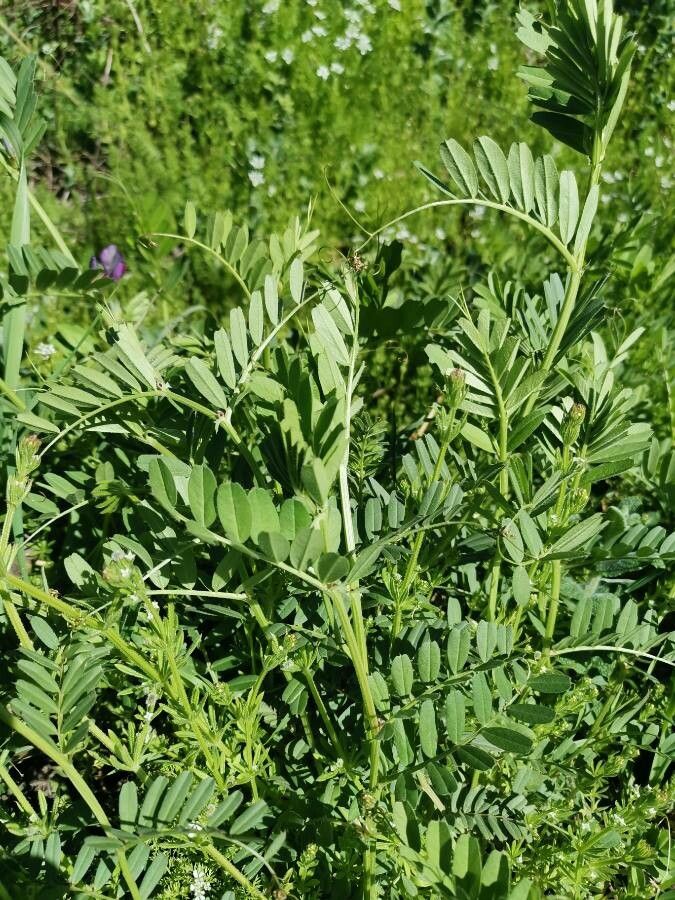
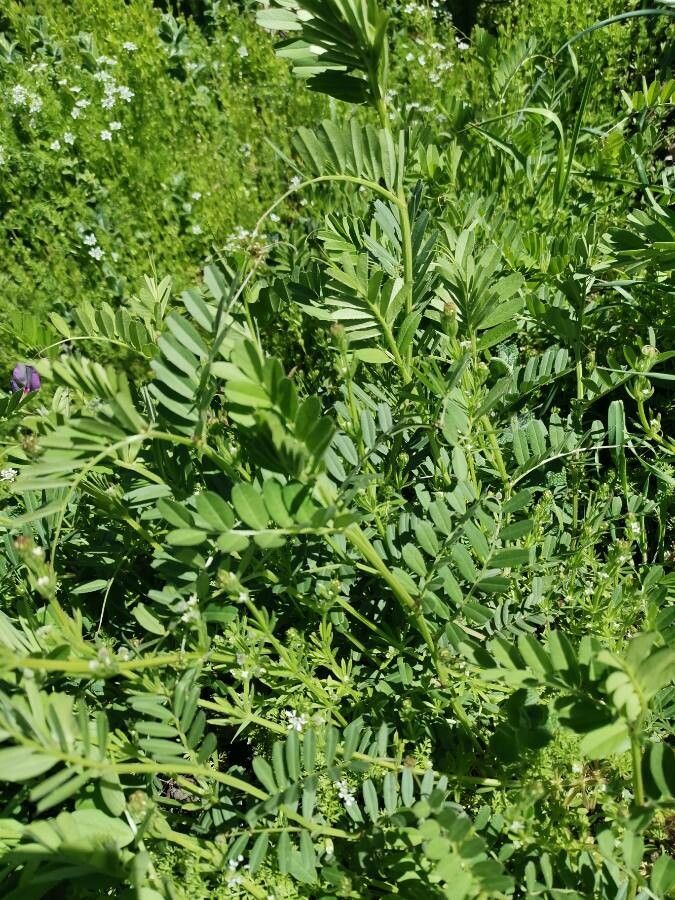
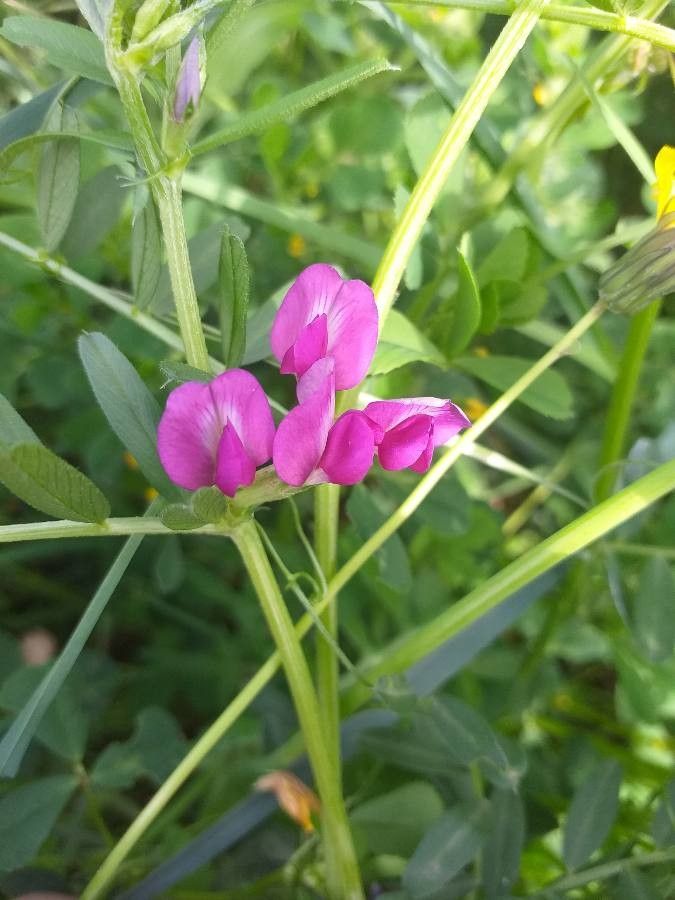
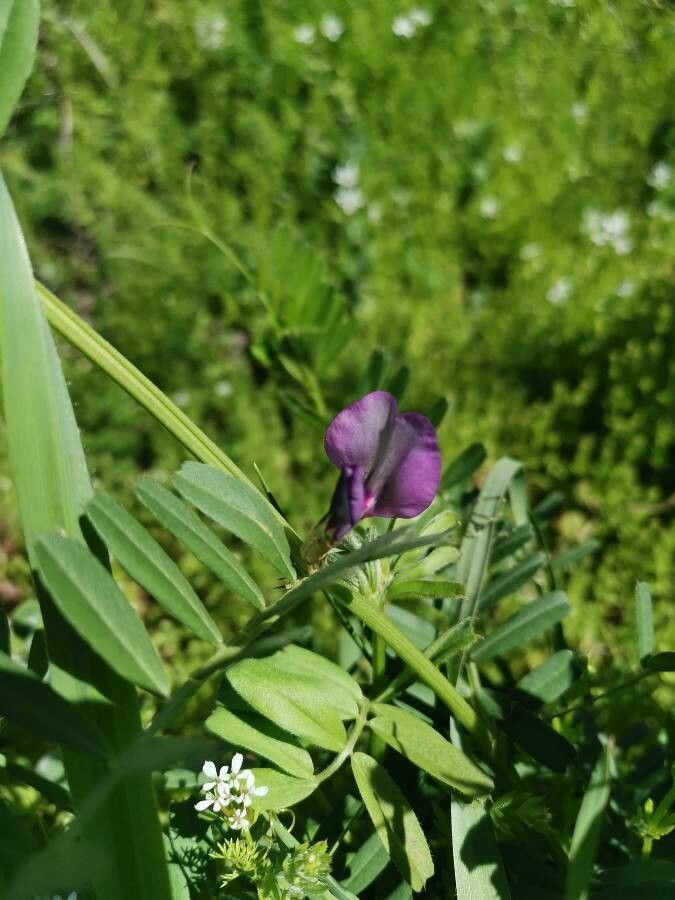
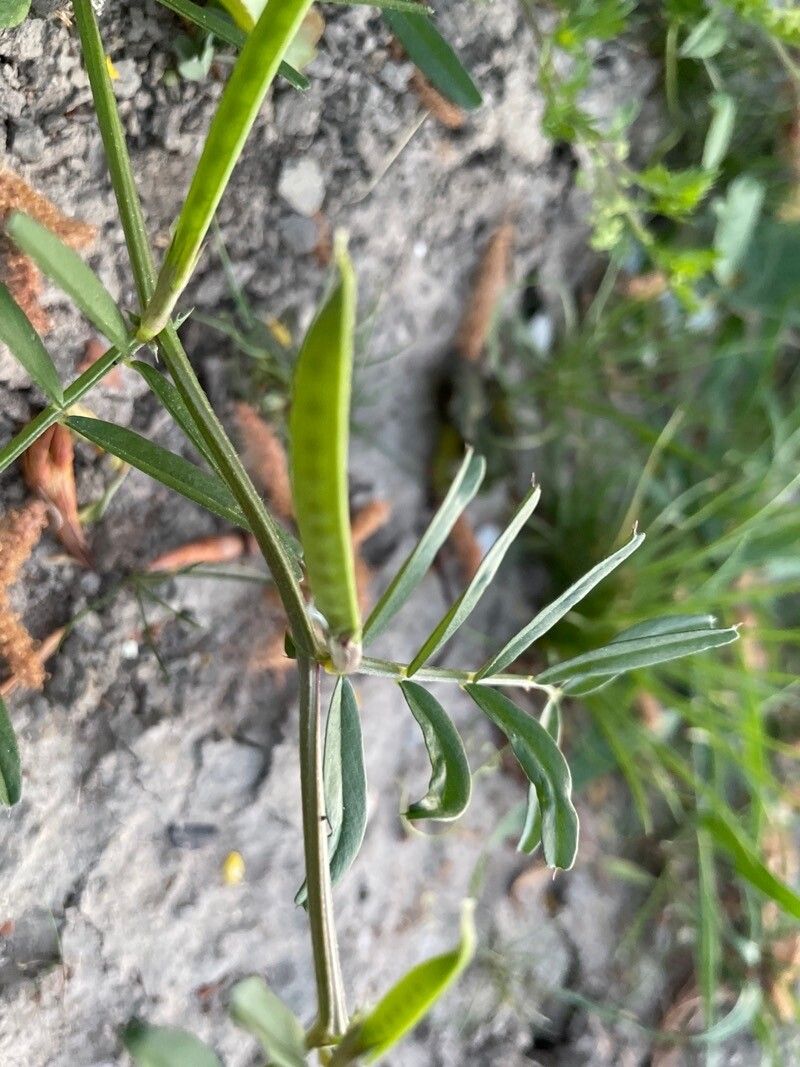
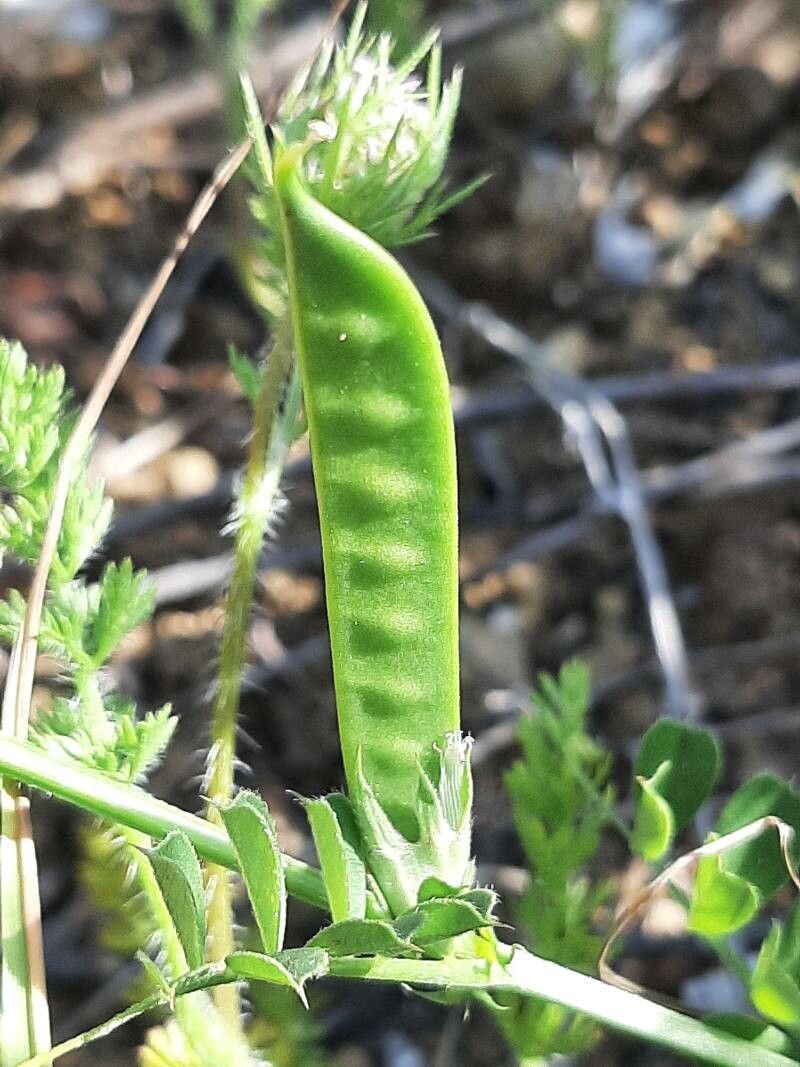
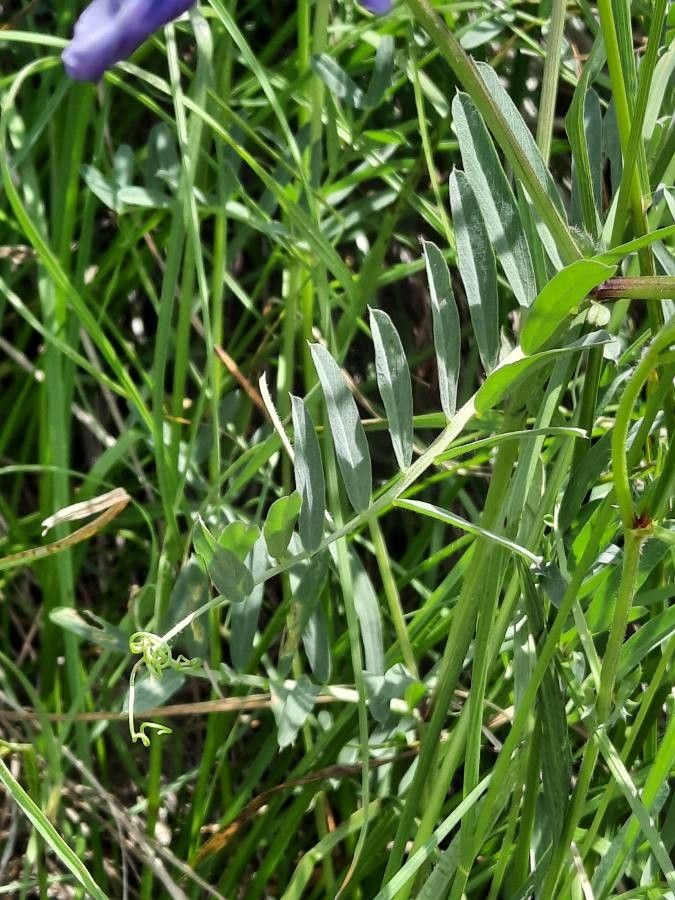
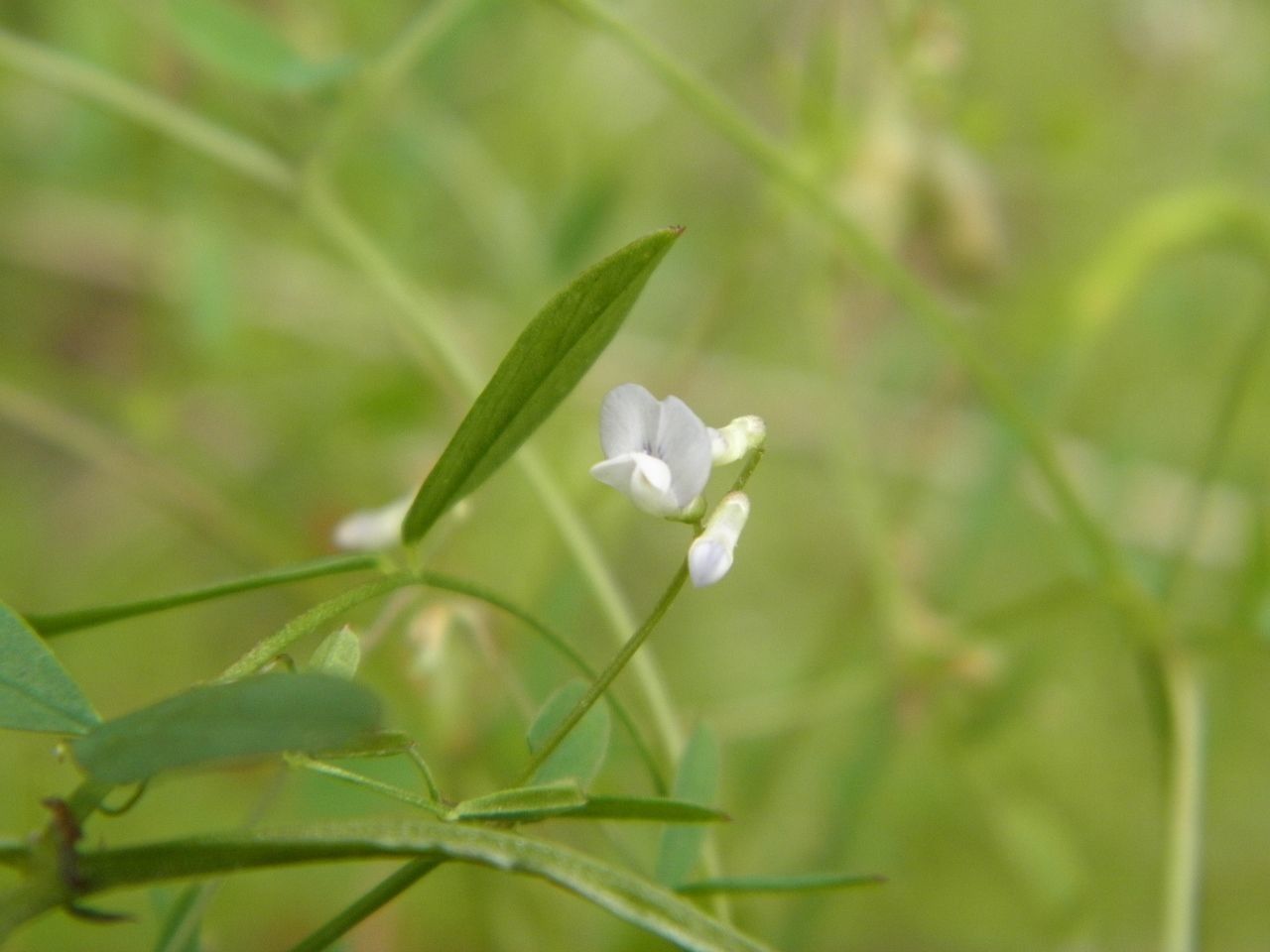
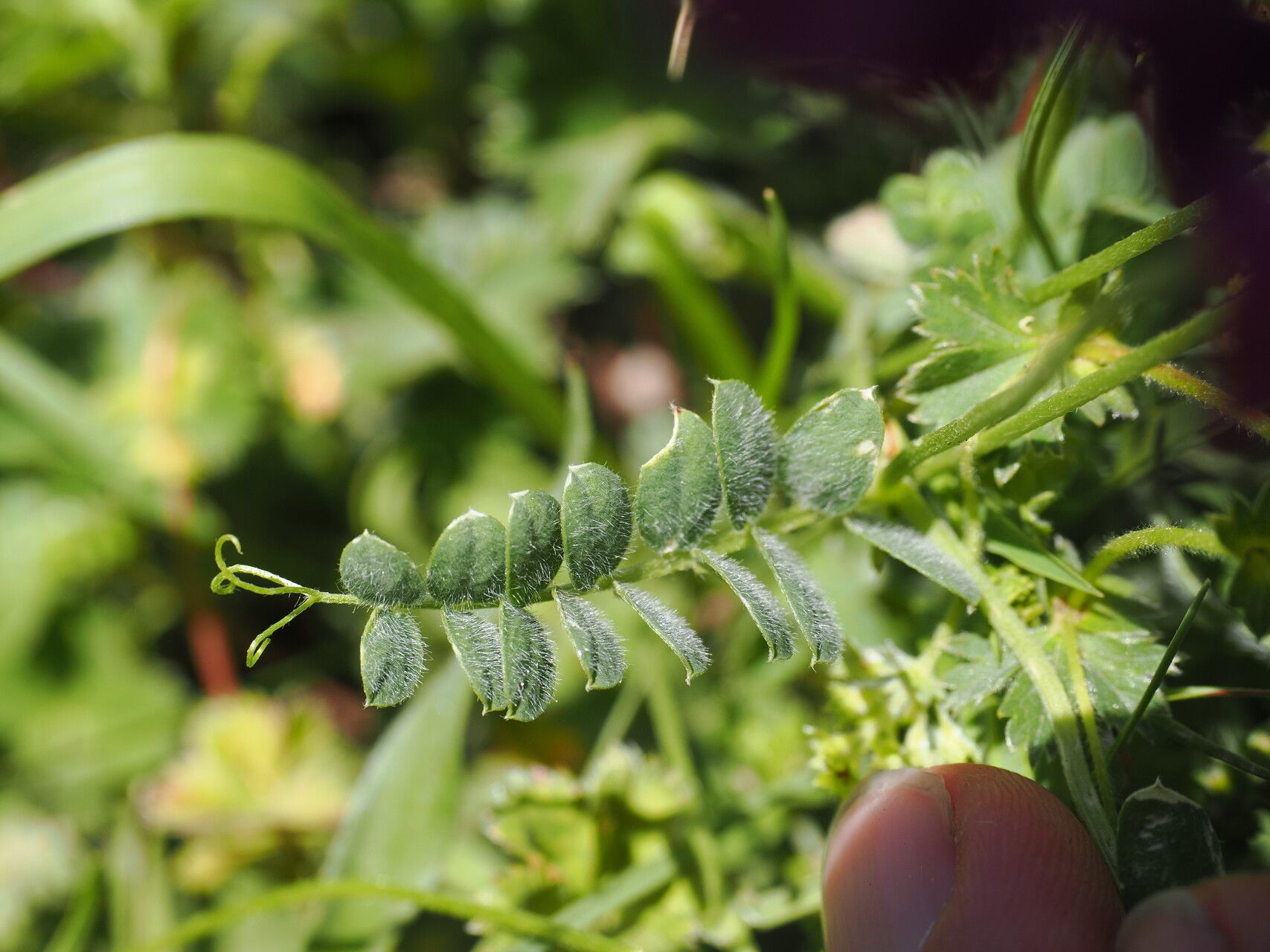
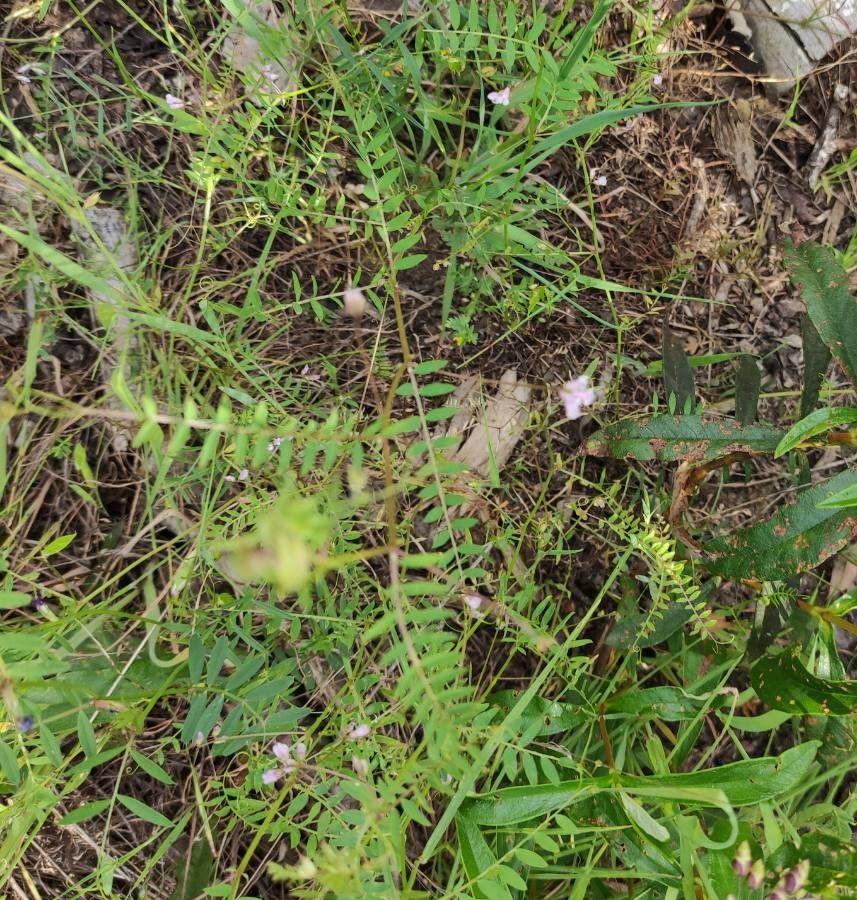
Vicia sativa, known as the common vetch, garden vetch, tare or simply vetch, is a nitrogen-fixing leguminous plant in the family Fabaceae. It is likely native to North Africa, Western Asia and Europe, but is now naturalized in temperate and subtropical regions worldwide. Although considered a weed when found growing in a cultivated grainfield, this hardy plant is often grown as a green manure, livestock fodder or rotation crop. More than 500,000 hectares (1,200,000 acres) per year of Vicia sativa is grown in Australia.
Narrow-leaved vetch has strong disease resistance and is usually not prone to illness. Nonetheless, it can be vulnerable to pests and diseases present in its environment. Such infections are typically not serious. For care, this plant requires moderate maintenance. It should be pruned regularly to maintain a neat appearance and support healthy growth. Fertilizing can also help encourage flowering. Narrow-leaved vetch is appropriate for anyone with outdoor space, like a garden or patio, and does not demand extensive care experience. It may need more attention when cultivated indoors.
How to keep Vicia Segetalis.
Light
Narrow-leaved vetch grows best when it receives abundant sun throughout the day, though it can tolerate locations with somewhat reduced light. Native to sunny environments, narrow-leaved vetch requires at least six hours of light daily for optimal growth. Excessive exposure can cause wilting, while inadequate light can produce poor flowering and a decline in health.
Temperature
Narrow-leaved vetch can adjust to a wide range of temperature conditions, but its distribution may still be limited by different combinations of moisture and heat. It grows best in warm summer climates with sufficient rainfall or irrigation. Extended periods of cloudy, rainy weather or sustained high temperatures can increase the likelihood of Narrow-leaved vetch dying. In winter, appropriate protection from cold can improve the plant's survival rate.
Fertilizer
Narrow-leaved vetch benefits from regular, light applications of fertilizer to encourage healthy leaf growth. You should fertilize Narrow-leaved vetch about once a month during the summer. Nitrogen is vital for foliage, and supplying nitrogen-rich sources helps Narrow-leaved vetch thrive.
Botanical profile.
- Plant Type
- Herb, Vine
- Life Cycle
- Annual
- Genus
- Vicia
- Family
- Fabaceae
- Hardiness Zone
- 5-9
- Mature Height
- 30 cm to 91 cm
- Mature Spread
- 20 cm to 40 cm
- Leaf Color
- Green, Dark Green
- Leaf Type
- Semi-evergreen
- Flower Color
- Purple
- Flower Size
- 2.03 cm
- Bloom Time
- Mid spring, Late spring, Early summer
- Planting Time
- Spring, Summer, Autumn
- Harvest Time
- Summer
Other names.