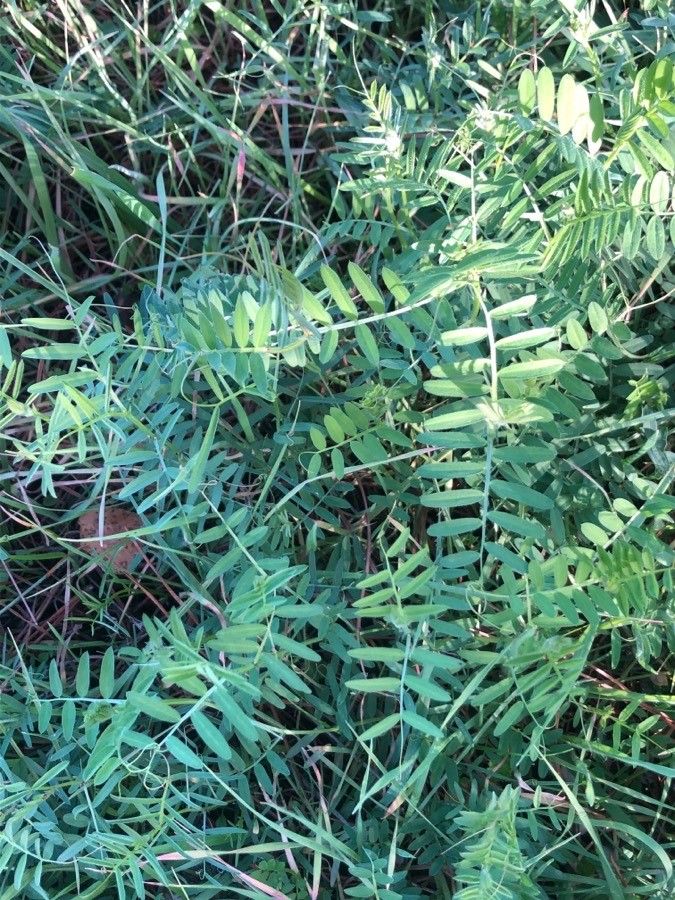
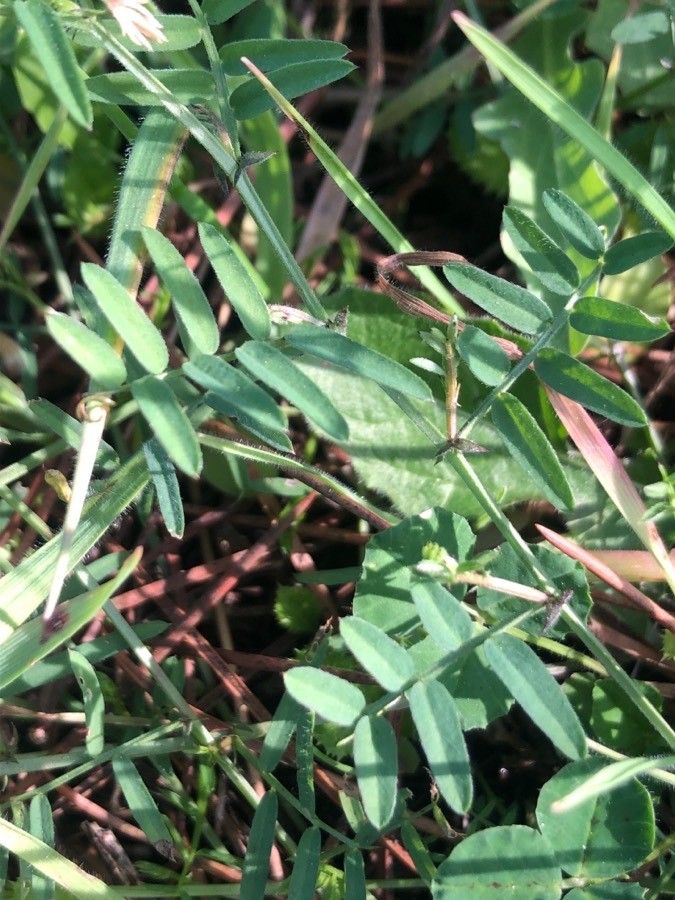
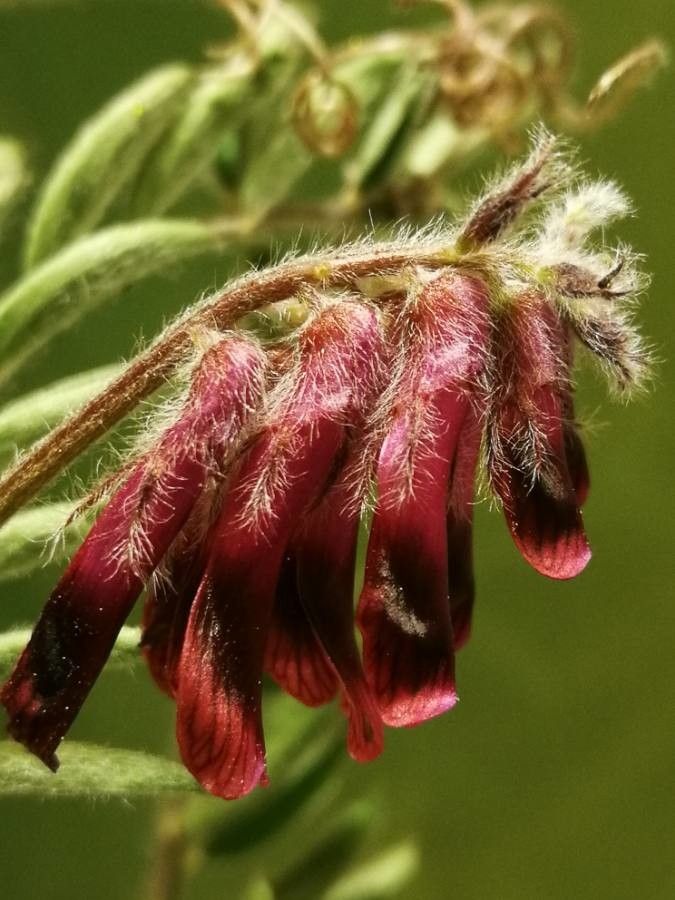
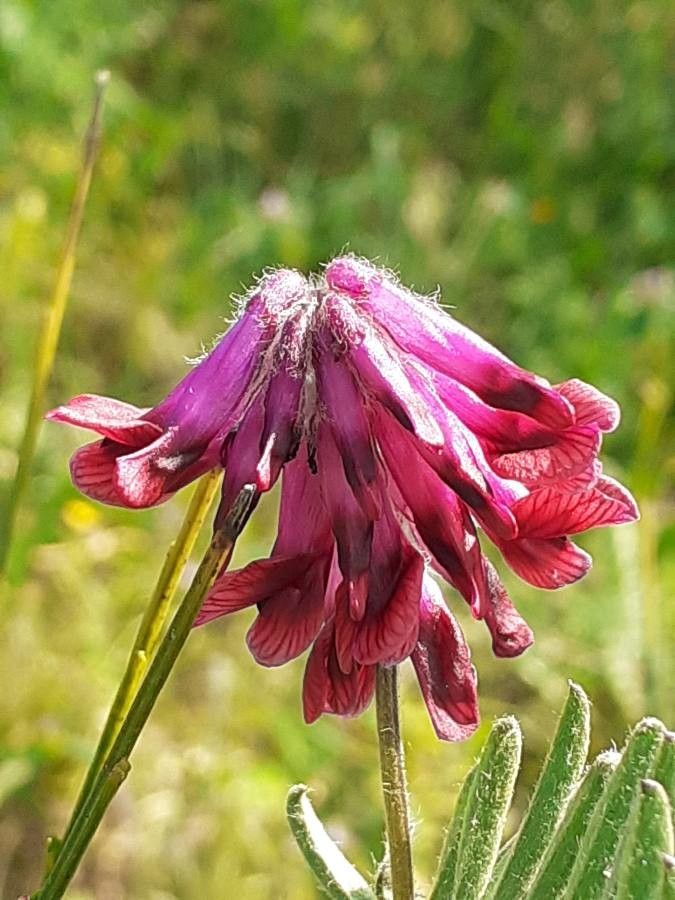
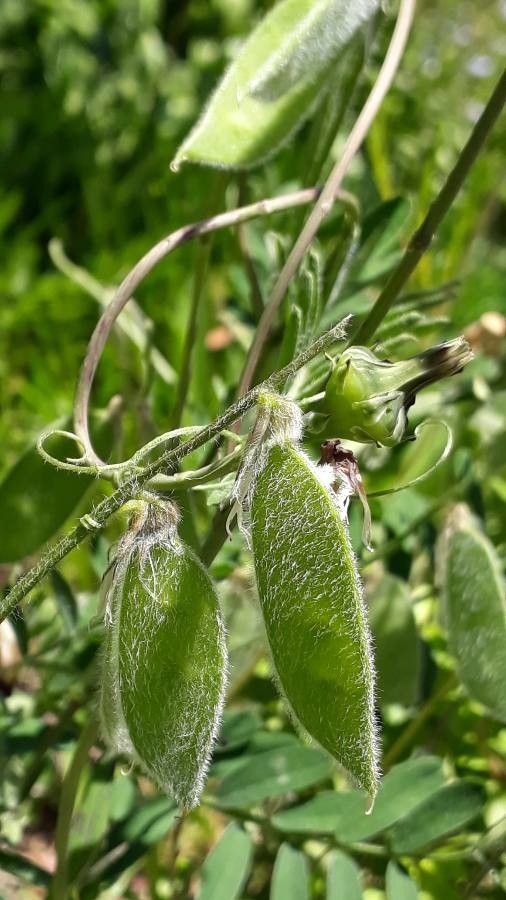
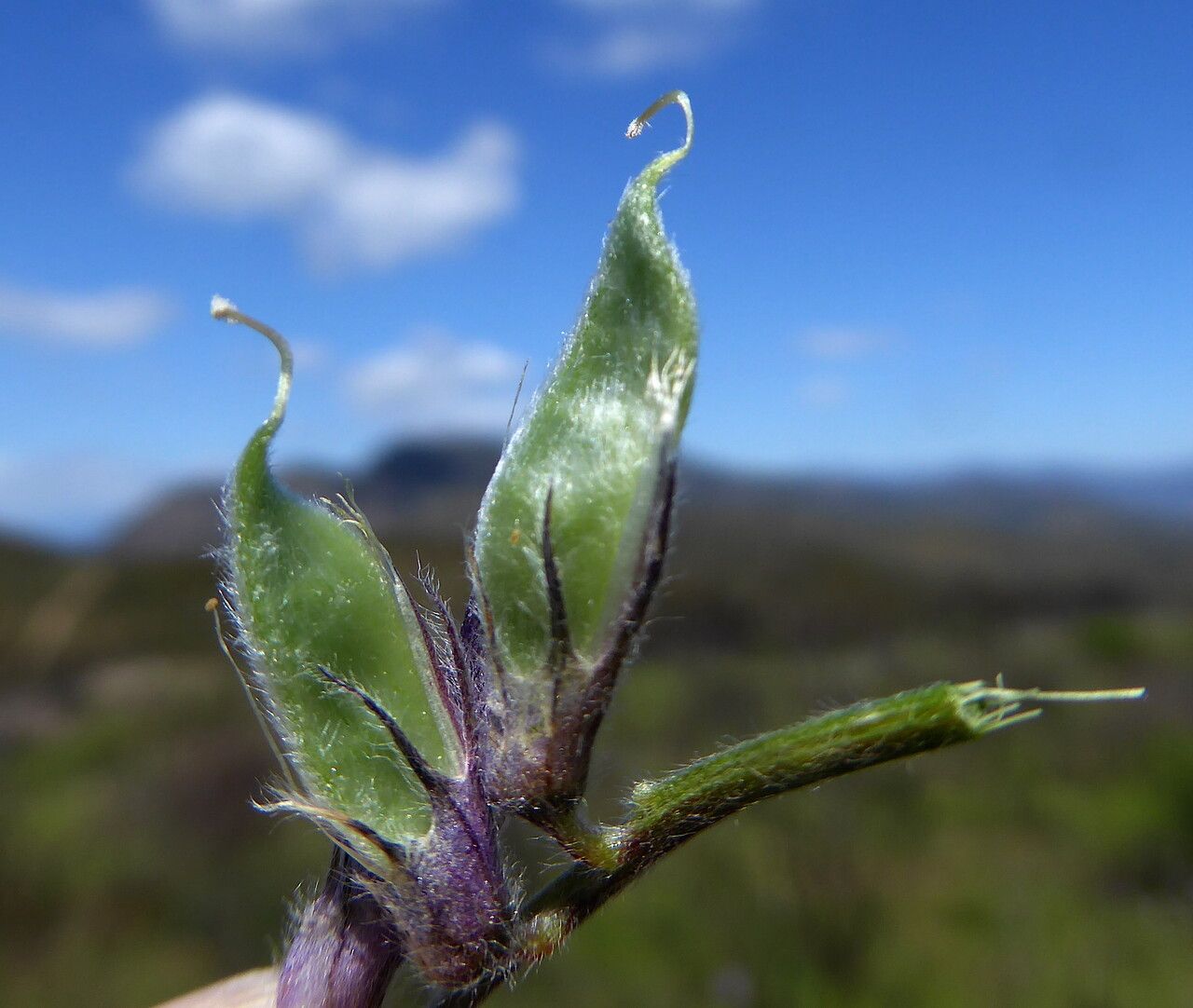
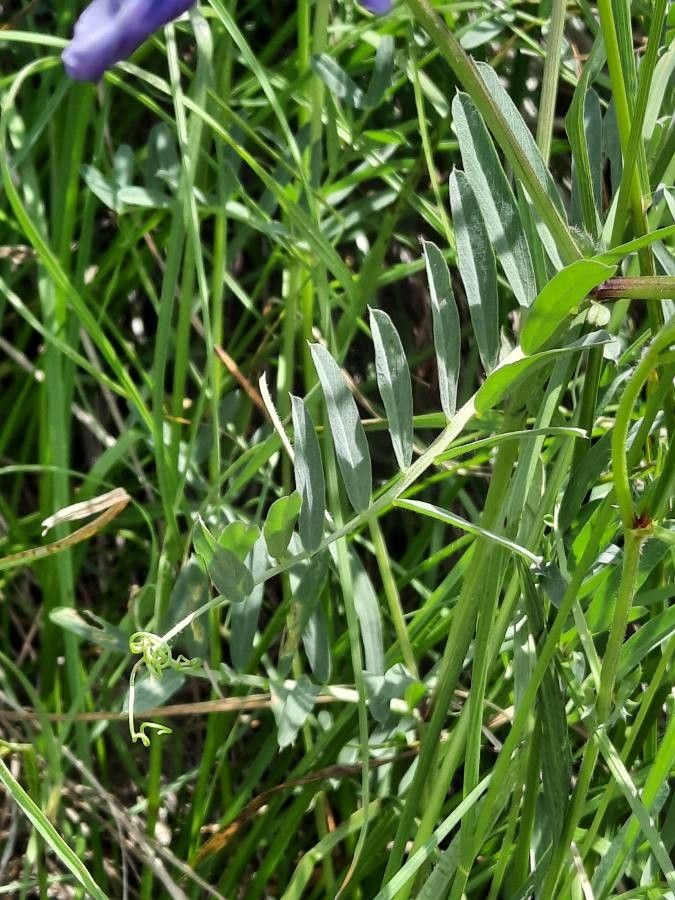
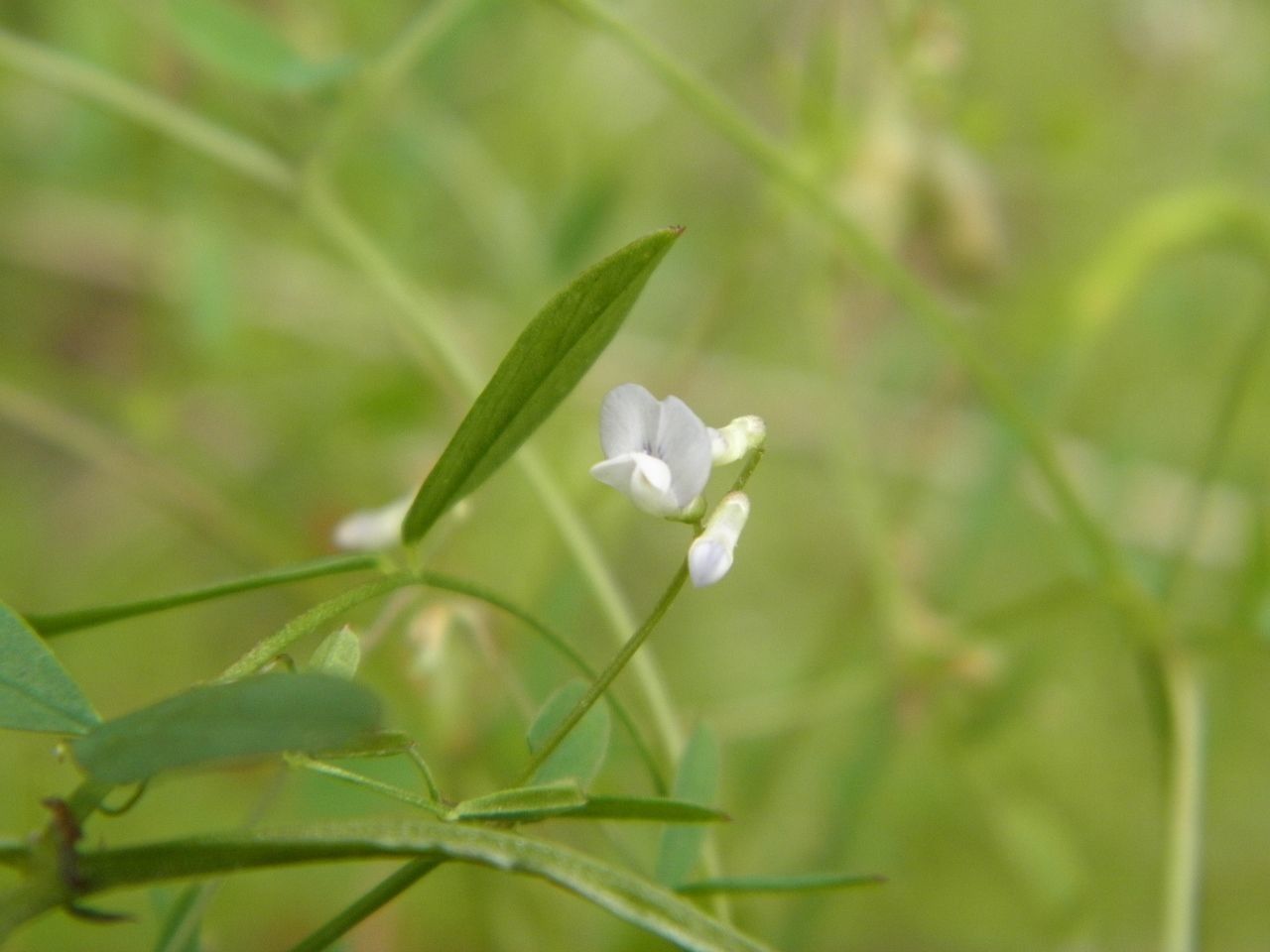
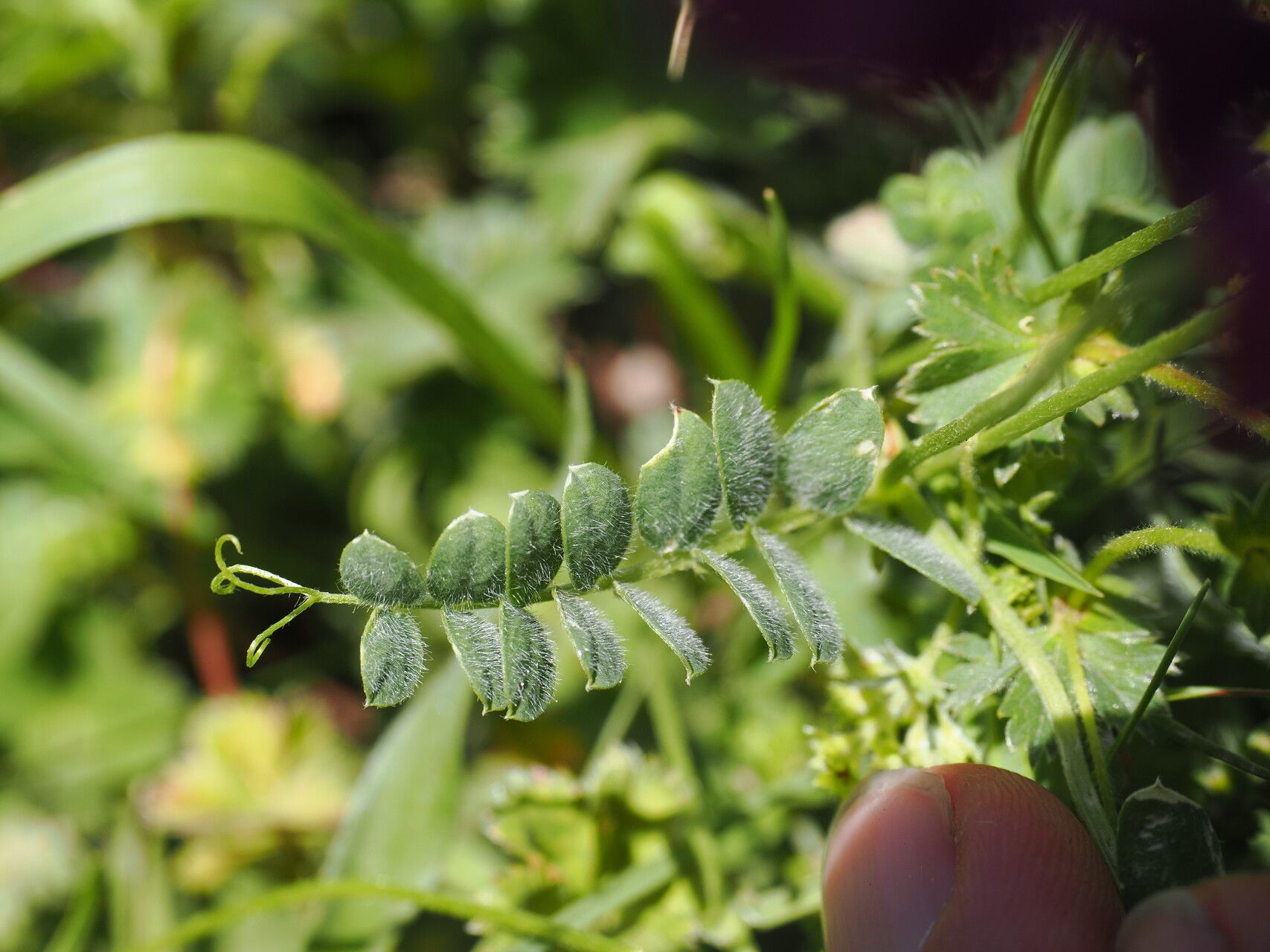
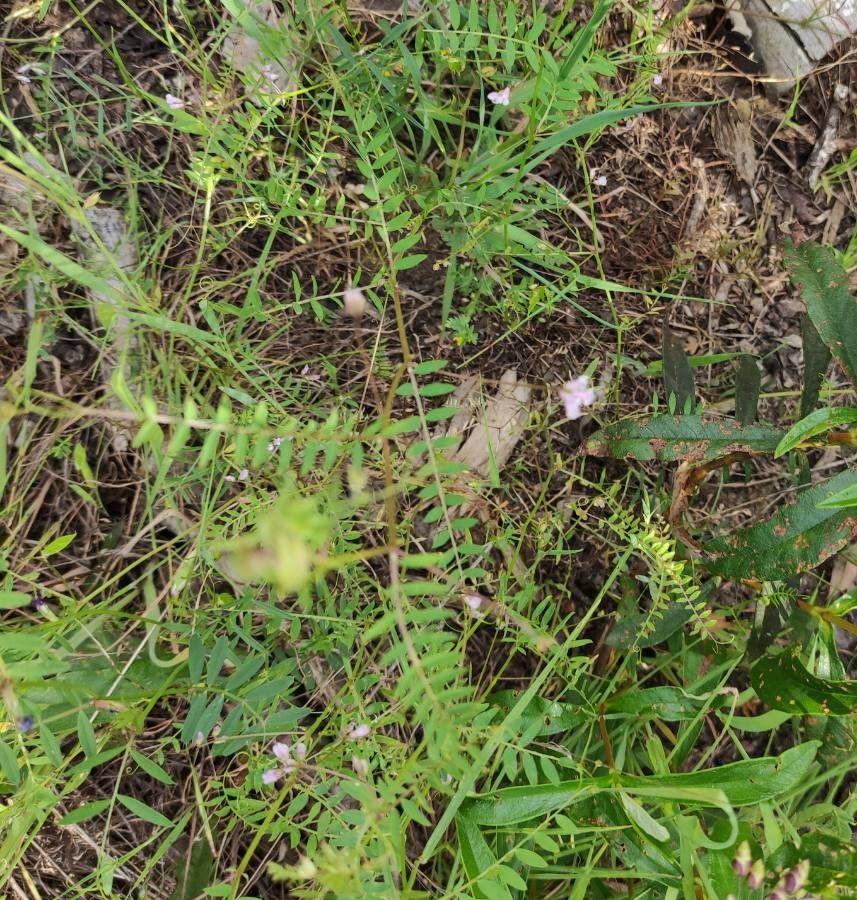
Vicia benghalensis is a species of vetch known by the common names purple vetch and reddish tufted vetch. It is native to southern Europe, North Africa, and nearby islands, and it is utilized elsewhere in agriculture and may be present in the wild as an introduced species. It is an annual herb with a climbing stem which is coated in hairs, often densely, making the plant appear silvery white. Each leaf is made up of several pairs of elongated leaflets which measure up to 3 centimeters in length. The inflorescence is a one-side raceme of several dark reddish purple flowers. Each flower has a densely hairy calyx of sepals and a tubular corolla between one and two centimeters in length. The fruit is a flat, hairy legume pod up to 3.5 centimeters long containing multiple seeds. This plant is used as a cover crop and green manure for the purposes of soil improvement and weed and pest control. It is used in crop rotation, for hay and fodder, and as a honey plant, and it has a very high biomass yield. Purple vetch seeds and forage have been reported to cause poisoning in humans and in livestock, so caution is required when feeding them.
Purple vetch has good resistance to disease and is generally not prone to illnesses. However, it can be affected by pests and diseases present in its environment. These infections are typically not severe. Regarding care, this plant requires moderate maintenance. Regular pruning is needed to maintain a neat appearance and support healthy growth. Applying fertilizer can also help encourage flowering. Purple vetch is appropriate for anyone with an outdoor area, such as a garden or patio, and does not demand extensive gardening experience. It may need more attention if cultivated indoors.
How to keep Vicia Benghalensis.
Light
Purple vetch does best in places where it gets plenty of sunlight for most of the day. It can also tolerate some periods of reduced light. In its native habitat, it is found in areas with abundant sun. Too little or too much light can hinder its healthy growth.
Water
Purple vetch, native to regions with varying moisture levels, thrives best when its watering schedule mimics its natural climate. It should be watered once a week, allowing the soil to dry out slightly between waterings. This outdoor plant is hardy and adapts well to changing conditions, making good use of sporadic rainfall during its active growing season.
Temperature
Purple vetch does best in climates with temperatures ranging from 68 to 95 °F (20 to 35 ℃). Native to temperate areas, it favors warmer conditions. Seasonal temperature adjustments may be needed to replicate its natural growing environment.
Fertilizer
When most of the Purple vetch blooms have opened to full size, resume fertilizing. Around the time the blooms are at their peak, apply fertilizer every three to four weeks, weather permitting. Then, once Purple vetch starts to produce fewer new blooms, stop fertilizing; there’s no need to feed the plant when it can no longer produce more flowers.
Pruning
Purple vetch is a robust legume known for its purple flowers and climbing nature. To maintain its growth and encourage bushiness, prune it from early to late spring. Be careful not to prune too heavily, as this can cause stress to the plant. Regular maintenance is important to control its invasiveness and ensure a healthier appearance.
Botanical profile.
- Plant Type
- Herb
- Life Cycle
- Annual, Perennial
- Genus
- Vicia
- Family
- Fabaceae
- Hardiness Zone
- 8-10
- Mature Height
- 30 cm to 46 cm
- Mature Spread
- 20 cm to 40 cm
- Leaf Color
- Green, Blue
- Leaf Type
- Deciduous
- Flower Color
- Purple, Violet
- Flower Size
- 0.51 cm
- Bloom Time
- Mid spring, Late spring, Early summer
- Planting Time
- Spring, Summer
- Harvest Time
- Summer
Other names.
Reader questions.
How should I water my Purple vetch plants the most effectively?
Purple vetch can be watered using a garden hose with a spray nozzle, a watering can, or any other common watering tool. This plant is not too particular about the type of water it receives and can thrive with rainwater, tap water, or filtered water. It is typically recommended to avoid watering Purple vetch from overhead to prevent damage to the leaves, flowers, and potential disease. Setting up a drip irrigation system is often the best method for watering this plant, as it ensures even and direct water application to the soil. When watering a container-grown Purple vetch, you can use a cup, watering can, or tap to directly water the soil.
Why should I use fertilizer on my Purple vetch plant?
Plants need nutrients to grow, but some types can obtain what they need without needing additional fertilizers. Purple vetch is one such plant, as it, like other plants, uses nutrients for growth and internal processes. The main nutrients for plants, nitrogen, phosphorus, and potassium, contribute to essential plant functions. In the case of foliage, nitrogen is especially important. However, Purple vetch can struggle to obtain enough nitrogen from the soil, which is why some gardeners choose to supplement its nitrogen by feeding it with an external source.
What are the sunlight requirements for Purple Vetch?
Purple Vetch thrives best in full sunlight conditions, requiring more than 6 hours of sunlight daily, but it can also grow in partial sun, with about 3-6 hours of sunlight. It's crucial to watch how sunlight moves through your garden throughout the day and choose planting spots that balance light and shade optimally. In its natural habitat, Purple Vetch is accustomed to abundant sunlight, though it tolerates periods of lesser illumination. Both scarce and excessive light can hinder its healthy growth.
What is the ideal temperature range for growing Purple vetch?
Purple vetch thrives best in climates where the temperature ranges between 68 to 95 °F (20 to 35 °C), originating from temperate regions but favoring warmer conditions. To successfully grow Purple vetch, it may be necessary to adjust for seasonal temperature changes to closely mimic its natural habitat. Although this plant has some cold tolerance and usually does not require extra measures for temperatures above 0°C, precautions should be taken if temperatures are expected to drop below freezing. Temporarily protecting the plant with wraps made of plastic film, fabric, or other materials can help, but these coverings should be removed once temperatures rise again.
What should I do if I give my Purple vetch plant too much water or too little water?
If you notice that your Purple vetch plant is not getting enough water, you should start watering it more regularly. Overwatering, on the other hand, can be a serious problem that may result in diseases and the death of your plant. To prevent this, choose a suitable location with plenty of sunlight and good drainage. If you overwater your potted Purple vetch, consider repotting it in a container with better drainage and loose soil.
When should I fertilize my Purple vetch?
Purple vetch generally grows well and can benefit from monthly fertilization during its active growing season. This is usually in spring and summer, while it becomes less active and needs fewer nutrients in fall and winter. To determine when to start fertilizing, look for signs of new growth. Whether grown outside or in a container indoors, the fertilization schedule remains the same. However, if it is in a container, you may not need to fertilize for the first one to two months. Container potting soil already contains sufficient nutrients, so it's best to fertilize after the plant has been in the same soil for a while.
How can artificial lighting support indoor Purple Vetch plants?
For indoor Purple Vetch plants, artificial lighting can be essential, especially when natural sunlight is insufficient, such as in winter or less sunny spaces. LED lights are recommended because they can be customized to provide specific wavelengths of light needed by plants. Full sun plants require 30-50W/sq ft, partial sun plants need 20-30W/sq ft, and full shade plants need 10-20W/sq ft of artificial light. The light source should be placed 12-36 inches above the plant, and most plants benefit from 8-12 hours of artificial light per day to mimic natural sunlight conditions.
How does Purple vetch respond to low temperatures, and what actions should be taken?
Purple vetch has a moderate tolerance to low temperatures, thriving best when temperatures are above 20°C and should be kept above 0°C during winter months. If temperatures fall below -10°C, leaves may droop and, in severe cases, wilt and fall off. If frost damage occurs, affected parts should be trimmed off. To prepare for low temperatures, it's advisable to wrap the plant with non-woven fabric or cloth and construct a wind barrier to protect it from cold winds, aiding in its survival and recovery from chilly weather.
How often should I give water to my Purple vetch plant?
Purple vetch needs regular watering throughout the growing season. In the spring, it should be watered once a week. As the weather gets warmer, you may need to water it two to three times per week. It's important not to exceed this amount of watering, as it can harm the plant. Regardless of the watering frequency, the soil should be kept relatively moist but not wet. When it comes to potted Purple vetch, you'll need to water it more often compared to the ones planted in the ground. Generally, watering a container-grown Purple vetch a few times per week should be sufficient, while an in-ground plant can be watered weekly.
When is the best time to not fertilize my Purple vetch?
To ensure the health of your Purple vetch, avoid fertilizing it if it is already diseased or infested with insects. Additionally, refrain from fertilizing dehydrated plants as this will exacerbate the problem. Only fertilize plants that are in good health. When watering, be cautious not to splash fertilizer onto the leaves or stem, as it can cause burning. Unless you are using a specialized foliage fertilizer, avoid direct contact between the plant and the fertilizer.
What are the symptoms of light deficiency in Purple Vetch?
When Purple Vetch is grown indoors under inadequate light, it may exhibit several symptoms indicating light deficiency. These include smaller new leaves, leggy or sparse growth, faster leaf drop, slowed or halted growth, lighter-colored new leaves, and symptoms caused by excessive sunlight such as chlorosis, sunscald, leaf curling, wilting, and leaf scorching. These symptoms show the plant's struggle with either too much or too little light.
What should be done when Purple vetch experiences high temperatures?
During the summer months, it is crucial to ensure that Purple vetch is kept below 35°C to prevent heat stress. When the temperature surpasses 41°C, the plant may show signs of stress such as lightening of leaf color, drying and withering of leaf tips, curling of leaves, and increased susceptibility to sunburn. To mitigate these issues, sunburned and dried parts should be trimmed. Moving the plant to a shaded area or using a shade cloth can protect it from the harsh midday and afternoon sun. Additionally, watering the plant in the morning and evening can help keep the soil adequately moist and support the plant's health under high temperature conditions.