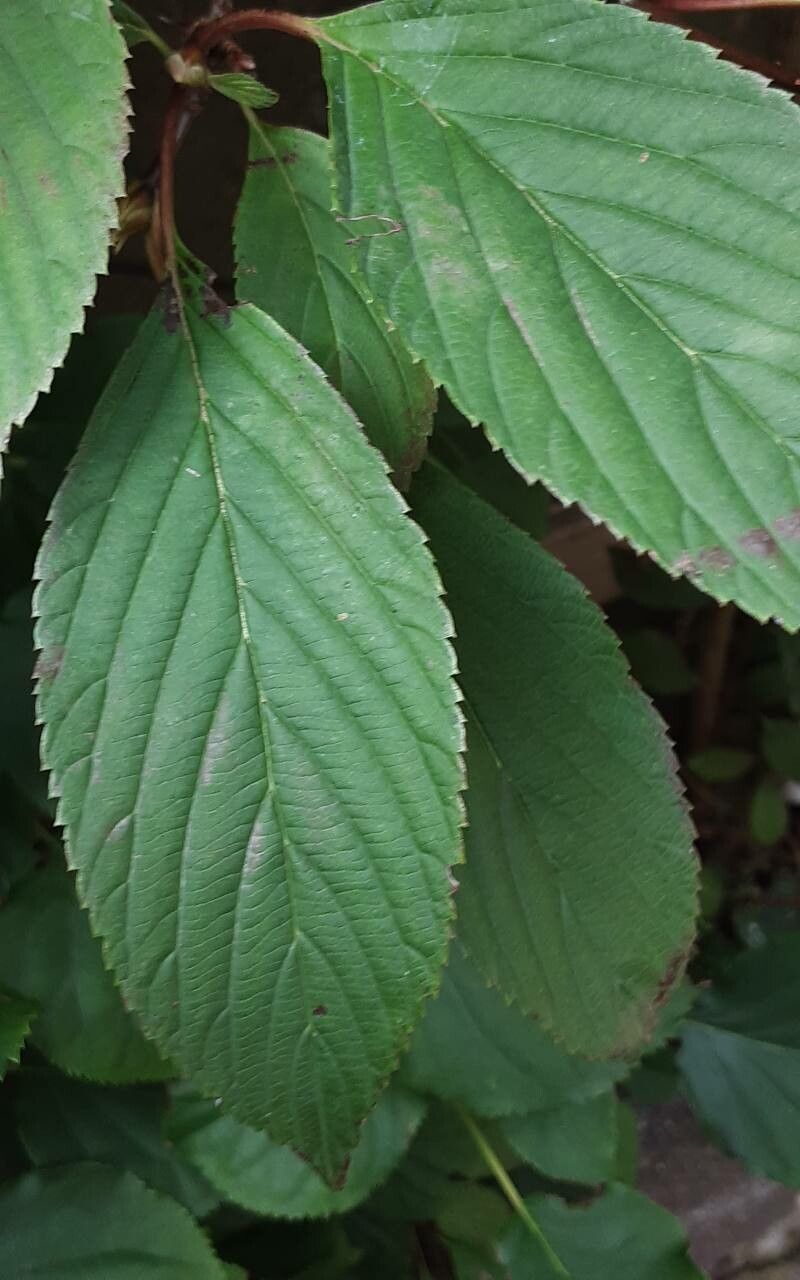
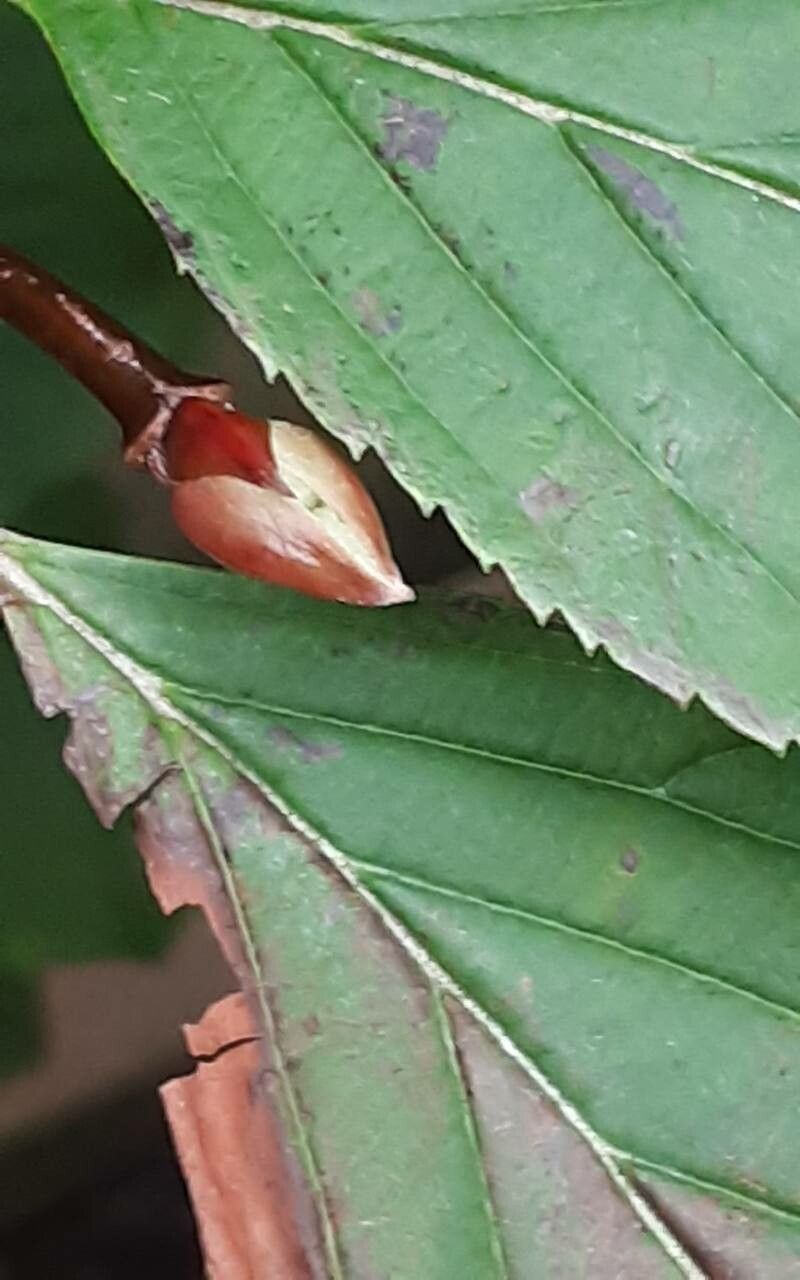
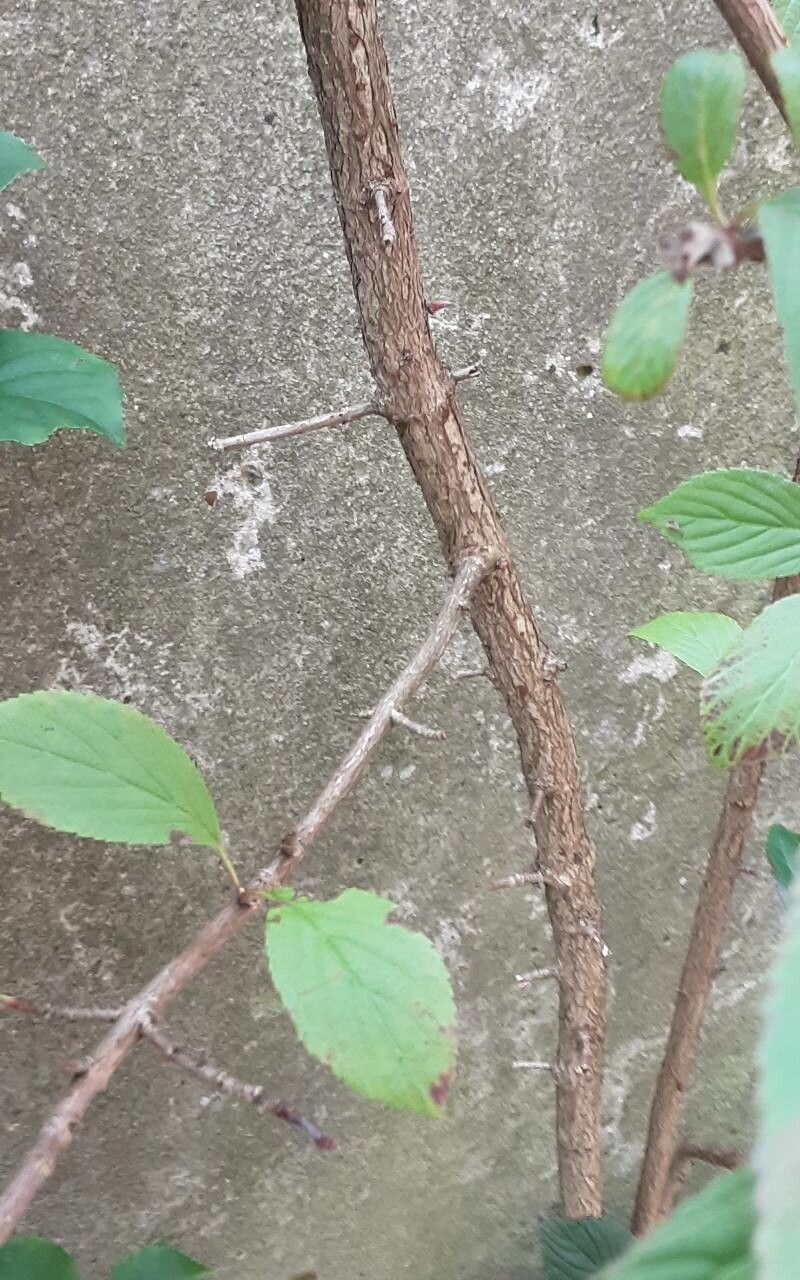
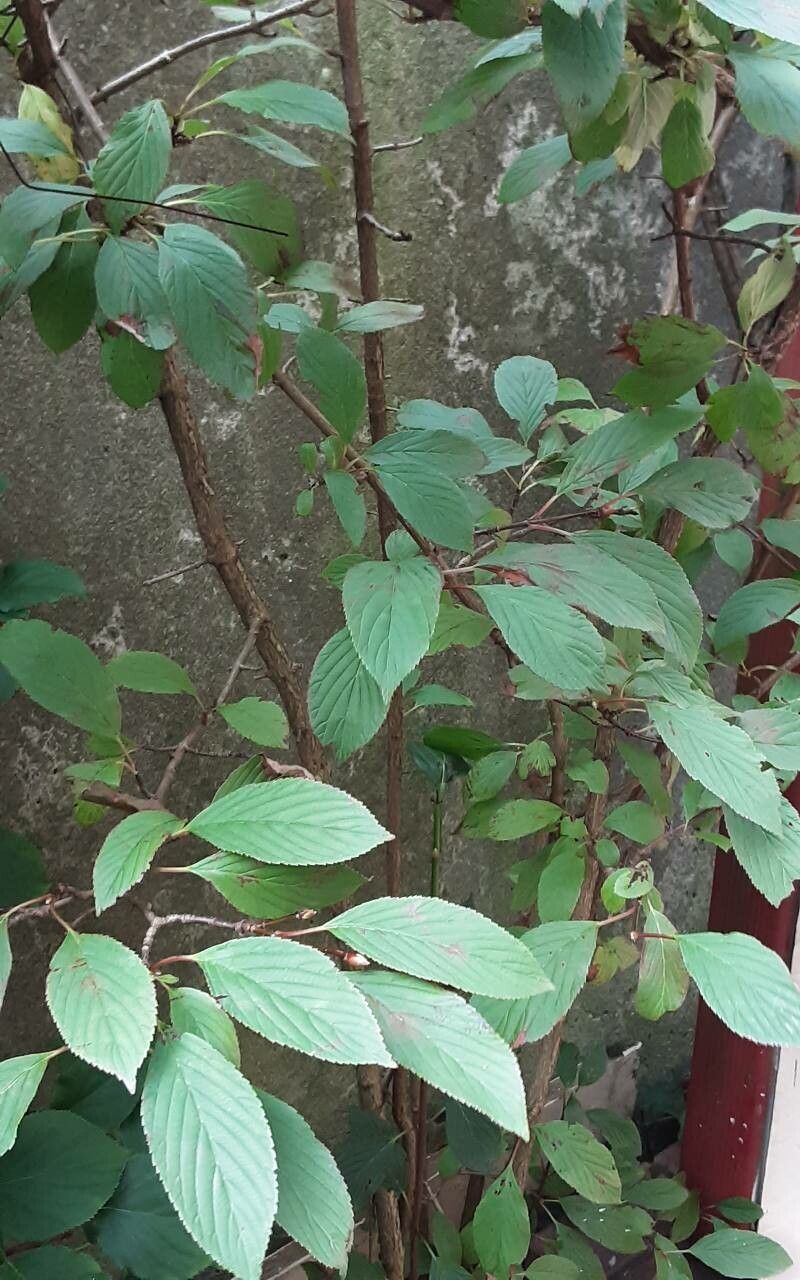
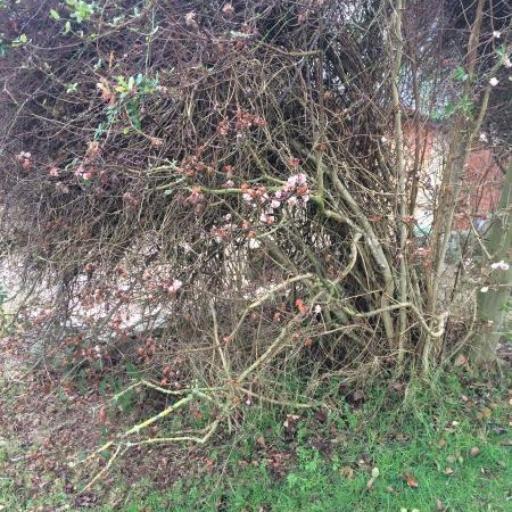
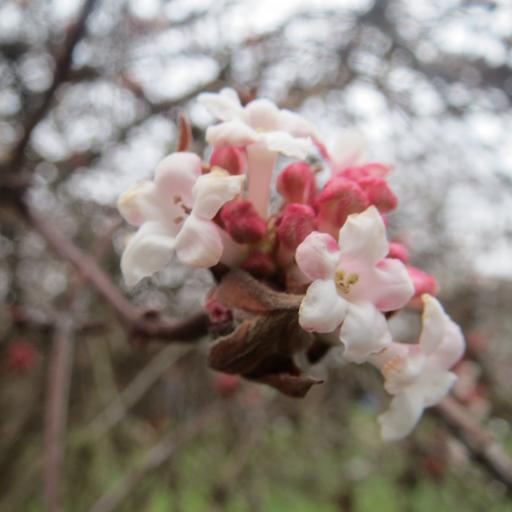
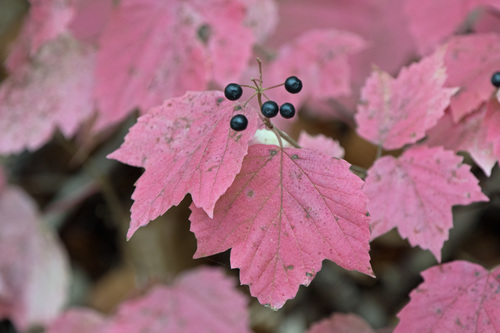
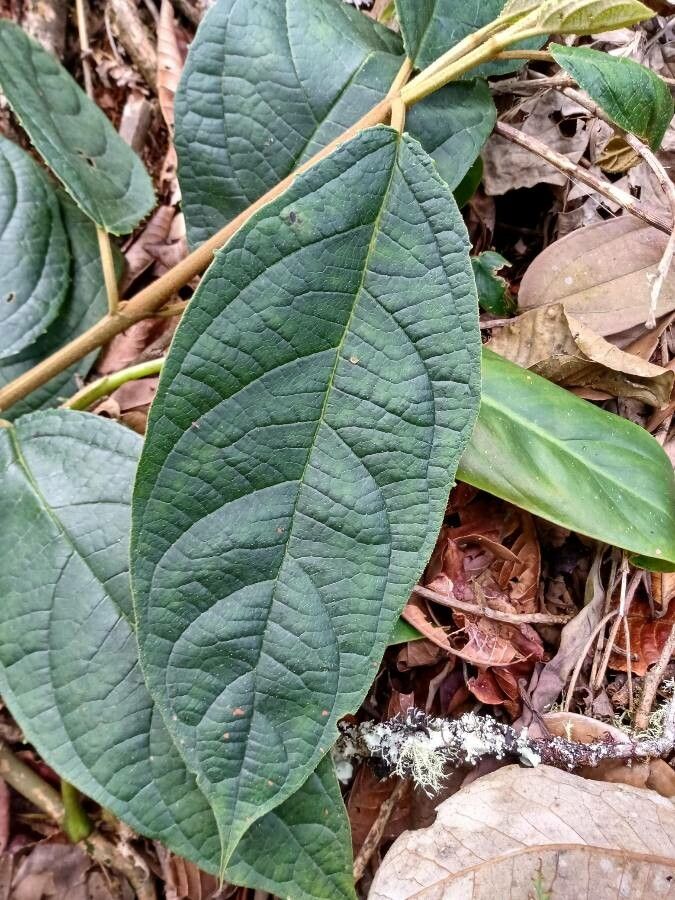
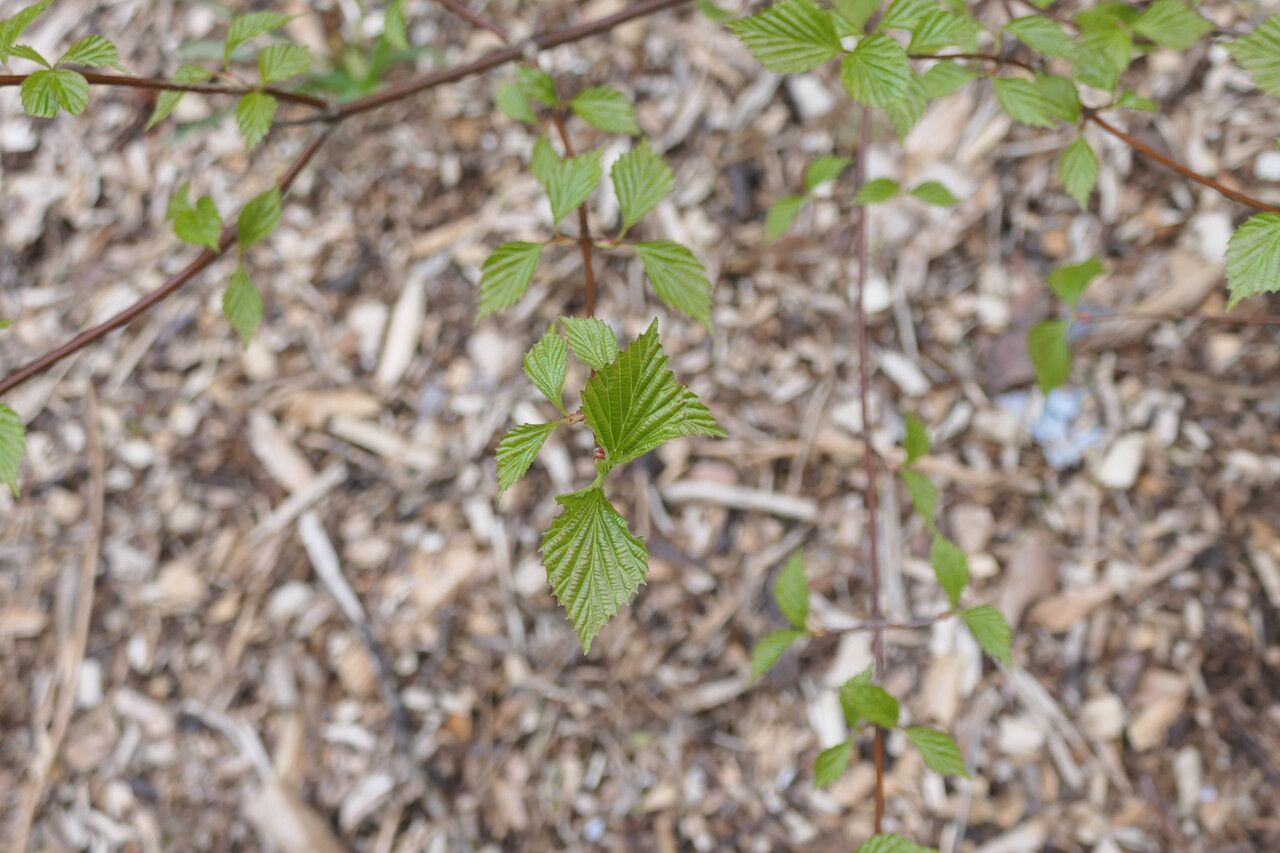
Viburnum × bodnantense, the Bodnant viburnum, is a Group of hybrid flowering plant cultivars of garden origin. They originate in a cross between V. farreri and V. grandiflorum made by Charles Puddle, head gardener to Lord Aberconway at Bodnant Garden, Wales around 1935. The most famous selection, ‘Dawn’, is a substantial deciduous shrub growing to 2.5 m (8.2 ft) tall by 1.5 m (4.9 ft) broad. In winter and early spring the bare branches are clothed with fragrant pink blooms, and later by narrow, heavily-veined oval leaves. These turn bright red in autumn, and are often accompanied by small globose red fruits. Though hardy down to −20 °C (−4 °F), like all early-flowering shrubs the flowers can be affected by late frost – which in turn affects the production of fruit. This shrub requires a sheltered position in full sun or partial shade, in soil that stays moist. The cultivars ‘Dawn’, ‘Deben’ and ‘Charles Lamont’ are recipients of the Royal Horticultural Society’s Award of Garden Merit. According to the Plant List, Viburnum × bodnantense is an unresolved name, meaning that it has not yet been accredited as a valid botanical name or synonym.
Bodnant viburnum is resistant to disease and typically does not get sick. Regarding care, this plant is fairly low-maintenance. Planted outdoors it needs only light watering, and larger specimens usually do not require pruning. Smaller plants, however, should be pruned after they finish blooming. Bodnant viburnumt is suitable for anyone with an outdoor area, such as a garden or deck, and does not require extensive gardening experience.
How to keep Viburnum Ux Bodnantense.
Light
Bodnant viburnum naturally occurs in places like forest understories or rocky areas, where it grows in natural shade. It prefers partial sun but can tolerate full sun or full shade, demonstrating its versatile and hardy nature.
Water
Moist soil significantly boosts the vigor of bodnant viburnum, while insufficient water can reduce its ornamental appeal and hinder its flowering. Proper water management is critical during transplanting, requiring consistent irrigation for 3 to 4 weeks. In hot conditions, it is important to provide 7 to 8 millimeters of water weekly to maintain soil moisture. However, be cautious, as overwatering can cause root rot.
Temperature
Bodnant viburnum is highly adaptable to a range of climates, from blazing summers to frosty winters. It does, however, have a preferred temperature range for growth. If temperatures rise too much, the plant is vulnerable to heat and humidity stress, which can lead to its death. In locations where temperatures approach the lower limit of its cold hardiness, it is necessary to provide insulation to protect the plant.
Fertilizer
The timing of fertilizing Bodnant viburnum is important. Apply fertilizer in early spring and repeat monthly until early summer. Fertilizer encourages attractive blooms and supplies energy both during dormancy and in periods of active growth.
Pruning
Bodnant viburnum is a deciduous shrub known for its fragrant pink blossoms. To keep the plant healthy and attractive, prune it in early spring after it has finished flowering. Remove weak branches to improve airflow and encourage healthy regrowth. Make sure to use clean, sharp tools to prevent the spread of disease. This practice maintains the shrub's health and enhances its beauty.
Botanical profile.
- Plant Type
- Shrub
- Life Cycle
- Perennial
- Genus
- Viburnum
- Family
- Viburnaceae
- Hardiness Zone
- 5-9
- Mature Height
- 0 cm to 10 cm
- Mature Spread
- 1.52 m to 2.44 m
- Leaf Color
- Green
- Leaf Type
- Deciduous
- Flower Color
- Pink
- Flower Size
- 1.02 cm to 1.52 cm
- Bloom Time
- Mid winter, Late winter, Early spring
- Planting Time
- Spring, Autumn
- Harvest Time
- Late spring, Early summer, Mid summer