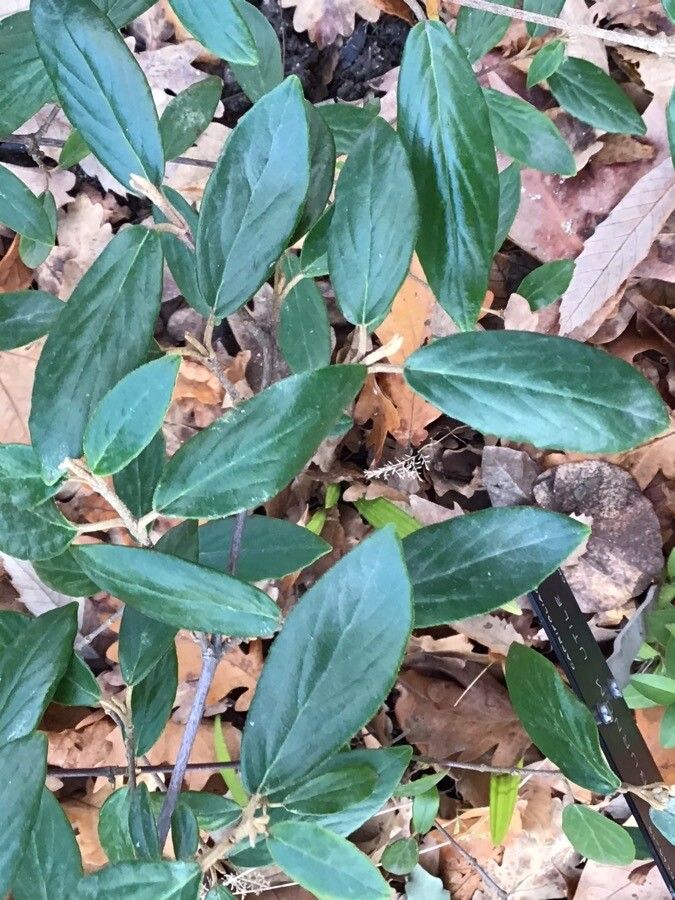
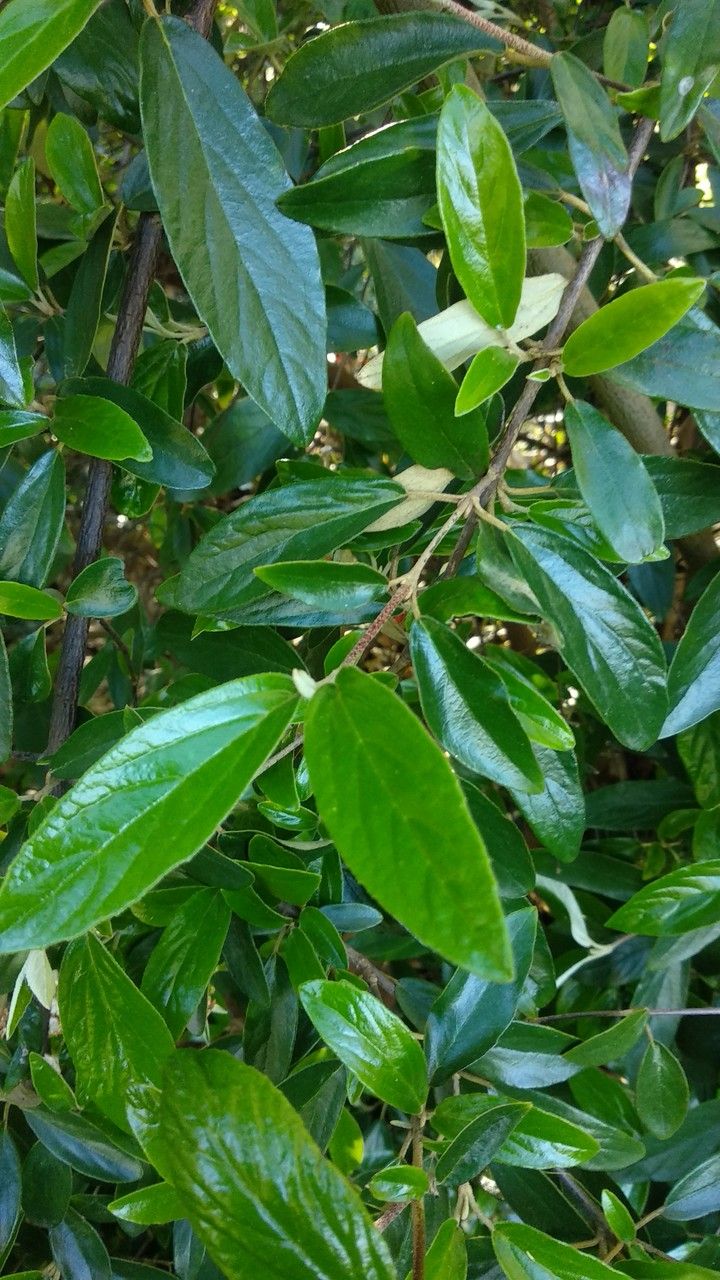
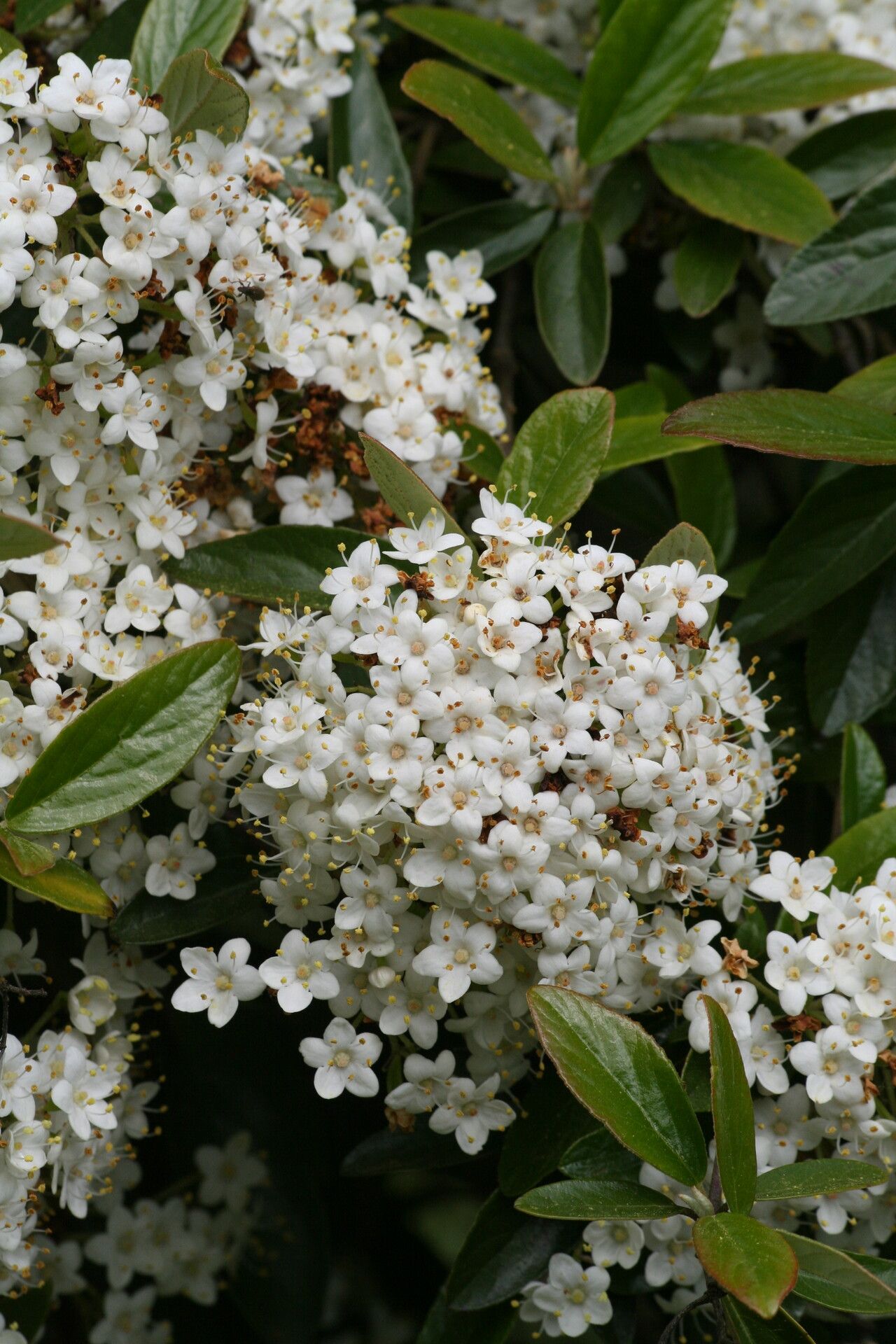
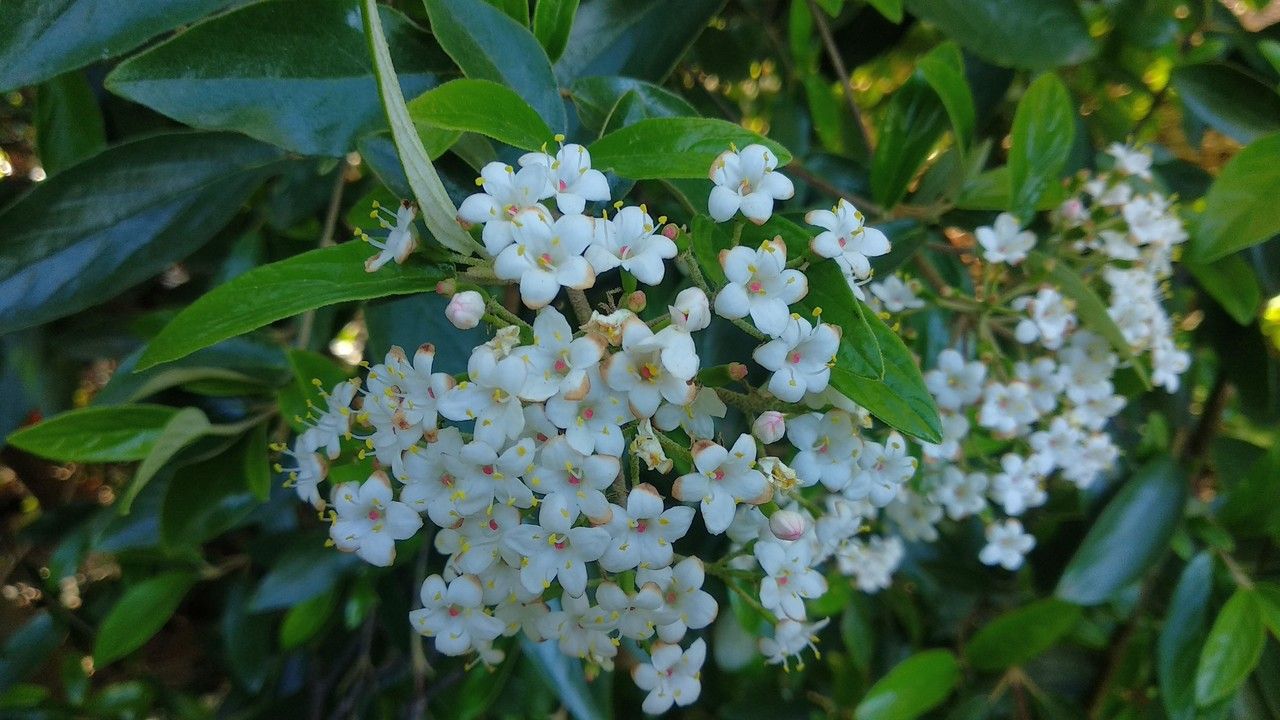
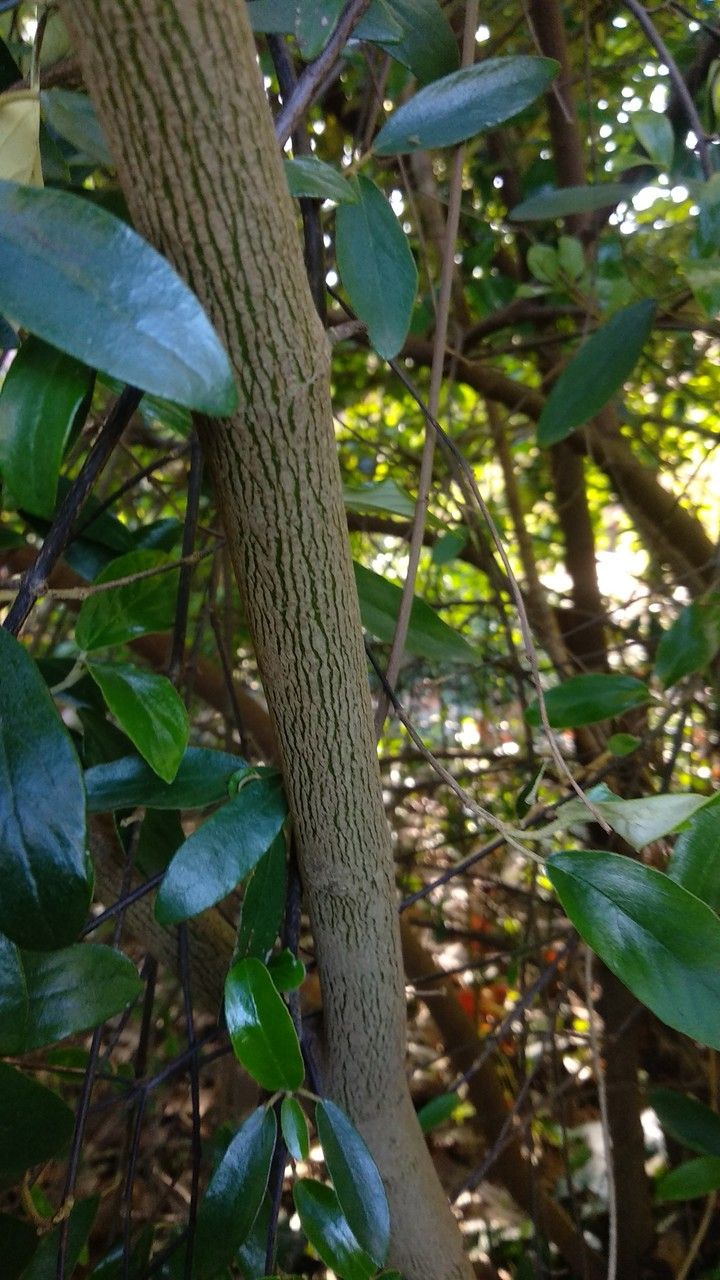
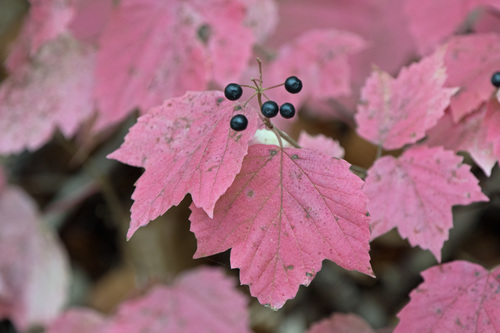
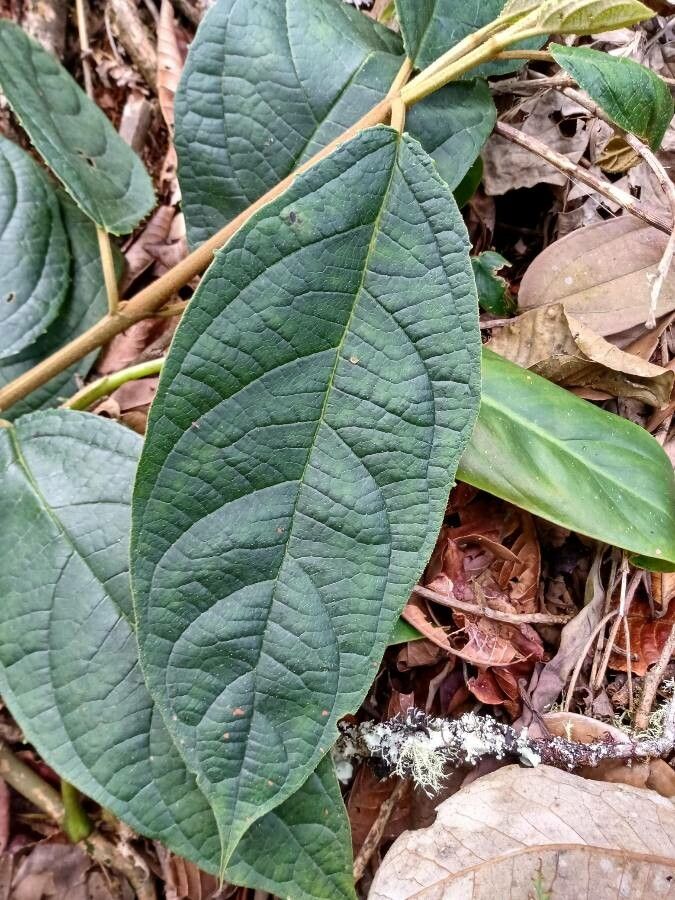
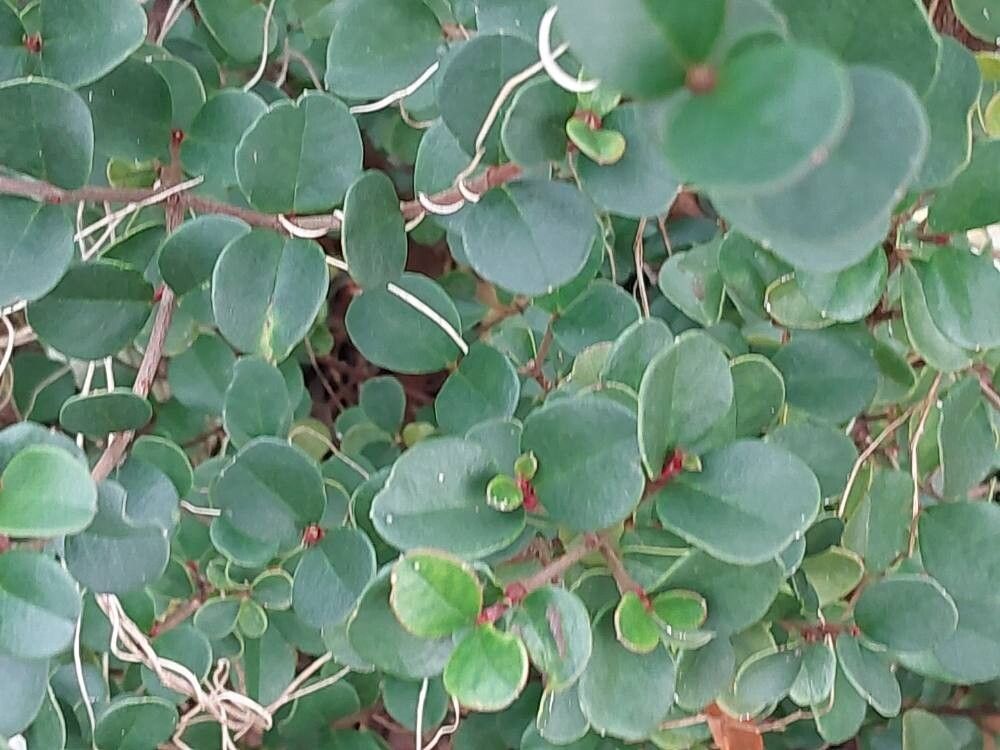
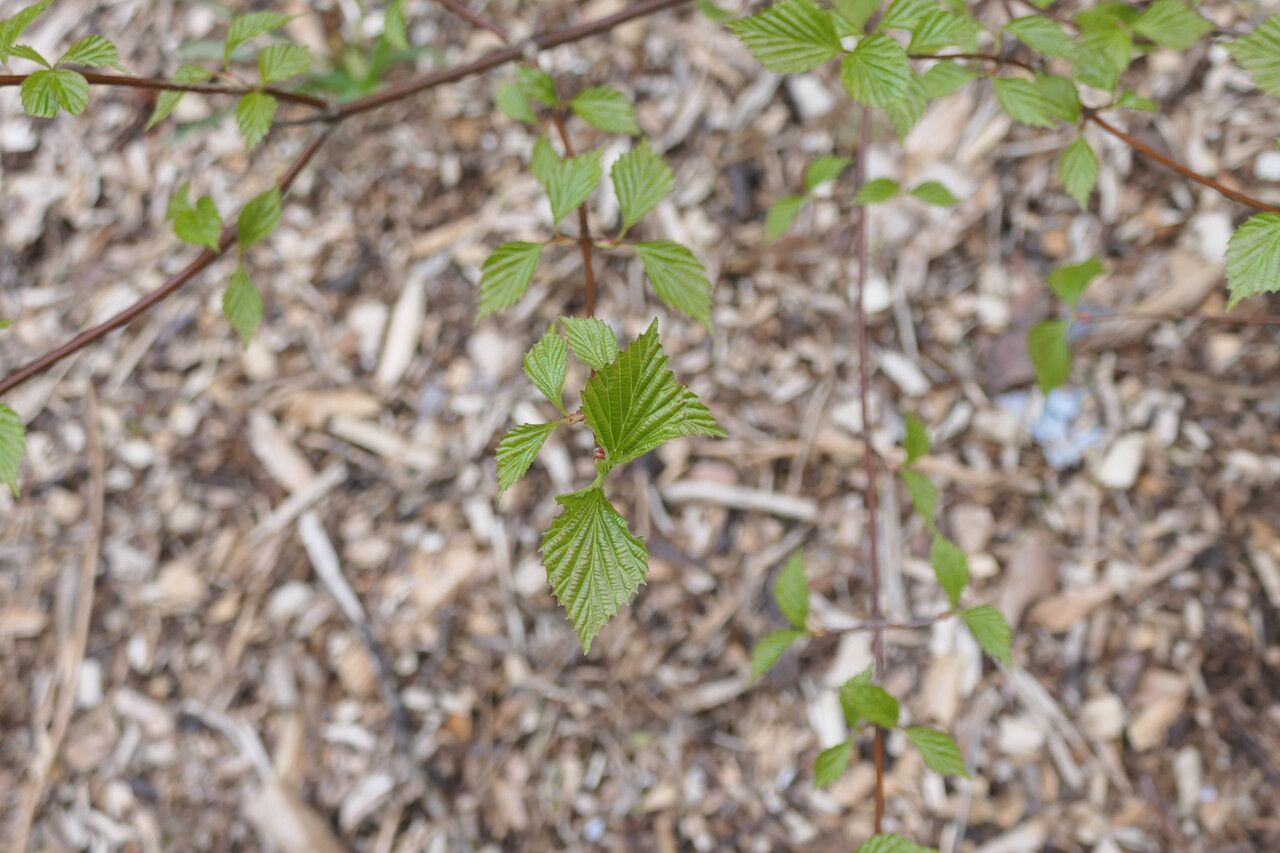
Viburnum utile, the service viburnum, is a species of flowering plant in the family Viburnaceae, native to central and southern China. A leggy evergreen shrub reaching 4 to 8 ft (1.2 to 2.4 m), it is rarely found in commerce. Instead, its chief utility has been as a parent to viburnum hybrids, including Viburnum × burkwoodii (with V. carlesii) and Viburnum × pragense (with V. rhytidophyllum). The V. × burkwoodii cultivars 'Mohawk' and 'Park Farm Hybrid', and the V. × pragense cultivar 'Pragense' have all gained the Royal Horticultural Society's Award of Garden Merit.
Service viburnum is resistant to disease and typically not susceptible to illnesses. In terms of care, this plant is fairly low maintenance. When planted outdoors it needs little watering, and larger plants usually do not require pruning. Smaller plants, however, should be pruned after they have bloomed. Service viburnum is suitable for anyone with an outdoor space, such as a garden or deck, and does not require much experience in plant care.
How to keep Viburnum Utile.
Light
Service viburnum is native to habitats like forest understories and rocky areas, where it grows in naturally shaded conditions. It prefers partial sun but is able to adapt to full sun or full shade, demonstrating its versatile and hardy nature.
Water
Service viburnum thrives in moderate humidity and requires watering every one to two weeks for optimal health. As an evergreen, it retains its leaves year-round, which means it needs a consistent water supply even during non-growing seasons.
Temperature
Service viburnum is highly adaptable to a wide range of climates, from blistering summers to frosty winters. Still, it has an ideal temperature range for development. If temperatures become too high, the plant can experience heat and humidity stress, which may lead to its death. In areas where temperatures approach the minimum of its cold tolerance, providing insulation to protect the plant is necessary.
Fertilizer
Timing is essential for fertilizing Service viburnum. Begin fertilizing in early spring and continue with monthly applications until early summer. Fertilizer encourages lovely blooms and supplies energy during both dormant and active growth periods.
Pruning
To ensure your viburnum thrives, prune it in early spring. This enhances air circulation and helps shape the plant. Be sure to remove any dead or crossing branches, and use clean, sharp tools to prevent the spread of disease. Regular trimming will maintain a compact form and promote healthy growth and flowering before the growing season begins.
Botanical profile.
- Plant Type
- Shrub
- Life Cycle
- Perennial
- Genus
- Viburnum
- Family
- Viburnaceae
- Hardiness Zone
- 6-9
- Mature Height
- 1.22 m to 2.44 m
- Mature Spread
- 1.22 m to 2.13 m
- Leaf Color
- Dark Green, Gray
- Leaf Type
- Deciduous
- Flower Color
- White
- Flower Size
- 2.54 cm
- Bloom Time
- Mid spring, Late spring
- Planting Time
- Spring, Summer, Autumn
- Harvest Time
- Late summer, Early fall, Mid fall
- Native Area
- China
Reader questions.
What are the sunlight requirements for Service Viburnum?
Service Viburnum (Viburnum utile) thrives in specific sunlight conditions to ensure its growth and happiness. It requires 'Full sun' conditions, which means it should receive above 6 hours of sunlight daily. For those areas that get a bit less sunlight, 'Partial sun' conditions are also suitable, with the plant receiving about 3-6 hours of sunlight. It's important to observe your garden throughout the day to determine spots that offer the perfect balance of light and shade, as the right amount of sunlight is crucial for the well-being of your Service Viburnum.