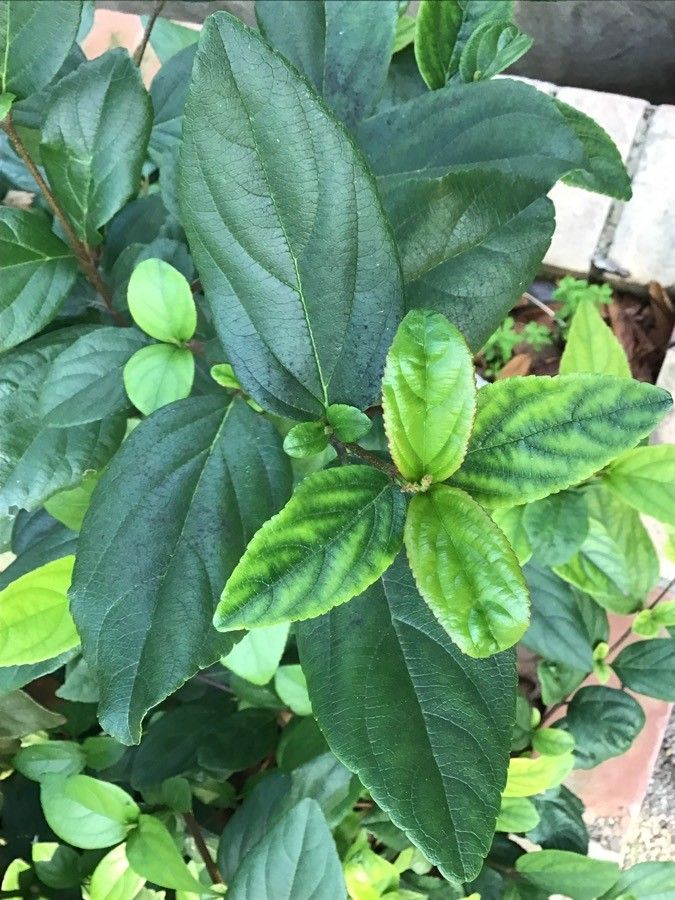
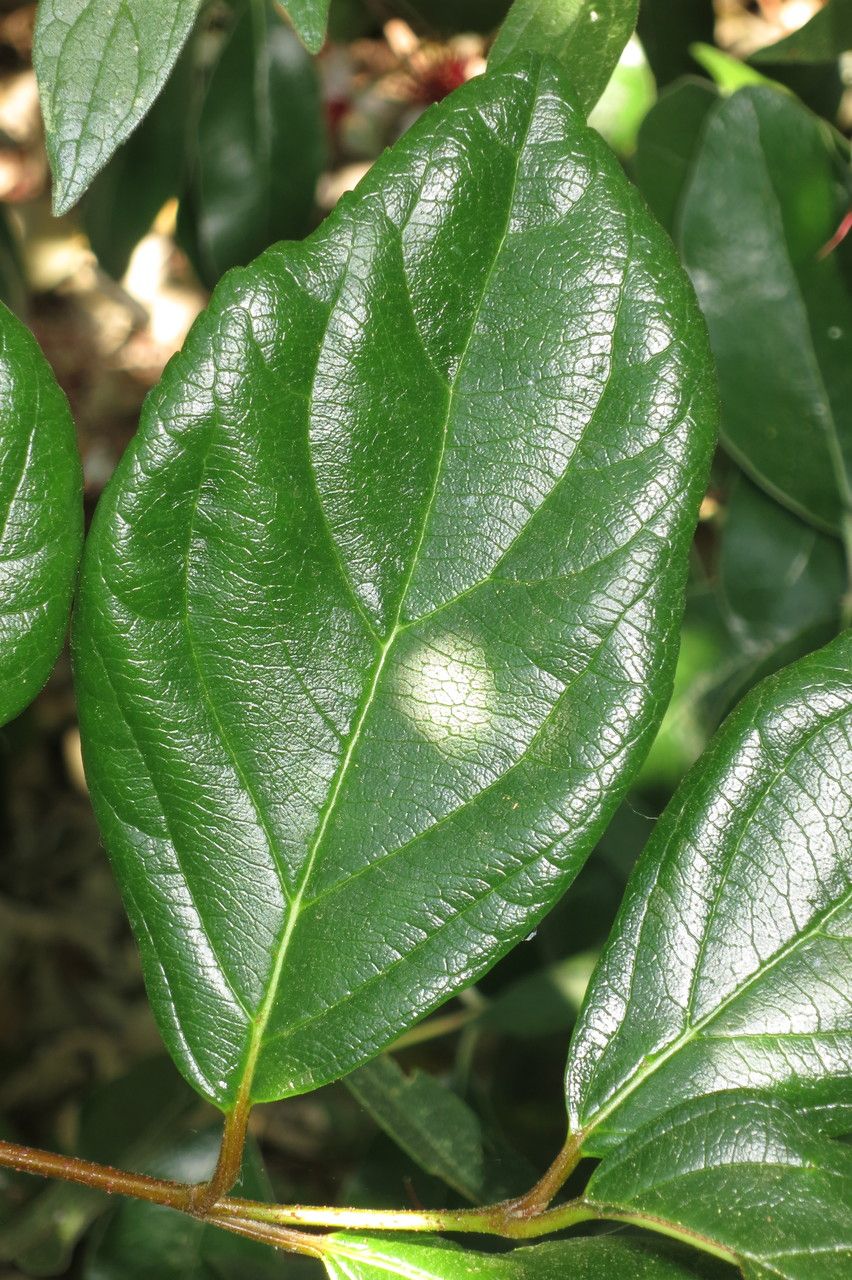
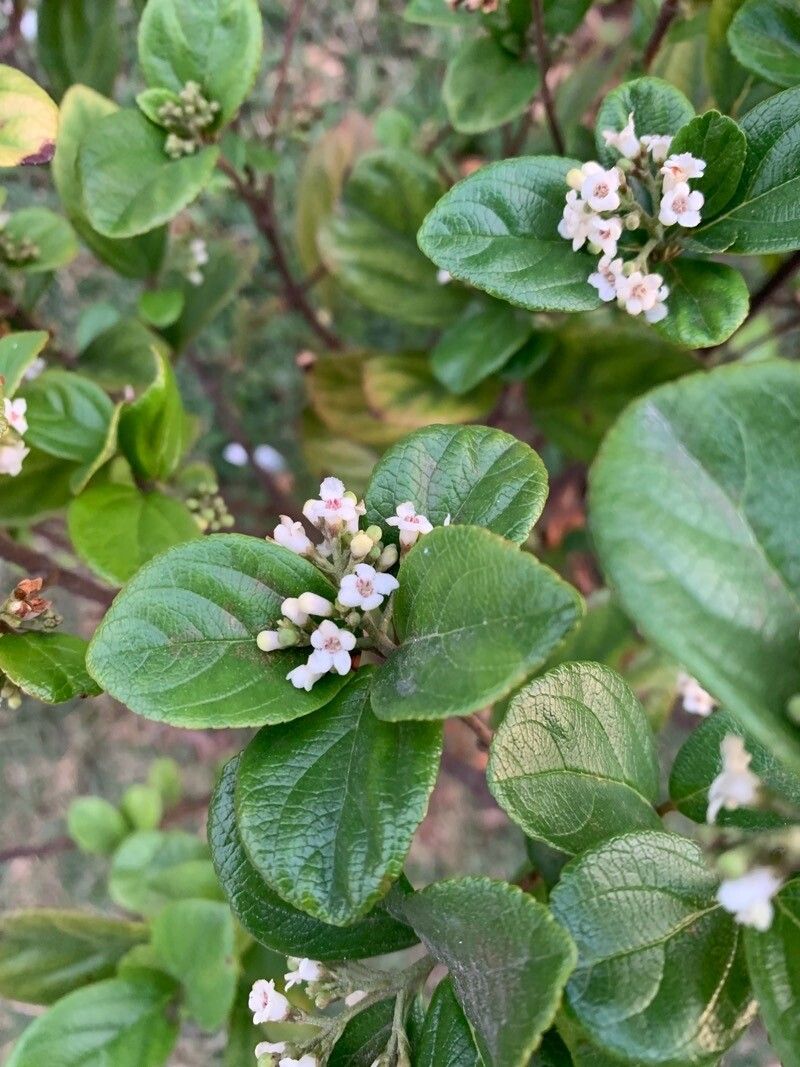
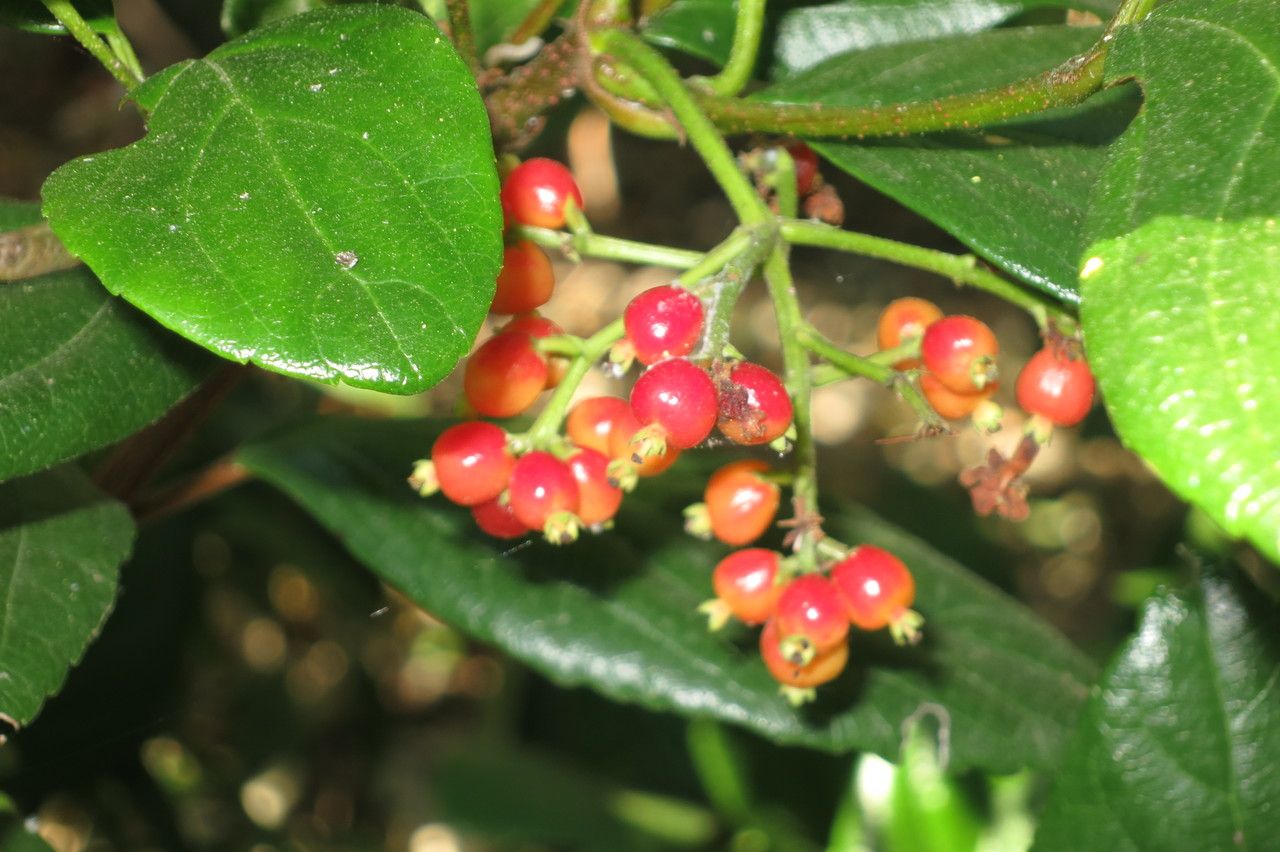
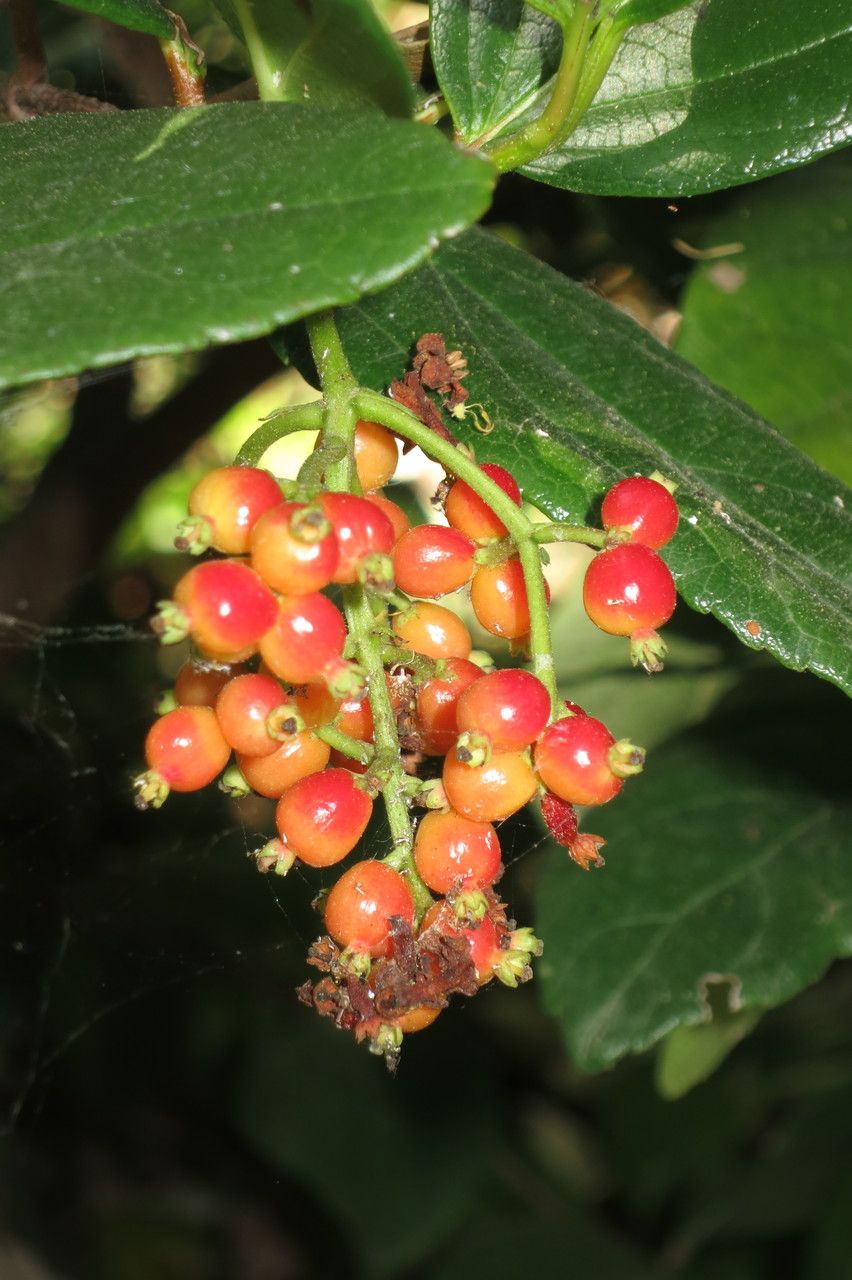
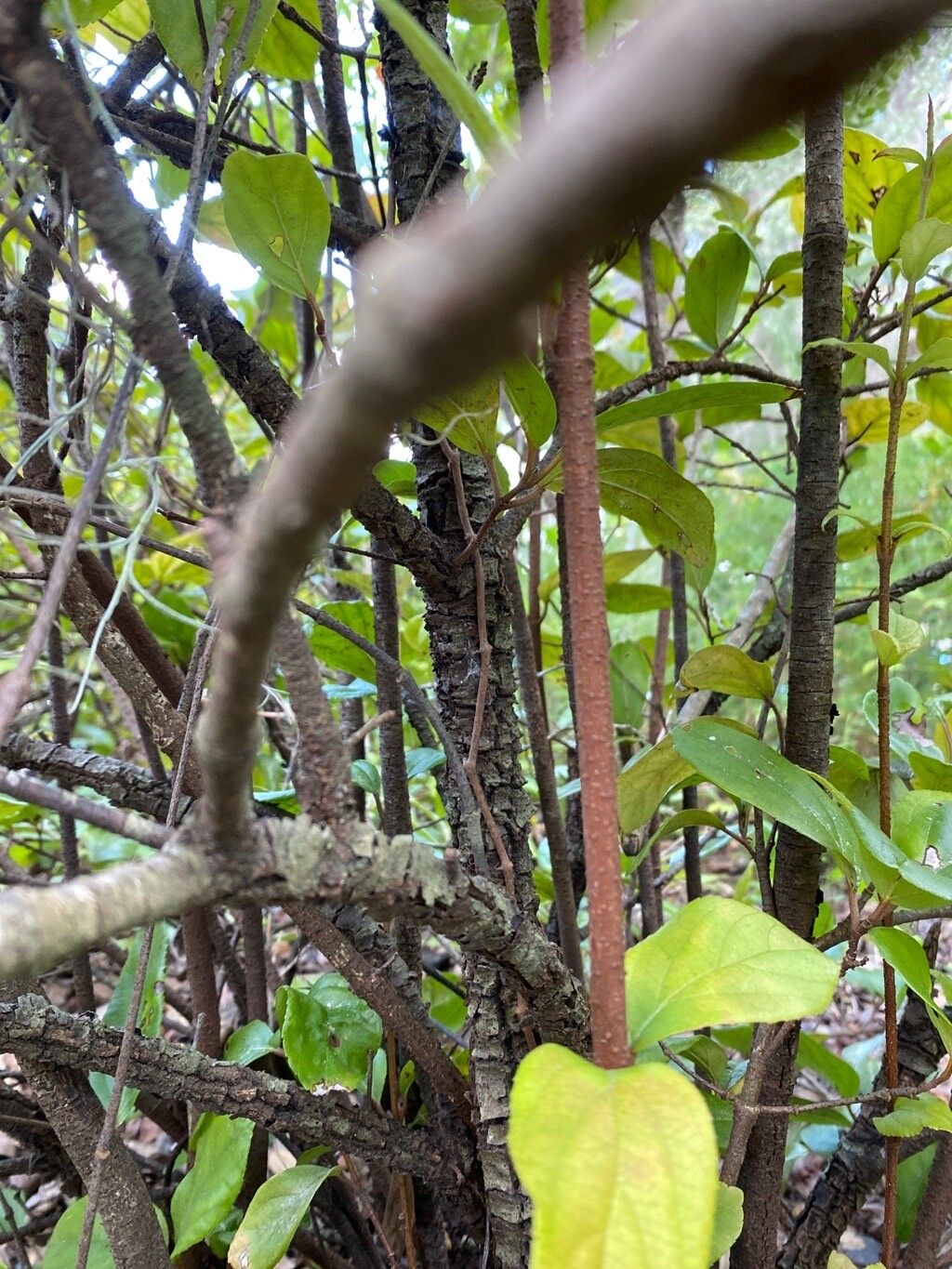
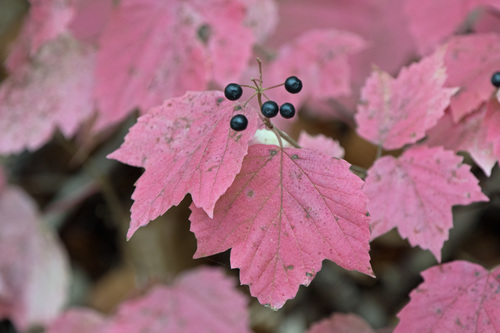
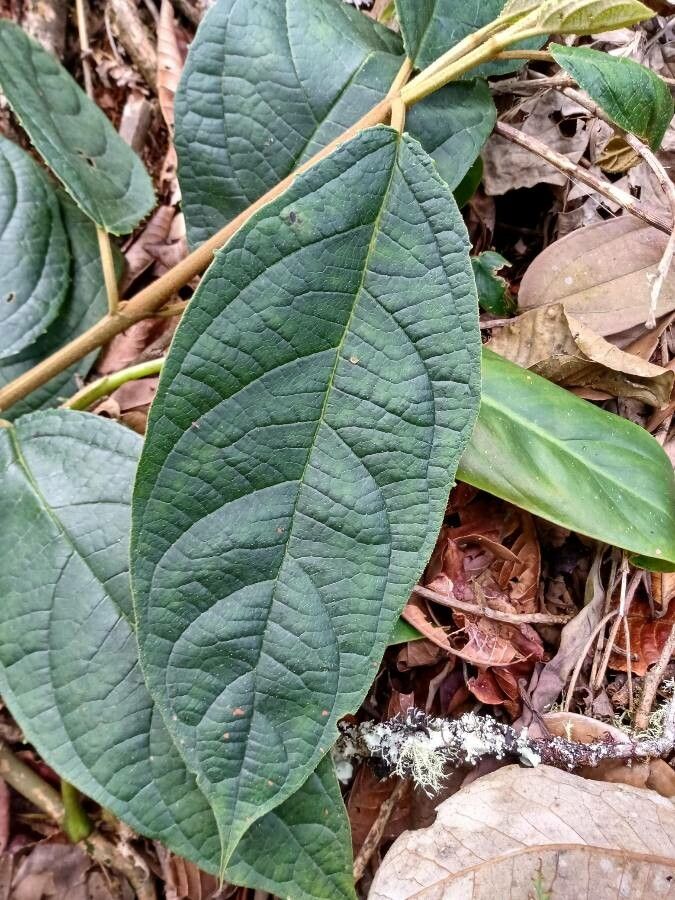
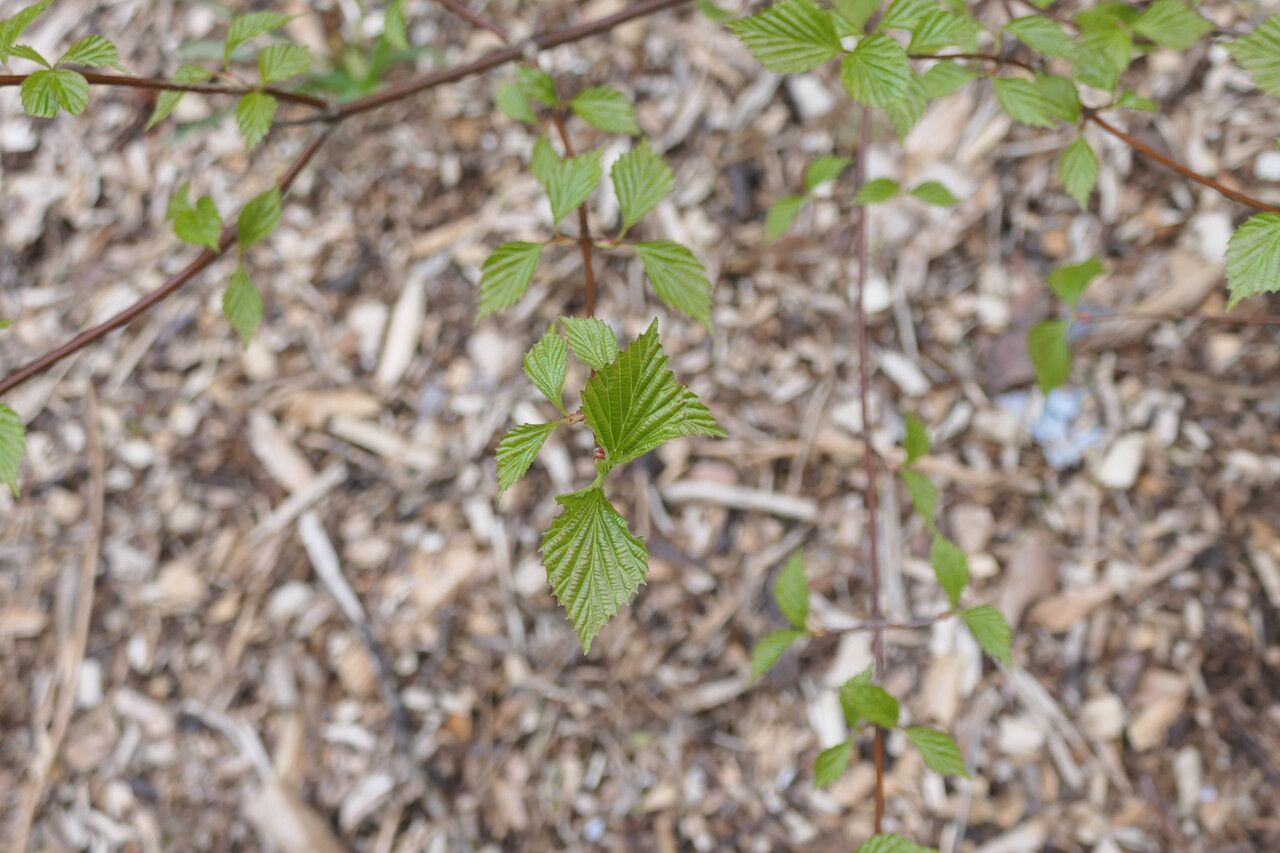
Viburnum suspensum, commonly called Sandankwa viburnum, is a compact, perennial shrub, native to Japan. It grows up to 3.7 m in height.The coarse leaves are dark green and densely cover the shrub. They are oval with serrated edges about 3.5 inches (8.9 cm) long and 2 inches (5 cm) wide and are held oppositely on rough textured, dark brown stems. Small tubular flowers are borne on the ends of new branches in the spring, and sporadically appear in the summer. They are white to pale pink, followed by small red berries in the fall that attract wildlife.
Sandankwa viburnum is disease-resistant and, overall, not prone to illness. Care-wise, the plant is fairly low maintenance. Planted outdoors it needs only minimal watering, and larger specimens usually do not require pruning. Smaller plants, however, should be trimmed after they finish blooming. Sandankwa viburnum is appropriate for anyone with an outdoor area, such as a garden or deck, and does not demand extensive care experience.
How to keep Viburnum Suspensum.
Light
Sandankwa viburnum grows best in locations with moderate sunlight but can also establish in areas fully exposed to the sun. The plant needs light for healthy development. Its growth stages do not slightly vary in their sunlight requirements. Originating from the forest understory, sandankwa viburnum's growth is endangered by either too little or too much sun exposure.
Water
Sandankwa viburnum thrives in moderately humid, subtropical regions and can adapt to occasional drought. It prefers consistent moisture and needs watering every 1-2 weeks, allowing the soil to dry slightly between waterings. Typically grown outdoors, it benefits from mulching, which helps retain moisture by mimicking the leaf litter of its natural habitat.
Temperature
Sandankwa viburnum originates from temperate regions and thrives in temperatures of 59 to 95 °F (15 to 35 °C). To replicate its native environment, keep temperatures within that range and adjust them during peak winter or summer as needed.
Fertilizer
Applying fertilizer at the right time is essential for Sandankwa viburnum. Begin fertilizing in early spring and continue every month through early summer. Fertilizer promotes attractive blooms and supplies energy both during dormancy and in periods of active growth.
Pruning
Pruning your Sandankwa viburnum each year after it blooms in late spring will help it thrive. This annual practice encourages growth, shapes the plant, and improves air circulation. Be sure to carefully remove any dead or crowded branches to prevent damage, promote healthy regrowth, and reduce the risk of disease.
Botanical profile.
- Plant Type
- Shrub
- Life Cycle
- Perennial
- Genus
- Viburnum
- Family
- Viburnaceae
- Hardiness Zone
- 8-10
- Mature Height
- 1.22 m to 1.83 m
- Mature Spread
- 1.83 m to 3.05 m
- Leaf Color
- Green
- Leaf Type
- Evergreen
- Flower Color
- White, Pink
- Flower Size
- 2.54 cm
- Bloom Time
- Late winter, Early spring, Mid spring
- Planting Time
- Spring, Autumn
- Harvest Time
- Late spring, Early summer, Mid summer
- Native Area
- Japan
Other names.
Reader questions.
What is the best way to water Sandankwa viburnum?
Using soaker hoses can be a great way to keep leaves and flowers moist without getting the entire plant wet. To use this method, simply lay the hose around the base of the plant and leave it on for about 30 to 45 minutes. Make sure the soil becomes moist, but not overly saturated. Another option is to use drip feeders to keep the plant continuously hydrated throughout the day. If you have a Sandankwa viburnum planted in a pot, it's best to water it using a watering can. Wait until you see water dripping out of the bottom of the pot to ensure that the roots are well-watered. Using a portable watering can allows you to easily reach the soil and thoroughly penetrate the roots, promoting better growth.
Why is it necessary to put fertilizer on my Sandankwa viburnum plant?
Fertilizing your Sandankwa viburnum is important for several reasons. Firstly, it helps the plant produce beautiful blooms. It is especially effective to fertilize in early spring to ensure excellent flowers during that season. Additionally, fertilizer provides the plant with the energy it needs during dormant growth phases. By giving your Sandankwa viburnum extra nutrients in the fall or late spring, it will have more energy stored for active growth.
How much sunlight does Sandankwa viburnum need to grow?
Sandankwa viburnum needs 3-6 hours of direct sunlight daily to thrive. It should also have some shade during the hottest parts of the day to avoid sun damage. The best sunlight for Sandankwa viburnum is in the morning, but it can handle some afternoon sun as long as it's not too hot. To achieve the right amount of sunlight, consider planting the viburnum in a partially sunny area, like under a tree or on the east side of a building.
What temperature is best for Sandankwa viburnum?
Plants can be affected by colder temperatures when the air around them becomes chilly. While they can warm up when exposed to sunlight, this is not the case during winter. The optimal temperature range for the Sandankwa viburnum is typically between 70 to 85°F (21 to 30°C). They might tolerate temperatures as low as 20 to 30°F (-6 to 0°C), or even 15°F (-10°C), but prolonged exposure to such cold can cause frost damage. It is crucial to ensure maximum temperatures stay within the 70 to 85°F (21 to 30°C) range. Additionally, remember to occasionally spray them with water and provide some shade to prevent wilting.
What happens if I give Sandankwa viburnum too much or too little water?
If you have overwatered your Sandankwa viburnum, it's important to take a step back and prevent further damage. Luckily, these plants are hardy and have a good chance of surviving. Allow the plant to dry out by stopping watering it, as the roots don't tolerate sitting in water for extended periods of time. Aeration can help in this process. Symptoms of overwatering can include the premature falling of yellow leaves, fewer flowers, and misshapen buds. In severe cases, the plant may have wilted and brown leaves. Over time, overwatering can lead to root rot. Symptoms of underwatering can be similar. If your Sandankwa viburnum is wilting, it could be a sign of underwatering. Test the soil's moisture level by sticking your finger into it. If it feels too dry, it means the plant is dehydrated. In such cases, you may need to water it in the evening. Always check the soil's dryness and stick to a regular watering schedule, preferably in the morning.
When should I fertilize my Sandankwa viburnum plant?
To effectively fertilize Sandankwa viburnum, timing is crucial. It's important to avoid fertilizing too early while the plant is still dormant as this can result in ineffective use of the fertilizer, causing it to be washed away by rainwater. To ensure optimal growth, the first application of fertilizer should be made in the early spring, followed by monthly fertilization until early summer.
What will happen if Sandankwa viburnum doesn't get enough sunlight?
To prevent sun damage, ensure that Sandankwa viburnum receives some shade during the hottest times of the day. If the plant is exposed to excessive direct sunlight, its leaves may become yellow, dry, or burn. Additionally, the plant may wilt or appear stunted. You can provide shade by using a shade cloth or positioning Sandankwa viburnum near taller plants that will naturally provide some shade.
Do I need to change the temperature for Sandankwa viburnum as it grows?
To ensure optimal growth for Sandankwa viburnum, it is important to research and understand the appropriate temperature requirements. While some growers may consider adjusting the plants' thermostats to save on heating and cooling costs, it is crucial to recognize that temperature can impact various factors such as flowering, pest control, and overall plant quality. In winter, certain species may enter a dormant state, causing growth to stop at a specific temperature threshold. As the seasons change and the base temperature increases, the Sandankwa viburnum will exhibit faster growth. It is worth noting that species naturally found in warmer climates have higher optimal temperatures compared to those thriving in cooler environments. Exposing Sandankwa viburnum seeds to cool temperatures can lead to inconsistencies and delays in growth. During the flowering phase, you may consider lowering the temperature, but it should not be altered during other stages. Cooler night temperatures also result in reduced water requirements, so it is necessary to adjust irrigation accordingly.
How often should I give water to Sandankwa viburnum?
To properly care for the Sandankwa viburnum, it is recommended to water it deeply two to three times a week. If you live in a hot climate, it may need to be watered more frequently. It requires average amounts of water and prefers moist but well-drained soil. A good way to gauge when to water the plant is by checking the soil moisture level. If the top 2-4 inches of soil are dry, it is a good indication that watering is needed. If the plant is outdoor, it can be watered 1-2 times a week, taking into account the additional moisture it receives from rainwater.
When is it not a good time to add fertilizer to my Sandankwa viburnum?
To ensure optimal growth and blooming of the Sandankwa viburnum, it is important to be mindful of the following fertilizer guidelines. Firstly, avoid using a fertilizer with high nitrogen content, as this can result in excessive leaf development but fewer blooms. Instead, select a fertilizer that contains lower levels of nitrogen compared to other nutrients. Additionally, refrain from fertilizing the plant after early autumn, as this can promote excessive growth just before the winter season. Moreover, it is advisable to avoid fertilizing the Sandankwa viburnum during hot and dry periods, as dry soil is less effective at delivering nutrients compared to moist soil. Fertilization during this time may also stimulate growth, which requires more water that may not be readily available. Ideally, fertilize the plant during cooler temperatures earlier in the season. Lastly, be aware that the Sandankwa viburnum can absorb fertilizer applied to nearby plants or lawns, so take care to avoid inadvertently providing the tree with an excessive dose of fertilizer.
If Sandankwa viburnum gets too much sunlight, what will happen?
When Sandankwa viburnum is lacking sunlight, it can become tall and thin with not much foliage. The leaves may turn yellow or pale green, which means the plant isn't getting enough sunlight to produce chlorophyll. To fix this, you can try moving the Sandankwa viburnum to a sunnier spot or trimming nearby foliage to let more light reach the plant.
How do I keep Sandankwa viburnum warm during cold seasons?
To help the Sandankwa viburnum adapt to colder temperatures, stop fertilizing the plant to prevent new growth and let the existing ones become more resilient. In order to provide extra protection from the cold, you can create structures like cages or trellises around the plant. Another option is to use heat mats to gently warm the soil, as they can maintain an optimal temperature range specifically suitable for the Sandankwa viburnum.