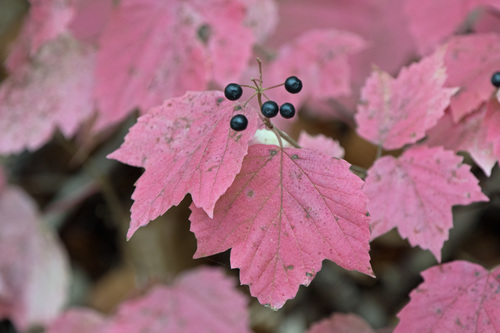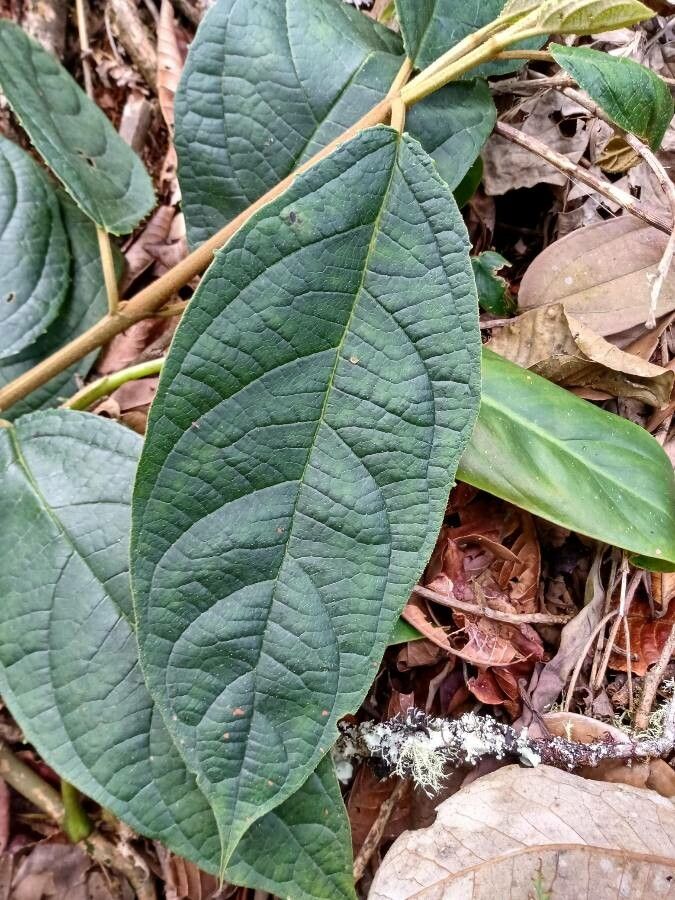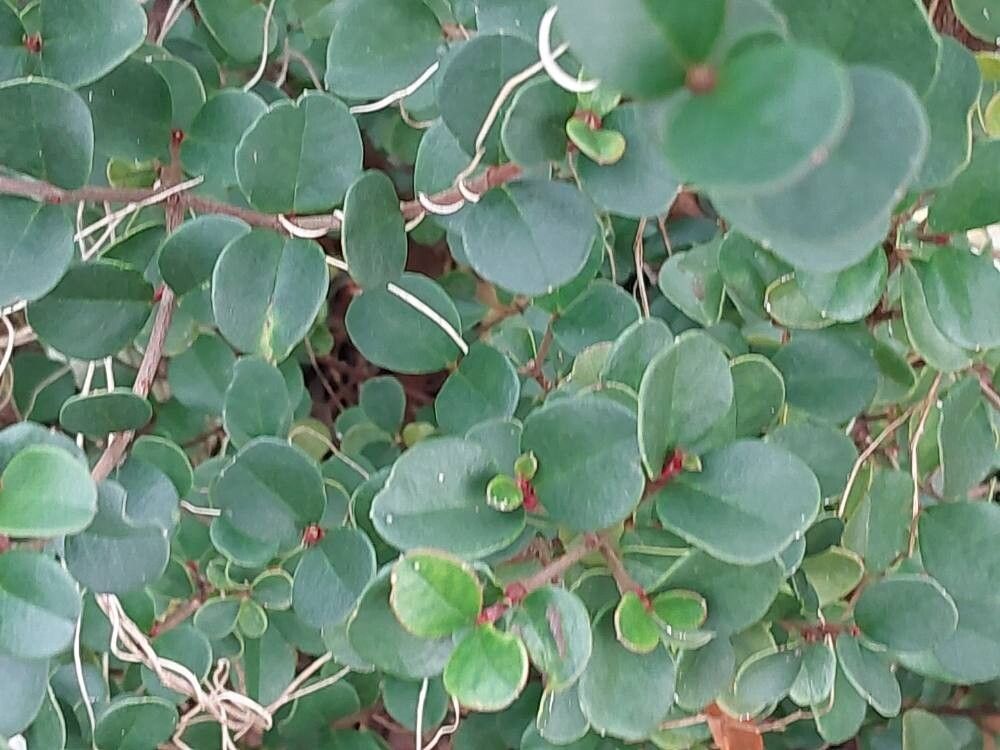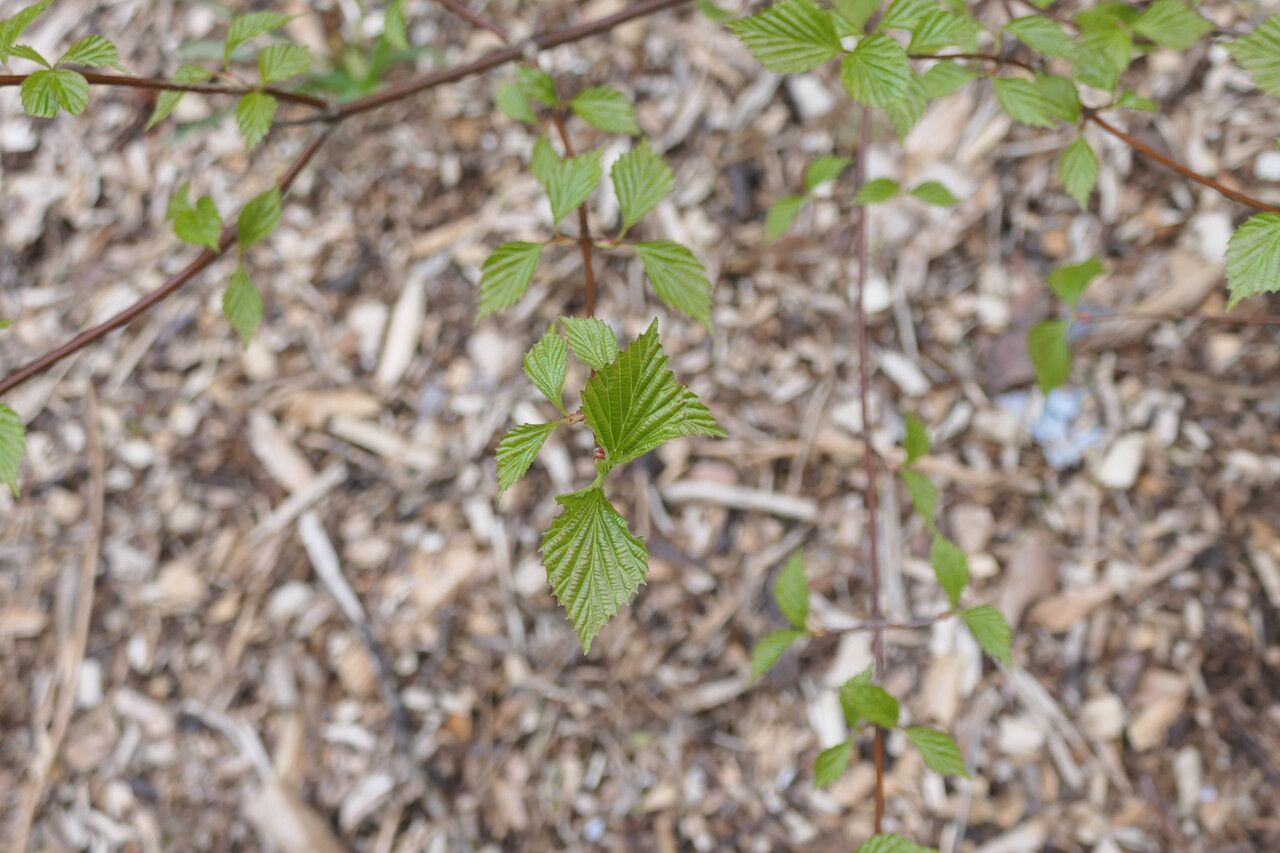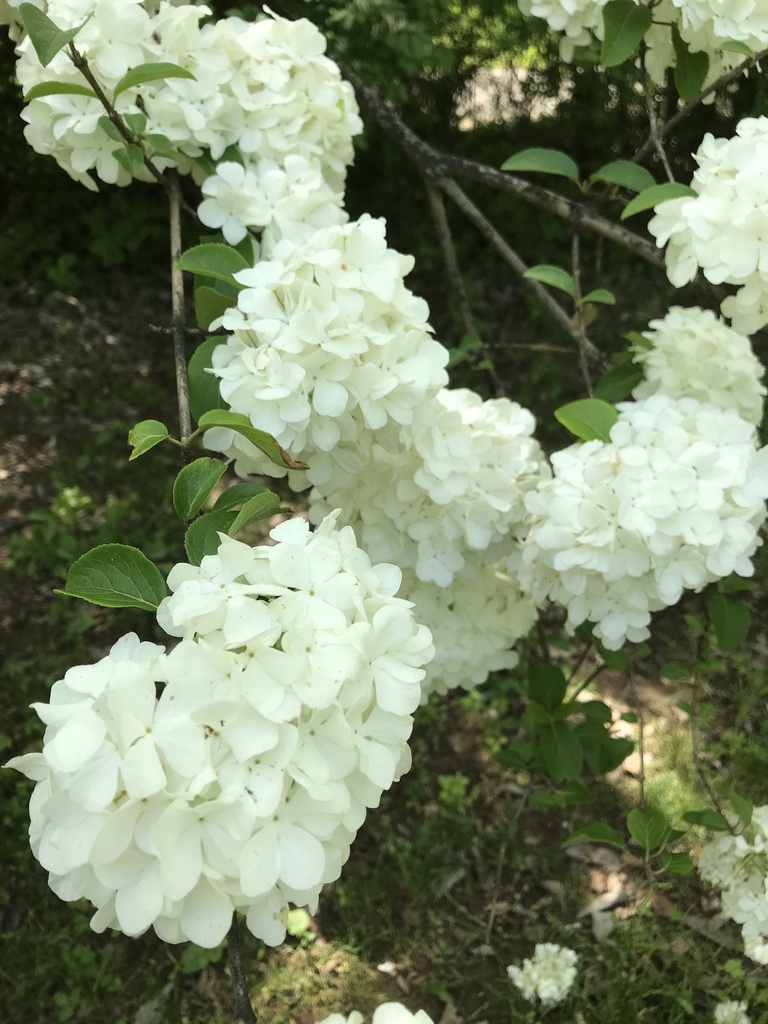
Viburnum macrocephalum, commonly known as Chinese snowball, is a deciduous shrub in the Adoxaceae family. Native to China, it is widely cultivated in gardens and parks around the world for its striking flowers. The plant can grow up to 10 feet tall and wide, forming a rounded shape.
The leaves of Viburnum macrocephalum are dark green, glossy, and ovate with serrated edges. Its large clusters of white or pinkish-white flowers bloom in late spring or early summer, reaching up to 8 inches across and emitting a sweet fragrance.
This shrub prefers full sun or partial shade and thrives in well-drained soil rich in organic matter. It requires regular watering during the growing season but can tolerate some drought once established.
Viburnum macrocephalum is popular as an ornamental shrub because of its attractive foliage and showy flowers. Its dense growth also provides habitat for birds and other wildlife.
Overall, Viburnum macrocephalum is an excellent choice for gardeners seeking a low-maintenance shrub that enhances landscape beauty while offering ecological benefits.
Chinese snowball has strong disease resistance and is generally not susceptible to illnesses. In terms of care, this plant is fairly low-maintenance. When grown outdoors it needs little watering, and mature plants typically do not require pruning. However, smaller plants should be pruned after they have finished blooming. The Chinese snowball is well suited to anyone with an outdoor area, such as a garden or deck, and does not require extensive plant-care experience.
How to keep Viburnum Macrocephalum.
Light
The Chinese snowball requires a generous amount of light each day to reinforce its growth. It needs the same level of light throughout its different growth stages. Although it comes from sunny environments, it can also cope in areas with moderate sunlight. Nevertheless, too much or too little light can negatively impact its health.
Water
The Chinese snowball is moderately drought-tolerant and thrives when the soil is kept consistently moist. Water it every 1-2 weeks, making sure not to let it dry out completely. As an outdoor plant, its growth depends on the changing seasons and the rainfall they bring, so it needs less additional watering during periods of natural precipitation.
Temperature
Chinese snowball is a temperate plant originally adapted to a moderate climate, favoring temperatures between 50 and 95 °F (10 and 35 ℃). Seasonal adjustments may be necessary to ensure optimal growth within this range.
Fertilizer
Proper timing matters when fertilizing Chinese snowball. Apply fertilizer in early spring and continue monthly until early summer. The fertilizer encourages attractive blooms and supplies energy during both dormant and active growth periods.
Pruning
Prune the Chinese snowball in late spring after it has finished blooming. Begin by removing any dead branches and thinning out some growth to improve air circulation. Carefully shape the plant while avoiding heavy pruning, as this helps preserve blooms for the following year. Performing annual maintenance ensures healthier growth and abundant flowering, resulting in a vibrant display.
Toxicity
According to the ASPCA website, Chinese snowball plants are not hazardous to pets or people. If any portion of the plant is ingested, a mild stomach pain may develop.
Further reading →
The toxicity and danger assessments provided are for reference only. We do not assure their accuracy, so it's crucial not to depend on them. Seek professional advice when necessary for accurate guidance.
Botanical profile.
- Plant Type
- Shrub
- Life Cycle
- Perennial
- Genus
- Viburnum
- Family
- Viburnaceae
- Hardiness Zone
- 6-9
- Mature Height
- 3.96 m
- Mature Spread
- 3.05 m to 3.66 m
- Leaf Color
- Green
- Leaf Type
- Deciduous
- Flower Color
- White
- Flower Size
- 2.54 cm to 7.62 cm
- Bloom Time
- Mid spring, Late spring, Early summer
- Planting Time
- Spring, Autumn
- Harvest Time
- Mid summer
- Native Area
- China
Other names.
Reader questions.
How should I water Chinese snowball plants?
Soaker hoses are a great method for keeping moisture off of leaves and flowers. They deliver water efficiently at the base of the plant without wetting the entire foliage. To use a soaker hose, lay it around the plant and leave it on for 30-45 minutes. Check the soil to ensure it is moist but not too wet. Attach a regular hose to the soaker hose and cover with mulch. Alternatively, some people use drip feeders to keep the soil moist throughout the day. If you have a Chinese snowball plant in a pot, use a watering can to water it. Wait until you see water dripping out of the bottom of the pot. Using a watering can allows you to reach the soil and ensure the water penetrates the roots for better growth.
Why should I add fertilizer to my Chinese snowball plant?
Fertilizing a Chinese snowball is important for several reasons. Firstly, it helps the plant produce beautiful blooms. To ensure excellent flowers in the spring, it is best to fertilize in early spring. Additionally, fertilizing provides the plant with energy that is stored in the ground during dormant growth phases. By giving the plant extra nutrients during fall planting or late spring, it can store more energy to use when active growth resumes.
What are the sunlight requirements for a Chinese snowball plant?
The Chinese snowball plant requires a substantial amount of sunlight daily to thrive. Originating from sunny habitats, it performs best in areas where it can receive full sun, which means above 6 hours of sunlight a day, although it can also manage in partial sun, receiving about 3-6 hours of sunlight. It's essential to watch how sunlight moves through your garden to find the ideal spot for your plant, ensuring a balance of light and shade to keep your plant healthy.
What is the suitable climate for Chinese snowball plants?
Chinese snowball (Viburnum macrocephalum) plants are temperate plants originally adapted to moderate climates. They prefer conditions with temperatures ranging from 50 to 95 °F (10 to 35 °C). Although they have strong cold resistance, and special frost protection measures are usually not necessary, during winter, if temperatures are expected to drop below the plant's tolerance limit, measures should be taken to protect it. This includes wrapping the trunk and branches with non-woven fabric or cloth and watering the plant abundantly before the first freeze in autumn to keep the soil moist and protect the plant from drought and water scarcity during winter and early spring.
What do I need to do if I give my Chinese snowball plant too much or too little water?
If you have overwatered your Chinese snowball plant, it's important to take some steps to prevent further damage. Chinese snowball plants are resilient and have a good chance of surviving the overwatering. To help the plant recover, allow it to dry out completely and stop watering it for now. These plants don't tolerate having their roots soaked for extended periods, so it can be beneficial to aerate the soil. Look out for signs of overwatering, such as yellow leaves falling prematurely, fewer flowers, and misshapen buds. In more severe cases, you may notice wilted and brown leaves, which can indicate root rot due to excess moisture. On the other hand, underwatering can cause similar symptoms, such as wilting. Check the soil moisture by sticking your finger into the soil; if it feels too dry, it means the plant is dehydrated, and you may need to water it. Remember to water your Chinese snowball plant in the evening if it needs it, and always check the dryness of the soil before watering according to your regular schedule, usually in the morning.
When should I put fertilizer on my Chinese snowball plant?
To ensure effective fertilization of Chinese snowball, timing is crucial. Applying fertilizer too early, while the Chinese snowball is dormant, will result in its ineffectiveness as it will be washed away by rainwater, leading to waste and pollution. The recommended time to begin fertilizing is during early spring, and it should be continued once a month until early summer.
How can artificial lighting benefit indoor Chinese snowball plants?
For indoor Chinese snowball plants, when natural sunlight is insufficient, especially during winter or in spaces with limited sun exposure, artificial lighting can be a vital solution for optimal growth. It's recommended to use LED lights, which can be customized to provide specific wavelengths needed by the plants. Full sun plants should receive 30-50W/sq ft of artificial light, partial sun plants 20-30W/sq ft, and full shade plants 10-20W/sq ft. The light source should be placed 12-36 inches above the plant, for a duration that mimics natural daylight hours, generally 8-12 hours per day.
How does low temperature affect Chinese snowball plants, and what should be done?
Low temperatures can challenge Chinese snowball plants, which are cold-tolerant and thrive best above their minimum suitable growth temperature. If the winter temperature falls below their growth limit, the branches might not show immediate damage but can become brittle and dry by spring, with no new shoots emerging. To mitigate this, any dead branches that failed to produce new leaves by spring should be pruned away to help the plant focus its energy on healthy growth.
How frequently should I water Chinese snowball?
To properly care for the Chinese snowball plant, watering it deeply two to three times a week is recommended. However, if you live in a hot climate, it may need more frequent watering. This plant has average water needs and prefers moist but well-drained soil. A helpful tip is to check the soil moisture by feeling it with your fingers. If the soil is dry about 2-4 inches deep, it is likely time to water the plant. If the plant is planted outdoors, watering it 1-2 times a week is sufficient. Keep in mind that outdoor plants receive additional moisture from rainwater, so watering less is ideal in these cases.
When is the best time to not add fertilizer to my Chinese snowball?
To help Chinese snowball plants thrive, avoid using fertilizers high in nitrogen, as this can result in excessive leaf growth but limited blooming. Instead, opt for fertilizers with lower nitrogen levels and balanced nutrient composition. It is crucial to refrain from fertilizing these plants in late autumn, as it can cause excessive growth before winter. Similarly, fertilization during hot and dry periods should be avoided, as dry soil is not as efficient at delivering nutrients to the plants. Furthermore, fertilizing during these times can stimulate growth, which requires more water that might not be readily available. It is best to apply fertilizer earlier in the season when temperatures are cooler. Lastly, keep in mind that Chinese snowball plants can absorb fertilizer from nearby plants or lawns, so be careful not to accidentally over-fertilize them.
What are the symptoms of light deficiency in Chinese snowball plants?
When a Chinese snowball plant doesn't receive enough light, it may show several symptoms indicating stress. New leaves might grow smaller than mature ones, the plant could exhibit leggy or sparse growth with longer spaces between leaves or stems, and there might be faster leaf drop as the plant conserves resources. Additionally, growth may slow or stop, new leaves could appear lighter in color or with irregular patterns due to insufficient chlorophyll, and the plant might develop chlorosis, where leaves lose their green color and turn yellow. Excessive sunlight can cause sunscald, leaf curling, wilting, and leaf scorching.
What are the effects of high temperature on Chinese snowball plants and how can they be alleviated?
High temperatures can be detrimental to Chinese snowball plants, especially when the mercury climbs above their maximum suitable growth temperature. The signs of heat stress include leaves becoming lighter in color, with dry, withered tips, and increased susceptibility to sunburn. To help the plant cope, trim away the sunburned and dried-up parts, move the plant to a shaded location or create shade with a cloth during the hottest parts of the day, and ensure the soil remains moist by watering in the morning and evening.