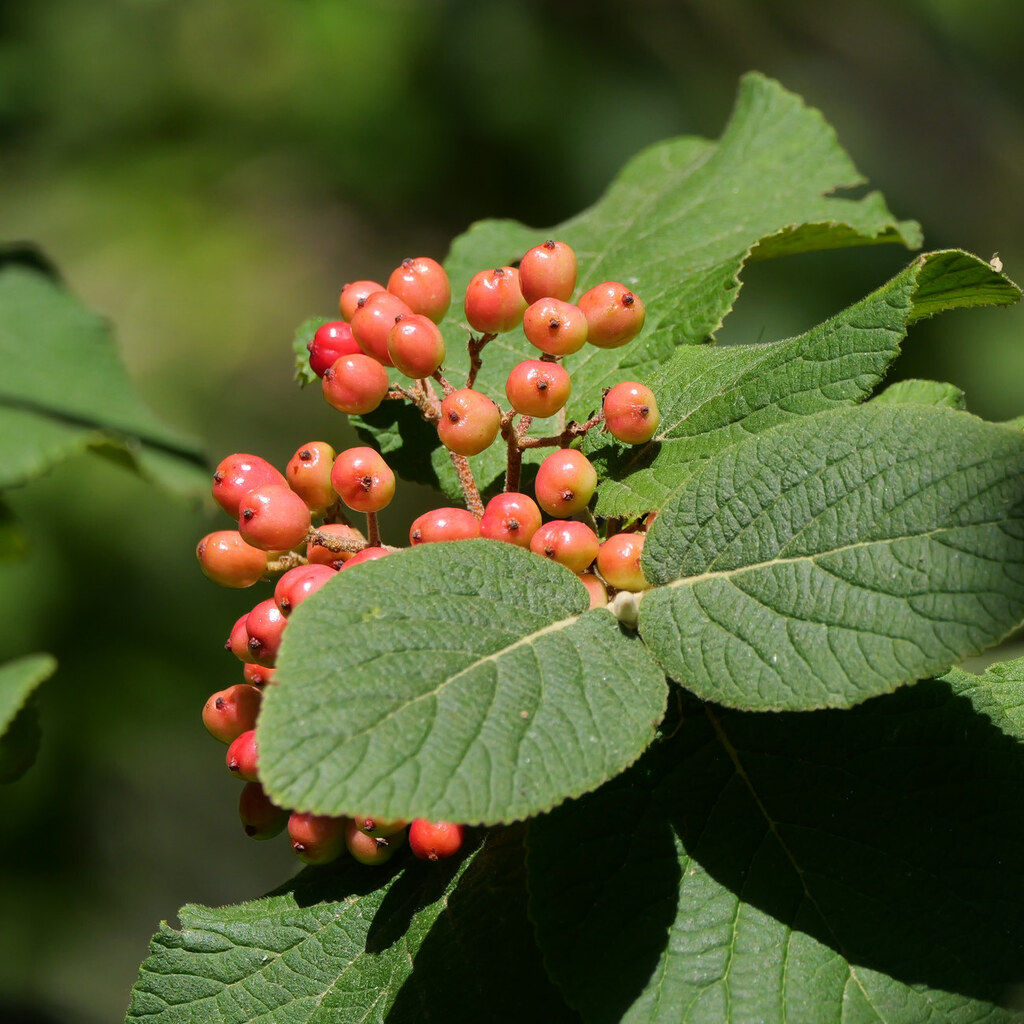
Viburnum lantana, commonly known as the wayfaring tree, is a deciduous shrub that belongs to the Adoxaceae family. Native to Europe and Asia, this plant has been widely cultivated in North America for its ornamental value. It can grow up to 4 meters in height and features a spreading habit with arching branches.
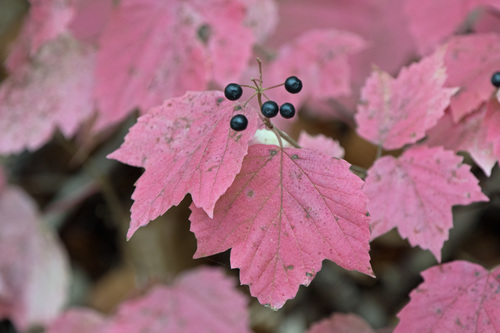
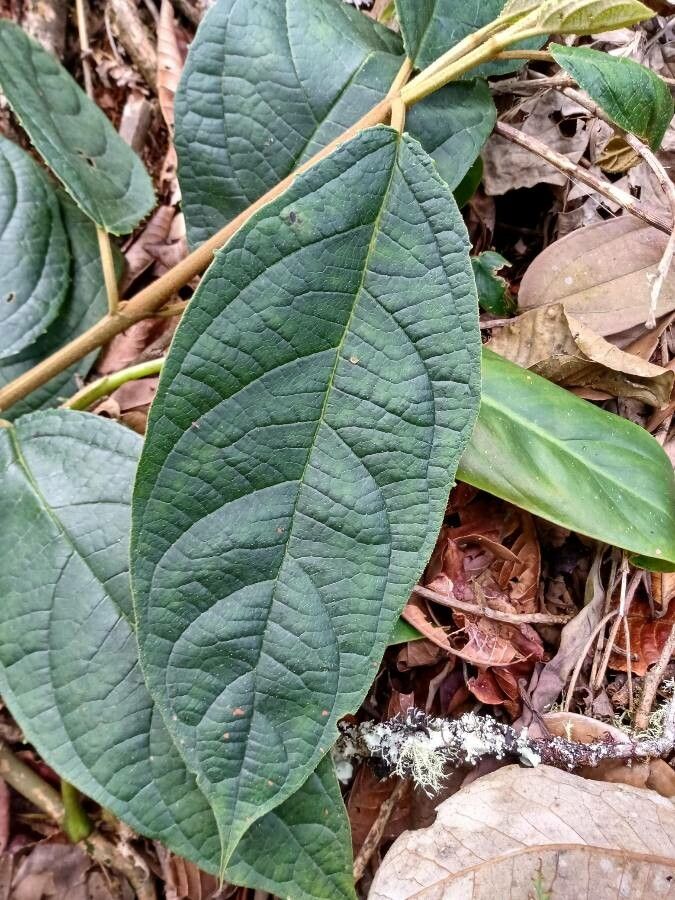
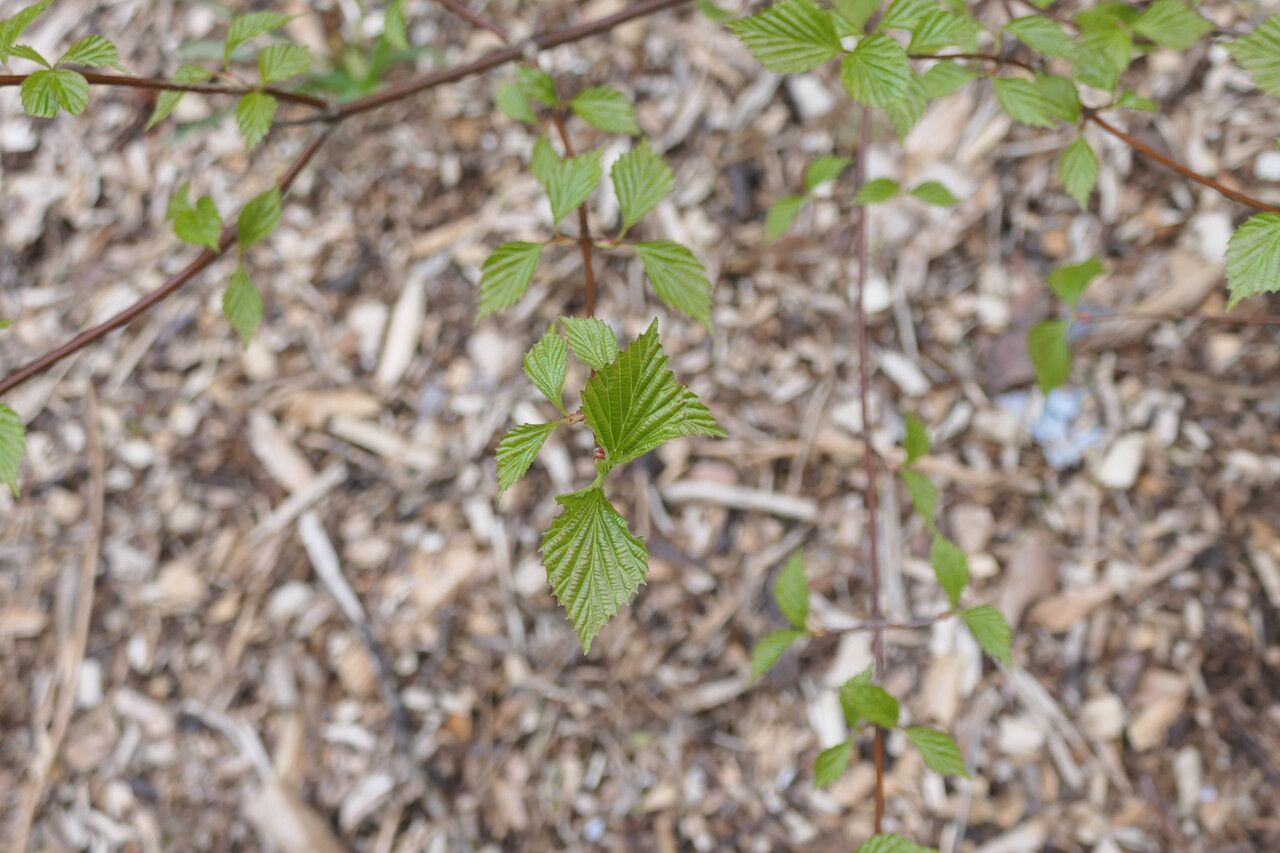
The leaves of Viburnum lantana are dark green and ovate-shaped with serrated edges. Its small, creamy-white flowers bloom in clusters from May to June, followed by red berries that turn black when ripe.
Viburnum lantana thrives in well-drained soil and prefers full sun or partial shade. It is a hardy plant capable of tolerating cold temperatures, though prolonged exposure to frost can cause damage.
The wayfaring tree is a versatile and dependable option for garden borders and hedges. Originally introduced to the United States as an ornamental plant, it has since "escaped" from gardens and become naturalized. In certain areas, it is even regarded as invasive. FUN FACT · FROM THE LIBRARY
Historically, the wayfaring tree has been used for its medicinal properties, particularly its anti-inflammatory benefits. Its bark was traditionally used as an herbal remedy for fever, diarrhea, and dysentery.
In landscaping design, Viburnum lantana is often employed as a hedge or screen due to its dense foliage. Its attractive flowers also make it a popular choice for ornamental gardens and mixed borders.
Overall, Viburnum lantana is an appealing shrub with both medicinal and aesthetic uses, making it a favorite among gardeners worldwide!
The wayfaring tree is known for its white flowers, which emit a scent that tends to divide opinions. Some people find the fragrance reminiscent of lilies, while others consider it unpleasant. True to its name, the wayfaring tree serves as a guide, indicating whether you are on or near a path.
Wayfaring tree is resistant to disease and generally not susceptible to illnesses. In terms of care, this plant is fairly low-maintenance. When grown outdoors it needs only minimal watering, and larger specimens typically do not require pruning. Smaller plants, however, should be pruned after they have finished blooming. Wayfaring tree is appropriate for anyone who has an outdoor area, such as a garden or deck, and does not demand extensive care experience.
How to keep Viburnum Lantana.
Light
The Wayfaring tree flourishes with ample exposure to sunlight, which promotes healthy growth. Native to areas with abundant sun, it can also tolerate places where sunlight is diffused or partially filtered during the day. Too much or too little sun can stunt its growth or produce other negative effects.
Water
The wayfaring tree thrives in temperate regions and prefers well-drained soil with moderate moisture levels. Watering it every 1-2 weeks is ideal, although it can withstand short periods of drought. Being a deciduous plant, the wayfaring tree sheds its leaves annually, which reduces its water requirements during dormancy.
Temperature
The wayfaring tree originates from temperate areas and favors temperatures between 32 to 90 ℉ (0 to 32 ℃). In winter it can tolerate lows of 23 ℉ (-5 ℃) if situated in a sheltered spot or covered with mulch. In summer it does better with afternoon shade and slightly cooler conditions. Overall, it adapts to a variety of temperatures with some adjustments.
Fertilizer
Fertilize your Wayfaring tree in early spring to encourage healthy growth. Regular feeding improves the tree’s overall health, producing vigorous growth, increased resilience to harsh conditions, and enhanced resistance to pests and diseases. Keep to a consistent fertilization schedule for your Wayfaring tree to preserve vibrant foliage with rich color and a lush appearance.
Pruning
The Wayfaring tree is a deciduous shrub known for its dark green leaves, white flowers, and berries that transition from red to black. To keep the shrub healthy and well-shaped, prune it in early spring to remove any dead wood. Be careful not to prune excessively, as the plant blooms on old wood. Light, regular pruning will help enhance the shrub's health and longevity.
Pot & Repot
When repotting a Wayfaring tree, select a pot 1–2 inches (2.5–5.1 cm) larger with ample drainage. Use a well-draining potting mix. Repot in spring or fall, making sure the root ball sits slightly lower than the rim of the flower pot. Water thoroughly after repotting and place it in a warm spot with indirect sunlight.
Botanical profile.
- Plant Type
- Shrub
- Life Cycle
- Perennial
- Genus
- Viburnum
- Family
- Viburnaceae
- Hardiness Zone
- 3-8
- Mature Height
- 3.96 m to 4.88 m
- Mature Spread
- 3.66 m to 4.57 m
- Leaf Color
- Green, Gray, Silver
- Leaf Type
- Deciduous
- Flower Color
- White, Cream
- Flower Size
- 0.51 cm to 0.76 cm
- Bloom Time
- Late spring, Early summer
- Planting Time
- Spring, Autumn
- Harvest Time
- Mid summer
- Native Area
- Turkey, Austria, Czech Republic, Slovakia, Montenegro, Bulgaria, Armenia, Greece, Croatia, Slovenia, Morocco, Ukraine, Serbia, Russia, Hungary, Germany, Italy, Spain, Switzerland, Iran, Albania, United Kingdom, Romania, Algeria, Belgium, France
Other names.
Reader questions.
How should I water the Wayfaring tree?
Soaker hoses are a great way to keep the leaves and flowers moist without getting the entire plant wet. To use a soaker hose, simply lay it around the plant and leave it on for about 30 to 45 minutes. Make sure the soil is moist but not overly wet. You can connect a regular hose to the soaker hose and cover it with mulch for added efficiency. Another option is to use drip feeders to keep the soil consistently moist throughout the day. If you have a Wayfaring tree in a pot, it's best to water it using a watering can. Wait until you see the water dripping down from the bottom of the pots before stopping. Using a portable watering can will allow you to reach the soil and ensure the water penetrates deeply into the roots for better growth.
When is the best time to not fertilize my Wayfaring tree?
There are a few specific times of the year when you should avoid fertilizing your Wayfaring tree. The first is in early and mid-winter when the tree is dormant and doesn't require any nutrients. It's also not advisable to fertilize the tree during late spring and throughout the summer because the weather is hotter and drier, which could have a negative impact on the tree if it's fertilized. To avoid any potential issues, it's best to stick to a fertilization schedule that only includes feeding in early spring and early fall.
What are the sunlight requirements for a Wayfaring tree?
The Wayfaring tree requires generous exposure to sunlight to thrive, which includes being in full sun for more than 6 hours of sunlight or partial sun for about 3-6 hours of sunlight daily. Originating from environments with abundant sun, it can also adapt to areas with scattered or filtered sunlight. It is crucial to monitor the balance of light and shade in your garden to ensure the plant's healthy growth. Too much or too little sunlight may stunt the Wayfaring tree's growth or cause other adverse effects.
What temperatures can the wayfaring tree tolerate and prefer?
The wayfaring tree, or Viburnum lantana, is native to temperate regions, demonstrating a wide range of temperature tolerance. It prefers a temperate environment ranging from 32 to 90°F (0 to 32°C). During winter, it can withstand temperatures as low as 23°F (-5°C), especially when sited in a sheltered location or protected with mulch. In the summer months, it benefits from some afternoon shade and slightly cooler conditions. Remarkably, the wayfaring tree possesses strong cold resistance, meaning that special frost protection measures are not typically necessary. Nonetheless, if temperatures are anticipated to fall below the critical limit for growth, it's advisable to protect the plant by wrapping its trunk and branches with non-woven fabrics or cloth and to water it abundantly before the first freeze, ensuring the soil remains moist and enters winter in a frozen state to prevent drought and water scarcity.
What should I do if I give the Wayfaring tree too much or too little water?
If you have overwatered your Wayfaring tree, it's important to take a step back and prevent any further damage. Fortunately, Wayfaring trees are quite resilient and have a good chance of surviving. Give the plant some time to dry out by stopping watering. It's important to note that these plants do not tolerate having their roots constantly sitting in water, so it may be helpful to aerate the soil. There are several symptoms to look out for if your plant has been overwatered. These can include premature yellowing and falling of leaves, as well as fewer flowers and misshapen buds. In more severe cases, the leaves may become wilted and brown. If overwatering continues for a long period of time, root rot may occur. On the other hand, the symptoms of underwatering can be quite similar. If your Wayfaring tree is wilting, it may be a sign that it is not getting enough water. To check for dehydration, feel the soil by sticking your finger into it. If it feels dry, this is a sign that your plant may need some water. It is possible to underwater as well, so adding water in the evening may be necessary. To ensure proper watering, always check the soil for dryness and follow a regular watering schedule in the morning.
What kind of plant food does my Wayfaring tree need?
A Wayfaring tree primarily requires nitrogen for optimal growth. However, phosphorus and potassium also play important roles, so all three nutrients are needed in decent amounts. A balanced fertilizer like 10-10-10 can be effective, but a more nuanced nutrient ratio can lead to even better results. Usually, fertilizers with slightly higher nitrogen content, like 10-6-4, tend to work well. You can choose between granular or liquid-based fertilizers for application.
How do you use artificial lighting for indoor Wayfaring trees?
Indoor Wayfaring trees require adequate lighting for optimal growth, especially when natural sunlight is insufficient, such as during winter or in less sunny spaces. Artificial lights, like LED lamps, offer a solution by providing the specific wavelengths of light needed by the plants. For full sun plants, 30-50W/sq ft of artificial light is necessary, partial sun plants require 20-30W/sq ft, and full shade plants need 10-20W/sq ft. The light source should be placed 12-36 inches above the plant, mimicking natural sunlight conditions, and plants typically need 8-12 hours of light per day.
How should you care for a wayfaring tree in low temperatures?
The wayfaring tree thrives best in temperatures above its minimum suitable growth temperature and should remain above its tolerable minimum growing temperature during the winter. If temperatures drop below its growth limit, there may not be visible changes immediately; however, come spring, the branches could become brittle, dry, and fail to produce new shoots. To manage this, in the spring, it's recommended to prune any dead branches that have not sprouted new leaves, ensuring the tree maintains its health and vigor despite the colder conditions.
How often should I give water to the Wayfaring tree?
To take care of the Wayfaring tree, it's recommended to water it deeply two to three times a week. However, if you live in a hot climate, it may require more frequent watering. The tree has average water needs and prefers moist but well-drained soil. You can check if it's time to water the plant by feeling the soil, and if it's about 2-4 inches dry, then it's likely in need of water. If the Wayfaring tree is planted outdoors, watering it 1-2 times a week is sufficient. Keep in mind that outdoor plants receive additional moisture from rainwater, so watering less during rainy periods would be ideal.
What will happen if I give too much fertilizer to my Wayfaring tree?
Feeding a Wayfaring tree carries the constant risk of overfertilization. This risk becomes particularly high when you feed the tree at the wrong time, feed it too frequently, or forget to water the soil before feeding. If overfertilization occurs, the tree may develop brown leaves and experience stunted growth. Conversely, excessive fertilizer can also cause the tree to generate an abundance of weak, fragile new growth, which can detract from the tree's overall form and structure.
What are the symptoms of insufficient or excessive sunlight in Wayfaring trees?
Wayfaring trees show various symptoms when they experience insufficient or excessive sunlight. Insufficient light can lead to smaller new leaves, leggy or sparse growth, faster leaf drop, slower or no new growth, and lighter-colored new leaves due to a lack of chlorophyll and essential nutrients. Excessive sunlight might cause chlorosis (leaves losing their green color), sunscald (damaged leaves or stems from intense sunlight), leaf curling (a defense mechanism to reduce surface area exposed to sunlight), wilting (loss of turgor pressure), and leaf scorching (brown, dry edges on leaves). These symptoms indicate the need to adjust the plant's exposure to sunlight.
What steps should be taken if a wayfaring tree experiences high temperatures?
During the summer, it's crucial to keep the wayfaring tree below its maximum suitable growth temperature. If the temperature rises above its tolerable maximum growing temperature, the tree may show signs of stress such as lighter colored leaves, dry and withered tips, and increased susceptibility to sunburn. To mitigate this, trim away sunburned and dried parts of the plant. Relocating the plant to a shaded area during the peak sun hours or using a shade cloth can provide necessary protection. Additionally, watering the tree in the morning and evening will help maintain soil moisture, further supporting the tree's health in high temperatures.