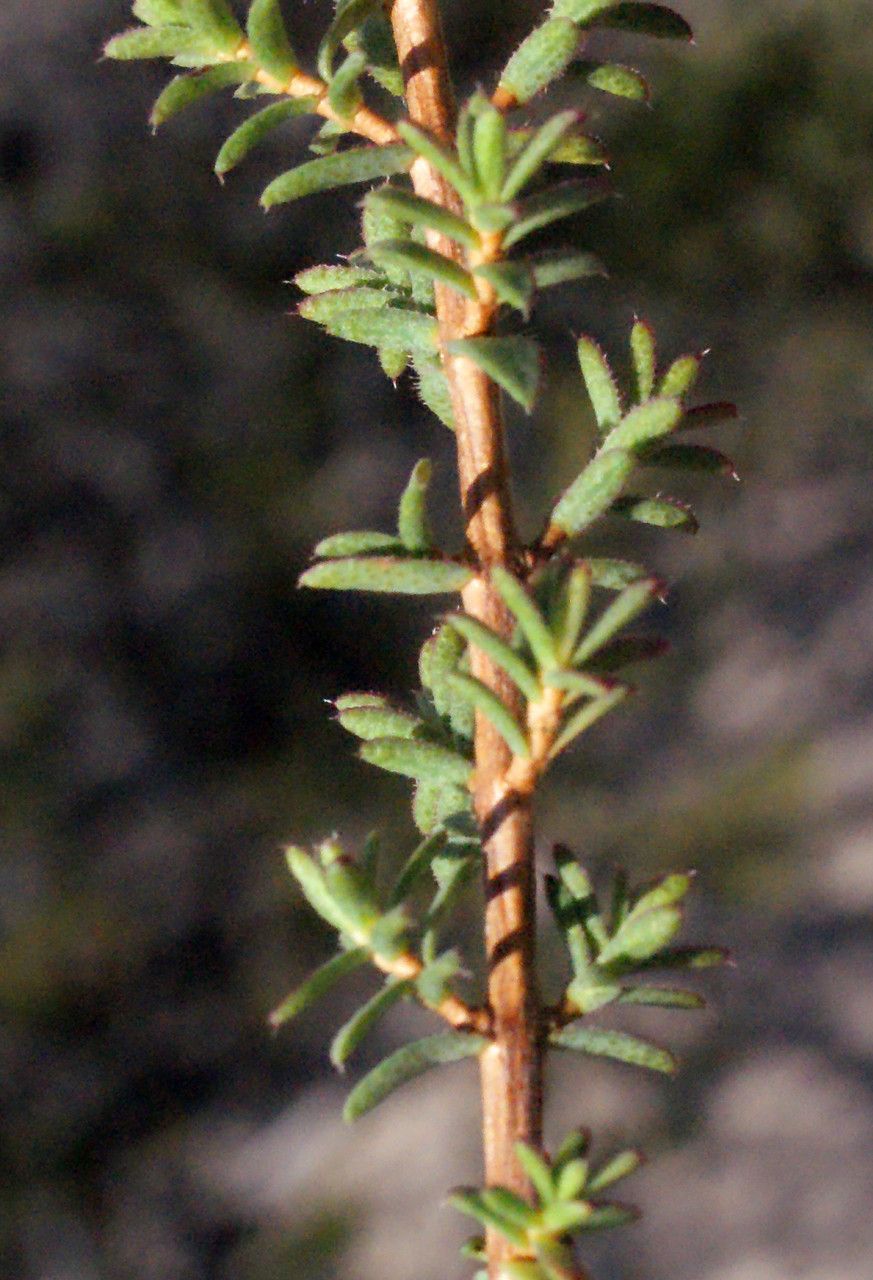
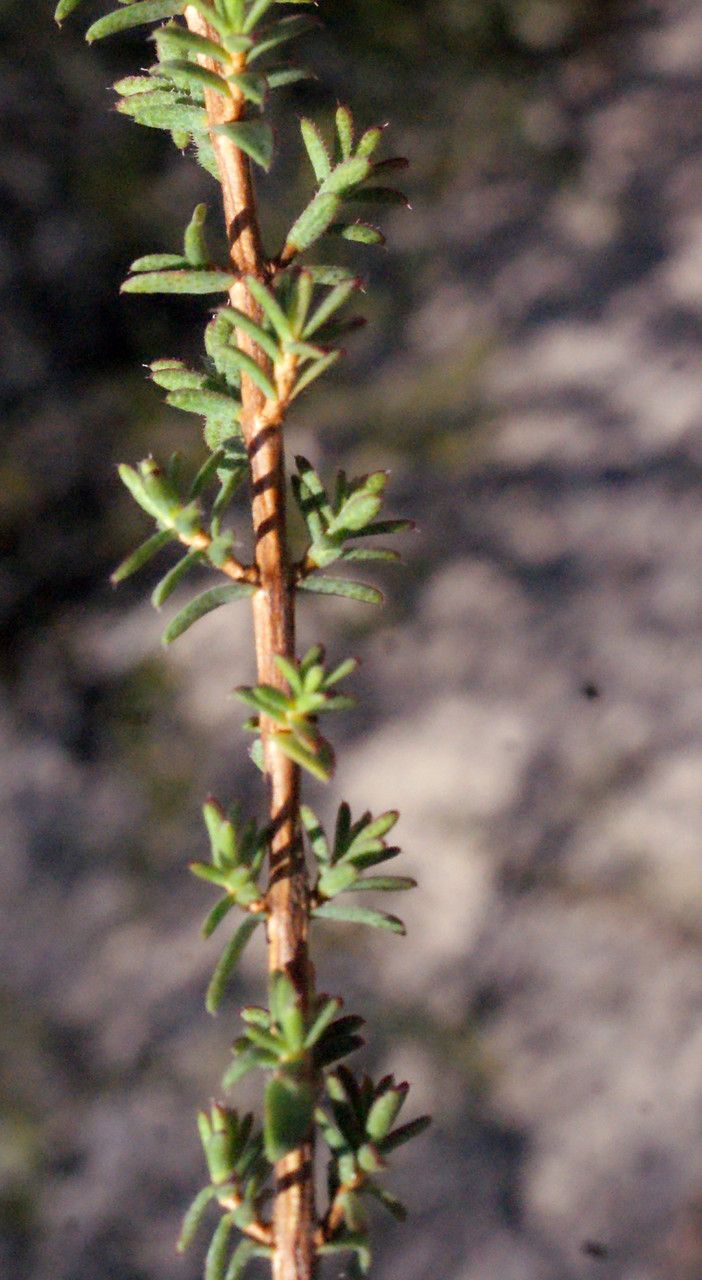
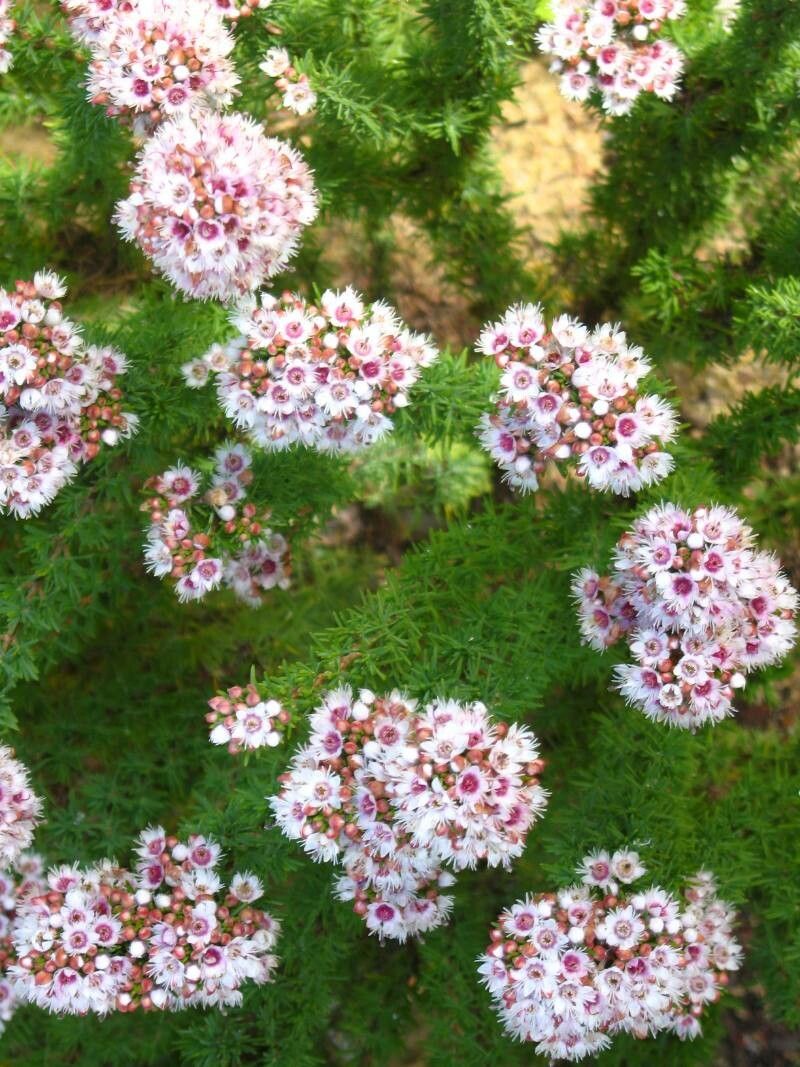
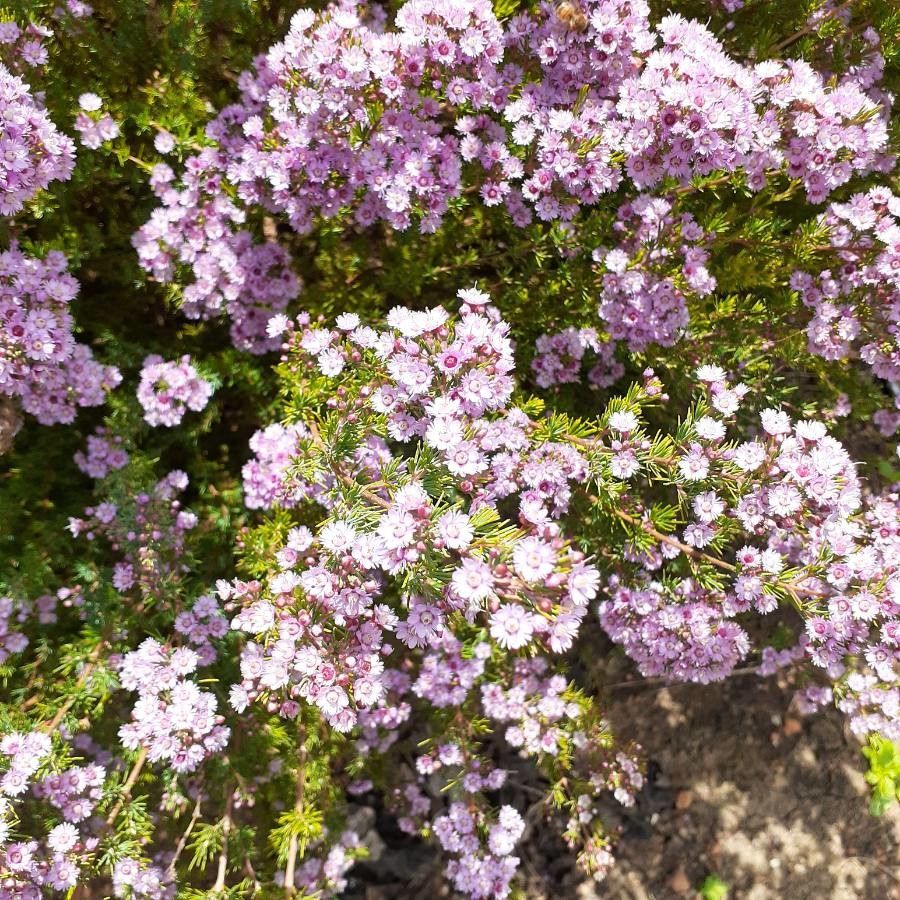
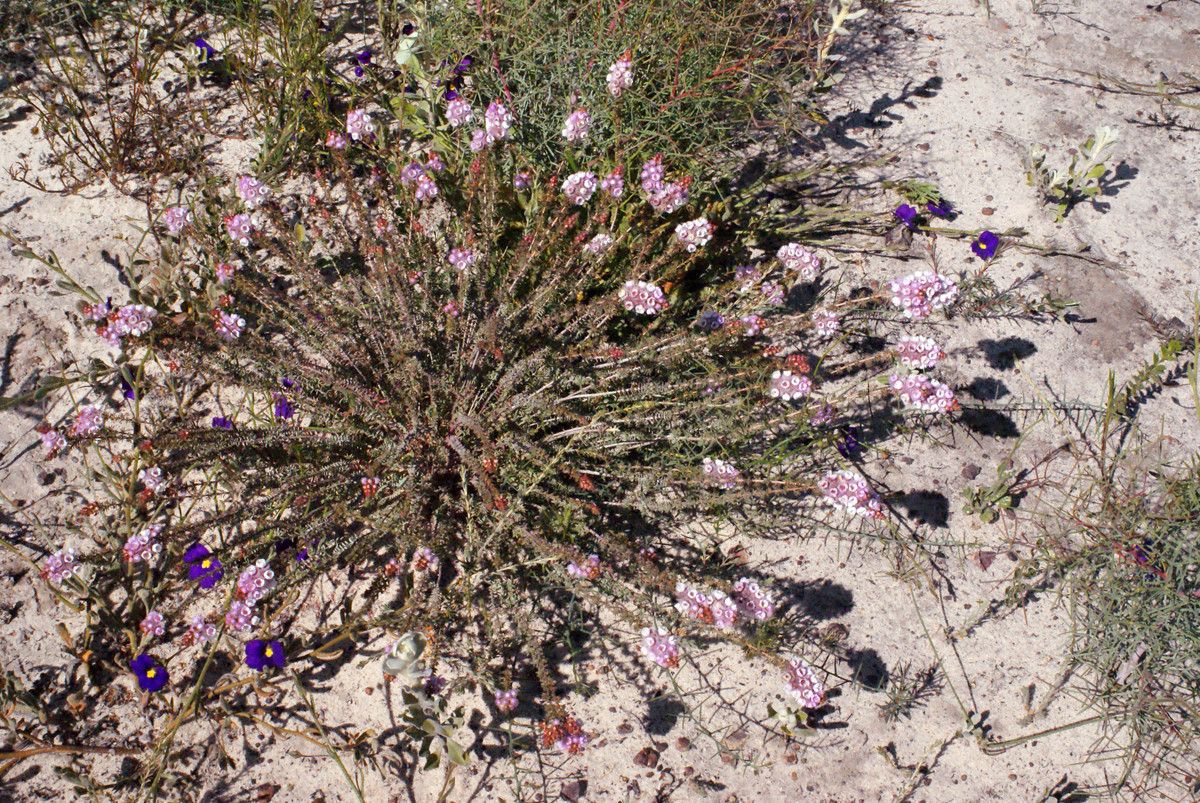
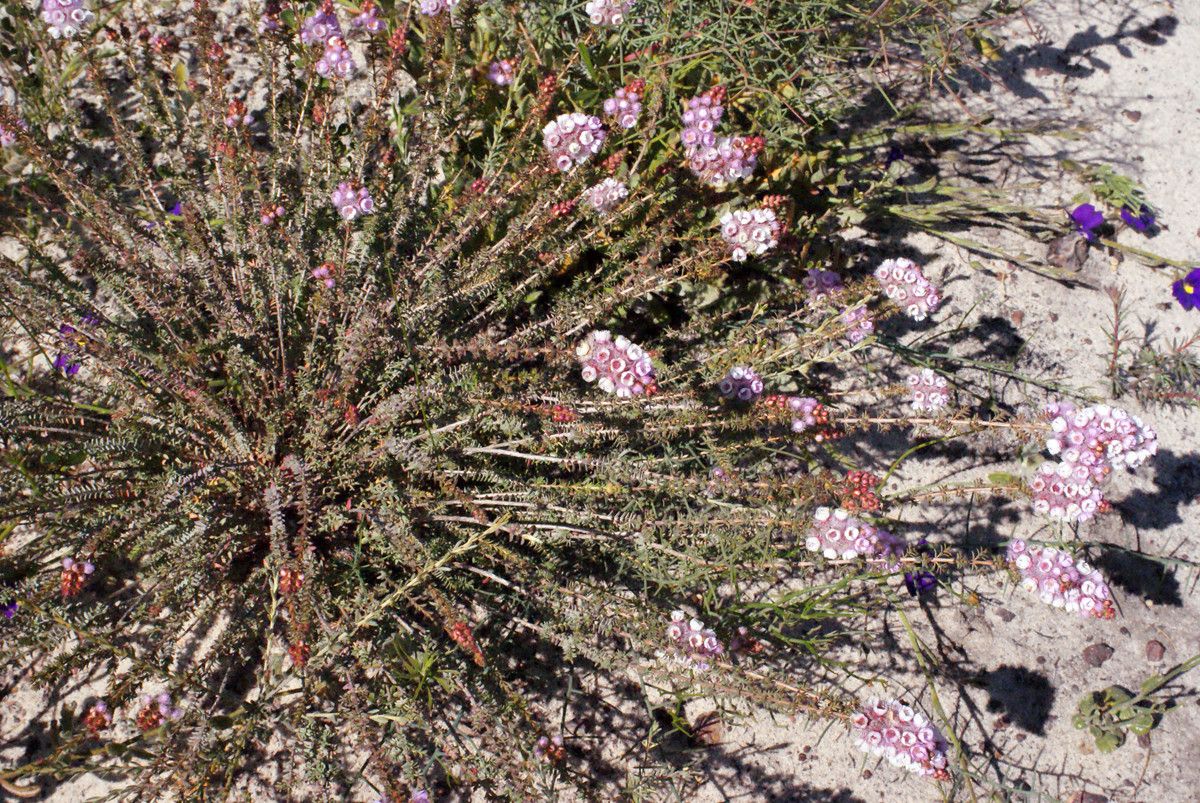
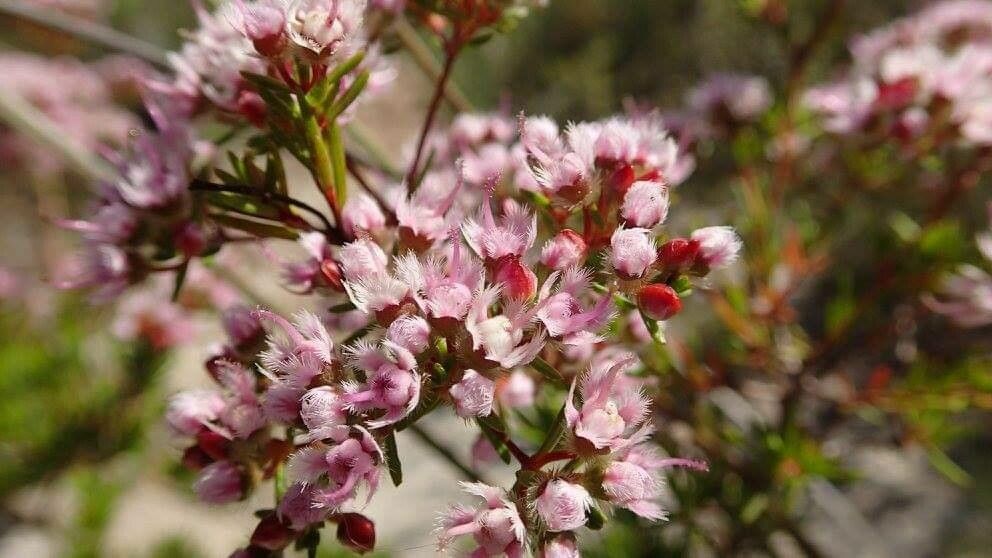
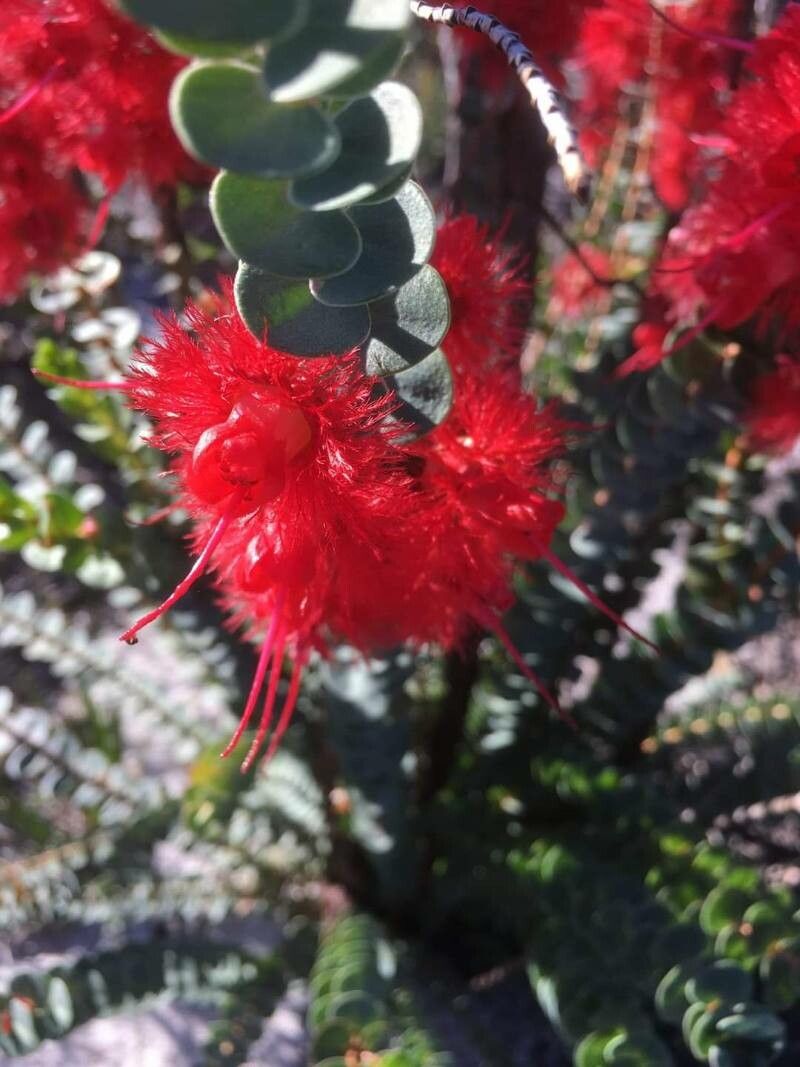
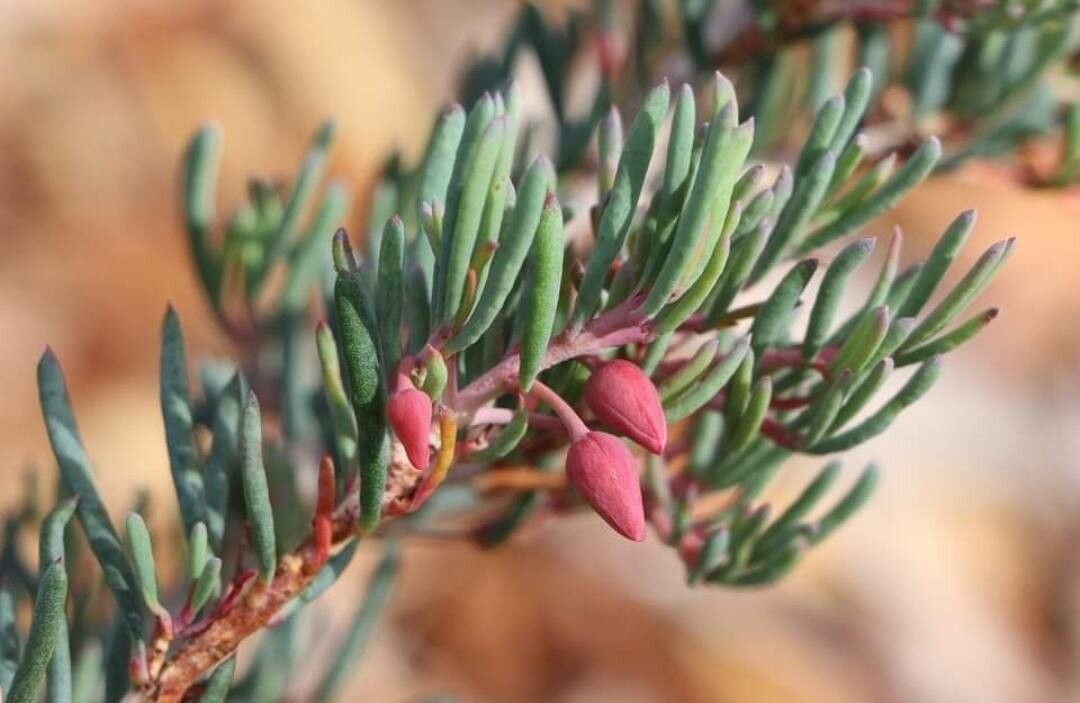
Verticordia plumosa, commonly known as plumed featherflower, is a flowering plant in the myrtle family, Myrtaceae and is endemic to the south-west of Western Australia. It was the first species in the genus to be described, although initially given the name Chamelaucium plumosum. It is a shrub with linear leaves and rounded groups of scented pink, mauve or white flowers. Two varieties of this species have been declared as being "threatened".
Plume feather-flower resists disease well and is usually not prone to illness. As for care, this plant is fairly low-maintenance. When grown outdoors it needs only minimal watering, and larger plants typically do not require pruning. Smaller plants, however, should be pruned after they finish blooming. Plume feather-flowert is suitable for anyone with an outdoor area, such as a garden or deck, and does not demand much gardening experience.
How to keep Verticordia Plumosa.
Light
Plume feather-flower comes from open habitats, such as sunny meadows and forest edges, that provide abundant light. It thrives in Full Sun but can also tolerate Partial Sun, doing well under a range of sunlight conditions.
Temperature
Plume feather-flower is highly adaptable to a range of climates, from blazing summers to frosty winters. Still, it has a preferred temperature range for healthy growth. If temperatures rise too much, the plant is susceptible to heat and humidity stress, which can kill it. In areas where temperatures approach the lower limit of its cold tolerance, insulating the plant is necessary to protect it.
Fertilizer
Proper timing matters when fertilizing Plume feather-flower. Apply fertilizer in early spring and continue monthly until early summer. Fertilizer encourages attractive blooms and supplies energy during both dormant and active growth periods.
Pruning
The plume feather-flower thrives when it is pruned at the right times. Begin by trimming it by one-third in early spring, right after it has finished flowering. This helps to improve its shape and encourages growth. Be sure to remove any dead branches to promote its health and produce vibrant blooms. Regular pruning prevents the plant from becoming leggy, helping to maintain its size and optimize its flowering potential. Always use clean, sharp tools to prevent disease.
Botanical profile.
- Plant Type
- Shrub
- Life Cycle
- Perennial
- Genus
- Verticordia
- Family
- Myrtaceae
- Hardiness Zone
- 9-11
- Mature Height
- 0.3 m to 1.52 m
- Mature Spread
- 30 cm to 91 cm
- Leaf Color
- Green
- Leaf Type
- Evergreen
- Flower Color
- Pink, White
- Flower Size
- 0.76 cm to 1.27 cm
- Bloom Time
- Fall
- Planting Time
- Spring, Summer
- Harvest Time
- Winter
Other names.