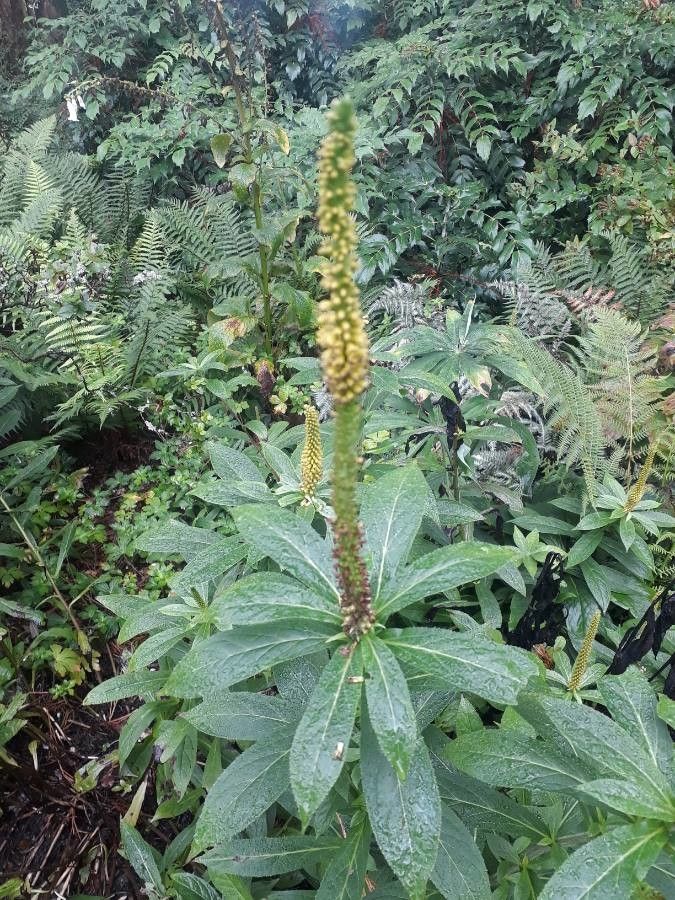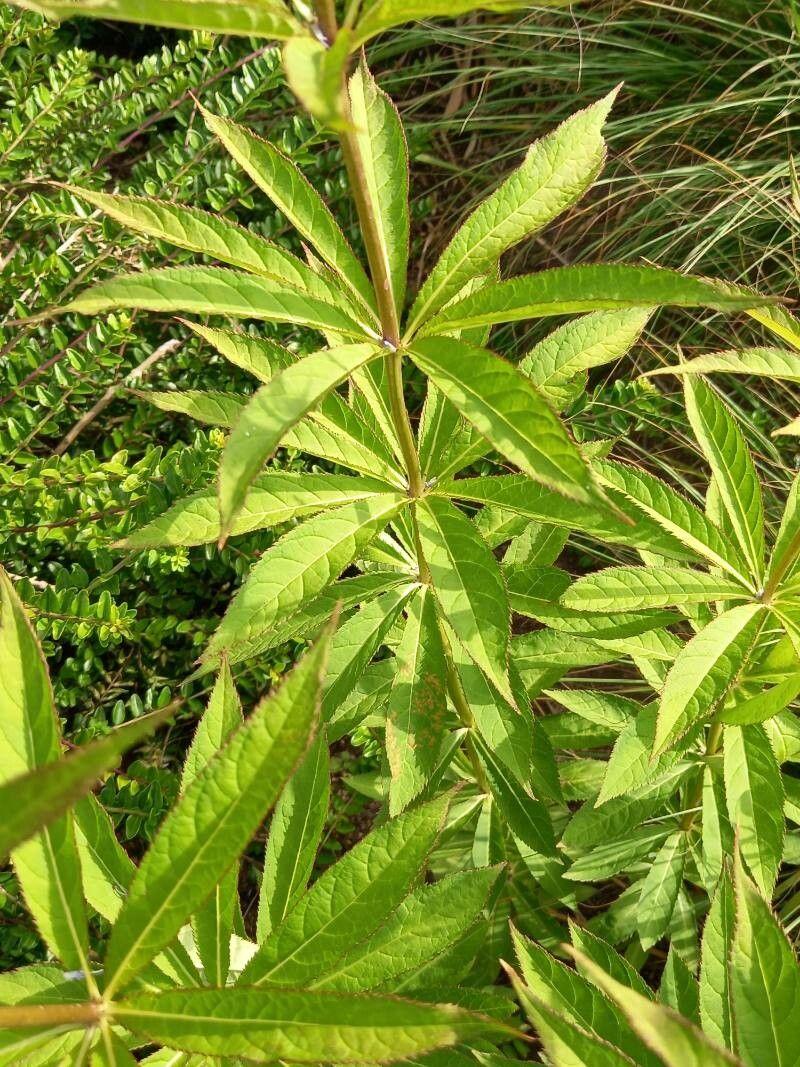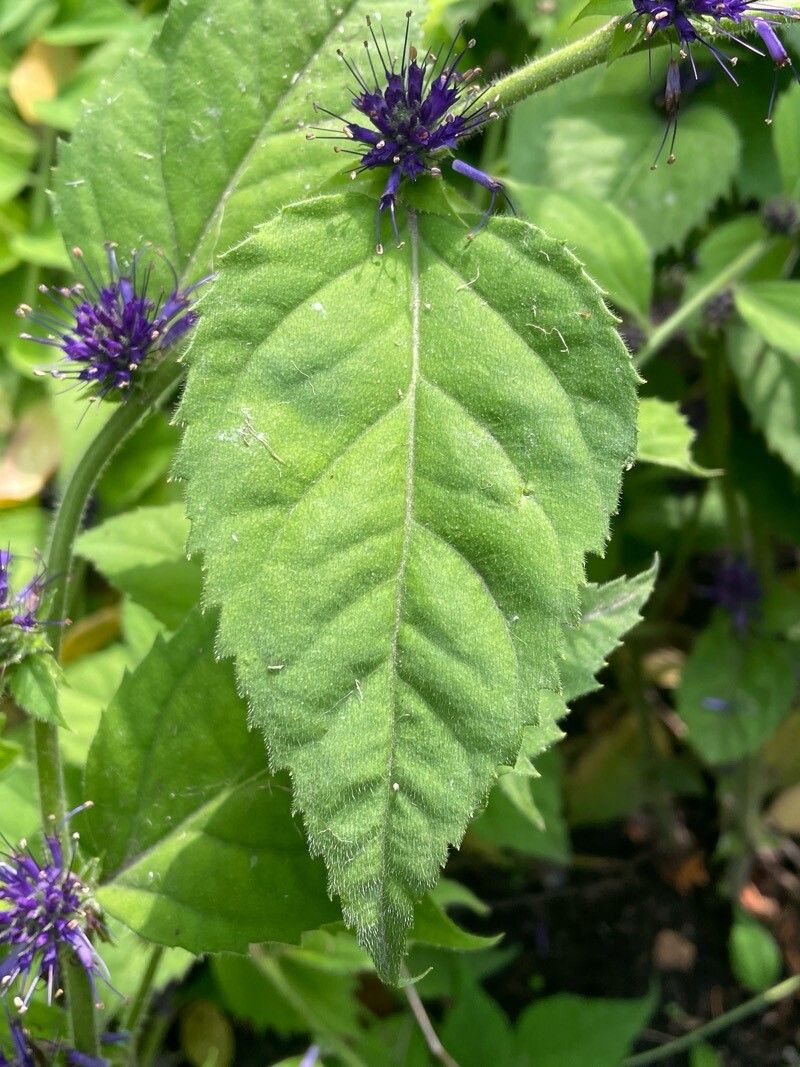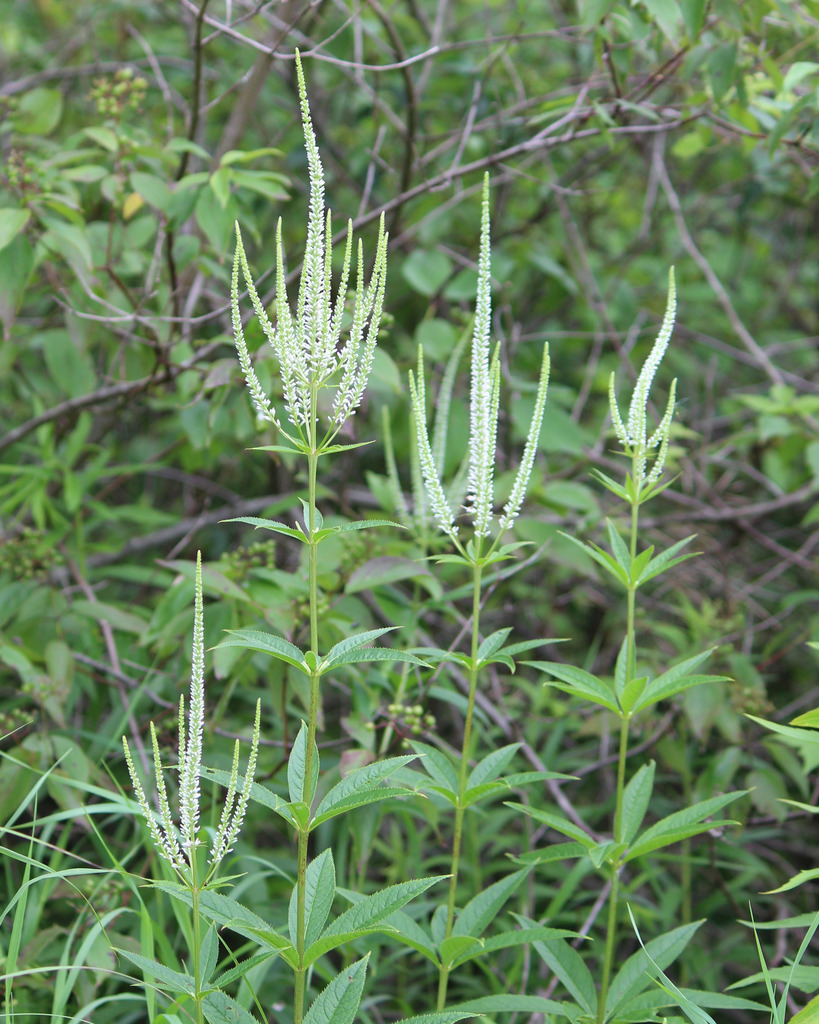
Veronicastrum virginicum, commonly known as Culver's root, is a herbaceous perennial plant that belongs to the family Plantaginaceae. Native to North America, it typically grows in moist meadows, prairies, and along stream banks.
This plant can reach heights of up to 6 feet and features a straight stem adorned with whorls of lance-shaped leaves. The leaves are dark green with serrated edges. The flowers are arranged in long spikes that can grow up to 18 inches and bloom from mid-summer through early fall. They are small, white or pinkish-white, and consist of five petals.
Culver's root has a long history of medicinal use by Native Americans, who employed it as a laxative, diuretic, and treatment for fever. Today, herbalists continue to use it as a remedy for various ailments, including constipation, liver problems, and respiratory infections.
In addition to its medicinal properties, Culver's root is an attractive ornamental plant. It can be grown in gardens or naturalized areas, where it attracts pollinators such as bees and butterflies.
Overall, Veronicastrum virginicum, or Culver's root, is a fascinating plant with both medicinal value and aesthetic appeal, making it a great addition to any garden!
Culver's root has strong disease resistance and is usually not prone to illnesses. Still, it can be vulnerable to pests and diseases present in its environment. These problems are generally mild. Regarding care, the plant needs a moderate amount of maintenance. It should be pruned regularly to keep a neat appearance and support healthy growth. Fertilizing can also encourage more flowering. Culver's root is appropriate for anyone with outdoor space, like a garden or patio, and does not demand extensive care experience. It may need extra attention when grown indoors.
How to keep Veronicastrum Virginicum.
Light
Culver's root does best with abundant sunlight. In its natural habitat, the plant prefers clear skies overhead for most of the day. It can, however, tolerate environments with limited sunlight. Too little light can stunt its growth, while too much can dry the plant out.
Water
Culver's root thrives in moist environments and benefits from regular watering, ideally once a week. While it can withstand short periods of drought, its growth cycles as an herbaceous perennial are influenced by water supply. Adequate hydration is crucial for optimal foliage production and flowering potential.
Temperature
Culver's root naturally grows in temperate areas. It prefers temperatures between 32 to 90 ℉ (0 to 32 ℃) and needs only minor temperature changes during the growing season. However, in winter dormancy it is advised to keep temperatures at 25 to 40 ℉ (-4 to 4 ℃) to encourage healthy growth in the spring.
Fertilizer
One application of fertilizer in spring is typically sufficient for Culver's root, but multiple feedings can maximize growth. Feed about once every month to a month and a half. Fertilization improves leaf appearance and function, promoting even color and a healthy texture. It also encourages root growth and nutrient uptake for long-term plant health.
Pruning
Culver's root is a tall perennial known for its striking flower spires. To keep the plant healthy and encourage thicker growth, prune it in early spring to remove any damaged stems and shape the plant. Regular pruning helps prevent legginess and enhances blooming. Make sure to use clean tools to avoid spreading disease, and deadhead spent blooms to prolong the flowering period.
Pot & Repot
When repotting Culver's root, select a pot 1–2 inches (2.5–5.1 cm) larger that has good drainage. Use a well-draining potting mix. Repot in spring or fall, making sure the root ball is slightly lower than the rim of the flower pot. Water thoroughly after repotting and place it in a warm spot with indirect sunlight.
Toxicity
The raw root is a powerful cathartic (purgative) that should be avoided because it might cause bloody stool and even abortion. The dried root is considerably gentler and is commonly used.
Further reading →
The toxicity and danger assessments provided are for reference only. We do not assure their accuracy, so it's crucial not to depend on them. Seek professional advice when necessary for accurate guidance.
Botanical profile.
- Plant Type
- Herb
- Life Cycle
- Perennial
- Genus
- Veronicastrum
- Family
- Plantaginaceae
- Hardiness Zone
- 3-8
- Mature Height
- 2.13 m
- Mature Spread
- 46 cm
- Leaf Color
- Green
- Leaf Type
- Deciduous
- Flower Color
- White, Lavender
- Flower Size
- 2.54 cm
- Bloom Time
- Early summer, Mid summer
- Planting Time
- Spring
- Harvest Time
- Mid summer
Other names.
Reader questions.
How much water does my Culver's root plant need?
When watering your Culver's root, don't be afraid to give it a generous amount of water. Make sure the first two to three inches of soil are dry, and then thoroughly soak the soil. You should add enough water that it flows through the drainage holes at the bottom of the pot. If you don't see excess water draining, it means you haven't watered enough. However, be careful not to let water accumulate in the soil, as it can harm the plant. If water doesn't drain properly from the pot, it may indicate poorly draining soil, which is harmful to the plant's health. If the plant is outside, one inch of rain per week will be enough.
Why should I use fertilizer on my Culver's root?
Culver's root relies heavily on its leaves for structure, and proper fertilization plays a significant role in maintaining their appearance and function. By fertilizing correctly, you can promote consistent color and a healthy texture in the leaves of your Culver's root. Fertilization also benefits the plant's root system, both by fostering new root growth and by supporting the existing roots. This ensures not only the current health of your plant, but also its ability to absorb nutrients from the soil in the future.
What are the sunlight requirements for Culver's root?
Culver's root requires full sun for optimal growth, meaning it should receive above 6 hours of sunlight daily. However, it can also tolerate partial sun, which is about 3-6 hours of sunlight. It's essential to observe how sunlight moves through your garden to ensure your plants get a balance of light and shade, contributing to their well-being. In its natural habitat, Culver's root thrives best under clear skies for most of the day but demonstrates resilience in less sunny conditions. Insufficient sunlight can stunt the plant's growth, whereas too much sun can harm it.
What are the ideal growth conditions for Culver's root?
Culver's root, scientifically known as Veronicastrum virginicum, thrives in temperate regions. It prefers temperatures ranging from 32°F to 90°F (0°C to 32°C) during its growing season, requiring little adjustment in temperature. However, to ensure healthy growth in the spring, it's recommended to maintain winter temperatures between 25°F and 40°F (-4°C to 4°C) during its dormancy period. Thanks to its strong cold resistance, Culver's root generally does not need special frost protection measures. Yet, for winters expecting temperatures to drop below -35°C, providing cold protection by covering the plant with soil or straw is advisable. Additionally, watering the plant abundantly before the first freeze in autumn to keep the soil moist can help prevent drought and water scarcity during winter and early spring.
How should I water my Culver's root?
To effectively water the Culver's root plant, it is recommended to use filtered water at room temperature. Tap water may contain harmful particles, which is why filtered water is preferred. The water should be at room temperature or slightly warmer because the Culver's root is accustomed to a warm environment, and cold water may be too much of a shock. Additionally, overhead watering should be avoided as it can cause issues with the foliage. Instead, it is best to water the soil directly with the filtered room temperature water until the soil is thoroughly soaked. This method is highly beneficial as it helps to moisten the roots and promote their spread through the soil, allowing the plant to absorb the necessary nutrients.
When should I fertilize my Culver's root for the best results?
When you grow your Culver's root outdoors, it will start sending out new growth in early spring. This is the signal that it's time to start fertilizing for the year. Usually, one application of fertilizer in spring is enough for a Culver's root to grow well. But if you want to maximize its growth, you can fertilize it multiple times during spring and early summer. In this case, you can feed your Culver's root about once every month to a month and a half.
How can artificial lighting benefit indoor Culver's root plants?
Indoor Culver's root plants require adequate lighting for optimal growth, especially when natural sunlight is insufficient, like in winter or less sunny spaces. Artificial lights are a crucial solution, promoting faster, healthier growth. LED lights, customizable to provide specific wavelengths needed by plants, are a popular option. For full sun plants, 30-50W/sq ft of artificial light is recommended, 20-30W/sq ft for partial sun plants, and 10-20W/sq ft for full shade plants. The light source should be placed 12-36 inches above the plant to mimic natural sunlight, and most plants need 8-12 hours of light per day.
How does Culver's root react to low temperatures?
Culver's root is known for its cold-tolerance, optimally thriving when temperatures are above 0°C. During the winter season, it is advisable to keep the environment above -30°C to avoid harm. Exposure to temperatures below -35°C might not show immediate noticeable changes during the winter months, but there could be a significant decrease in springtime sprouting or even a complete lack of sprouting. If this occurs, it's recommended to remove any parts of the plant that have failed to sprout as a solution to encourage new growth in the spring.
What do I do if I give my Culver's root plant too much or too little water?
Overwatering can be detrimental to the health of your Culver's root, whereas underwatering is less common but still possible. With excessive water, the stems and leaves may wilt and turn yellow. Prolonged overwatering can lead to diseases like root rot, mold, and mildew, which can kill the plant. Culver's root has decent drought tolerance, but underwatering can cause brittle and brown leaves. It is crucial to notice signs of overwatering early and reduce watering immediately. Assess the soil quality; if it drains poorly, replace it with a well-draining potting mix. If underwatering signs are present, water more regularly until the signs subside.
When is it better to not add fertilizer to my Culver's root?
During the late fall and winter, Culver's root goes into a dormant phase, and stops producing new growth. It's best not to fertilize Culver's root during this time. However, if you decide to fertilize during the spring and summer, you should decrease the amount of fertilizer as summer approaches because the growth rate of Culver's root will also slow down. In general, it's not a good idea to fertilize Culver's root during exceptionally hot weather or when the soil is very dry. Fertilizing in these conditions can stress the plant and cause it to die prematurely.
What are the symptoms of light deficiency in Culver's root?
Light deficiency in Culver's root can lead to several issues. New leaves may grow smaller than previous ones, and the plant can become leggy or sparse. You may notice faster leaf drop as the plant conserves resources, and growth can become delayed or stop altogether. Pale or lighter-colored new leaves and chlorosis, where leaves turn yellow due to a lack of chlorophyll, are indicative of insufficient sunlight. Symptoms of excessive sunlight include sunscald, leaf curling, wilting, and leaf scorching, which affect the plant's health and appearance.
What should I do if Culver's root experiences high temperatures?
During the summer months, it's crucial to ensure that Culver's root does not exceed temperatures of 32°C. Exposure to temperatures above 35°C may result in the plant's leaves becoming lighter in color, curling, and becoming susceptible to sunburn. In severe cases, the plant may wilt and dry up entirely. To mitigate these high temperature effects, affected parts should be trimmed away. Moving the plant to a shaded area or using a shade cloth can protect it from the midday and afternoon sun. Additionally, it's beneficial to water the plant in the morning and evening to keep the soil adequately moist, aiding in its recovery and continued health.