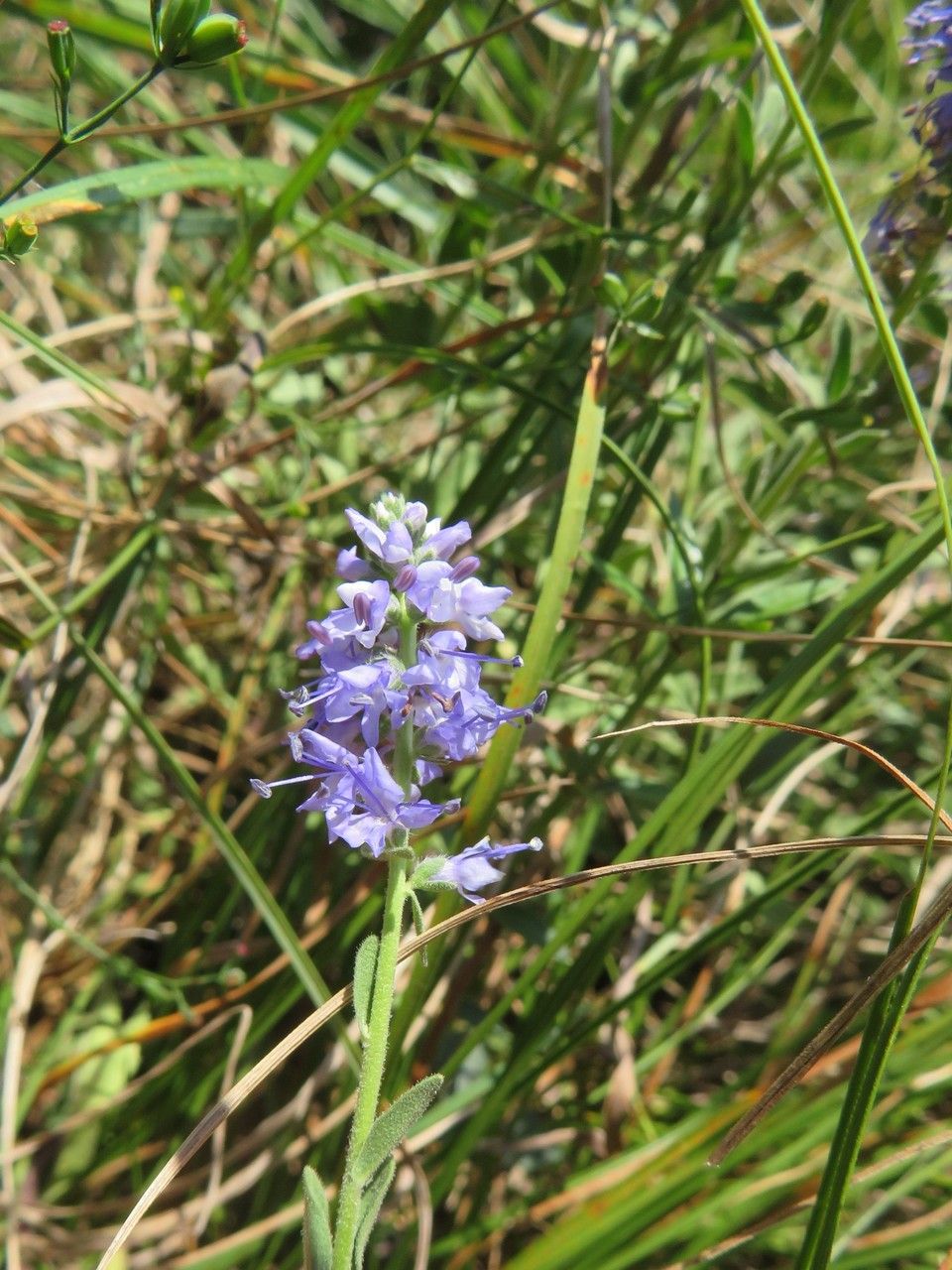
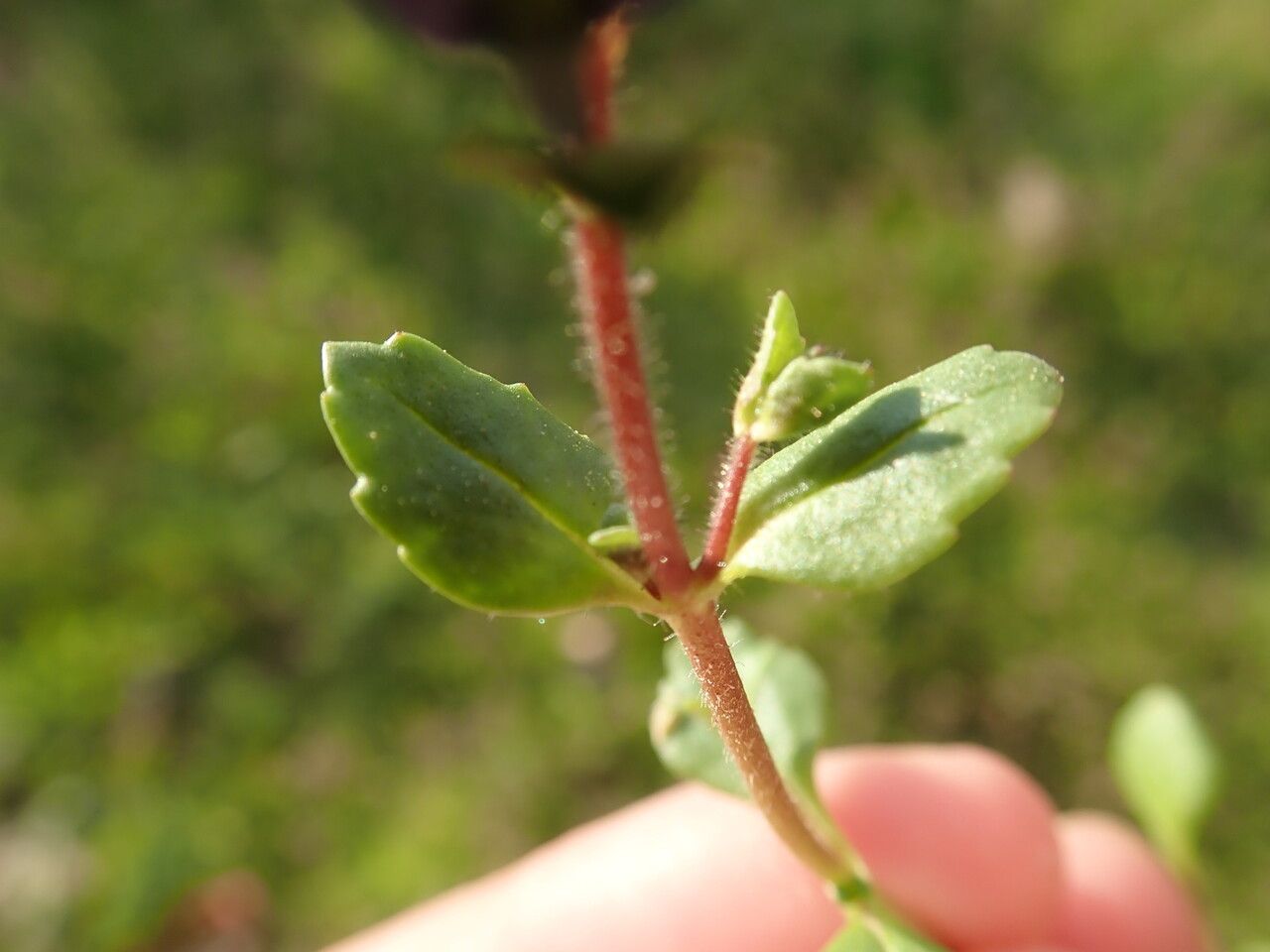
Veronica prostrata, commonly known as prostrate speedwell, is a low-growing perennial plant belonging to the Plantaginaceae family. Native to Europe and Asia, it has also been introduced and naturalized in North America. The plant typically reaches up to 10 cm in height and can spread up to 60 cm wide. Its small, oval-shaped leaves are arranged opposite each other on the stem. The flowers of Veronica prostrata are small and blue or purple with a white center. They bloom from late spring through summer on short spikes that rise above the foliage. The plant thrives in full sun or partial shade with well-drained soil. Due to its low-growing habit and ability to spread quickly through runners or stolons, Veronica prostrata is commonly used as a ground cover. It also attracts pollinators such as bees, butterflies, and hummingbirds. Overall, Veronica prostrata is an attractive perennial that adds color and texture to gardens while providing ecological benefits for pollinators.
Prostrate speedwell has strong disease resistance and is generally unlikely to contract illnesses. Still, it can be vulnerable to pests and diseases present in its surroundings. These problems are usually minor. Regarding care, this plant requires a moderate level of maintenance. It should be pruned regularly to keep a neat appearance and support healthy growth. Fertilizing can also encourage better flowering. Prostrate speedwell is suitable for anyone with outdoor space, such as a garden or patio, and does not demand extensive gardening experience. It may need additional care when grown indoors.
How to keep Veronica Prostrata.
Light
Prostrate speedwell flourishes optimally and achieves peak health when it receives abundant sunlight, although it can adapt reasonably well in moderately sunny settings. Having originated in an environment with strong sunlight, the plant thrives better in abundant light, sustaining extraordinary growth. It's important to note, however, that too much sunlight can harm the plant, while too little might impede its growth and liveliness.
Water
Prostrate speedwell flourishes in moderately moist soil and needs regular weekly watering without being overwatered. Native to temperate regions, its health is influenced by rainfall patterns in the growing season, highlighting its drought-resistant qualities and making it suitable for garden settings.
Temperature
The native habitat of prostrate speedwell has a temperature bracket of 41 to 90 °F (5 to 32 ℃). Owing to its fondness for moderate climates, it's recommended to maintain the ambient temperature in this range throughout the seasons.
Fertilizer
The optimal period for fertilizing a Prostrate speedwell occurs in the early part of spring, as it awakens from dormancy and starts to grow actively. The process of fertilization supplies crucial nutrients required for its proper growth. Despite the fact that Prostrate speedwell's fertilization requirements are relatively minimal, fertilizing this plant annually can improve its longevity and stimulate the production of healthier, more durable flowers.
Pruning
To promote healthy growth and abundant flowering, prostrate speedwell should be pruned from early to late spring. Remove dead stems and spent flowers to prevent leggy growth and reduce the risk of disease. Regular pruning with clean, sharp tools encourages a neat shape and maintains the plant's vigor, ensuring it stays healthy and looks its best.
Pot & Repot
To ensure optimal growth, you should repot prostrate speedwell every 2-3 years in the spring. Choose a wide pot to accommodate its horizontal spreading habit. After repotting, provide moderate watering and place the plant in partial shade to help it recover. Be sure to give it extra care during this transition period.
Botanical profile.
- Plant Type
- Herb
- Life Cycle
- Perennial
- Genus
- Veronica
- Family
- Plantaginaceae
- Hardiness Zone
- 5-8
- Mature Height
- 49 cm
- Mature Spread
- 49 cm
- Leaf Color
- Green
- Leaf Type
- Semi-evergreen
- Flower Color
- Blue
- Flower Size
- 2.54 cm
- Bloom Time
- Spring
- Planting Time
- Spring, Summer, Autumn
- Harvest Time
- Late spring, Early summer, Mid summer
- Native Area
- Austria, Czech Republic, Slovakia, Montenegro, Bulgaria, Poland, Croatia, Slovenia, Belarus, Ukraine, Serbia, Russia, Lithuania, Hungary, Germany, Italy, Kazakhstan, Switzerland, France, Albania, Romania, Latvia, Belgium, Netherlands
Other names.
Reader questions.
How should I water my Prostrate speedwell to keep it healthy?
To properly water the Prostrate speedwell, it is best to use filtered water at room temperature. Tap water may have harmful particles, so filtering it is preferable. It is important to use room temperature water or slightly warmer because the Prostrate speedwell is accustomed to warm environments and cold water can be a shock to its system. Additionally, overhead watering should be avoided as it can lead to foliage issues. Instead, simply apply filtered room temperature water to soak the soil completely. This helps to moisten the roots and supports their spread through the soil to collect essential nutrients.
Why should I add fertilizer to my Prostrate speedwell?
Fertilization is important for the Prostrate speedwell for several reasons. It provides essential nutrients for the plant to grow both above and below ground. However, the Prostrate speedwell has relatively low fertilization needs and can sometimes survive without it. Nevertheless, annual fertilization can greatly benefit the plant, helping it stay alive and encouraging the production of longer-lasting flowers. Therefore, those who want their Prostrate speedwell to look its best should maintain regular annual fertilization.
What are the sunlight requirements for Prostrate Speedwell?
Prostrate Speedwell requires full sun, characterized by more than 6 hours of sunlight a day, to thrive optimally. However, it can also adapt to partial sun conditions, which means about 3-6 hours of sunlight daily. It's crucial to observe the movement of sunlight in your garden carefully to identify areas that offer a balanced exposure to light and shade, as this will ensure your Prostrate Speedwell grows healthily and happily.
What is the ideal temperature range for prostrate speedwell?
Prostrate speedwell thrives in environments with a temperature range of 41 to 90 °F (5 to 32 °C). It has a preference for moderate temperatures, so it is advised to maintain the surrounding temperature within this range throughout the different seasons. Although prostrate speedwell exhibits strong cold resistance, special frost protection measures are not typically necessary. However, for extremely cold winters with temperatures expected to drop below -25°C, providing cold protection by covering the plant with soil or straw is recommended. To aid in drought prevention during winter and early spring, watering the plant abundantly before the first freeze in autumn to ensure the soil remains moist is also suggested.
What should I do if I give too much or too little water to my Prostrate speedwell?
Overwatering is a more common issue than underwatering for Prostrate speedwell. When this plant gets too much water, its stems and leaves may wilt and turn yellow. Overwatering for a long time can also cause diseases like root rot, mold, and mildew, which can be fatal for the plant. Prostrate speedwell has good tolerance for drought, so underwatering is less likely. However, when it does happen, the leaves become brittle and brown. It's important to notice the signs of overwatering quickly. Some diseases caused by overwatering, like root rot, may not be fixable if you wait too long. If you see early signs of overwatering, reduce watering immediately. Check the soil quality where the plant grows. If it drains poorly, replace it with well-draining potting mix. If you see signs of underwatering, simply water more regularly until the signs go away.
When should I fertilize my Prostrate speedwell for the best results?
The best time to fertilize a Prostrate speedwell is in the late winter to early spring when it is transitioning from dormancy to active growth. Fertilizing at this time promotes healthy growth and sets the plant up for a successful season. While early spring is the ideal time, fall can also be suitable for fertilization. However, it is not recommended to feed a Prostrate speedwell during the summer or winter seasons.
How does Prostrate Speedwell react to different lighting conditions?
Prostrate Speedwell performs best when exposed to abundant sunlight, reflecting its natural habitat's conditions, where it experiences robust sunlight. Although it can adapt to moderately lit environments, too much or too little light can detrimentally affect its growth. Excessive sunlight can lead to conditions such as leaf scorching and wilting, while insufficient sunlight might result in slower growth, lighter-colored leaves, or even chlorosis. To mitigate these issues, especially indoors, utilizing artificial lighting can be beneficial. Artificial lighting, particularly LED lights, should be adjusted in terms of type, distance (12-36 inches above the plant), and duration (8-12 hours per day) to match the plants' natural sunlight requirements.
How does prostrate speedwell react to low temperatures?
Prostrate speedwell is cold-tolerant, ideally remaining above -20°C during winter months. Though it may not show visible changes when temperatures fall below -25°C during winter, this can result in a decrease in sprouting or even the absence of sprouting come springtime. To mitigate this, it is recommended to remove any parts of the plant that have failed to sprout in the spring.
How frequently should I water my Prostrate speedwell?
If your Prostrate speedwell is in a pot, the most precise way to determine if it needs water is by checking the soil. Stick your finger into the soil and if the top two to three inches feel dry, it's time to water it. If you have planted your Prostrate speedwell outdoors in the ground, you can follow a similar method to test the soil. Again, if the top few inches of soil have dried out, it's time to water the plant. Typically, during the spring and early fall, watering once a week is sufficient using this method. However, in extremely hot weather, you may need to water the plant twice or more per week. It's worth noting that mature and well-established Prostrate speedwell plants have a remarkable ability to tolerate drought.
When is it not a good time to put fertilizer on my Prostrate speedwell?
To maintain the health of your Prostrate speedwell, it's best to fertilize only during late winter and early spring. This plant has low fertilization needs, so a single annual feeding is sufficient. Over-fertilizing during spring, summer, and fall can lead to complications, unless you missed fertilizing in spring, in which case fall feeding is allowed. Additionally, avoid fertilizing during the winter when the Prostrate speedwell is dormant and not producing new growth.
What are the symptoms of inadequate lighting for Prostrate Speedwell?
When Prostrate Speedwell does not receive adequate sunlight, several symptoms may manifest, including smaller new leaves, leggy or sparse growth, faster leaf drop, and a halt in new growth. Leaves may become lighter in color or show signs of chlorosis, and intense sunlight exposure can cause sunscald, leaf curling, wilting, and leaf scorching. These symptoms signal that the plant's lighting conditions need to be optimized to support its health and growth.
What should be done if prostrate speedwell experiences high temperatures?
During the summer, it's critical to ensure that the temperature surrounding prostrate speedwell does not exceed 32°C. Exposure to temperatures above 35°C can lead to the leaves becoming lighter in color, prone to curling, becoming sunburned, and, in severe cases, the plant may wilt and dry out entirely. To combat this, it is advisable to trim away any sunburned or dried-up parts of the plant. Moving the plant to a shaded area or employing a shade cloth to protect it from the midday and afternoon sun can be beneficial. Additionally, watering the plant during the cooler morning and evening hours can help keep the soil adequately moist.