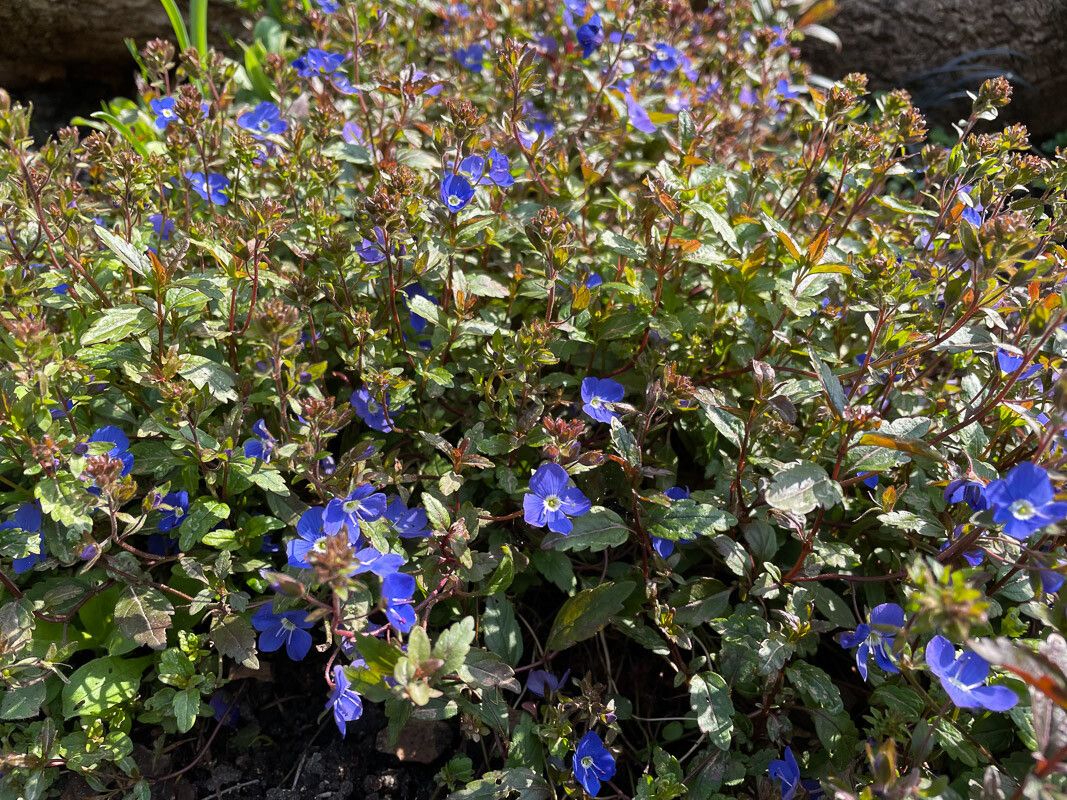
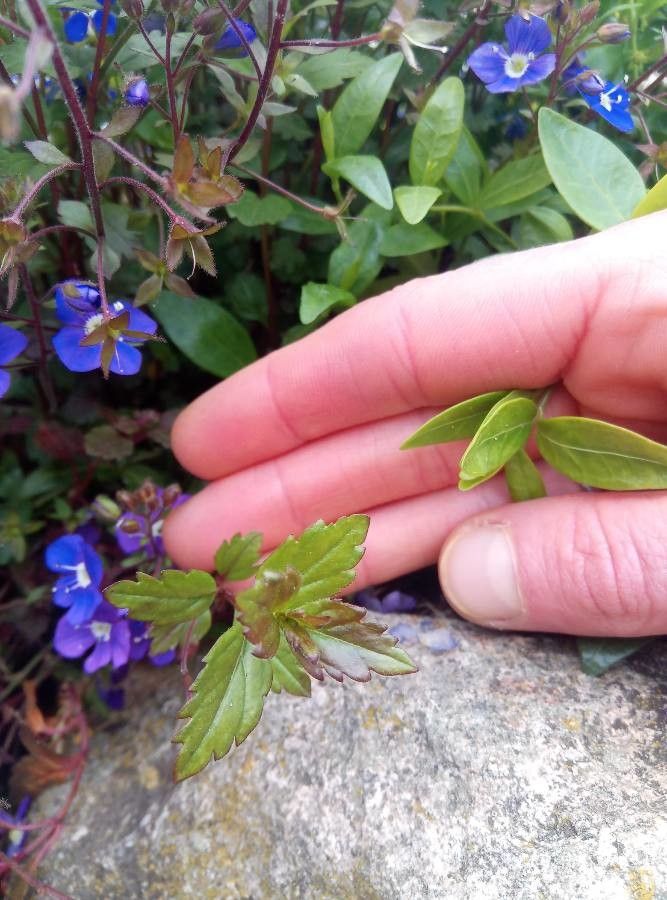
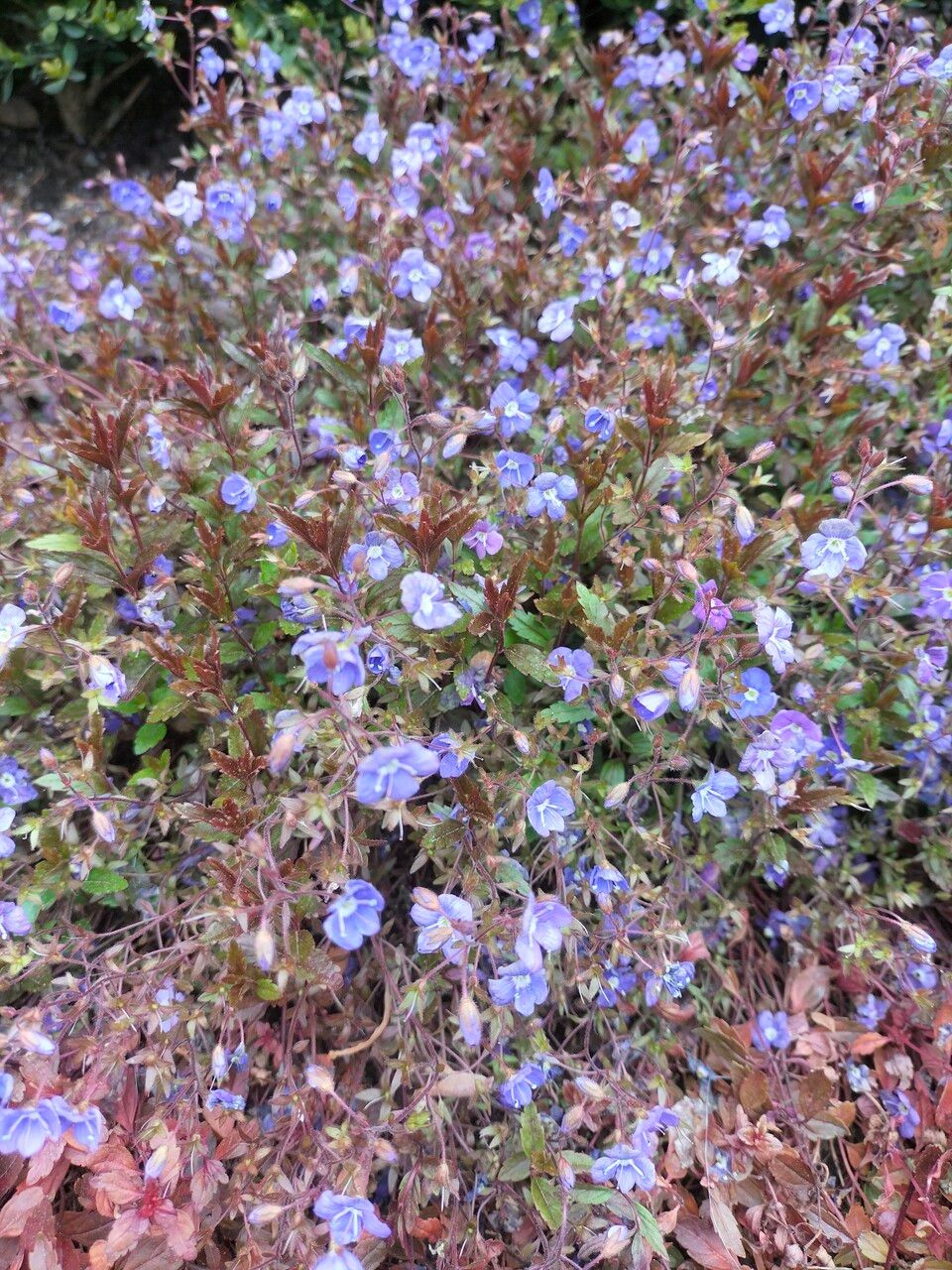
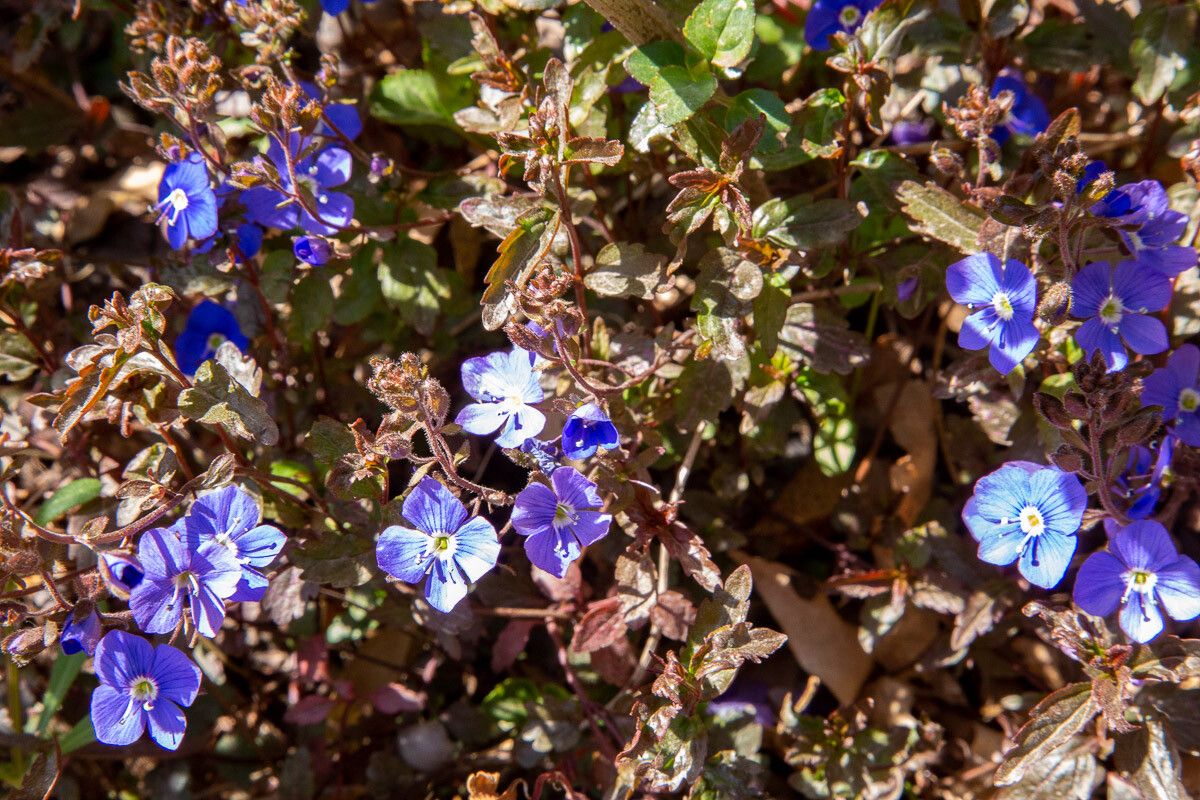
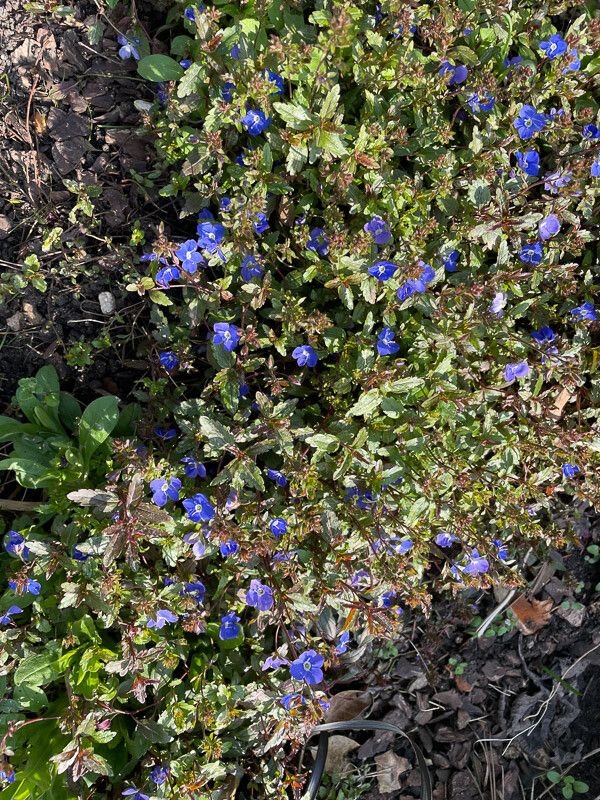
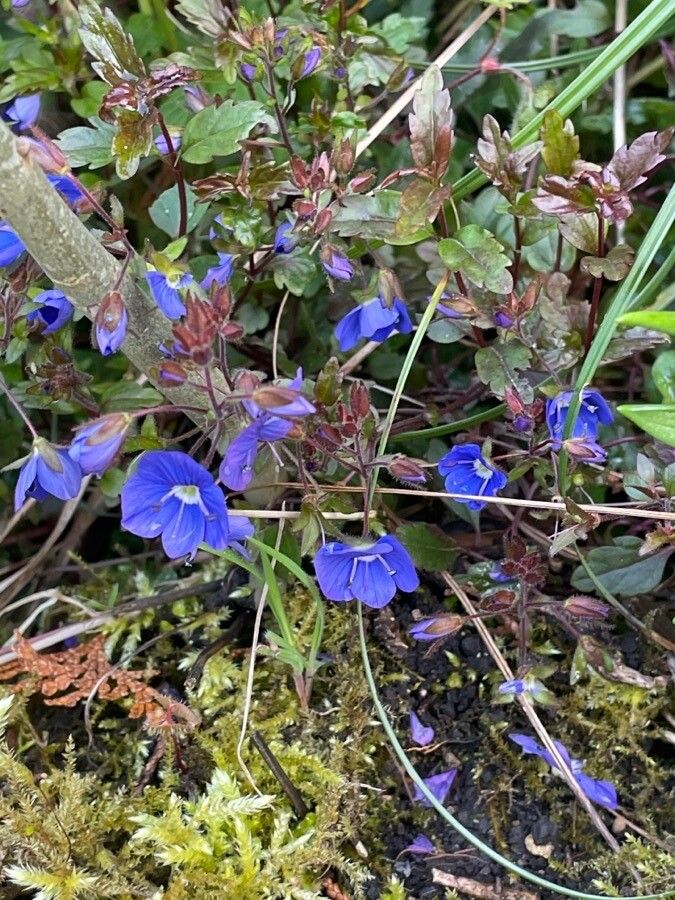
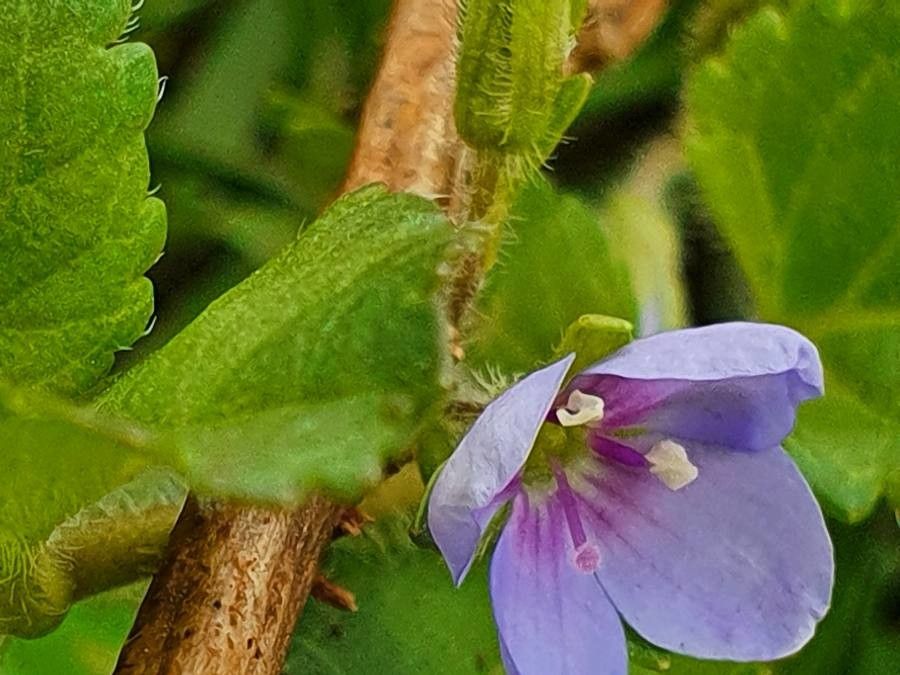
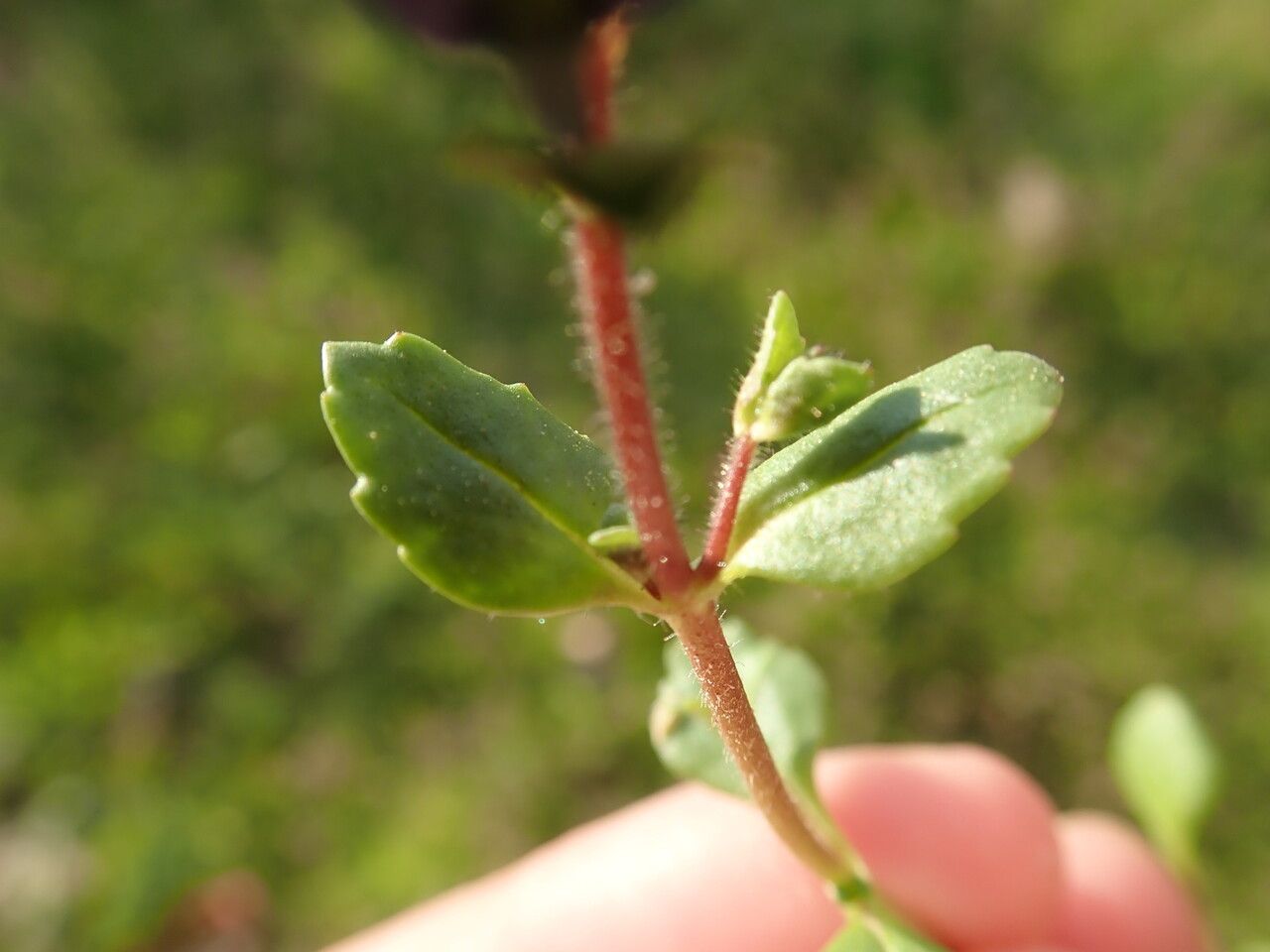
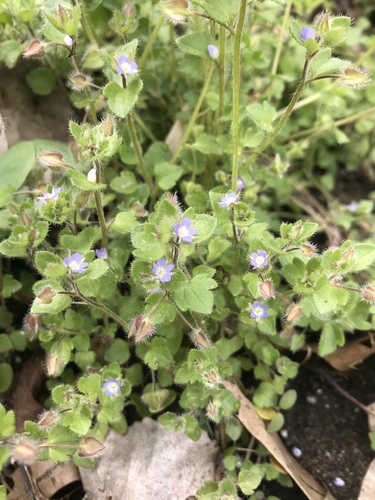
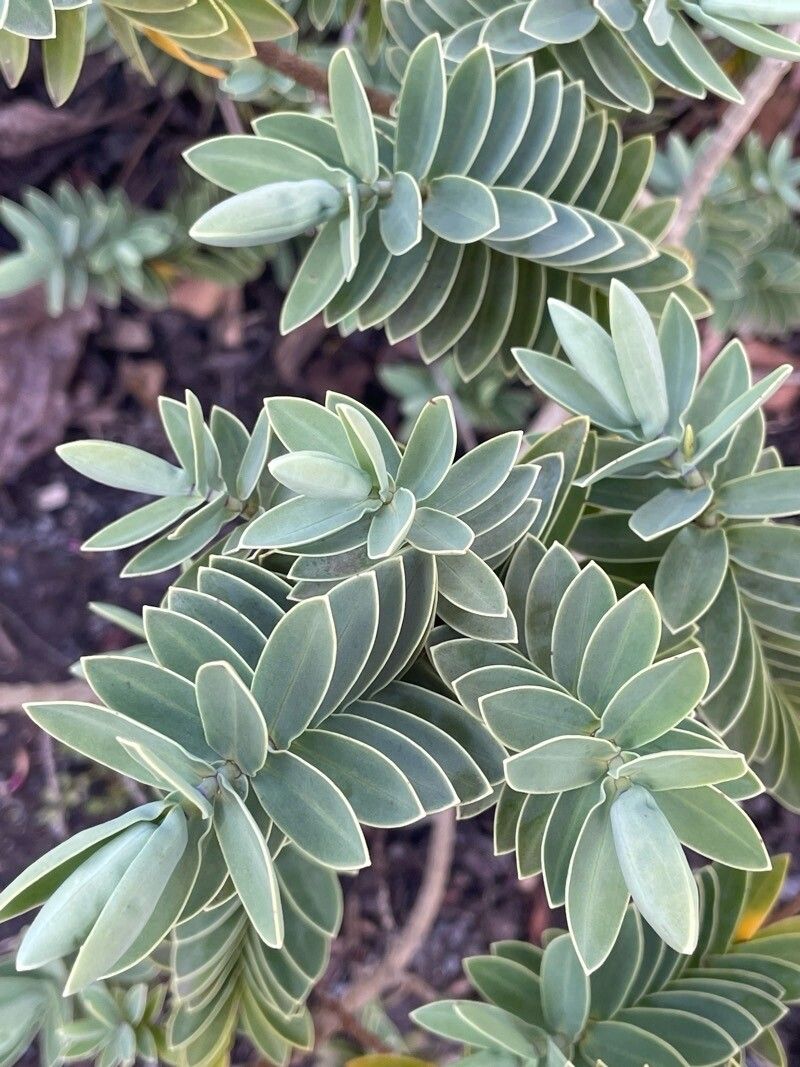
Veronica peduncularis, the creeping speedwell, is a flowering plant in the plantain family, Plantaginaceae. Listed under its synonym Veronica umbrosa, its cultivar 'Georgia Blue' has gained the Royal Horticultural Society's Award of Garden Merit.It is a semi-evergreen perennial with alternate, simple leaves on creeping stems. The flowers are blue, and borne in spring. Though hardy, it requires a sheltered spot in full sun with good drainage. It is a suitable subject for a gravel garden or alpine garden.
Creeping Blue Speedwell has strong resistance to disease and is generally not susceptible to illnesses. However, it can be affected by pests and diseases present in its surroundings, and such infections are typically mild. For care, this plant needs moderate attention. It should be pruned regularly to maintain a tidy appearance and support healthy growth. Fertilizing can also encourage flowering. Creeping Blue Speedwell is appropriate for anyone with an outdoor area, like a garden or patio, and does not demand extensive gardening experience. It may need more attention if grown indoors.
How to keep Veronica Peduncularis.
Light
Creeping Blue Speedwell originates from habitats like forest understories and rocky sites where it grows in natural shade. It prefers partial sun but can tolerate both full sun and full shade, which demonstrates its versatility and hardiness.
Water
Veronica peduncularis does well in moderate moisture conditions, needing balanced watering and typically requiring weekly irrigation. This plant thrives best outdoors in areas with consistent rainfall during its growing season, but it should avoid both drought and overly humid conditions.
Temperature
Creeping Blue Speedwell can tolerate a wide range of temperatures, though its distribution may still be constrained by different combinations of moisture and heat. It does best in warm summer climates with sufficient rainfall or watering. Extended periods of cloudy, rainy weather and prolonged high temperatures can raise the chance of Creeping Blue Speedwell dying. In winter, providing proper protection from the cold can improve the plant’s survival rate.
Fertilizer
The best time to fertilize Creeping Blue Speedwell is in early spring, as it emerges from dormancy and starts active growth. Applying fertilizer supplies essential nutrients for healthy development. Although this plant needs relatively little feeding, an annual application can improve its survival and encourage better, longer-lasting blooms.
Pruning
To properly care for Veronica peduncularis, follow these steps: 1. Prune the plant annually in early spring by cutting back old stems and thinning the growth. This will improve air circulation, encourage vigorous growth, and result in more blooms. 2. Regularly remove spent flowers by deadheading. This practice extends the blooming period, maintains the plant's health, and prevents it from becoming leggy or overcrowded.
Botanical profile.
- Plant Type
- Herb
- Life Cycle
- Perennial
- Genus
- Veronica
- Family
- Plantaginaceae
- Hardiness Zone
- 4-8
- Mature Height
- 10 cm to 30 cm
- Mature Spread
- 10 cm to 30 cm
- Leaf Color
- Green, Dark Green
- Leaf Type
- Evergreen, Semi-evergreen
- Flower Color
- White
- Flower Size
- 1.02 cm to 1.52 cm
- Bloom Time
- Mid spring, Late spring, Early summer
- Planting Time
- Spring, Summer
- Harvest Time
- Summer
- Native Area
- Russia, Ukraine, Armenia, Turkey
Other names.
Reader questions.
What are the sunlight requirements for Veronica peduncularis?
Veronica peduncularis, also known by its botanical name Veronica peduncularis, thrives under specific sunlight conditions to ensure its happiness. For full sun exposure, it requires above 6 hours of sunlight daily. In the case of partial sun exposure, about 3-6 hours of sunlight per day is needed. It's important to observe the movement of sunlight through your garden to identify spots that offer the ideal balance of light and shade suitable for planting Veronica peduncularis.