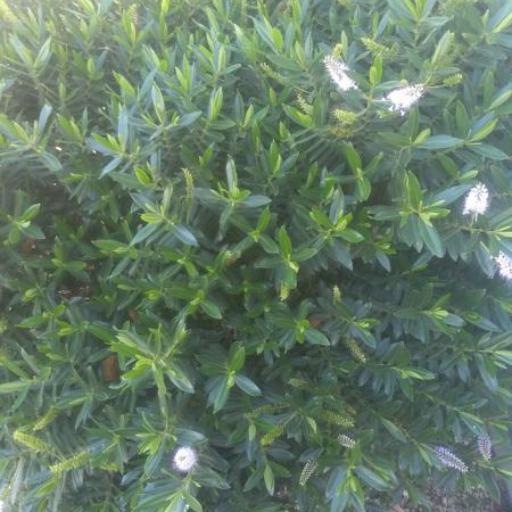
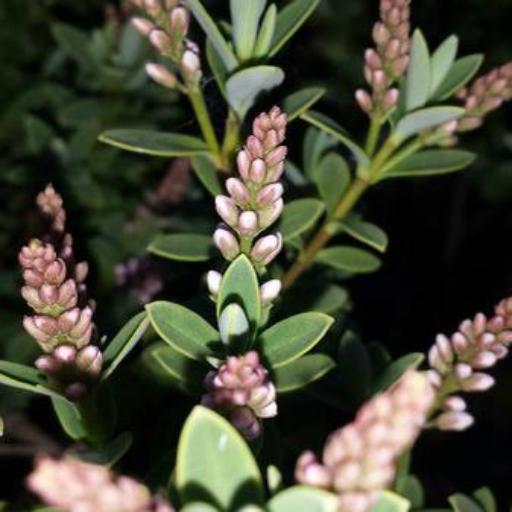
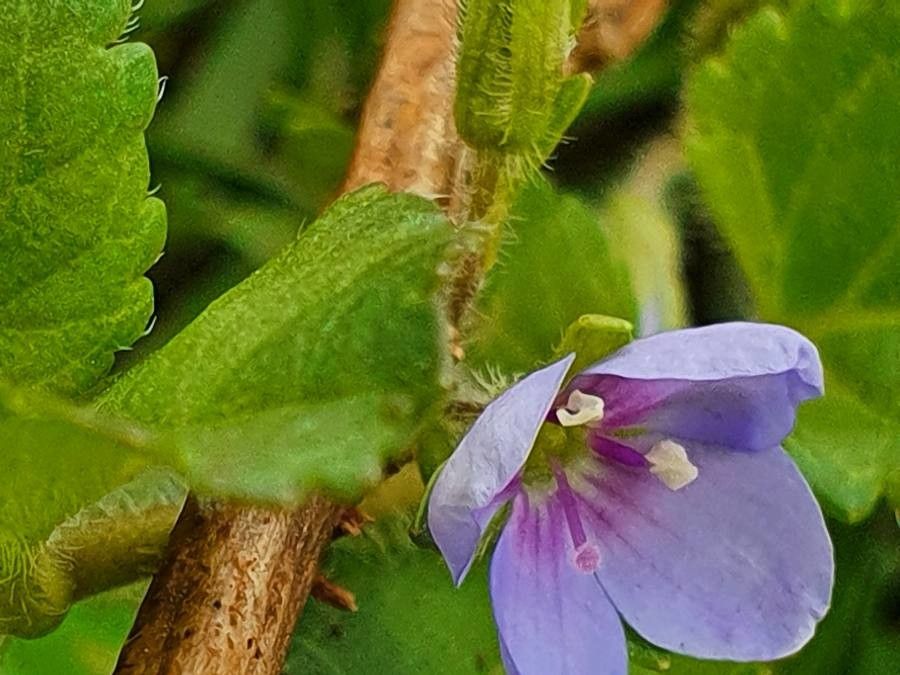
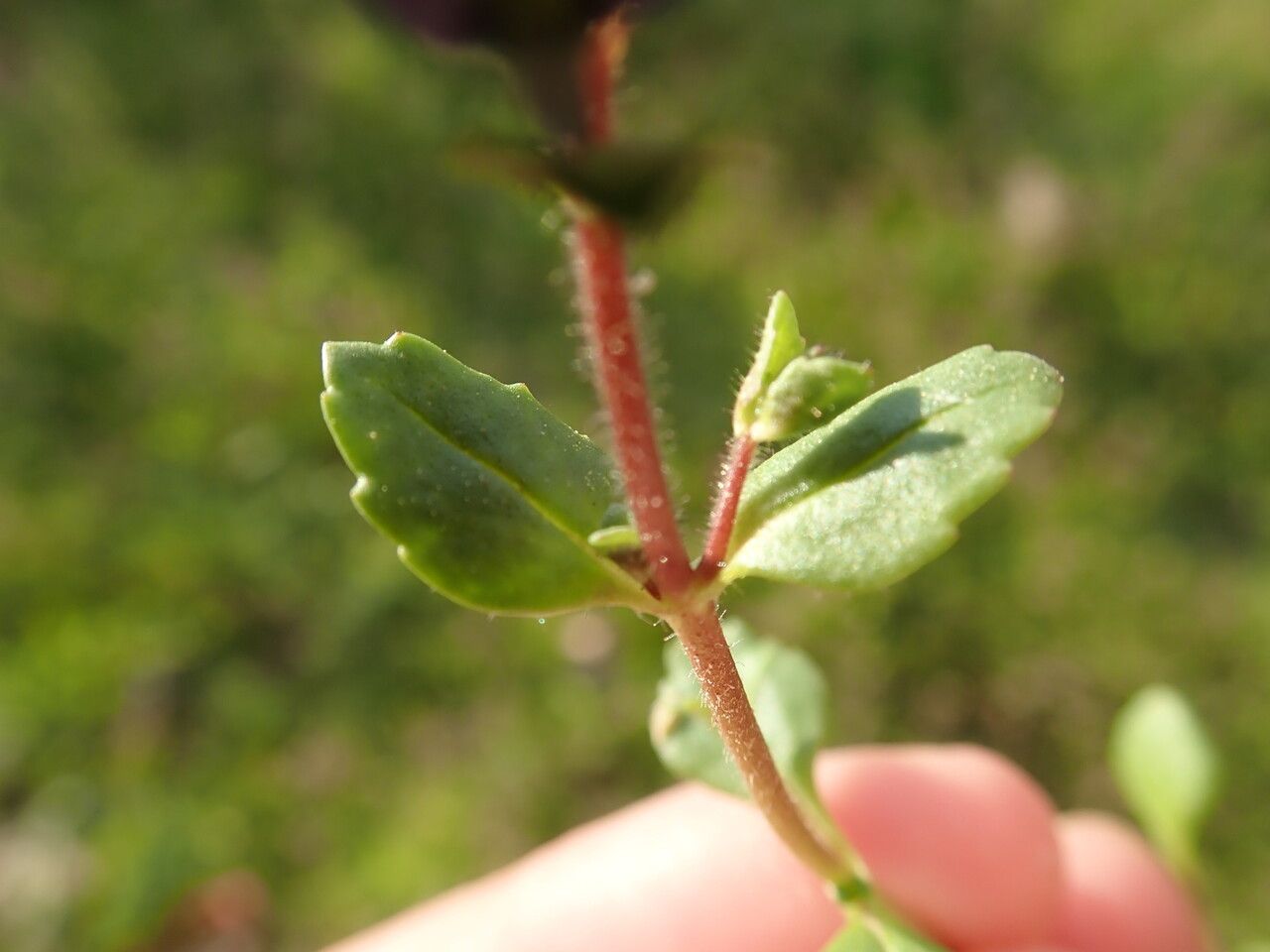
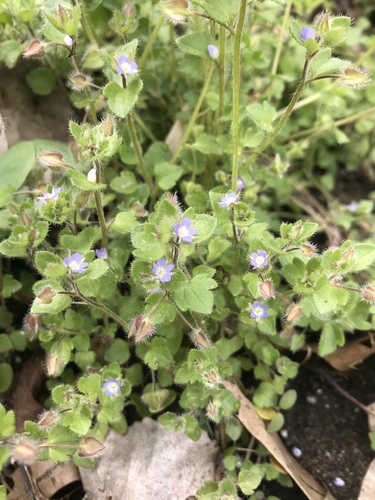
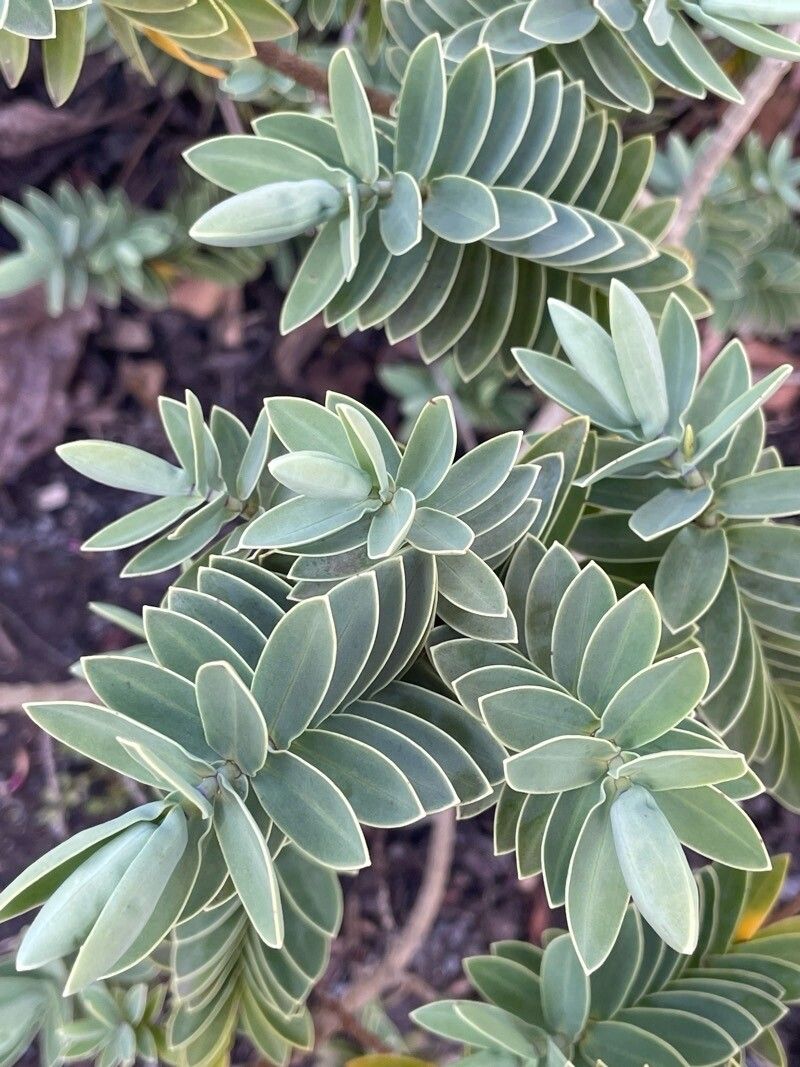
Veronica odora, known as the boxwood hebe, mountain-box, Hebe odora or Hebe buxifolia, is a plant in the family Plantaginaceae, and it is native to New Zealand. Veronica odora was discovered on the Auckland Islands by J.D Hooker in 1840. A certain amount of confusion later arose following its collection on mainland New Zealand by Ernst Dieffenbach and its naming as Veronica buxifolia by George Bentham. Even overseas, Veronica odora is still not infrequently known as Veronica buxifolia.
Mountain-box has strong resistance to disease and is generally not easily affected by illnesses. That said, it can be vulnerable to pests and diseases present in its environment. Such infestations are generally mild. Regarding care, this plant needs moderate maintenance. It should be pruned regularly to preserve an attractive appearance and healthy growth. Fertilizing can also encourage flowering. Mountain-box is appropriate for anyone with outdoor space, like a garden or patio, and does not demand extensive care experience. It may need more attention when cultivated indoors.
How to keep Veronica Odora.
Light
Mountain-box is a perennial herbaceous plant that prefers sunny conditions and originates from open habitats, commonly thriving in meadows and grasslands. It favors full sun but can also tolerate partial sun.
Water
The Mountain-box flourishes in moist environments and requires weekly watering to stay healthy, as it cannot tolerate drought conditions. This evergreen plant retains its leaves all year round, so maintaining consistent moisture levels is essential for its healthy growth.
Temperature
Mountain-box can tolerate a wide range of temperatures, but its distribution may still be restricted by different combinations of moisture and heat. It performs best in warm summer conditions with enough rainfall or watering. Extended stretches of cloudy, rainy weather or persistent high temperatures can raise the chance of Mountain-box dying. During winter, adequate protection from the cold can enhance the plant's survival rate.
Fertilizer
The best time to fertilize a Mountain-box is in early spring, when it is coming out of dormancy and starting active growth. Fertilization supplies essential nutrients needed for healthy development. Although Mountain-box has relatively low fertilizer requirements, applying fertilizer once a year can improve its survival and encourage better, longer-lasting flowers.
Pruning
Mountain-box is a compact evergreen shrub with aromatic leaves and attractive flowers. To maintain its shape, remove dead branches, and improve air circulation, prune the shrub in early spring or late winter. Be careful not to over-prune, as this can negatively affect flower production. Proper pruning helps promote the shrub's health and enhances its appearance.
Pot & Repot
Repot the compact mountain-box every 2 to 3 years in early spring to promote healthy growth. Choose a slightly larger pot and make sure the plant receives plenty of light. Be careful not to overwater, as this will help maintain its vigorous health and lush foliage.
Botanical profile.
- Plant Type
- Herb, Shrub
- Life Cycle
- Perennial
- Genus
- Veronica
- Family
- Plantaginaceae
- Hardiness Zone
- 6-8
- Mature Height
- 91 cm
- Mature Spread
- 76 cm
- Leaf Color
- Dark Green, Forest Green
- Leaf Type
- Evergreen
- Flower Color
- Lavender
- Flower Size
- 2.54 cm
- Bloom Time
- Late spring, Early summer, Mid summer
- Planting Time
- Spring
- Harvest Time
- Mid summer
- Native Area
- New Zealand