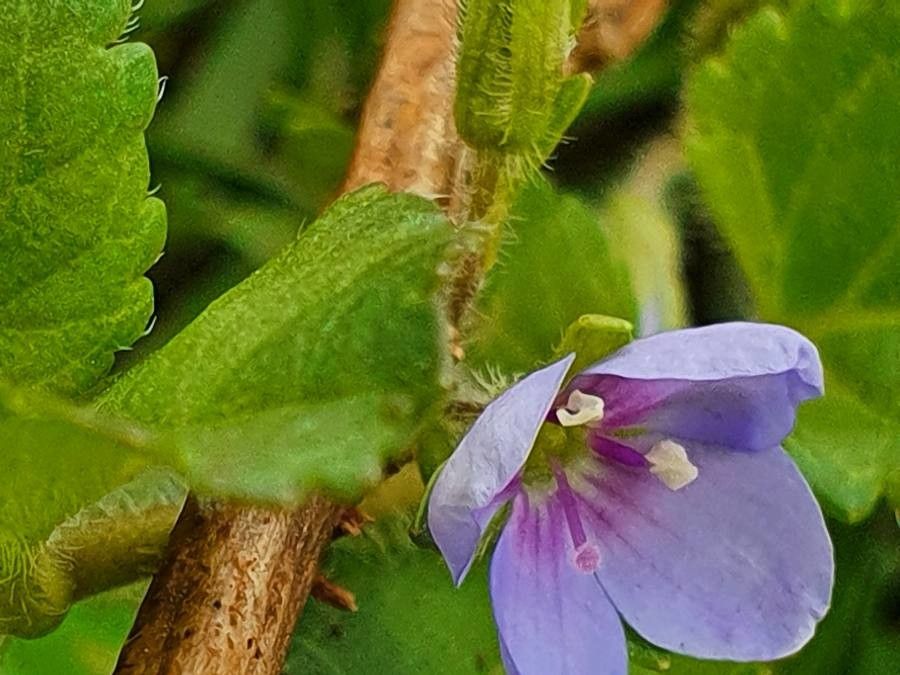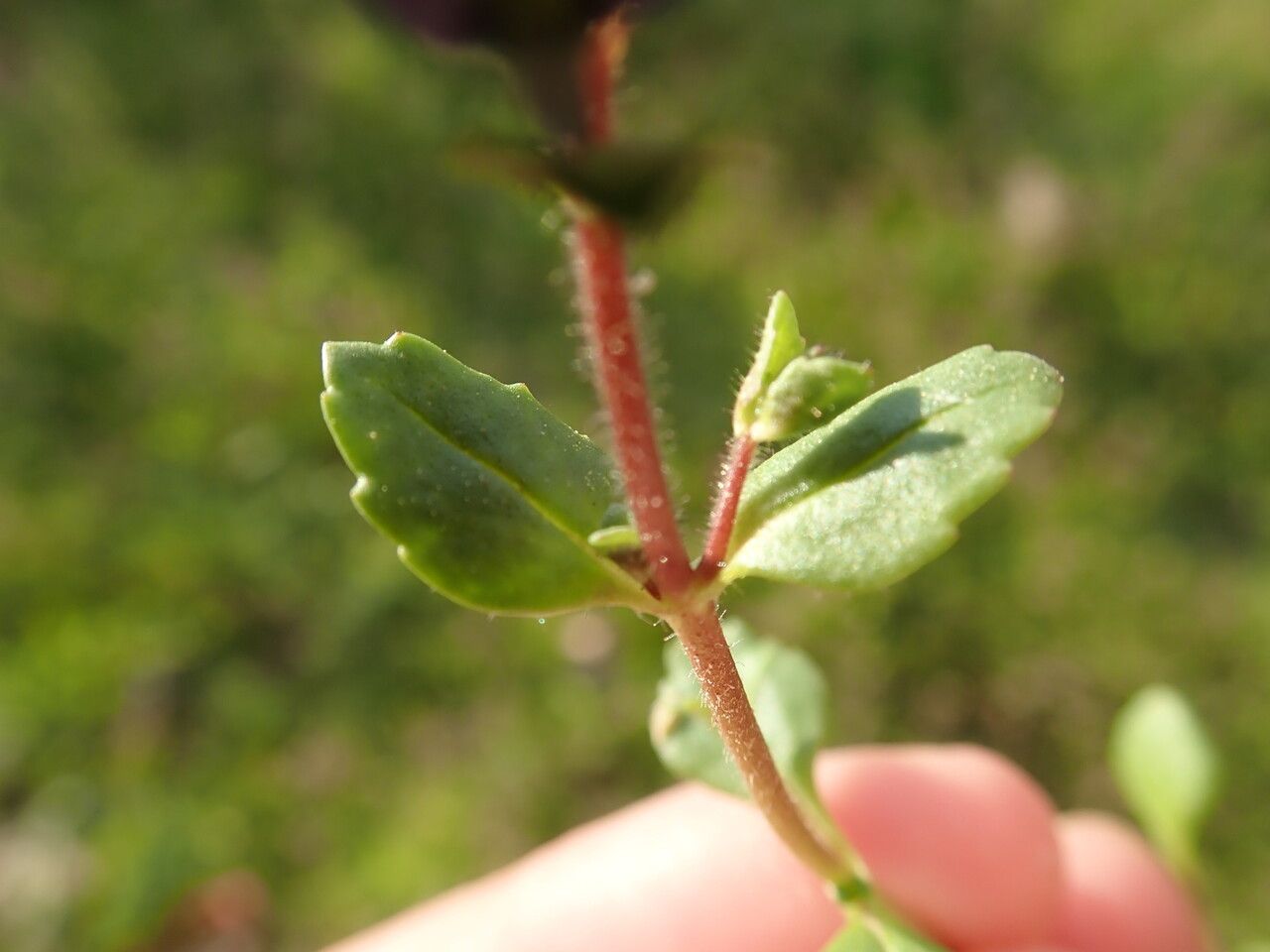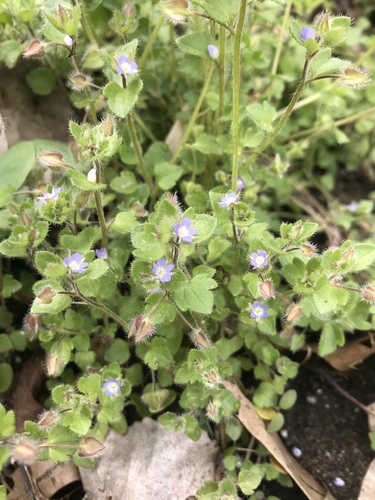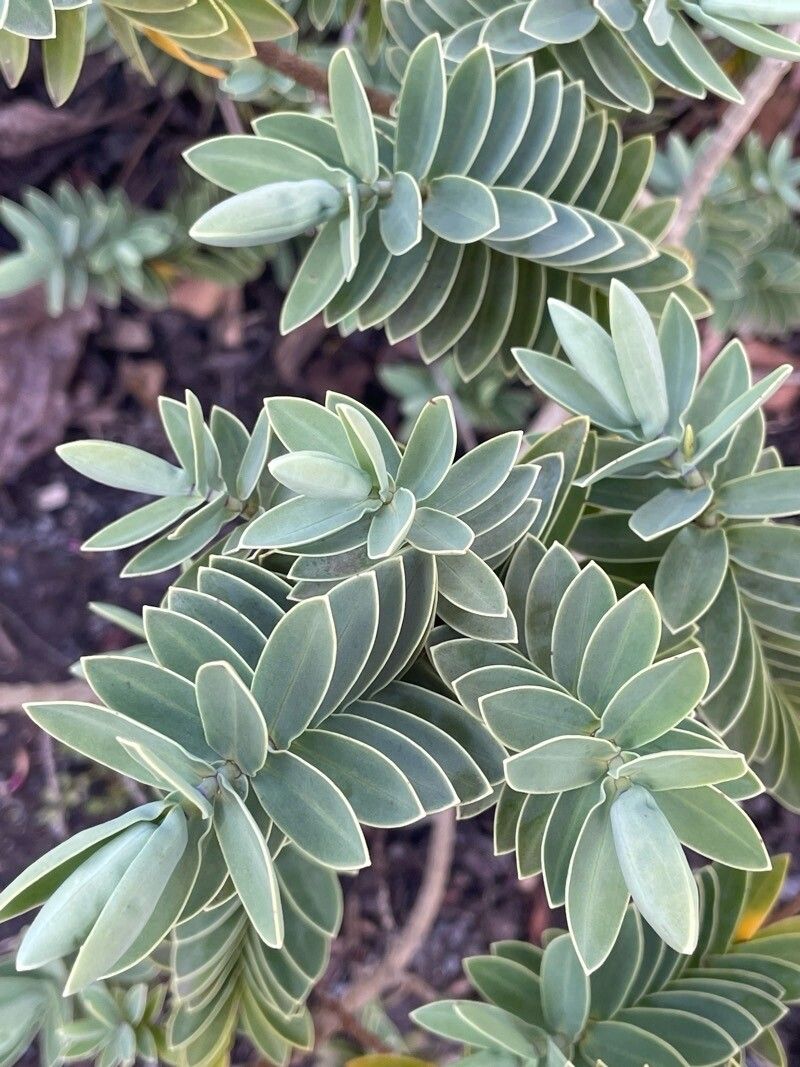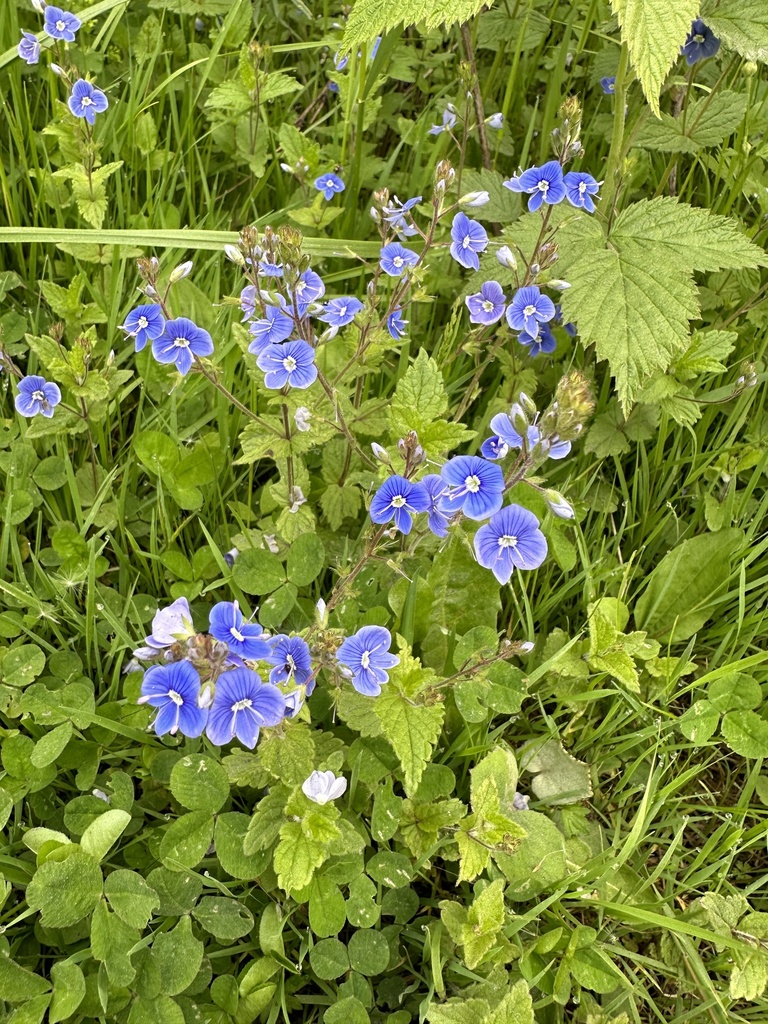
Veronica chamaedrys, commonly known as germander speedwell, is a perennial herbaceous plant that belongs to the Plantaginaceae family. Native to Europe and western Asia, it has also been naturalized in North America. The plant can grow up to 30 cm tall and produces small blue-violet flowers that bloom from April to June. Its leaves are opposite, oval-shaped, with serrated edges and a slightly hairy texture.
Germander speedwell prefers well-drained soils in full sun or partial shade. It is commonly found in meadows, pastures, woodland edges, and along roadsides.
Historically, the plant has been used for its anti-inflammatory properties in medicinal practices. Additionally, it served as a culinary herb during the Middle Ages.
There is another interesting explanation for the common name 'speedwell.' Veronica chamaedrys, often found along roadsides, is considered a good luck charm for travelers, as are other Veronica flowers. It is believed that if a traveler wears germander speedwell in their buttonhole, it will speed up their journey and offer protection along the way. FUN FACT · FROM THE LIBRARY
With its vibrant blue flowers that attract bees and butterflies, germander speedwell is an attractive addition to any garden. It can be propagated by seed or by dividing the root ball in spring or autumn.
Overall, Veronica chamaedrys is an easy-to-grow perennial that offers both ornamental and medicinal value, making it a popular choice among gardeners worldwide!
Bird's-eye speedwell, also known as Cat's eyes, Germander speedwell, or Germander-leaved speedwell, gets its common names from the appearance of its blue-violet petals adorned with white markings. These features inspired names like Cat's eyes and Bird's-eye speedwell for Veronica chamaedrys. The term "speedwell," used for all plants in the Veronica genus, originates from an old meaning of the word "speed," which means "to thrive."
Germander speedwell is fairly resistant to disease and typically does not get sick easily. Still, it can be vulnerable to pests and diseases present in its environment. When infections occur, they are generally mild. Regarding care, the plant needs a moderate amount of attention. Regular pruning is necessary to keep its appearance and growth healthy. Applying fertilizer can also help encourage flowering. This plant is appropriate for anyone with outdoor space, like a garden or patio, and does not demand extensive care experience. It may need more attention if grown indoors.
How to keep Veronica Chamaedrys.
Light
Germander speedwell does best when exposed to abundant sunlight for most of the day, though it also copes well if it receives sun in patches throughout the day. Excessively strong light can bleach its leaves, while too little light can restrict its growth. It originates from habitats accustomed to plentiful sunshine.
Water
Germander speedwell naturally thrives in moist meadows, where the soil stays consistently hydrated without becoming waterlogged. To achieve this balance, it's best to water the plant once a week. Since its growth period depends heavily on water availability, it’s important to irrigate carefully during key growth stages.
Temperature
The germander speedwell grows best in temperatures between 32 and 90 ℉ (0 to 32 ℃). It is native to temperate regions that experience temperature fluctuations throughout the year. In summer, partial shade can help it avoid excessive heat stress.
Fertilizer
One fertilizer application in spring is typically enough for Germander speedwell, though several feedings can produce the best growth. Fertilize about once every month to a month and a half. Feeding improves the leaves’ appearance and function, helping maintain even color and a healthy texture. It also promotes root development and enhances nutrient uptake for the plant’s long-term health.
Pruning
Germander speedwell is known for its vibrant blue flowers and delicate foliage. To maintain its appearance and health, prune the plant between early and late spring, making sure to trim any dead or overgrown stems. By reducing the height by one-third, you can encourage a more compact shape and enhanced flowering. For detailed pruning techniques, refer to trusted horticultural guides.
Toxicity
Veronica Chamaedrys is not toxic for but rabbits but also it is not palatable. The leaves of the plant works as tea substitute.
Further reading →
The toxicity and danger assessments provided are for reference only. We do not assure their accuracy, so it's crucial not to depend on them. Seek professional advice when necessary for accurate guidance.
Botanical profile.
- Plant Type
- Herb
- Life Cycle
- Perennial
- Genus
- Veronica
- Family
- Plantaginaceae
- Hardiness Zone
- 3-7
- Mature Height
- 49 cm
- Mature Spread
- 49 cm
- Leaf Color
- Green
- Leaf Type
- Evergreen, Deciduous
- Flower Color
- Blue
- Flower Size
- 0.76 cm to 1.27 cm
- Bloom Time
- Late spring, Early summer
- Planting Time
- Summer
- Harvest Time
- Early summer, Mid summer
Other names.
Reader questions.
What is the most effective way to water my Germander speedwell plant?
When watering the Germander speedwell, it's best to use filtered water at room temperature. Tap water can have harmful particles, so filtered water is preferred. The Germander speedwell prefers warm water because it's used to a warm environment, and cold water can be a shock. Additionally, avoid overhead watering to prevent foliage problems. Instead, apply filtered room temperature water directly to the soil until it's soaked. This helps moisten the roots and allows them to spread and collect necessary nutrients.
Why should I put fertilizer on my Germander speedwell?
The Germander speedwell's leaves are a crucial part of its structure. Fertilizing is essential for promoting healthy and attractive leaves. Proper fertilization maintains consistent color and textures. It also aids root growth and maintenance, allowing the plant to absorb nutrients effectively in the future. Fertilization benefits both the plant's current health and its long-term nutrient absorption capabilities.
What are the sunlight requirements for Germander speedwell?
Germander speedwell performs best when exposed to full sun, which means it requires more than 6 hours of sunlight daily. However, it can still manage with partial sun, equaling about 3-6 hours of sunlight. It is essential to observe the movement of sunlight in your garden to find the optimal spot that offers a balance of light and shade, ensuring the plant's health and happiness. Excessive light can bleach the leaves, whereas not enough light can stunt growth. Germander speedwell naturally thrives in environments abundant in sunshine.
What are the essential care requirements for Germander Speedwell (Veronica chamaedrys)?
Germander Speedwell (Veronica chamaedrys) thrives in temperatures ranging from 32 to 90°F (0 to 32°C), typical of temperate regions where it is native. These regions experience temperature fluctuations throughout the year, making the plant adept at handling varying conditions. During the hot summer months, Germander Speedwell benefits from partial shade to mitigate excessive heat stress. Despite its high tolerance for cold, no special frost protection measures are needed in winter. However, it's advisable to water the plant generously before the first freeze of autumn to ensure the soil remains moist and freezes, which helps prevent winter and early spring drought.
What should I do if I give my Germander speedwell plant too much water or too little water?
Overwatering is a common problem for Germander speedwell and can cause wilting, yellowing leaves, and diseases like root rot, mold, and mildew. Underwatering is less common but can result in brittle, brown leaves. It's important to identify signs of overwatering early to prevent irreversible damage. If overwatering is noticed, reduce watering immediately and consider using well-draining soil. If underwatering is observed, increase watering until signs improve.
When should I fertilize my Germander speedwell plant?
If you grow your Germander speedwell outdoors, it will send new growth in early spring. This is the sign that it's time to start fertilizing. Usually, one application of fertilizer in spring is enough for Germander speedwell. But if you want to maximize its growth, you can fertilize it multiple times throughout spring and early summer, about once every month to a month and a half.
Can Germander speedwell be grown indoors, and how do you provide sufficient light?
Yes, Germander speedwell can be grown indoors but requires adequate lighting to foster optimal growth. This can be quite challenging during winter or in less sunny spaces. Artificial lights, especially LED lights, can be an effective solution as they can be tailored to deliver specific wavelengths needed by the plant. For full sun plants, 30-50W/sq ft of artificial light is recommended, while partial sun plants need 20-30W/sq ft, and full shade plants need 10-20W/sq ft. The light source should be placed 12-36 inches above the plant for 8-12 hours per day to mimic natural sunlight conditions.
How does Germander Speedwell react to low temperatures?
Germander Speedwell is exceptionally cold-tolerant, able to withstand winter temperatures down to -35°C without significant visible changes. However, if temperatures fall below this threshold, you may notice a reduction in sprouting or no sprouting at all when spring arrives. To manage this, remove any parts of the plant that haven't sprouted in the spring.
How frequently do I need to water my Germander speedwell?
If your Germander speedwell plant is in a pot, the most accurate way to determine if it needs water is by sticking your finger into the soil. If the top two to three inches of soil feel dry, it is time to water it. If you have planted the Germander speedwell outdoors in the ground, you can use a similar method to test the soil. Again, if you find that the top few inches of soil have dried out, it is time to water the plant. During the spring and early fall, you will often need to water this plant about once a week using this method. However, when it gets extremely hot, you may need to increase the frequency to watering it about twice or more per week. It is worth noting that mature and well-established Germander speedwell plants have a remarkable ability to tolerate drought.
When is the best time to not fertilize my Germander speedwell?
During the late fall and winter, your Germander speedwell goes into a dormant phase where it stops producing new growth. It's best not to fertilize your Germander speedwell during this time. If you prefer to fertilize during the spring and summer, you should reduce the rate as summer approaches since the growth rate of the Germander speedwell also slows down. In general, it's not a good idea to fertilize your Germander speedwell when the weather is too hot or the soil is excessively dry. Fertilizing in these situations can stress the plant and cause it to die prematurely.
What are the symptoms of light deficiency in Germander speedwell?
Insufficient lighting can cause various symptoms in Germander speedwell, including smaller new leaves, leggy or sparse growth, premature leaf drop, slower or halted growth, lighter-colored or yellowing leaves (chlorosis), and possibly damage from excessive light such as sunscald and leaf scorching. These symptoms indicate the plant's struggle with adapting to inadequate light conditions, highlighting the importance of ensuring it receives enough sunlight or artificial light.
What should I do if Germander Speedwell experiences high temperatures?
Germander Speedwell struggles with high temperatures above 32°C, which can halt its growth and make it vulnerable to rot. If your plant is affected by excessive heat, trim away any sunburned and dried parts. Relocate the plant to a spot with shade during the peak sun of midday and afternoon, or use a shade cloth to protect it. Ensuring the soil is kept moist through morning and evening watering will also help mitigate the stress of high temperatures.