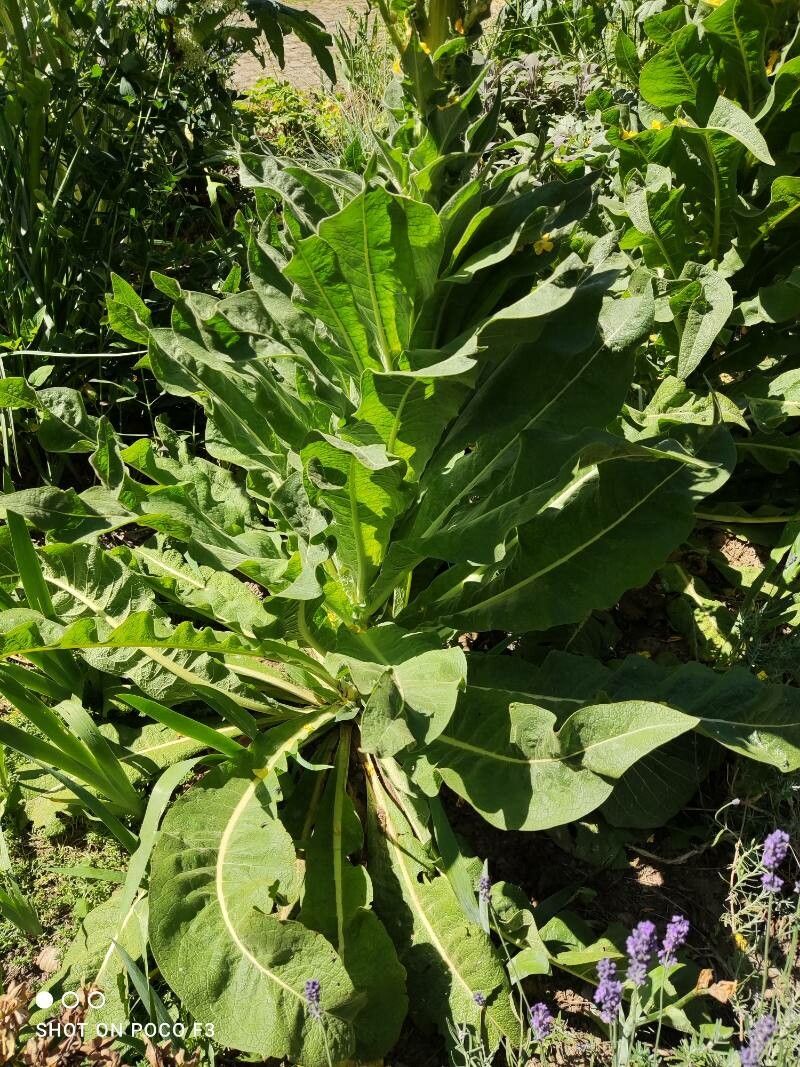
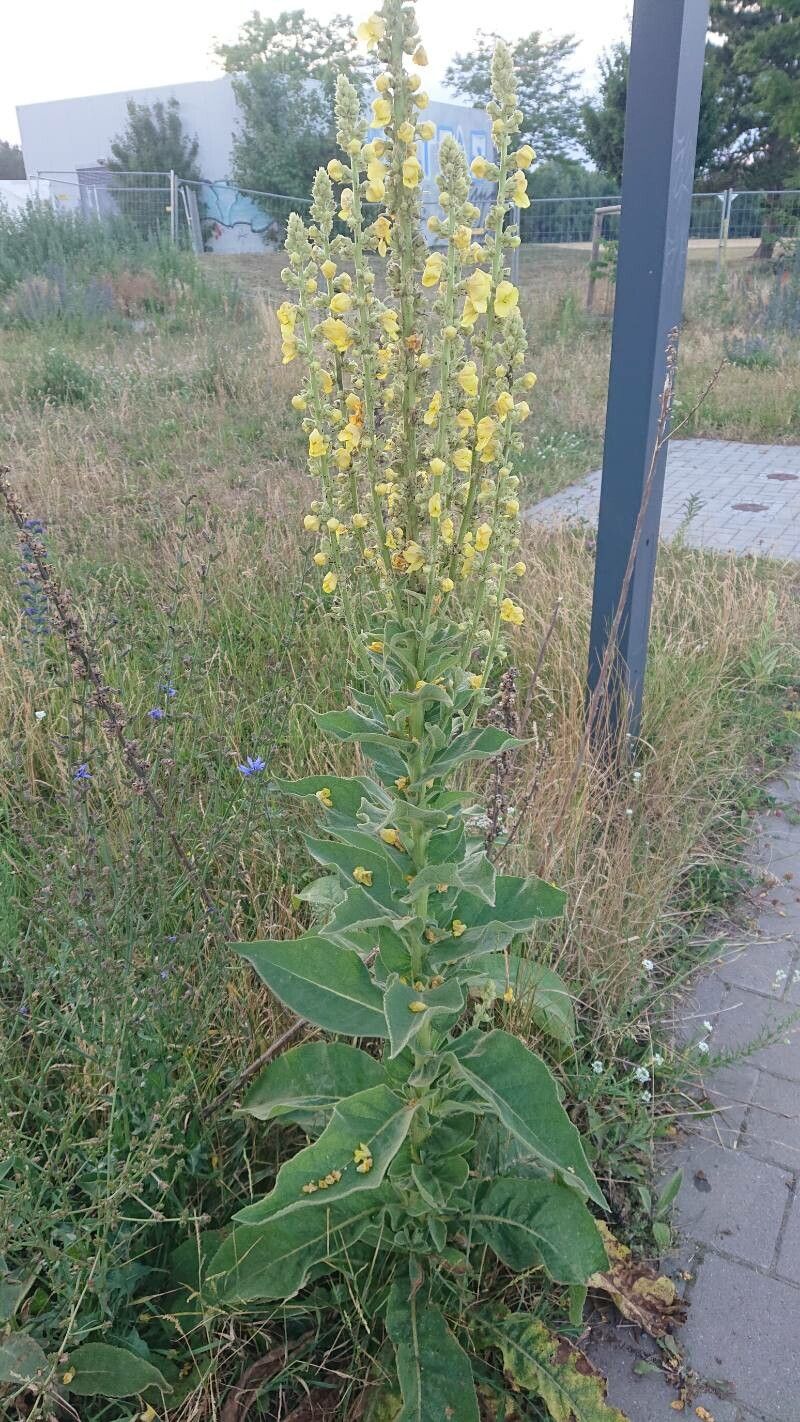
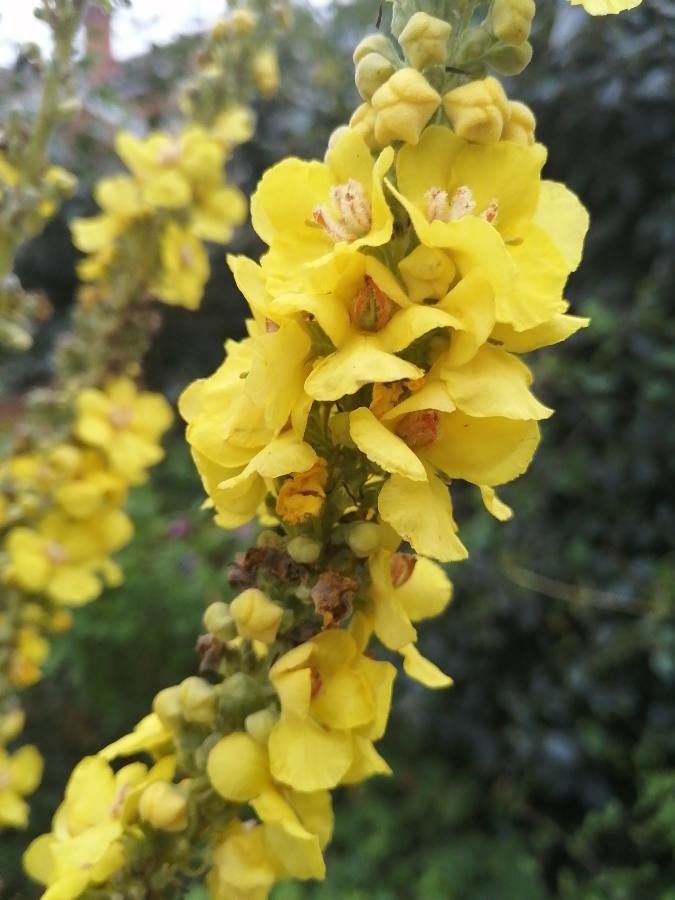
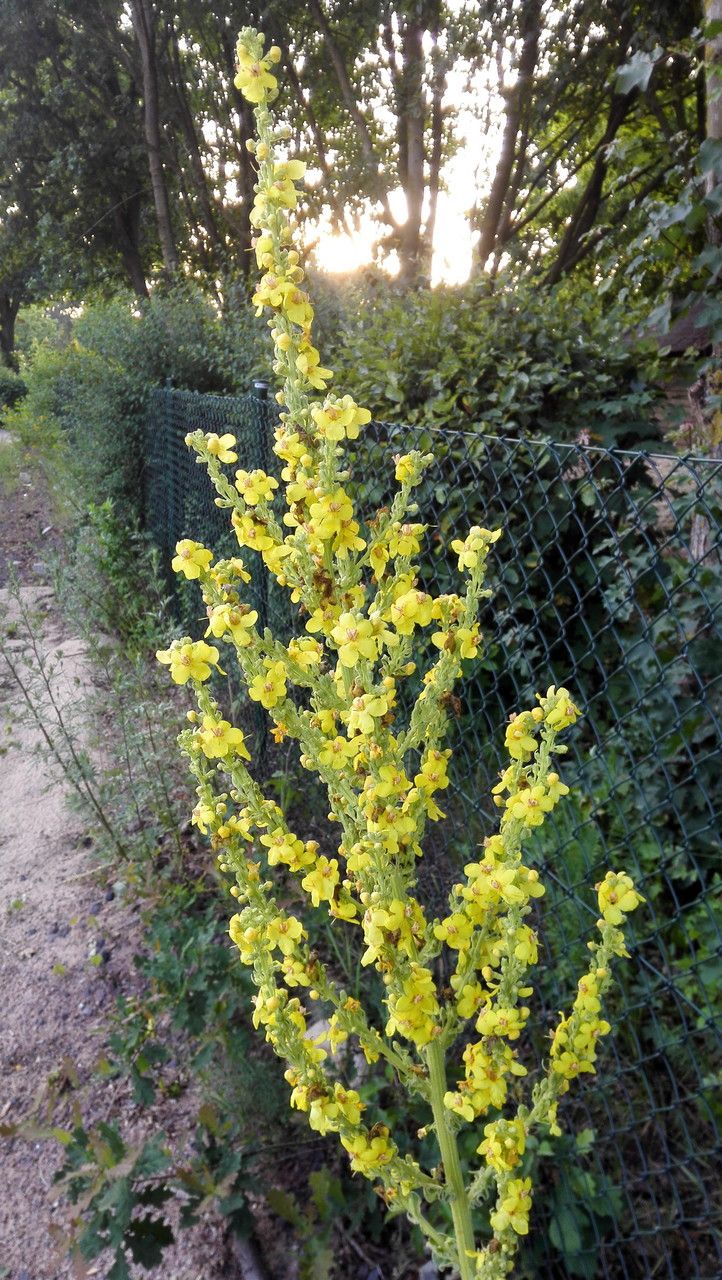
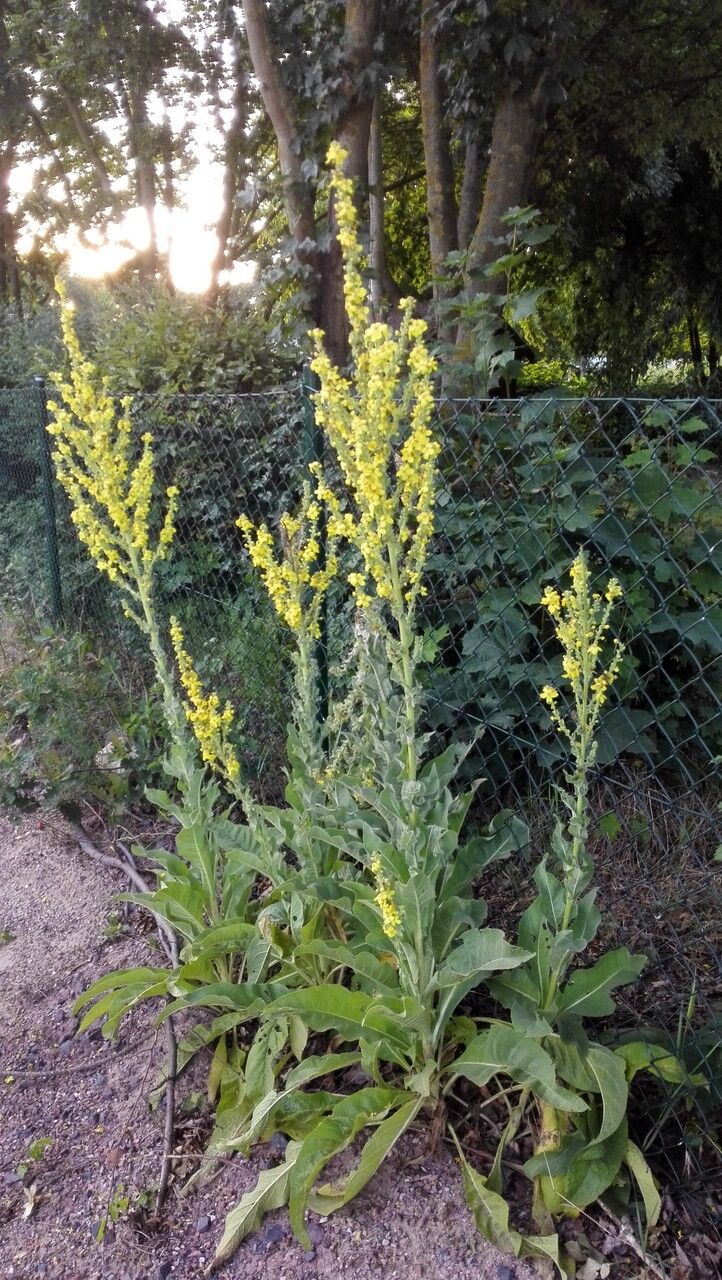
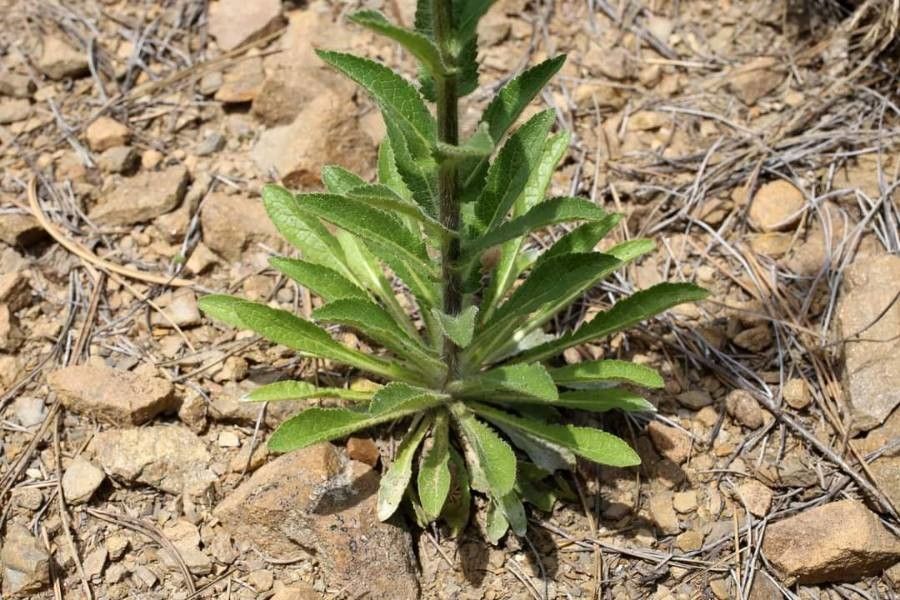
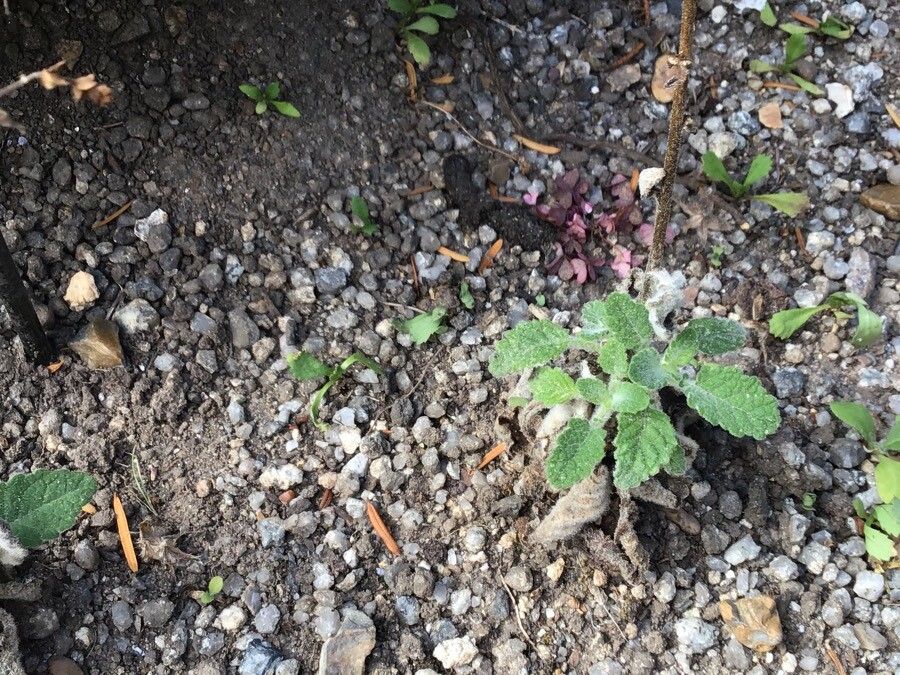
Verbascum speciosum is a species of flowering plant in the figwort family known by the common name Hungarian mullein or showy mullein. It is native to eastern Europe and western Asia, and it is known in many other regions as an introduced species and roadside weed. It is a biennial herb forming a rosette of large leaves and an erect stem well exceeding one meter in maximum height. The leaves are 30 to 40 centimeters long and have smooth edges and pointed tips. The plant blooms in a large panicle with many branches lined with flowers. Each flower has a corolla measuring 2 to 3 centimeters wide with five yellow petals. There are five stamens coated in long white hairs at the center. The fruit is a capsule up to 7 millimeters in length containing many seeds.
Showy mullein has good resistance to disease and is generally not highly susceptible to illnesses. However, it can be affected by pests and diseases present in its surroundings, and these problems are typically mild. Its care level is moderate. It should be pruned regularly to maintain a tidy appearance and healthy growth. Fertilizing can also help encourage flowering. Showy mullein is suitable for anyone with outdoor space, such as a garden or patio, and does not require extensive care experience. It may need more attention when grown indoors.
How to keep Verbascum Speciosum.
Light
Showy mullein is native to bright, open areas where it does best in full sun. It can tolerate partial sun but favors direct sunlight for optimal growth. This annual and biennial plant is noted for its sun-loving nature.
Water
Showy mullein, adapted to moderate climates, thrives in well-draining soil with consistent moisture. This herbaceous perennial grows best outdoors, where natural rainfall can meet its watering needs. It benefits from weekly watering, which helps maintain its hydration without risking waterlogging.
Temperature
Showy mullein can tolerate a wide range of temperatures, but its distribution can still be limited by different combinations of moisture and heat. It grows best in warm summer climates with sufficient rainfall or irrigation. Extended periods of cloudy, rainy weather, along with sustained high temperatures, can raise the chance of Showy mullein dying. In winter, adequate protection from cold can increase the plant’s survival rate.
Fertilizer
Showy mullein are considered heavy feeders in regard to nutrients. They need frequent, low doses of nitrogen and potassium fertilizers and periodic applications of phosphorus, micronutrients, sulfur, and magnesium to maintain good growth and bright coloration. Continuous fertilization throughout the growing season is required to prevent deficiency symptoms and maintain optimal growth.
Pruning
To promote healthy growth and vibrant blooms in showy mullein, it's important to prune them from early to late spring. Start by removing any dead leaves and spent flowers to tidy up the plant. Cutting back to the basal rosette helps prevent legginess, keeping the plant more compact and attractive. Regular thinning further enhances air circulation, which can reduce the risk of disease. By timing your pruning efforts correctly, you can ensure the mullein blooms optimally and maintains its vigor throughout the growing season.
Botanical profile.
- Plant Type
- Herb
- Life Cycle
- Biennial, Perennial
- Genus
- Verbascum
- Family
- Scrophulariaceae
- Hardiness Zone
- 4-9
- Mature Height
- 0.91 m to 2.13 m
- Mature Spread
- 49 cm to 91 cm
- Leaf Color
- Gray, Light Gray
- Leaf Type
- Deciduous
- Flower Color
- Yellow
- Flower Size
- 2.03 cm to 3.05 cm
- Bloom Time
- Early summer, Mid summer
- Planting Time
- Spring, Summer, Autumn
- Harvest Time
- Late summer, Early fall
Other names.