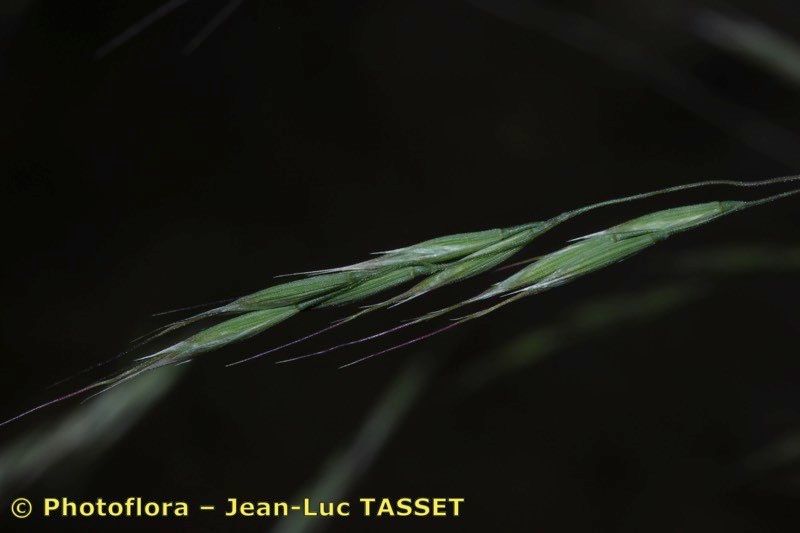
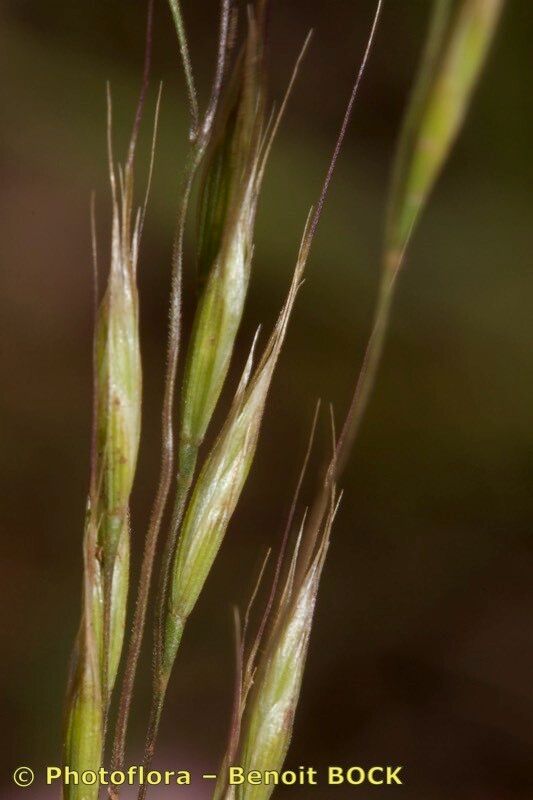
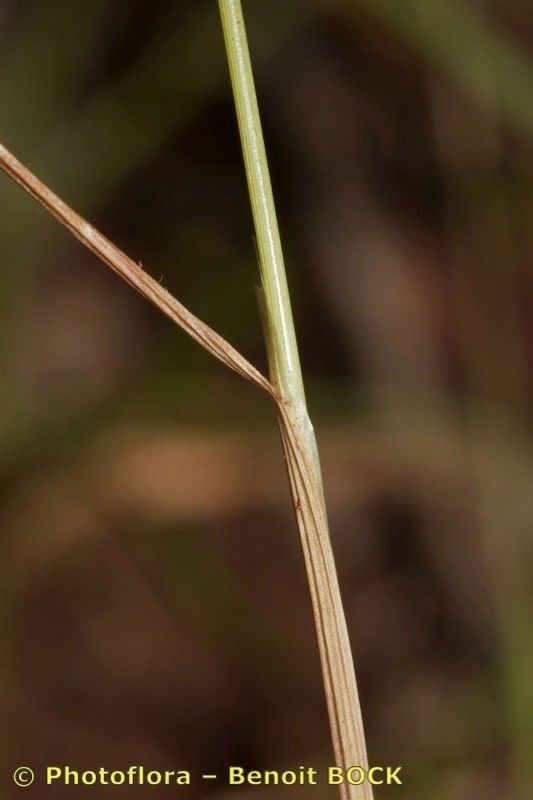
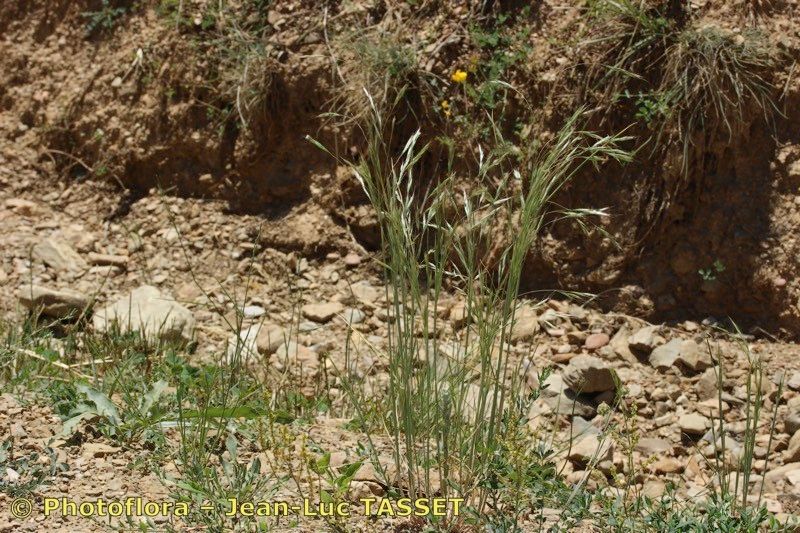
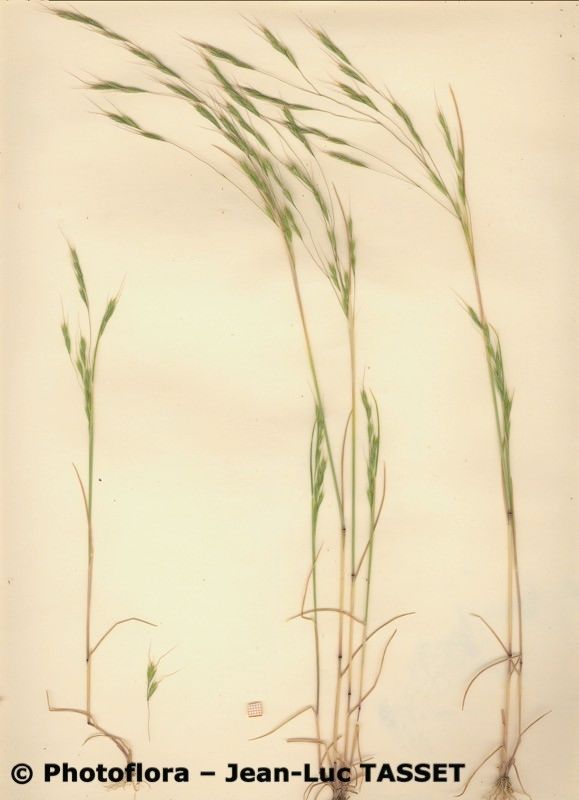
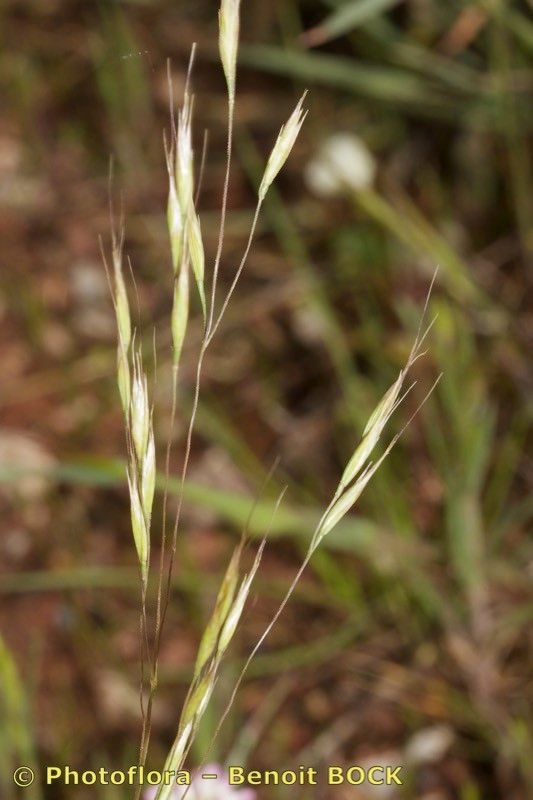
Ventenata dubia is a species of grass known by the common names North Africa grass and wiregrass. It is native to southern Europe, North Africa and the Middle East. It is becoming well known in North America, where it is an introduced species and a noxious weed of cultivated and disturbed habitat. It is problematic in the Pacific Northwest, where it was first identified in Washington in 1952 and Idaho in 1957. It was found in Utah in 1996. It probably spreads when it gets mixed in with grass seed and is transported and inadvertently planted.This is an annual grass growing 15 to 70 centimeters tall with thin, branching stems that are naked and wiry. These wiry stems make the grass hard to cut. The inflorescence is an open panicle with very slender, spreading branches bearing spikelets at their tips. The spikelet is 1 to 1.5 centimeters in length and has riblike longitudinal veins. The upper flower has a wavy awn up to 1.5 centimeters long.
North Africa grass is resistant to disease and is generally not susceptible to illnesses. Regarding care, this plant is fairly low-maintenance. When grown outside it needs minimal watering, and larger plants usually do not require pruning. Smaller plants, however, should be pruned after they have finished blooming. North Africa grass is suitable for people with an outdoor area, such as a garden or deck, and does not require much gardening experience.
How to keep Ventenata Dubia.
Light
North Africa grass comes from bright, open habitats and does best in full sun. It can handle some partial shade but prefers direct sunlight for optimal growth. This annual and biennial plant is noted for its sun-loving nature.
Water
North African grass is well-suited to arid environments, thriving with minimal moisture and exhibiting excellent drought tolerance. It requires watering only once a week to meet its hydration needs. As an outdoor grass, it primarily depends on natural precipitation for its growth and adapts to seasonal rain patterns rather than relying on artificial irrigation.
Temperature
North Africa grass can tolerate a wide range of temperatures, but its distribution may still be restricted by different combinations of moisture and heat. It does best in warm summer conditions with sufficient rainfall or watering. Extended periods of cloudy, rainy weather, as well as prolonged high temperatures, increase the likelihood of North Africa grass dying. In winter, adequate protection from cold can improve the plant's survival chances.
Pruning
North African grass is characterized by its slender stems and rapid growth. To promote healthy growth and control its invasiveness, it is best to prune any dead or damaged stems from early to late spring. Regular pruning not only ensures vigorous regrowth but also helps reduce competition. For the best practices, consult reliable horticultural guides.
Botanical profile.
- Plant Type
- Grass
- Life Cycle
- Annual
- Genus
- Ventenata
- Family
- Poaceae
- Hardiness Zone
- 4-8
- Mature Height
- 30 cm to 61 cm
- Mature Spread
- 10 cm to 20 cm
- Leaf Color
- Light Green
- Leaf Type
- Semi-evergreen
- Flower Color
- Green, Tan
- Flower Size
- 0.51 cm to 1.02 cm
- Bloom Time
- Early summer, Mid summer
- Planting Time
- Spring, Summer
- Harvest Time
- Mid summer, Late summer
- Native Area
- Turkey, Austria, Tunisia, Czech Republic, Slovakia, Montenegro, Bulgaria, Armenia, Poland, Greece, Croatia, Ukraine, Serbia, Russia, Hungary, Germany, Italy, Kazakhstan, Spain, France, Albania, Azerbaijan, Algeria, Romania, Belgium, Portugal
Other names.