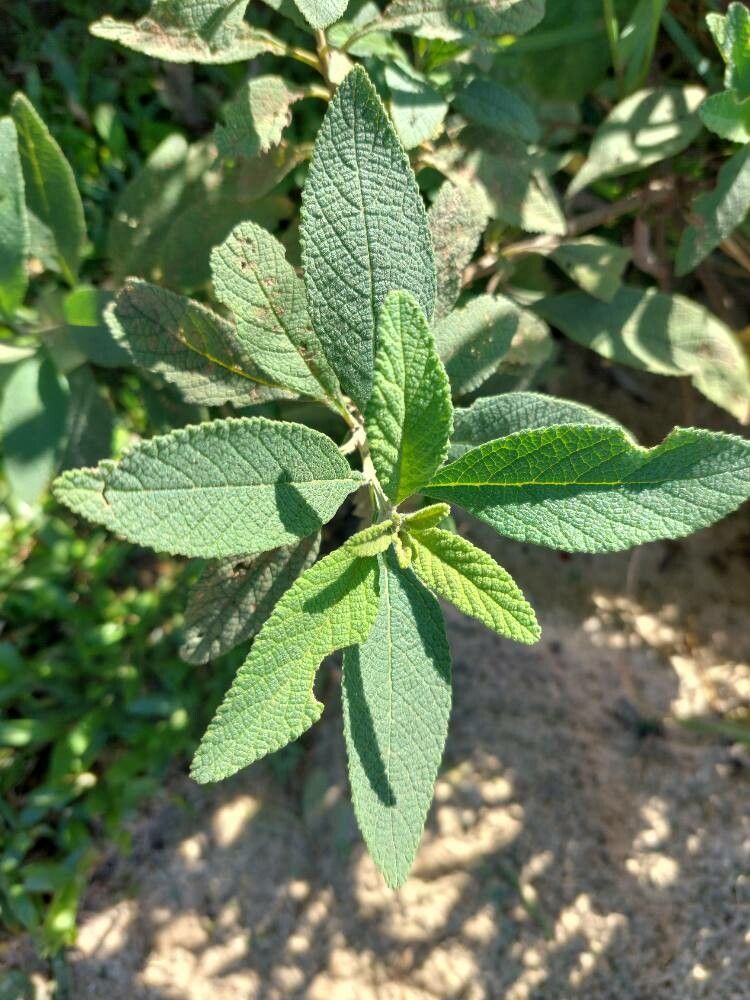
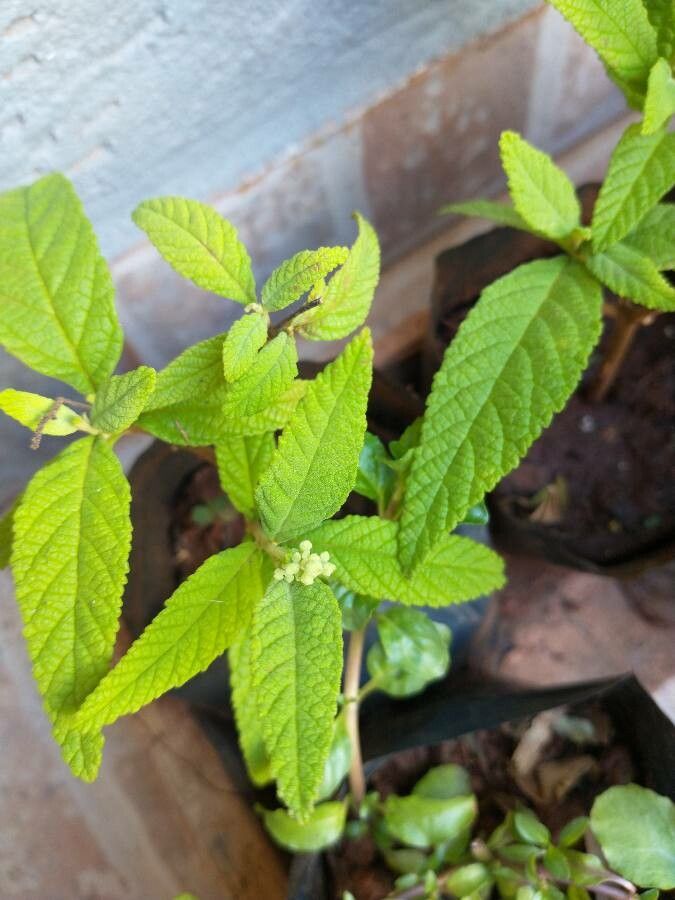
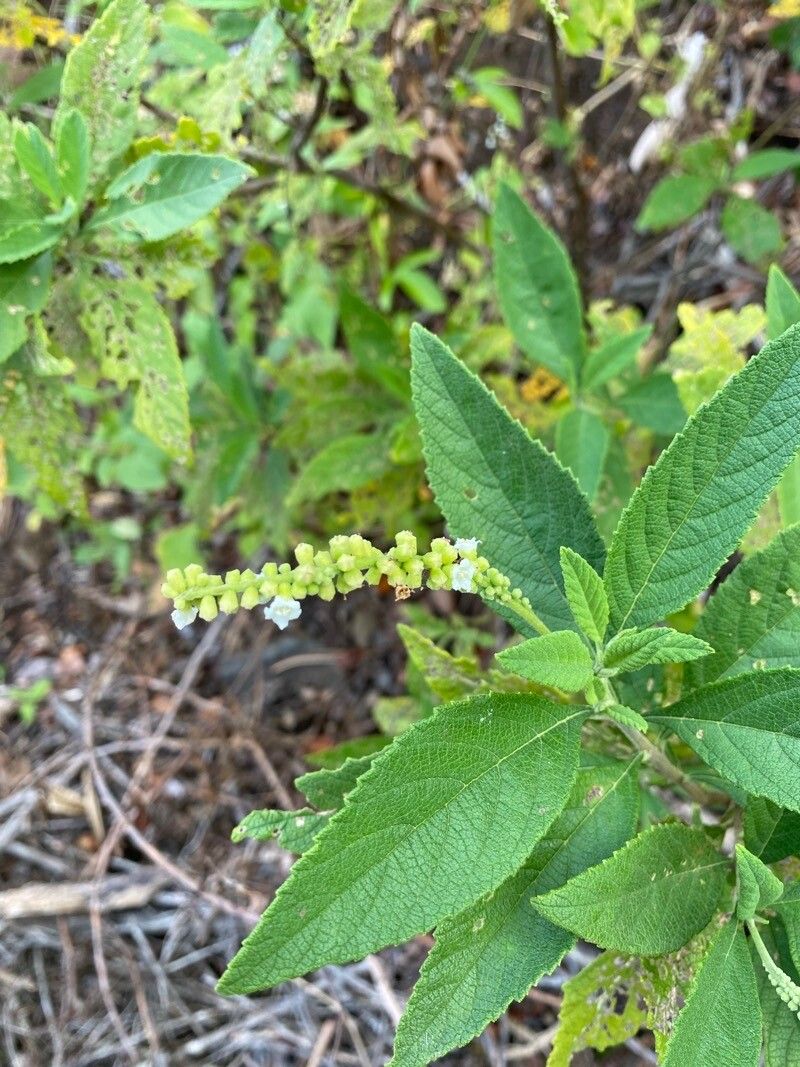
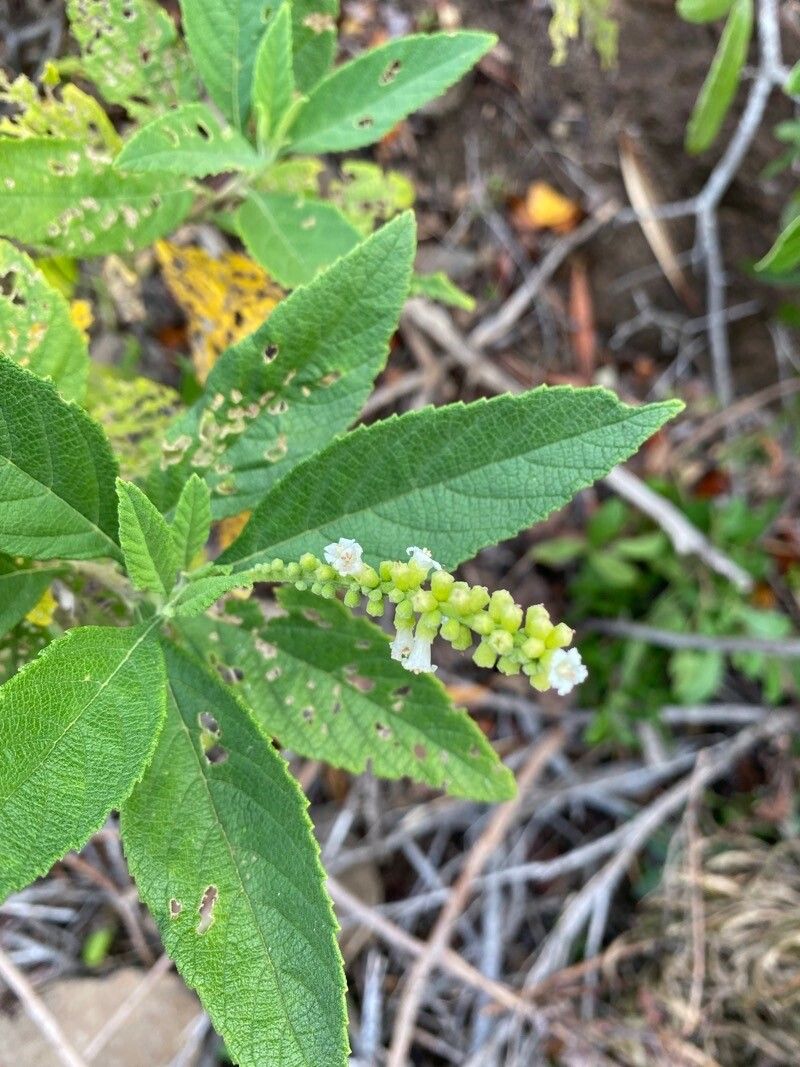
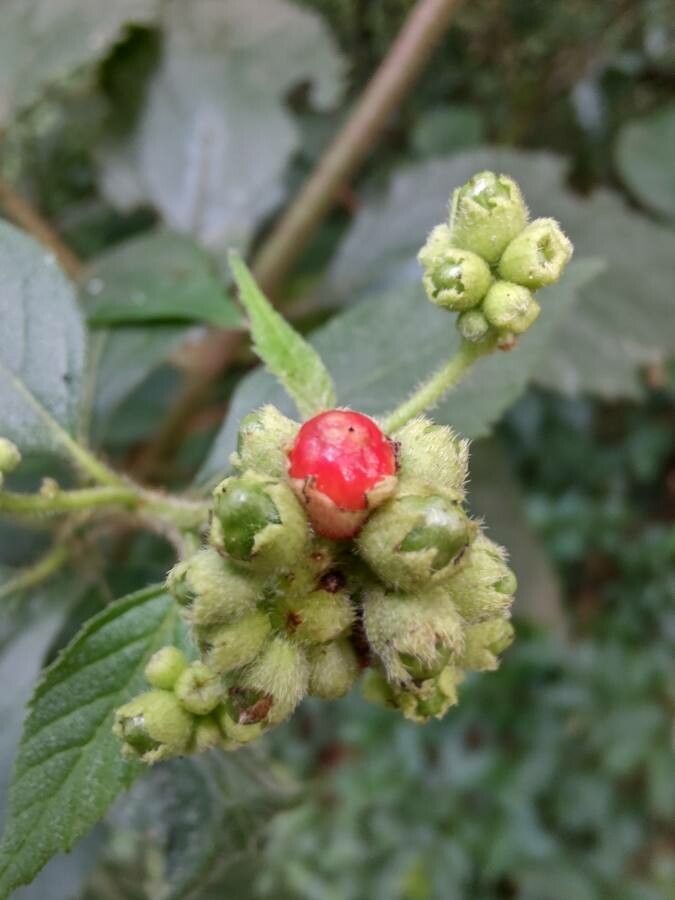
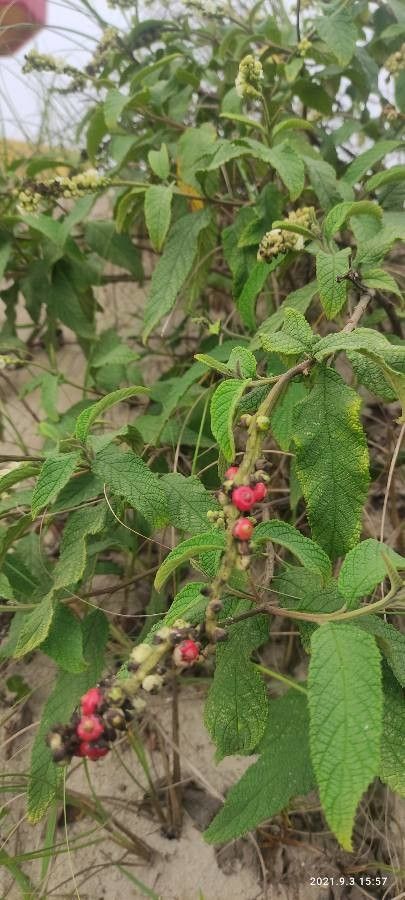
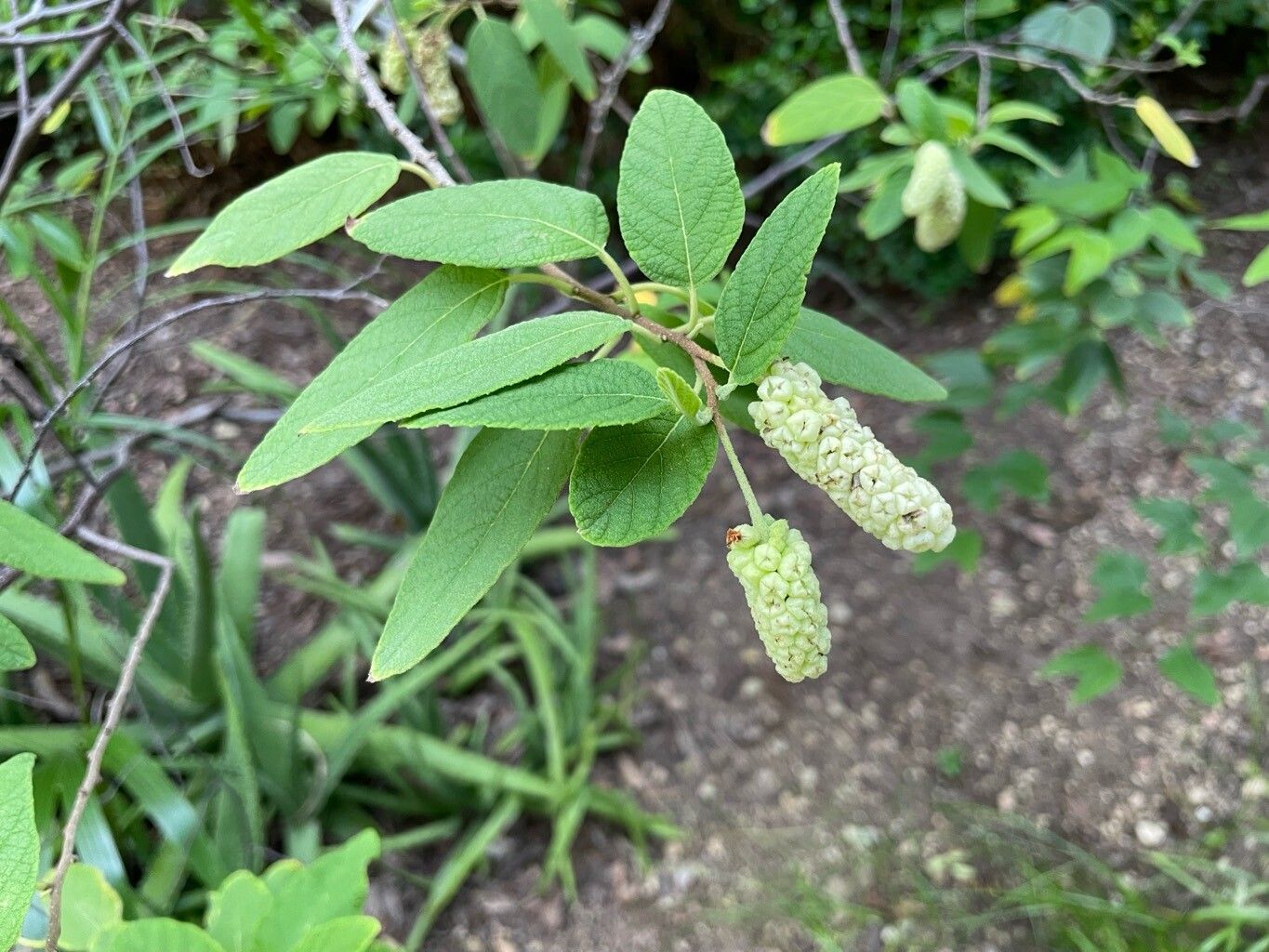
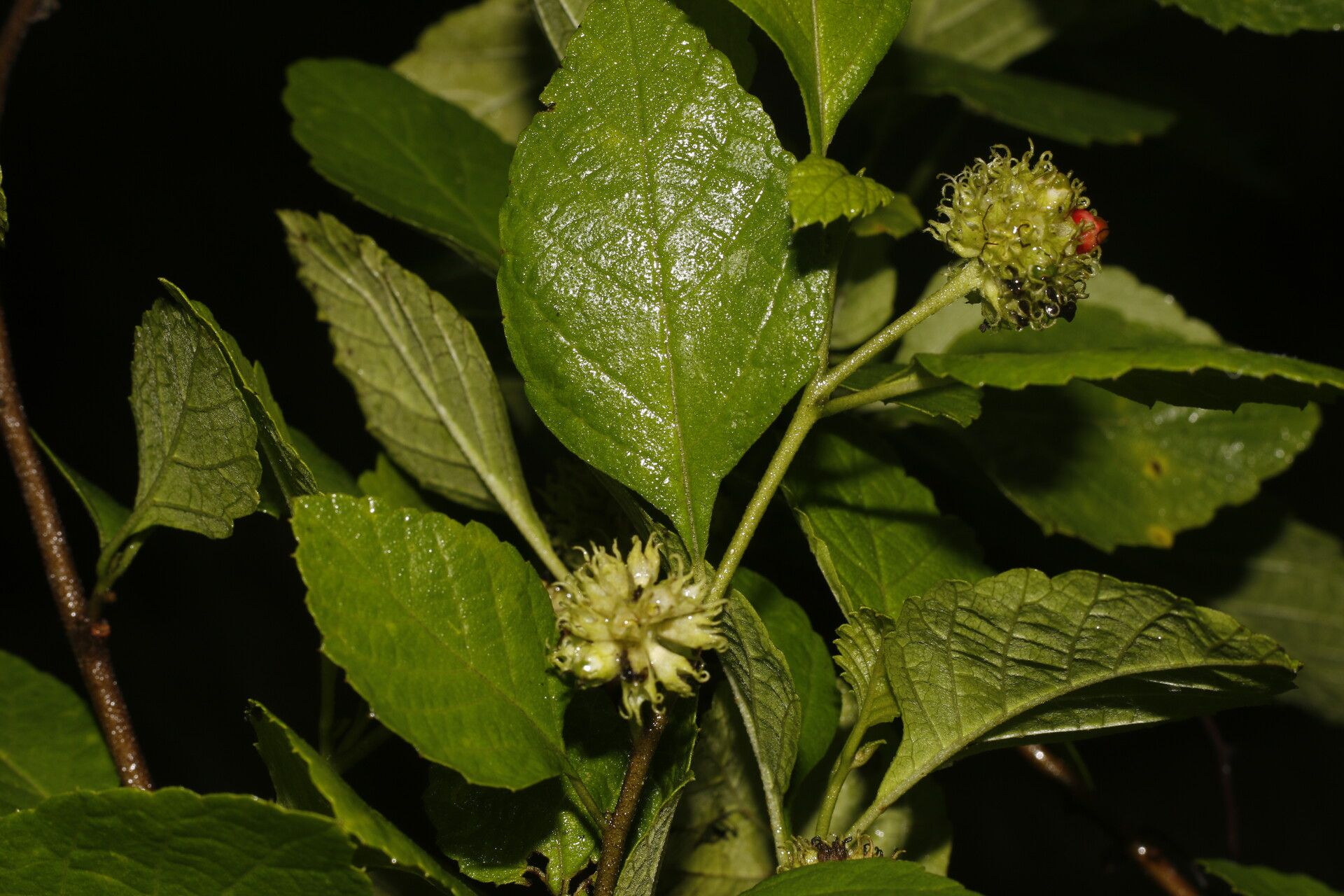
Varronia curassavica, synonym Cordia curassavica, commonly known as black sage or wild sage, is a species of flowering plant in the borage family, Boraginaceae. It is sometimes called tropical black sage to distinguish it from another unrelated species named black sage, Salvia mellifera. It is native to tropical America but has also been widely introduced to Southeast Asia and the tropical Pacific region, where it is an invasive weed. The specific epithet is a latinised form of Curaçao, an island in the southern Caribbean Sea region and the locality of the type collection.
Tropical black sage has strong resistance to disease and is generally not susceptible to illnesses. As for care, this plant is fairly low-maintenance. When grown outdoors it needs only light watering, and larger specimens usually do not require pruning. Smaller plants, however, should be trimmed after they have finished blooming. Tropical black sage is suitable for anyone with an outdoor area, such as a garden or deck, and does not demand extensive plant-care experience.
How to keep Varronia Curassavica.
Light
Tropical black sage is native to open habitats, such as sunlit meadows and forest margins, where light is abundant. It flourishes in full sun but can also endure partial sun, adapting well to a range of light conditions.
Temperature
Tropical black sage comes from tropical areas, where the climate is generally warm and humid. As a result, it is adapted to high temperatures and humidity. It is sensitive to abrupt temperature changes and prefers a steady thermal environment, so avoiding temperature fluctuations indoors is important. It generally does not tolerate cold and requires warmer conditions to grow. If the surrounding temperature falls too low, the plant may stop growing or even die.
Fertilizer
The best time to fertilize a Tropical black sage is in early spring, when it wakes from dormancy. Doing so supports overall growth and the development of flowers. Fertilization improves the foliage, stems, and branches and encourages large, vibrant, long-lasting blooms. It also helps transport nutrients from the roots to the flowers and enhances the plant’s health and resistance to disease.
Botanical profile.
- Plant Type
- Shrub
- Life Cycle
- Perennial
- Genus
- Varronia
- Family
- Boraginaceae
- Hardiness Zone
- 9-13
- Mature Height
- 0 cm to 10 cm
- Mature Spread
- 49 cm to 91 cm
- Leaf Color
- Green
- Leaf Type
- Evergreen
- Flower Color
- White
- Flower Size
- 0.51 cm to 1.02 cm
- Bloom Time
- All year round
- Planting Time
- Spring, Summer, Autumn
- Harvest Time
- All year round
- Native Area
- Colombia, Belize, Cuba, Honduras, Mexico, Guatemala, Bolivia, Venezuela, Peru, Guyana, Nicaragua, Costa Rica, Panama
Other names.