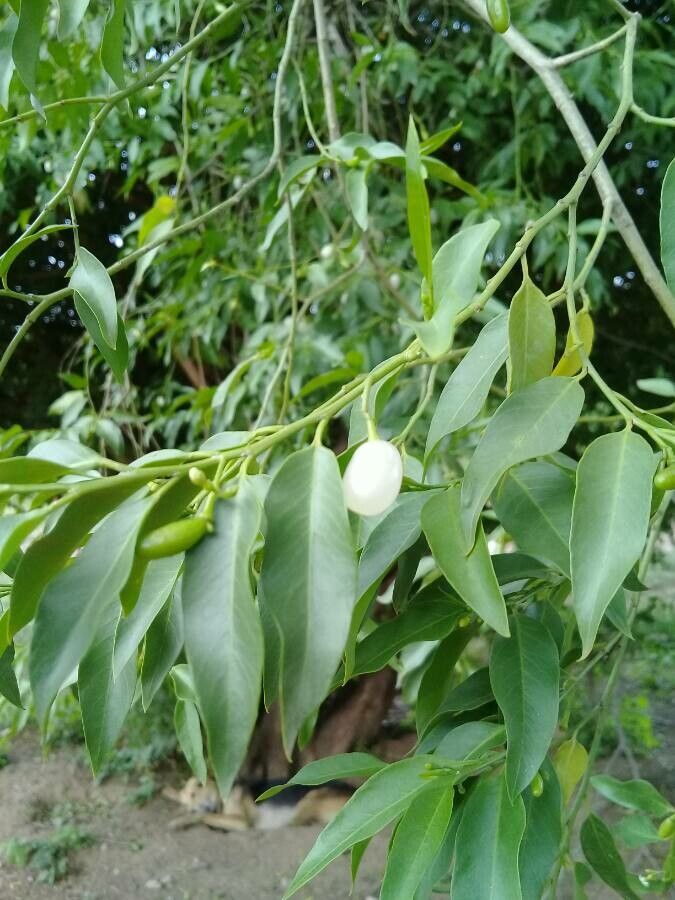
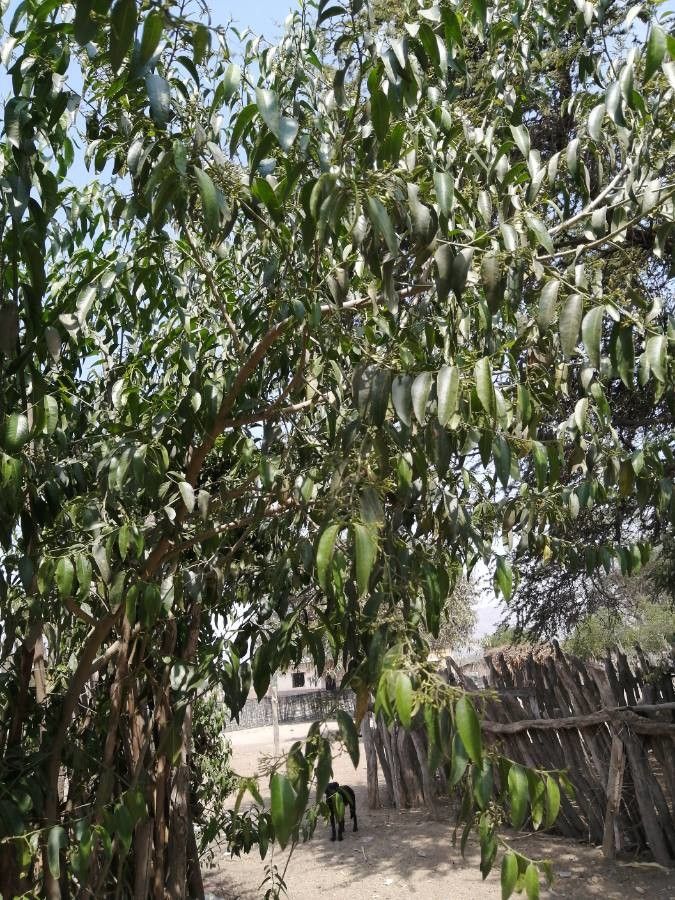
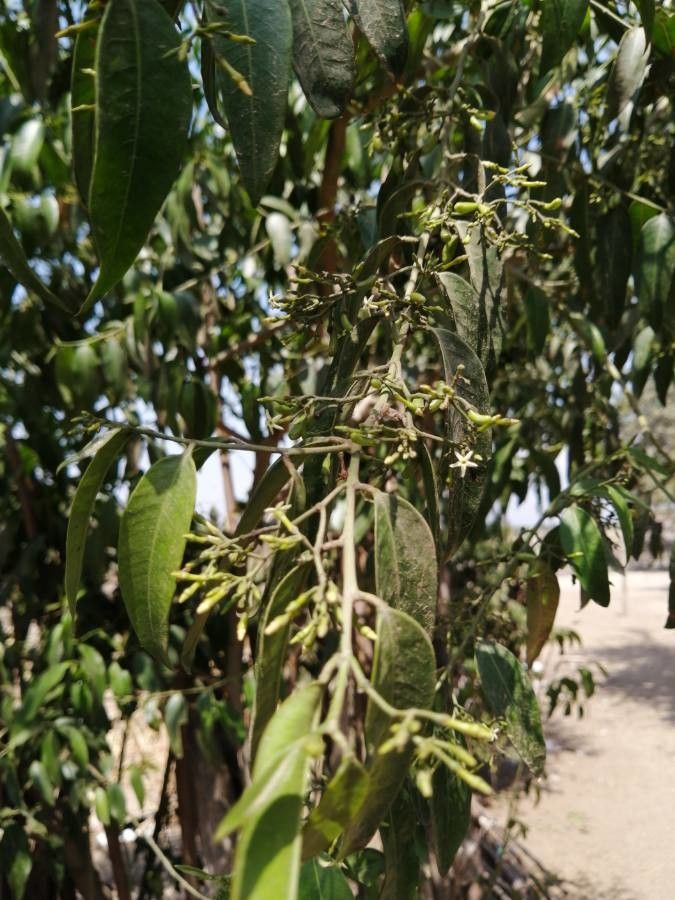
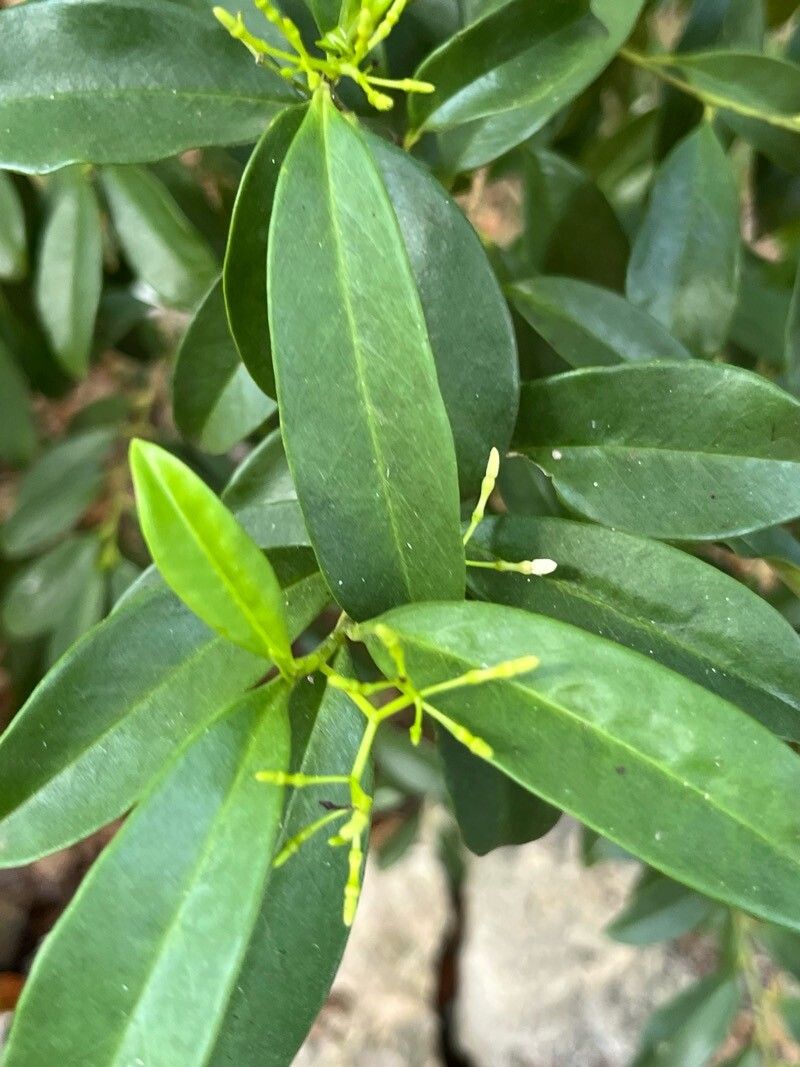
Vallesia glabra is a small evergreen tree or shrub belonging to the family Apocynaceae. It is native to the tropical regions of South America, including Brazil, Bolivia, and Peru. This plant can grow up to 10 meters tall and features a dense crown of glossy, leathery green leaves.
The flowers of Vallesia glabra are small, white, and sweetly fragrant, blooming in clusters from late spring through early summer. Its fruit is an elongated capsule that contains numerous seeds.
Indigenous people in South America have traditionally used Vallesia glabra for medicinal purposes, treating various ailments such as fever, diarrhea, and respiratory problems.
The plant thrives in well-drained soils with moderate moisture levels and can tolerate both full sun and partial shade conditions. It is also drought-tolerant once established.
In landscaping, Vallesia glabra is valued for its attractive foliage and fragrant flowers, making it an excellent ornamental tree or shrub. Its dense foliage also provides a habitat for birds.
Overall, Vallesia glabra is a fascinating plant species with both ornamental appeal and traditional medicinal uses in South America's indigenous cultures.
Tear shrub is resistant to disease and is generally unlikely to develop illnesses. In terms of maintenance, this plant is fairly low-maintenance. When grown outdoors it needs only light watering, and larger specimens typically do not require pruning. Smaller plants, however, should be trimmed after they finish blooming. Tear shrubt is suitable for anyone with an outdoor area, such as a garden or deck, and does not demand extensive care experience.
How to keep Vallesia Glabra.
Light
Tear shrub grows in open habitats, like sunny meadows and forest edges, which supply abundant light. It does best in full sun but can also tolerate partial sun, handling a range of sunlight conditions well.
Water
The Tear shrub thrives in arid conditions and only needs watering every 2-3 weeks to prevent over-saturation. It does best outdoors in areas with plenty of natural light. This plant flourishes in well-draining soil and can adjust its transpiration rate to adapt to changes in temperature and humidity throughout the seasons, demonstrating its drought tolerance.
Temperature
Tear shrub comes from tropical areas, where the climate is typically warm and humid. Consequently, it is well suited to high temperatures and humidity. It dislikes sudden temperature changes and favors a steady thermal environment, so avoiding temperature swings indoors is important. It generally cannot tolerate cold and needs relatively high temperatures to grow. If the surrounding temperature falls too low, the plant may stop growing or even die.
Fertilizer
The best time to fertilize a Tear shrub is in early spring as it breaks dormancy. This encourages overall growth and flower development. Fertilizing improves the foliage, stems, and branches, while encouraging large, vibrant, long-lasting flowers. It helps move nutrients from the roots to the flowers and boosts the plant's health and resistance to disease.
Pruning
Tear shrub is an evergreen plant known for its glossy leaves and fragrant white flowers. To encourage healthy growth, it’s best to prune the shrub between early and late winter. During pruning, remove any dead branches and manage overgrowth to ensure the plant receives enough sunlight. This process not only improves airflow, reducing the risk of pests, but also stimulates blooming. Remember to use clean tools when pruning, and consider consulting local guidelines for the best practices in your area.
Botanical profile.
- Plant Type
- Shrub
- Life Cycle
- Perennial
- Genus
- Vallesia
- Family
- Apocynaceae
- Hardiness Zone
- 9-12
- Mature Height
- 2.13 m to 3.96 m
- Mature Spread
- 1.52 m to 3.05 m
- Leaf Color
- Light Green, Green
- Leaf Type
- Evergreen
- Flower Color
- White
- Flower Size
- 1.02 cm to 1.52 cm
- Bloom Time
- Late spring, Summer, Early fall
- Planting Time
- Spring, Autumn
- Harvest Time
- Late summer, Fall
- Native Area
- Colombia, Mexico, Bolivia, Peru, Ecuador
Other names.
Reader questions.
What are the sunlight requirements for Tear Shrub (Vallesia glabra)?
Tear Shrub (Vallesia glabra) flourishes in environments that deliver full sun, which means it requires more than 6 hours of sunlight daily. However, it can also adapt and grow well in partial sun, receiving about 3-6 hours of sunlight. This plant's natural habitats, like sunny meadows and forest edges, lend it the ability to thrive under various light conditions. When planning where to place your Tear Shrub, ensure it gets the right balance of sunlight to promote its health and growth.
What should I do if natural sunlight is insufficient for my Tear Shrub?
If your Tear Shrub isn't receiving enough natural sunlight, especially during winter or in less sunny locations, artificial lighting can be a significant aid. Optimal growth is achievable with adequate lighting—LED lights are recommended due to their customization potential to match your plant's specific light wavelength needs. Full sun plants require 30-50W/sq ft, partial sun plants 20-30W/sq ft, and full shade plants 10-20W/sq ft of artificial light. Position the light source 12-36 inches above the plant, ensuring it mimics natural sunlight's distance and duration most plants favor, which is between 8-12 hours per day.
What symptoms indicate my Tear Shrub is not getting enough light?
Signs that your Tear Shrub is lacking adequate light include smaller new leaves, leggy or sparse growth, faster leaf drop, slower or halted new growth, and lighter-colored new leaves. These symptoms suggest the plant is struggling due to insufficient light, prompting adjustments such as relocating the plant to a sunnier spot or incorporating artificial light into its environment.
What symptoms show my Tear Shrub is getting too much sunlight?
Excessive sunlight can harm your Tear Shrub, leading to symptoms like chlorosis, where leaves lose their green pigment and turn yellow, sunscald causing pale or necrotic spots on the foliage, leaf curling as a defense mechanism against water loss, wilting, and leaf scorching characterized by brown, dry edges on leaves. These signs indicate the plant is under stress from too much sun exposure.
How can I manage light exposure for my Tear Shrub?
Managing light exposure for your Tear Shrub involves several strategies depending on the plant's setting. Indoors, you can gradually move the plant to receive at least 6 hours of direct sunlight daily, using a south-facing window or artificial light if necessary. Outdoors, adapt your plant to sunlight changes gently to prevent shock. Removing obstructions or transplanting the shrub can enhance light access for Tear Shrub placed in the ground. Always consider the plant's specific needs and environment when adjusting its light exposure.