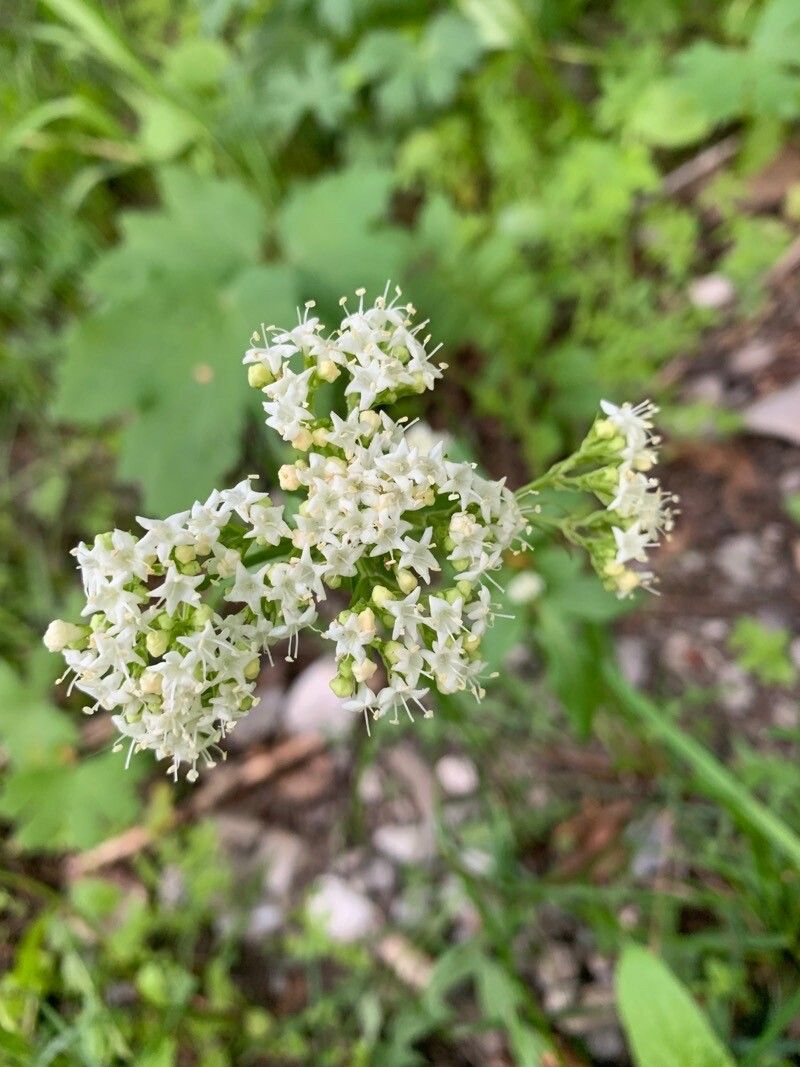
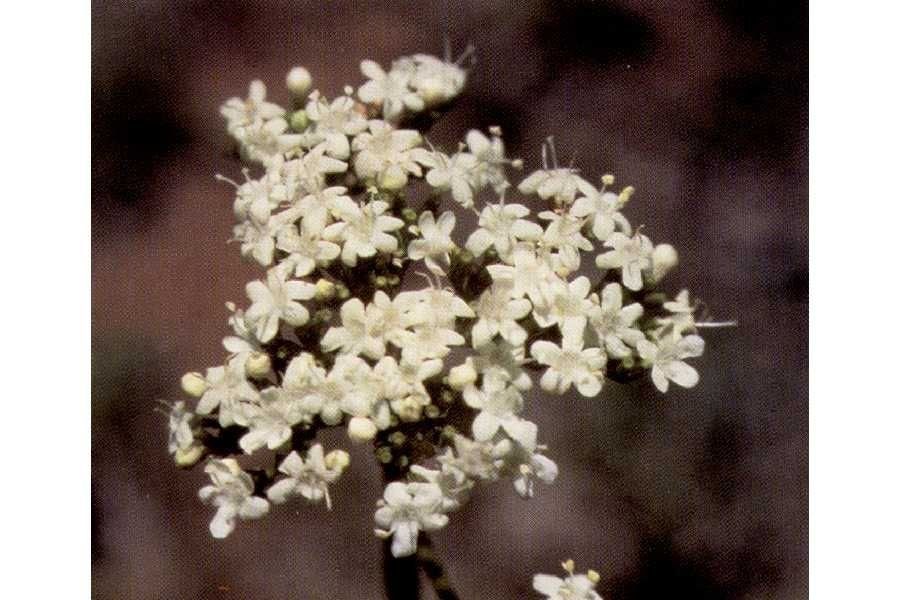
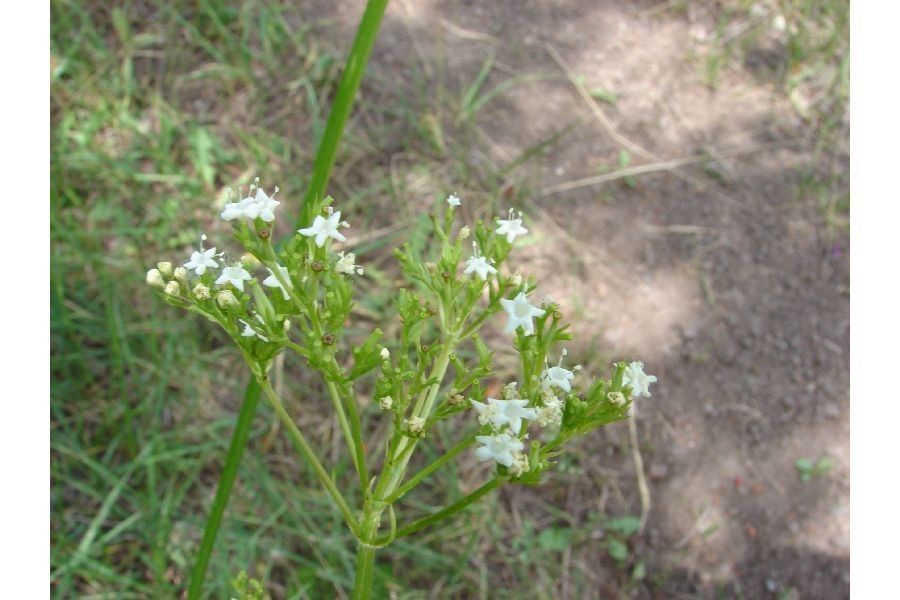
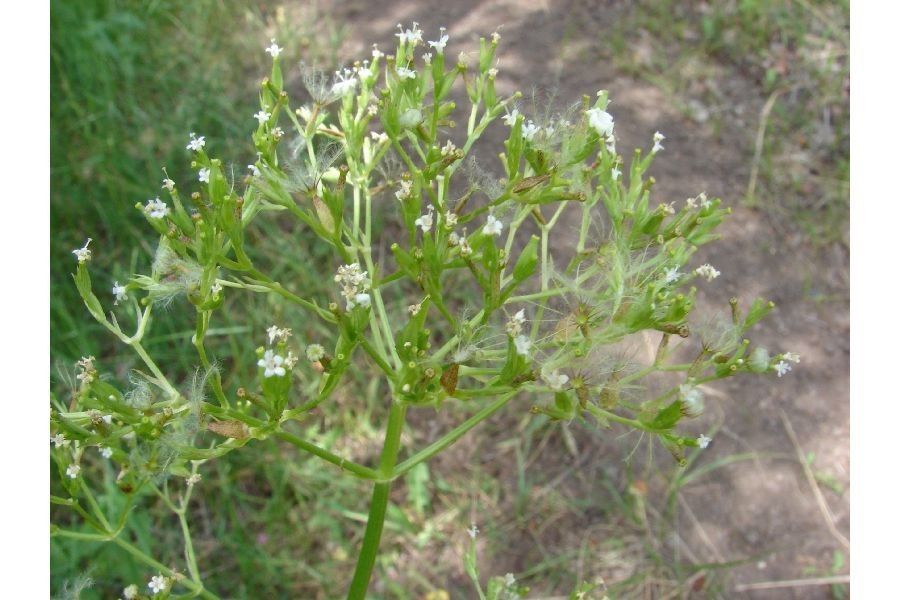
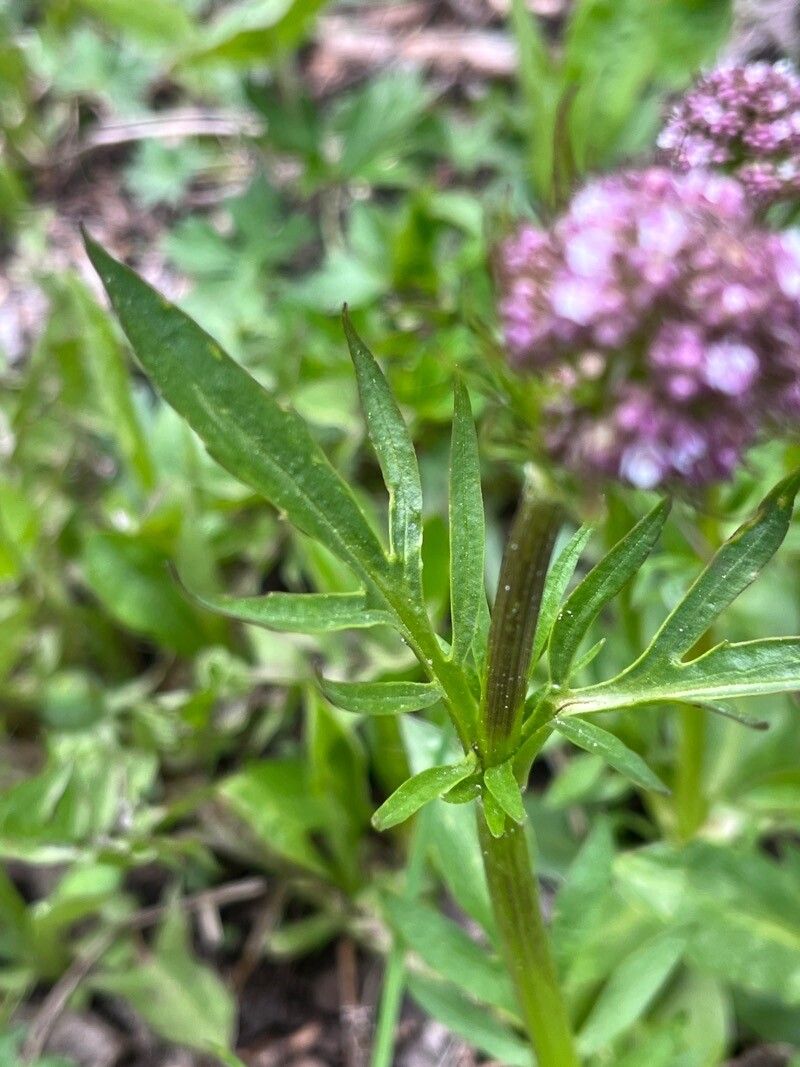
Valeriana occidentalis is a species of flowering plant in the honeysuckle family known by the common name western valerian. It is native to the western United States, particularly the northwestern quadrant, but it occurs as far south as Arizona and as far east as Colorado and South Dakota. It occurs in moist, forested mountain habitat. It is an erect herb growing 30 to 75 centimeters tall with whorls or opposite pairs of leaves at intervals along stem. The leaves are generally divided into lobes or are compound, with each leaf made up of a few oval-shaped leaflets. The inflorescence is a dense cyme of many funnel-shaped white flowers each 3 or 4 millimeters long with three long, protruding stamens. The fruit is a ribbed achene about half a centimeter long which may be tipped with the featherlike remains of the flower sepals.
Western valerian is fairly disease-resistant and generally does not suffer much from illnesses. Still, it can be affected by pests and diseases present in its environment. Such infections tend to be mild. Regarding care, the plant needs a moderate level of attention. Regular pruning is necessary to preserve an attractive look and encourage healthy growth. Applying fertilizer can also support better flowering. Western valerian is appropriate for anyone who has an outdoor area, like a garden or patio, and does not demand extensive gardening experience. When kept indoors, it may need more intensive care.
How to keep Valeriana Occidentalis.
Light
Western valerian is native to habitats like forest understories and rocky areas, where it grows in natural shade. It prefers partial sun but can tolerate full sun or full shade, showing its hardy, adaptable nature.
Water
Western valerian thrives in moist environments and needs consistent watering to stay healthy. It prefers soil that is kept evenly moist, requiring watering about once a week. As an herbaceous perennial, it benefits from natural rainfall, which encourages lush growth during its active growing season.
Fertilizer
Generally, one spring application of fertilizer is adequate for Western valerian, though multiple feedings can enhance growth. Feed every one to one and a half months. Fertilization improves leaf appearance and function, helping maintain even color and a healthy texture. It also encourages root development and increases nutrient uptake for long-term plant health.
Pruning
Western valerian features aromatic leaves and small white flowers. To keep the plant healthy and promote new growth, prune it in early spring to remove dead stems. Light shaping also improves air circulation. Regular trimming helps maintain a strong form and encourages abundant flowering, ensuring that western valerian remains healthy and visually attractive throughout the season.
Botanical profile.
- Plant Type
- Herb
- Life Cycle
- Perennial
- Genus
- Valeriana
- Family
- Caprifoliaceae
- Hardiness Zone
- 4-9
Other names.
Reader questions.
What are the sunlight requirements for Western valerian (Valeriana occidentalis)?
Western valerian (Valeriana occidentalis) requires full sun, which means it needs to be in a location that receives more than 6 hours of sunlight daily. It's important to observe how sunlight moves through your garden throughout the day to find spots that provide the perfect balance of light and shade. Choosing the right location ensures your plants remain happy and healthy.