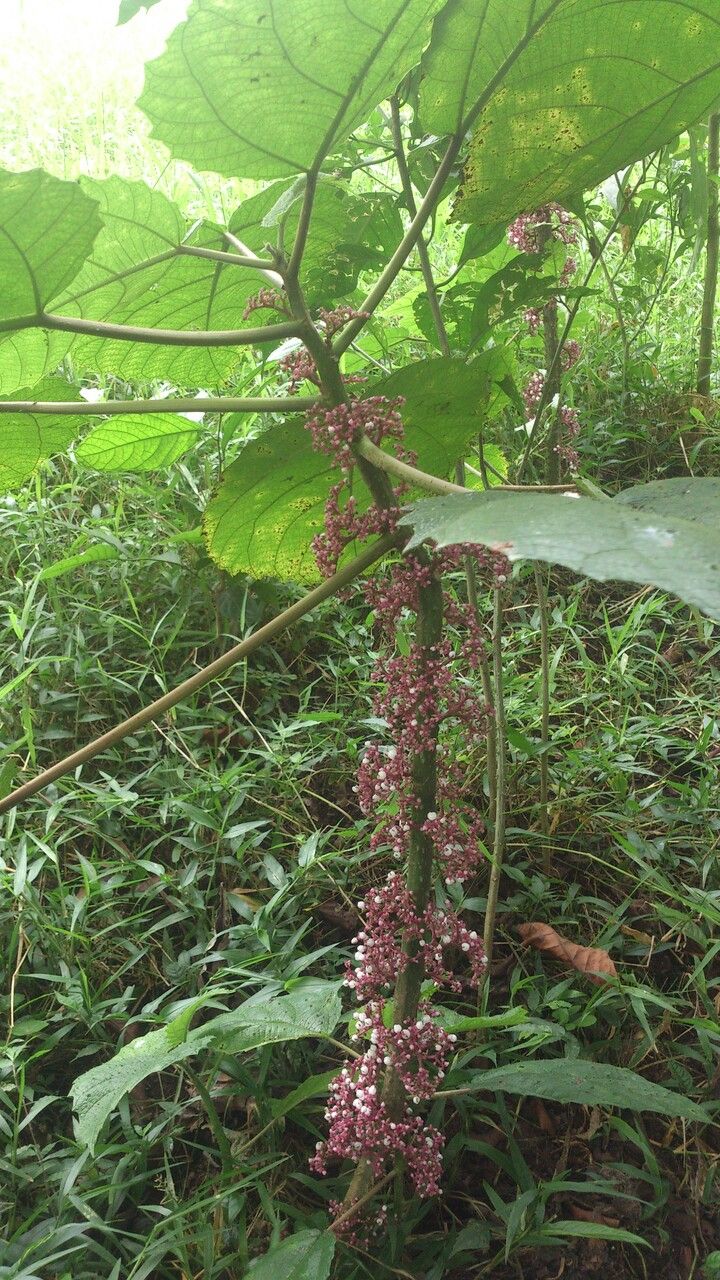
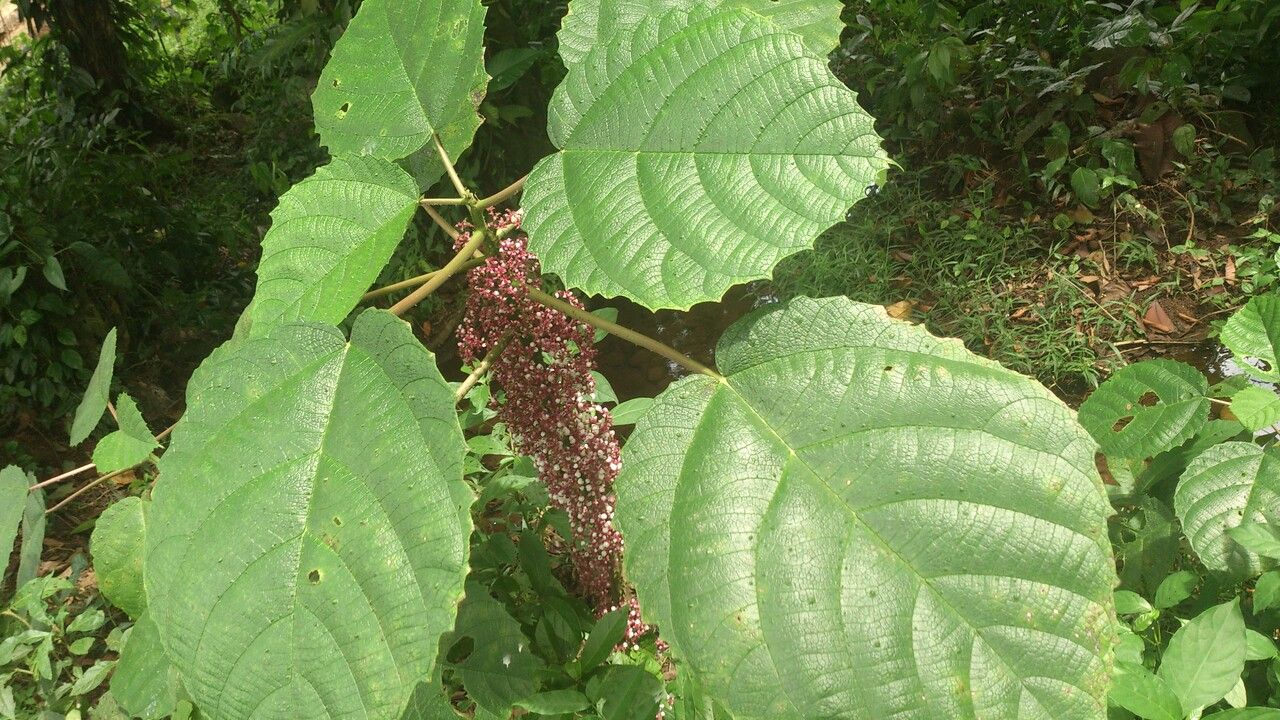
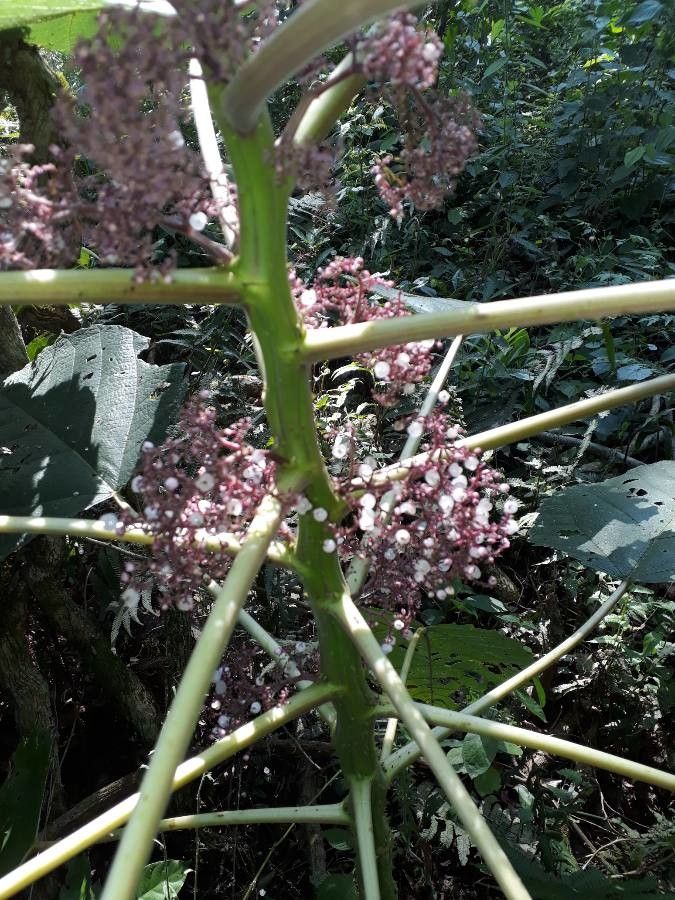
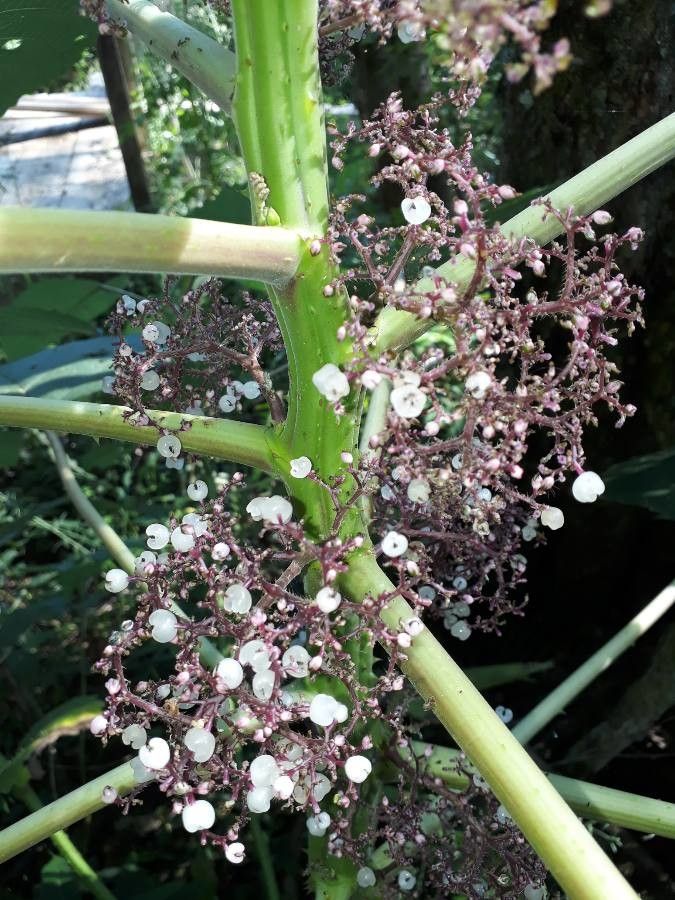
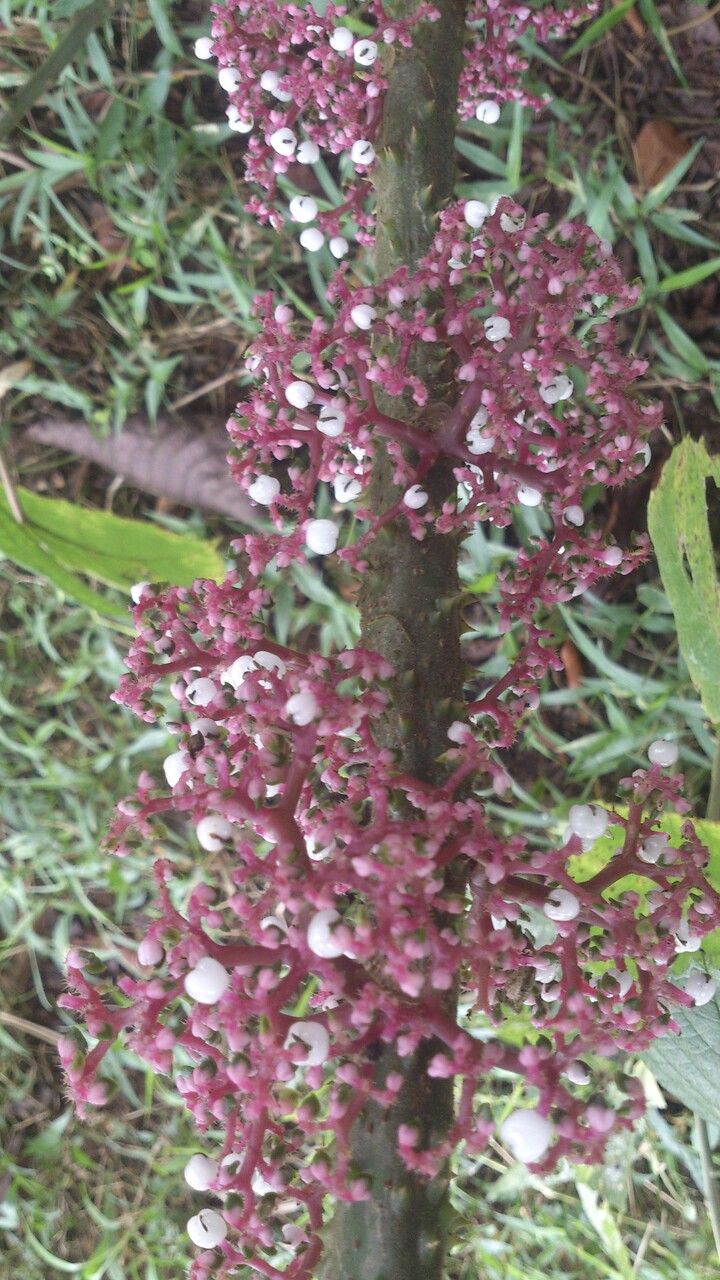
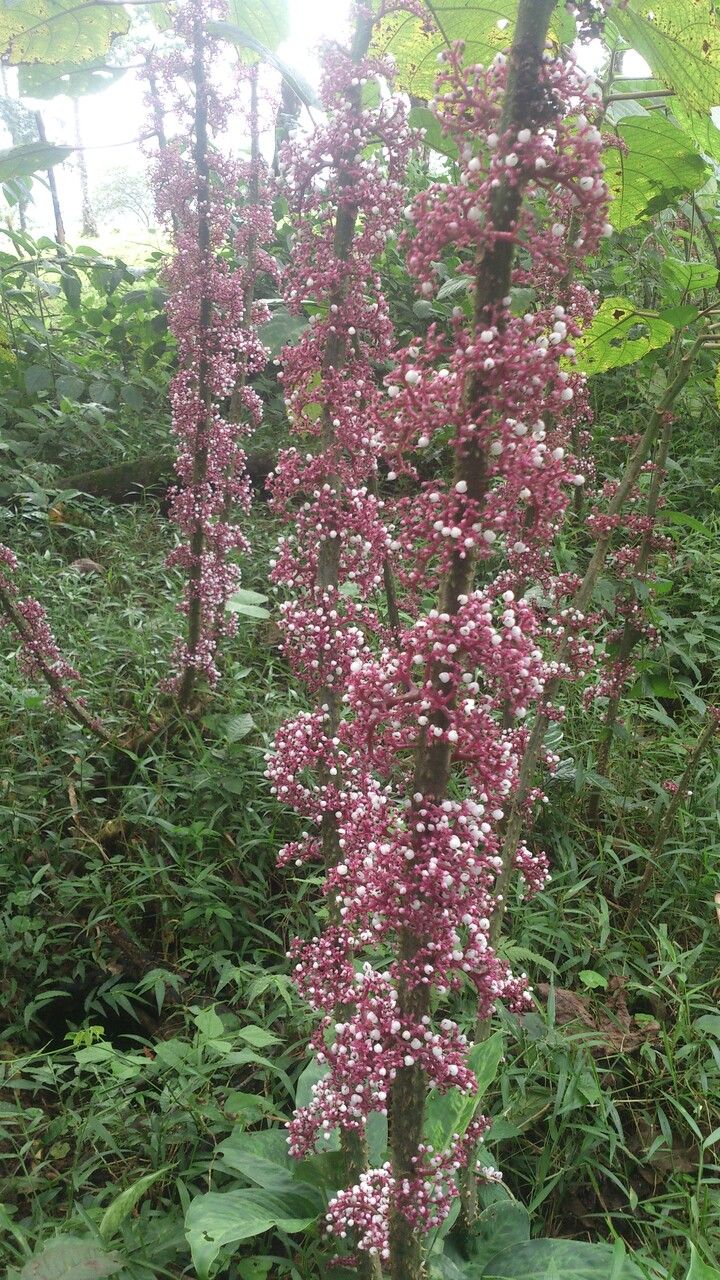
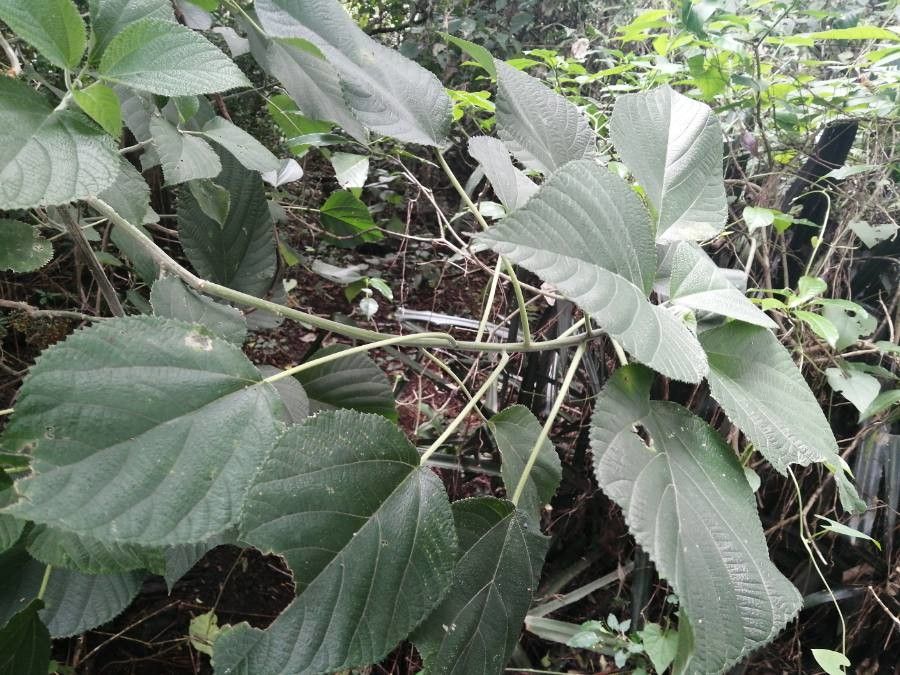
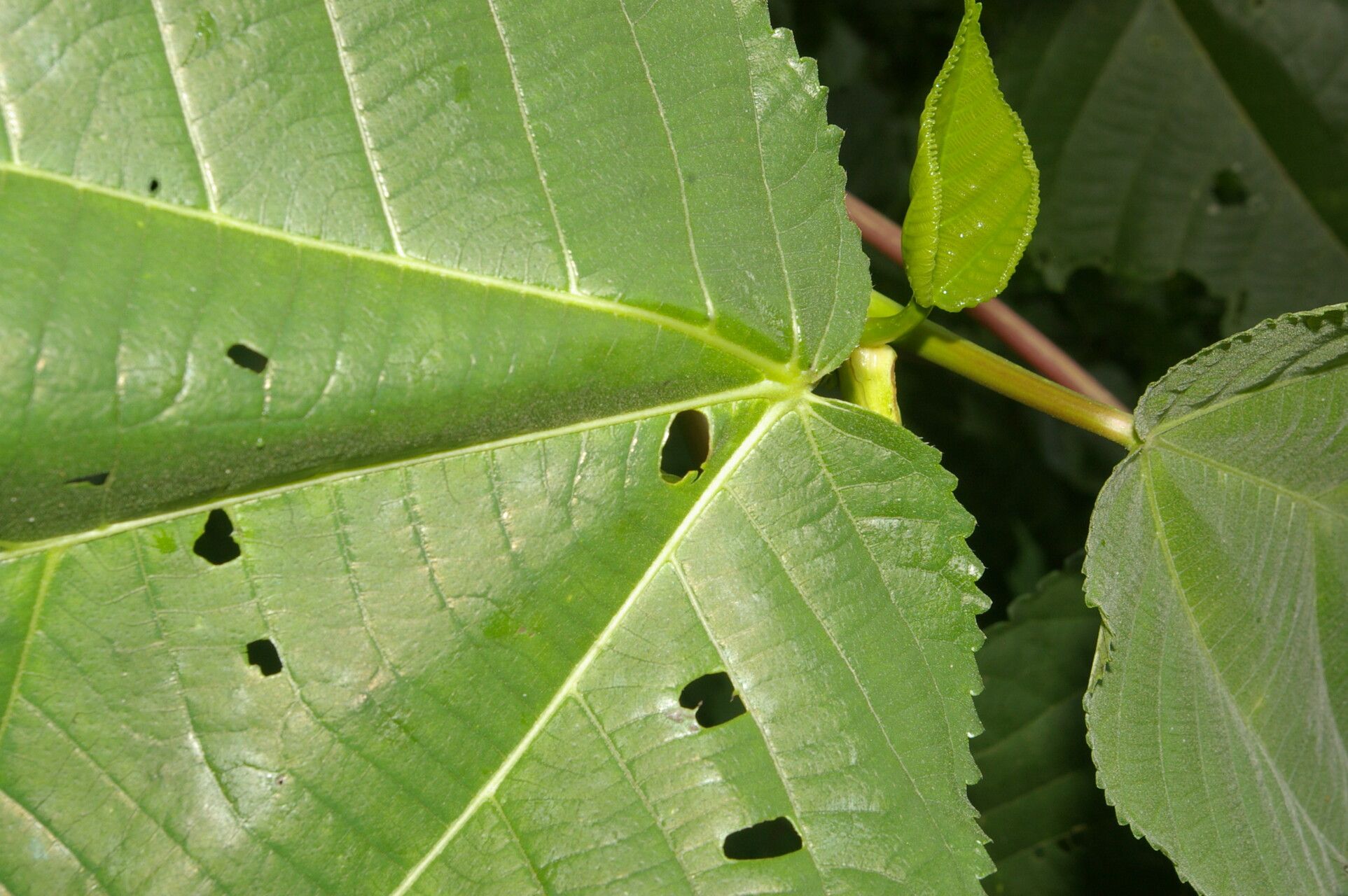
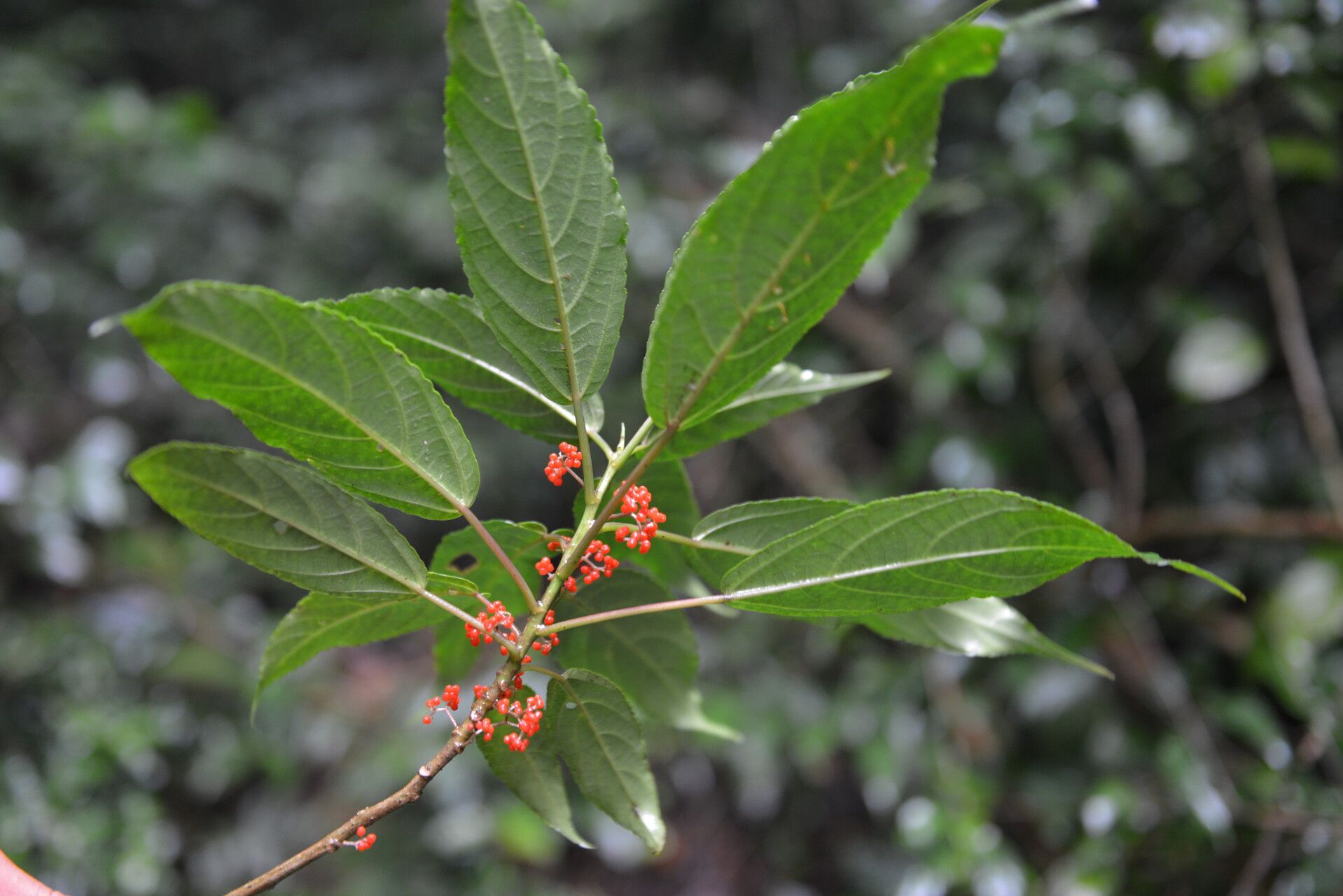
Urera baccifera is a species of flowering plant in the nettle family known by many common names, including scratchbush, ortiga brava, pringamoza, mala mujer, chichicaste, nigua, guaritoto, ishanga, manman guêpes, and urtiga bronca. It is native to the Americas from Mexico through Central America into South America, as well as the Caribbean.This species is a shrub or a small tree. It can reach five meters in height. The thin, toothed leaves are up to 25 centimeters long by 12.5 wide. The blades are borne on long petioles. The plant is covered in spines and stinging hairs. The inflorescence is a pink or purple cluster of flowers, and the plant is dioecious, with male and female parts on different plants. The spongy, juicy fruit is green or pinkish. The seeds are dispersed by fruit-eating birds and capuchin monkeys.
This plant grows in moist tropical forests. It is not very tolerant of shade, so it dies back when the overstory closes. It can be found in forests recently disturbed by fire.In some areas, this plant is one of the first to bear fruit after the damage of a hurricane, and then it becomes an important food source for birds. The fruits also provide food for many species of ant. The ants also collect pearl bodies which form on the leaves, stems, and stalks of the plant. Ants performing this activity include species in genera such as Camponotus, Pheidole, Crematogaster, and Pseudomyrmex. When ants are present on a plant, they rid it of lepidopteran larvae which would feed upon it, such as Smyrna blomfildia, Urbanus esmeraldus, and Pleuroptya silicalis. This provides a benefit for both plant and ant in a mutualistic relationship.
The nettle tree has strong resistance to disease and is generally not susceptible to illnesses. In terms of care, this plant is fairly low-maintenance. When grown outdoors it needs only minimal watering, and larger plants typically do not need pruning. Smaller plants, however, should be pruned after they have bloomed. The nettle tree is suitable for anyone with outdoor space, such as a garden or deck, and does not require extensive care experience.
How to keep Urera Baccifera.
Light
Nettle tree naturally occurs in places such as forest understories or rocky areas where it receives natural shade. It prefers partial sun but can adjust to full sun or full shade, showing its versatile and hardy nature.
Water
The nettle tree, which comes from regions with changing moisture levels, can handle occasional watering and withstand dry periods. For the best results, it should be watered every 2 to 3 weeks. It thrives outdoors in environments that mimic the sporadic rainfall of its native habitat.
Temperature
The nettle tree comes from tropical areas, where the climate is generally warm and humid. As a result, it is suited to high temperatures and humidity. It is sensitive to sudden temperature changes and prefers a stable thermal environment, so avoiding temperature fluctuations indoors is important. It typically cannot tolerate cold and requires higher temperatures to grow. If the surrounding temperature falls too low, the plant may stop growing or even die.
Fertilizer
Fertilizing is essential for the care of the Nettle tree. Regular nutrient applications during the growing season help maintain the energy needed for its showy foliage and support overall growth. If fertilization is neglected, leaves can become unhealthy, the tree's ornamental value may decline, and growth can be stunted or weak and more prone to breaking.
Pruning
The nettle tree is a fast-growing plant known for its stinging hairs. To encourage healthy growth and prevent disease, it benefits from regular pruning. During the dormant period, which is from early to late winter, focus on removing dead branches and thinning crowded areas. Always use clean, sharp tools to ensure effective pruning.
Botanical profile.
- Plant Type
- Tree, Shrub
- Life Cycle
- Perennial
- Genus
- Urera
- Family
- Urticaceae
- Hardiness Zone
- 10-12
- Mature Height
- 4.88 m
- Mature Spread
- 3.96 m
- Leaf Color
- Green
- Leaf Type
- Evergreen
- Flower Color
- White
- Flower Size
- 0.25 cm to 0.51 cm
- Bloom Time
- Late spring, Summer, Early fall
- Planting Time
- Spring, Autumn
- Harvest Time
- Mid summer, Late summer, Fall
- Native Area
- Belize, Honduras, Mexico, Guatemala, Peru, Panama, Jamaica, Colombia, Cuba, Bolivia, Venezuela, Guyana, El Salvador, Nicaragua, Brazil, Ecuador, Costa Rica
Other names.
Reader questions.
How should I water my Nettle tree?
Your Nettle tree doesn't require specific watering methods. You can use any common watering tool, such as watering cans, hoses, or even cups. Regardless of the tool you choose, it's important to water the soil directly. Make sure to evenly moisten all areas of the soil to properly hydrate the root system. Using filtered water is preferred to avoid harmful particles found in tap water. Additionally, it's recommended to use water at or slightly above room temperature to prevent shocking the Nettle tree. However, the tree typically responds well to any water given to it.
What are the sunlight requirements for a Nettle tree?
The Nettle tree, with its botanic name Urera baccifera, thrives in partial sun, needing about 3-6 hours of sunlight daily. It's essential to observe the movement of sunlight through your garden to choose locations that offer a mix of light and shade. This ensures the plants are happy, growing in conditions that mimic their native environments, such as forest understories or rocky areas where natural shade is common. Although the Nettle tree prefers partial sun, it can also tolerate full shade, which makes it a versatile plant for various garden spots.
What should I do if I give my Nettle tree too much or too little water?
Outdoor plants, especially newly planted ones or seedlings, are prone to lack of watering. It's important to remember to water them enough for a few months when they are small or newly planted. Once the roots are established, Nettle trees can rely on rain most of the time. When you have a Nettle tree planted in pots, overwatering is more likely to occur. If you accidentally overwater your Nettle tree, you should act quickly to fix the situation. First, stop watering the plant immediately to minimize the effect of overwatering. Then, remove the Nettle tree from its pot to check its roots. If you find no signs of root rot, you can return the plant to its container. However, if root rot is present, trim the affected roots and consider using a fungicide to prevent further damage. Lastly, repot the Nettle tree in well-draining soil. In the case of an underwatered Nettle tree, simply water the plant more frequently. Underwatering is usually easy to fix. If the plant's leaves droop, dry out, and fall off, water it sufficiently to see the leaves regain their fullness. Correct your watering frequency as soon as you notice underwatering.
How do I use artificial lighting for indoor Nettle trees?
When natural sunlight is insufficient for indoor Nettle trees, especially during winter or in less sunny indoor locations, artificial lighting becomes essential for their growth. LED lights are recommended due to their ability to provide specific light wavelengths needed by plants. The requirements vary based on the plant's sunlight needs: full sun plants need 30-50W/sq ft, partial sun plants need 20-30W/sq ft, and full shade plants require 10-20W/sq ft of artificial light. The light source should be placed 12-36 inches above the plant, mimicking natural sunlight as close as possible, and kept on for 8-12 hours per day to ensure optimal growth.
How much water does my Nettle tree need?
Most outdoor plants can rely on rainfall for their watering needs. However, if your area has limited rainfall, you should water your plants every 2 weeks during the spring and fall, and more frequently during the summer. In winter, when plants need less water, water them sparingly and you may not need to water them at all. If your Nettle tree is young or newly planted, it needs more frequent watering to help it establish and grow into a drought-tolerant plant. When it comes to potted plants, there are two main ways to determine how often to water your Nettle tree. The first is to follow a set watering schedule, such as watering once a week or once every other week. However, this may not always be appropriate as it doesn't account for the specific conditions of your Nettle tree's growing environment. Another approach is to determine watering frequency based on soil moisture. Ideally, wait until the top two to four inches of soil (about ⅓ to ½ depth of the pots) have completely dried out before watering again. This method allows you to adjust watering frequency based on the changing needs of the plant, especially during the summer when it requires more water.
What are the symptoms of light deficiency in Nettle trees?
Nettle trees show various symptoms when they receive insufficient light. New leaves might grow smaller, and the plant could exhibit leggy or sparse growth due to longer spaces between leaves or stems. There might be faster leaf drop as the plant tries to conserve resources, leading to slower or halted growth. Leaves may also appear lighter in color or develop chlorosis, turning yellow due to a lack of chlorophyll. Other symptoms of too much sunlight include sunscald, leaf curling, wilting, and leaf scorching, which damage the plant's tissue and affect its overall health. These symptoms indicate the plant's struggle with adapting to its light environment.
How much water does my Nettle tree require?
Watering your Nettle tree doesn't always require a lot of water. If only a few inches of soil have dried since the last watering, giving the tree about five to ten ounces of water would be enough for healthy growth. You can also determine the amount of water based on how dry the soil is. If more than half of the soil has dried out, it's a good idea to give more water than usual. Make sure to water until you see excess water draining from the pot's drainage holes. If your Nettle tree is planted in an area with sufficient rain, additional watering may not be necessary. However, when the tree is young or getting established, it needs 1-2 inches of rain per week. As it grows, it can rely solely on rainwater, unless there is a hot weather spell without rainfall for 2-3 weeks. In that case, give the tree a thorough watering to prevent it from experiencing stress.
How can I address light deficiency or excessive sunlight exposure for Nettle trees?
To optimize growth and address light deficiencies in Nettle trees, gradually shift them to sunnier spots each week until they get the required 3-6 hours of direct sunlight daily. For indoor plants that are large or not easily movable, consider using a desk or ceiling lamp for at least 8 hours daily, or invest in plant grow lights. If your plants are outdoors, avoid sudden changes in light intensity by gradually moving them to sunnier locations. For plants in the ground, reduce obstructions like trees by pruning, and consider transplanting smaller plants during their dormant period to locations with ample sunlight and good drainage. Note that while parts of the plant affected by inadequate light might not recover, new growth should be healthy following these adjustments.
How do I know if I am giving enough water to my Nettle tree?
The Nettle tree is more commonly overwatered, and there are several signs to look for when this happens. An overwatered Nettle tree will typically have yellowing and dropping leaves. Overwatering can also cause the plant to shrink and may lead to root rot. On the other hand, an underwatered Nettle tree will start to wilt and may have brown or brittle leaves. Regardless of whether you see signs of overwatering or underwatering, you should be ready to take action and restore the tree's health.
How do I water my Nettle tree as it grows?
When the Nettle tree is young, especially as a seedling, it requires more water compared to when it is fully grown. It is crucial to keep the soil consistently moist during the early stages of the tree's life in order to encourage root development. This applies to any Nettle tree that has been transplanted to a new location as well. Additionally, giving the Nettle tree proper care can result in the development of attractive flowers and fruits. If your Nettle tree is currently flowering or producing fruits, it may require slightly more water than usual to support these structures.
How can I make sure my Nettle tree gets enough water throughout the year?
Understanding the seasonal changes will help you determine the watering needs of your Nettle tree. In the summer, especially when it's hot and sunny, you may need to increase the amount of water you give the tree. The strong sunlight can dry out the soil faster, so regular watering is crucial. On the other hand, during the winter months when the tree is not actively growing, it requires much less water. You can water it once every 2 to 3 weeks or even less frequently. If you have an indoor Nettle tree, be mindful of appliances like air conditioners as they can dry out the plant faster, necessitating more frequent watering.
How is watering my Nettle tree inside different from watering it outside?
Your Nettle tree may not need extra watering if it's growing outside and receives enough rain. However, if you live in a low rainfall area, watering about every two weeks is recommended. If you live outside the plant's natural hardiness zone, it's best to grow it indoors. When growing indoors, pay attention to the soil moisture as it can dry out faster in containers or when exposed to HVAC units like air conditioners. These drying factors may require more frequent watering compared to growing outdoors.