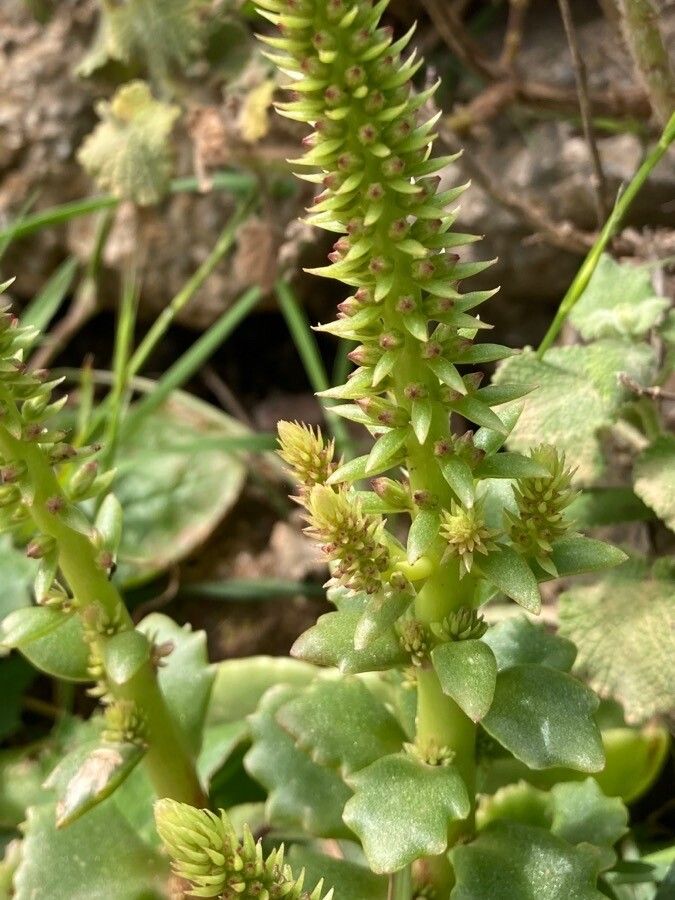
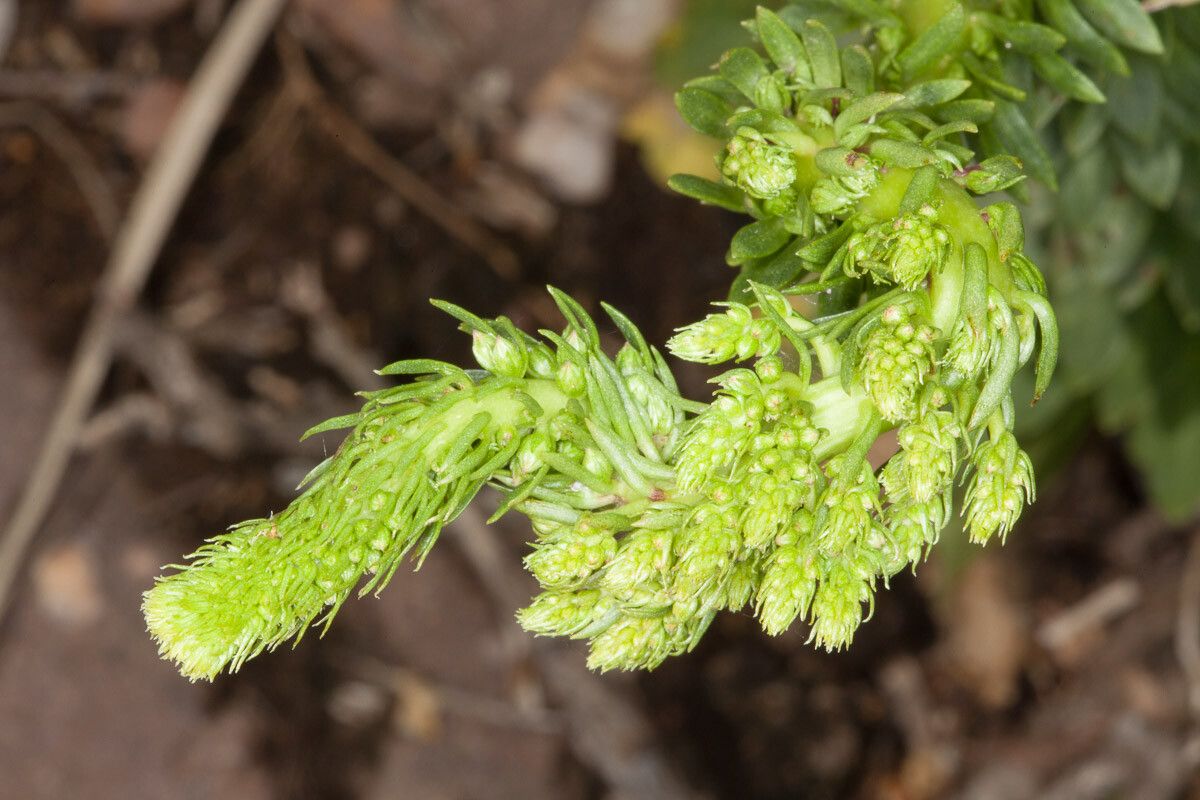
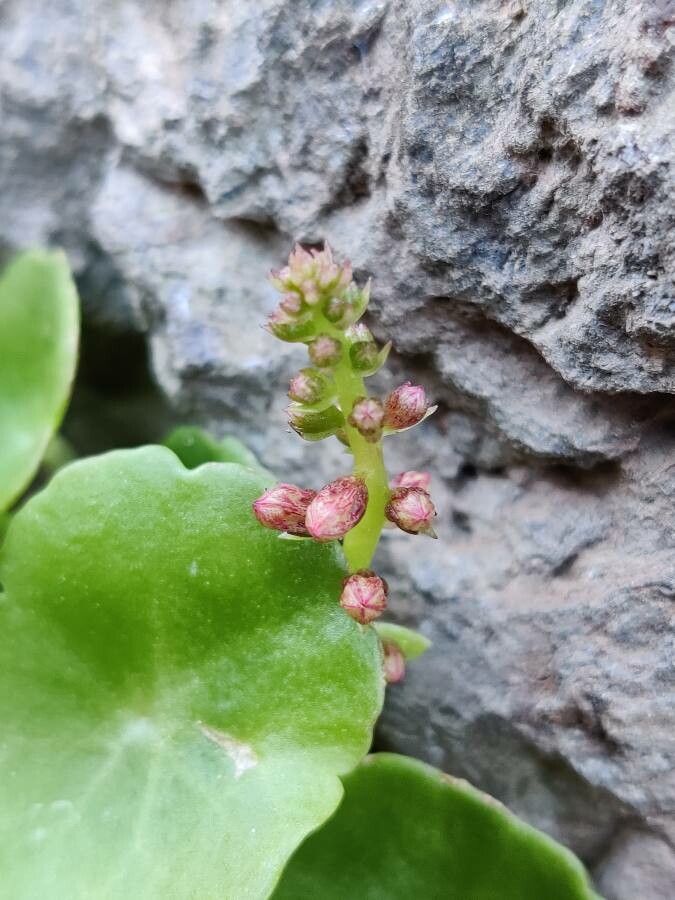
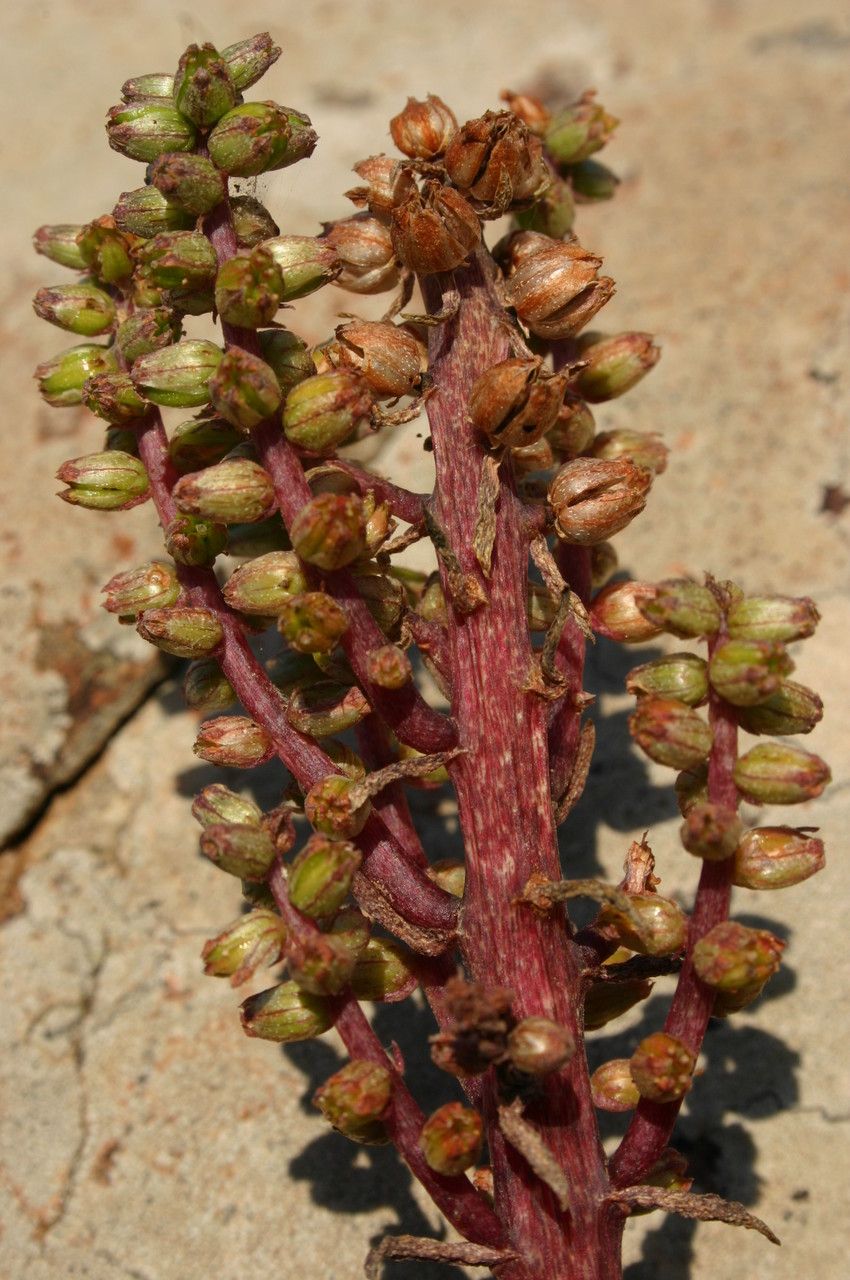
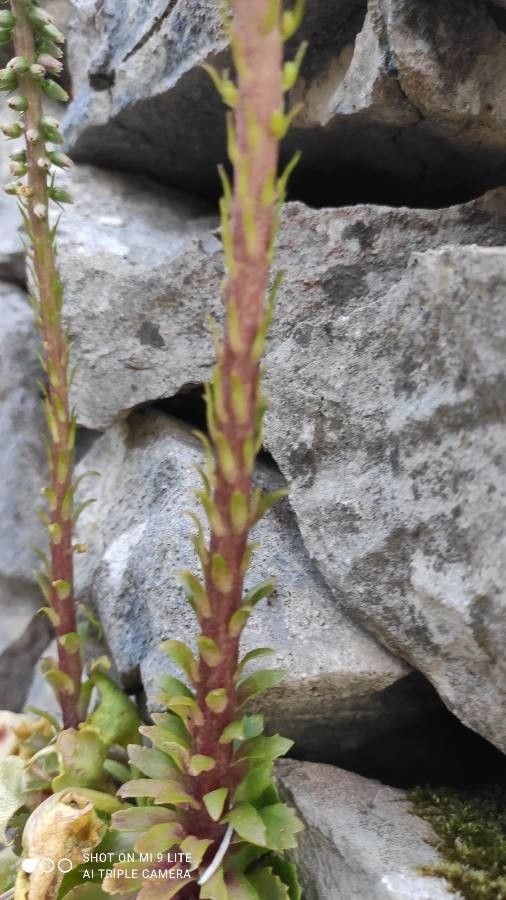
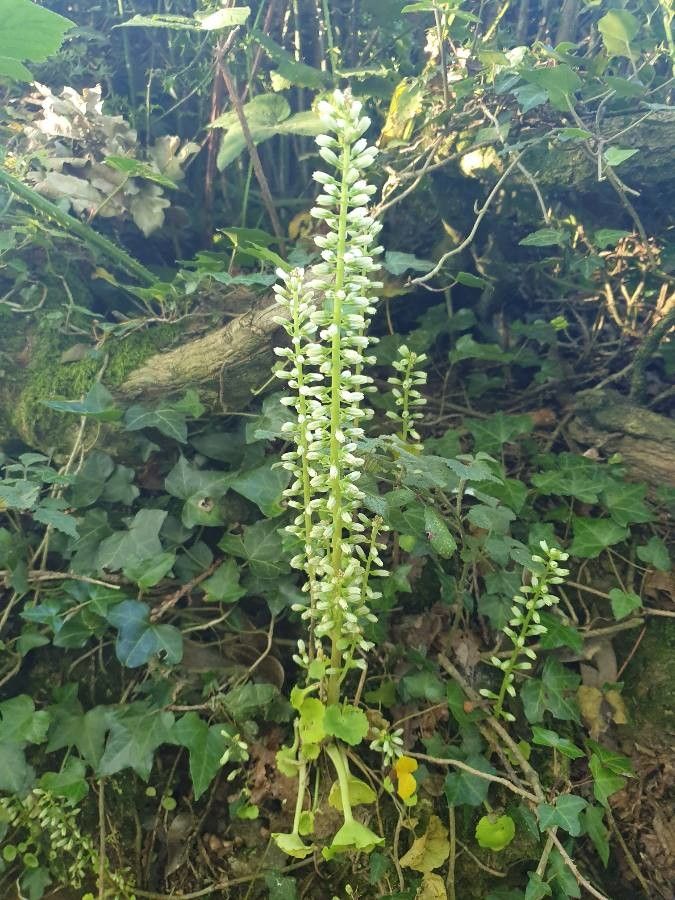
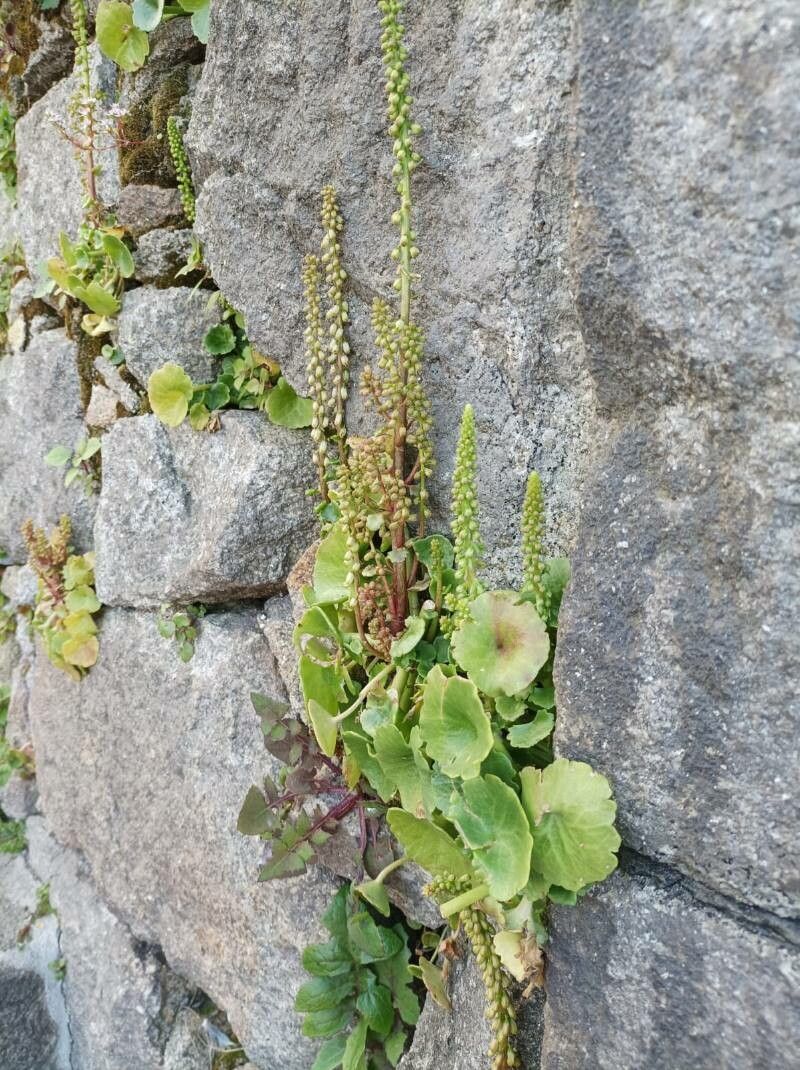
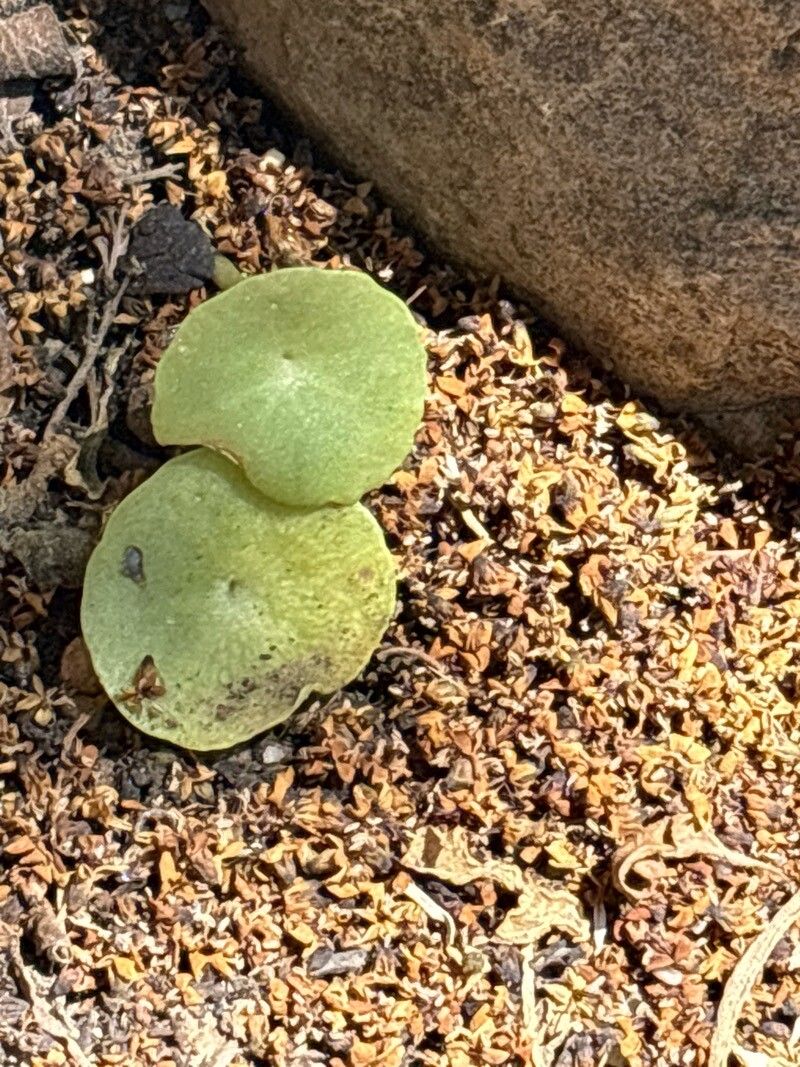
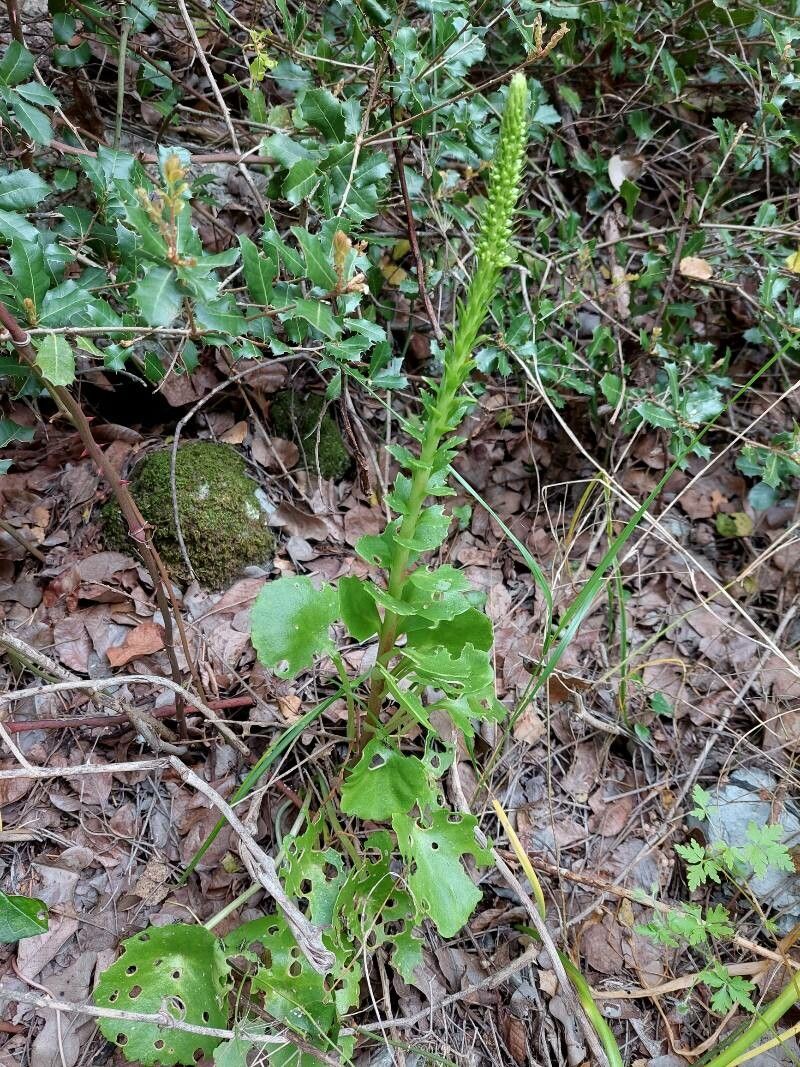
Umbilicus horizontalis, commonly known as navelwort or pennywort, is a small succulent plant in the Crassulaceae family. Native to Europe, it thrives in rocky areas, walls, and crevices. This plant features a rosette of fleshy, circular leaves, each bearing a small central depression, or "navel." The green leaves, edged with reddish-brown, can grow up to 5 cm in diameter. During the summer, Umbilicus horizontalis produces small white or pink flowers on long stems. These five-petaled flowers form clusters at the top of stems that can reach up to 30 cm in height. Historically, the plant has been valued for its anti-inflammatory properties and has also been used in salads for its slightly sour taste. Umbilicus horizontalis is easy to grow and requires minimal maintenance once established. It prefers well-draining soil and partial shade but can tolerate full sun if provided with sufficient water during hot weather. Overall, Umbilicus horizontalis is an attractive succulent with unique features, making it a popular choice for gardeners seeking low-maintenance plants with medicinal benefits.
Horizontal navelwort has moderate disease resistance and is more sensitive to humidity. It becomes vulnerable to disease under high humidity and tends to suffer root rot while dormant. Regarding care, it tolerates drought but requires increased watering during the growing season. Watering should be greatly reduced or stopped entirely during the dormant period. Horizontal navelwort is best suited to growers with some experience, though it can be challenging to maintain, particularly during dormancy. It is especially appropriate for those who can dedicate time to its care throughout the winter months.
How to keep Umbilicus Horizontalis.
Light
Horizontal navelwort is native to habitats with dappled light, such as forest understories or rocky areas that provide natural shade. It prefers partial sunlight but can also tolerate full sun.
Temperature
Although Horizontal navelwort can tolerate some heat, it predominantly does best in cooler seasons and becomes dormant in summer. In very hot summer weather, give it shade to avoid scorching from strong sunlight. Reduce or stop watering during the hottest period to prevent root rot. Horizontal navelwort shows vigorous growth in winter and spring. If temperatures do not fall too low, it will continue to grow steadily.
Fertilizer
For Horizontal navelwort, apply small amounts of fertilizer once or twice a year during the active growing season. Do not fertilize in winter or summer because the plant is dormant then. Use less fertilizer for plants that have been repotted, and wait a couple of months after repotting before you begin feeding. Fertilizing helps maintain healthy growth and stimulates flowering.
Pruning
To keep the horizontal navelwort well-shaped, prune any redundant or dense branches in the spring and fall. For propagation, cut a sturdy stem with 5 to 6 leaves, apply sulfur powder to the cut, and allow it to heal before planting. Use slightly moist soil for planting.
Botanical profile.
- Plant Type
- Herb
- Life Cycle
- Annual
- Genus
- Umbilicus
- Family
- Crassulaceae
- Hardiness Zone
- 7-10
- Mature Height
- 10 cm to 20 cm
- Mature Spread
- 15 cm to 30 cm
- Leaf Color
- Light Green, Pale Green
- Leaf Type
- Evergreen
- Flower Color
- Green
- Flower Size
- 0.51 cm to 0.76 cm
- Bloom Time
- Mid spring, Late spring
- Planting Time
- Summer
- Harvest Time
- Early summer, Mid summer
- Native Area
- Saudi Arabia, Libya, Somalia, Egypt, Turkey, Tunisia, United Arab Emirates, Sudan, Montenegro, Cyprus, Bulgaria, Greece, Croatia, Morocco, Lebanon, Iraq, Syria, Italy, Spain, Oman, Iran, Albania, Algeria
Other names.