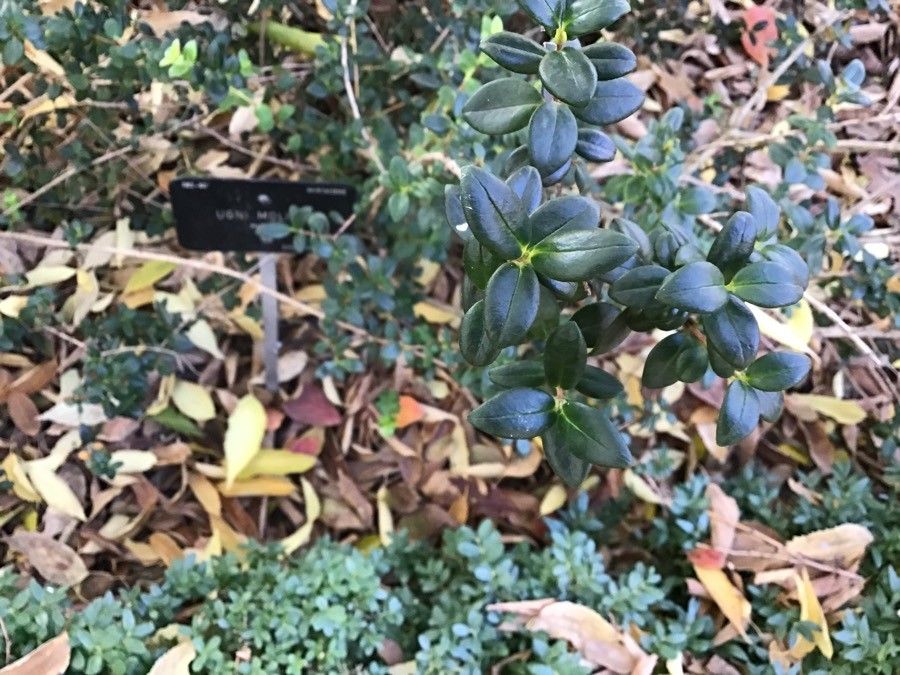
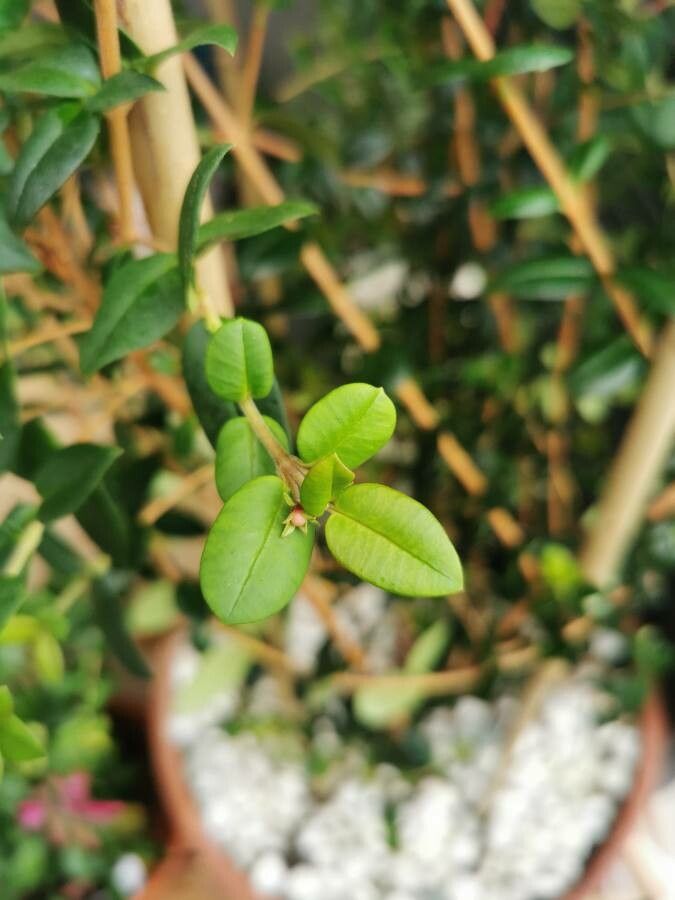
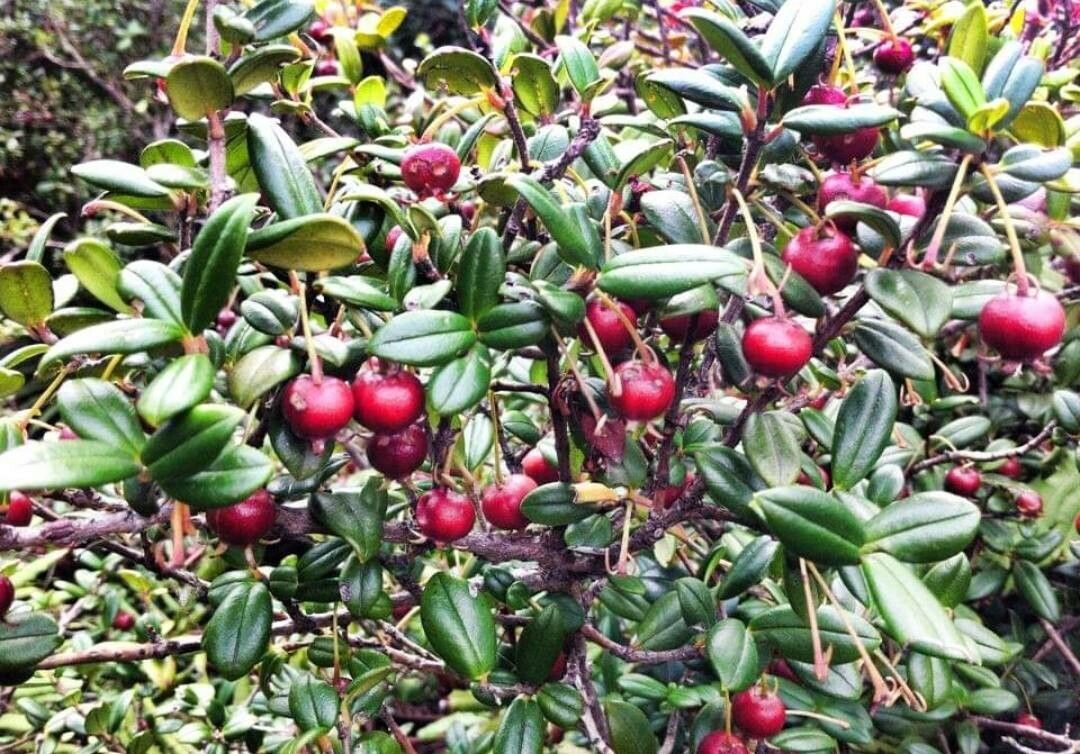
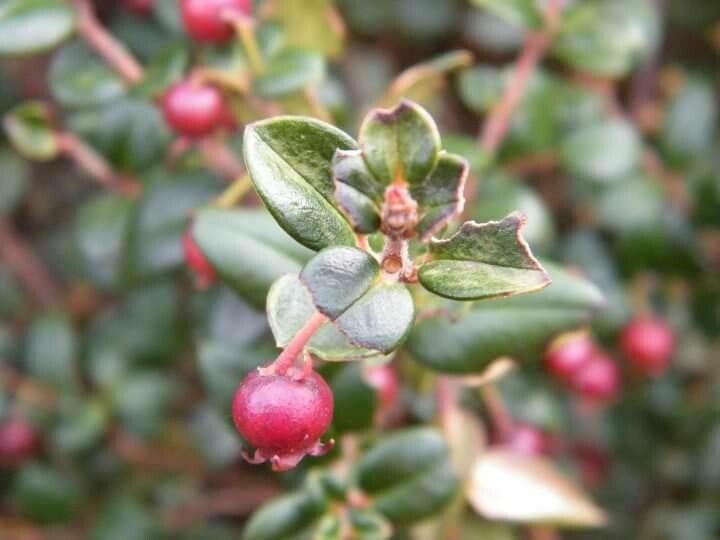
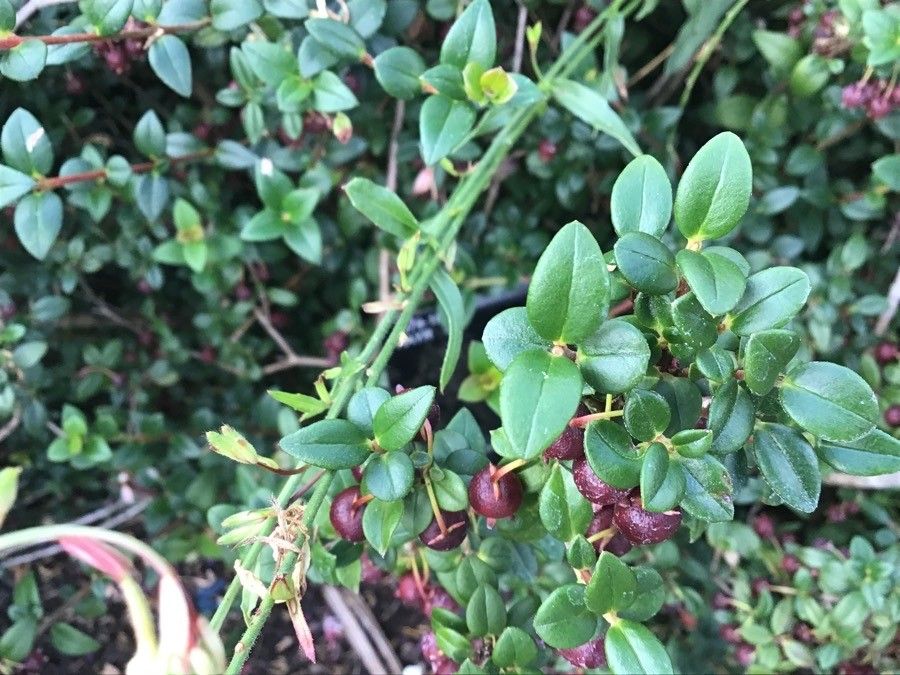
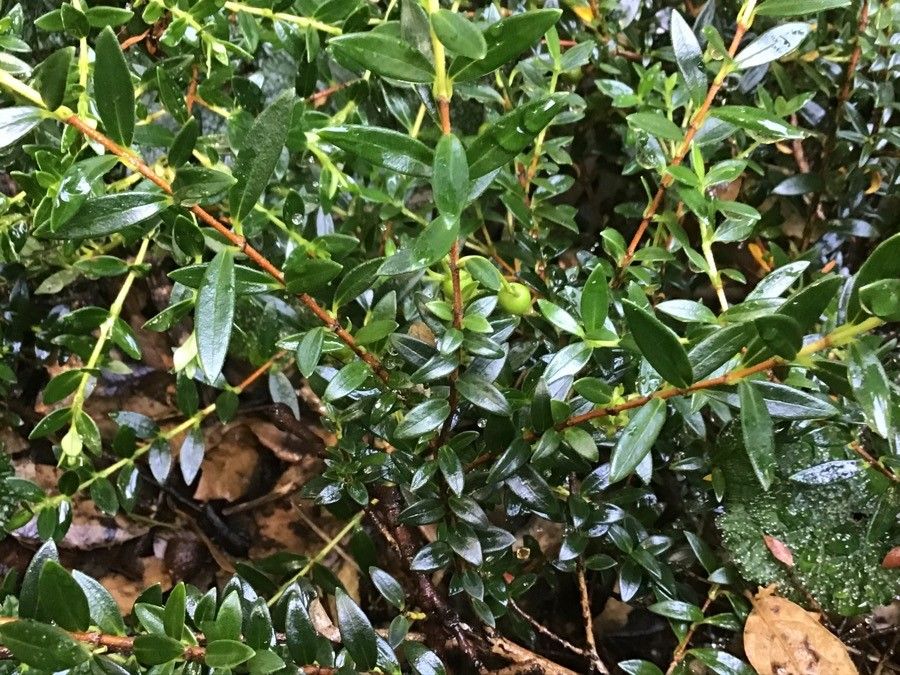
Ugni molinae, commonly known as Chilean guava or murta, is a small evergreen shrub native to Chile and Argentina. It belongs to the Myrtaceae family and can grow up to 2-3 meters tall. The plant features dense foliage of glossy green, oval-shaped, leathery leaves.
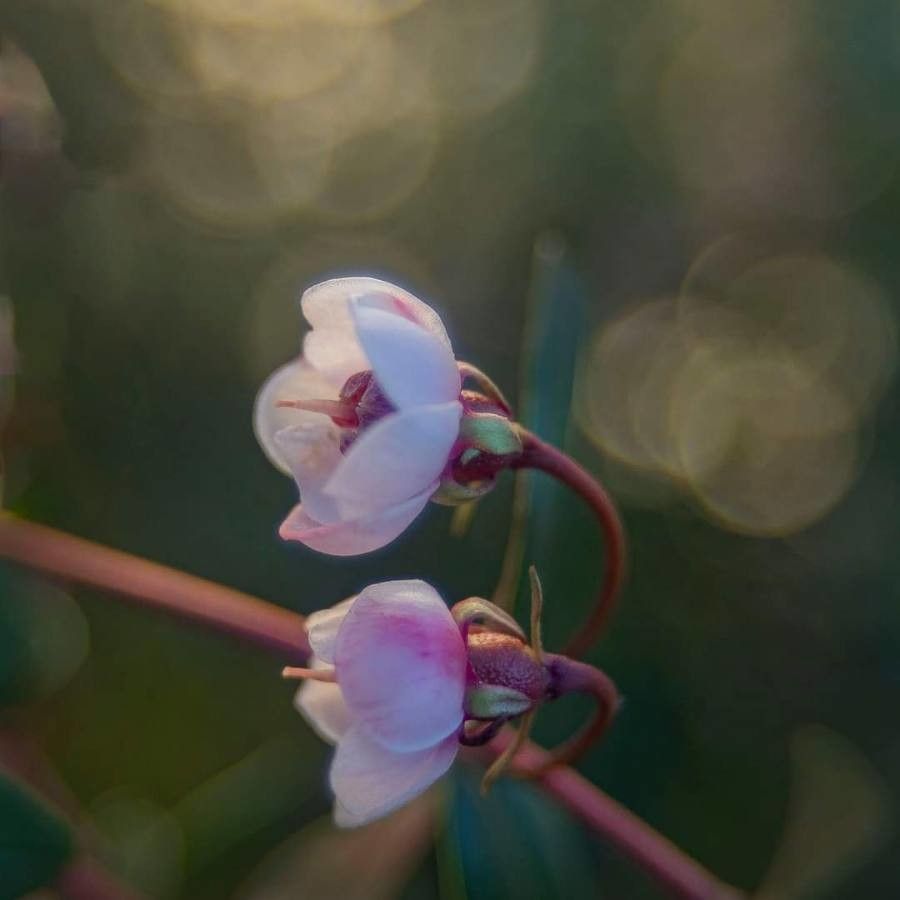
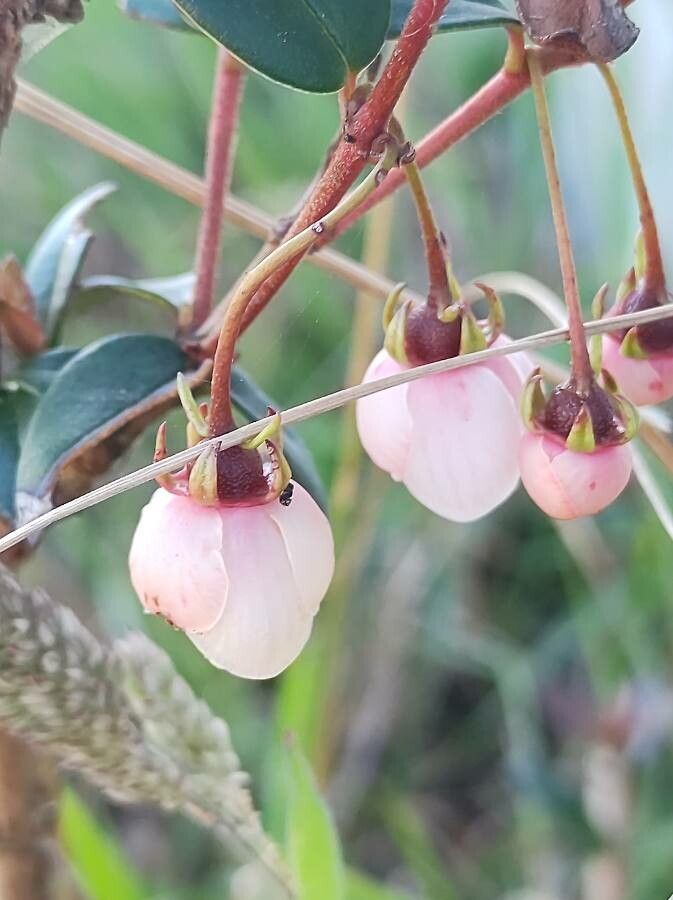
In the summer, the Chilean guava produces small white or pink flowers, which are followed by edible berries. These berries are about 1 cm in diameter and have a sweet flavor with hints of strawberry and kiwi. They can be enjoyed fresh or used in making jams, jellies, sauces, and liqueurs.
Ugni molinae is easy to grow, preferring well-drained soil with moderate moisture levels. It can tolerate both full sun and partial shade but needs protection from frost during winter.
The plant has several medicinal properties, including anti-inflammatory effects, due to its high content of polyphenols like quercetin and myricetin. It also contains high levels of vitamin C, which makes it an excellent immune booster.
Overall, Ugni molinae is an attractive ornamental shrub with edible fruits, making it popular among gardeners seeking both beauty and functionality from their plants.
Chilean guava is fairly disease-resistant and is usually not vulnerable to diseases. As for care, this plant is fairly low maintenance. When grown outdoors it needs little watering, and larger plants typically do not require pruning. Smaller plants, however, should be pruned after they finish blooming. Chilean guavat is appropriate for anyone with outdoor space, such as a garden or deck, and does not demand extensive gardening experience.
How to keep Ugni Molinae.
Light
Chilean guava naturally occurs in habitats like forest understories and rocky areas, where it grows in natural shade. It prefers partial sun but can adapt to both full sun and full shade, demonstrating its versatile and hardy nature.
Water
Chilean guava thrives in humid environments, similar to its native South American forests. It needs consistent moisture, but be careful to avoid waterlogging. Water the plant every 1-2 weeks to keep the soil slightly moist. Ensuring proper hydration is crucial for the plant's health and its potential to produce fruit when grown as an ornamental shrub.
Temperature
Chilean guava shows strong adaptability to a wide range of climates, from scorching summers to cold winters. Still, it has an optimal temperature range for growth. If temperatures get too high, the plant is vulnerable to heat and humidity stress, which can lead to its death. In areas where temperatures near the lower limit of its cold tolerance, it's important to provide insulation to protect the plant.
Fertilizer
The Chilean guava needs adequate nutrients to produce fruit optimally. Apply fertilizer in early spring to promote new growth and flowering. Regular feeding keeps the plant healthy, results in more delicious fruit, and prevents nutrient deficiency problems like yellowing leaves and poor fruit production.
Pruning
To ensure the Chilean guava remains healthy and productive, horticultural experts recommend selective pruning in early spring. This process involves removing dead branches to enhance air circulation and encourage fruit production. Regular trimming also promotes denser foliage, reduces the risk of disease, and improves the overall appearance and growth of the plant.
Botanical profile.
- Plant Type
- Shrub
- Life Cycle
- Perennial
- Genus
- Ugni
- Family
- Myrtaceae
- Hardiness Zone
- 7-10
- Mature Height
- 1.52 m
- Mature Spread
- 91 cm
- Leaf Color
- Green, Pink, Variegated, Cream
- Leaf Type
- Evergreen
- Flower Color
- Pink, White
- Flower Size
- 1.02 cm to 1.52 cm
- Bloom Time
- Mid spring, Late spring
- Planting Time
- Spring, Summer, Autumn
- Harvest Time
- Late summer, Early fall, Mid fall
Other names.