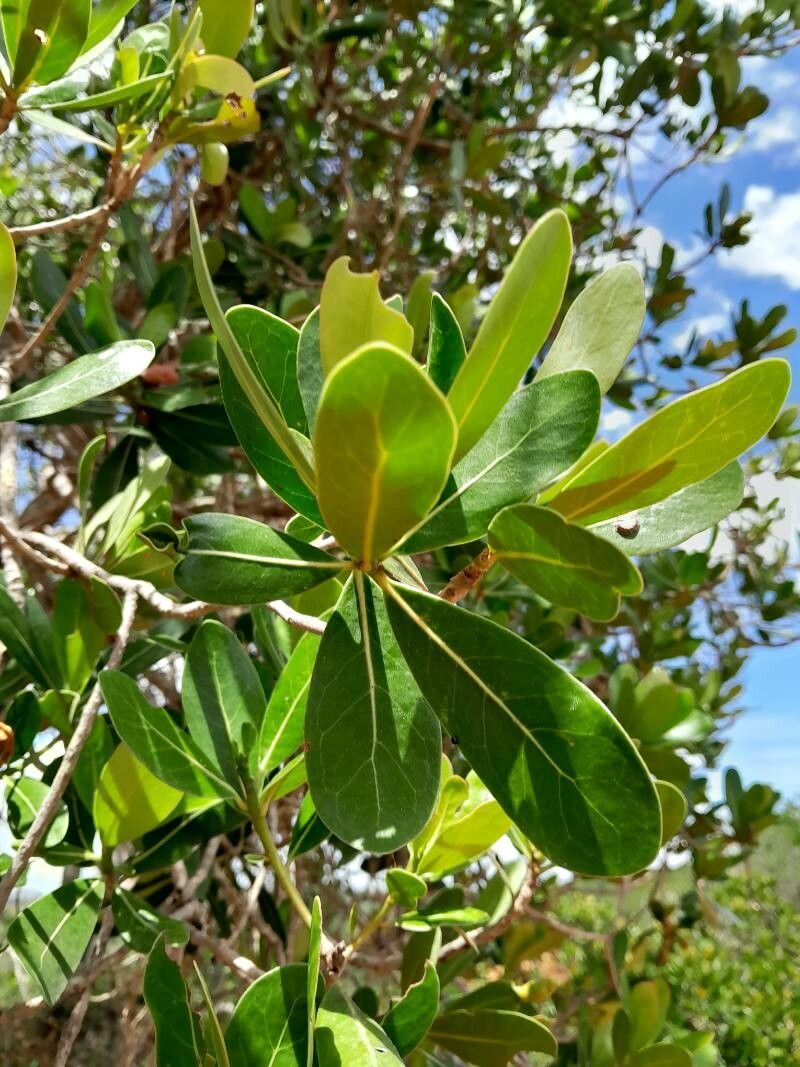
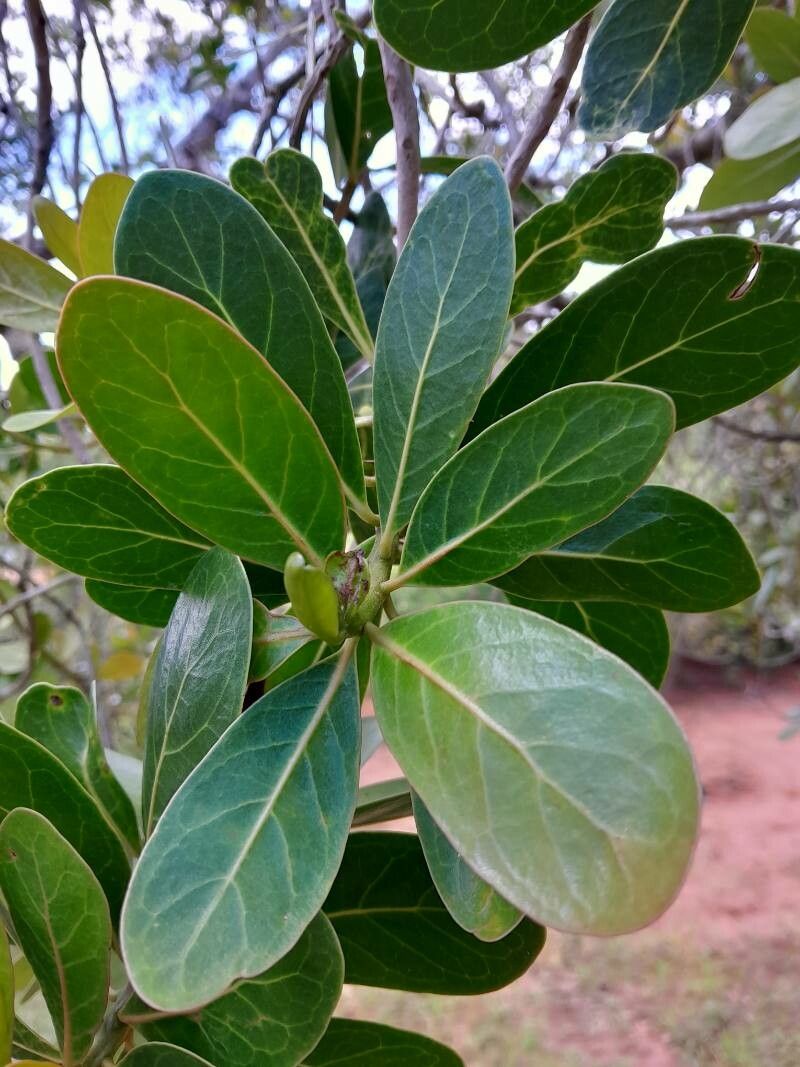
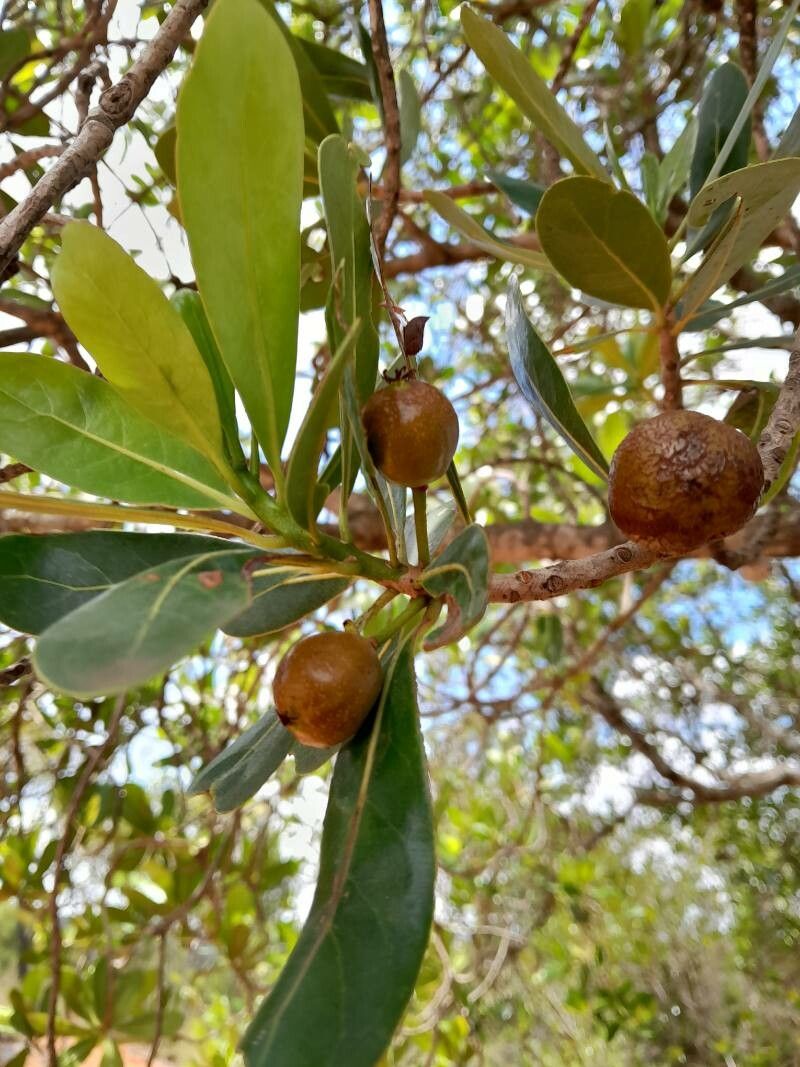
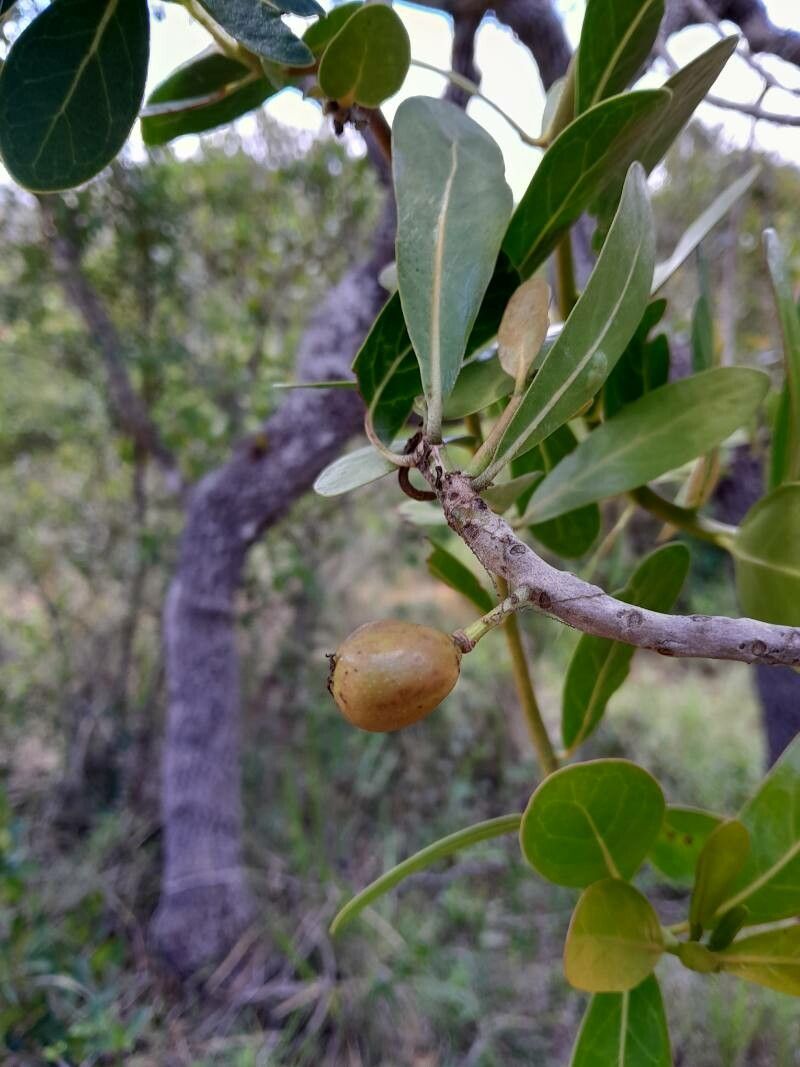
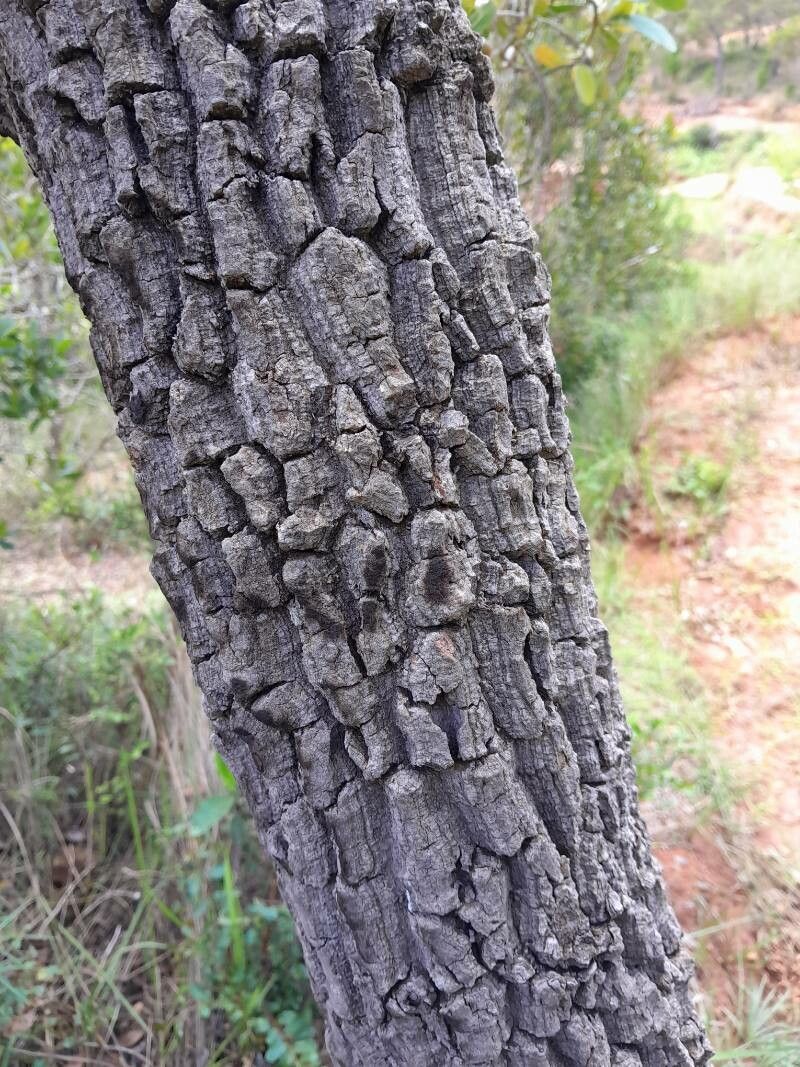
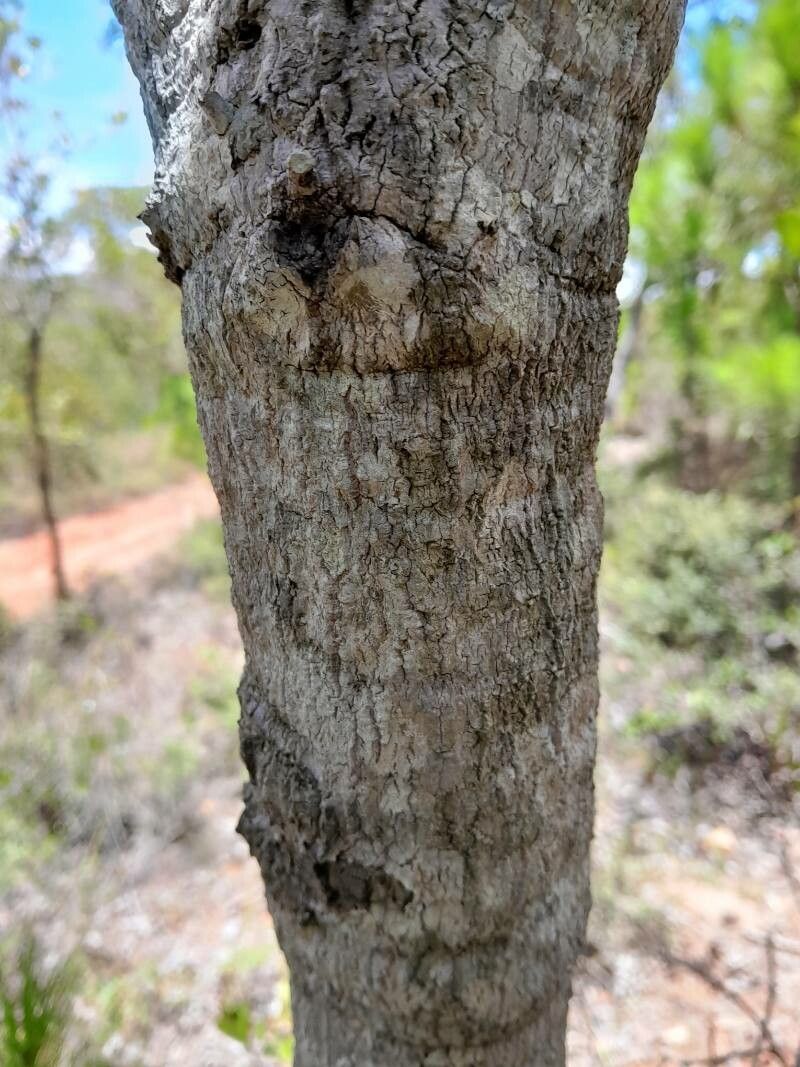
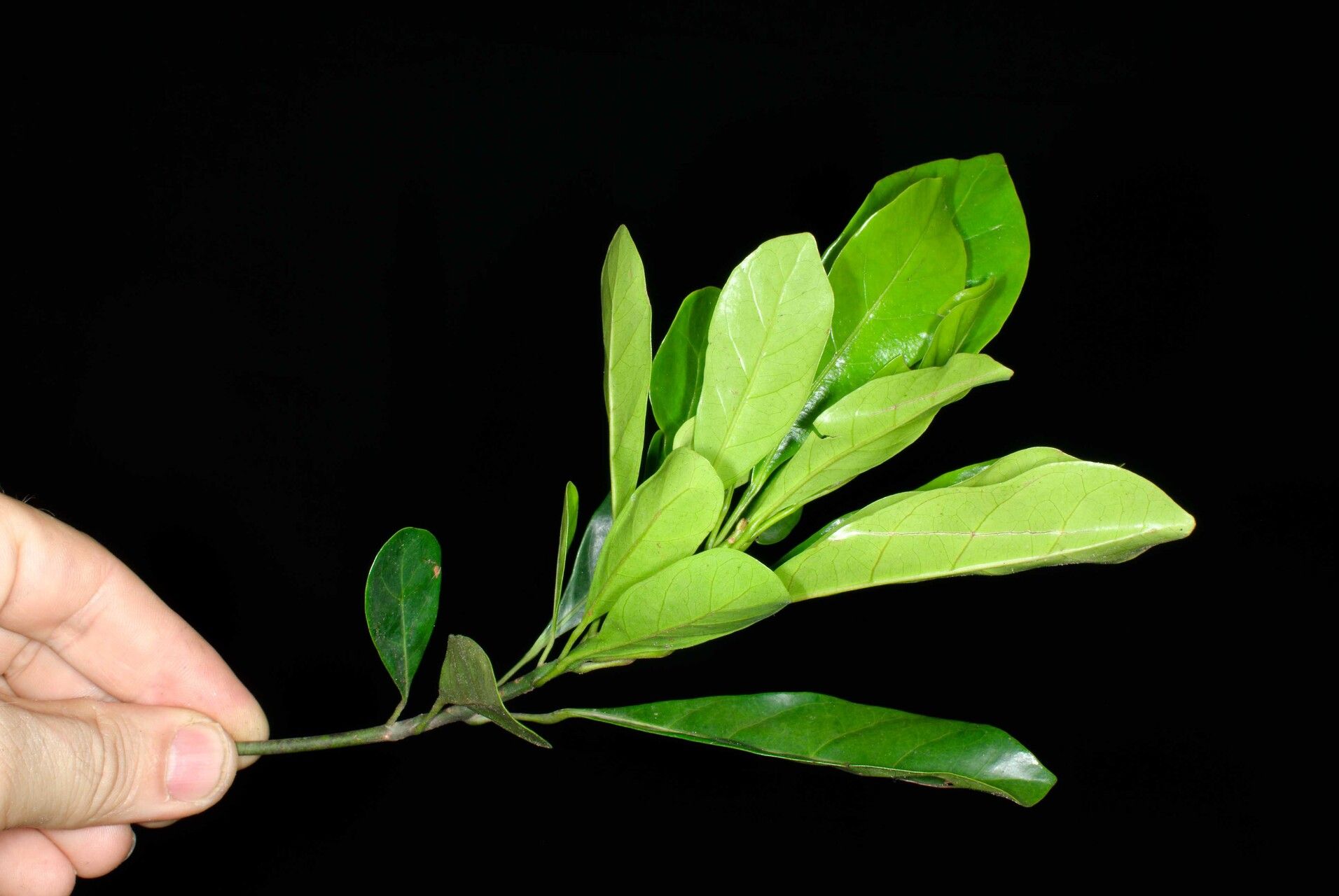
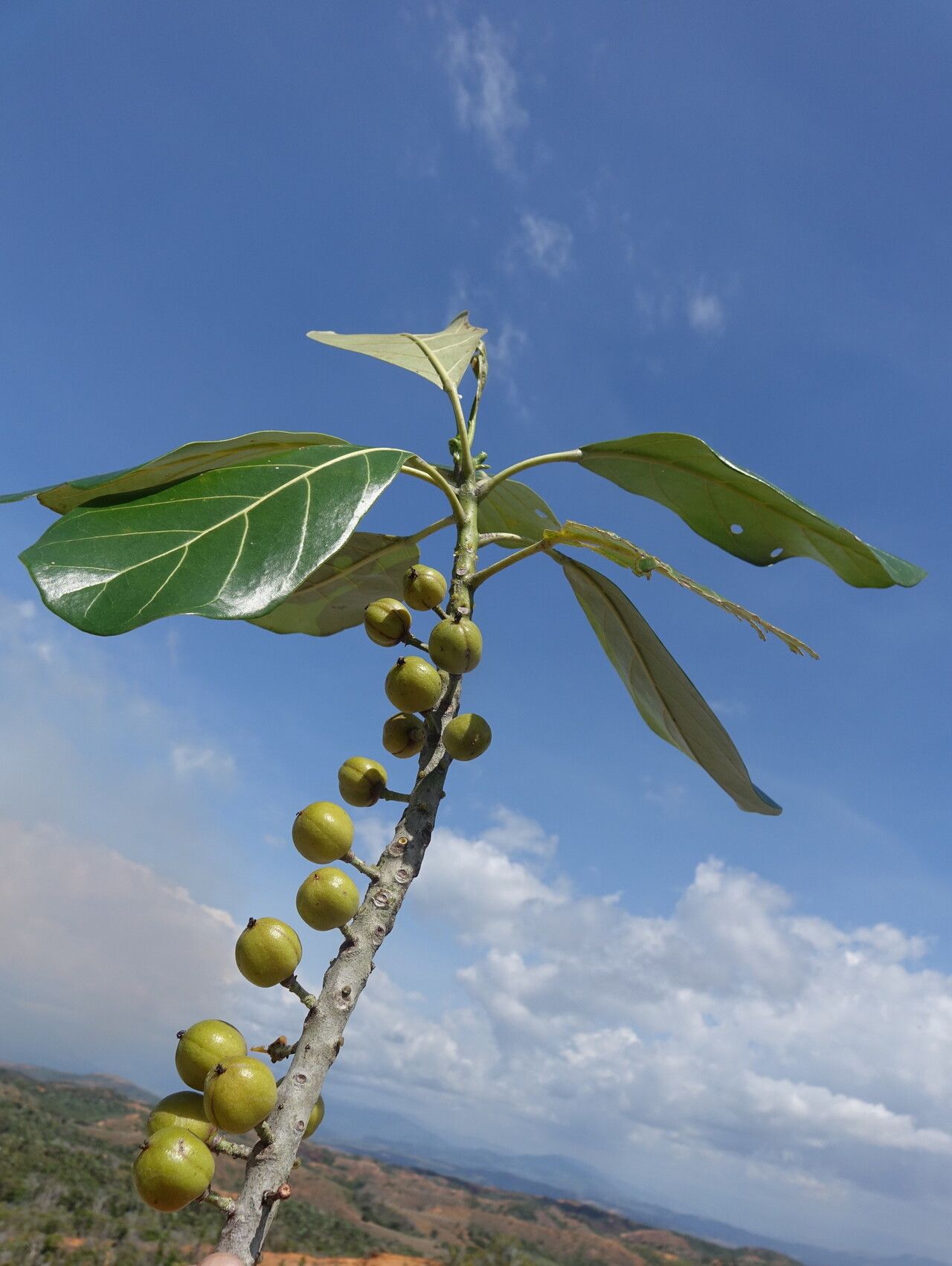
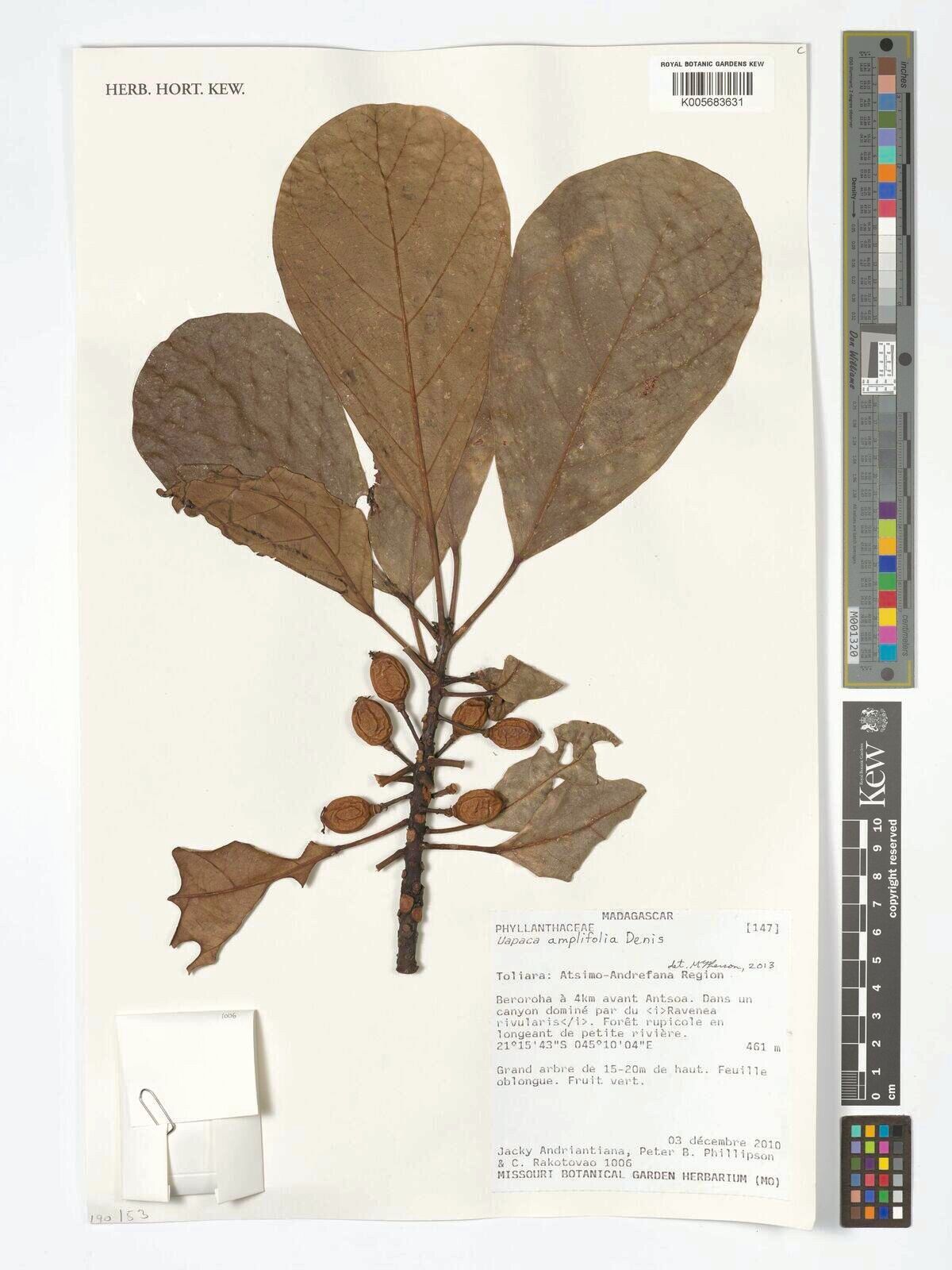
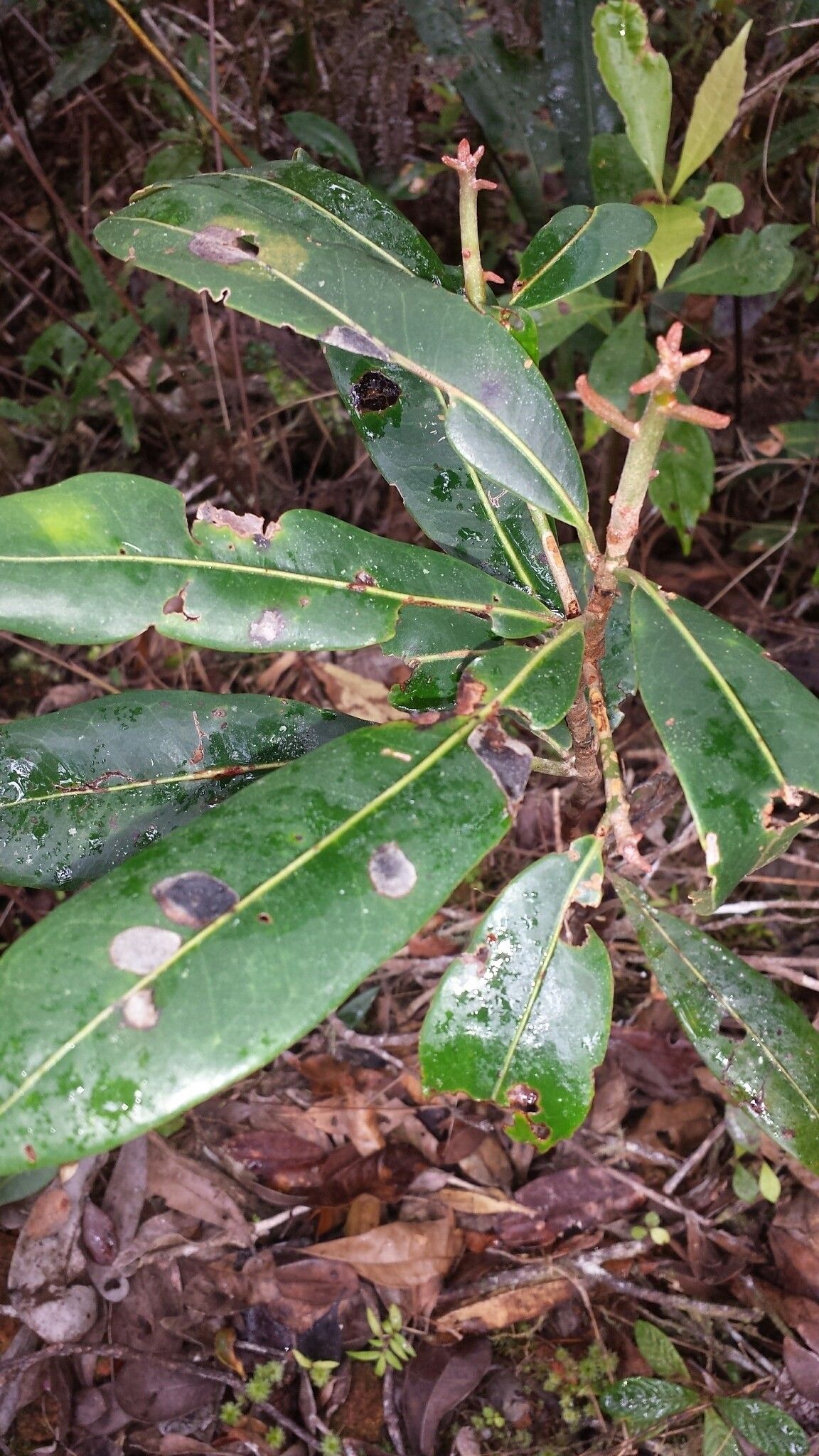
Uapaca bojeri, or tapia, is a tree species endemic to Madagascar. A characteristic element of the Madagascan flora, it occurs in the central highlands, where it dominates a type of sclerophyllous forest or woodland. Tapia forest has a high ecological value due to the fauna, flora, and funga it harbours, and is of economic interest to the local population, e.g. for collection of tapia fruits, firewood, mushrooms or wild silkworms, and hunting. Local impact through fire and cutting is seen as a form of sustainable use however tapia woodlands are now found only in scattered, isolated stands totaling at most 132,255 ha. Native woody vegetation of the central highlands is increasingly replaced by grasslands, primarily due to increased fire frequency as areas are burned annually.
The Tapia tree has strong resistance to disease and is generally not prone to illnesses. As for care, this plant is fairly low-maintenance. When grown outdoors it needs only minimal watering, and larger plants usually do not require pruning. Smaller plants, however, should be pruned after they finish blooming. The Tapia tree is suitable for anyone with outdoor space, such as a garden or a deck, and does not demand extensive plant-care experience.
How to keep Uapaca Bojeri.
Light
The Tapia tree is native to open habitats, such as sunny meadows and forest edges, which supply abundant light. It thrives in Full Sun but can also tolerate Partial Sun, adapting well to different sunlight levels.
Water
The Tapia tree flourishes in semi-arid climates due to its exceptional drought tolerance. It only needs watering every 2 to 3 weeks. As an evergreen, it keeps its leaves throughout the year, which helps conserve water during dry periods.
Temperature
The Tapia tree comes from tropical areas, where the climate is generally warm and humid. Consequently, it is adapted to high temperatures and humidity. It is sensitive to sudden temperature changes and prefers a steady thermal environment, so avoiding temperature fluctuations indoors is important. It typically does not tolerate cold and requires warmer conditions for growth. If the surrounding temperature falls too low, the plant may stop growing or even die.
Fertilizer
Fertilization is essential for caring for the Tapia tree. Regular feeding throughout the growing season preserves the energy needed for its showy foliage and supports overall growth. Failing to fertilize can lead to unhealthy leaves, reduced ornamental value, and stunted or weak growth that is more likely to break.
Pruning
To maintain the health and structure of a tapia tree, it is best to prune it from early to late winter before new growth begins. Start by removing any dead branches and thinning out dense areas to improve airflow, which supports healthy growth and fruit production. Regular pruning also aids in managing the tree's size and enhancing its appearance.
Botanical profile.
- Plant Type
- Tree
- Life Cycle
- Perennial
- Genus
- Uapaca
- Family
- Phyllanthaceae
- Hardiness Zone
- 10-12
- Mature Height
- 3.05 m to 11.89 m
- Mature Spread
- 4.88 m to 7.92 m
- Leaf Color
- Dark Green
- Leaf Type
- Evergreen
- Flower Color
- Yellow
- Flower Size
- 0.51 cm to 1.02 cm
- Bloom Time
- Early fall, Mid fall
- Planting Time
- Spring, Summer, Autumn
- Harvest Time
- Winter
- Native Area
- Madagascar
Other names.