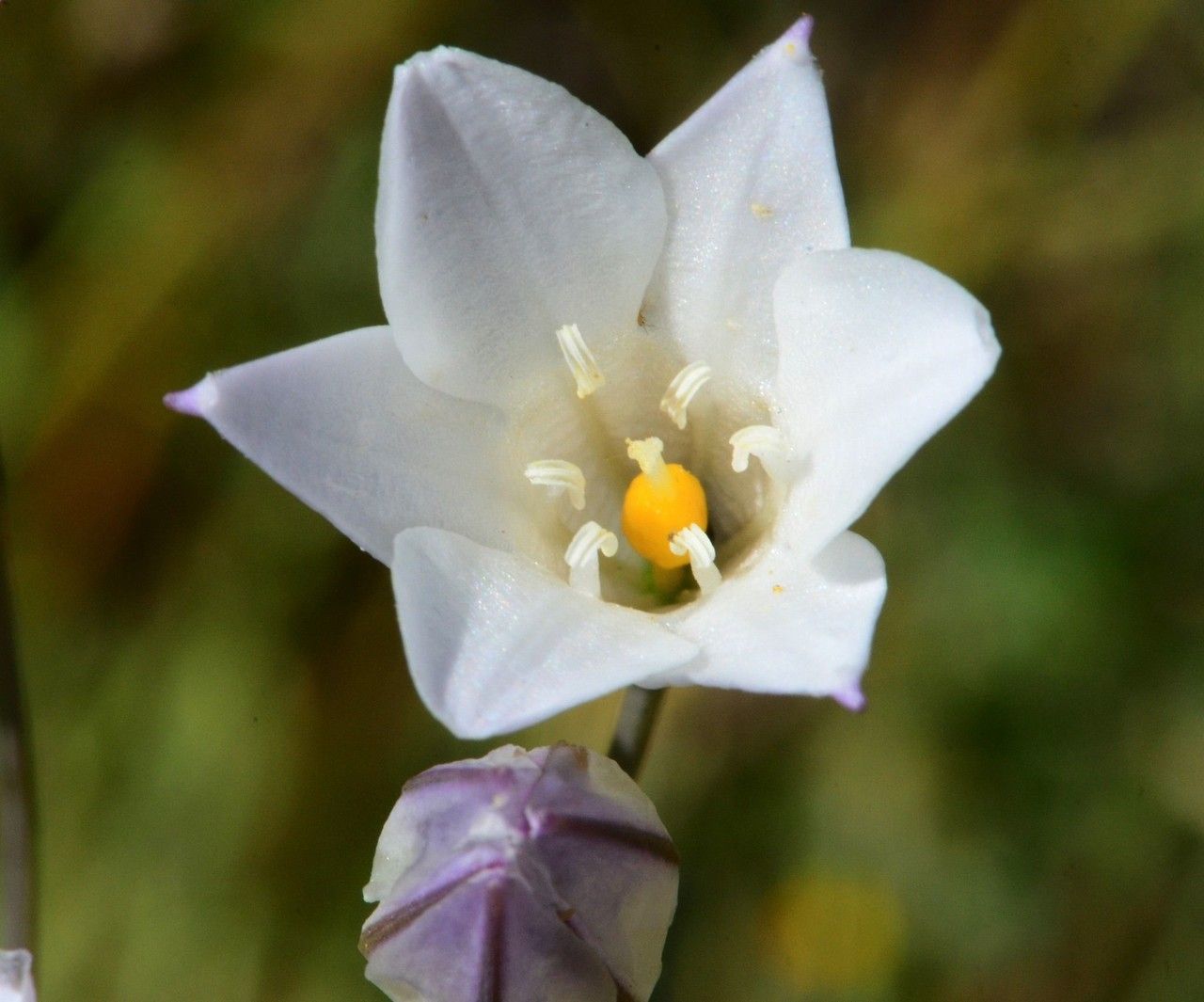
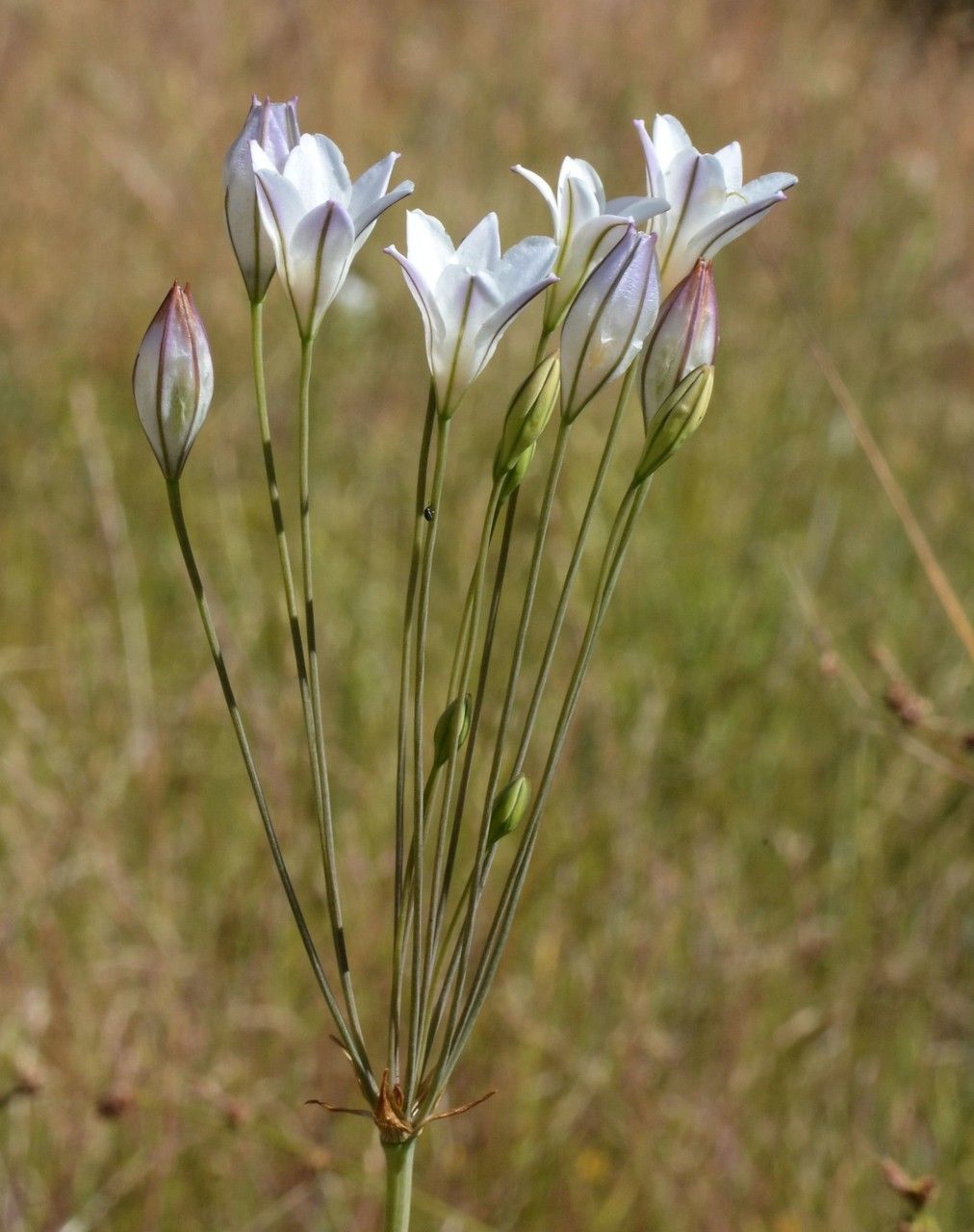
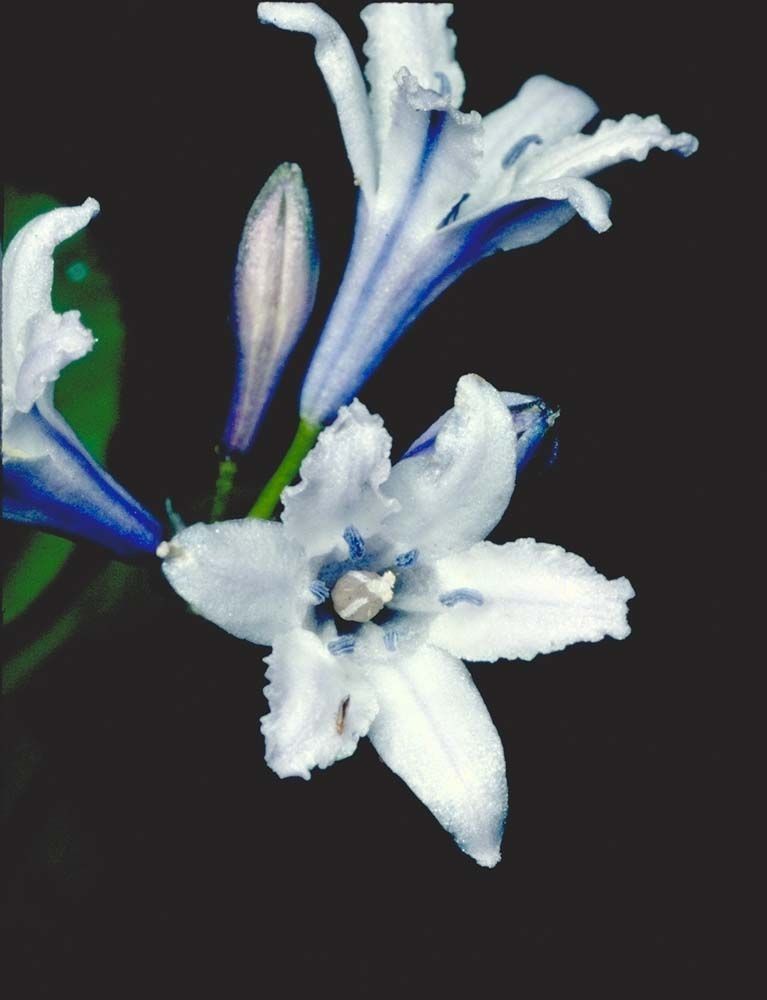
Triteleia peduncularis is a monocot flowering plant in the genus Triteleia. Its common names include long-ray brodiaea and longray triteleia. It is endemic to California, where it occurs in the coastal and inland mountain ranges of the northern and central sections of the state. It grows in vernally moist habitat such as meadows, grassland, and vernal pools, often in areas with serpentine soils. It is a perennial wildflower growing from a corm. There are two or three basal leaves measuring up to 40 cm (16 in) long and 1.5 cm (0.6 in) wide. The inflorescence arises on a smooth, erect stem up to 80 cm (31 in) tall. It is an umbel-like cluster of several flowers which are borne on very long, straight pedicels measuring up to 18 cm (7.1 in) long. Each funnel-shaped flower is white, often tinged purple, with six tepals up to 1.6 cm (0.6 in) in length. There are six stamens with white anthers, and the ovary at the center is yellow when the flower is fresh.
Long-ray brodiaea has good resistance to disease and is generally not prone to illnesses. However, it can be susceptible to pests and diseases present in its environment. Such infections are usually not severe. Regarding care, this plant requires moderate maintenance. Regular pruning is necessary to maintain its appearance and promote healthy growth. Fertilizing can also help encourage flowering. Long-ray brodiaea is appropriate for anyone with an outdoor area, such as a garden or patio, and does not demand extensive care experience. It may require more attention when grown indoors.
How to keep Triteleia Peduncularis.
Light
Long-ray brodiaea is a sun-loving perennial herbaceous plant that comes from open habitats and often thrives in meadows and grasslands. It prefers full sun but can also tolerate partial sun conditions.
Temperature
Long-ray brodiaea can tolerate a wide range of temperatures, but its distribution may still be restricted by particular combinations of moisture and heat. It performs best in warm summer climates with sufficient rainfall or irrigation. Extended periods of cloudy, rainy weather or prolonged high temperatures increase the chance of Long-ray brodiaea dying. In winter, adequate protection from the cold can enhance the plant's survival.
Fertilizer
For Long-ray brodiaea, the primary time to apply fertilizer is in early spring when the flowers are forming. An appropriate fertilizer promotes better blooms and enables Long-ray brodiaea to produce attractive flowers. Fertilizing in early spring ensures strong flowering throughout the season and supplies energy for dormant growth periods.
Botanical profile.
- Plant Type
- Herb
- Life Cycle
- Perennial
- Genus
- Triteleia
- Family
- Asparagaceae
- Hardiness Zone
- 7-10
- Mature Height
- 30 cm to 61 cm
- Mature Spread
- 15 cm to 30 cm
- Leaf Color
- Green
- Leaf Type
- Deciduous
- Flower Size
- 2.03 cm to 3.05 cm
- Bloom Time
- Mid spring, Late spring
- Planting Time
- Spring, Summer
- Harvest Time
- Early summer, Mid summer
Other names.