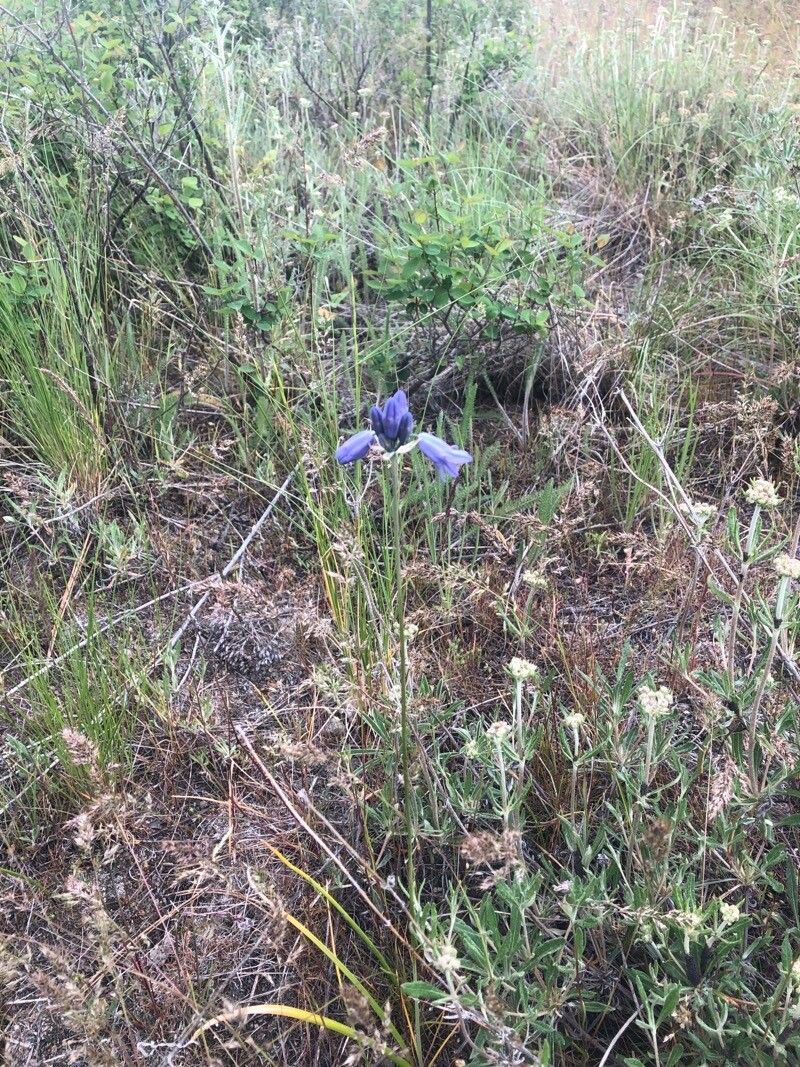
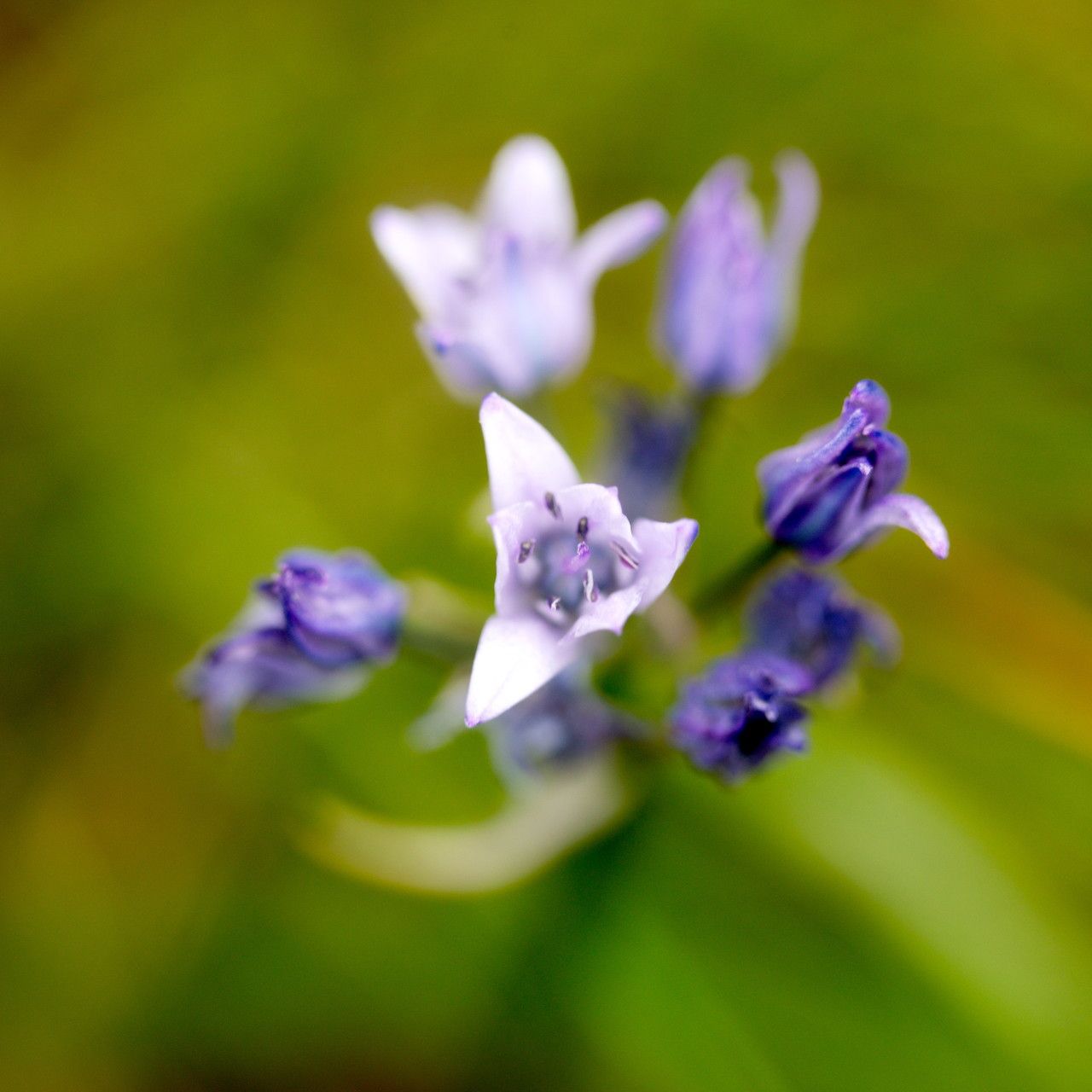
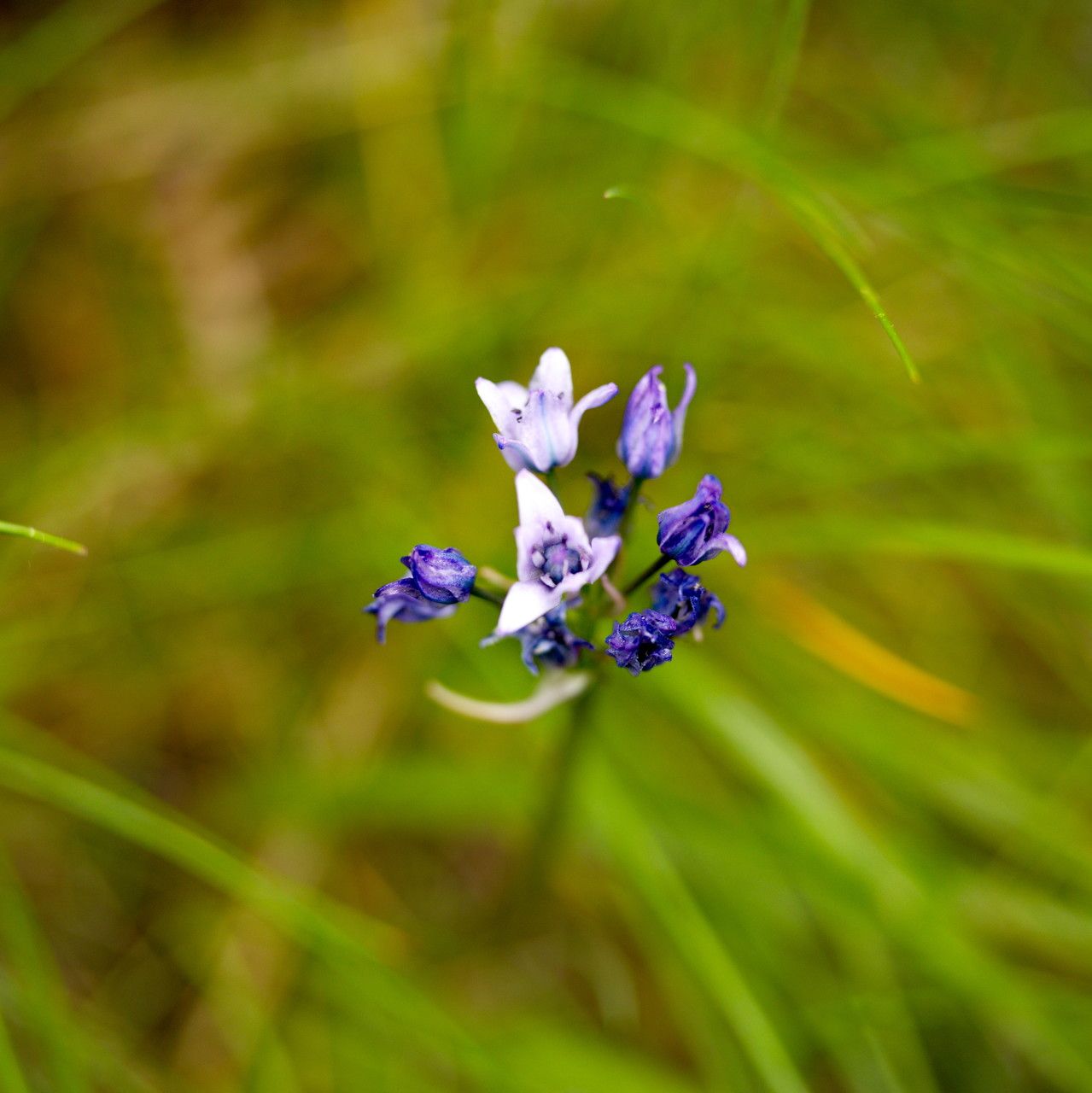
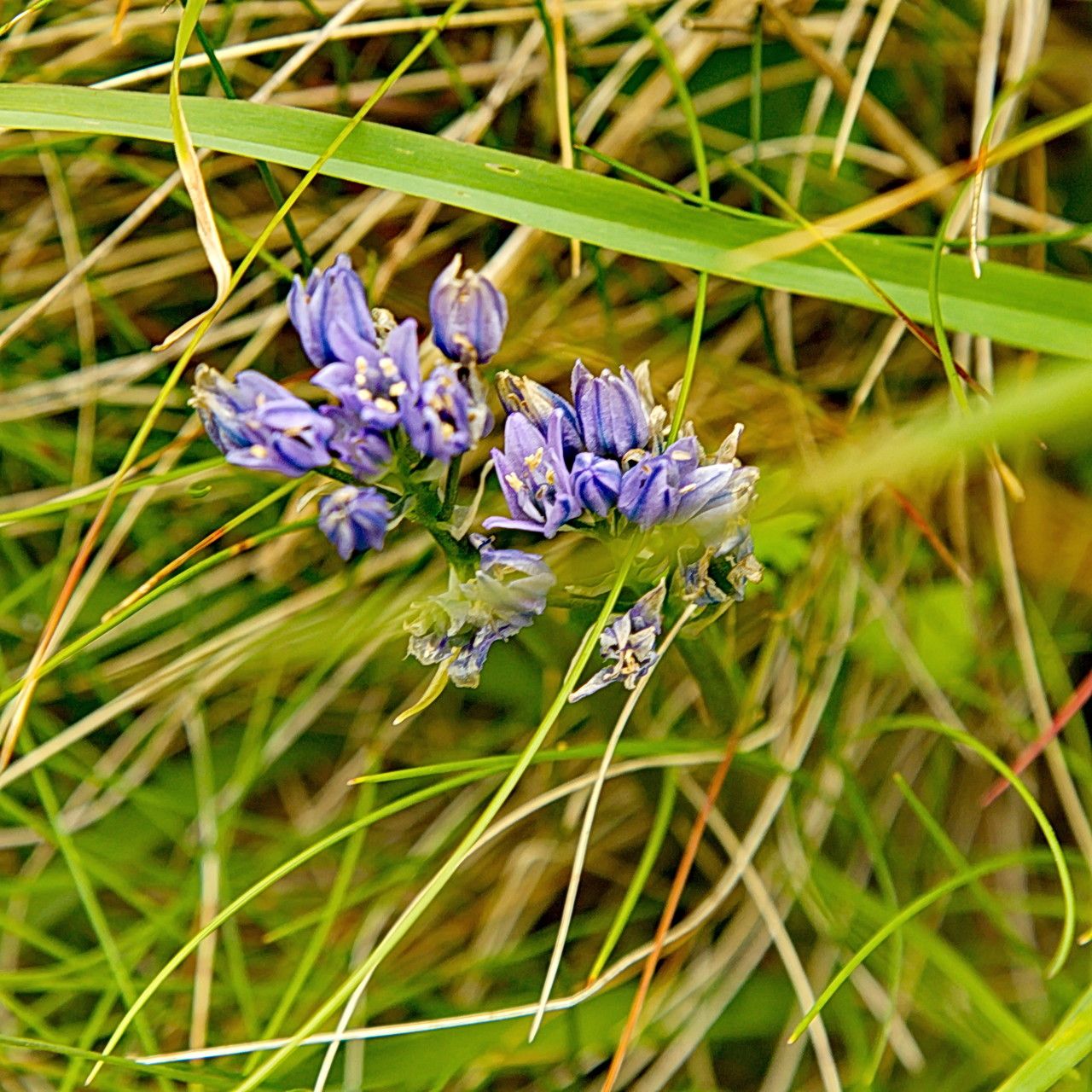
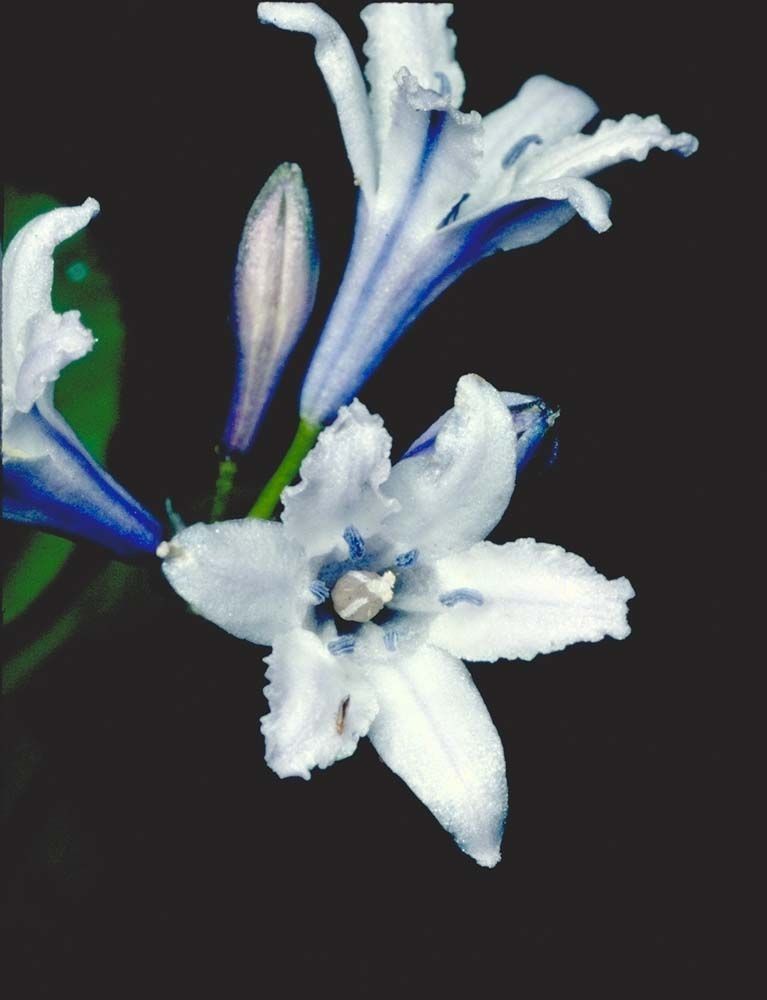
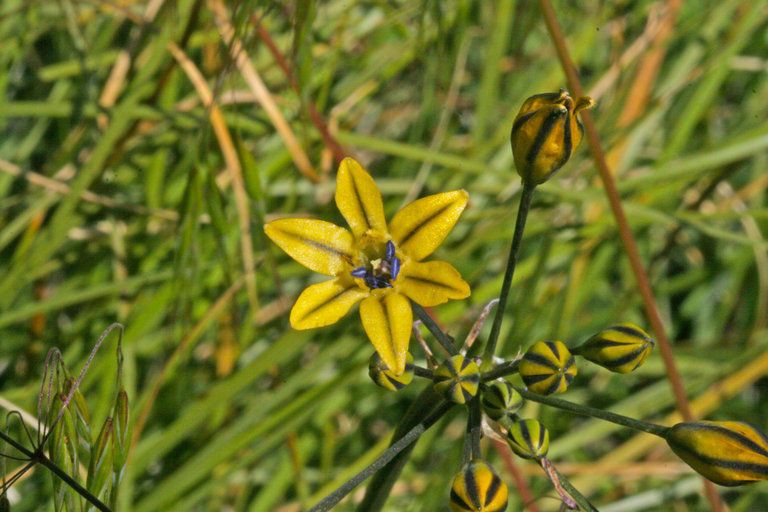
Triteleia grandiflora is a species of flowering plant known by the common names largeflower triteleia, largeflower tripletlily, and wild hyacinth. It is native to western North America from British Columbia to extreme northern California, eastward into Idaho, Montana and northern Utah, with disjunct populations occurring in Wyoming and Colorado. Its habitat includes grassland, sagebrush, woodlands, and forests. It is a perennial herb growing from a corm. It produces two or three basal leaves up to 70 centimetres (28 in) long by 1 cm wide. The inflorescence arises on a smooth, erect stem up to 75 cm (30 in) tall and bears an umbel-like cluster of many flowers. Each flower is a funnel-shaped bloom borne on a pedicel up to 4 or 5 cm long. The flower may be up to 3.5 cm long including the tubular throat and six tepals each just over 1 cm long. The inner set of three tepals are somewhat ruffled and broader than the outer tepals. The flower corolla may be deep blue to almost white with a darker blue mid-vein. There are six stamens with purple or yellow anthers.
The corm provides food for various wild rodents and livestock, and Native Americans and settlers found them edible as well.
Largeflower triteleia has strong disease resistance and is generally not susceptible to illnesses. Still, it can be affected by pests and diseases present in its environment. These infections are generally not serious. For care, this plant requires moderate maintenance. It should be pruned regularly to maintain a tidy appearance and promote healthy growth. Fertilizing can also help encourage flowering. Largeflower triteleia is suitable for anyone with outdoor space, such as a garden or patio, and does not demand extensive care experience. It may need more attention when cultivated indoors.
How to keep Triteleia Grandiflora.
Light
Largeflower triteleia does best with plenty of sunlight and can tolerate moderate shade. Sunlight is vital for its vigorous growth. Ironically, too much sun can cause stress, while too little light can hinder its development. Native to regions with strong solar intensity, it is adapted to bright sun.
Water
Largeflower triteleia is well-suited for arid environments and thrives in dry conditions, needing only weekly watering. Its drought tolerance helps minimize water usage during hot seasons, leading to vibrant blooms. Also resilient to full sun exposure, largeflower triteleia effectively balances moisture and dryness, making it an excellent choice for outdoor gardening.
Temperature
Largeflower triteleia prefers temperatures between 41 and 90 °F (5 to 32 ℃). This is its ideal range. Try to keep it within these bounds and adjust seasonally for the happiest plant. Remember, largeflower triteleia is all about temperature.
Fertilizer
For Largeflower triteleia, the primary time to fertilize is early spring as the flowers are developing. The appropriate fertilizer promotes better blooms and helps Largeflower triteleia produce attractive flowers. Fertilizing in early spring ensures excellent flowers throughout the season and supplies energy for dormant growth phases.
Pruning
Largeflower triteleia is a perennial plant known for its vibrant blue flowers. To promote healthy growth, prune the plant from early to late spring by removing spent flower stalks and up to one-third of the oldest stems. Be sure to use clean, sharp tools to prevent disease, and avoid heavy pruning to minimize stress on the plant.
Botanical profile.
- Plant Type
- Herb
- Life Cycle
- Perennial
- Genus
- Triteleia
- Family
- Asparagaceae
- Hardiness Zone
- 4-8
- Mature Height
- 30 cm to 52 cm
- Mature Spread
- 15 cm
- Leaf Color
- Green
- Leaf Type
- Evergreen
- Flower Color
- Lavender
- Flower Size
- 3.56 cm
- Bloom Time
- Mid spring, Late spring
- Planting Time
- Spring, Autumn
- Harvest Time
- Early summer, Mid summer
Other names.
Reader questions.
How should I water my Largeflower triteleia plant to keep it healthy?
To properly care for the Largeflower triteleia, use filtered water at room temperature or slightly warmer. Tap water may harm the plant due to contaminants. The plant is accustomed to warm environments, so avoid using cold water as it can shock the system. Additionally, avoid overhead watering to prevent foliage issues. Instead, thoroughly soak the soil with the filtered room temperature water. This method benefits the plant by moisturizing the roots and aiding their expansion and nutrient absorption.
Why should I add fertilizer to my Largeflower triteleia?
The main structure of the Largeflower triteleia is made up of its leaves. Fertilization is a vital way to ensure that these leaves not only look great but also function properly. Proper fertilization ensures that the leaves of your Largeflower triteleia remain consistently colored and have a healthy texture. Fertilization is not only beneficial above ground but also below the soil's surface. It helps the plant generate new roots and maintain existing ones in its root system. This means that fertilization not only keeps the plant healthy now but also improves its ability to absorb soil nutrients in the future.
What are the sunlight requirements for Largeflower triteleia?
Largeflower triteleia thrives best under conditions of full sun, requiring more than 6 hours of sunlight daily for optimal growth. It can also tolerate partial sun, growing well in spots that receive about 3-6 hours of sunlight. When considering where to place your garden, it's important to observe the movement of sunlight throughout the day to find the perfect balance for your plants. This will ensure they are happy and healthy, benefiting from the adequate light they need.
What is the ideal temperature range for Largeflower triteleia?
The ideal temperature range for Largeflower triteleia, also known as Triteleia grandiflora, is between 41 and 90 °F (5 to 32 °C). Keeping the plant within this temperature range is crucial for its happiness and health. Seasonal adjustments may be necessary to maintain these conditions. The plant is highly cold-resistant, indicating that special frost protection measures are often not required during winter. However, in extremely cold conditions where temperatures are expected to drop below -30°C, it's important to provide cold protection by covering the plant with soil or straw. Additionally, watering the plant abundantly before the first freeze in autumn helps maintain moisture in the soil, preventing drought and water scarcity during the winter and early spring.
What should I do if I give my Largeflower triteleia too much or too little water?
Both overwatering and underwatering can harm your Largeflower triteleia, but overwatering is more common. If this species gets too much water, its stems and leaves may wilt and turn yellow. Prolonged overwatering can also lead to root rot, mold, and mildew, which can be fatal for your plant. Underwatering is less likely, as this plant can tolerate some drought. However, it is still possible, and in that case, the leaves may become brittle and brown. When caring for your Largeflower triteleia, it is important to recognize the signs of overwatering early on. Diseases like root rot may not be reversible if you wait too long. If you notice early signs of overwatering, reduce watering immediately. Check the quality of the soil as well. If it drains poorly, replace it with a loose, well-draining potting mix. On the other hand, if your Largeflower triteleia shows signs of not getting enough water, simply water it more regularly until the signs improve.
When should I fertilize my Largeflower triteleia?
If you grow your Largeflower triteleia outdoors, it will start sending out new growth in early spring. This signals that it's time to fertilize the plant for the year. Typically, a single application of fertilizer in spring is enough for the plant to thrive. However, if you want to maximize its growth, you can feed it multiple times throughout spring and early summer. In this case, you can fertilize it once every month to a month and a half.
How does sunlight affect the growth of Largeflower triteleia?
Sunlight is essential for the vibrant growth and health of Largeflower triteleia. Originating from regions with strong solar intensity, this plant is well-adapted to thrive in abundant sunlight but can also grow in moderately shaded environments. However, too much sunlight can stress the plant, while insufficient sunlight may hinder its growth. In environments with less natural light, especially during winter, artificial lighting can be a beneficial solution. LED lights are particularly recommended for their ability to provide specific wavelengths needed for optimal growth. For indoor plants, the amount of artificial light needed varies depending on the plant's natural sunlight requirements.
How does Largeflower triteleia react to low temperatures?
Largeflower triteleia demonstrates impressive cold tolerance and flourishes best when the temperature remains above 5°C. During the winter months, it is advisable to maintain temperatures above -25°C. If temperatures fall below -30°C, the plant may not exhibit noticeable changes during the winter, but there can be a decrease in sprouting or even a lack of sprouting in the spring. The solution for any parts of the plant that fail to sprout in spring is to simply remove them.
How much water does my Largeflower triteleia need?
If your Largeflower triteleia plant is in a pot, the best way to determine if it needs water is to check the moisture level of the soil by sticking your finger into it. If the top two to three inches of soil feel dry, then it's time to water. For those growing their Largeflower triteleia outdoors in the ground, you can use a similar method to test the soil. Once the top few inches have dried out, it's time to water. This watering schedule usually works well during the spring and early fall, with watering needed about once a week. However, during hot weather, you may need to water two or more times per week. It's worth noting that mature and well-established Largeflower triteleia plants have a good tolerance for drought and can withstand dry periods.
When is it not a good idea to fertilize my Largeflower triteleia?
During the late fall and winter, your Largeflower triteleia will go into a dormant phase, meaning it won't grow anymore. It's best to avoid fertilizing it during this time. In the spring and summer, if you do choose to fertilize it, start reducing the amount as summer approaches since the growth rate will slow down. Overall, it's not recommended to fertilize your Largeflower triteleia when the weather is unusually hot or when the soil is extremely dry. Fertilizing in those conditions can stress the plant and make it die earlier.
What are the symptoms of inadequate sunlight for Largeflower triteleia?
When Largeflower triteleia does not receive enough sunlight, several symptoms may appear, including smaller new leaves, leggy or sparse growth, faster leaf drop, and slower or no new growth, indicating that the plant is entering survival mode. Inadequate sunlight can also lead to lighter-colored new leaves due to a lack of chlorophyll and essential nutrients. Conversely, symptoms such as chlorosis, sunscald, leaf curling, wilting, and leaf scorching may occur from excessive sunlight, showing the plant's struggle to adapt to its environment.
What should be done if Largeflower triteleia is exposed to high temperatures?
Largeflower triteleia should ideally be kept below 32°C during the summer months. Exposure to temperatures above 35°C can result in the leaves becoming lighter in color, curling, and being susceptible to sunburn. In severe cases, the plant may wilt and dry out completely. To manage this, it's recommended to trim away any sunburned and dried-up parts of the plant. Moving the plant to a shaded location or using a shade cloth to provide protection from the midday and afternoon sun can be beneficial. Additionally, watering the plant during cooler times of the day, such as morning and evening, helps keep the soil adequately moist and supports plant health.