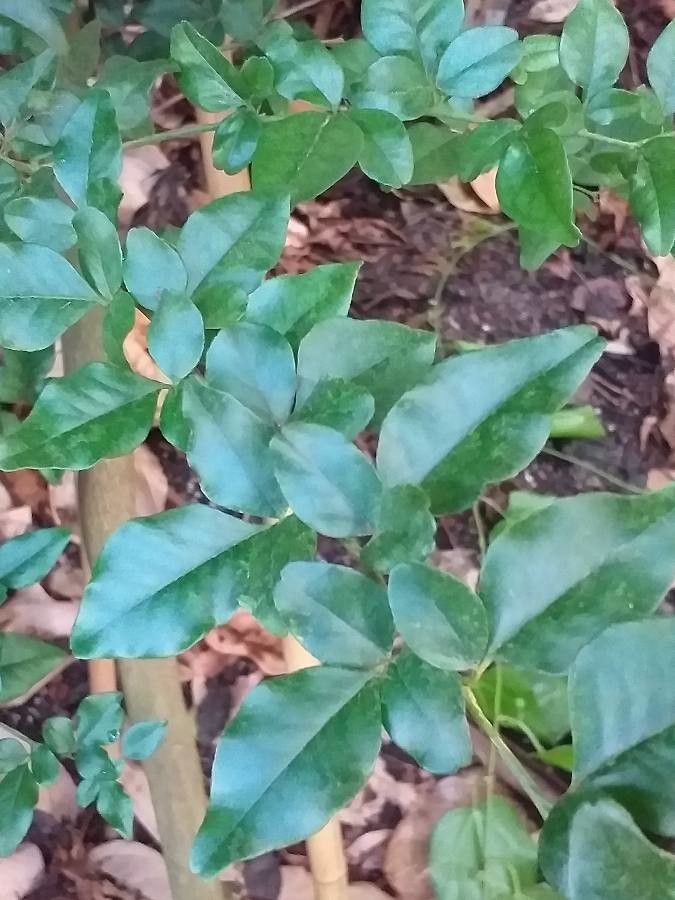
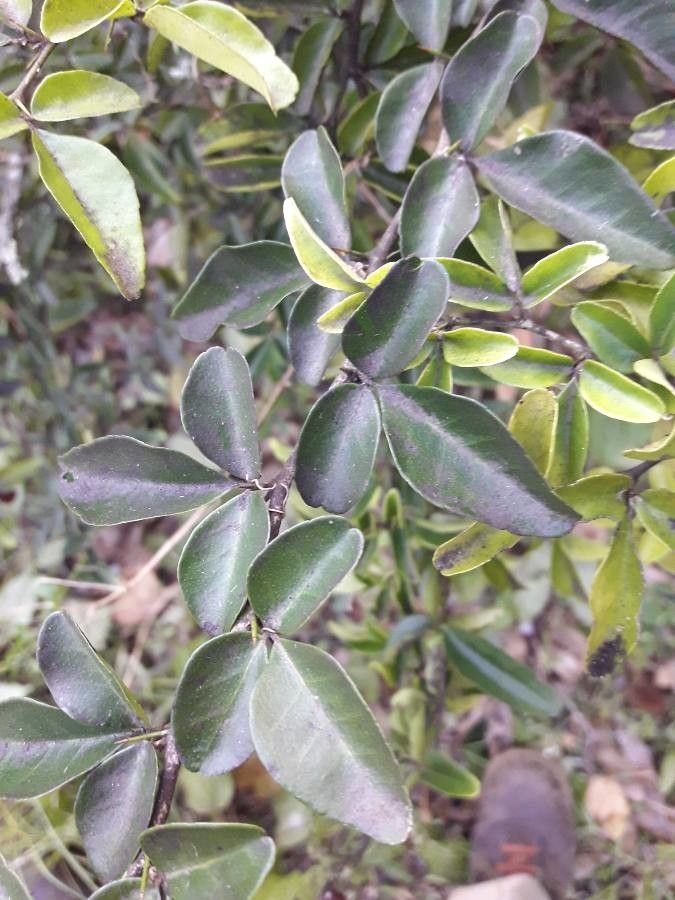
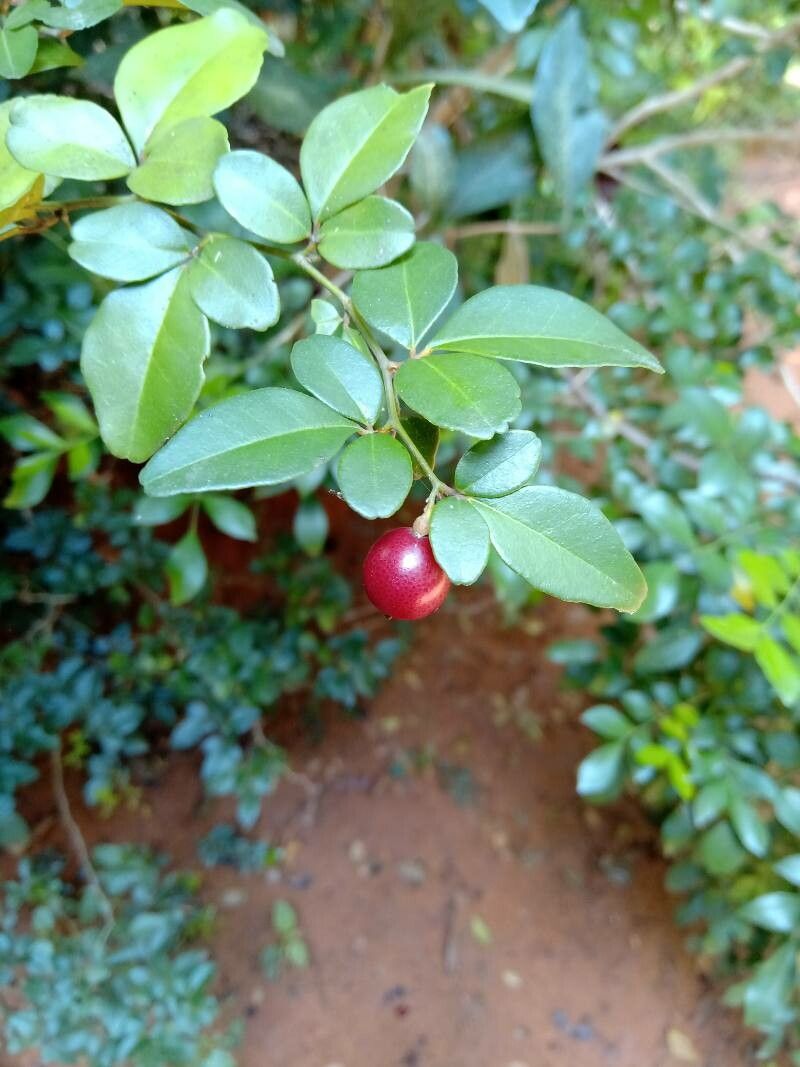
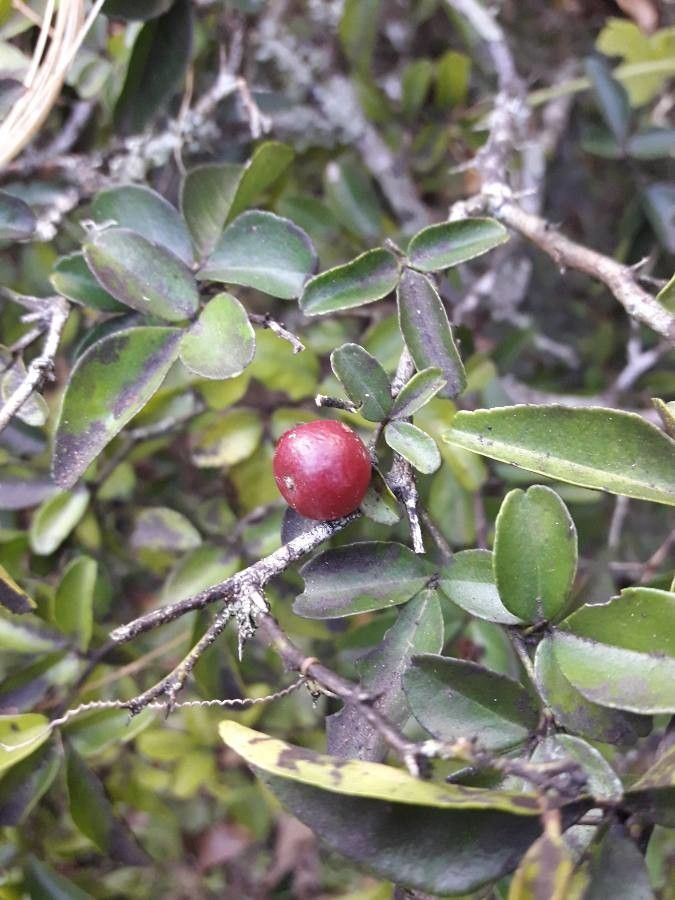
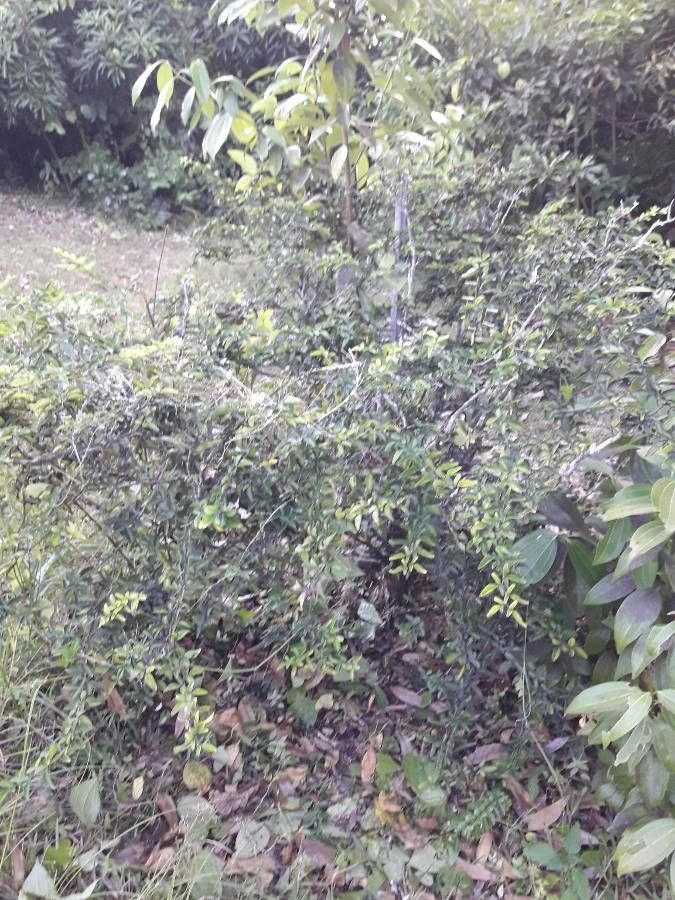
Triphasia trifolia, also known as limeberry or lemonberry, is a small evergreen tree or shrub that belongs to the citrus family. Native to Southeast Asia, it can be found in countries such as Thailand, Malaysia, and Indonesia. The plant can grow up to 6 meters tall and features dense, glossy green leaves that are trifoliate (three-lobed).
The limeberry produces small fruits that resemble limes or lemons in appearance but are much smaller, measuring about 1-2 cm in diameter. The fruits have a thin skin that ranges from green to yellow-orange when ripe and contain juicy pulp with a sour taste. They are commonly used for making jams, jellies, sauces, and beverages.
This plant is easy to grow and prefers well-drained soil with full sun exposure. While it can tolerate drought conditions, regular watering is necessary for optimal growth. The limeberry is also valued for its ornamental appeal due to its attractive foliage and fruit-bearing capabilities.
In traditional medicine practices of Southeast Asian countries such as Malaysia, the leaves of Triphasia trifolia have been used to treat various ailments, including fever reduction, coughs, colds, and stomach ache relief.
Overall, the Triphasia trifolia plant is notable for both its ornamental value and its medicinal properties.
Baby lime is quite resistant to disease and usually isn't prone to illnesses. Carewise, this plant is fairly low-maintenance. When grown outdoors it needs only minimal watering, and larger plants typically do not require pruning. Smaller plants, however, should be pruned after they have finished blooming. Baby lime is appropriate for anyone with outdoor space, such as a garden or deck, and does not demand much experience in plant care.
How to keep Triphasia Trifolia.
Light
Baby lime does best in places with plenty of daylight. Too much light or too little light can cause stunted growth or yellowing leaves, respectively. Although it performs best in full sun, it can still remain healthy in somewhat less brightly lit conditions. These traits reflect its origins in habitats with high levels of sunlight.
Water
Baby lime plants thrive in high humidity and consistently moist conditions. They prefer soil that is evenly moist but not waterlogged. Ideally, they should be watered once every 1-2 weeks. These plants tend to grow better indoors, where humidity levels are easier to control, which helps maintain their lush evergreen foliage.
Temperature
Baby lime comes from tropical areas where the climate is usually warm and humid. As a result, it is adapted to high temperatures and moisture. It dislikes sudden temperature shifts and prefers a steady thermal environment, so indoor temperature fluctuations should be avoided. It generally cannot tolerate cold and needs warmer conditions to grow. If the ambient temperature falls too low, the plant may stop growing or even die.
Fertilizer
Prefer organic fertilizers (for example, fish emulsion or compost) instead of chemical fertilizers for Baby lime. Give young plants increased nitrogen and phosphorus in spring. Incorporate compost or fertilizer into the soil before or after planting. For mature plants, supplement in spring with a balanced fertilizer or one aimed at specific deficiencies. Nutrient deficiency causes small leaves, short branches, yellow or bronze leaves, acidic fruits, premature fruit fall, and splitting.
Pruning
Regular pruning is essential for the healthy growth of baby lime trees. This involves removing dead wood and managing new growth. The best time for pruning is from early to late spring. Proper pruning improves air circulation, promotes overall health, and increases fruit yield. For detailed care instructions, consult trustworthy horticultural sources.
Botanical profile.
- Plant Type
- Tree, Shrub
- Life Cycle
- Perennial
- Genus
- Triphasia
- Family
- Rutaceae
- Hardiness Zone
- 9-11
- Mature Height
- 3.05 m
- Mature Spread
- 0.91 m to 2.13 m
- Leaf Color
- Green
- Leaf Type
- Evergreen
- Flower Color
- White
- Flower Size
- 0.51 cm
- Bloom Time
- All year round
- Planting Time
- Spring, Summer, Autumn
- Harvest Time
- All year round
- Native Area
- Solomon Islands, Malaysia, Indonesia, Cambodia, Vietnam, Myanmar, Bangladesh, Laos, Thailand
Other names.