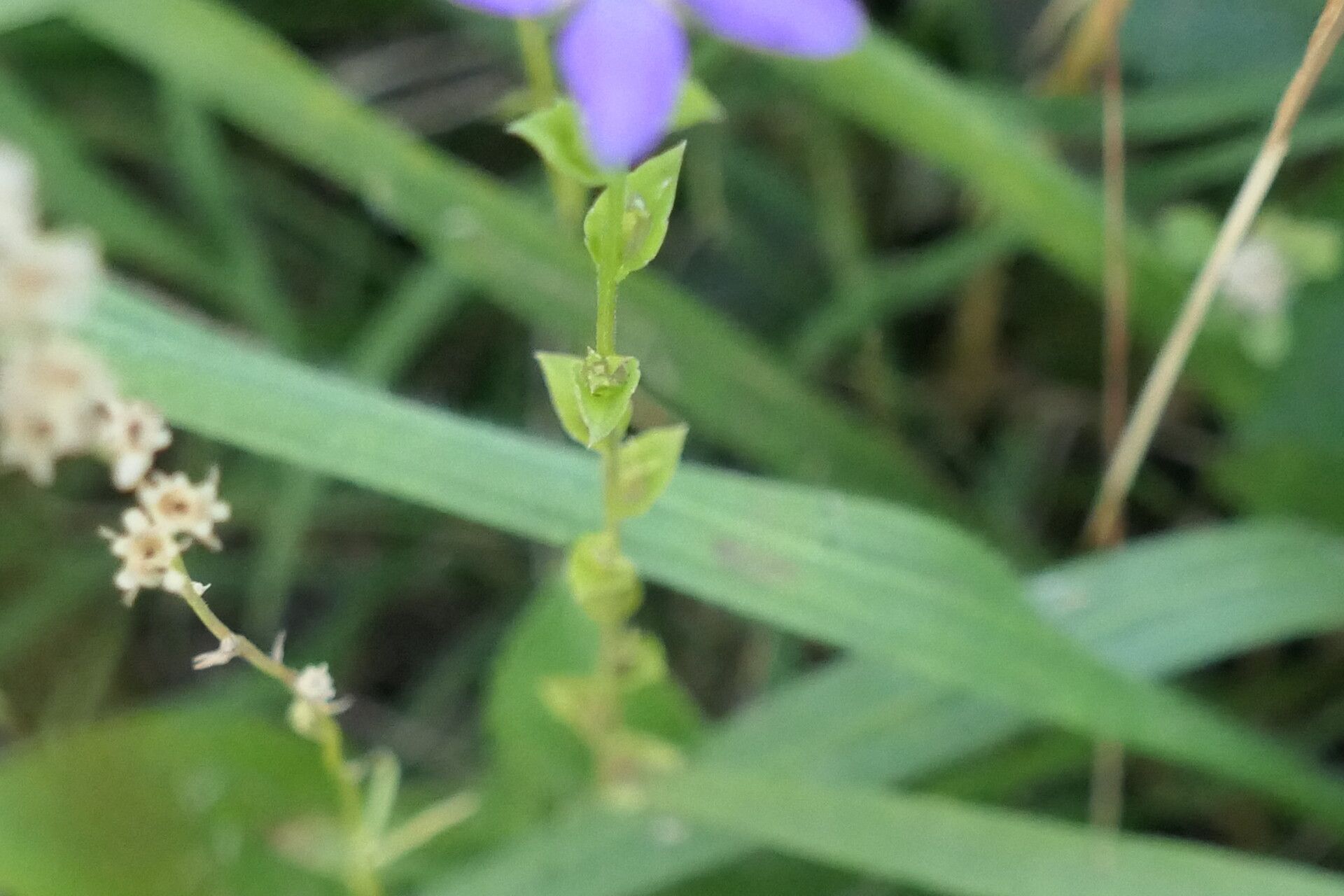
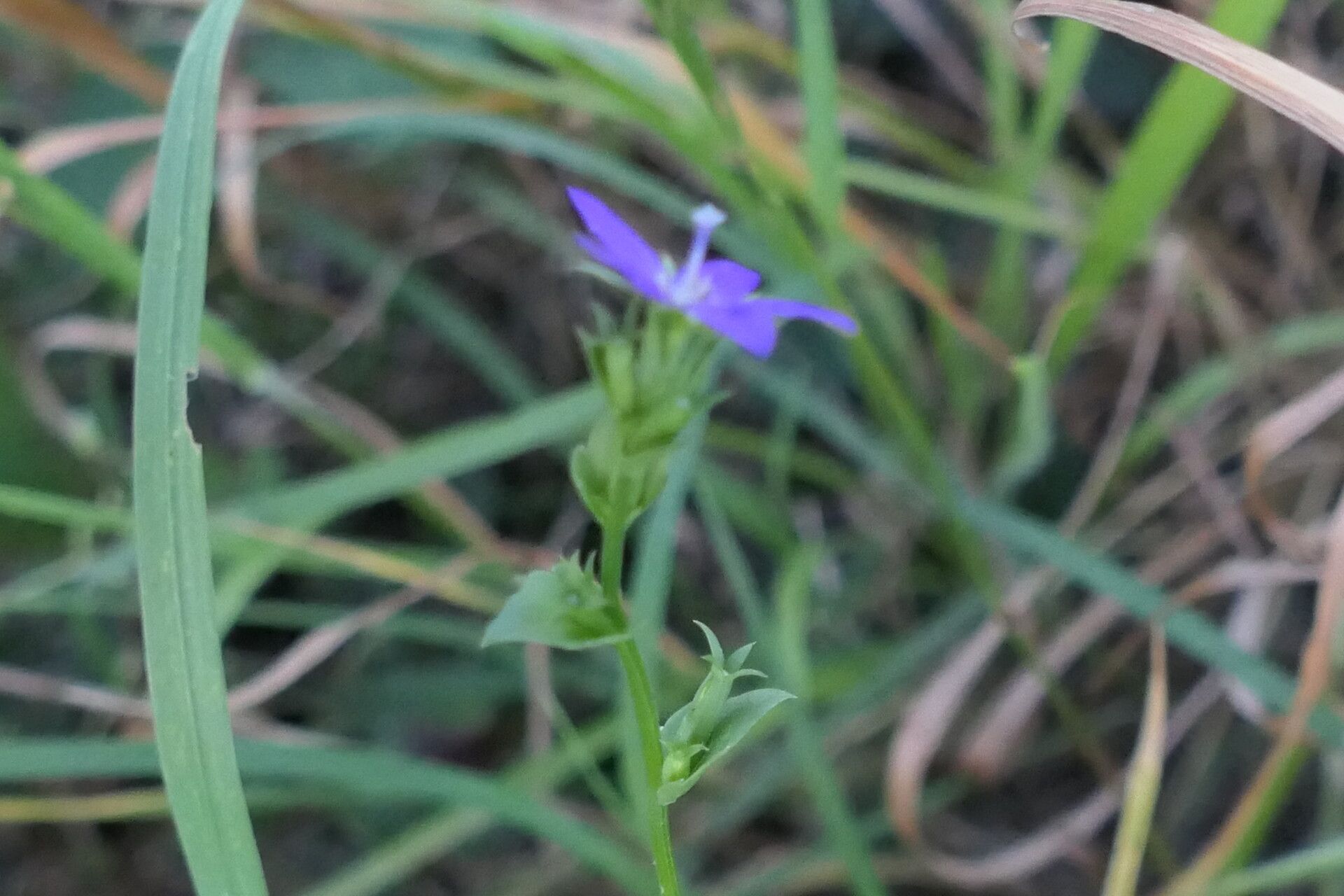
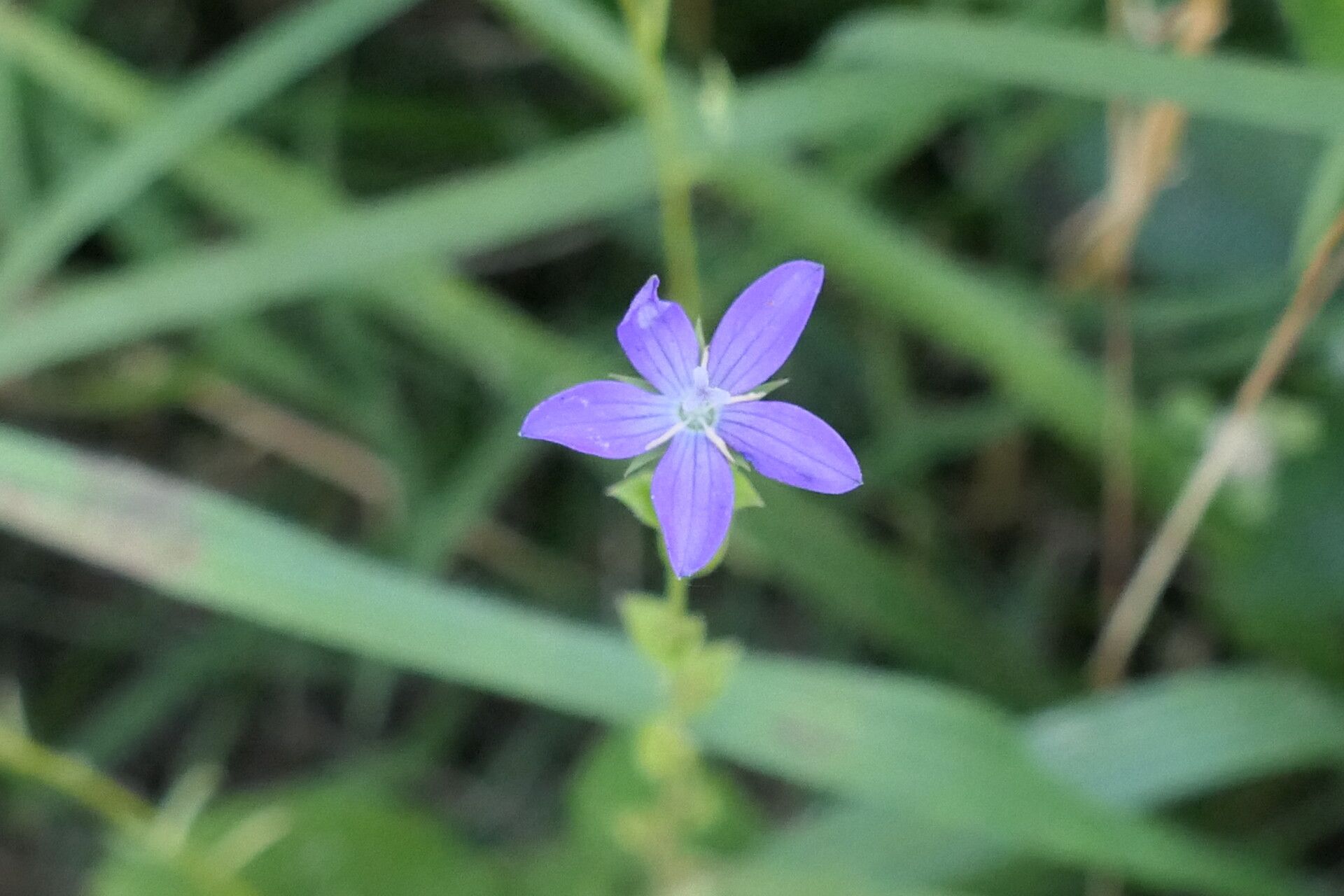
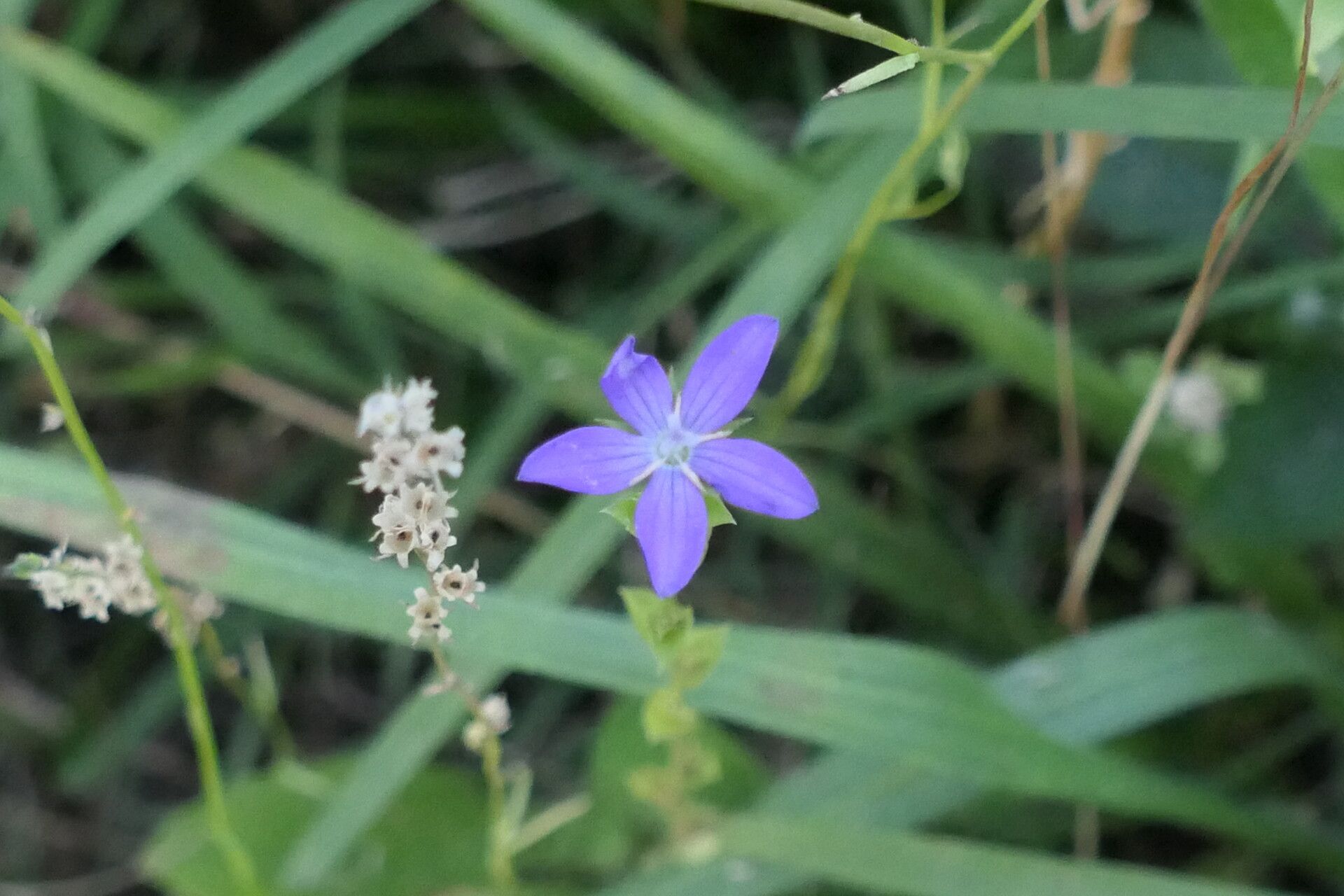
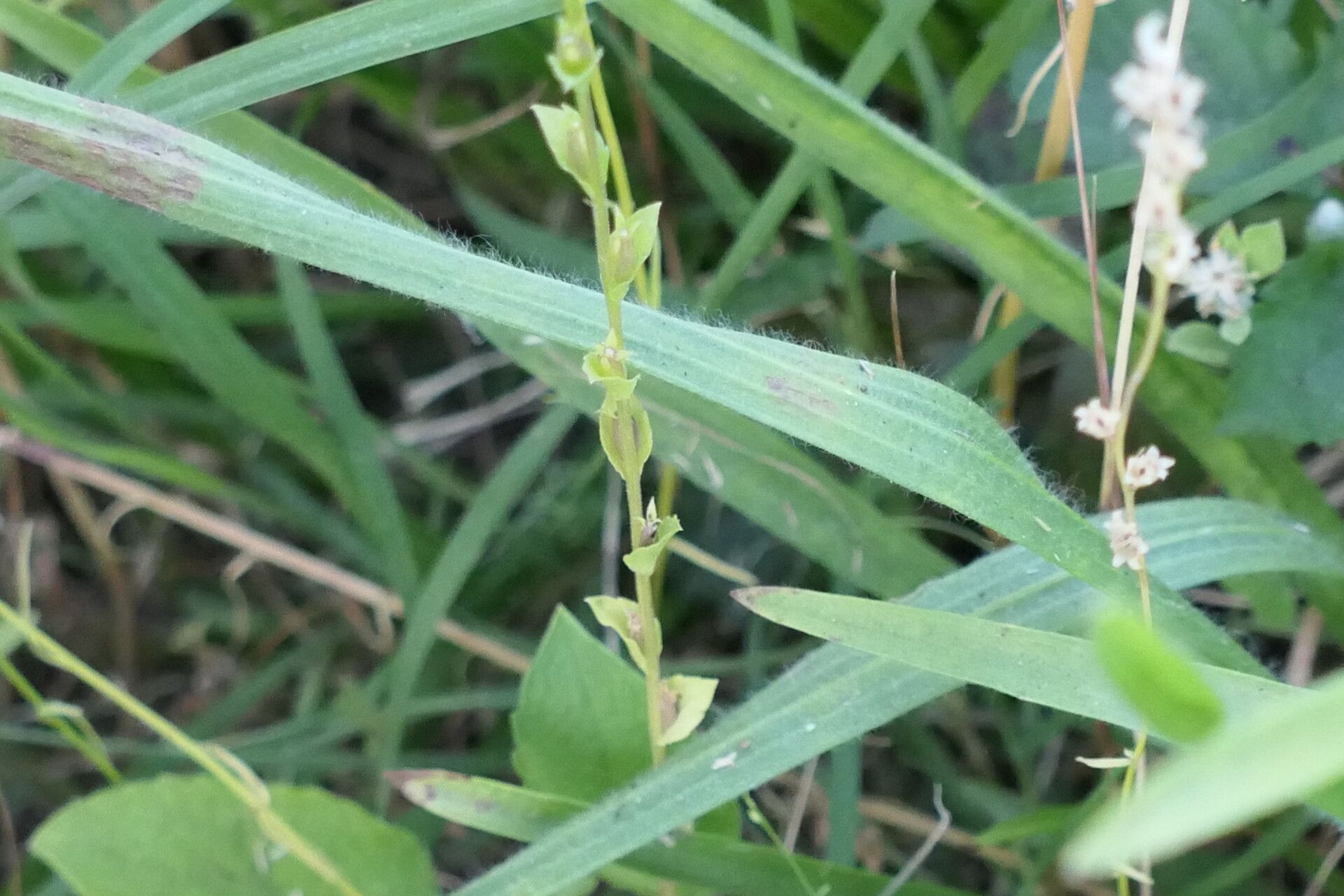
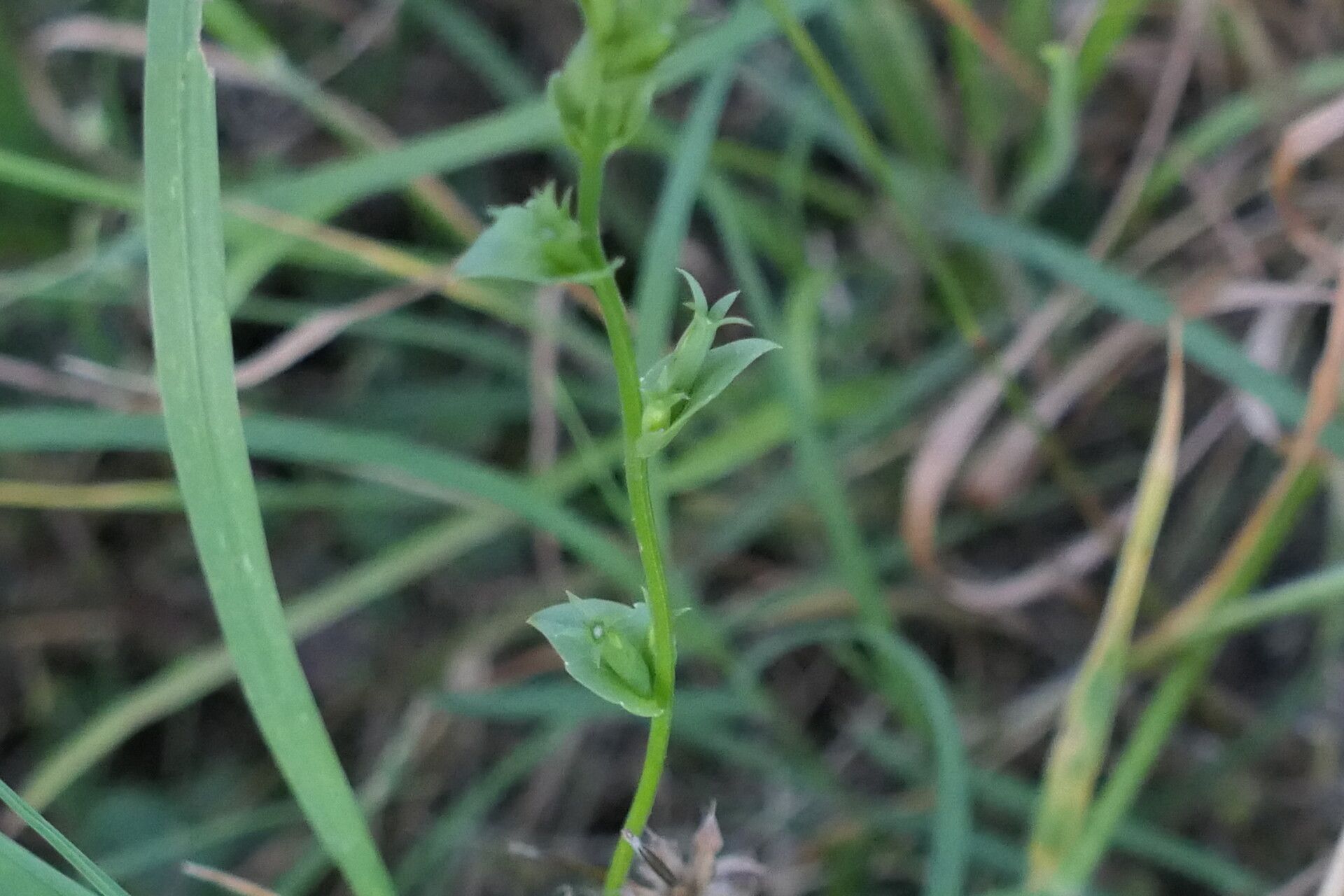
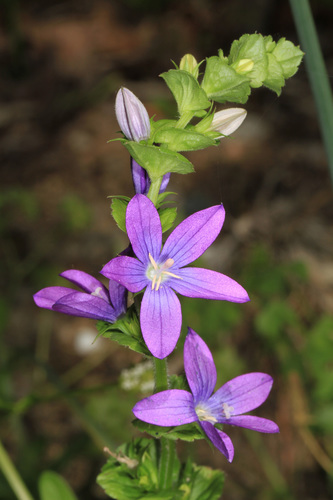
Triodanis biflora, also known as the Small Venus' Looking-Glass, is a species of flowering plant in the Campanulaceae family, or bellflower family, and is in the genus Triodanis. Its common name was given because it is similar to the European plant, Legousia speculum that has seeds with a shiny appearance resembling looking glass. This species is native to America and is a small, solitary wildflower with purple bell-shaped petals and an alternate leaf arrangement. It can be found in a diverse range of habitats, especially in disturbed areas across the U.S. and into South America, and it has an annual life cycle where it flowers from May to June. This species primarily relies on selfing due to its floral system; however, pollination by various insects can occur. While sharing many similarities with its relative, Triodanis perfoliata from their history of hybridization, key features that separate the two flowers are their anatomy and breeding system.
Small venus's looking-glass is largely resistant to disease and usually not vulnerable to illnesses. Still, it can be affected by pests and diseases present in its environment. These problems tend to be mild. For care, this plant needs moderate maintenance. It should be pruned regularly to keep a neat appearance and support healthy growth. Fertilizing can also encourage flowering. Small venus's looking-glass is a good choice for anyone with outdoor space, such as a garden or patio, and does not demand extensive care experience. It may need more attention when grown indoors.
How to keep Triodanis Biflora.
Light
Small venus's looking-glass does best when exposed to the most sun for most of the day, though it can tolerate periods of reduced light. Adequate sunlight promotes its growth and overall vitality. Irregular sun exposure can impede the plant's development and lead to poorer health.
Temperature
Small venus's looking-glass occurs in habitats with temperatures ranging from 68 to 100 °F (20 to 38 ℃). It thrives at those temperatures, showing a preference for relatively warm climates. Seasonal temperature adjustments for optimal growth may not be necessary.
Fertilizer
When most of the blooms of Small venus's looking-glass have opened to full size, it's time to resume fertilizing. Around the period when blooms are at their peak production, begin fertilizing again every three to four weeks, as weather permits. Then, once Small venus's looking-glass starts producing fewer new blooms, stop fertilizing; there's no need to feed the plant when it can no longer produce additional blooms.
Botanical profile.
- Plant Type
- Herb
- Life Cycle
- Annual
- Genus
- Triodanis
- Family
- Campanulaceae
- Hardiness Zone
- 2-11
- Mature Height
- 15 cm to 61 cm
- Mature Spread
- 5 cm to 20 cm
- Leaf Color
- Green
- Leaf Type
- Deciduous
- Flower Color
- Purple, Lavender
- Flower Size
- 1.27 cm
- Bloom Time
- Late spring, Early summer, Mid summer
- Planting Time
- Spring, Summer
- Harvest Time
- Early summer, Mid summer
- Native Area
- Colombia, Mexico, Bolivia, Peru, Ecuador
Other names.