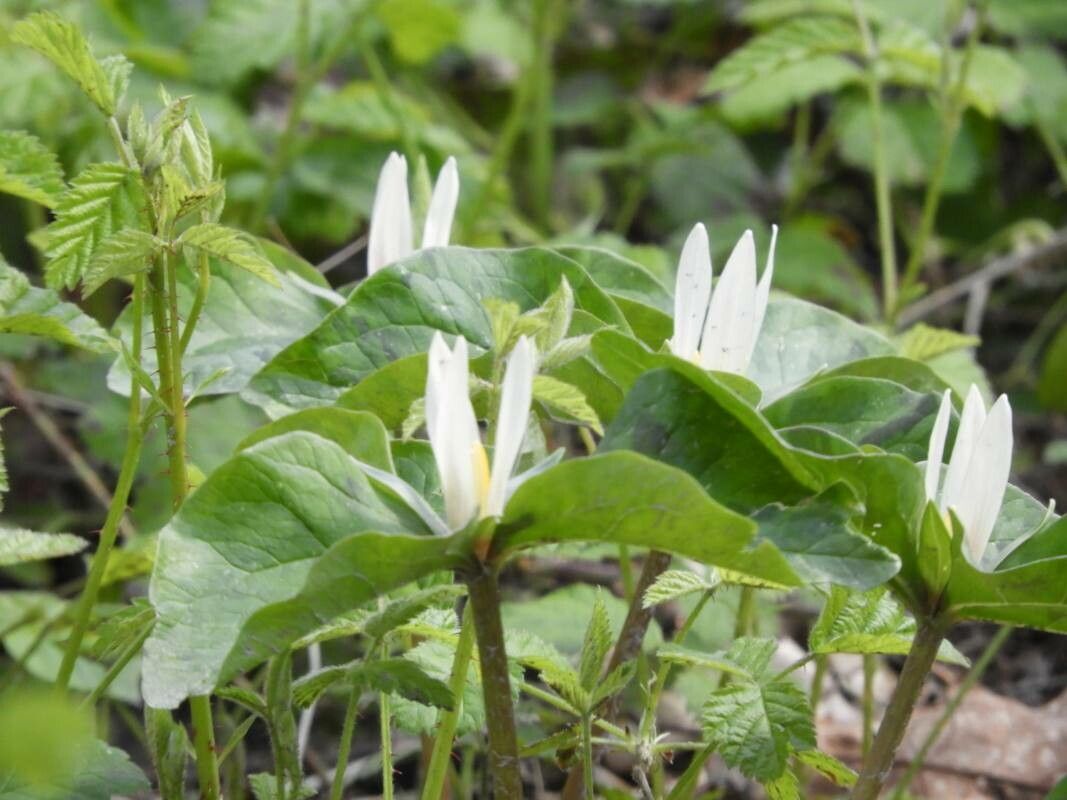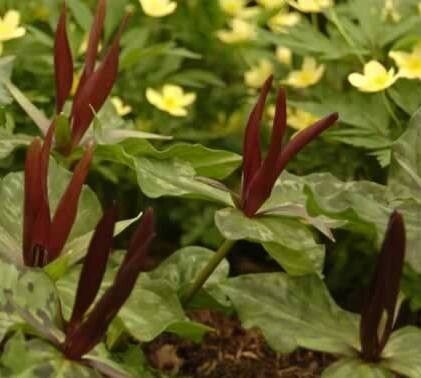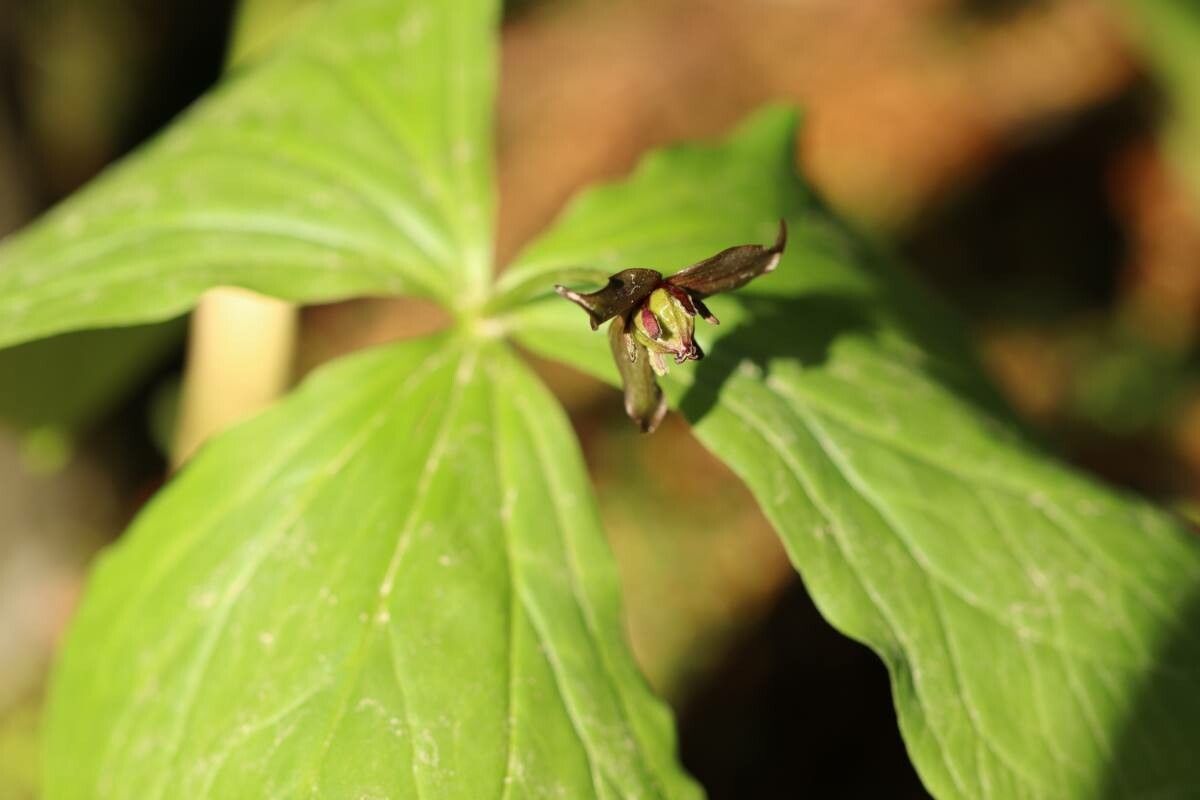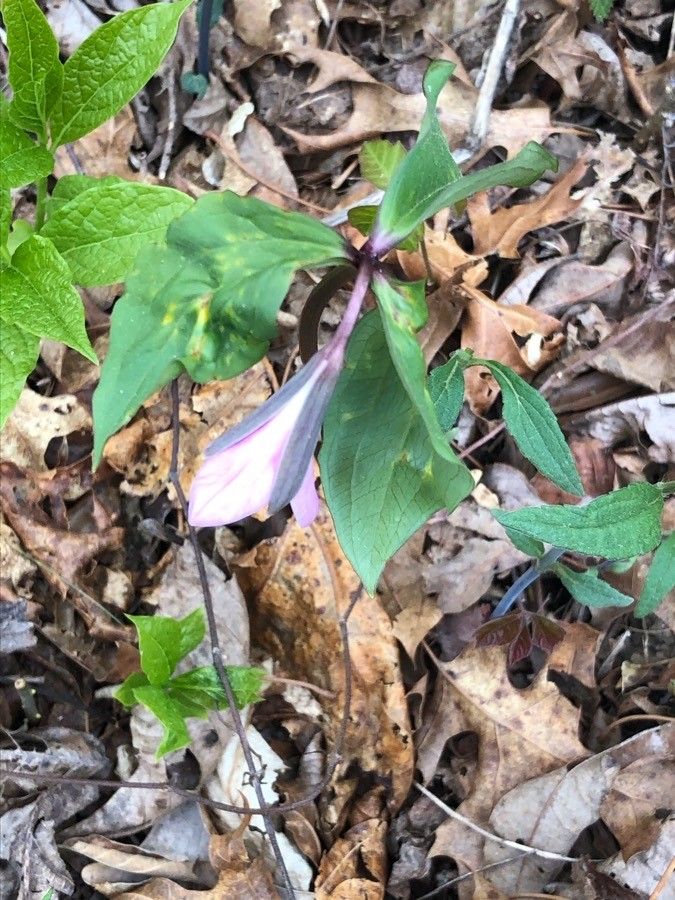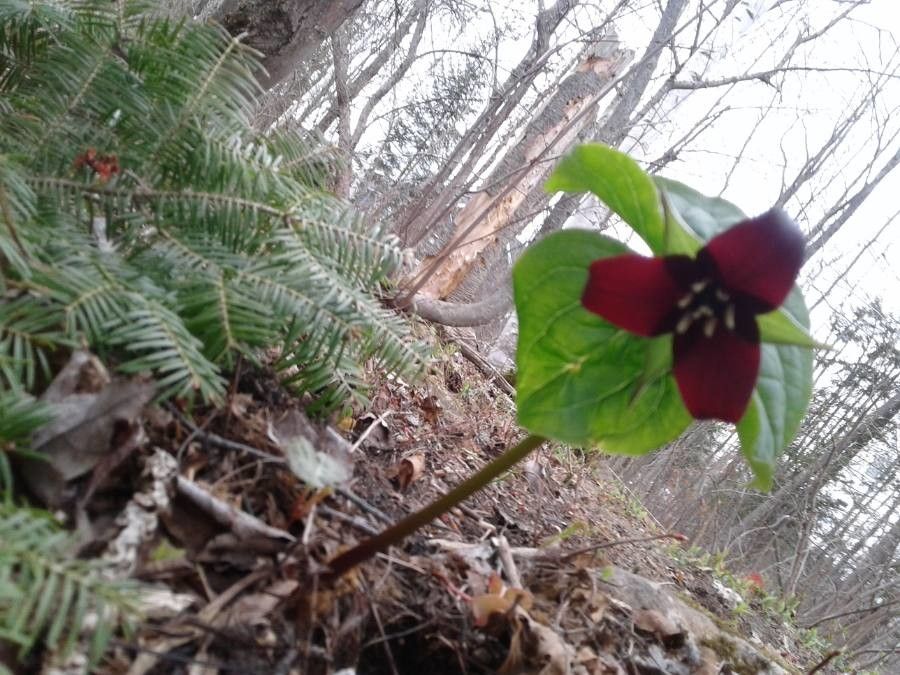
Trillium vaseyi, the sweet wakerobin or sweet beth, is a spring flowering perennial plant which is found only in the southeastern United States, primarily in the southern part of the Appalachian Mountains but with a few populations farther south.Sweet wakerobin has among the largest flowers in the trillium family, with red petals up to 7 cm long. It grows in rich woods, sometimes on riverbanks but other times on steep slopes.
Sweet wakerobin has strong resistance to diseases and is generally not very susceptible to them. Still, it can be affected by pests and diseases that exist in its environment. Such infections are typically mild. Regarding care, this plant needs a moderate level of attention. It should be pruned on a regular basis to preserve a neat appearance and support healthy growth. Applying fertilizer can also encourage blooming. Sweet wakerobin is appropriate for anyone with outdoor areas like a garden or patio and does not demand extensive gardening experience. It may need more attention when cultivated indoors.
How to keep Trillium Vaseyi.
Light
Sweet wakerobin is native to habitats like forest understories or rocky sites, where it grows in natural shade. It prefers partial sun but can adapt to full sun or full shade, illustrating its versatile, hardy nature.
Water
Sweet wakerobin flourishes in moist woodland environments, where it favors consistently moderate moisture. For optimal health, it requires weekly watering. Most often, it is grown outdoors to benefit from natural rainfall, which mirrors the humidity and periodic rainfall patterns of its native habitat.
Temperature
Sweet wakerobin can tolerate a wide range of temperatures, though its range may still be restricted by various combinations of moisture and heat. It does best in warm summer climates with sufficient rainfall or irrigation. Extended periods of cloudy, rainy weather or prolonged high temperatures increase the risk of Sweet wakerobin dying. In winter, adequate protection from the cold can improve the plant's chances of survival.
Fertilizer
The best time to fertilize a Sweet wakerobin is in early spring, when it is coming out of dormancy and starting active growth. Fertilization supplies essential nutrients needed for healthy development. Although Sweet wakerobin has relatively low fertilizer requirements, annual feeding can improve its survival and encourage better, longer-lasting flowers.
Pruning
Sweet wakerobin thrives in woodland environments and is known for its distinctive three-petaled flowers. To encourage vibrant blooms and prevent disease, prune the plant in early spring by removing any damaged foliage. Be careful not to cut healthy stems, as this will support strong growth and enhance the plant's aesthetic appeal throughout the growing season.
Botanical profile.
- Plant Type
- Herb
- Life Cycle
- Perennial
- Genus
- Trillium
- Family
- Melanthiaceae
- Hardiness Zone
- 5-8
- Mature Height
- 30 cm to 46 cm
- Mature Spread
- 30 cm to 46 cm
- Leaf Color
- Green, Red
- Leaf Type
- Deciduous
- Flower Color
- Red, Burgundy
- Flower Size
- 5.08 cm to 10.16 cm
- Bloom Time
- Early spring, Mid spring
- Planting Time
- Spring, Summer
- Harvest Time
- Early summer, Mid summer
Other names.
Reader questions.
What are the sunlight requirements for Sweet wakerobin?
Sweet wakerobin requires about 3-6 hours of sunlight, which is considered partial sun, but it can also tolerate full shade, meaning less than 3 hours of sunlight. Watching how sunlight moves through your garden helps in choosing spots that provide a balance of light and shade, ensuring the plant's happiness. Sweet wakerobin is adapted to environments like forest understories or rocky areas, where it experiences natural shade.
What is Sweet wakerobin?
Sweet wakerobin, scientifically known as Trillium vaseyi, is a plant species known for its unique attributes. Unfortunately, details regarding its essentials, symptoms, or any additional information have not been provided.
How does artificial lighting support Sweet wakerobin growth indoors?
Indoor plants, including Sweet wakerobin, require adequate lighting for optimal growth, especially when natural sunlight is insufficient. Artificial lights, such as LED lights, offer a vital solution by providing customized wavelengths necessary for the plant. Depending on the type of plant, the requirements vary: full sun plants need 30-50W/sq ft, partial sun plants need 20-30W/sq ft, and full shade plants need 10-20W/sq ft. The light source should be placed 12-36 inches above the plant, mimicking natural sunlight for 8-12 hours per day to promote faster, healthier growth.
What are the symptoms of inappropriate light conditions in Sweet wakerobin?
Symptoms of light deficiency in Sweet wakerobin include smaller new leaves, leggy or sparse growth, accelerated leaf drop, cessation of new growth, lighter-colored or yellowing leaves (chlorosis), and symptoms of excessive sunlight exposure like sunscald, leaf curling, wilting, leaf scorching. These indicate either insufficient sunlight or excessive exposure, affecting the plant's ability to photosynthesize and maintain health.
How can Sweet wakerobin be cared for to optimize growth?
To optimize Sweet wakerobin's growth, gradually adapt the plant to changing light conditions by shifting it to sunnier spots each week until it receives 3-6 hours of direct sunlight. For indoor plants that are large or not easily movable, consider using artificial light such as keeping a desk or ceiling lamp on for at least 8 hours daily, or invest in professional plant grow lights. Outdoors, gradually moving your plants to sunnier locations helps to avoid sunburn. Minimizing obstructions, like pruning trees, or transplanting smaller plants to sunnier locations with good drainage, also supports healthy growth. Remember, parts of the plant damaged by insufficient sunlight may not recover, but new growth will be healthy with increased light exposure.