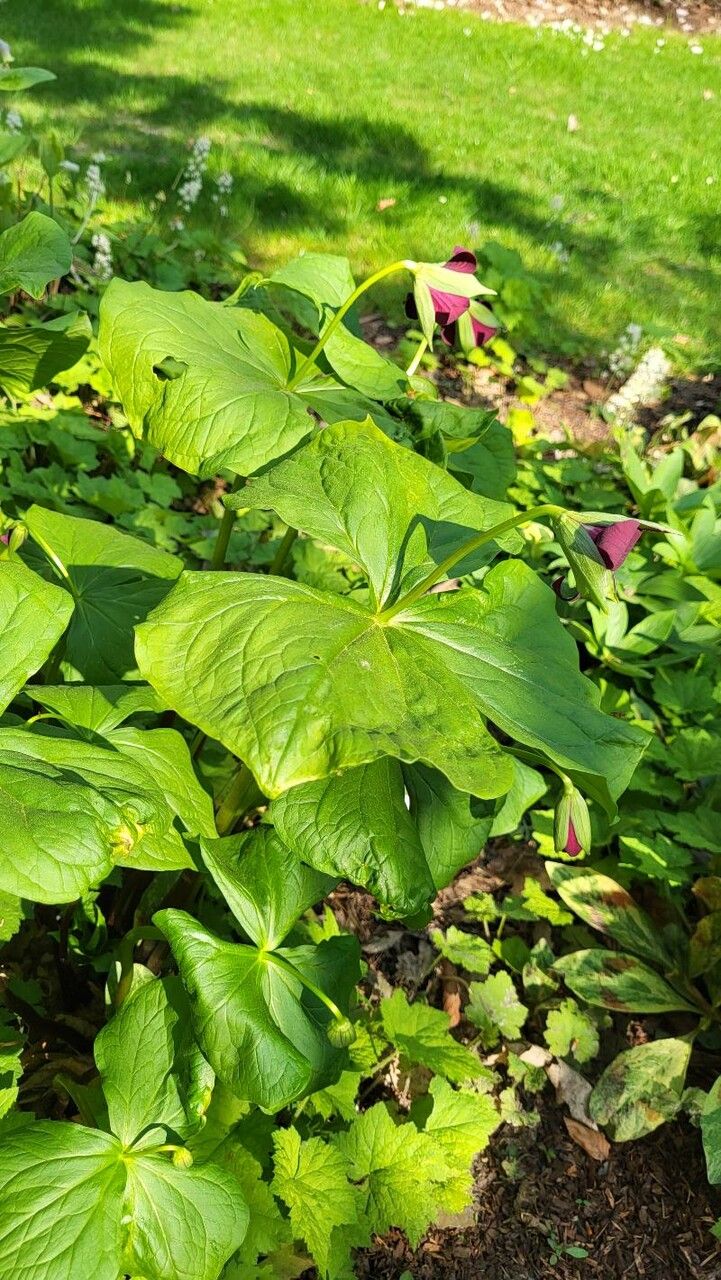
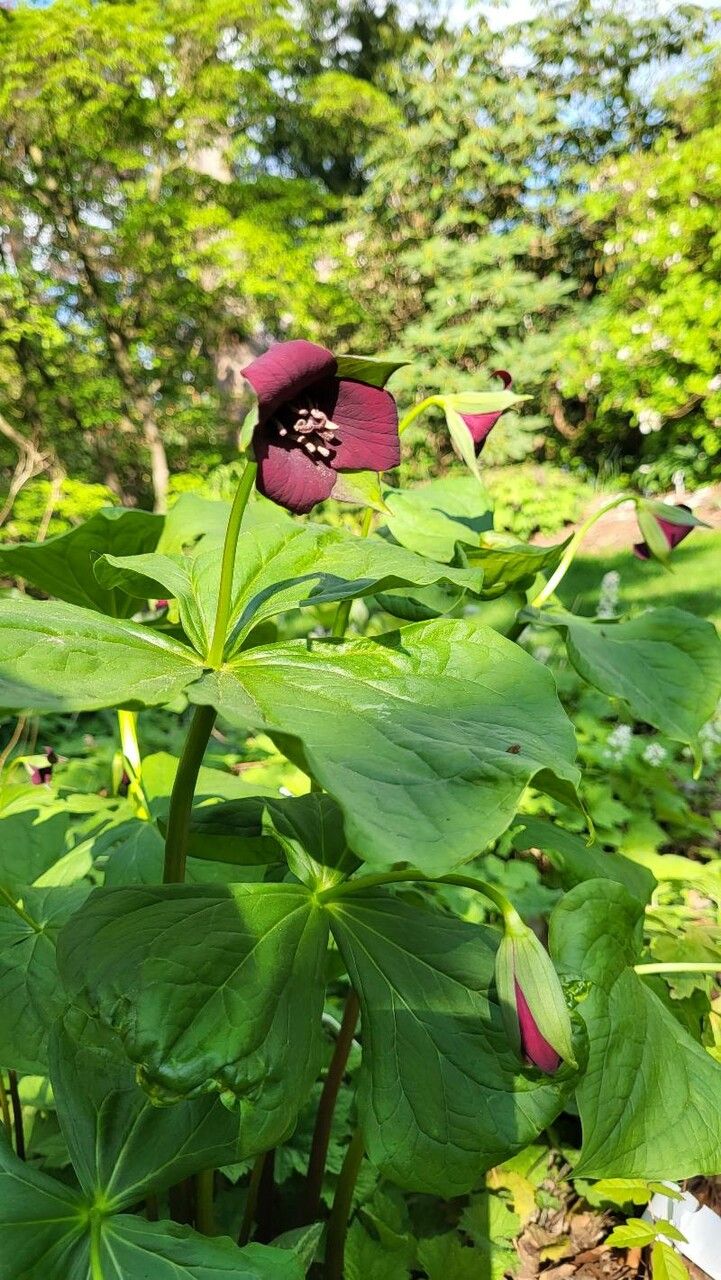
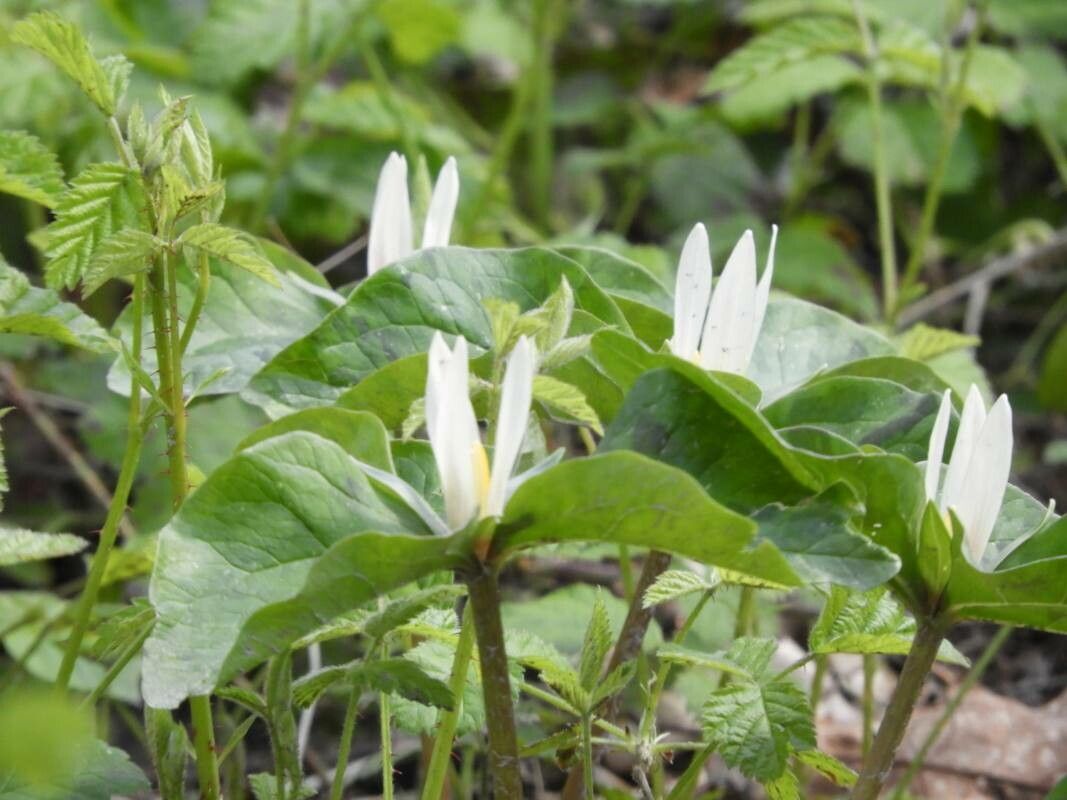
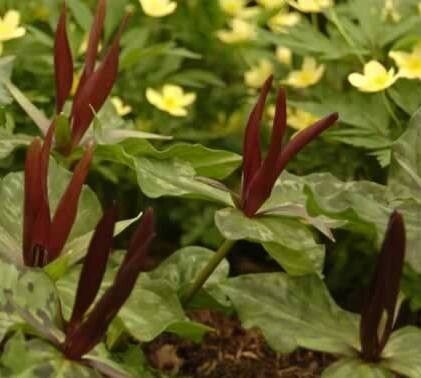
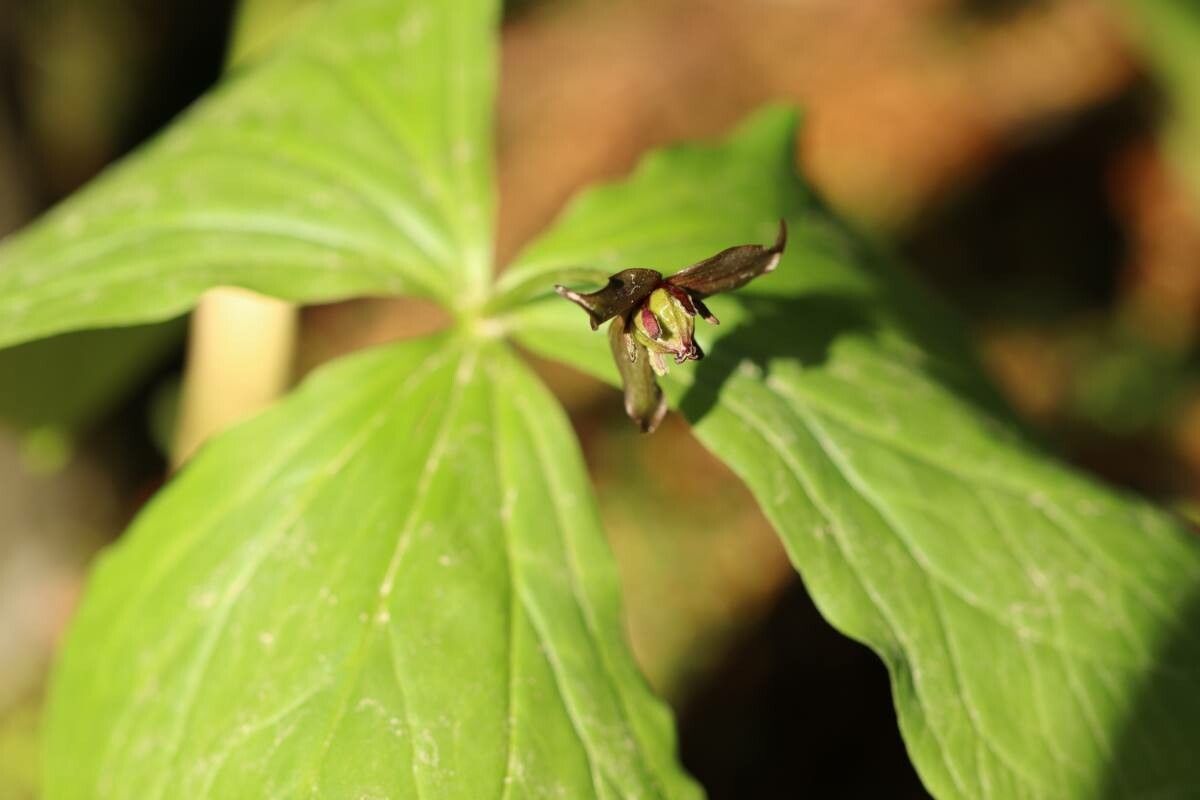
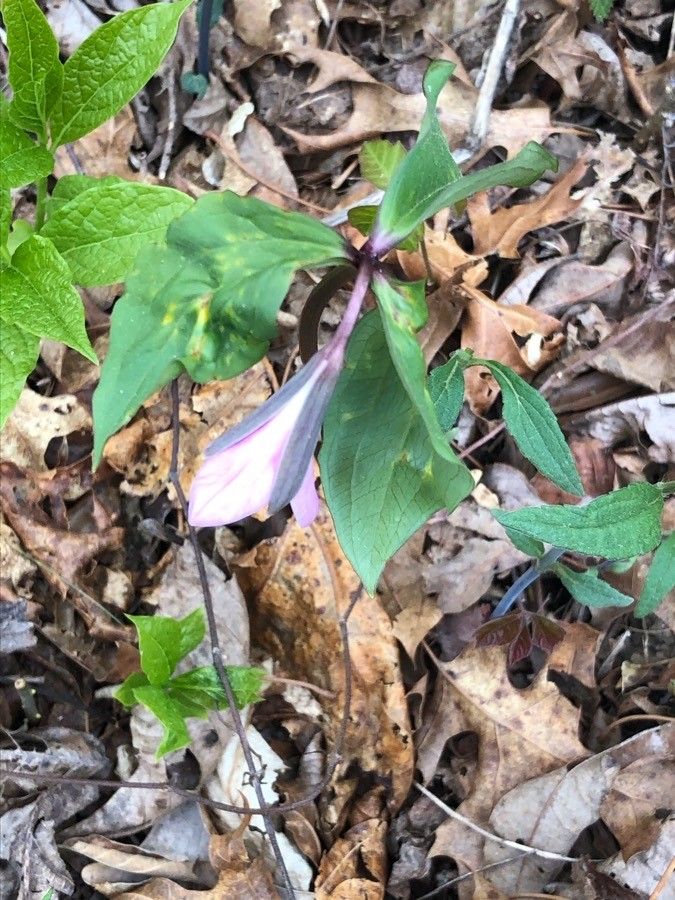
Trillium sulcatum, the furrowed wakerobin, southern red trillium or Barksdale trillium, is a perennial wildflower that blooms in April and May. It is native to the southern Appalachian Mountains and nearby areas from West Virginia to Alabama.Trillium sulcatum bears its dark reddish flower on a pedicel above the leaves, with recurved (bent backwards) petals. The berry is also red.
Furrowed wakerobin generally has strong resistance to disease and is not often affected by illnesses. Still, it can be vulnerable to pests and diseases that exist in its environment. When infections do occur, they tend to be mild. Regarding maintenance, this plant demands a moderate level of care. It should be pruned on a regular basis to preserve an attractive look and support healthy development. Applying fertilizer can also encourage more abundant flowering. Furrowed wakerobin is well suited for anyone with an outdoor area, like a garden or patio, and does not call for extensive gardening experience. If cultivated indoors, it may need a higher level of attention.
How to keep Trillium Sulcatum.
Water
Freshly planted furrowed wakerobin needs regular watering to prevent the soil from drying out until it becomes established. Once it has adapted, you can water it less often. However, ensure the soil stays moist but not waterlogged.
Fertilizer
Usually one fertilizer application in spring is enough for Furrowed wakerobin, though several feedings can maximize growth. Feed every month to month and a half. Fertilization improves leaf appearance and function, maintaining even color and a healthy texture. It also encourages root development and nutrient uptake for long-term plant health.
Pruning
Furrowed wakerobin, known for its distinctive grooved petals, flourishes in woodland environments. To care for this plant, prune it in early spring, before new growth begins. Remove any dead foliage, but avoid heavy cutting to minimize stress on the plant. Always use sterilized tools to ensure the plant's health. This will help improve air circulation and enhance the plant's appearance, supporting its vitality and resistance to disease.
Botanical profile.
- Plant Type
- Herb
- Life Cycle
- Perennial
- Genus
- Trillium
- Family
- Melanthiaceae
- Hardiness Zone
- 4-8
- Mature Height
- 15 cm to 52 cm
- Mature Spread
- 30 cm to 91 cm
- Leaf Type
- Deciduous
Other names.
Reader questions.
What are the sunlight requirements for Furrowed wakerobin?
Furrowed wakerobin, also known as Trillium sulcatum, thrives in varying degrees of sunlight. It needs partial sun, which means about 3-6 hours of sunlight per day, to flourish. Additionally, it can survive in conditions of full shade, characterized by less than 3 hours of sunlight daily. It's important to watch how sunlight moves through your garden throughout the day. Choosing locations that offer the right balance of light and shade will ensure that your Furrowed wakerobin plants are happy and healthy.