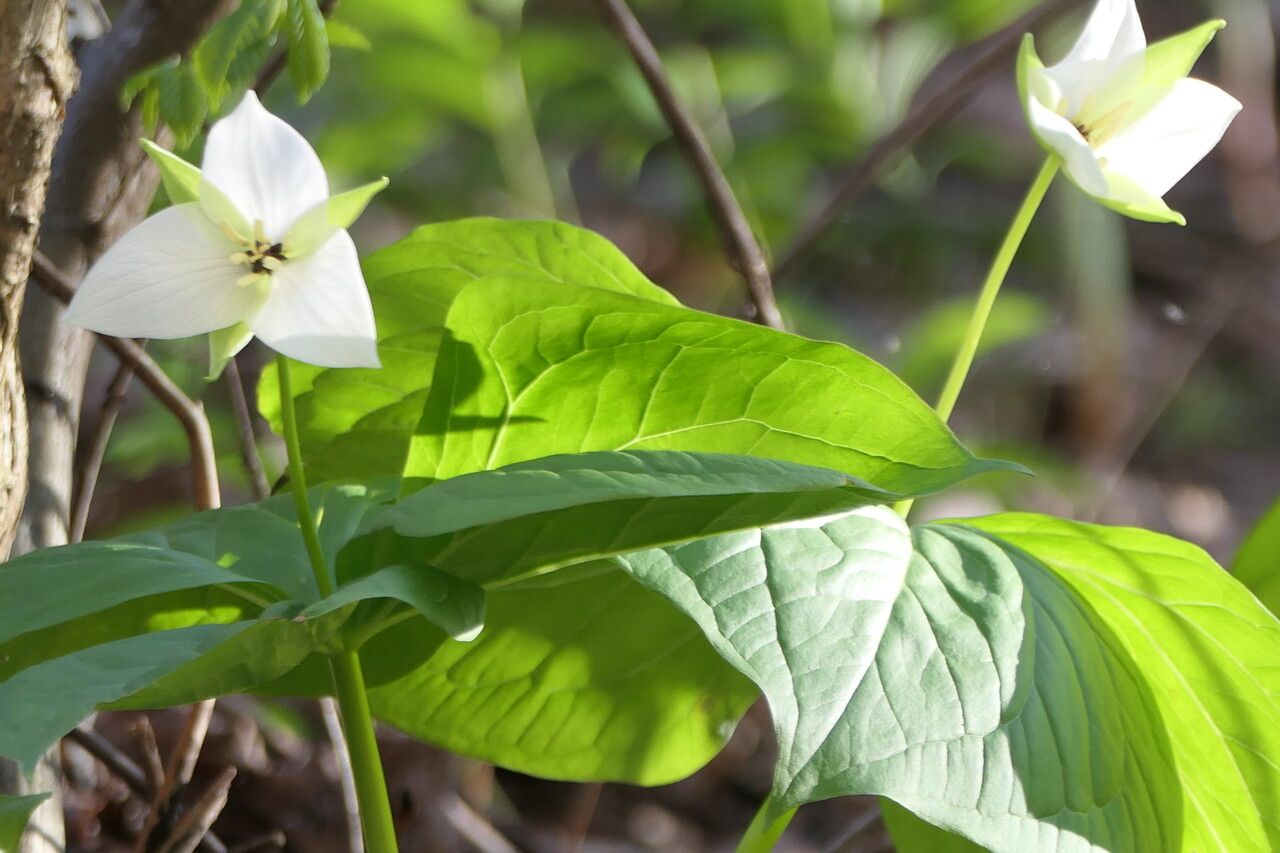
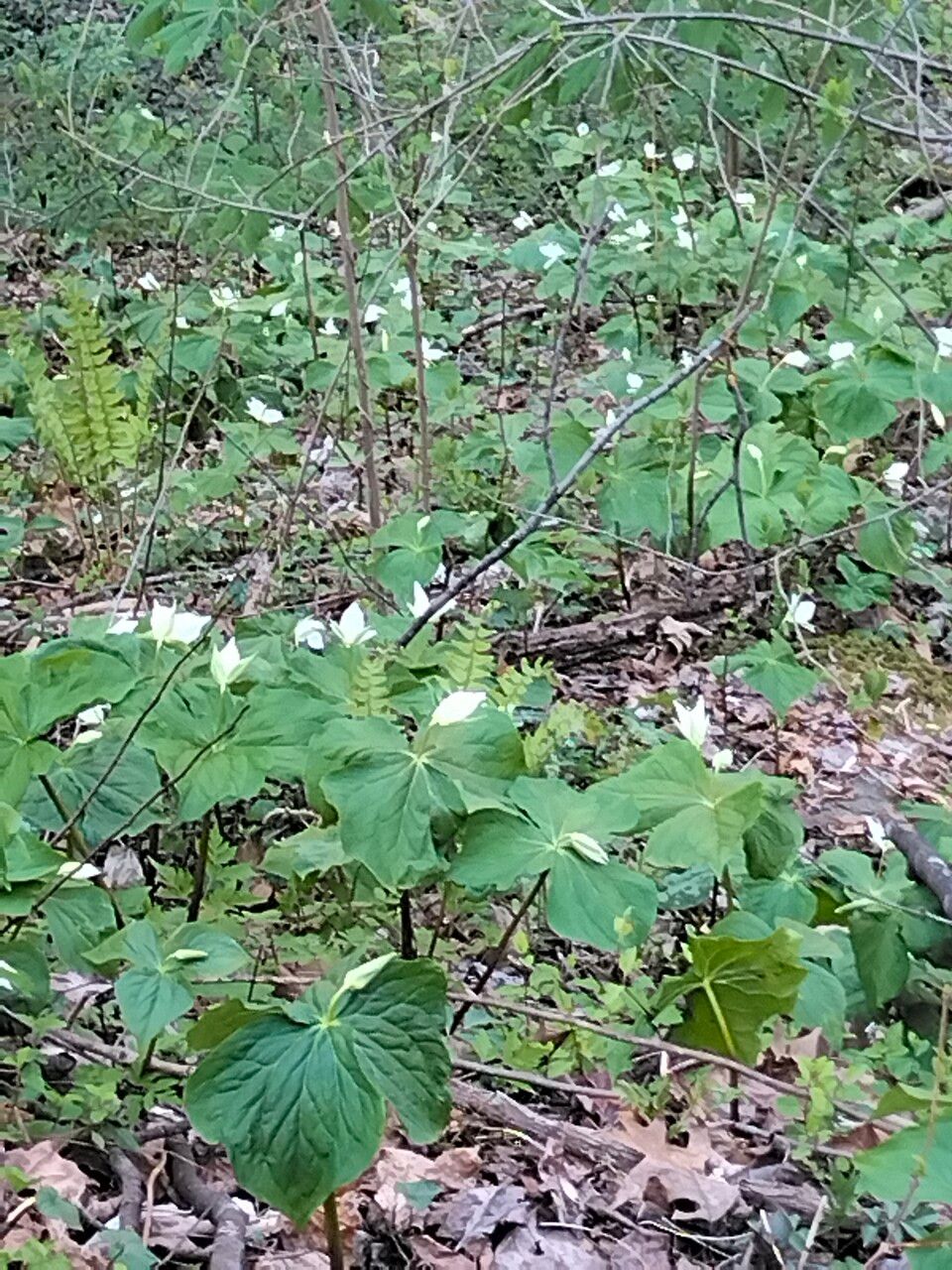
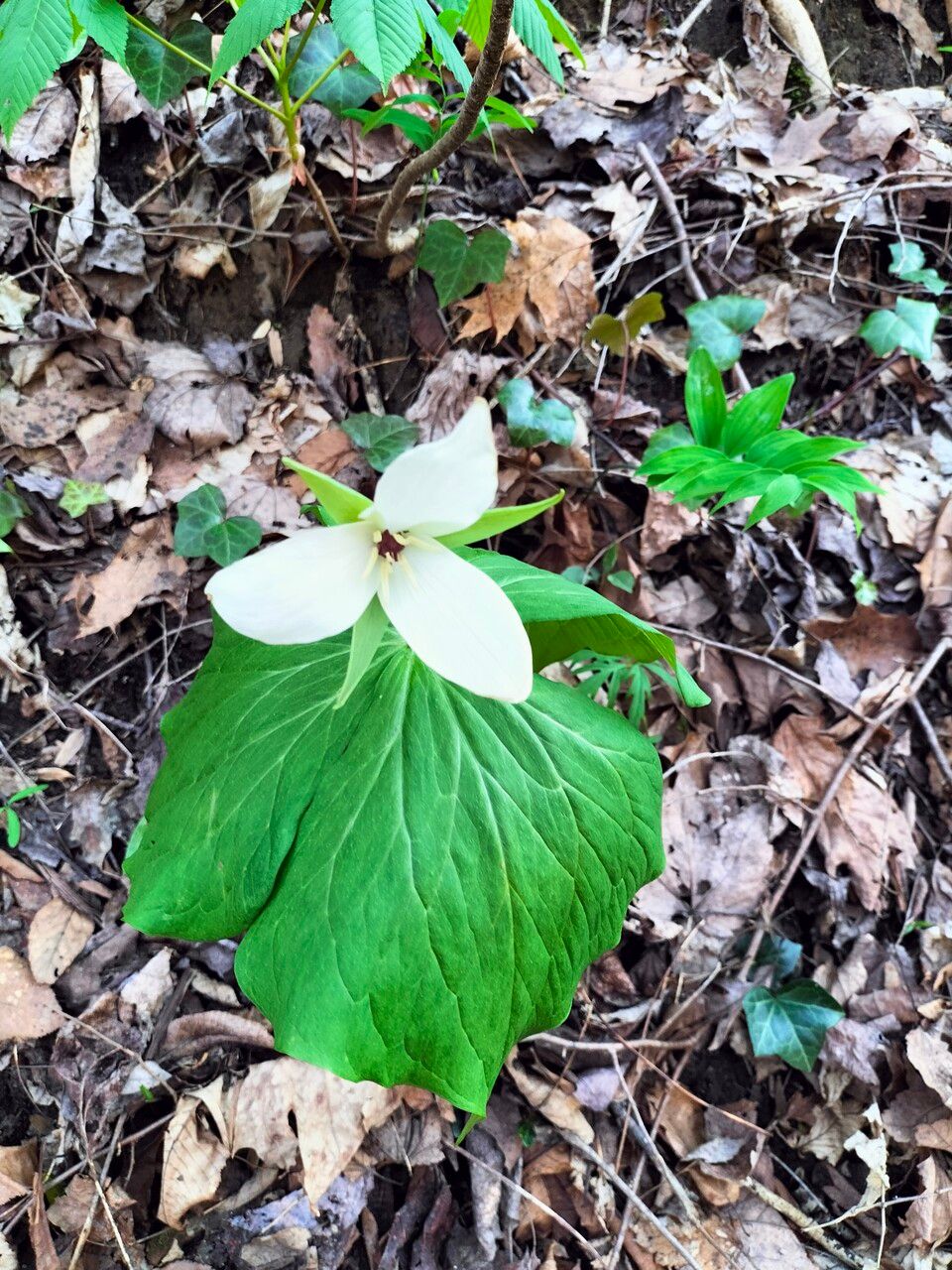
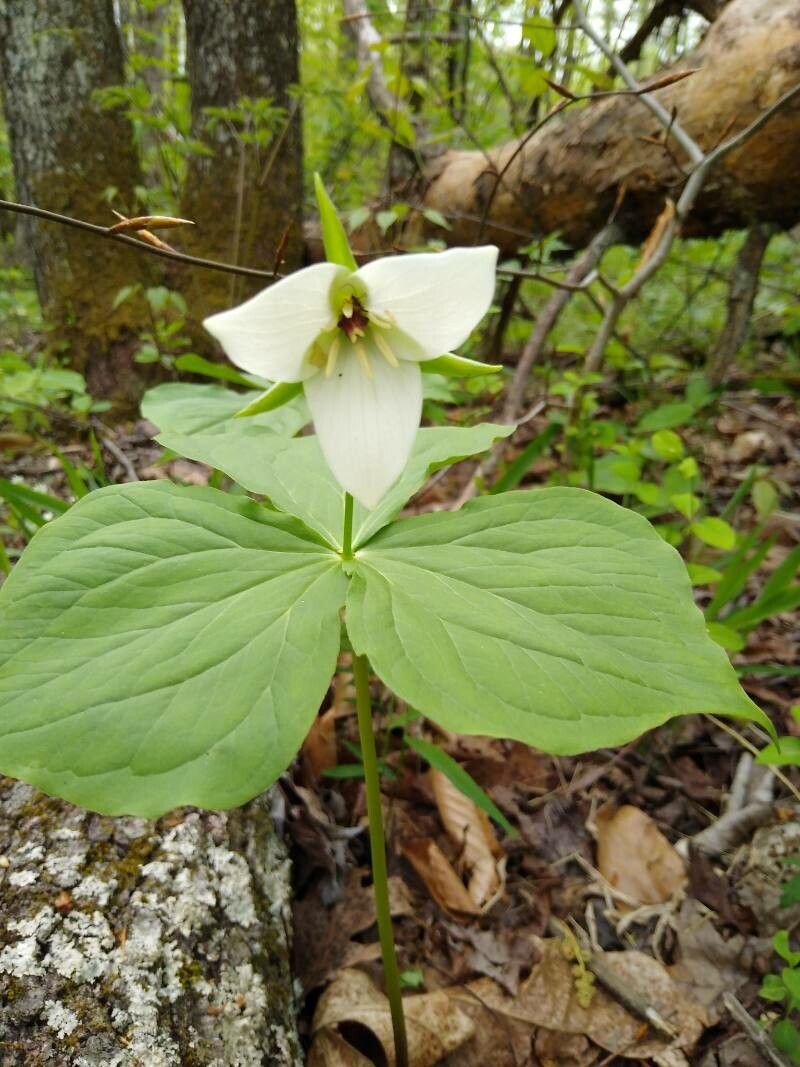
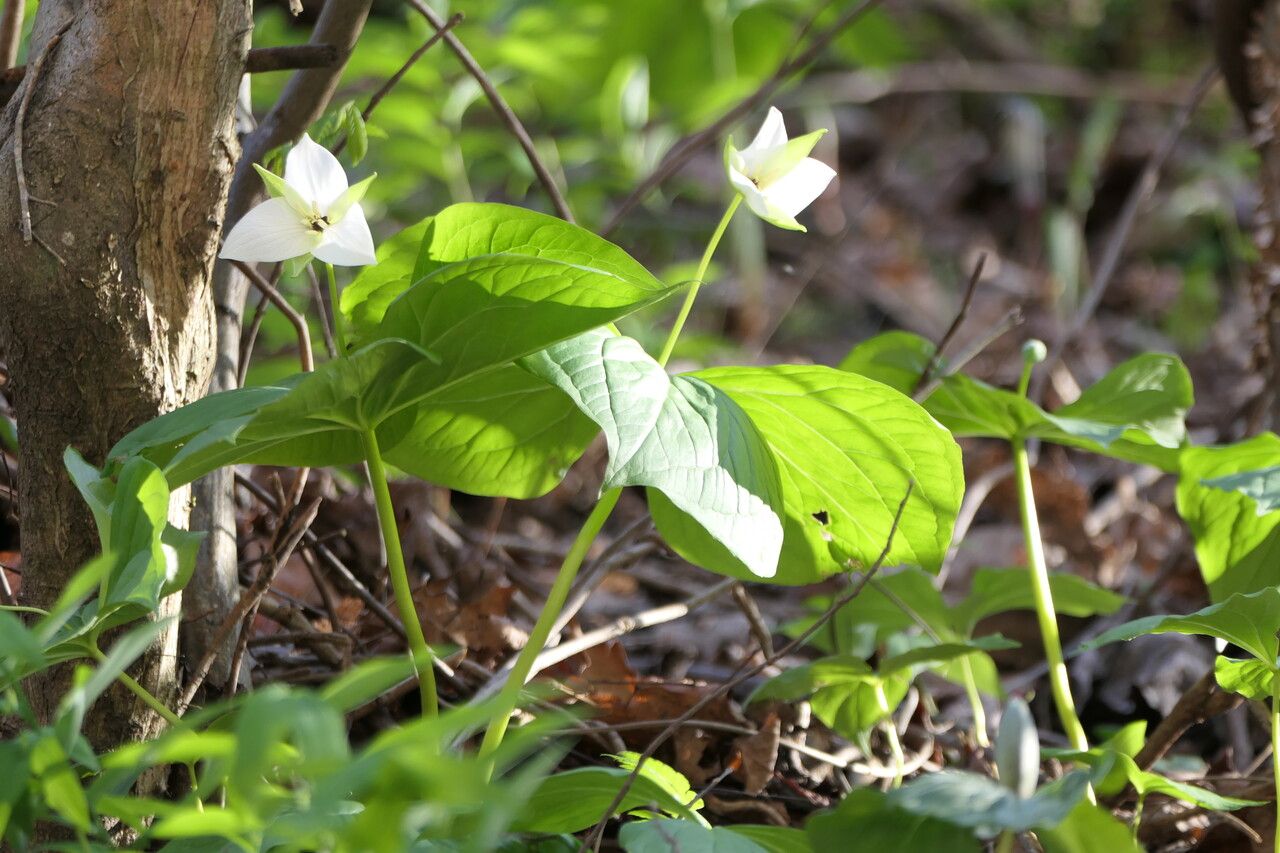
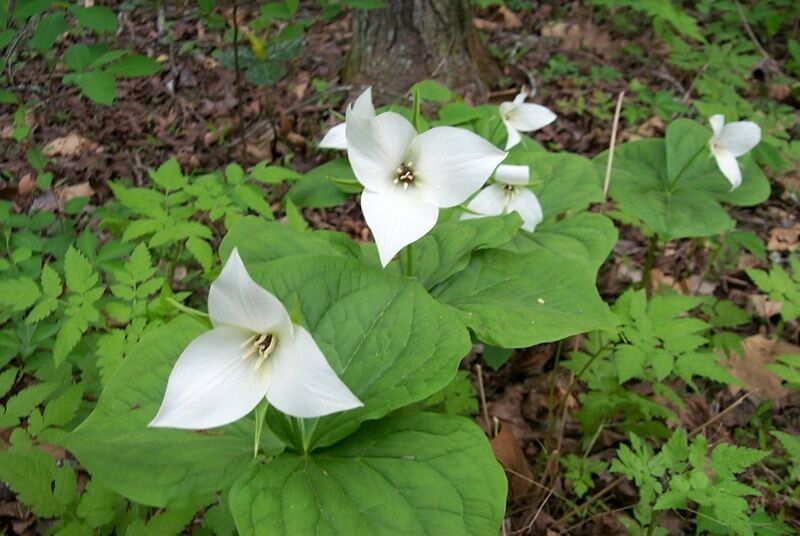
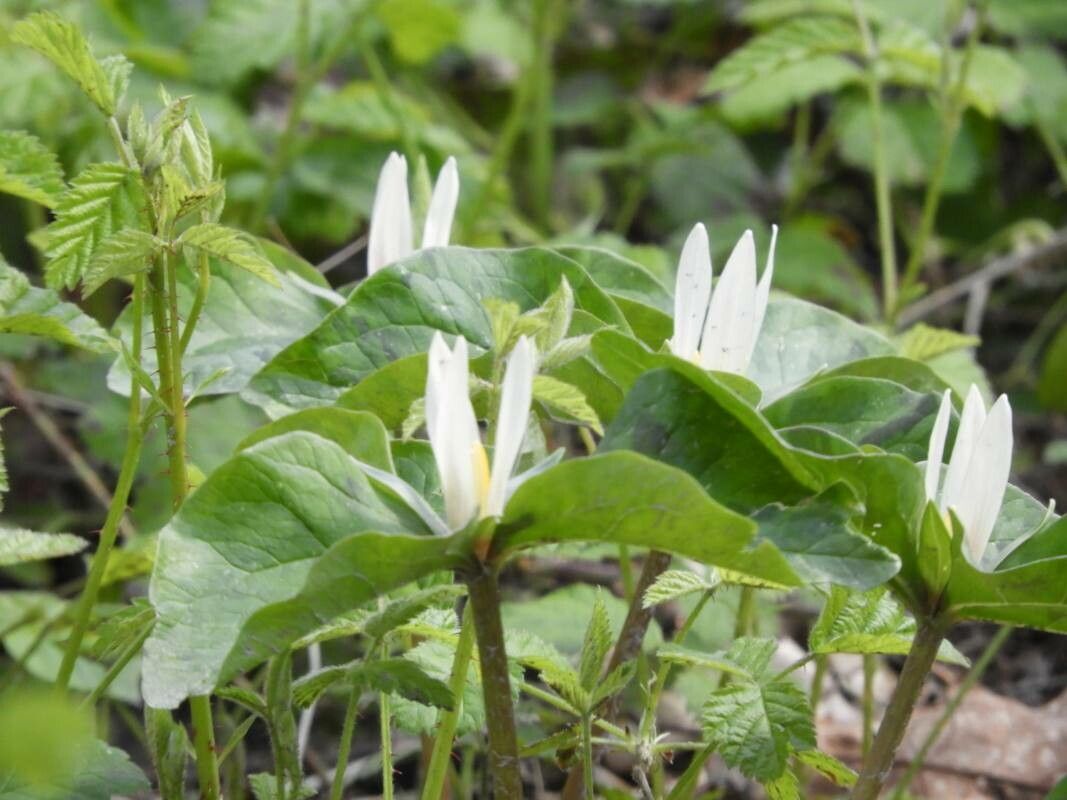
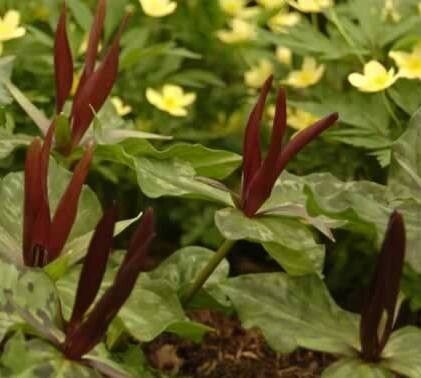
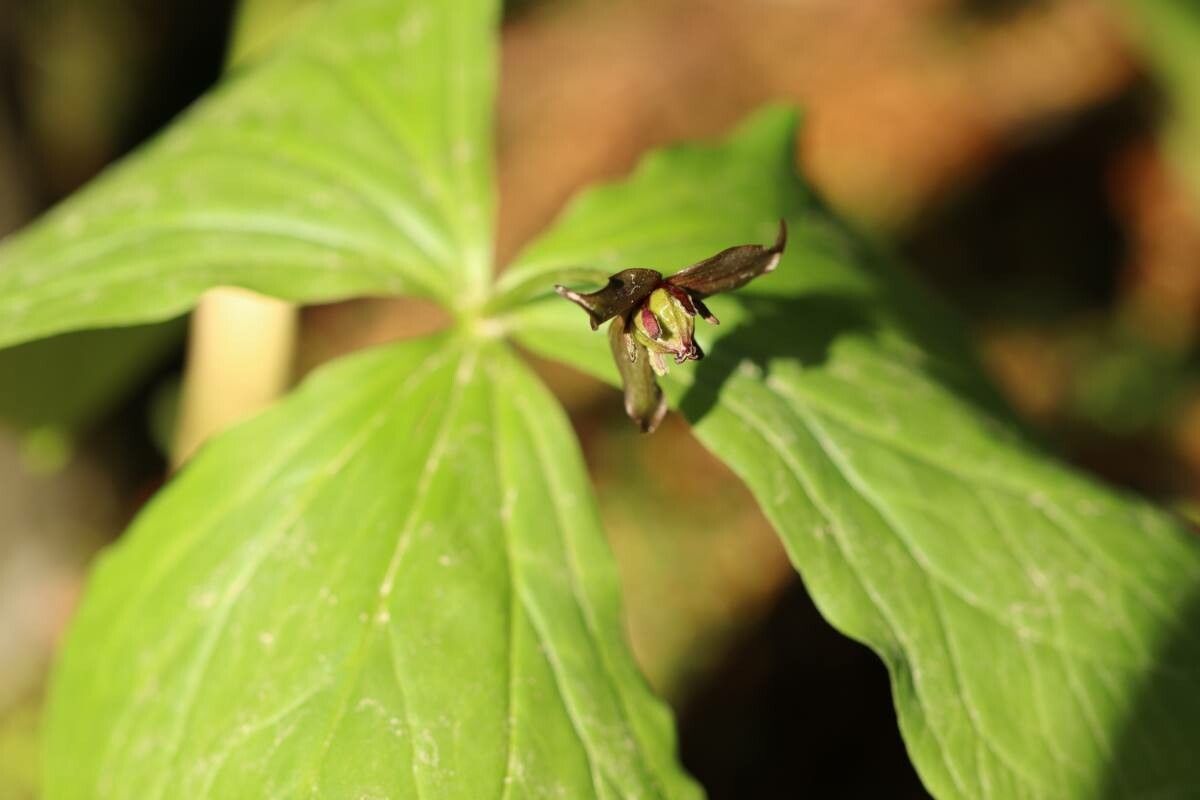
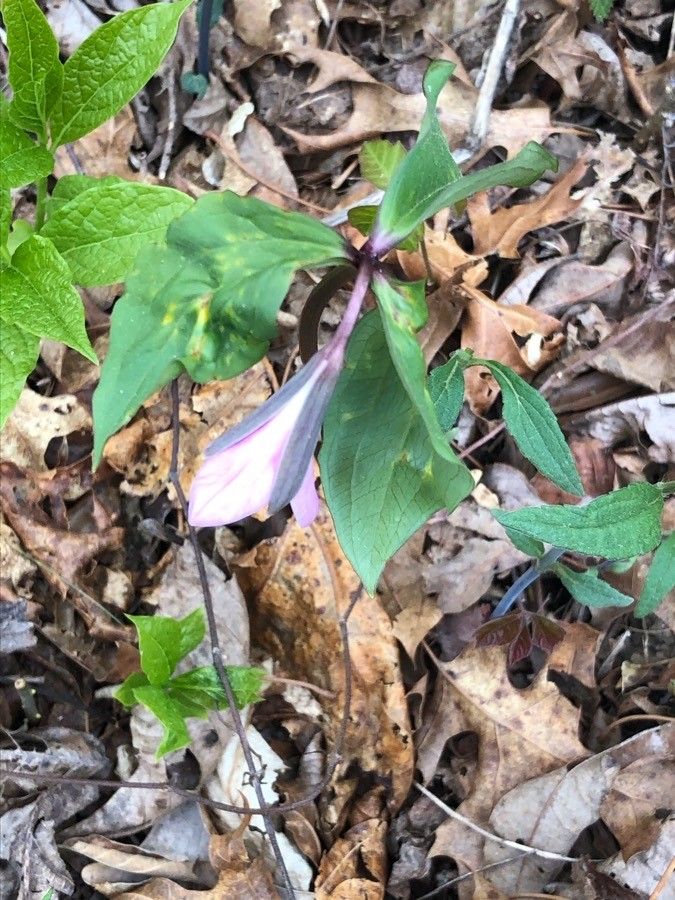
Trillium simile, the jeweled wakerobin, is a spring-flowering perennial plant which is native to southern parts of the Appalachian Mountains in southeastern United States (Tennessee, Georgia, North and South Carolina). It is also known as sweet white wake-robin, sweet white trillium and confusing trillium. Trillium simile prefers to grow in moist humus-rich soils in mature forests at the edges of Rhododendron thickets and at edges of the forest. It is found at elevations of 500 – 700 meters (1,640 - 2,300 feet).
Jeweled wakerobin has strong disease resistance and is generally not likely to get sick. Still, it can be vulnerable to pests and diseases present in its surroundings. Those infections are usually mild. Regarding care, this plant needs a moderate amount of maintenance. It requires regular pruning to keep a neat appearance and encourage healthy growth. Fertilizing can also aid in promoting blooms. Jeweled wakerobin is appropriate for anyone with outdoor space, such as a garden or patio, and does not demand extensive gardening experience. It may need more attention when cultivated indoors.
How to keep Trillium Simile.
Light
Le Jeweled wakerobin est originaire d'habitats comme le sous-bois forestier ou les zones rocheuses, où il se trouve à l'ombre naturelle. Il préfère une exposition partielle au soleil, mais peut s'adapter au plein soleil ou à l'ombre totale, ce qui témoigne de sa nature polyvalente et robuste.
Water
The Jeweled Wakerobin is an herbaceous perennial that thrives in the understories of temperate forests. It requires a stable level of humidity and benefits from consistent weekly watering—just enough to keep it moist without becoming waterlogged. For optimal growth, this plant prefers outdoor environments that mimic seasonal rainfall patterns, ensuring it receives the right amount of water.
Temperature
Jeweled wakerobin can tolerate a wide range of temperatures, but its distribution may still be restricted by different combinations of water and heat conditions. It performs best in warm summer climates with sufficient rainfall or watering. Extended periods of cloudy, rainy weather or prolonged high temperatures can raise the chance of Jeweled wakerobin dying. In winter, adequate protection from cold can increase the plant's survival rate.
Fertilizer
A single spring application of fertilizer is generally enough for Jeweled wakerobin, though multiple feedings can maximize growth. Fertilize once a month to once every month and a half. Feeding improves the leaves' appearance and function, helping maintain even color and a healthy texture. It also encourages root growth and nutrient absorption, supporting long-term plant health.
Pruning
The Jeweled Wakerobin is a perennial plant known for its three-petaled flowers. To keep it healthy, prune any dead or damaged foliage in early spring, but be cautious to avoid heavy pruning. Remove faded flowers to promote growth and encourage more blooms. Always use clean, sharp tools to minimize the risk of disease.
Botanical profile.
- Plant Type
- Herb
- Life Cycle
- Perennial
- Genus
- Trillium
- Family
- Melanthiaceae
- Hardiness Zone
- 5-8
- Mature Height
- 30 cm
- Mature Spread
- 30 cm
- Leaf Color
- Dark Green, Forest Green
- Leaf Type
- Deciduous
- Flower Color
- White, Pink
- Flower Size
- 5.08 cm to 6.35 cm
- Bloom Time
- Early spring, Mid spring
- Planting Time
- Spring, Summer
- Harvest Time
- Early summer, Mid summer
Other names.
Reader questions.
What are the sunlight requirements for Jeweled Wakerobin?
Jeweled Wakerobin, also known by its botanical name Trillium simile, requires partial sun, meaning about 3-6 hours of sunlight, but it can also thrive in full shade, where it receives less than 3 hours of sunlight. It's important to watch how sunlight moves through your garden to choose the best spots for your plants, ensuring they receive the balanced light needed for their happiness.
Where does Jeweled Wakerobin naturally grow, and what are its lighting needs?
Natively found in environments like forest understories or rocky areas, Jeweled Wakerobin is accustomed to natural shade. Its ideal sunlight condition is partial sun, although it's capable of growing in full shade. This makes it a versatile perennial herbaceous plant that can adapt to various lighting conditions.
How can artificial lighting support indoor plants like Jeweled Wakerobin?
Indoor plants, including Jeweled Wakerobin, require adequate lighting for optimal growth, especially when natural sunlight is insufficient. Artificial lighting, such as LED lights, can be a vital solution. These lights can be customized to provide specific wavelengths needed by the plants. The right amount of artificial light varies by plant type: full sun plants require 30-50W/sq ft, partial sun plants need 20-30W/sq ft, and full shade plants need 10-20W/sq ft. The light source should be 12-36 inches above the plant, mimicking natural sunlight for the most part. Plants typically need 8-12 hours of light per day.
What are the symptoms of light deficiency in Jeweled Wakerobin?
When grown indoors or in insufficient light, Jeweled Wakerobin may display symptoms such as small, new leaves growing smaller than previous ones, leggy or sparse growth, faster leaf drop, slower or no new growth, lighter-colored new leaves, and the onset of chlorosis—where leaves lose their green color. Other symptoms include sunscald, characterized by damaged leaves due to intense sunlight, leaf curling as a defense mechanism against sunlight, wilting from excessive water loss, and leaf scorching, indicated by brown, dry edges on the leaves.
What are the solutions for alleviating light deficiency symptoms in Jeweled Wakerobin?
To optimize plant growth and alleviate light deficiency symptoms in Jeweled Wakerobin, gradually increasing direct sunlight to 3-6 hours daily is key, either by shifting plants to sunnier spots weekly or using artificial light if the plant is large or not easily movable. For outdoor plants, the transition to sunnier locations should be gradual to prevent sunburn. Obstructions to sunlight, such as trees, may need pruning or, for smaller plants, consider transplanting during their dormant period to a location with better sunlight and drainage. Be aware that parts of the plant affected by insufficient sunlight may not recover, but new growth post-adjustment should be healthy.