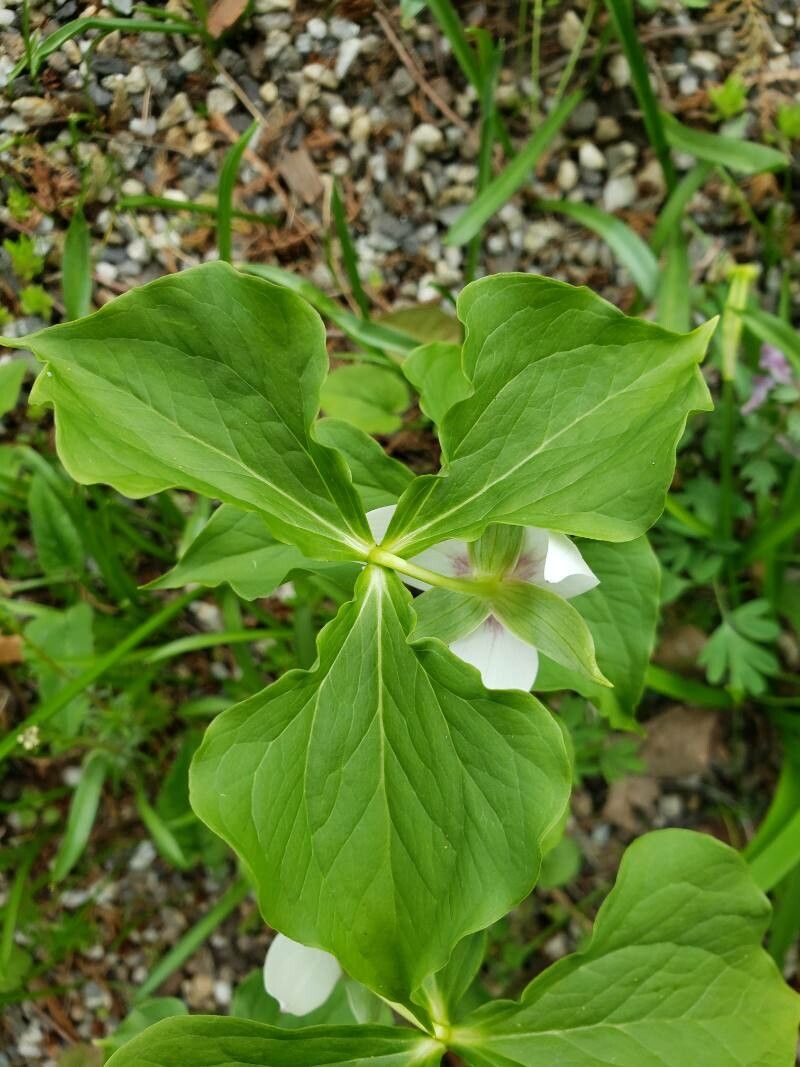
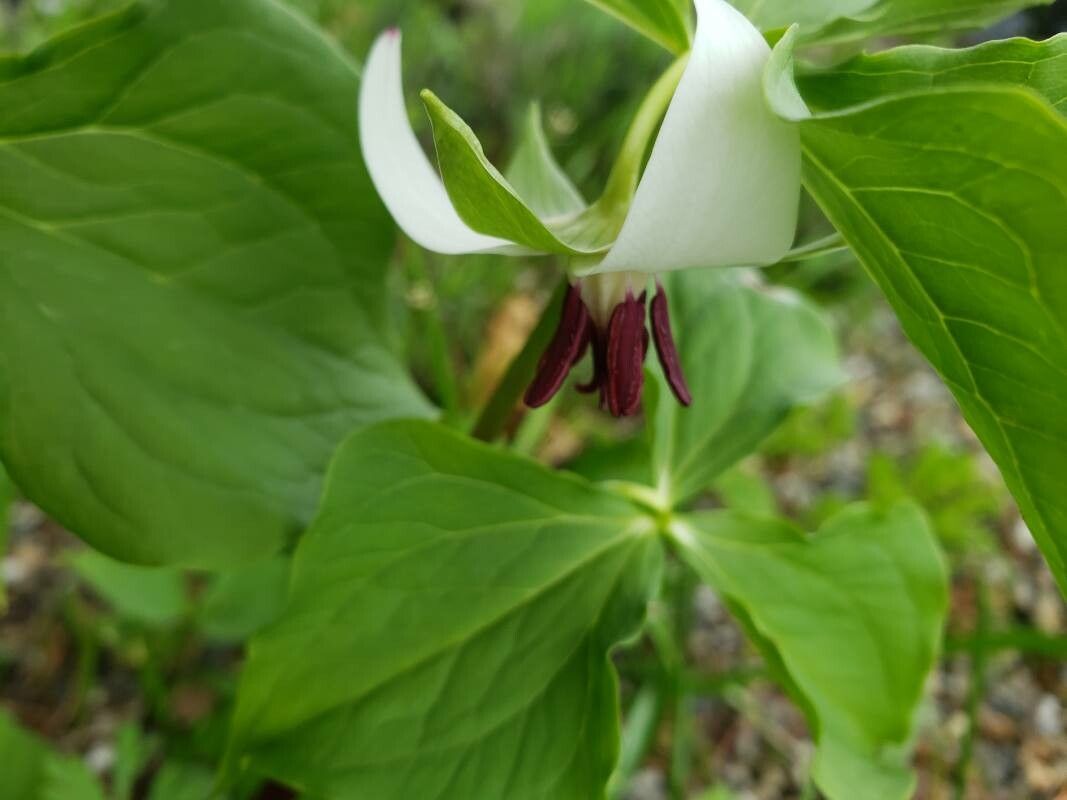
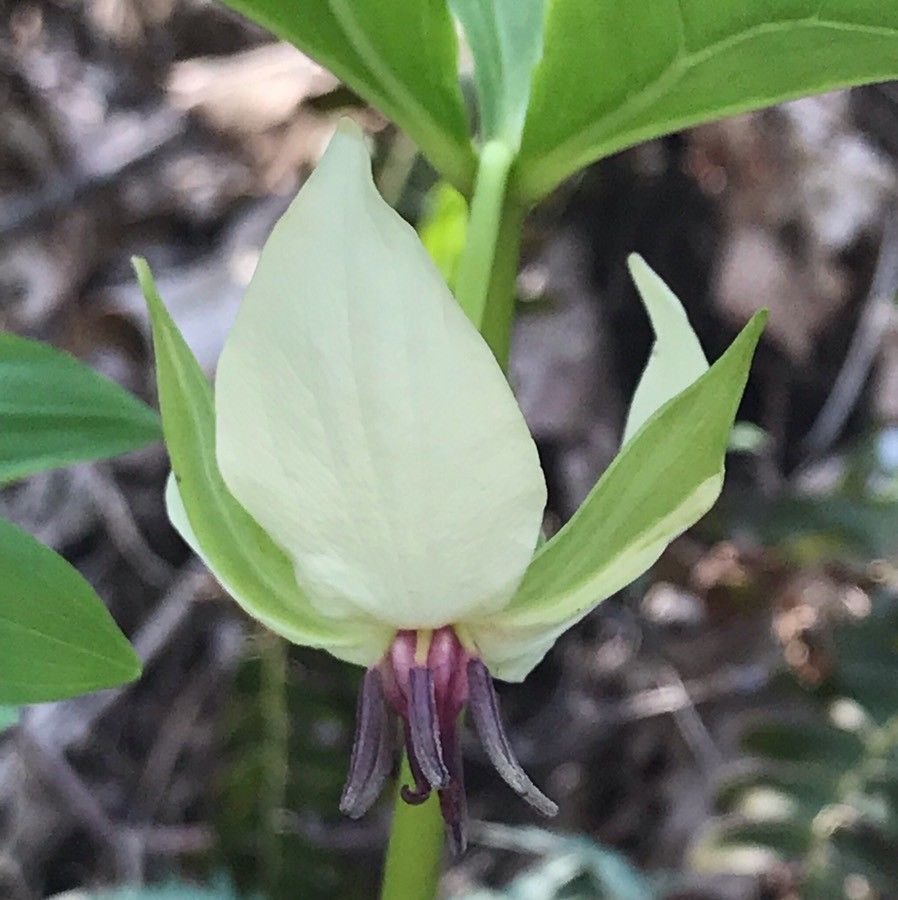
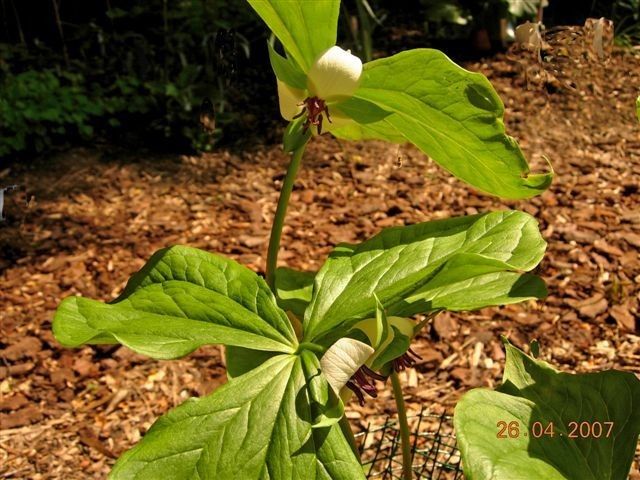
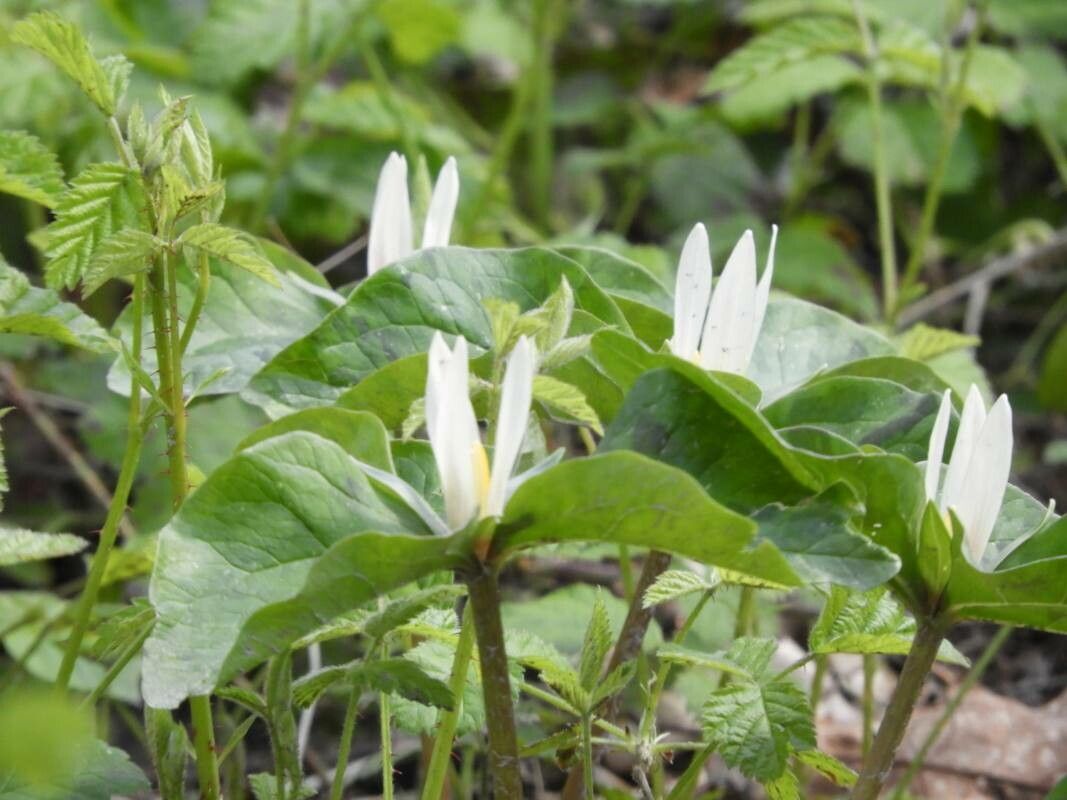
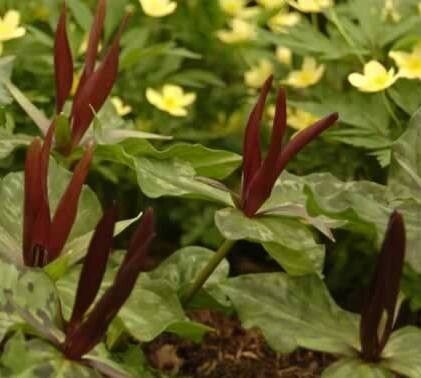
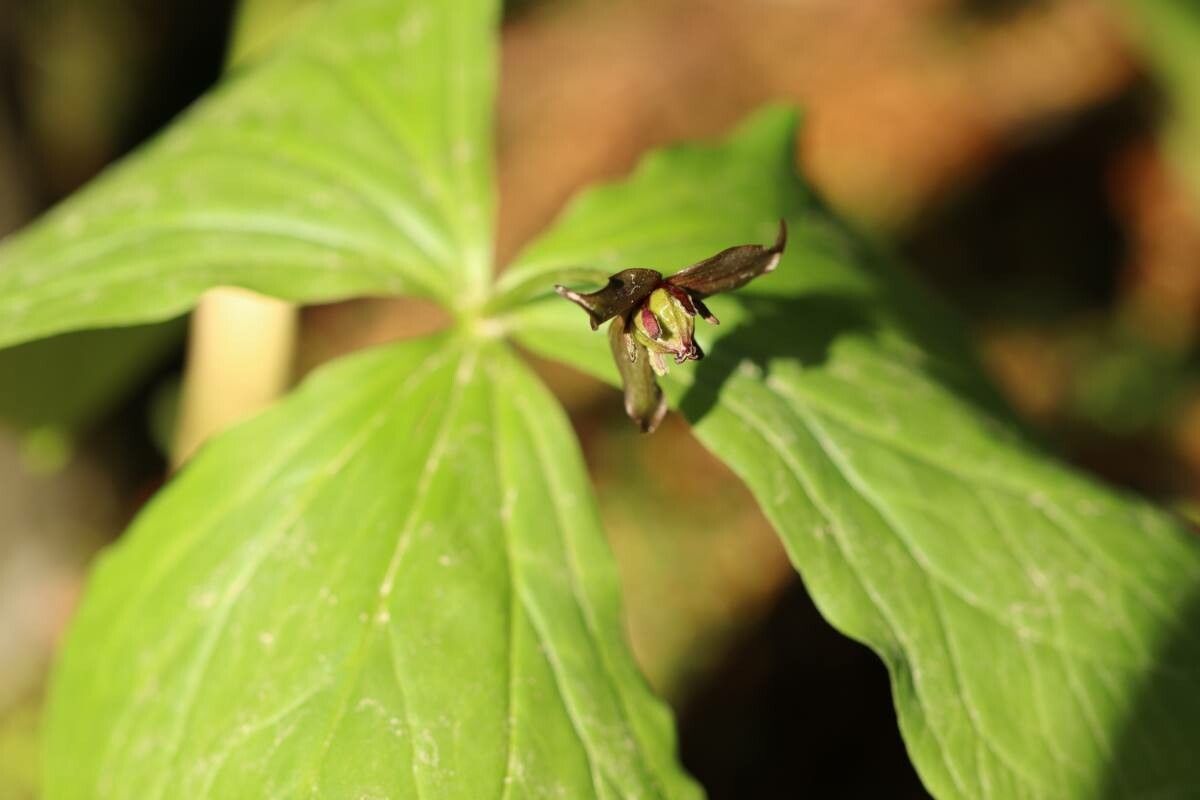
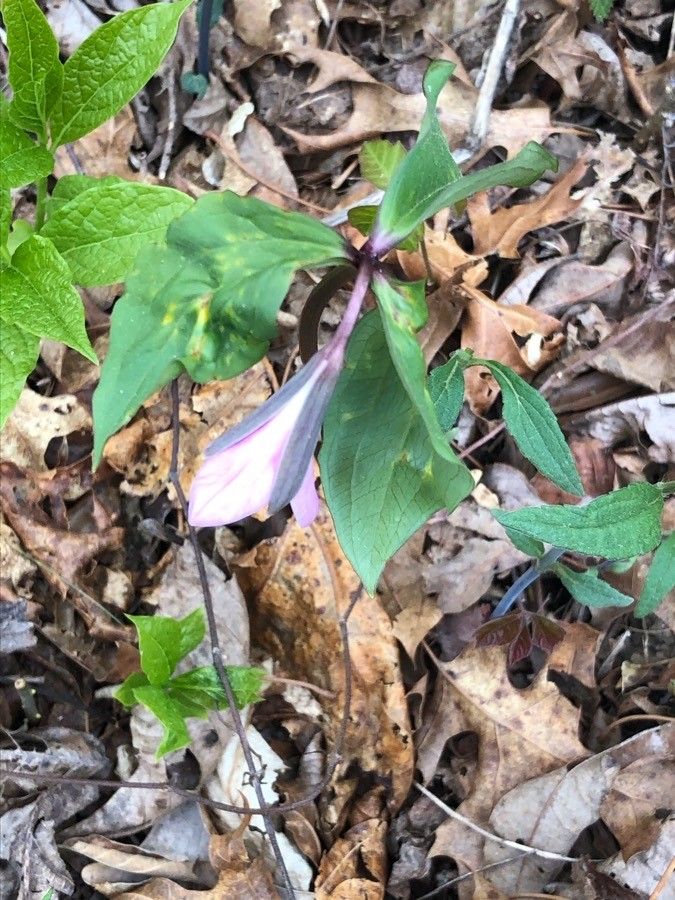
Trillium rugelii, also known as the southern nodding trillium or illscented wakerobin, is a species of flowering plant in the family Melanthiaceae. It is native to parts of the southeastern United States. It is found in the Great Smoky Mountains, Fernbank Forest, Steven's Creek Heritage Preserve, and other places of the Piedmont and southern Appalachian Mountains in Alabama, Georgia, South Carolina, North Carolina and Tennessee. It prefers to grow near streams in humus-rich soil under the shade of deciduous trees. Trillium rugelii is a perennial herbaceous plant that blooms mid April to May. Like some other trillium species (such as T. catesbaei, T. cernuum, and T. vaseyi), its flower hangs below the leaves. In the past, many authors incorrectly cited specimens as Trillium cernuum, which has a similar though smaller flower with shorter stamens and thinner petals. Also, T. cernuum grows farther north and is less robust.
Illscented wakerobin has good disease resistance and is generally not prone to illnesses. However, it can be susceptible to pests and diseases present in its surroundings. These infections are usually mild. In terms of care, this plant requires a moderate level of maintenance. It should be pruned regularly to maintain a good appearance and healthy growth. Fertilizing can also help encourage flowering. Illscented wakerobin is suitable for anyone with outdoor space, such as a garden or patio, and does not require extensive care experience. It may demand more attention when grown indoors.
How to keep Trillium Rugelii.
Light
Illscented wakerobin is native to habitats such as forest understories or rocky areas, where it grows in natural shade. It prefers partial sun but can tolerate full sun or full shade, demonstrating its versatile and hardy nature.
Water
The ill-scented wakerobin thrives in consistently moist environments and has some tolerance for drought, preferring stable humidity. To maintain its health, it is crucial to water the plant weekly. As an understory plant, it greatly benefits from mulching, which helps retain soil moisture and mimics the leaf litter found in its natural habitat.
Temperature
Illscented wakerobin can tolerate a broad range of temperatures, but its distribution may still be restricted by various combinations of moisture and heat. It performs best in warm summer conditions with sufficient rainfall or watering. Extended periods of cloudy, rainy weather or prolonged high temperatures can raise the chance of Illscented wakerobin dying. In winter, proper protection from cold can enhance the plant's survival rate.
Fertilizer
For Illscented wakerobin, the main time to fertilize is early spring, when the flowers are forming. The proper fertilizer promotes better blooms and helps Illscented wakerobin produce lovely flowers. Fertilizing in early spring ensures excellent flowers during the season and provides energy for dormant growth phases.
Pruning
Ill-scented wakerobin is known for its unpleasant odor and distinctive three-petaled flowers. It requires minimal pruning, ideally done between early to late spring. Focus on removing any dead foliage to encourage growth and blooming. Be sure to use clean, sharp tools for pruning to prevent infection and ensure that your ill-scented wakerobin thrives in the garden.
Botanical profile.
- Plant Type
- Herb
- Life Cycle
- Perennial
- Genus
- Trillium
- Family
- Melanthiaceae
- Hardiness Zone
- 4-8
- Mature Height
- 40 cm
- Mature Spread
- 30 cm
- Leaf Color
- Green
- Leaf Type
- Deciduous
- Flower Color
- White
- Flower Size
- 5.08 cm to 6.35 cm
- Bloom Time
- Early spring, Mid spring
- Planting Time
- Spring
- Harvest Time
- Early summer, Mid summer
Other names.