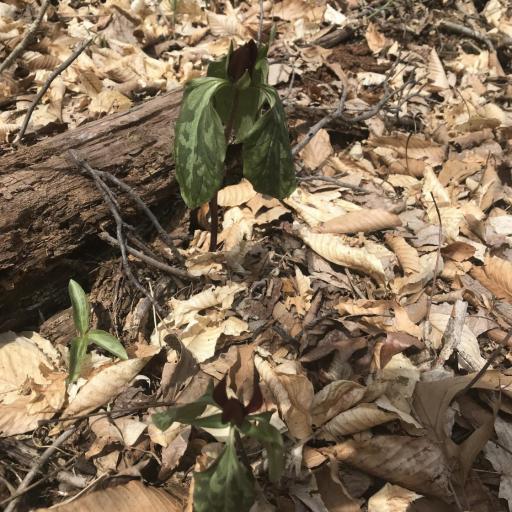
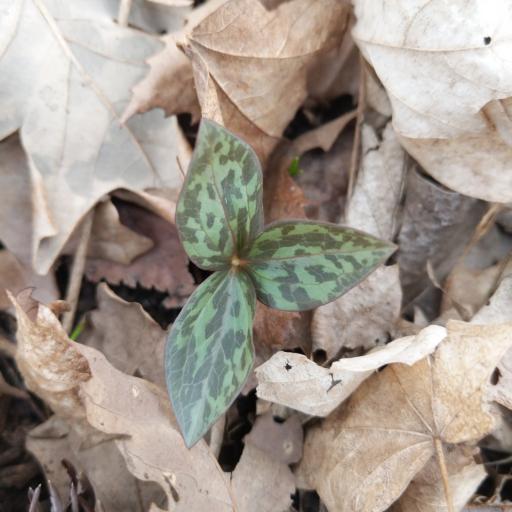
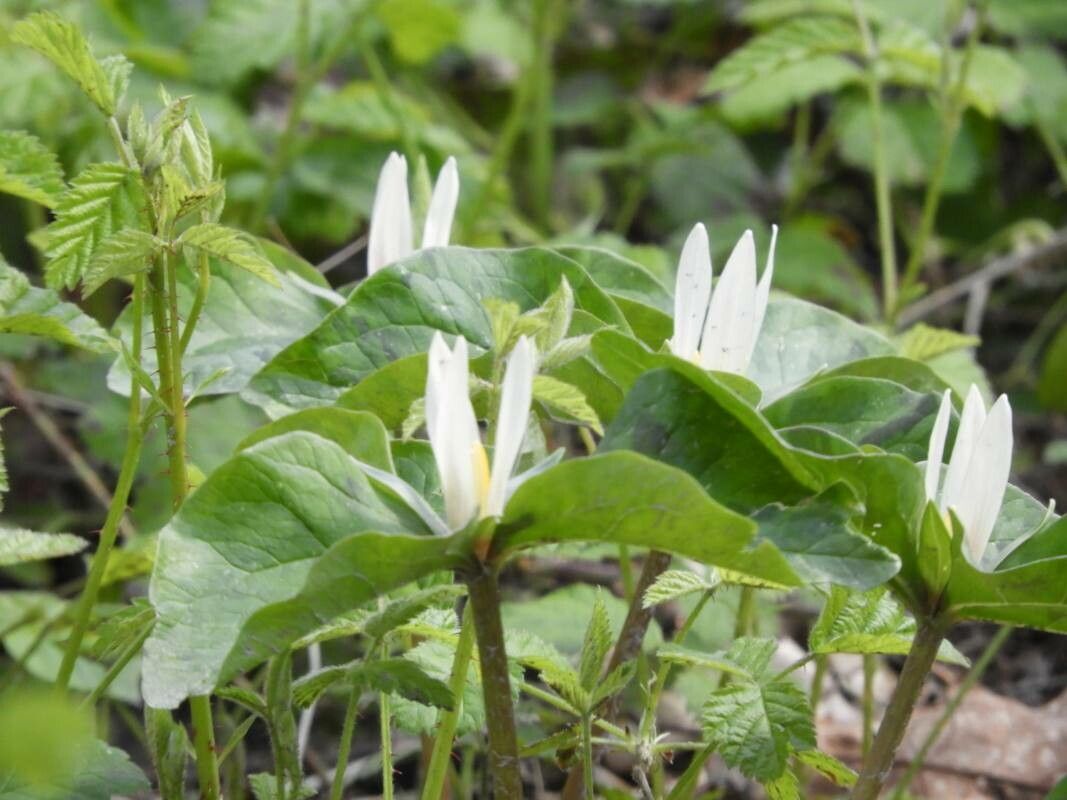
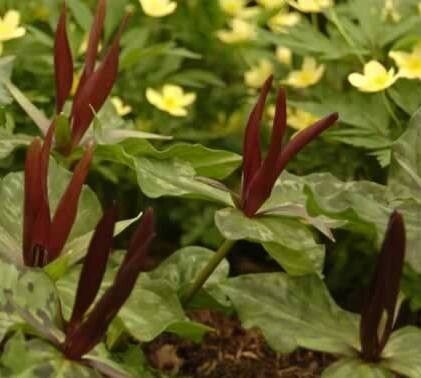
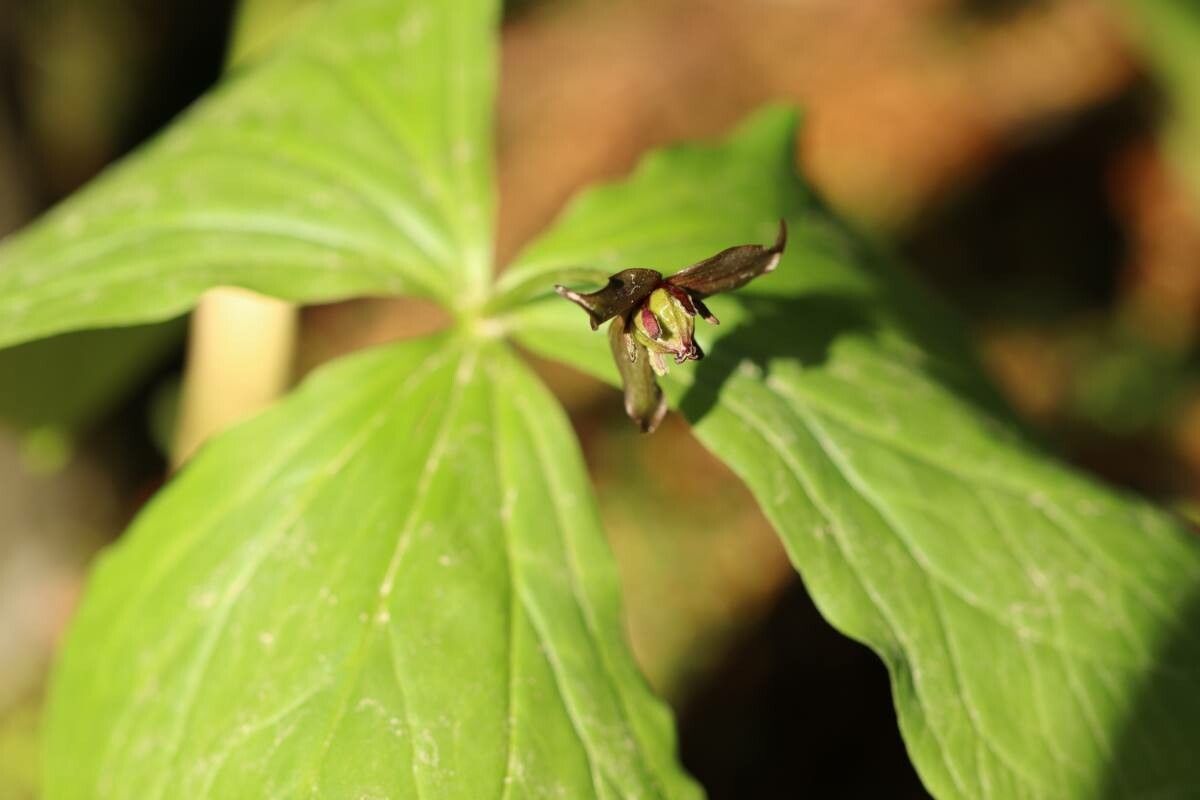
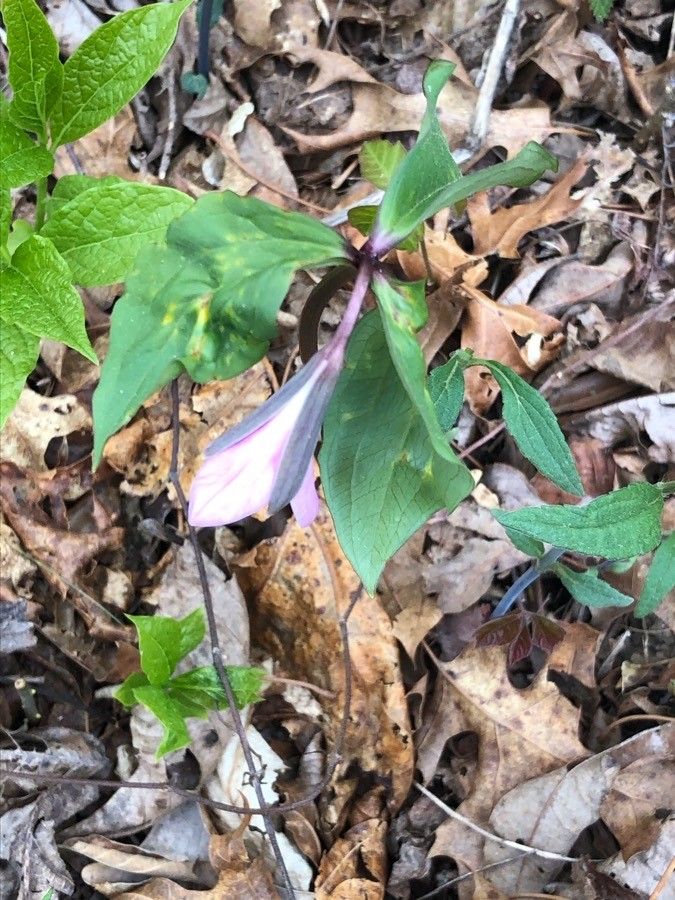
Trillium recurvatum, the prairie trillium, toadshade, or bloody butcher, is a species of perennial herbaceous flowering plant in the family Melanthiaceae. It is native to parts of central and eastern United States, where it is found from Iowa south to Texas and east to North Carolina and Pennsylvania. It grows in mesic forests and savannas, often in calcareous soils. It is also known as bloody noses, red trillium, prairie wake-robin, purple trillium, and reflexed trillium, in reference to its reflexed sepals.
Bloody butcher has strong resistance to disease and is typically not susceptible to illnesses. Nevertheless, it can be affected by pests and diseases present in its environment. Such infections tend to be mild. Regarding care, this plant needs moderate attention. It should be pruned regularly to preserve a neat appearance and encourage healthy growth. Applying fertilizer can also aid in boosting its flowering. Bloody butcher is appropriate for anyone who has outdoor space, like a garden or patio, and does not demand extensive gardening experience. It may need increased care if kept indoors.
How to keep Trillium Recurvatum.
Light
Bloody butcher does best with a substantial amount of sunlight, though it can tolerate lower light levels. Native to areas where light filters through overhead foliage, it has adapted to a range of light conditions. Too much sun can burn its leaves, while too little light can impede its growth and flowering.
Water
The Bloody Butcher plant flourishes in areas with dappled shade and consistent moisture, preferring soil that remains evenly moist but not waterlogged. To maintain ideal conditions, water the plant weekly. It is commonly cultivated outdoors in temperate regions, where natural rainfall can reduce the need for artificial watering during the growing season.
Temperature
Bloody butcher originates from environments where temperatures range from 41 to 95 °F (5 to 35 ℃). It prefers cooler conditions, ideally within that range. Seasonal adjustments may be necessary to replicate its native temperature conditions.
Fertilizer
The best time to fertilize a Bloody butcher is in early spring, as it comes out of dormancy and starts active growth. Fertilization supplies essential nutrients for healthy development. Although Bloody butcher has relatively low fertilizer requirements, applying fertilizer once a year can improve its survival and encourage better, longer-lasting blooms.
Pruning
The Bloody Butcher plant showcases dark red flowers with gracefully recurved petals. To keep it healthy, prune in early spring to remove any dead foliage and improve air circulation, which can help reduce the risk of disease. When cutting, make your cuts at a slight angle and be careful not to over-prune, as this helps maintain the plant's natural shape. For more detailed care instructions, be sure to consult reputable sources.
Botanical profile.
- Plant Type
- Herb
- Life Cycle
- Perennial
- Genus
- Trillium
- Family
- Melanthiaceae
- Hardiness Zone
- 4-9
- Mature Height
- 15 cm to 46 cm
- Mature Spread
- 23 cm to 30 cm
- Leaf Color
- Green, Variegated, Red
- Leaf Type
- Deciduous
- Flower Color
- Red, Brown
- Flower Size
- 2.54 cm to 7.62 cm
- Bloom Time
- Mid spring, Late spring
- Planting Time
- Summer, Autumn
- Harvest Time
- Late spring, Early summer
Other names.