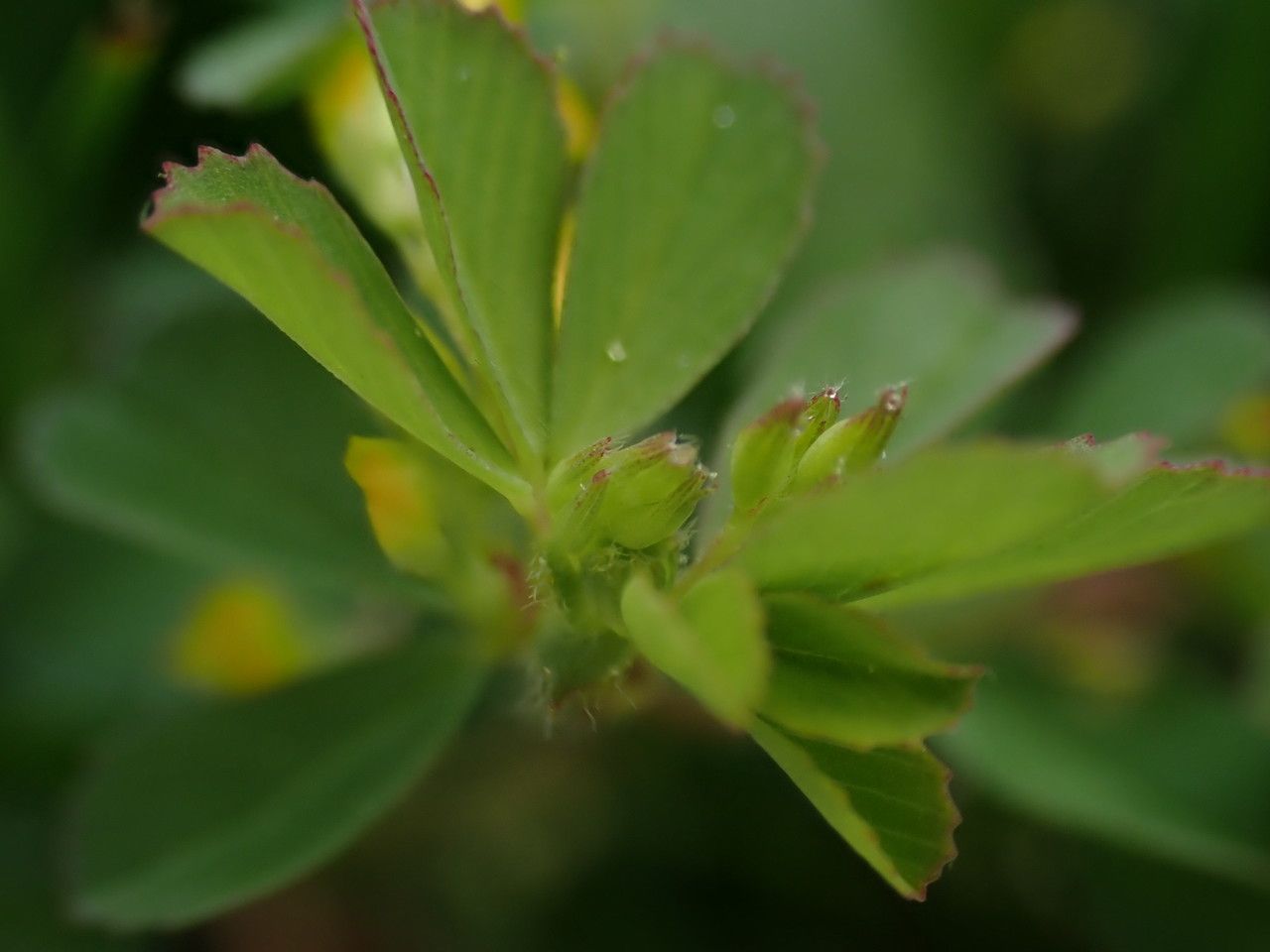
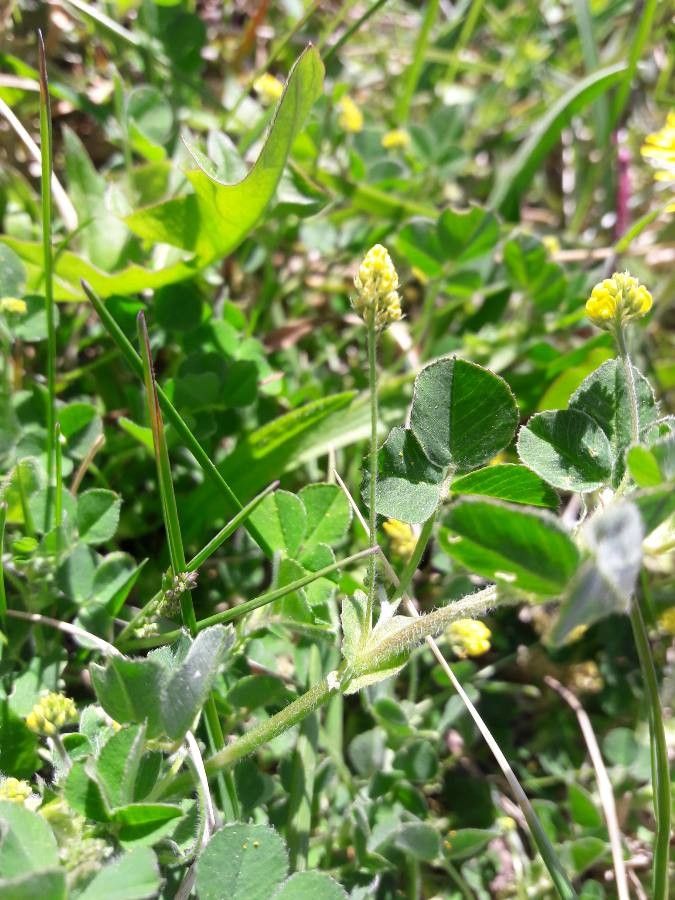
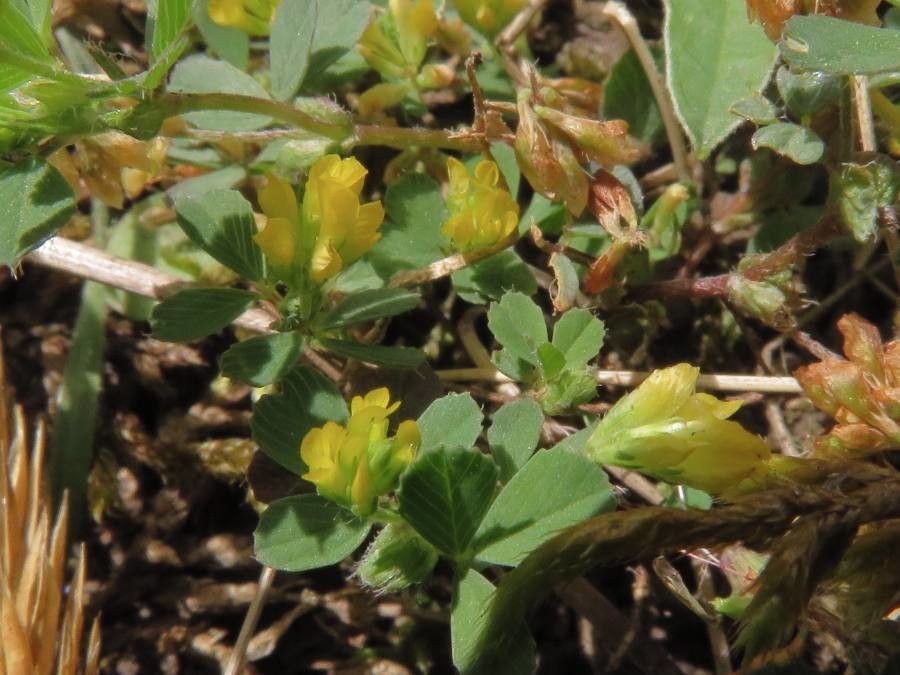
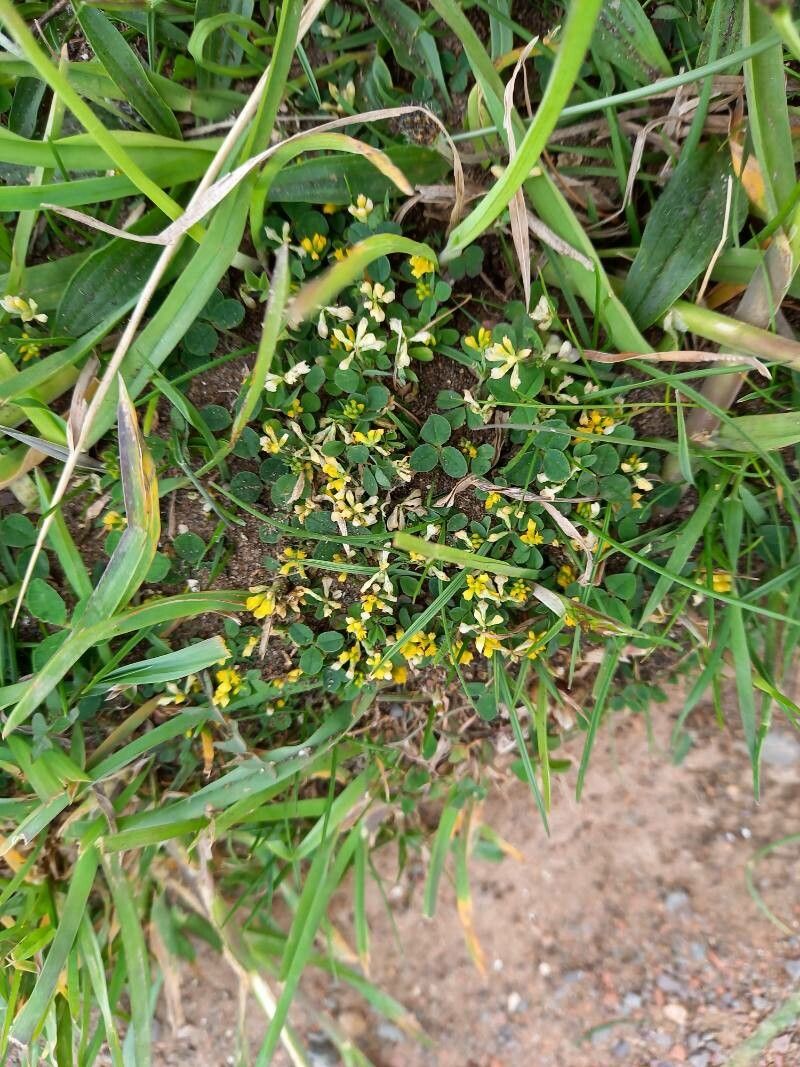
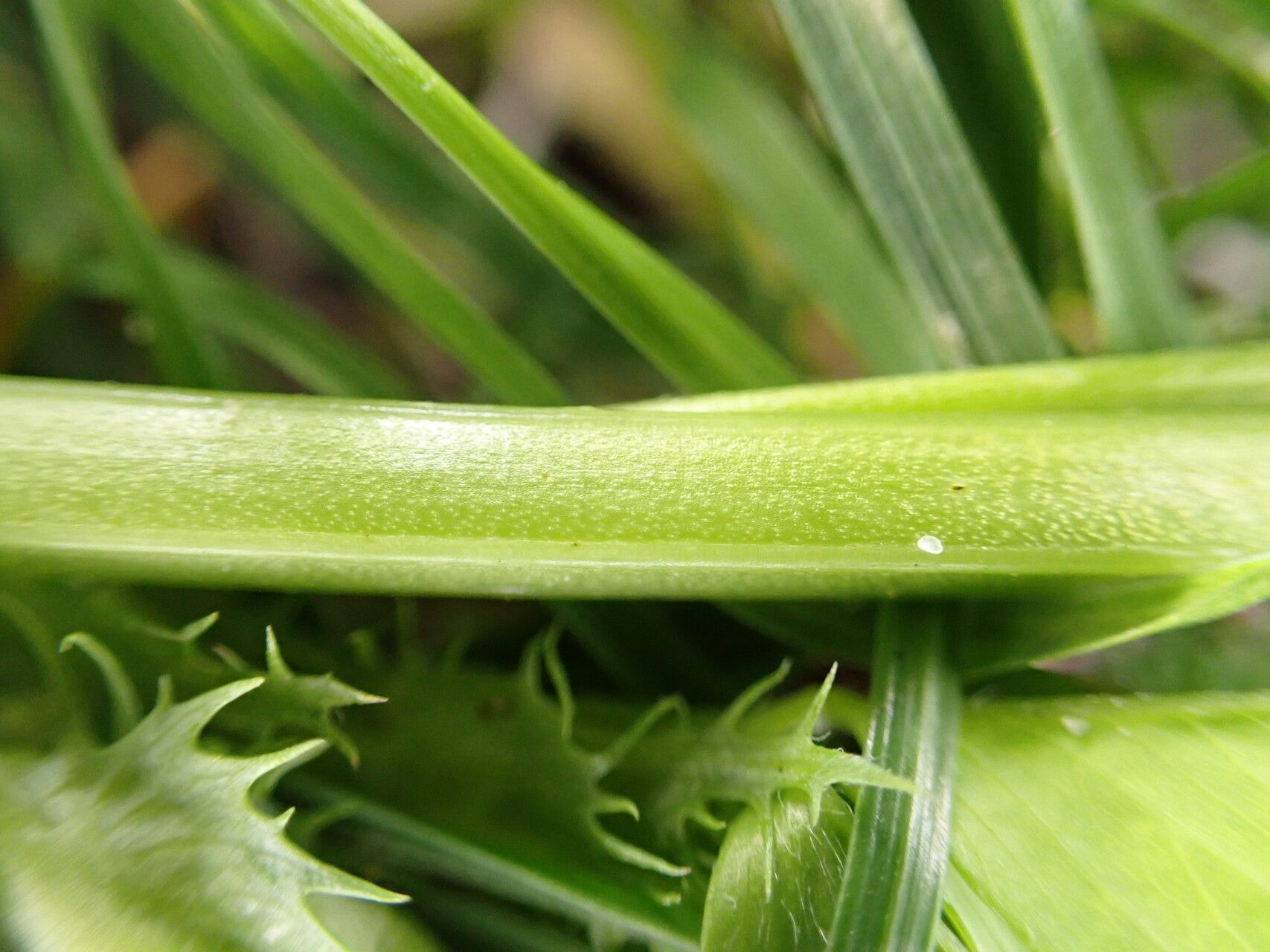
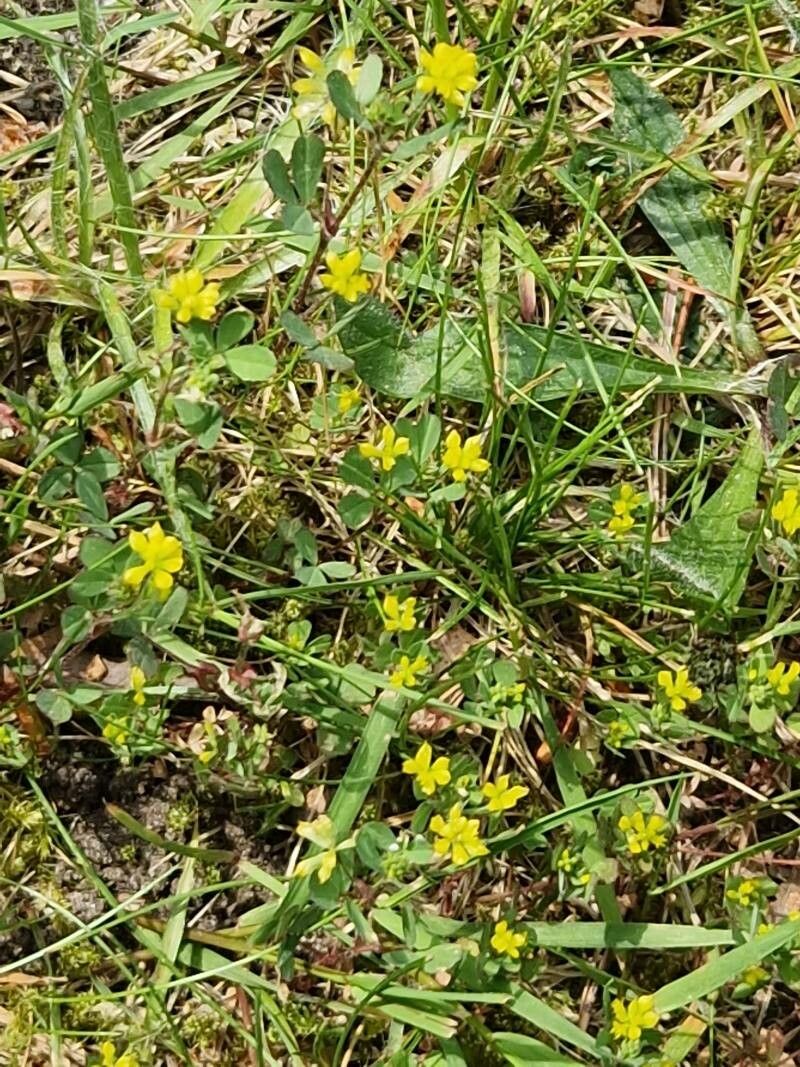
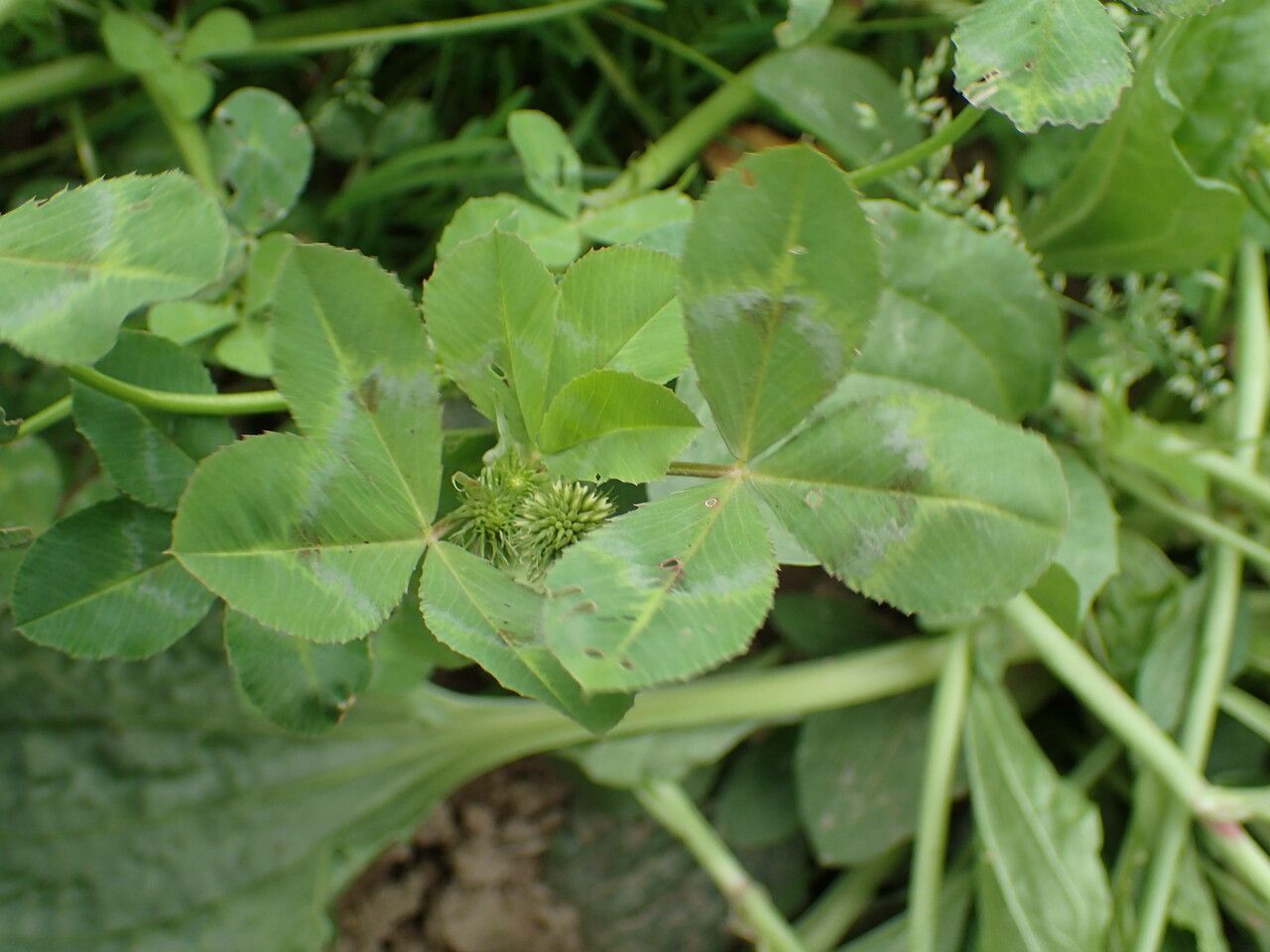
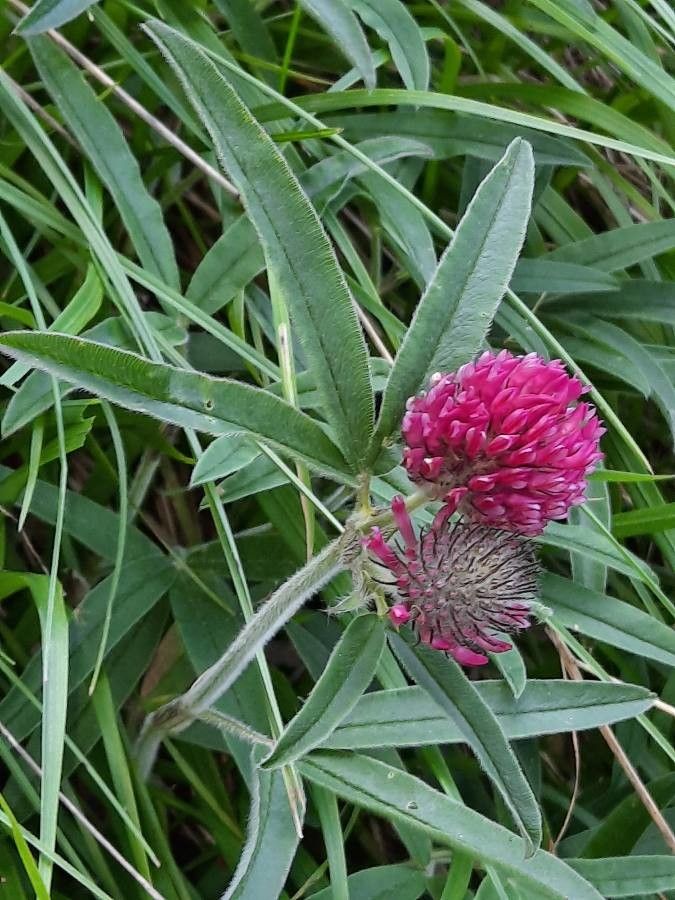
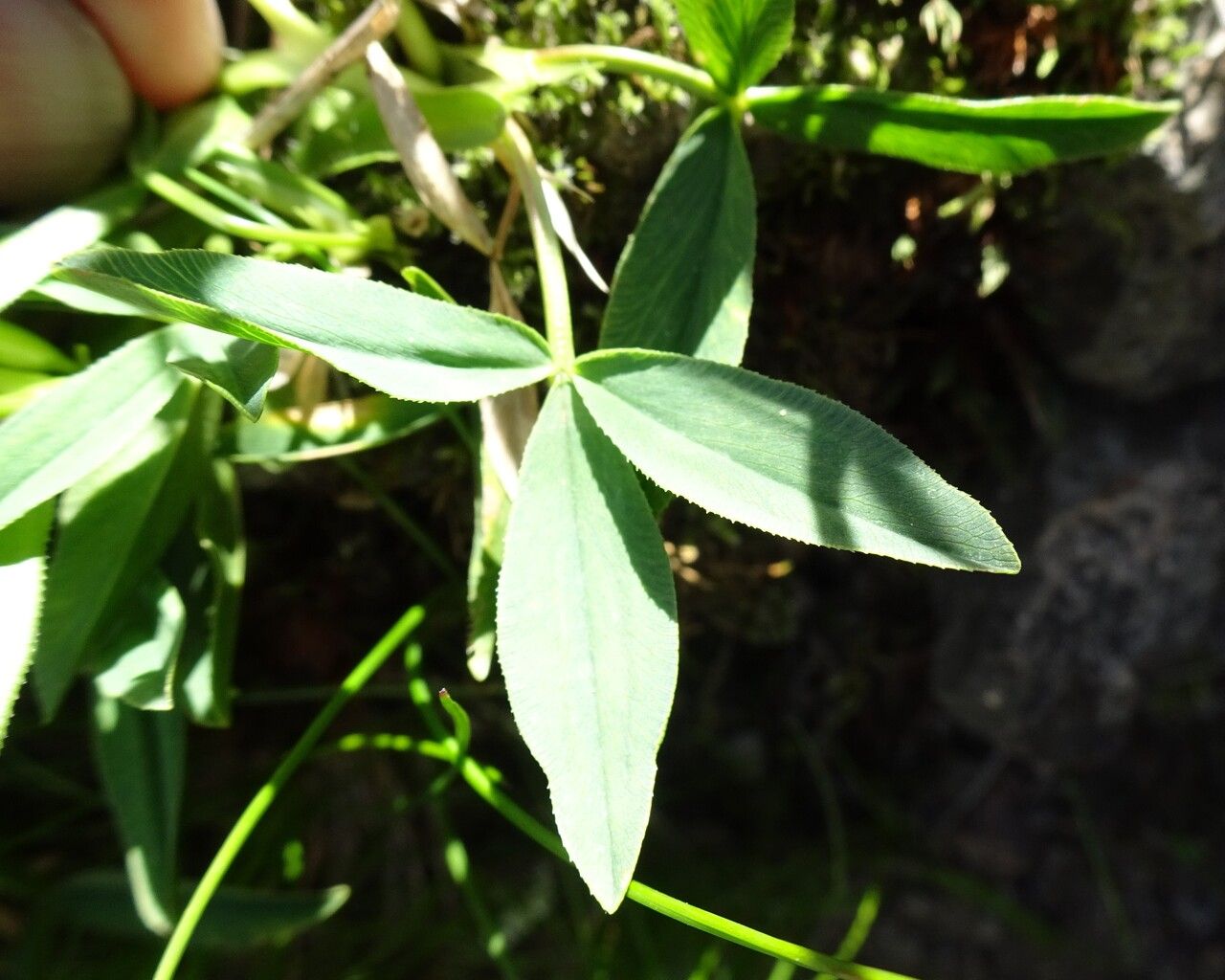
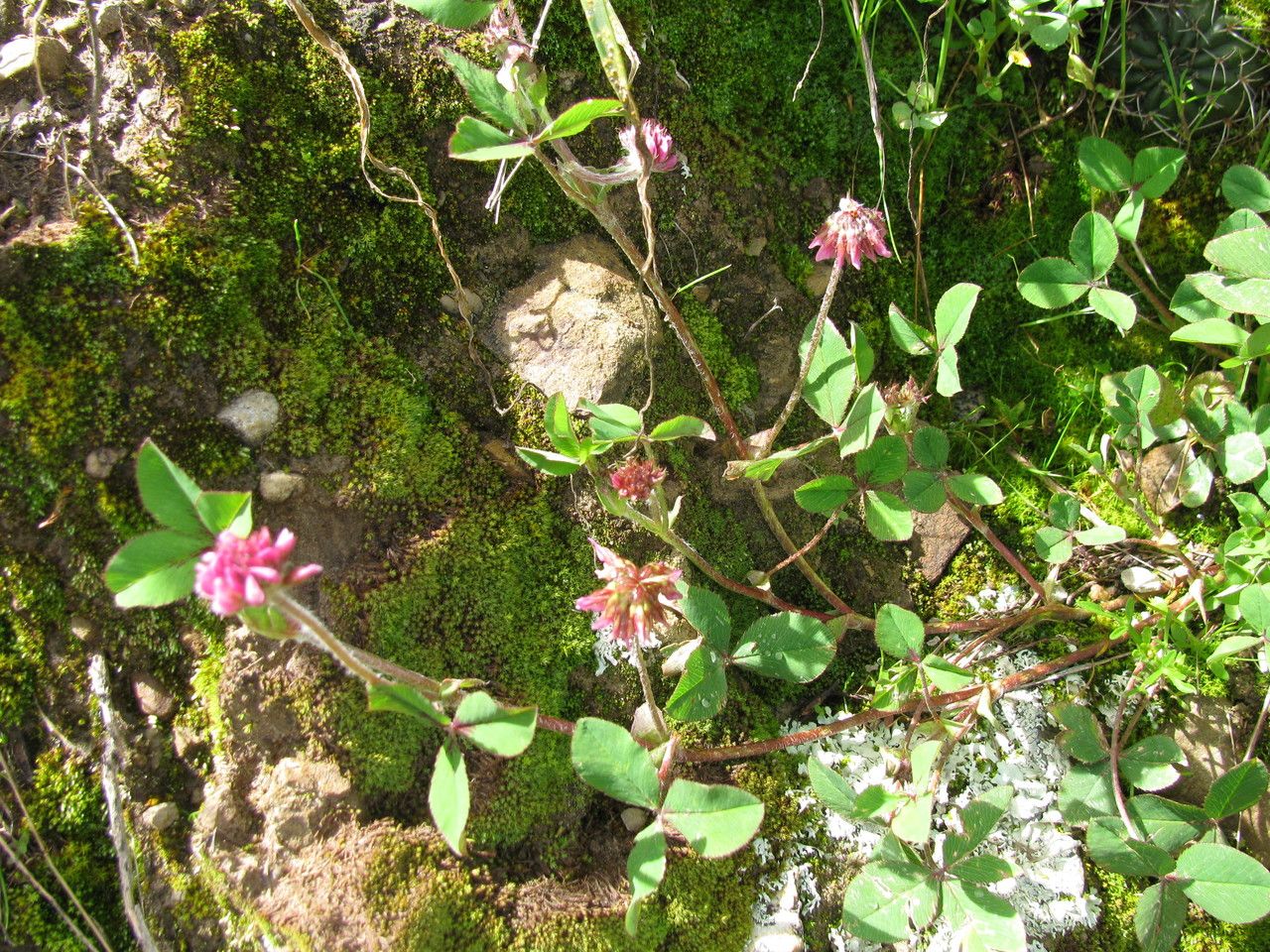
Trifolium micranthum, the slender trefoil or slender hop clover, is a plant species of the genus Trifolium in the "pea family" ; Fabaceae or Papillionaceae. It is distributed in Central and Western Europe on river dunes. It is an annual species with ovate or lance shaped leaves, the middle leaves with shorter petioles. The stems of the flowering head hang over slightly. The heads have 5-7 bright yellowish orange flowers which appear from May until July. The pods are turned in one direction.
Lesser suckling clover shows good resistance to disease and generally does not easily succumb to illnesses. However, it can be affected by pests and diseases present in its environment. These problems are typically mild. In terms of upkeep, the plant requires moderate maintenance. It should be pruned regularly to keep a neat appearance and support healthy growth. Fertilizing can also help encourage flowering. Lesser suckling clover is suitable for anyone with outdoor space, such as a garden or patio, and does not demand extensive gardening experience. It may need more care if grown indoors.
How to keep Trifolium Micranthum.
Light
Lesser suckling clover prefers full sun, which promotes healthy growth and enables it to thrive in areas receiving abundant sunlight throughout the day. It can, however, tolerate slight shade. Its native habitat reflects this preference. Extended periods of insufficient light can impede its growth, while excessive exposure can cause some stress.
Water
Lesser suckling clover is well-adapted to drought conditions, but it thrives with consistent moisture. It benefits from being watered weekly. When grown outdoors in temperate zones, it relies on natural rainfall patterns, which support its growth and reduce the need for additional irrigation.
Temperature
Lesser suckling clover can tolerate a wide range of temperatures, but its range may still be restricted by different combinations of moisture and heat. It does best in warm summer climates with sufficient rainfall or irrigation. Extended periods of cloudy, rainy weather or prolonged high temperatures can increase the chance of Lesser suckling clover dying. In winter, protecting the plant from cold can boost its survival rate.
Fertilizer
Lesser suckling clover benefits from regular, dilute fertilizer applications to encourage healthy leaf development. Fertilize Lesser suckling clover roughly once a month during the summer months. Nitrogen is essential for foliage, and supplying nitrogen-rich sources helps Lesser suckling clover thrive.
Pruning
Lesser suckling clover is a low-growing legume known for its nitrogen-fixing ability and delicate flowers. It thrives in various habitats. To promote healthy growth, prevent disease, and improve its appearance, it's best to prune the plant in early spring. Regular trimming results in a more robust and visually appealing plant.
Botanical profile.
- Plant Type
- Herb
- Life Cycle
- Annual
- Genus
- Trifolium
- Family
- Fabaceae
- Hardiness Zone
- 5-9
- Mature Height
- 10 cm
- Mature Spread
- 10 cm to 30 cm
- Leaf Color
- Green
- Leaf Type
- Deciduous
- Flower Color
- Yellow
- Flower Size
- 0.20 cm to 0.25 cm
- Bloom Time
- Mid spring, Late spring, Early summer
- Planting Time
- Spring, Summer
- Harvest Time
- Summer
- Native Area
- Libya, Turkey, Montenegro, Morocco, Germany, Romania, Belgium, Portugal, France, Netherlands, Tunisia, Bulgaria, Greece, Lebanon, Serbia, Norway, Italy, Spain, Denmark, Iran, Albania, Ireland, United Kingdom, Hungary, Algeria, Azerbaijan
Other names.
Reader questions.
How should I water my Lesser suckling clover?
To water Lesser suckling clover, you have several options for watering tools such as a garden hose with a spray nozzle or a watering can. This plant is not overly particular about the type of water it receives, so rainwater, tap water, or filtered water will suffice. However, it is recommended to avoid watering this plant from above as it can harm the leaves and flowers and potentially lead to disease. Instead, utilizing a drip irrigation system is often the best method for watering Lesser suckling clover. This system ensures that water is applied evenly and directly to the soil. If you have a container-grown plant, you can follow a similar watering approach while using tools like a cup, watering can, or tap water to directly water the soil.
What are the sunlight requirements for Lesser Suckling Clover?
Lesser Suckling Clover thrives best under full sun conditions, receiving more than 6 hours of sunlight daily for healthy growth. It can also adapt to partial sun, with about 3-6 hours of sunlight. The plant’s origins in a sun-rich environment reflect its preference for abundant light, although it can tolerate slight shade. Observing the movement of sunlight through your garden to find the perfect balance of light and shade is essential for ensuring the plant's happiness.
What is the botanical name of Lesser suckling clover?
The botanical name of Lesser suckling clover is Trifolium micranthum.
What should I do if I give my Lesser suckling clover either too much or too little water?
To help your Lesser suckling clover thrive, it's important to address both underwatering and overwatering. If you notice that your plant lacks moisture, simply increase the frequency of watering. On the other hand, overwatering can be a serious issue that may lead to disease and plant decline. To avoid this, choose a location with plenty of sunlight to dry the soil and ensure good drainage to prevent waterlogging. If you have overwatered your potted Lesser suckling clover, consider repotting it into a container with better drainage and loose soil.
How essential is lighting for Lesser Suckling Clover?
Lighting is crucial for the healthy development of Lesser Suckling Clover, especially when grown indoors. The plant requires full sun to flourish and can adapt to slight shade, mimicking its original habitat's conditions. If natural sunlight is scarce, particularly during winter or in darker spaces, artificial lighting can substitute to promote healthy growth. Indoor plants benefit from specific types of artificial light, such as LED lights, which can provide the necessary wavelengths of light. The recommended artificial light intensity is 30-50W/sq ft for full sun plants, 20-30W/sq ft for partial sun plants, and 10-20W/sq ft for full shade plants. Proper placement and duration of artificial lighting are critical, with lights set 12-36 inches above the plant and turned on for 8-12 hours per day to mimic natural daylight hours.
How often should I give water to my Lesser suckling clover?
To ensure the health of your Lesser suckling clover, it is important to water it regularly throughout the growing season. In spring, watering once a week should be sufficient. As the season progresses and gets warmer, increasing the watering frequency to two to three times per week may be necessary, but going beyond this can harm the plant. It's crucial to keep the soil moist but not overly wet regardless of the watering schedule. Watering potted Lesser suckling clover requires a higher frequency compared to in-ground plants, as the soil in pots tends to dry out more quickly. Generally, watering container-grown Lesser suckling clover a few times per week is recommended, as opposed to just once per week for plants in the ground.
What symptoms indicate Lesser Suckling Clover is receiving inadequate light?
Lesser Suckling Clover shows several signs when it's not getting enough light, including smaller new leaves, leggy or sparse growth, accelerated leaf drop, slower or halted growth, paler new leaves, chlorosis, sunscald, leaf curling, wilting, and leaf scorching. These symptoms indicate either a deficiency or excess of light. Adjusting the plant's exposure to light can address these issues by gradually introducing it to more sunlight or reducing excessive exposure to prevent damage.
How much water does my Lesser suckling clover require?
Determining the appropriate amount of water for your Lesser suckling clover can be done in a few different ways. Some gardeners prefer to judge water needs by checking the soil's moisture level. This method suggests watering until the top six inches of soil feel moist. Another approach is using a specific measurement. Typically, Lesser suckling clover requires around two gallons of water per week, adjusted based on heat and soil dryness. However, following strict guidelines may result in overwatering if the plant requires less water. When growing in a container, an alternate method is needed. In this case, ensure all dry soil layers are moistened by testing with your finger or allowing a slight trickle of water to exit the drainage holes.
What solutions can help improve the light conditions for Lesser Suckling Clover?
Improving light conditions for Lesser Suckling Clover involves several strategies. Indoors, you can gradually increase the plant's exposure to sunlight or use artificial lighting to meet its light requirements. Outdoor plants should be moved to sunnier locations carefully to avoid sunburn. For ground plants, reducing overhead obstructions like tree branches can significantly improve sunlight access. When transplanting for better light access, it's crucial to do so during the plant's dormant period and to ensure the new location has good drainage and ample sunlight. Implementing these solutions can promote healthy new growth, even if parts of the plant damaged by previous light conditions may not recover.
How can I know if I'm giving enough water to my Lesser suckling clover?
It can sometimes be tricky to avoid overwatering your Lesser suckling clover. On one hand, these plants have deep roots that need regular watering. On the other hand, they are prone to root rot and can turn brown if overwatered. Underwatering is less of a concern since these plants can survive without additional watering for a while. However, if you wait too long, they will start to wilt and their leaves may become dry.
How should I water my Lesser suckling clover throughout the year?
As the season progresses, your Lesser suckling clover will need more water. In spring, watering once a week is sufficient. However, as summer arrives and temperatures rise, you may need to water your Lesser suckling clover three times a week, especially if it is growing in containers. Container soil tends to dry out faster than ground soil in warm weather. In autumn, when the temperature drops and the sun is not as intense as in summer, your blooming Lesser suckling clover may require less water.
How should I water my Young clover at different stages of growth?
Throughout the year, Lesser suckling clover goes through different growth stages which have varying water requirements. When starting as a seed, it is important to provide more water to ensure successful germination. This means frequently watering to keep the soil consistently moist. As the seed grows into a seedling, slightly less water is needed. Once the plant matures, a regular watering frequency of about once per week is sufficient. However, during flower development, it may be necessary to increase the amount of water slightly to support the process.