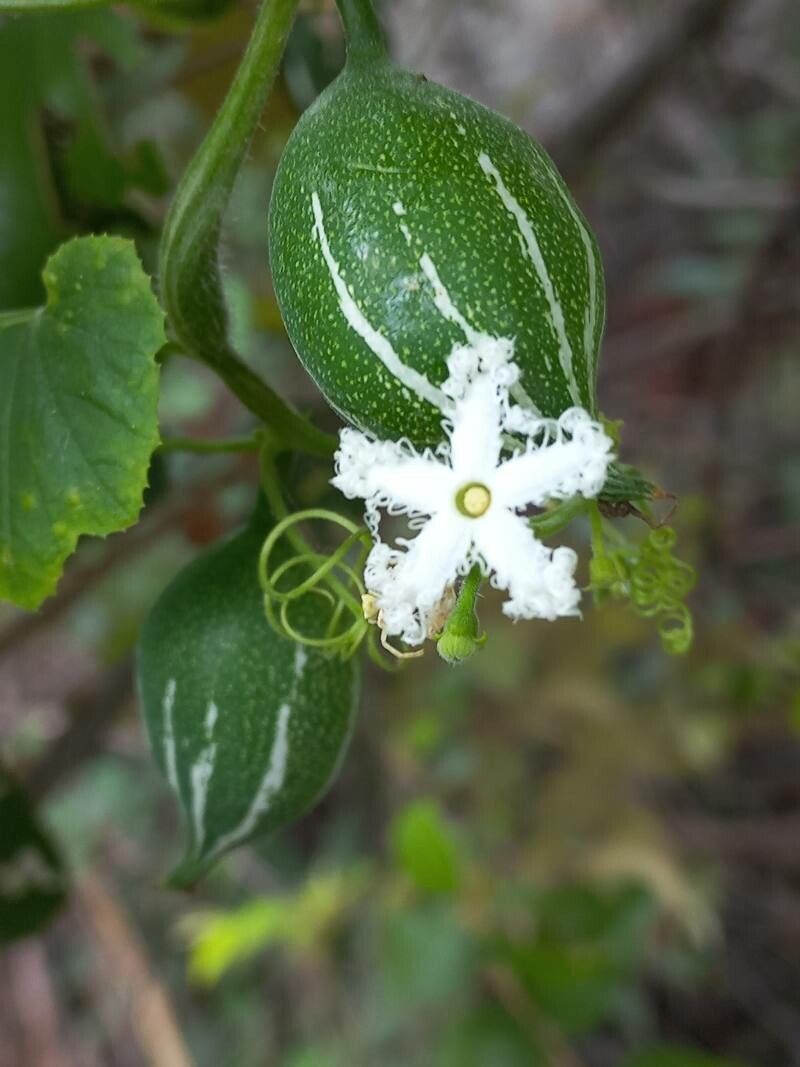
Trichosanthes kirilowii is a flowering plant in the family Cucurbitaceae found particularly in Henan, Shandong, Hebei, Shanxi, and Shaanxi. It is one of the 50 fundamental herbs used in traditional Chinese medicine, where it shares the name guālóu (Chinese: 栝蔞) with the related T. rosthornii. It is known as "Chinese cucumber" and "Chinese snake gourd" in English.
Chinese cucumber is resistant to disease and typically not susceptible to many illnesses. In terms of care, this plant is fairly low maintenance. When grown outdoors it needs only light watering, and larger plants generally do not require pruning. However, smaller plants should be pruned after they finish blooming. Chinese cucumber is well suited for anyone with an outdoor area, such as a garden or a deck, and does not demand extensive care experience.
How to keep Trichosanthes Kirilowii.
Light
Chinese cucumber thrives with plentiful sunlight. Its usual habitat is areas that receive a lot of sun. The plant's various growth stages are not especially sensitive to different light intensities. Excessive light can induce stress, while too little light can harm plant health and hinder growth.
Water
Chinese cucumbers flourish in humid environments and require consistent moisture, ideally receiving water on a weekly basis. Although they can tolerate short periods of dryness, they benefit significantly from rainwater. Rainwater not only provides necessary hydration but also delivers essential nutrients from the ecosystem, which supports their growth.
Temperature
Chinese cucumber grows best in its native habitat when temperatures range from 59 to 100.4°F (15 to 38 ℃). It prefers temperate climates and adapts well to seasonal temperature changes.
Fertilizer
Timing is essential for fertilizing Chinese cucumber. Fertilize in early spring and repeat once a month through early summer. Fertilizer encourages attractive blooms and supplies energy during both dormant and active growth phases.
Botanical profile.
- Plant Type
- Vine
- Life Cycle
- Perennial
- Genus
- Trichosanthes
- Family
- Cucurbitaceae
- Hardiness Zone
- 8-11
- Mature Height
- 6.1 m
- Mature Spread
- 2.13 m to 3.05 m
- Leaf Color
- Green, Dark Green
- Leaf Type
- Deciduous
- Flower Color
- White
- Flower Size
- 5.08 cm to 7.62 cm
- Bloom Time
- Early summer, Mid summer
- Planting Time
- Spring, Autumn
- Harvest Time
- Mid summer
- Native Area
- Cambodia, Vietnam, Japan, Koppen, Laos, South Korea, China
Other names.
Reader questions.
How should I water my Chinese cucumber plant in the best way?
To ensure excellent root development, place a garden hose at the base of the plant instead of spraying the leaves directly. If the plant is outdoors and exposed to direct sunlight, the leaves will need more water. You can use bubblers to moisten the roots of each plant, or soaker hoses to cover the entire garden or bed when adding or removing plants. After watering, drain any excess water and allow the soil to dry before watering again. Watering at ground level helps prevent diseases. On a sunny day, spraying the entire bush with water may be beneficial. Whether potted or in-ground, remember to water Chinese cucumber deeply rather than lightly sprinkling.
Why is it necessary to add fertilizer to my Chinese cucumber plant?
Fertilizing your Chinese cucumber is important for several reasons. One of the most obvious reasons is that it helps your cucumber produce beautiful blooms. To make sure your Chinese cucumber has excellent flowers during the spring, it's best to fertilize it in early spring. Fertilizer also provides your cucumber with the energy it needs during its dormant growth phases. By giving your Chinese cucumber extra nutrients during fall planting or late spring, it will store more energy to use when active growth resumes.
How many hours should Chinese cucumber plants be in the sun each day for them to grow healthy?
To ensure healthy growth, the Chinese cucumber needs a minimum of 3-6 hours of sunlight each day. This is the bare minimum requirement, as most plants that can tolerate some shade can also thrive in full sun. However, plants that require full sun or part shade are less flexible because they need more light for photosynthesis.
What temperature is best for Chinese cucumber?
Plants are affected by colder temperatures because they adjust to the air temperature around them. When exposed to sunlight, they can warm up, but this doesn't happen in winter. The preferred temperature range for Chinese cucumbers is usually between 70-85℉ (21-30℃). They can tolerate temperatures as low as 20-30℉ (-6-0℃), and maybe even as low as 15℉ (-10℃), but not for long as this can cause frost damage. To keep them healthy, make sure the maximum temperature stays within 70-85℉ (21-30℃), and provide water and shade to prevent wilting.
What should I do if I give the Chinese cucumber too much or too little water?
Chinese cucumbers that are overwatered may display yellow, drooping leaves and a dull, unhealthy appearance, along with mushy stems. Adjusting your watering schedule is recommended when you notice these signs. On the other hand, wilting can also be a result of under watering, which is characterized by crispy, dry leaves. To determine if watering is needed, check the soil for dryness. If it is dry, a thorough watering is necessary. Although this will help the Chinese cucumber recover, it may still exhibit dryness and yellowing leaves for a few days due to root damage. The yellowing of leaves will stop once the plant returns to normal. If you have Chinese cucumbers indoors, regularly check the moisture levels and avoid overwatering. Look out for black spots as a sign of overwatering, and allow the soil to dry out by refraining from watering for a few days. Overwatering can lead to root rot, so if you observe discolored and slimy roots, consider transferring the plant to a different pot. Preventing root rot by avoiding excessive moisture is crucial. When planting Chinese cucumbers outdoors, make sure to check the soil's dryness by digging deeper with your fingers. If the soil is too dry, it indicates that the plant is not receiving adequate water, so watering is necessary to aid in its recovery.
When should I put fertilizer on my Chinese cucumber plant?
Fertilizing Chinese cucumber at the right time is important. Applying fertilizer too early, when the cucumber is still dormant, will not be effective and may get washed away, causing waste and pollution. It is best to apply the first round of fertilizer in early spring and continue fertilizing once a month until early summer.
What kind of sunlight does Chinese cucumber require?
Chinese cucumbers thrive when they are exposed to full or part sun. They prefer direct morning light, but it's important to protect them from the strong afternoon sun during the summer. Too much hot afternoon sun can burn the leaves and harm the plant's appearance and health, particularly in temperate environments.
Do I need to change the temperature for Chinese cucumbers as they grow?
Ensure the right temperature for growing Chinese cucumber by conducting research. Some growers may choose to decrease the plants' thermostats during the growing season to save on HVAC costs. However, it's important to understand that temperature can impact flowering, pest management, and plant quality. At a certain point, Chinese cucumber growth will cease, especially during winter when some species may become dormant. When seasons change and the base temperature rises, Chinese cucumber growth accelerates. Species naturally found in warm habitats have higher optimum temperatures compared to those thriving in cooler climates. Exposing Chinese cucumber seeds to cooler temperatures can lead to reduced uniformity and delays. Lowering the temperature during flowering, but not in other phases, may be beneficial. Cooler nighttime temperatures also necessitate less watering, so adjust irrigation accordingly.
How frequently should I give water to my Chinese cucumber?
The Chinese cucumber prefers deep and infrequent watering, especially if planted in pots. When watering, use a gallon of water and ensure the soil is dry. In colder regions, water every 3 to 5 days, preferably in the morning. Check the top 2-3 inches of soil; if dry, water the plant. During hot days, monitor the moisture daily as the soil can dry quickly. In garden settings, water once a week if living in a hot climate. Avoid watering if there is already sufficient rainfall. Use mulch to conserve water when the plants are outdoors. Sandy soil requires more frequent watering, while clay soil needs less frequent watering. Keep track of watering dates to prevent under watering. If the leaves droop, it could mean you need to water sooner.
When is the best time to not put fertilizer on my Chinese cucumber?
To ensure proper growth of Chinese cucumber, it is important to avoid using fertilizer with excessive nitrogen. While this may result in an abundance of leaves, it can hinder the development of blooms. Instead, opt for a fertilizer with a lower nitrogen content compared to other nutrients. Additionally, refrain from fertilizing Chinese cucumber in the late autumn, as this can promote excess growth before winter. It is also crucial to avoid fertilizing during hot and dry periods, as dry soil is not as effective in delivering nutrients. Fertilizing at this time may lead to stimulated growth, which requires more water that may not be readily available. It is advisable to apply fertilizer earlier in the season when temperatures are cooler. Lastly, keep in mind that Chinese cucumber can absorb fertilizer from nearby plants or lawns, so exercise caution to prevent inadvertently giving trees or shrubs a double-dose of fertilizer.
Can the sun harm Chinese cucumbers? How can I shield Chinese cucumbers from sun and heat damage?
Chinese cucumber planted indoors can be easily damaged by direct sunlight if it is moved outdoors. To prevent sunburn from overexposure, it is best to gradually move the pots from a shaded area to a brighter spot. However, even plants that are used to the summer sun can be harmed by extreme heat. During a heatwave, it is crucial to keep the soil consistently moist to help the plants handle excessive heat levels. To protect sensitive Chinese cucumber during extreme weather events, you can move container plants to areas with afternoon shade or put up a shade cloth over them.
How can I make sure Chinese cucumber stays warm during the cold seasons?
To help the plant withstand colder temperatures, it's best to stop fertilizing it and let the existing growth become hardy. You can then protect the plant by creating structures like cages or trellises. Alternatively, you can use heat mats to gently warm the soil, as they provide a consistent and ideal temperature range for the Chinese cucumber.