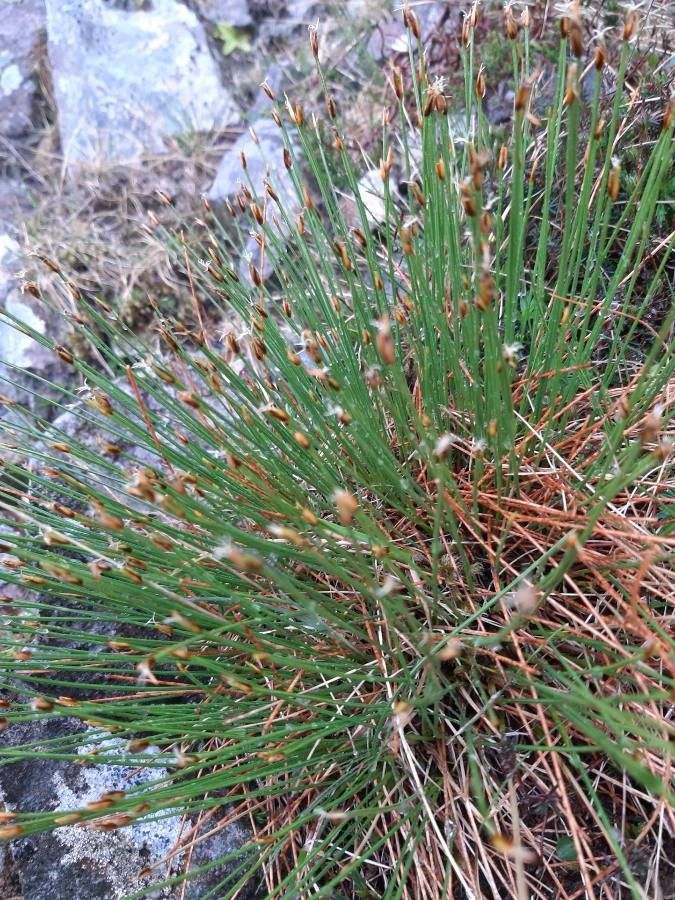
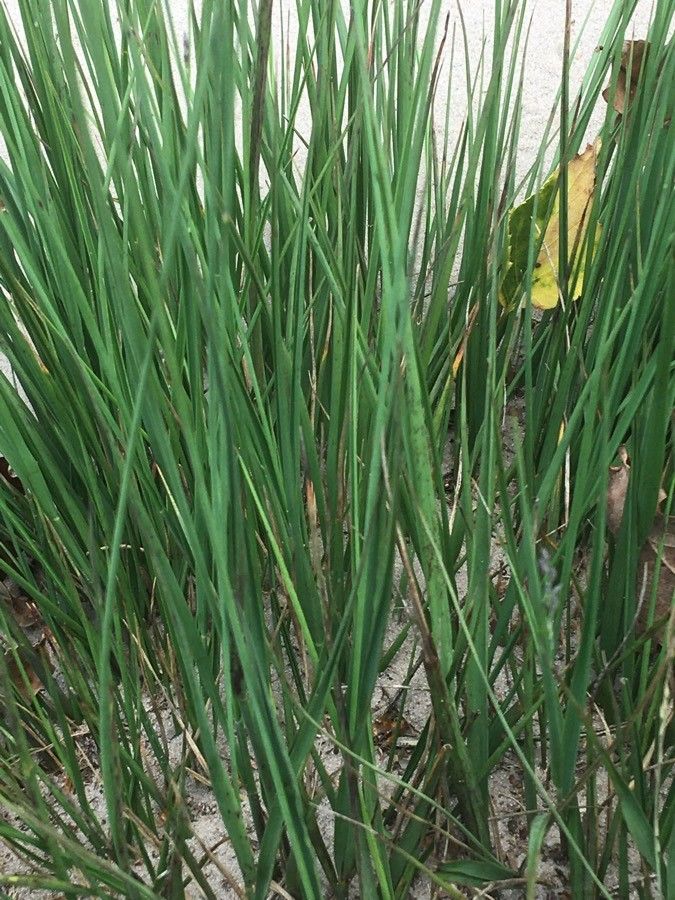
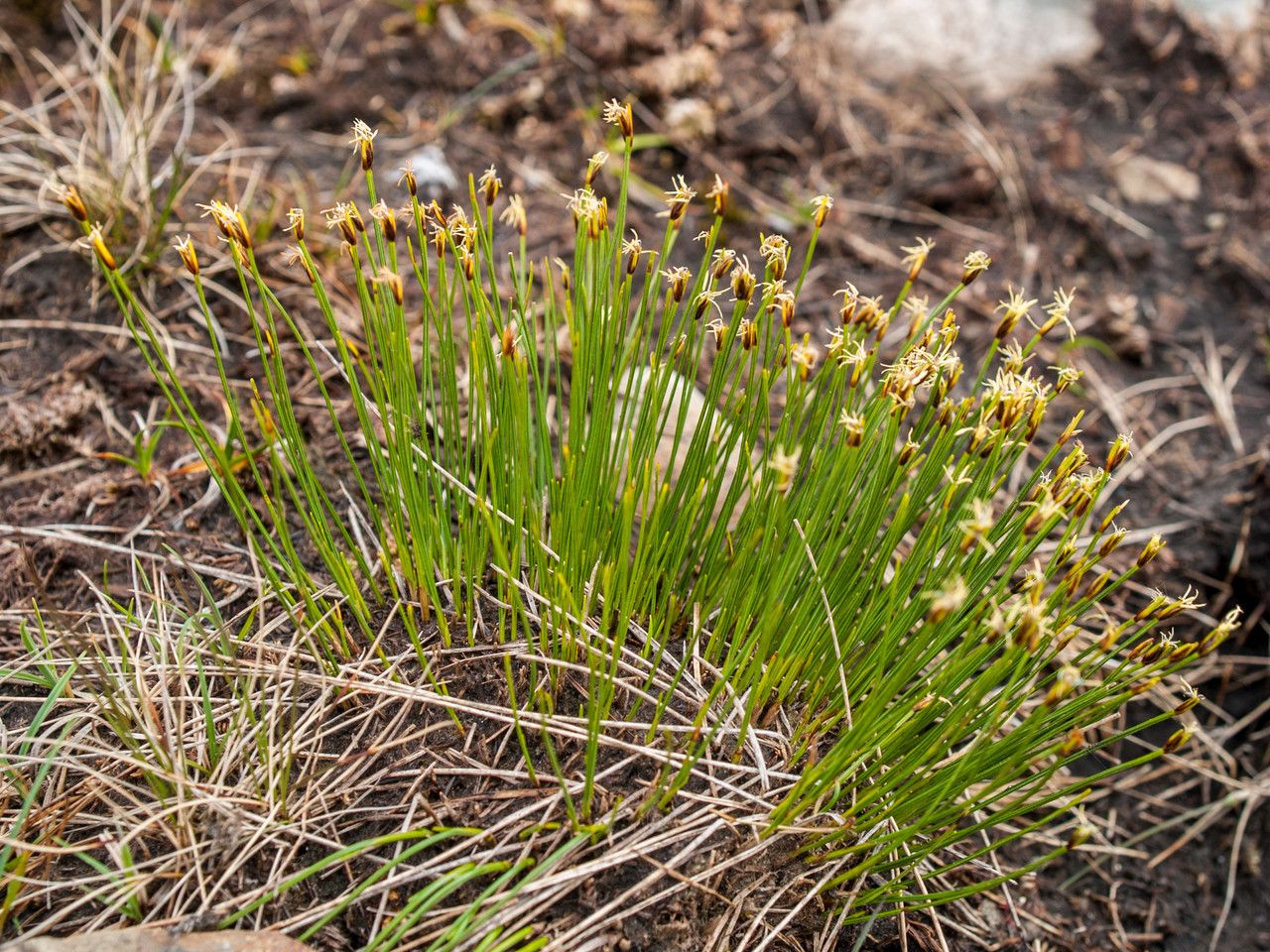
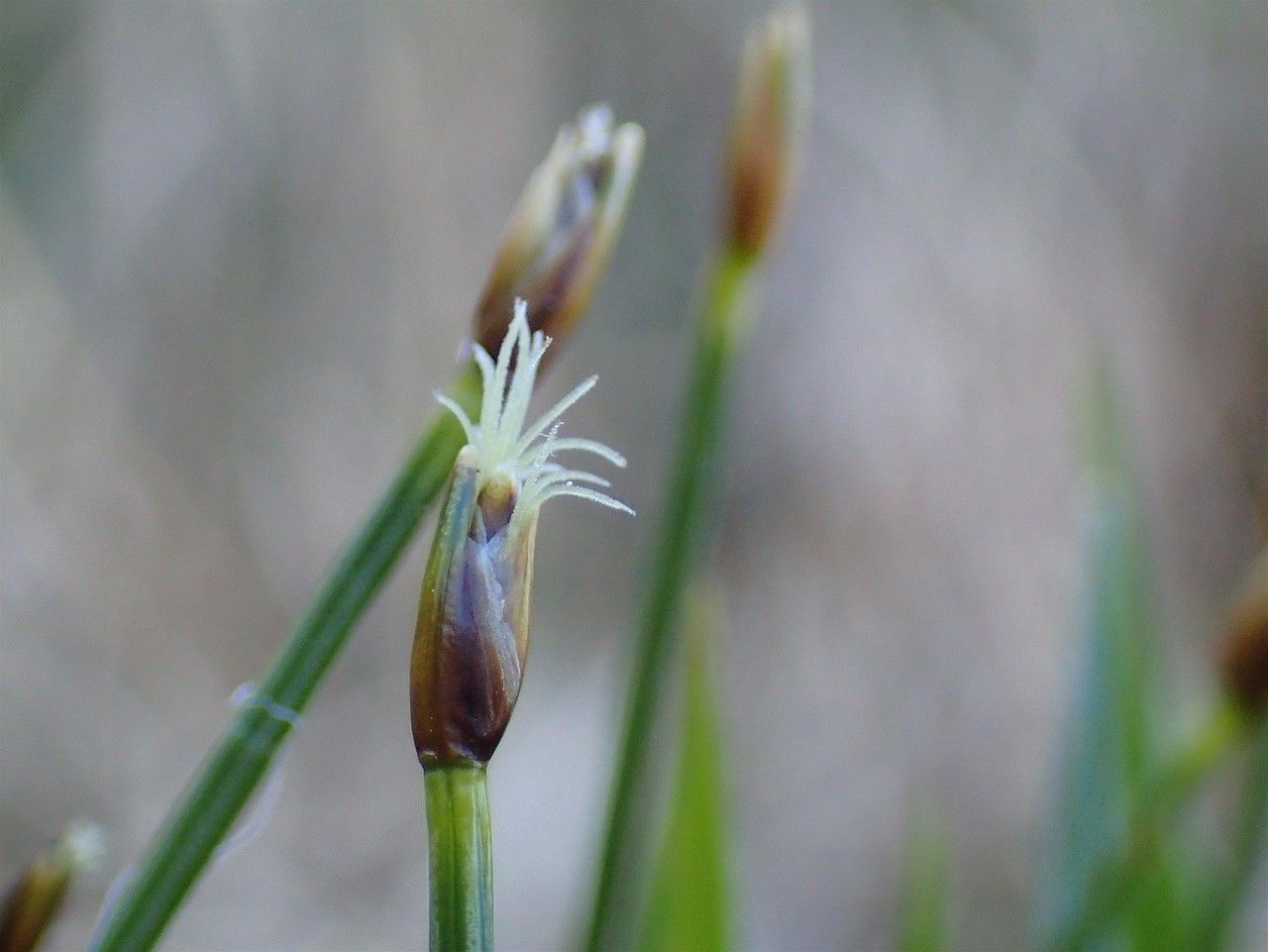
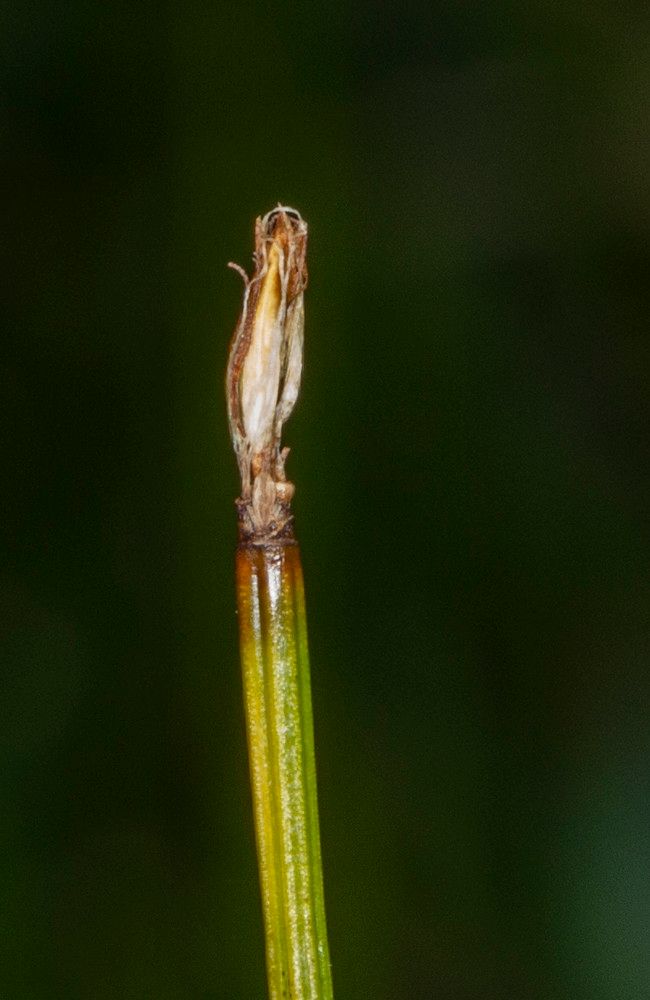
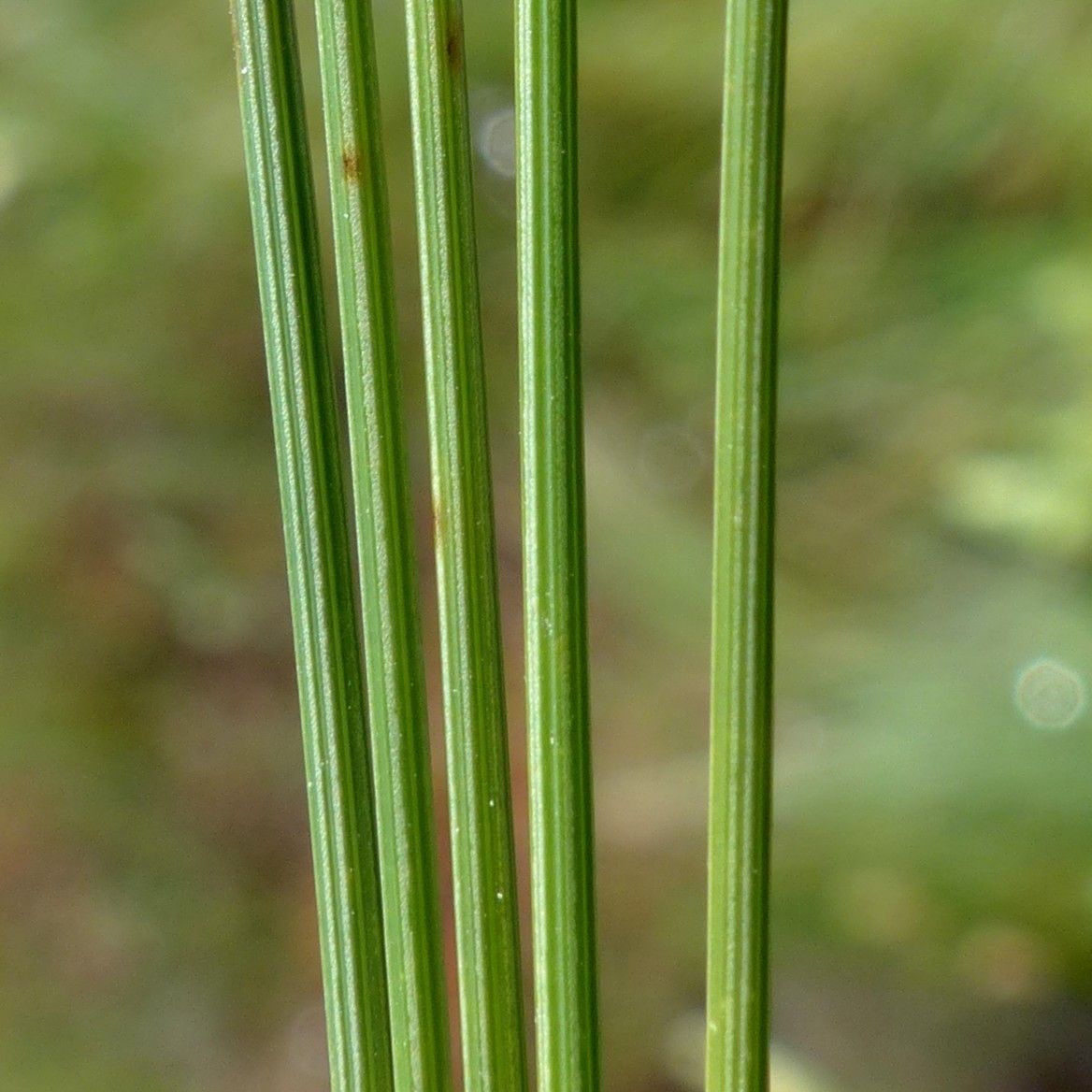
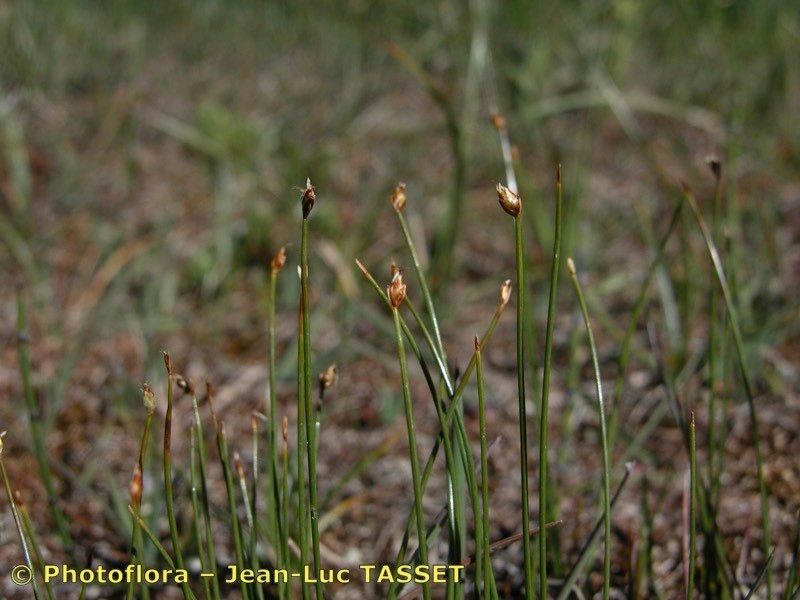
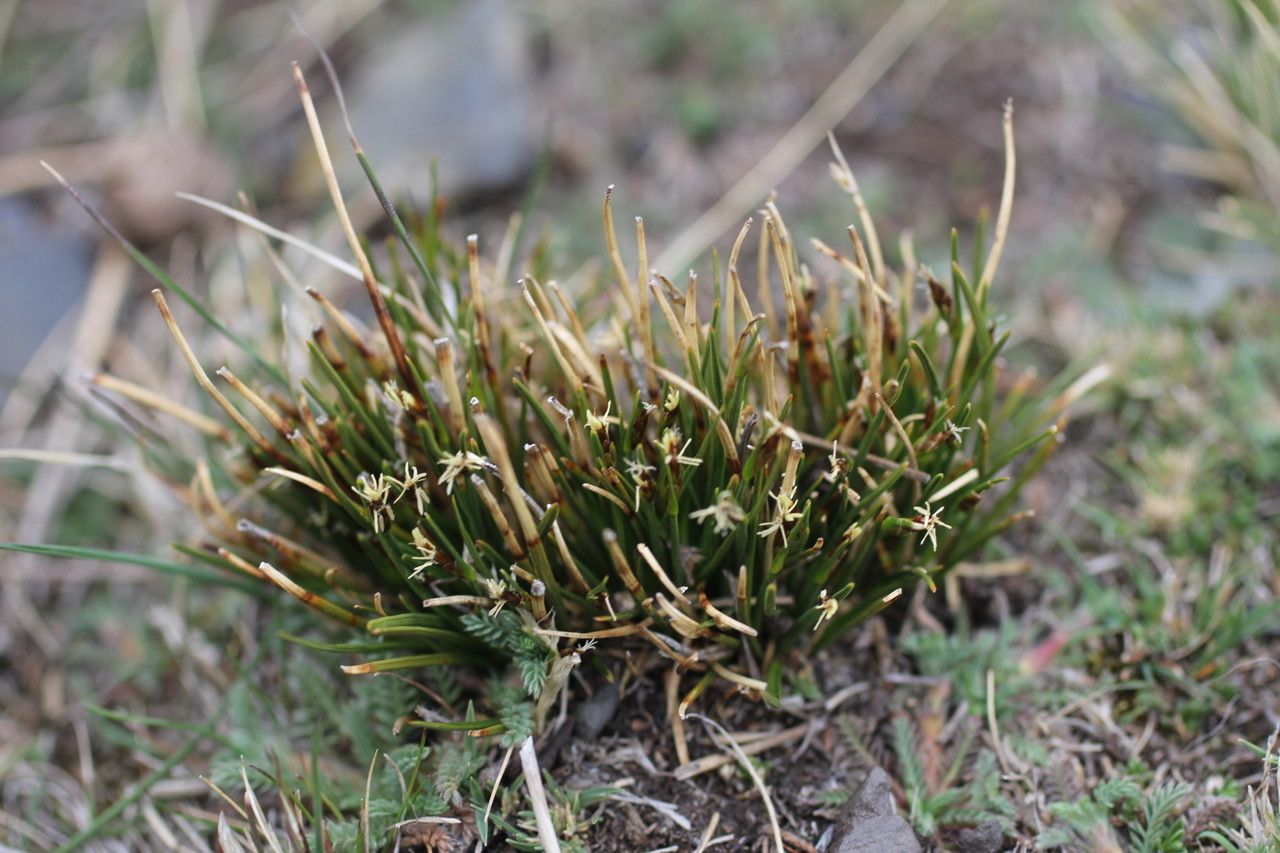
Trichophorum cespitosum, commonly known as deergrass or tussock grass, is a perennial plant species in the Cyperaceae family. Native to Europe and Asia, it thrives in wetlands, bogs, and marshes. This plant has a tufted growth habit with slender stems that can reach up to 60 cm in height. Its leaves are narrow, grass-like, and bluish-green in color.
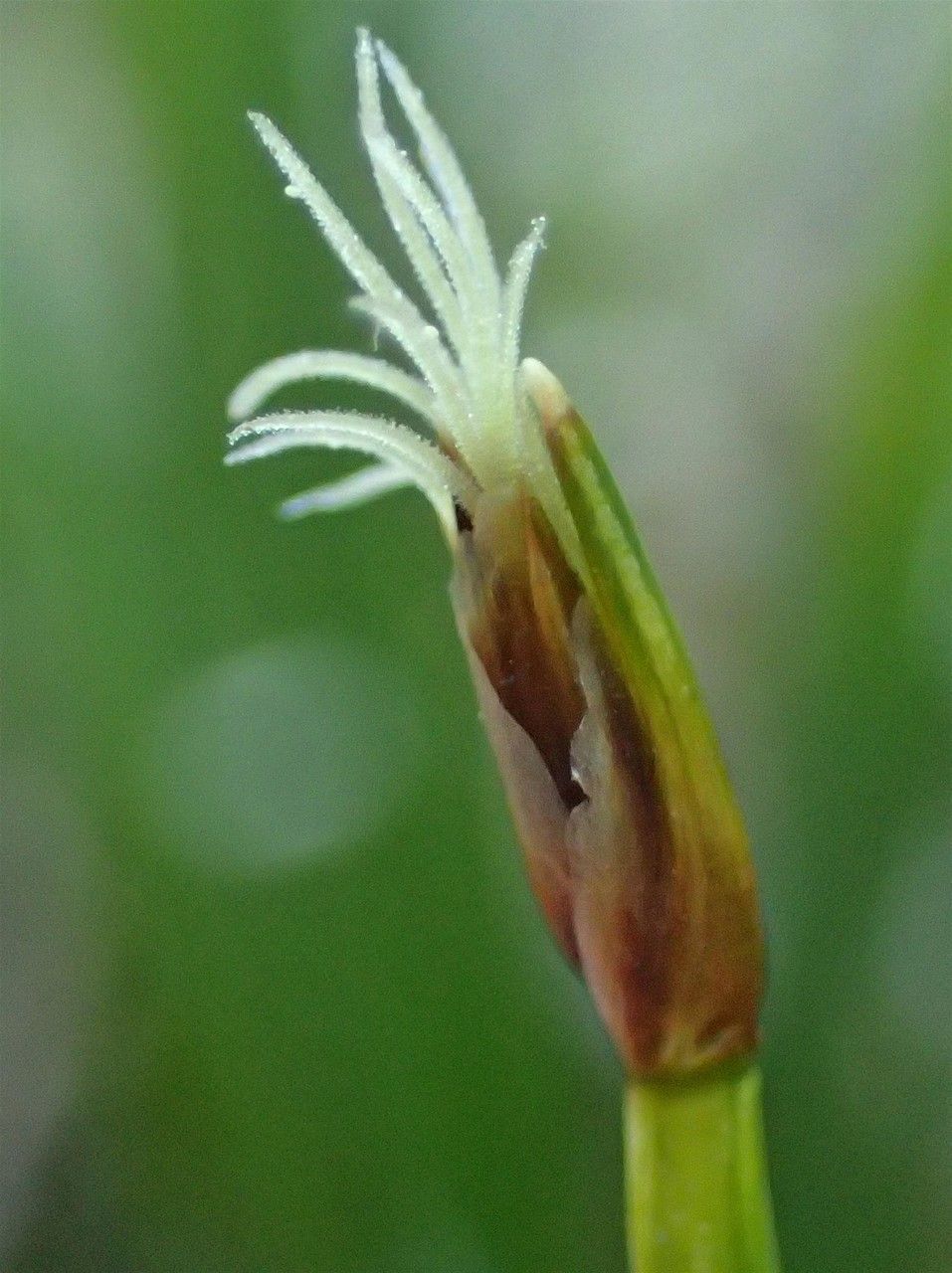
The flowers of Trichophorum cespitosum are small and inconspicuous, with brownish-green spikelets that appear from May to July. The plant produces small seeds that are dispersed by wind or water.
Traditionally, deergrass has been used for various medicinal purposes, such as treating wounds, fever, coughs, and rheumatism among indigenous people of Europe.
Trichophorum cespitosum plays a crucial role in wetland ecosystems by providing habitat for wildlife, including birds and insects. Additionally, it helps prevent soil erosion by stabilizing the soil through its extensive root system.
Overall, Trichophorum cespitosum is an important wetland species due to its ecological significance and traditional medicinal uses. It presents an intriguing subject for further research on ecological conservation and potential medical applications.
How to keep Trichophorum Cespitosum.
Light
Tufted bulrush is a sun-loving perennial herbaceous plant originating in open habitats, often thriving in meadows and grasslands. It prefers full sun but can also tolerate partial sun conditions.
Water
Tufted bulrush flourishes in consistently moist soil and high humidity, requiring weekly watering to maintain optimal health. This species is well-suited for wet environments and thrives in outdoor settings such as rain gardens or waterside plantings, where it can take advantage of seasonal rainfall for growth.
Temperature
Tufted bulrush is native to areas with moderate temperatures, specifically between 41 and 89.6 °F (5 to 32 ℃). It favors this temperature range and is well adapted to survive under these conditions. Seasonally, adjustments to temperature in its care may be necessary to mimic its natural habitat.
Fertilizer
Tufted bulrush benefits from extra nutrients to encourage healthy new growth. In spring, applying compost around the plant’s base can supply the necessary nourishment. Fertilizing supports strong growth and helps the plant resist diseases and pests.
Pruning
Tufted bulrush benefits from being pruned in early spring. This process involves cutting away any dead or damaged stems and trimming back overgrown areas to improve its shape and prevent overcrowding. Pruning in this way helps improve air circulation, reduces the risk of disease, and encourages vigorous new growth. To ensure optimal recovery, it is important to use clean, sharp tools.
Botanical profile.
- Plant Type
- Grass
- Life Cycle
- Perennial
- Genus
- Trichophorum
- Family
- Cyperaceae
- Hardiness Zone
- 5-8
- Mature Height
- 10 cm to 46 cm
- Mature Spread
- 5 cm to 15 cm
- Leaf Color
- Dark Green
- Leaf Type
- Semi-evergreen
- Flower Color
- White, Yellow, Brown
- Flower Size
- 0.51 cm to 0.51 cm
- Bloom Time
- Early summer, Mid summer
- Planting Time
- Summer, Autumn
- Harvest Time
- Late summer, Early fall
- Native Area
- Sweden, Austria, Slovakia, Montenegro, Slovenia, Croatia, Russia, Germany, Iceland, Estonia, Latvia, Belgium, Portugal, Netherlands, France, Czech Republic, Bulgaria, Poland, Serbia, Lithuania, Norway, Italy, Kazakhstan, Spain, Switzerland, Denmark, Japan, Finland, Ireland, United Kingdom, Hungary
Other names.
Reader questions.
What do I do if I give my Tufted bulrush plant too much or too little water?
Proper watering is essential for the performance of this beautiful ornamental grass. When planted in the ground, watering issues can be fixed. However, in a container, too much or too little water can quickly kill Tufted bulrush. Incorrect watering can cause growth stoppage. Overwatering may result in yellow leaves with brown tips, while underwatering can lead to drooping leaves, weak seed head production, and browned leaves. If you suspect improper watering, first determine if it is too much or too little. If it's too much, stop watering immediately and wait for the soil to dry out. Test the soil for moisture when new growth appears and decide if it requires more water. For underwatering, simply give the grass a deep drink to see if it recovers. Always remember that a long, deep watering is better than shallow, frequent waterings. Deep watering encourages deep root growth, making the grass more resistant to drought and watering-related issues.
What are the sunlight requirements for Tufted bulrush?
Tufted bulrush thrives in environments with full sunlight but can also tolerate partial sun conditions. 'Full sun' is defined as areas receiving more than 6 hours of direct sunlight daily, while 'partial sun' refers to about 3-6 hours of sunlight. The plant originates from open habitats like meadows and grasslands, where it enjoys ample exposure to the sun. It's important to observe the movement of sunlight through your garden to find spots that offer the right balance of light and shade, ensuring the well-being of your Tufted bulrush.
What is the native environment of the Tufted Bulrush?
The Tufted Bulrush, also known as Trichophorum cespitosum, is native to environments that experience moderate temperatures, specifically ranging between 41 to 89.6 °F (5 to 32 °C). This plant has adapted well to survive within these temperature conditions. Given its native habitat, it may require seasonal temperature adjustments in its care to closely emulate its natural environment. The Tufted Bulrush displays strong cold resistance, which means it generally does not need special frost protection measures during the winter. However, if temperatures are anticipated to fall below -25°C, cold protection is advisable through measures such as covering the plant with soil or straw. It is also recommended to water the plant abundantly before the first freeze in autumn, ensuring the soil remains moist and enters a frozen state to prevent drought and water scarcity for the plant during winter and early spring.
How often should I water my Tufted bulrush plant?
The watering needs of Tufted bulrush depend on its planting location. Generally, watering once a week is sufficient. In hot climates, watering once or twice a week in the summer may be necessary. In moderate climates, watering once every seven days or more may be enough. Grass in containers typically requires more frequent watering than grass planted in the ground. However, the amount of shade or sunlight the grass receives also affects watering frequency. Shaded grasses need less water compared to grasses planted in the ground. To determine when to water Tufted bulrush, you can check the soil moisture level. If the soil is dry, it's time to water. You can press your finger a couple of inches into the soil to test its dryness. For potted grass, you can use a portable scale to check its weight or simply feel if the pot feels light. Insufficient water can cause the grass blades to fold and appear thinner than usual. Despite its ability to tolerate drought, regular and deep waterings will enhance the grass's color. Although Tufted bulrush can handle extreme heat, bright sun, and intermittent rain in the wild, it still requires care and attention in a garden setting. While you might think it doesn't need watering due to its drought resistance, consistent water is beneficial. When initially planted, the grass will need more frequent watering until its roots establish deeply. For potted Tufted bulrush, the soil dries out quickly, especially if the pot is exposed to hot, direct sun for most of the day. Test the soil every 3 to 4 days and water only when it feels dry. In-ground Tufted bulrush generally requires less watering, but it depends on the soil type. Clay soil retains water, so it may feel dry at the surface while still being moist below. Sandy soils, on the other hand, drain quickly and will need to be watered more often.
How does artificial lighting support Tufted bulrush growth indoors?
For indoor Tufted bulrush plants, or when natural sunlight is insufficient, artificial lighting can be a vital solution for optimal growth. LED lights are a recommended choice for their ability to provide specific wavelengths needed by plants. Full sun plants require 30-50W/sq ft of light, while partial sun plants need 20-30W/sq ft. The light source should be placed 12-36 inches above the plant to mimic natural sunlight and be on for 8-12 hours per day to simulate the natural daylight hours, promoting faster, healthier growth.
What should be done if the Tufted Bulrush experiences temperatures below its tolerance?
The Tufted Bulrush thrives best when temperatures are maintained above 5°C and it demonstrates strong cold tolerance. However, during winter, efforts should be made to keep temperatures above -20°C. If temperatures fall below -25°C, the plant might not show immediate signs of stress during winter, but there could be a decrease in sprouting or a total absence of sprouting in spring. In such cases, any parts of the plant that have failed to sprout by spring should be removed to facilitate new growth.
What things should I be cautious of when watering my Tufted bulrush in different seasons, climates, or during different stages of growth?
To determine if you are watering your grass enough, pay attention to the rate of growth. Tufted bulrush, for example, tends to double in size during the hottest months. If the weather is hot but the grass is not growing well, you may need to adjust your watering schedule. In winter, watering once a month may be sufficient, but check the soil for moisture. During the warmest months, the grass will require more water due to its growth cycle. Conversely, water needs will be significantly lower during winter and cooler months. Remember to let the soil completely dry out before watering Tufted bulrush.
What are the symptoms of inadequate lighting for Tufted bulrush?
Tufted bulrush shows several symptoms when exposed to inadequate lighting, including smaller new leaves, leggy or sparse growth, early leaf drop to conserve resources, halted or delayed growth, paler new leaves indicating lack of chlorophyll, and conditions like chlorosis, sunscald, leaf curling, wilting, and leaf scorching. These symptoms reflect the plant's struggle with insufficient sunlight, affecting its health and growth. Chlorosis, for example, demonstrates the breakdown of chlorophyll due to excessive sunlight or other stressors, hindering the plant's photosynthesis process.
How should the Tufted Bulrush be cared for in high temperatures?
During the summer months, it's important to ensure that the Tufted Bulrush is kept in environments where temperatures do not exceed 32°C. Exposure to temperatures above 35°C can result in the leaves becoming lighter in color, prone to curling, susceptible to sunburn, and in severe cases, can lead to the entire plant wilting and becoming dry. To care for the Tufted Bulrush in such conditions, sunburned and dried-up parts of the plant should be trimmed away. Additionally, moving the plant to a location that provides shade during the midday and afternoon sun, or using a shade cloth to create such conditions, can be beneficial. It's also recommended to water the plant in the morning and evening to maintain soil moisture.
What are the solutions for Tufted bulrush experiencing inadequate sunlight?
To address insufficient sunlight for Tufted bulrush, indoor solutions include gradually moving the plant to a sunnier spot to receive at least 6 hours of direct sunlight daily or using artificial lighting like desk or ceiling lamps for at least 8 hours a day. For outdoor plants, it's crucial to adapt them to sunnier spots gradually to prevent sunburn. Reducing light obstructions can involve pruning obstructing trees or transplanting the bulrush during its dormant period to a location with ample sunlight. Note that parts of the plant damaged by inadequate light might not recover, but new growth will be healthy with improved light conditions.