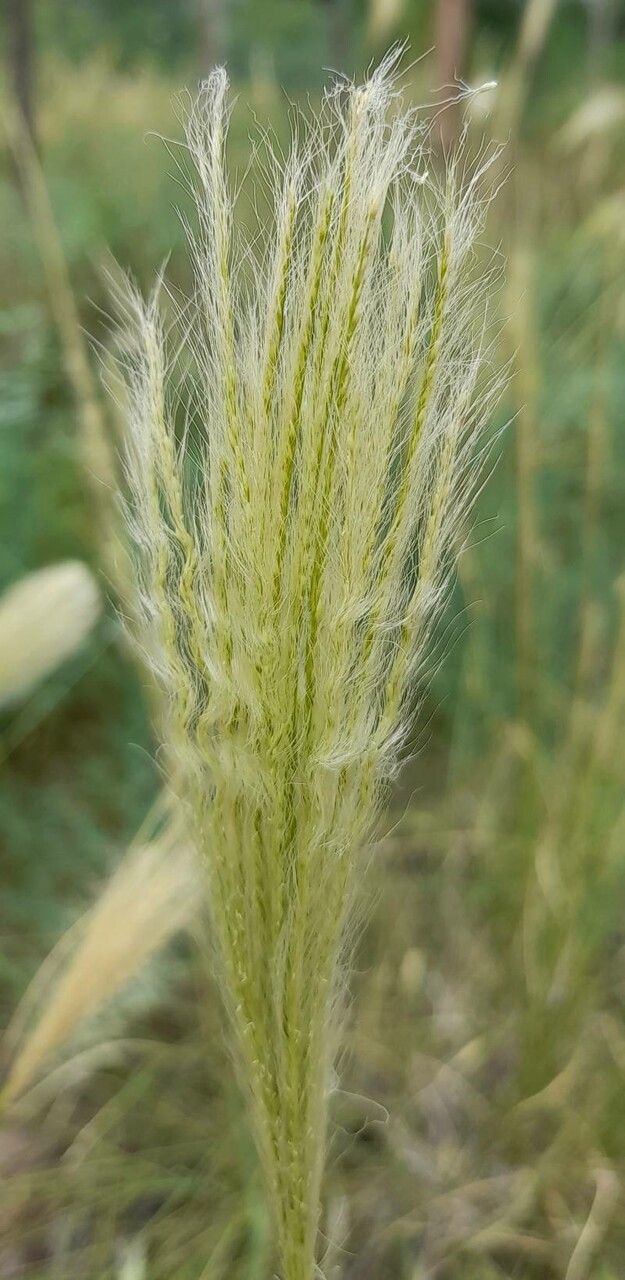
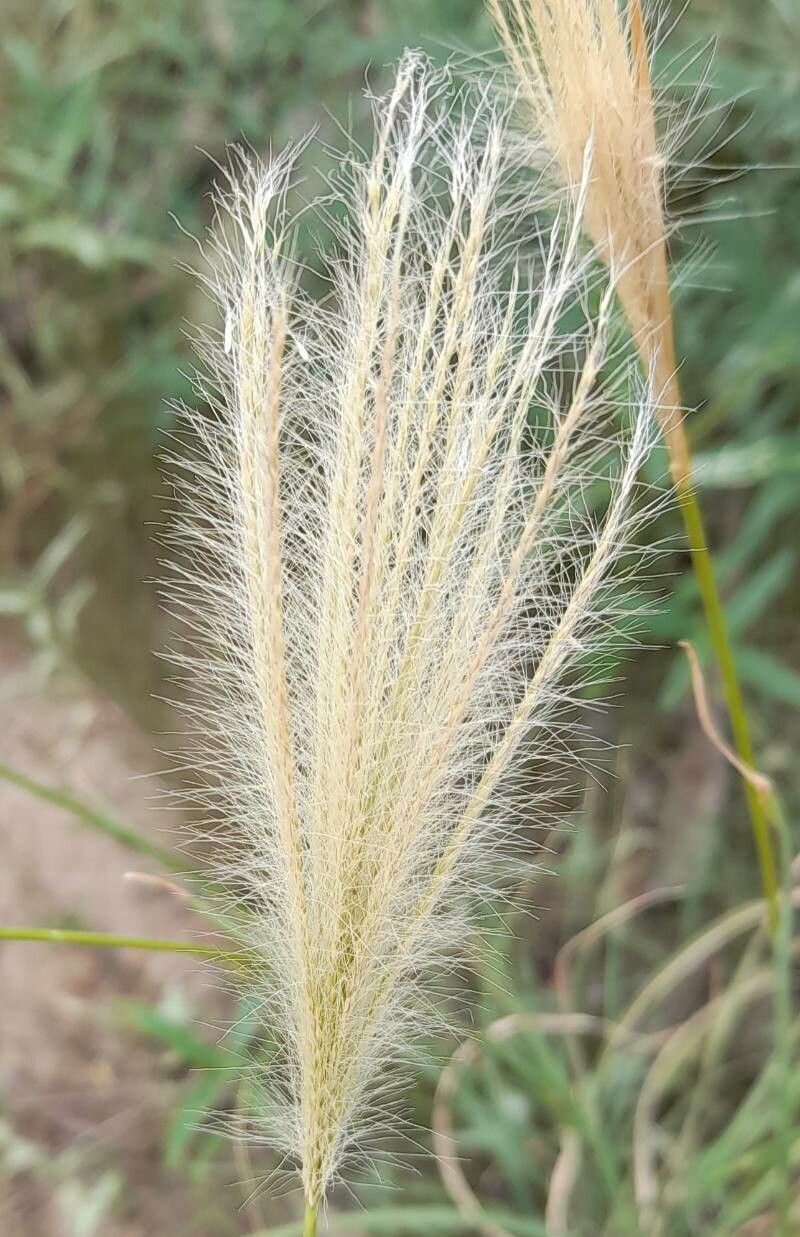
Trichloris crinita is a species of grass known by the common name false Rhodes grass. It is native to the Americas, where it occurs in the southwestern United States, northern Mexico, and parts of Argentina.This perennial grass reaches up to 1 meter tall. It sometimes spreads via stolons. The rough-haired leaves are up to 20 centimeters long by 1 centimeter wide. The panicle is a cluster of up to 20 branches arranged in tight whorls. Each branch is up to 15 centimeters long and lined with tiny spikelets. Each spikelet has one bisexual and one or two sterile flowers.This species is a common forage grass on dry plains in Argentina. In the US it is used for range revegetation.
False rhodes grass is disease-resistant and usually not susceptible to illnesses. Regarding care, the plant is fairly low-maintenance. When grown outdoors it needs only minimal watering, and larger specimens typically do not require pruning. Smaller plants, however, should be pruned after they finish blooming. False rhodes grasst is appropriate for anyone with an outdoor area like a garden or deck and does not demand extensive care experience.
How to keep Trichloris Crinita.
Light
False rhodes grass is a sun-loving perennial herbaceous plant native to open habitats, commonly found in meadows and grasslands. It prefers full sun but can also tolerate partial sun conditions.
Temperature
False rhodes grass demonstrates good temperature adaptability, tolerating high heat and considerable temperature fluctuations. In hot weather, you should pay attention to watering and supply suitable shade to avoid sunburn. On the other hand, False rhodes grass has relatively poor cold tolerance; it can endure some cold, but excessively low temperatures may result in frost damage.
Fertilizer
False rhodes grass needs extra nutrients to encourage healthy new growth. In spring, placing compost around the plant's base will effectively supply the necessary nutrition. Fertilizing supports vigorous growth and helps the plant resist diseases and pests.
Pruning
False Rhodes grass is well-suited to arid regions, thanks to its drought tolerance. To promote healthy growth, prune it in early spring. This involves removing dead stems and thinning the plant for better air circulation. Use sharp, disinfected tools for clean cuts, which will enhance both its ornamental appeal and resilience.
Botanical profile.
- Plant Type
- Grass
- Life Cycle
- Perennial
- Genus
- Trichloris
- Family
- Poaceae
- Hardiness Zone
- 8-11
- Mature Height
- 30 cm to 91 cm
- Mature Spread
- 20 cm to 40 cm
- Leaf Color
- Green
- Leaf Type
- Evergreen
- Flower Size
- 10.16 cm to 15.24 cm
- Bloom Time
- Summer
- Planting Time
- Spring
- Harvest Time
- Late summer, Early fall, Mid fall
Other names.