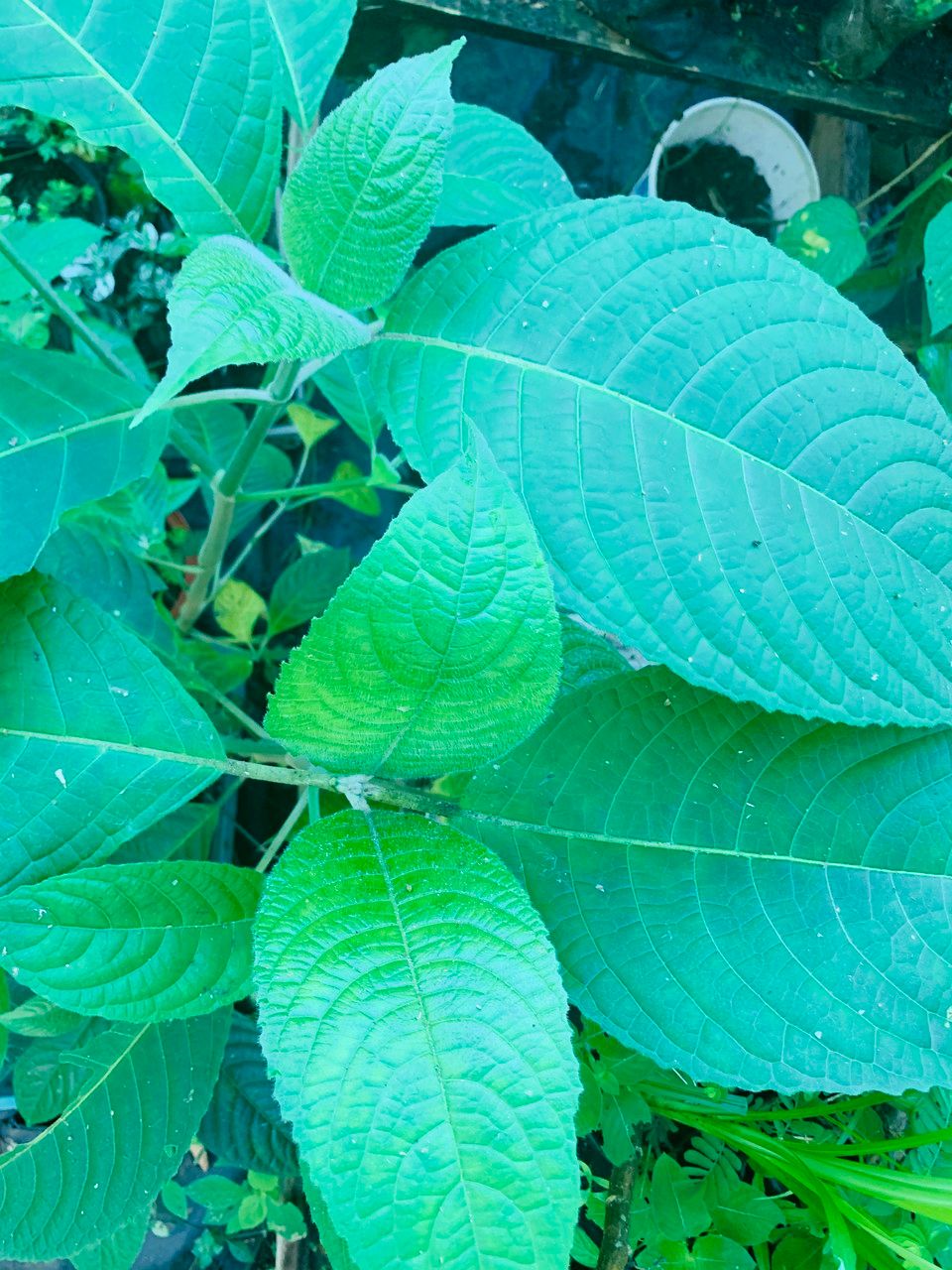
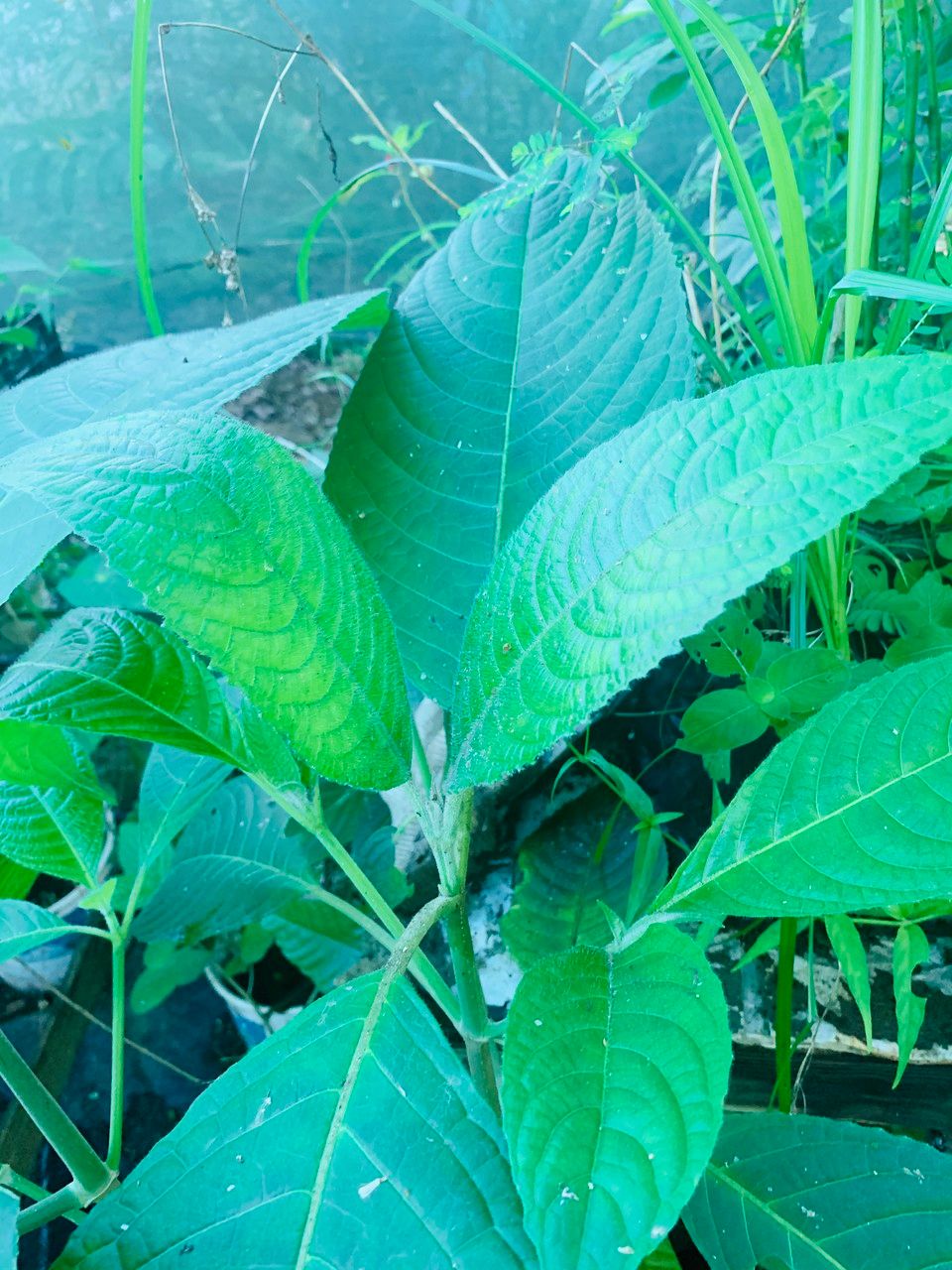
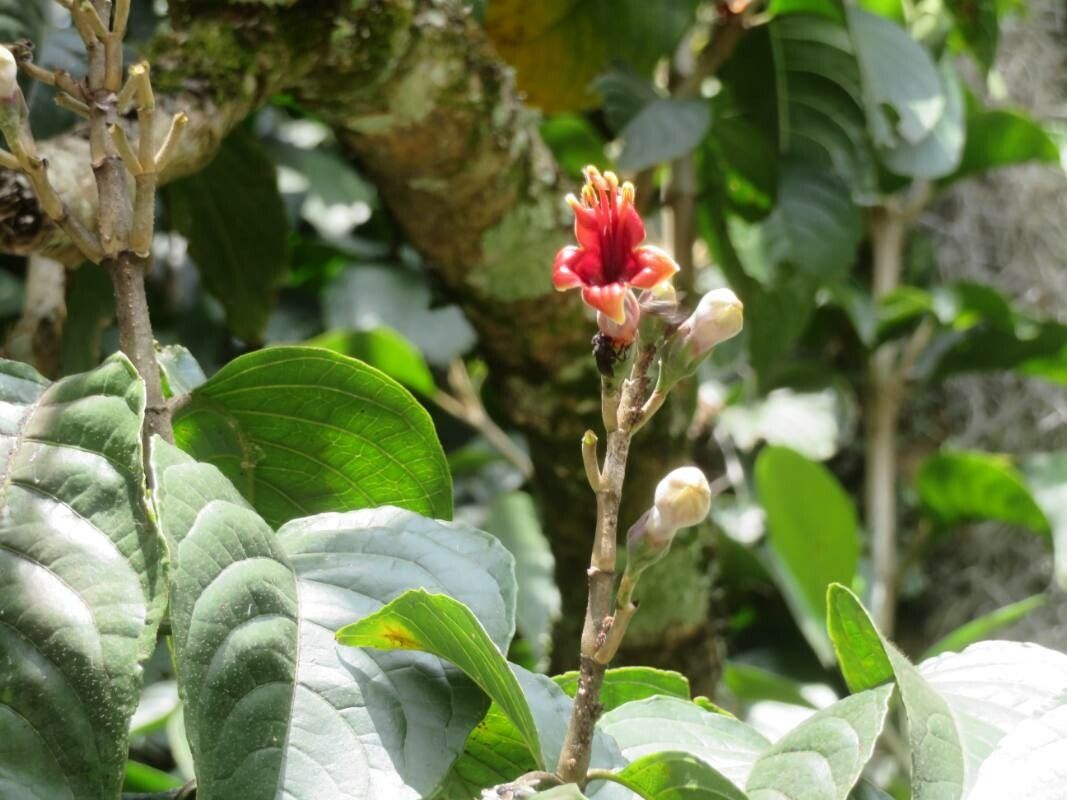
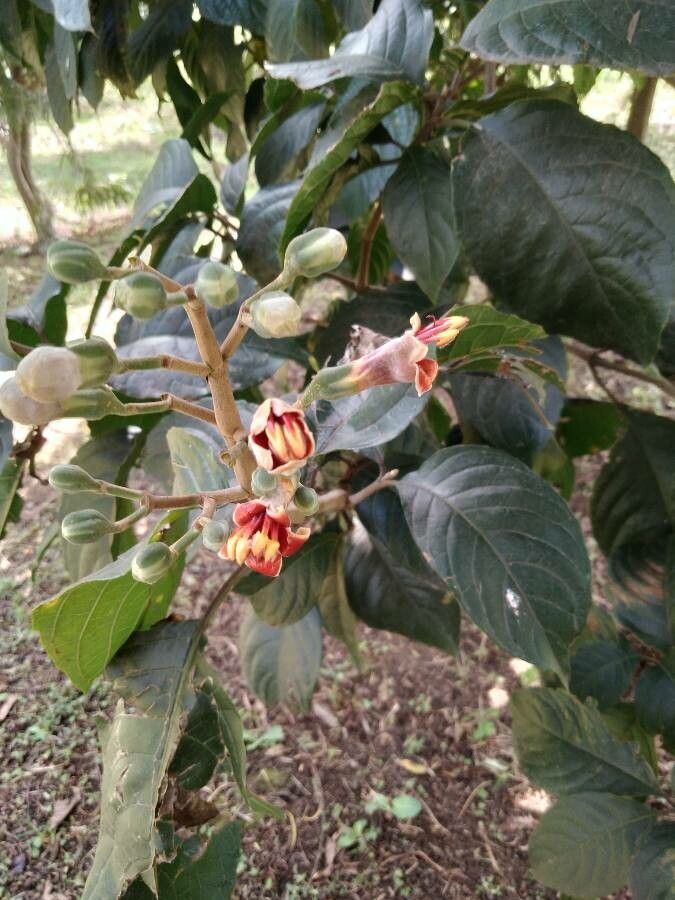
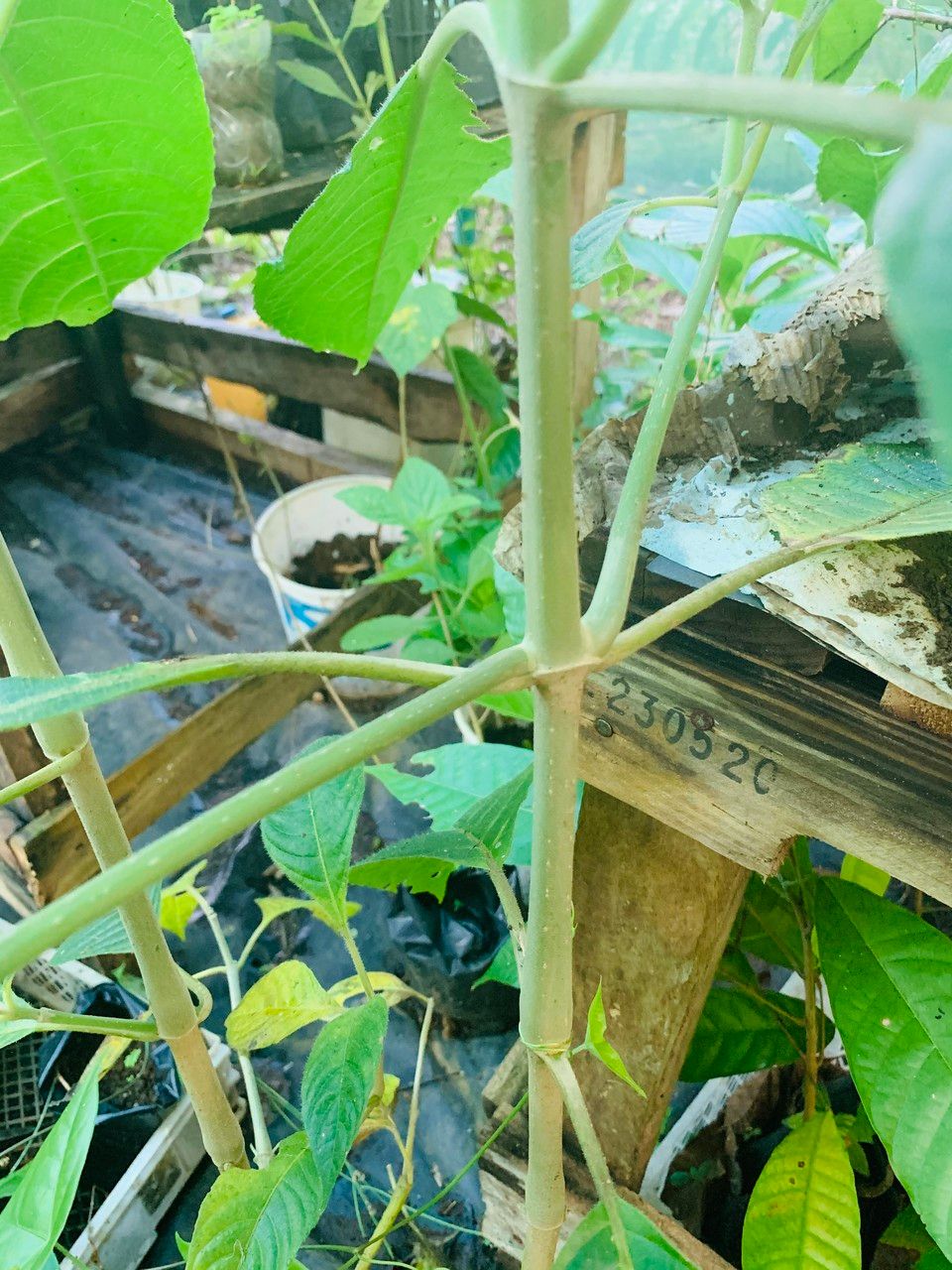
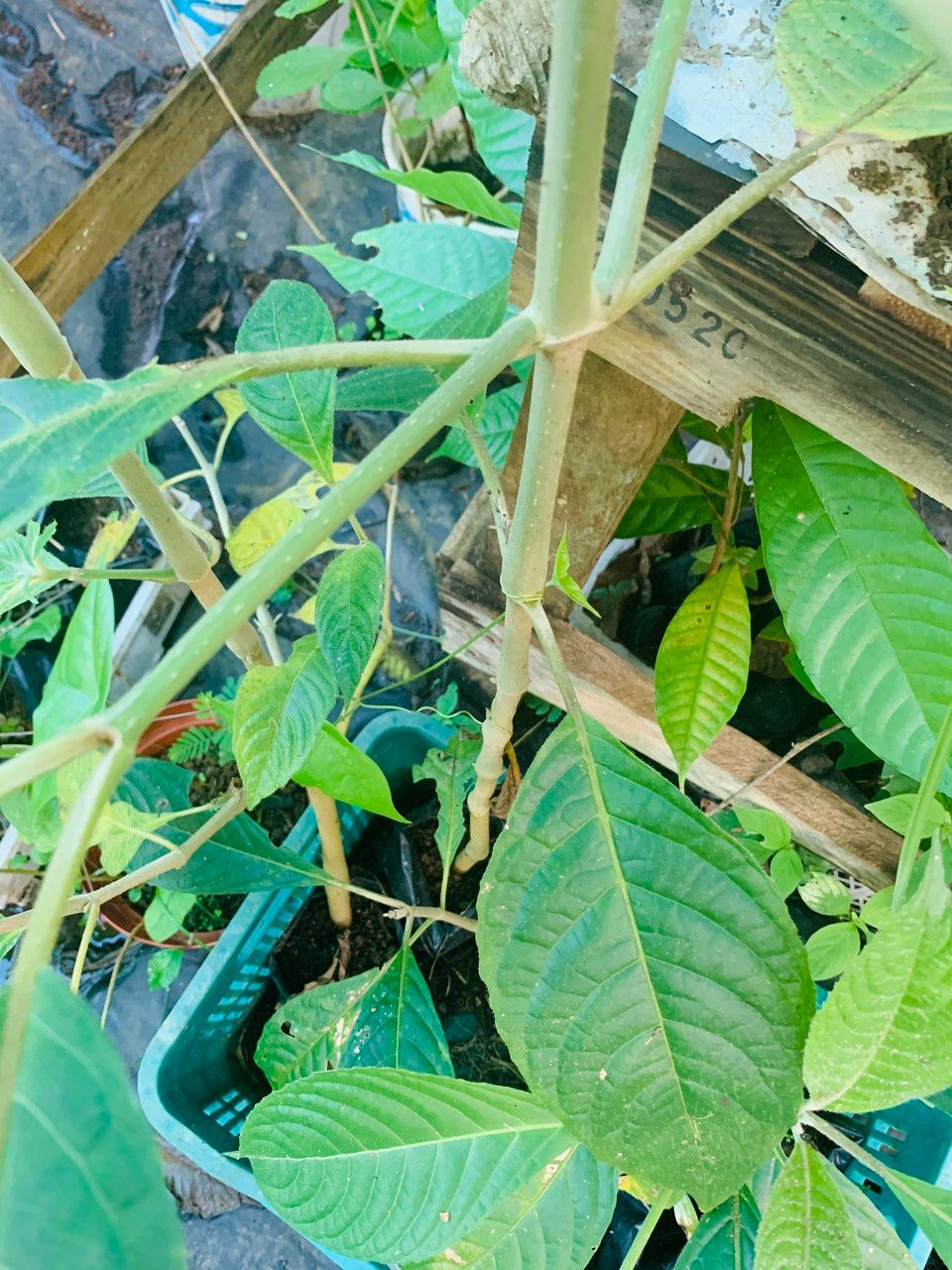
Trichanthera gigantea is a species of flowering plant in the acanthus family, Acanthaceae. The species is known by many common names, including madre de agua, suiban, cenicero, tuno, naranjillo, and palo de agua. It is native to Central America and northern South America. It has also been introduced to other tropical regions such as Vietnam, Cambodia, and the Philippines.This plant is a shrub or tree growing up to 5 meters tall, though a 15-meter specimen was reported once. It often produces aerial roots. The oval or oblong leaves are up to 26 centimeters long by 14 wide and are borne on short petioles. The flower is maroon with a yellow throat. It is bell-shaped and the throat measures up to 2.5 centimeters long. The plant blooms in the afternoon and the flowers fall away during the night. The flowers are pollinated by bats. The bat Glossophaga soricina has been seen at the flowers of this species.This plant is cultivated as an animal fodder and fed to ducks, pigs, and rabbits. Its leaves are relatively rich in protein. It has veterinary uses in Colombia, where it has been used to treat horse colic and retained placenta in cows. This plant also has many uses for humans. It has uses in human medicine, including as a supplement to increase lactation in nursing mothers. It is used as a living fence and a shade tree.
Trichanthera gigantea has good resistance to disease and is generally not prone to illnesses. Regarding care, this plant is fairly low-maintenance. When grown outdoors it needs only minimal watering, and larger plants typically do not require pruning. However, smaller plants should be pruned after they have bloomed. Trichanthera giganteat is suitable for anyone with an outdoor space, such as a garden or deck, and does not demand much experience in plant care.
How to keep Trichanthera Gigantea.
Light
Trichanthera gigantea naturally occurs in habitats like forest understories or rocky areas, where it grows under natural shade. It prefers partial sun but can adjust to full sun or full shade, reflecting its versatile and hardy nature.
Temperature
Trichanthera gigantea is native to tropical areas, where the climate is generally warm and humid. Consequently, it is well adapted to high temperatures and humidity. It does not tolerate sudden temperature changes and prefers a stable thermal environment, so avoiding temperature fluctuations indoors is important. It typically cannot withstand cold and requires higher temperatures to grow. If the surrounding temperature falls too low, the plant may stop growing or even die.
Fertilizer
Fertilization is essential for caring for Trichanthera gigantea. Consistent feeding during the growing season preserves the energy required for its showy foliage and supports overall growth. Failing to fertilize can lead to unhealthy leaves, reduced ornamental value, and stunted or weak growth that is prone to breaking.
Botanical profile.
- Plant Type
- Shrub
- Life Cycle
- Perennial
- Genus
- Trichanthera
- Family
- Acanthaceae
- Hardiness Zone
- 10-12
- Mature Height
- 0.01 m to 15 m
- Mature Spread
- 3.05 m to 6.1 m
- Leaf Color
- Green
- Leaf Type
- Evergreen
- Flower Color
- Tan, Yellow
- Flower Size
- 4.06 cm to 6.35 cm
- Bloom Time
- All year round
- Planting Time
- Summer
- Harvest Time
- All year round
- Native Area
- Colombia, Venezuela, Peru, Guyana, Brazil, Ecuador, Suriname, Costa Rica, Panama
Other names.