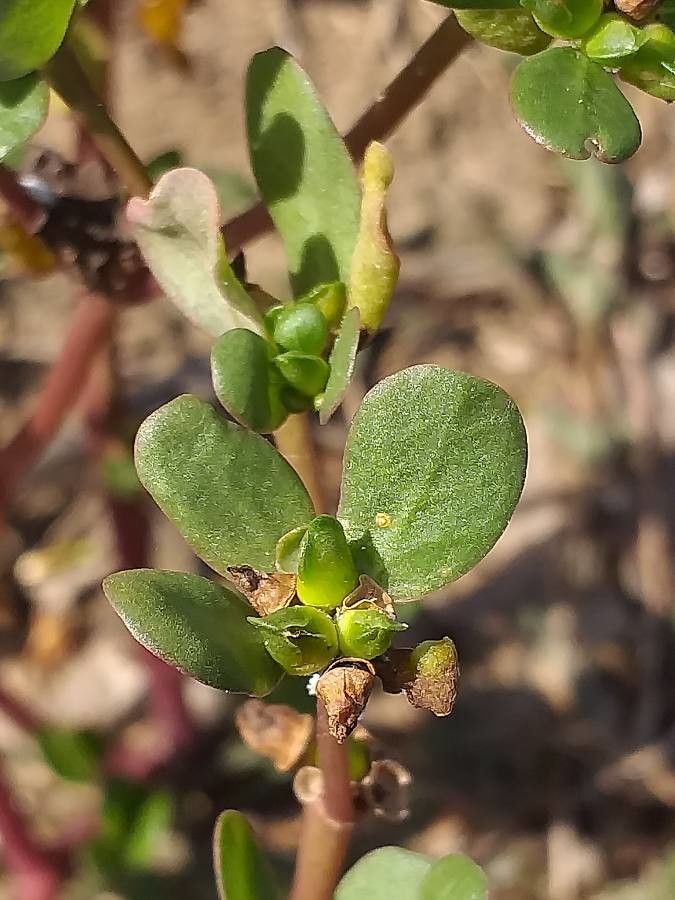
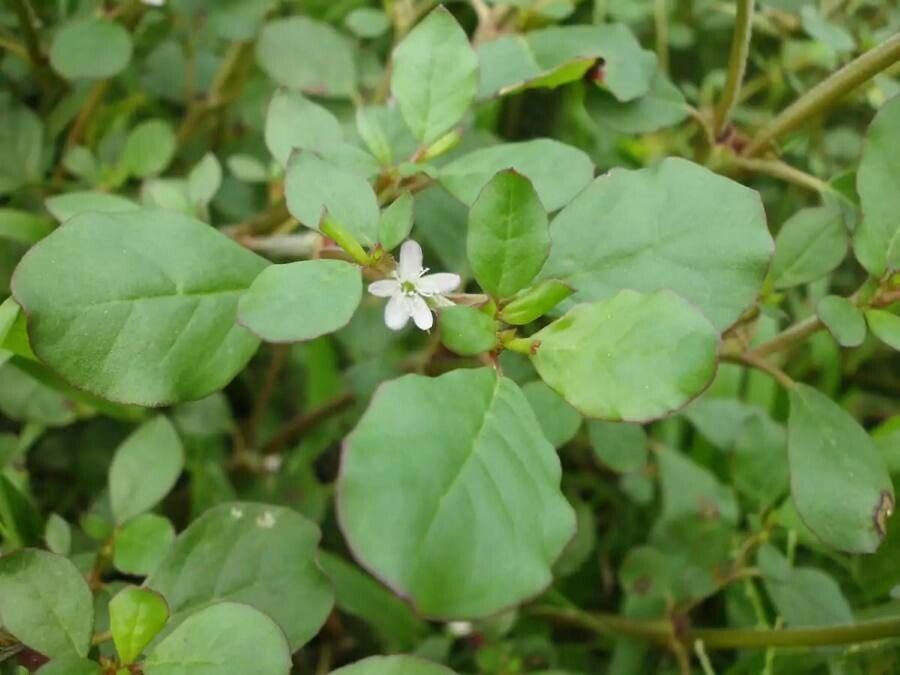
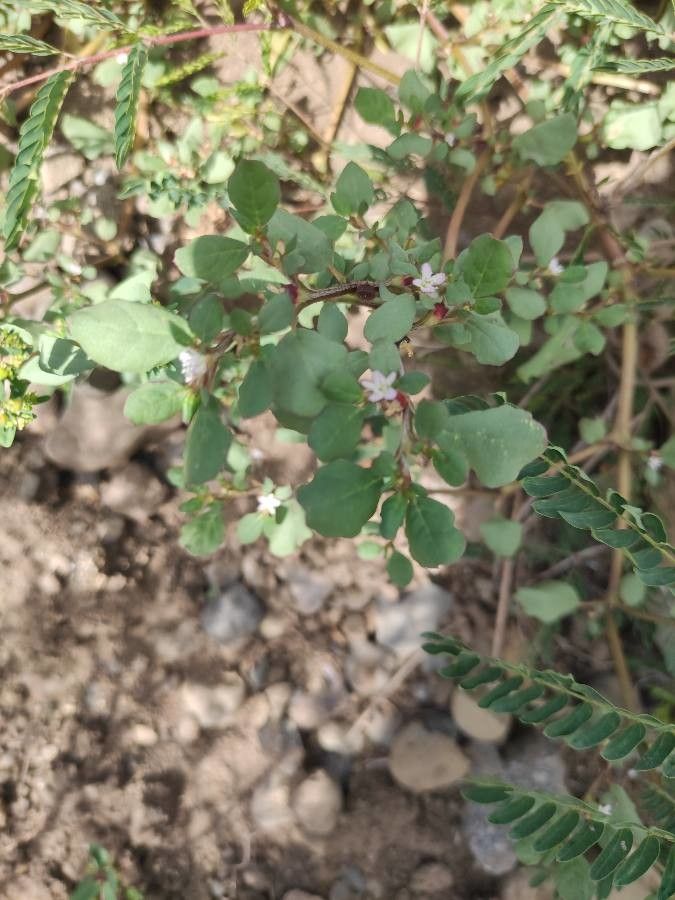
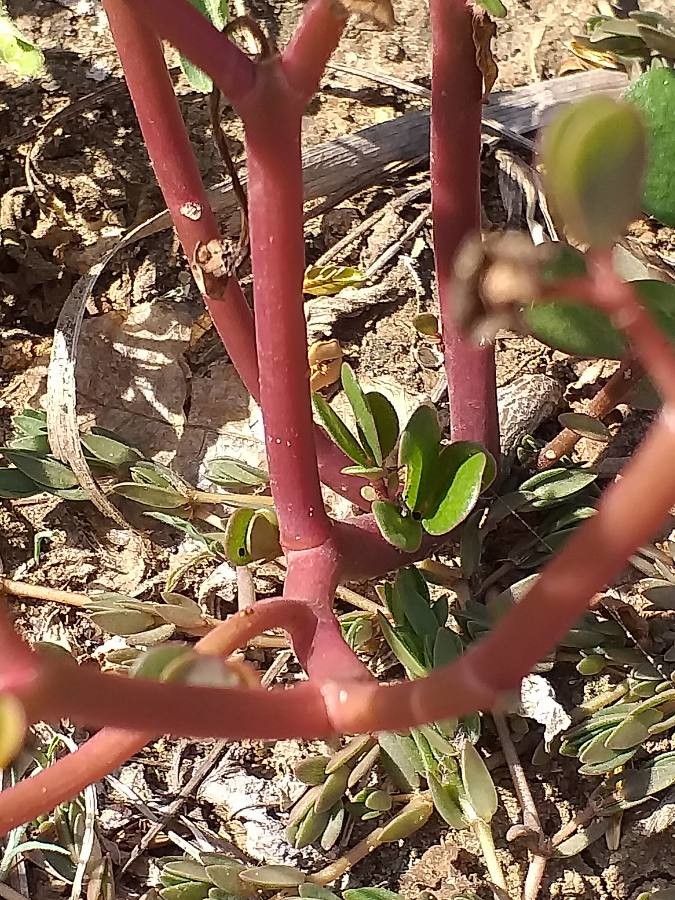
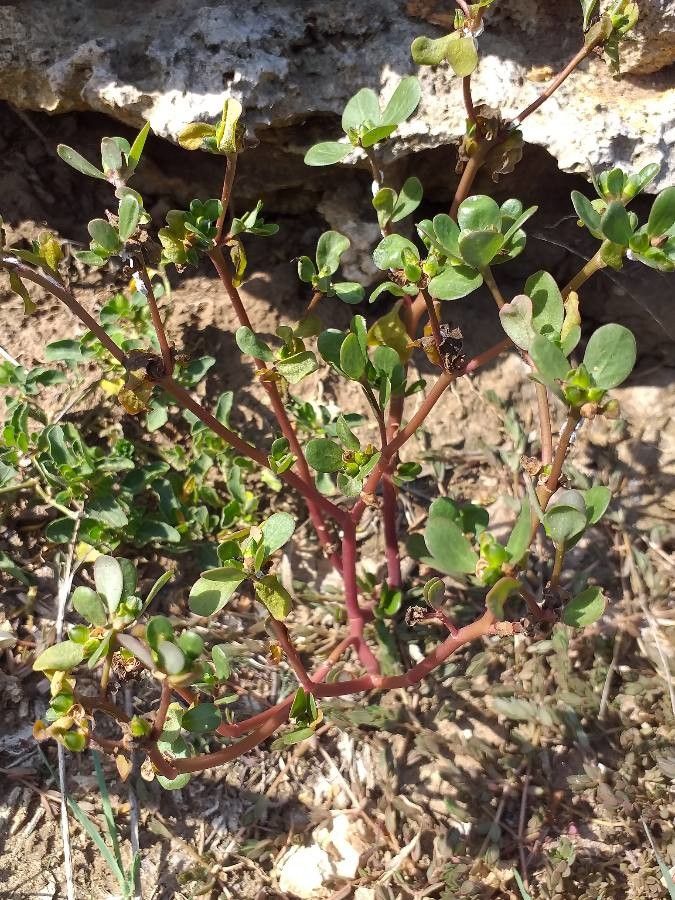
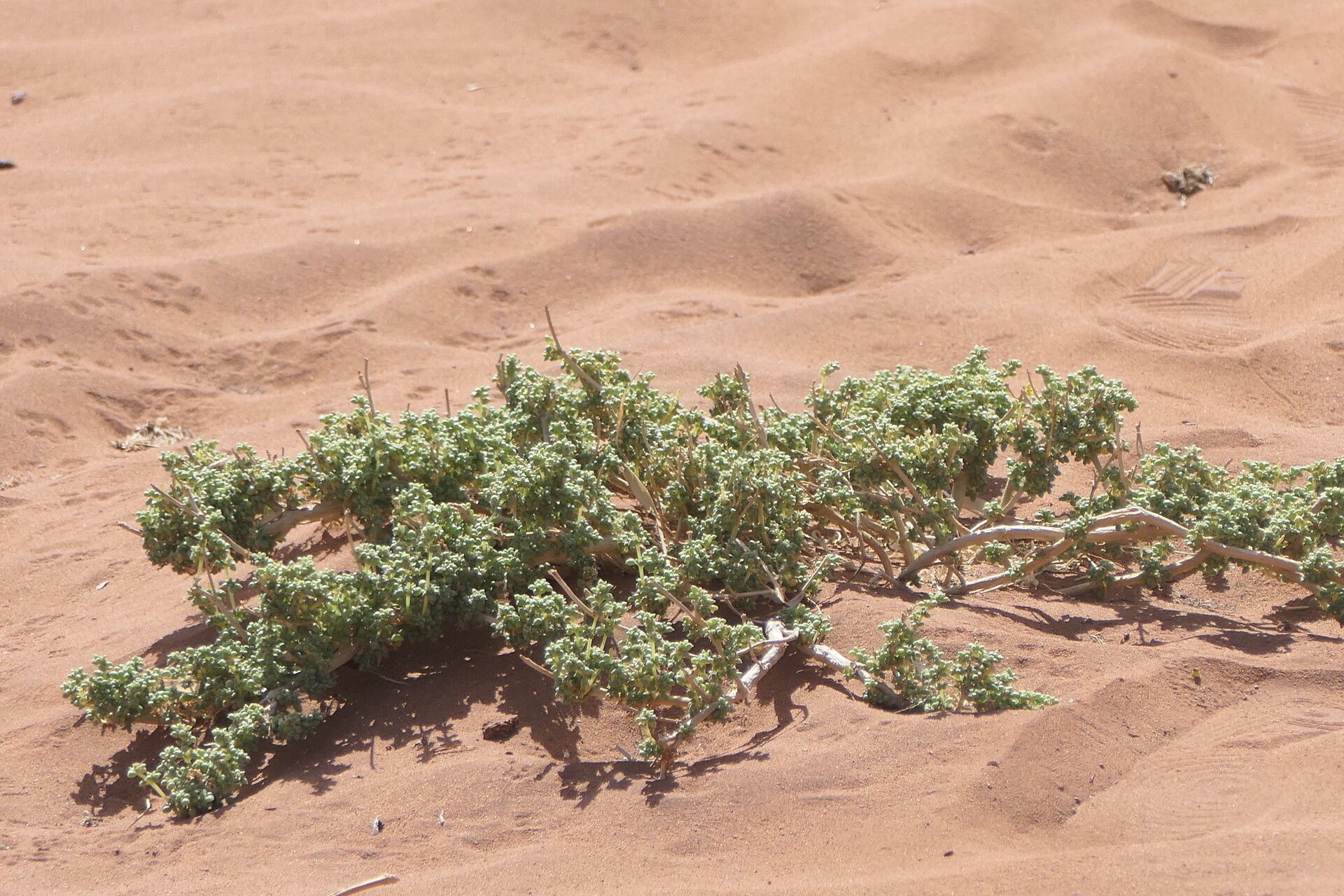
Trianthema portulacastrum, commonly known as desert horse purslane, is a small annual herbaceous plant that belongs to the Aizoaceae family. It is native to tropical and subtropical regions of Africa, Asia, and Australia. The plant has a prostrate growth habit, featuring succulent stems that can reach up to 50 cm in length. Its leaves are small, fleshy, and exhibit a greenish-grey color.
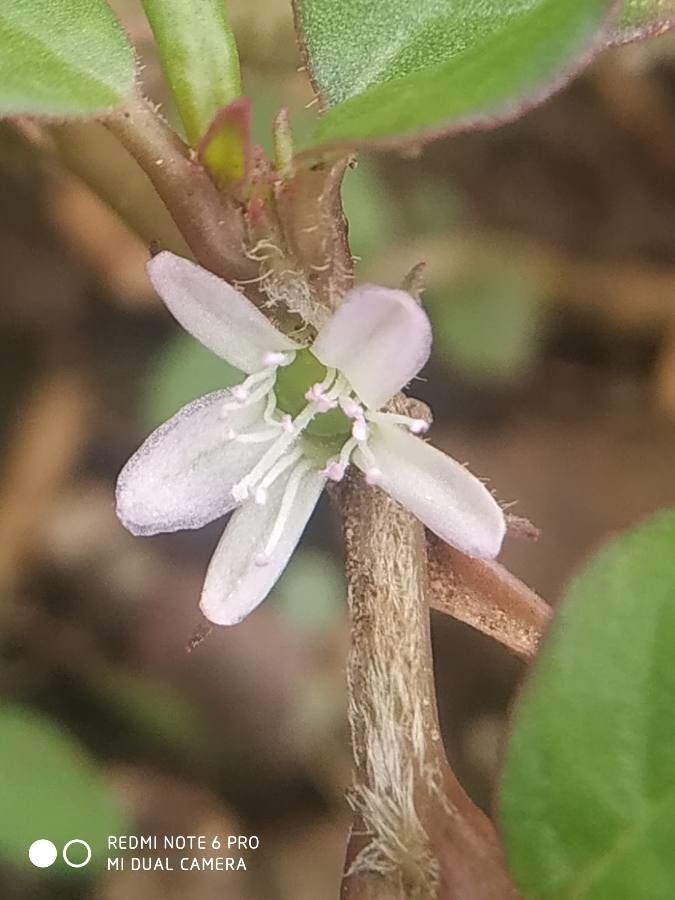
The flowers of Trianthema portulacastrum are small and inconspicuous, with five white or pinkish petals that bloom from July to September. The plant produces a capsule fruit that contains numerous tiny seeds.
Trianthema portulacastrum possesses various medicinal properties, including anti-inflammatory, analgesic, and antipyretic effects. These attributes make it useful in traditional medicine for treating ailments such as fever, and pain relief from rheumatism or arthritis.
This plant can thrive in sandy soils with full sun exposure but also tolerates partial shade conditions. While it is drought-tolerant, regular watering during its growing season is necessary for optimal growth.
Overall, Trianthema portulacastrum is a fascinating herbaceous plant due to its medicinal properties, which make it valuable for traditional medicine. Additionally, its succulent leaves and delicate flowers make it an attractive addition to gardens. It is an excellent choice for gardeners seeking low-maintenance plants that offer both beauty and health benefits.
Desert Horse-purslane is fairly disease-resistant and typically does not suffer from many illnesses. However, it can still be affected by pests and diseases present in its surroundings. Such infections are generally mild. In terms of care, this plant requires moderate maintenance. Regular pruning is necessary to preserve an attractive appearance and support healthy growth. Applying fertilizer can also encourage flowering. Desert Horse-purslane is suitable for people with outdoor spaces, such as a garden or patio, and does not demand extensive care experience. It may require more attention when grown indoors.
How to keep Trianthema Portulacastrum.
Light
The desert Horse-purslane grows best in locations that receive a large amount of sunlight each day. Although it can tolerate periods of increased shade, extended exposure to such dimmer light can impair its healthy growth. Excessive sun exposure can cause the plant’s leaves and flowers to appear less vibrant and healthy.
Water
Desert Horse-purslane, a plant native to arid regions, is exceptionally drought-tolerant, storing water in its thick, fleshy leaves. For optimal growth, it should be watered once a week. It thrives best when grown outdoors with full sun exposure, making it an ideal choice for xeriscaping, as it helps minimize the need for irrigation.
Temperature
Desert Horse-purslane prefers temperatures of 68 to 95 °F (20 to 35 ℃). Although it is suited to warmer climates, adjustments in care can help it tolerate cooler seasons. Keep a close eye on temperatures to preserve its health.
Fertilizer
Desert Horse-purslane does well with frequent, dilute fertilizer applications to encourage healthy leaf development. You should fertilize Desert Horse-purslane roughly once a month during the summer. Nitrogen is important for foliage, and providing nitrogen-rich sources helps Desert Horse-purslane prosper.
Pruning
Desert Horse-purslane is characterized by its succulent leaves and its ability to spread widely. To promote healthy growth, prune the plant from early to late spring. This involves removing dead stems and any excessive growth to improve air circulation. Pruning before the plant flowers not only enhances the blooms but also prevents it from becoming invasive, resulting in a more robust and manageable plant.
Botanical profile.
- Plant Type
- Herb
- Life Cycle
- Annual, Perennial
- Genus
- Trianthema
- Family
- Aizoaceae
- Hardiness Zone
- 8-10
- Mature Height
- 91 cm
- Mature Spread
- 91 cm
- Leaf Color
- Green, Dark Green
- Leaf Type
- Semi-evergreen
- Flower Color
- Pink, White
- Flower Size
- 0.76 cm
- Bloom Time
- Summer, Fall
- Planting Time
- Spring, Summer, Autumn
- Harvest Time
- Mid summer, Late summer, Fall, Early winter
- Native Area
- Sri Lanka, Burkina Faso, Belize, India, Mexico, Guatemala, Madagascar, Pakistan, Dominican Republic, Nigeria, Guinea-Bissau, Tanzania, Benin, Paraguay, Indonesia, Haiti, Cameroon, Mozambique, Ethiopia, Saudi Arabia, Malawi, Honduras, Peru, Philippines, Bangladesh, Panama, Chad, China, Colombia, Togo, El Salvador, Senegal, Iran, Côte d'Ivoire, Ecuador, Costa Rica, Gambia, Congo (DRC), Djibouti, Somalia, Egypt, Angola, Malaysia, Eritrea, Yemen, Kenya, Niger, Jamaica, Mali, Cuba, Argentina, Cambodia, Venezuela, Oman, Ghana, Congo, Nepal, Georgia, South Africa, Sudan, Mauritania, Guinea, Bahamas, Bolivia, Vietnam, Myanmar, Nicaragua, Thailand
Other names.
Reader questions.
How should I water my Desert Horse-purslane plant?
There are multiple ways to water Desert Horse-purslane. You can use a garden hose with a spray nozzle, a watering can, or any other common watering tool. This plant is not too particular about its water source and can thrive with rainwater, tap water, or filtered water. However, it is best to avoid overhead watering as it can harm the leaves, flowers, and potentially lead to disease. A drip irrigation system is an effective method for watering Desert Horse-purslane, as it evenly and directly applies water to the soil. If you have a container-grown plant, you can use a cup, watering can, or tap water to apply water directly to the soil.
What are the sunlight requirements for Desert Horse-purslane?
Desert Horse-purslane (Trianthema portulacastrum) thrives in areas with a high amount of daily sunshine, benefiting from above 6 hours of sunlight (full sun) for optimal growth. It can also tolerate partial sun, defined as about 3-6 hours of sunlight. However, it's vital to note that prolonged exposure to more shaded conditions may affect its healthy growth. The leaves and blooms may appear less vibrant and healthy under overexposure to the sun. Observing how sunlight moves through your garden to find spots that offer the right balance of light and shade is crucial for the plant's happiness.
What are the ideal temperature conditions for Desert Horse-purslane?
Desert Horse-purslane, or Trianthema portulacastrum, flourishes in temperatures ranging from 68 to 95 °F (20 to 35 °C). It has some cold tolerance and generally doesn't require additional protection when the temperature is above 0°C. However, to thrive, it is best kept within its ideal temperature range and may need protective measures during colder or warmer extremes.
What do I do if I give my Desert Horse-purslane too much or too little water?
When it comes to underwatering Desert Horse-purslane, the solution is simple: water it more regularly when you notice it lacks moisture. However, overwatering can cause more severe issues, such as diseases that lead to the plant's decline and death. To prevent this, it's important to choose a suitable location for growth – one with ample sunlight to help dry the soil and good drainage to avoid waterlogging. If you have overwatered your potted Desert Horse-purslane, consider changing it to a new pot with better soil drainage and holes. When repotting, make sure to use loose soil and an efficiently draining pot.
How can artificial lighting be used for growing Desert Horse-purslane indoors?
When natural sunlight is insufficient, especially during winter or in less sunny spaces, artificial lighting becomes essential for the growth of indoor plants like Desert Horse-purslane. LED lights are recommended due to their ability to provide specific wavelengths required for plant growth. Full sun plants need about 30-50W/sq ft, partial sun plants require 20-30W/sq ft, and full shade plants should get 10-20W/sq ft of artificial light. The artificial light source should be placed 12-36 inches above the plant to mimic natural sunlight and should be on for 8-12 hours per day to replicate the natural daylight hours necessary for the plant species.
How does Desert Horse-purslane react to low temperatures?
Desert Horse-purslane exhibits moderate tolerance to low temperatures but prefers conditions above 20°C. When temperatures drop below 0°C, temporary measures like wrapping the plant in plastic film or fabric should be taken to protect it from cold. If exposed to temperatures below -10°C, its leaves may droop, and in severe cases, leaves will wilt and fall off. To help the plant recover from frost damage, trim off the affected parts and provide wind protection and insulation before the next cold spell.
How often do I need to water my Desert Horse-purslane plant?
Desert Horse-purslane requires regular watering throughout the growing season. In spring, water it once a week. As the season progresses and it gets warmer, water it two to three times per week. However, be careful not to exceed this frequency as it can harm the plant. Regardless of watering frequency, make sure the soil remains moist but not overly wet. When growing Desert Horse-purslane in a pot, you'll need to water it more often than if it were planted in the ground due to the soil heating up and drying out faster. In most cases, water a potted Desert Horse-purslane a few times per week rather than just once per week for an in-ground plant.
What are the symptoms of light deficiency in Desert Horse-purslane when grown indoors?
When Desert Horse-purslane is cultivated indoors under inadequate lighting, it may display several symptoms indicating a light deficiency. These include the growth of smaller than normal new leaves, leggy or sparse growth due to elongated spaces between leaves or stems, and early shedding of older leaves to conserve resources. There could be slower or completely halted growth as the plant enters survival mode. Light-colored new leaves or yellowing (chlorosis) from insufficient sunlight, indicating a lack of chlorophyll and essential nutrients, may also be observed. More severe symptoms include leaf curling, wilting, sunscald, and leaf scorching as defense mechanisms or damage from light stress.
What should be done if Desert Horse-purslane experiences high temperatures?
During the summer, it's crucial to ensure Desert Horse-purslane doesn't stay in conditions exceeding 35°C, as extreme heat can cause the leaves to lighten in color, curl, dry up at the tips, and become more prone to sunburn. Solutions include moving the plant to a shaded area, using shade cloth to protect it from the harshest sun, and keeping the soil moist by watering in the cooler morning and evening hours. Trimming away sunburned or dried parts will also help maintain its health.
How much water does my Desert Horse-purslane plant need?
To determine how much water to give your Desert Horse-purslane, there are a few methods you can follow. One option is to feel the soil and water until the top six inches feel moist. Another approach is to use a set measurement, such as two gallons per week, depending on the heat and how quickly the soil dries out. However, be cautious not to overwater if your plant requires less. When growing Desert Horse-purslane in a container, you need to use a different method. Make sure to moisten all layers of dry soil by testing with your finger or checking for water flowing out of the pot's drainage holes.
What are the solutions for light deficient Desert Horse-purslane plants?
To address light deficiency in Desert Horse-purslane, gradually acclimate the plant to receive at least 6 hours of direct sunlight daily, ideally using a south-facing window and keeping curtains open during daylight. If the plant is large or not easily movable, consider supplementary artificial lighting, keeping a desk or ceiling lamp on for at least 8 hours daily or investing in professional grow lights. For outdoor plants, move them gradually to sunnier spots to avoid sunburn. Removing obstructions that block sunlight and transplanting smaller plants to brighter locations during their dormant periods can also facilitate healthier growth. It's important to note that while affected parts may not recover, increasing light exposure promotes the growth of healthy new foliage.
How do I know if I am watering my Desert Horse-purslane enough?
Watering your Desert Horse-purslane can be tricky. On one hand, these plants have deep roots and need to be watered weekly. On the other hand, they are vulnerable to root rot and excessive watering can cause browning. Underwatering is not as much of a concern since these plants can survive without much watering. However, if you go too long without watering, they will wilt and develop dry leaves.