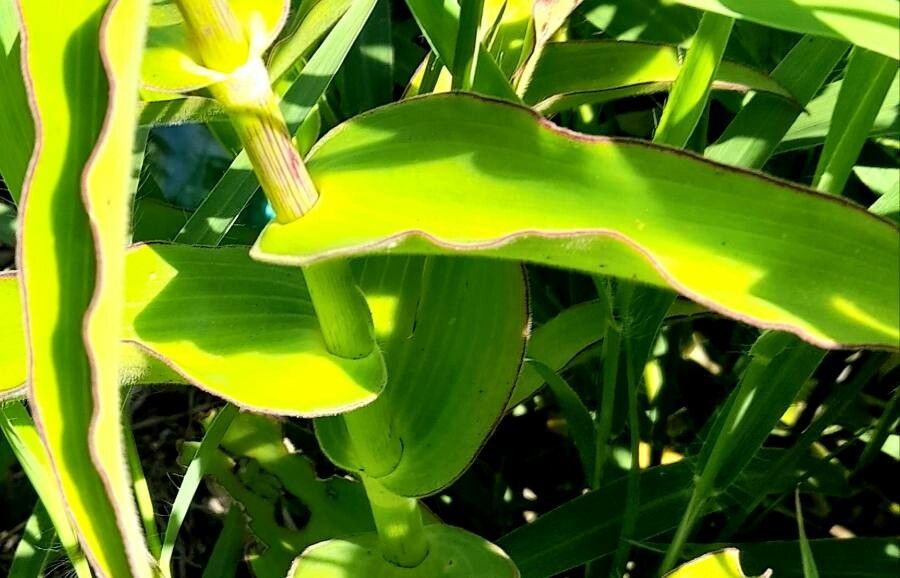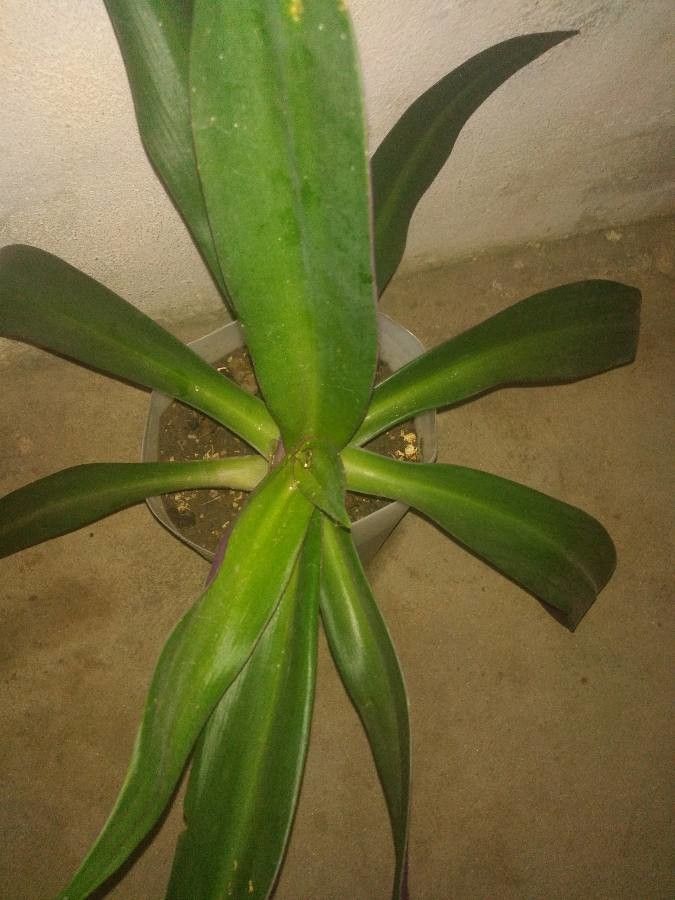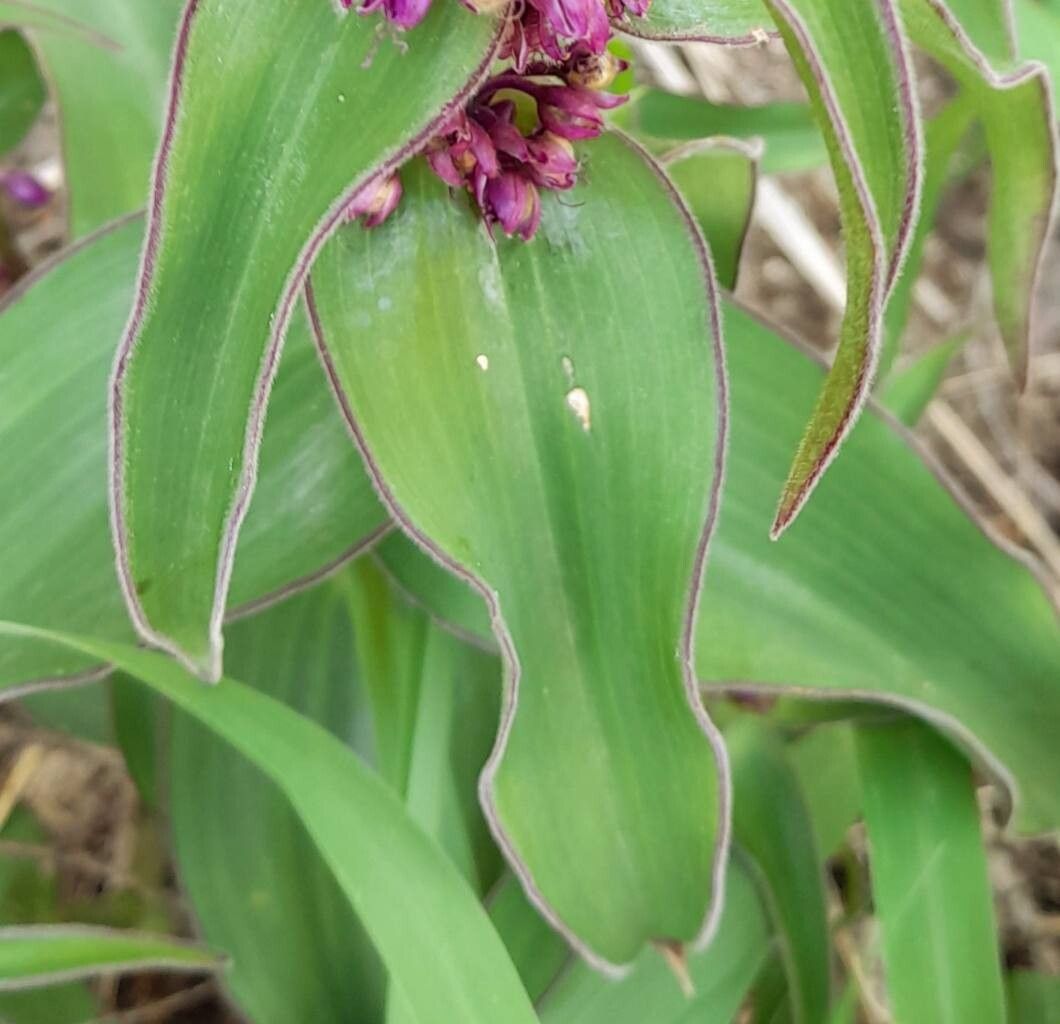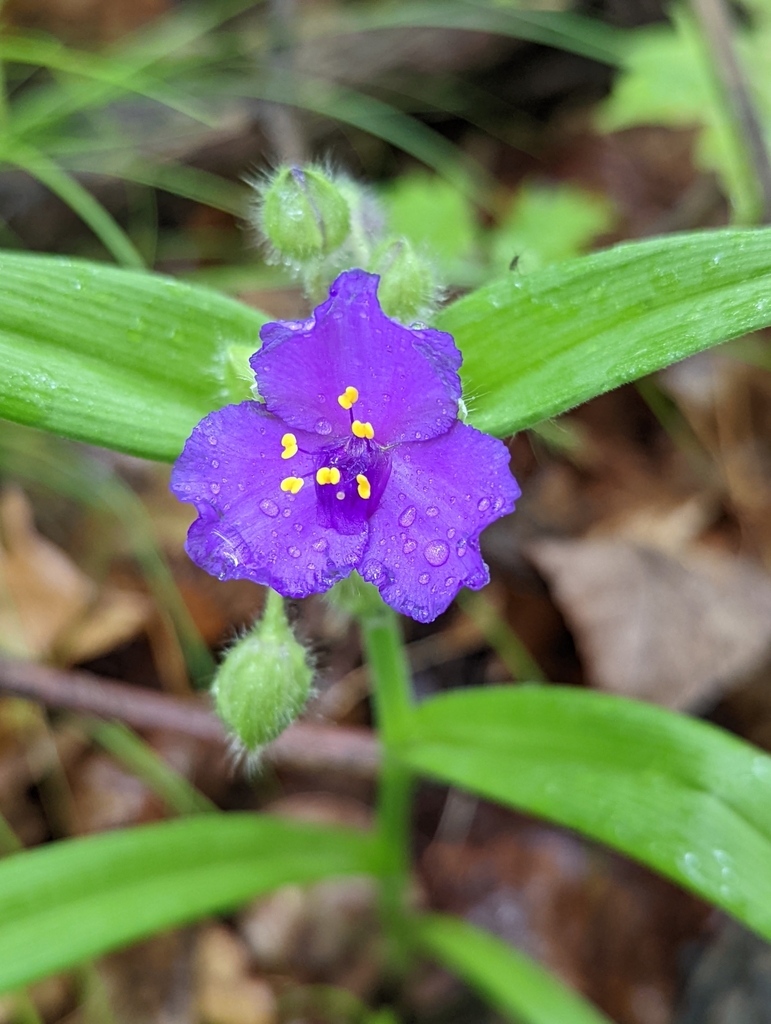
Tradescantia virginiana, commonly known as Virginia spiderwort, is a herbaceous perennial plant belonging to the Commelinaceae family. Native to the eastern United States, this plant thrives in moist meadows, woodlands, and along stream banks. Typically growing up to 60 cm in height, it features long, narrow leaves arranged in a clump at the base of the stem.
The flowers of Virginia spiderwort are three-petaled and come in shades of blue or purple. Blooming from late spring through early summer, these flowers appear on tall stems above the foliage. Although each flower lasts only one day, they are quickly replaced by new blooms.
Tradescantia virginiana is an easy-to-grow plant that prefers full sun or partial shade with moist soil conditions but can tolerate drought once established. It is often used as an ornamental plant for its attractive foliage and striking flowers.
Virginia spiderwort has a brief blooming period, producing flowers for only about a week during late spring or midsummer. Each of its clear blue flowers blooms for just one day. While the most common varieties have blue flowers, Virginia spiderwort can also be found with white, purple, or pink blooms. FUN FACT · FROM THE LIBRARY
Traditionally, Native Americans have used the leaves of Virginia spiderwort for medicinal purposes, including treating insect bites, skin irritations, headaches, and stomach ailments.
Overall, Tradescantia virginiana is a beautiful perennial that adds vibrant color to any garden or landscape, while also boasting a rich history of medicinal use.
Virginia spiderwort gets its name because the arrangement of its angular leaves resembles a squatting spider. Additionally, the name reflects its origin, as it was first discovered in Virginia. This is why it is called Virginia spiderwort.
Virginia spiderwort is fairly disease-resistant and usually not prone to illness. That said, it can be affected by pests and diseases present nearby. These issues are typically mild. For care, the plant needs moderate maintenance. It should be pruned regularly to maintain appearance and promote healthy growth. Fertilizing can also encourage flowering. Virginia spiderwort is a good choice for anyone with outdoor space, such as a garden or patio, and does not demand extensive care experience. It may need more attention if grown indoors.
How to keep Tradescantia Virginiana.
Light
Virginia spiderwort does well with moderate sunlight but can also tolerate fairly strong sun. Too little light can lead to weak growth, while too much can scorch the foliage. This reflects the light conditions of its native habitat — a combination of open areas and canopy shade. Its light needs stay the same throughout all stages of growth.
Water
Virginia spiderwort flourishes in moist environments, needing regular moisture without becoming waterlogged. To mimic its natural conditions, water it weekly. During the growing season, apply mulch to help retain soil moisture. This plant is usually grown outdoors because of its hardiness.
Temperature
The Virginia spiderwort tolerates a very wide temperature range and adapts well to many temperature fluctuations. Its preferred range is 41 to 95 ℉ (5 to 35 ℃). As a temperate woody plant, it can do well in cooler conditions, but it should not be exposed to freezing temperatures.
Fertilizer
One application of fertilizer in spring is typically enough for Virginia spiderwort, though additional feedings can boost growth to its fullest. Apply fertilizer every month to six weeks. Fertilization improves the leaves' appearance and function, helping maintain even color and a healthy texture. It also promotes root development and nutrient uptake, supporting the plant's long-term health.
Pruning
Virginia spiderwort showcases vibrant blue or purple flowers along with lance-shaped leaves. To promote healthy growth, enhance air circulation, and prevent self-seeding, prune the plant from early to late spring. This involves removing dead stems and spent flowers. By doing so, you ensure a vigorous and stunning display throughout the growing season.
Pot & Repot
When repotting Virginia spiderwort, pick a pot 1-2 inches (2.5–5.1 cm) larger that has good drainage. Use a well-draining potting mix. Repot in spring or fall, making sure the root ball sits slightly below the rim of the flower pot. Water thoroughly after repotting and place in a warm spot with indirect sunlight.
Toxicity
POISONOUS PARTS: Leaves. Minor skin irritation if touched.
Further reading →
The toxicity and danger assessments provided are for reference only. We do not assure their accuracy, so it's crucial not to depend on them. Seek professional advice when necessary for accurate guidance.
Botanical profile.
- Plant Type
- Herb
- Life Cycle
- Perennial
- Genus
- Tradescantia
- Family
- Commelinaceae
- Hardiness Zone
- 4-9
- Mature Height
- 46 cm to 76 cm
- Mature Spread
- 30 cm to 46 cm
- Leaf Color
- Green
- Leaf Type
- Deciduous
- Flower Color
- Purple, Violet, Lavender
- Flower Size
- 2.03 cm to 3.81 cm
- Bloom Time
- Late spring, Early summer, Mid summer
- Planting Time
- Spring
- Harvest Time
- Mid summer
- Native Area
- Cuba
Other names.
Reader questions.
When Should I Water My Virginia Spiderwort?
Watering your Virginia Spiderwort is crucial for its health, affecting growth, flower production, and disease resistance. To determine the right time to water, check for dryness in the top 1 to 2 inches of soil by feeling around the plant base. Also, look out for wilted or lackluster leaves, discoloration, or yellowing as indicators of under-watering. Water is especially important during the pre-flowering stage to avoid bud drop. Be mindful of watering more frequently during warm temperatures and high sunlight exposure to meet increased water needs. Avoid over-watering when the soil feels moist to prevent root diseases and be equally cautious not to water too late, as prolonged dryness can harm the plant.
Why should I put fertilizer on my Virginia spiderwort?
The main structure of the Virginia spiderwort is made up of its leaves. Fertilization is important for maintaining the appearance and function of these leaves. It ensures that the leaves have consistent color and a healthy texture. Fertilization also has benefits below the soil. It helps the plant generate new roots and maintain existing ones, which improves the plant's ability to absorb nutrients from the soil both now and in the future.
What are the sunlight requirements for Virginia Spiderwort?
Virginia Spiderwort, or Tradescantia virginiana, thrives in conditions ranging from partial to full sun. Partial sun refers to about 3-6 hours of sunlight per day, while full sun means the plant should receive more than 6 hours of direct sunlight daily. It's essential to observe the sunlight's movement in your garden to find the ideal spots for your plants, balancing between light and shade to ensure their well-being. The plant adapts well to moderate sunlight exposure but can also handle considerable amounts. Insufficient sunlight might lead to weak growth, and too much sunlight could cause foliage burn. This adaptability reflects the plant's natural habitat, which is a mix of open areas and canopy-covered spots.
What is the preferred temperature range for Virginia Spiderwort?
Virginia spiderwort thrives best in a temperature range from 41 to 95 °F (5 to 35 °C), making it adaptable to many temperature variations. As a temperate woody plant, it is able to grow in cooler temperatures comfortably. However, it is important to avoid exposing the plant to freezing temperatures. Despite its strong cold resistance, special frost protection measures should be considered if winter temperatures are expected to drop below -30°C (-22°F). Protection can include covering the plant with soil or straw, and it is advisable to water it abundantly before the first freeze in autumn, to ensure the soil remains moist and enters winter prepared.
How Should I Water My Virginia Spiderwort?
Water your Virginia Spiderwort deeply but infrequently to maintain optimal hydration without causing root rot. Ensure the soil around the plant is evenly moist but not waterlogged, and allow the top inch to dry out before the next watering. Use a watering can with a small spout to target the base of the plant directly, minimizing water on the foliage to reduce disease risk. A moisture meter can be helpful for accurate soil moisture assessment. While misting can increase humidity and benefit the plant, it is not a substitute for proper watering. Always aim to water the soil, not the foliage or crown, to prevent issues like fungal diseases. Adjust watering frequency based on pot size, humidity, and season, favoring under-watering over over-watering.
When should I fertilize my Virginia spiderwort?
If you grow your Virginia spiderwort outdoors, it will send new growth in early spring, indicating it's time to fertilize. Usually, one application of fertilizer is sufficient. However, if you want to maximize growth, you can repeat the feeding multiple times during spring and early summer, around once every month to a month and a half.
How do I use artificial lighting for Virginia Spiderwort indoors?
When natural sunlight is not sufficient, especially during winter or in less sunny spaces, artificial lighting can be crucial for the growth of indoor Virginia Spiderwort plants. LED lights are recommended due to their ability to be customized to provide specific wavelengths needed by the plants. The general guideline suggests that full sun plants require 30-50W/sq ft, partial sun plants need 20-30W/sq ft, and full shade plants should get 10-20W/sq ft of artificial light. Place your light source approximately 12-36 inches above the plant to best mimic natural sunlight. Also, ensure the plant receives 8-12 hours of light per day to replicate the natural daylight hours effectively.
How does Virginia Spiderwort react to low temperatures?
Virginia spiderwort is cold-tolerant and manages well in cold weather, with optimal growth occurring when temperatures remain above 5°C (41°F). During winter, it is advised to ensure temperatures stay above -25°C (-13°F). Although the plant may not show noticeable changes at -30°C (-22°F), there could be a possible effect on its ability to sprout in spring, showing decreased to no sprouting. If such conditions occur, removing any parts that failed to sprout in spring is recommended as a solution to this issue.
How Much Water Does Virginia Spiderwort Really Need?
Virginia Spiderwort requires consistent moisture due to its shallow roots and native habitat conditions. The exact amount of water needed will depend on several factors, including pot size and environmental conditions. As a general guideline, keep the top 1-2 inches of soil moist without waterlogging it, typically using about 200-500 milliliters of water per session. Recognize proper hydration through healthy, green, and turgid leaves. Watch for symptoms like wilting or discoloration from under-watering, or yellowing leaves and mold from over-watering. Ensure the spiderwort is in well-draining soil and a suitable pot, and water it more effectively early in the morning or late in the evening.
When is the best time to not fertilize my Virginia spiderwort?
During late fall and winter, your Virginia spiderwort goes into a dormant phase and stops growing. To prevent damage to your plant, avoid fertilizing it during this time. In spring and summer, if you choose to fertilize, gradually reduce the amount as summer approaches because the plant's growth rate decreases. It is important to note that it is never a good idea to fertilize your Virginia spiderwort when the weather is extremely hot or the soil is very dry. Fertilizing in these conditions can cause stress to the plant and lead to its premature death.
What are the symptoms of inadequate light for Virginia Spiderwort?
When Virginia Spiderwort does not receive enough light, especially indoors, several symptoms may manifest. These include the development of smaller-than-usual new leaves, leggy or sparse growth, where the spaces between leaves or stems elongate, causing a stretched appearance. Early leaf drop can occur as a conservation measure, alongside slower or halted growth when the plant goes into survival mode due to poor lighting conditions. Other indicators include lighter-colored new leaves, suggesting a lack of chlorophyll, and chlorosis, where leaves may turn yellow. Overexposure to sunlight can lead to sunscald, appearing as bleached or necrotic spots on leaves, leaf curling as a defense against excessive sunlight, wilting from increased water loss, and leaf scorching, characterized by brown, crispy leaf edges.
What should I do if Virginia Spiderwort experiences high temperatures?
During summer, it is ideal to keep Virginia spiderwort's environment below 35°C (95°F). Exposing the plant to temperatures above 38°C (100.4°F) could lead to signs of distress such as lighter leaf color, curling leaves, susceptibility to sunburn, and in severe cases, the plant may wilt and dry out completely. To mitigate these issues, trim away any sunburned and dried-up parts of the plant. It's beneficial to move the plant to a shaded location or use a shade cloth to protect it from the midday and afternoon sun. Additionally, maintaining soil moisture by watering the plant in the morning and evening can help prevent damage from high temperatures.