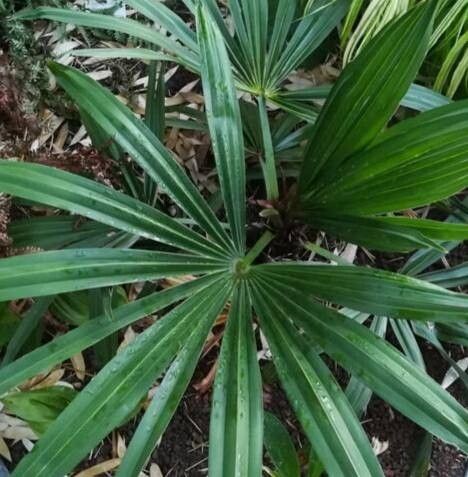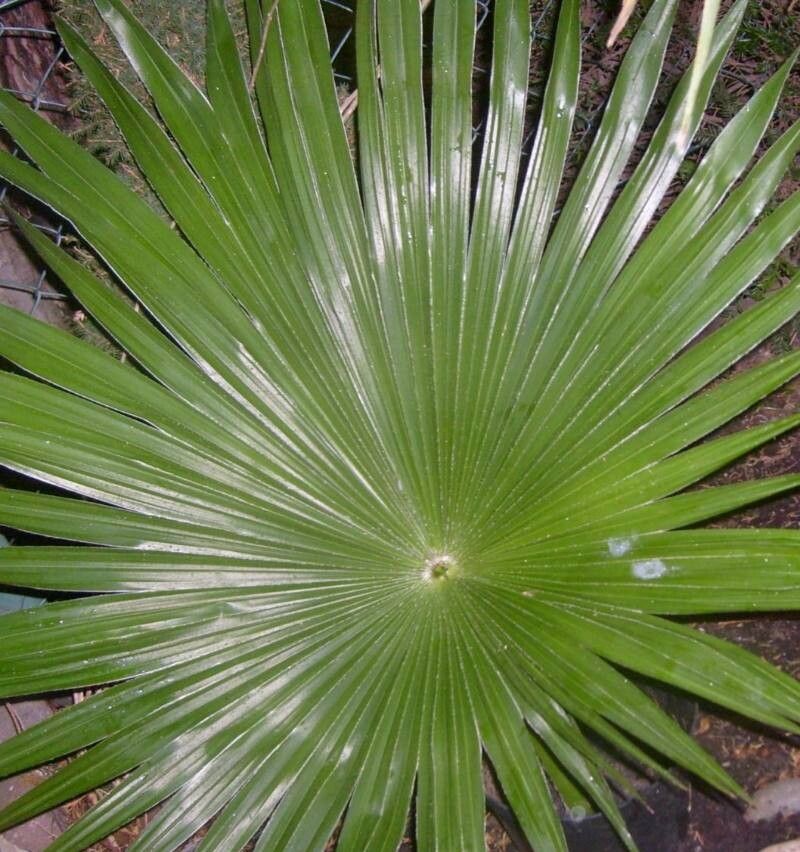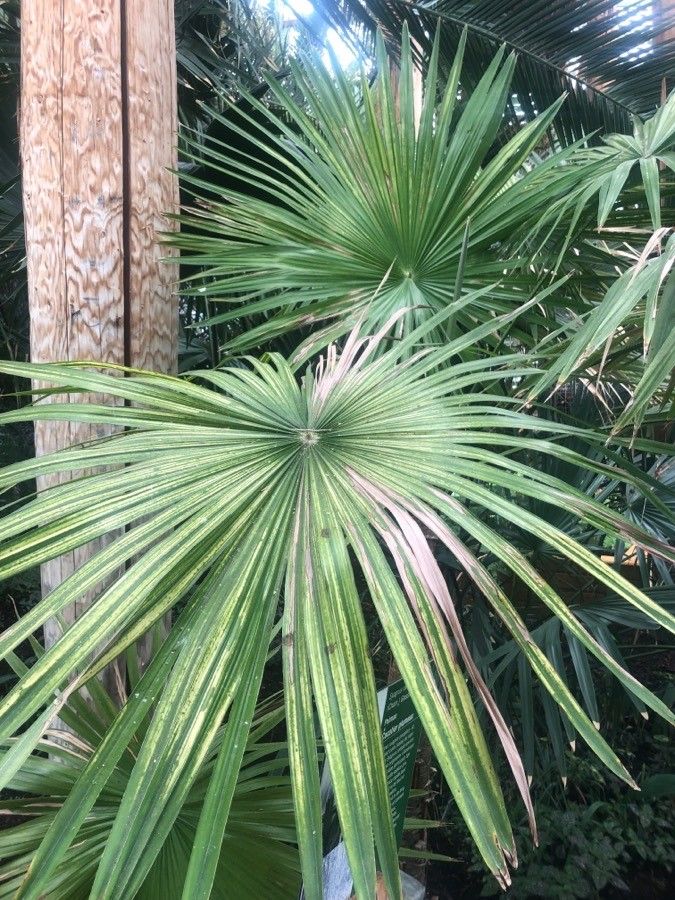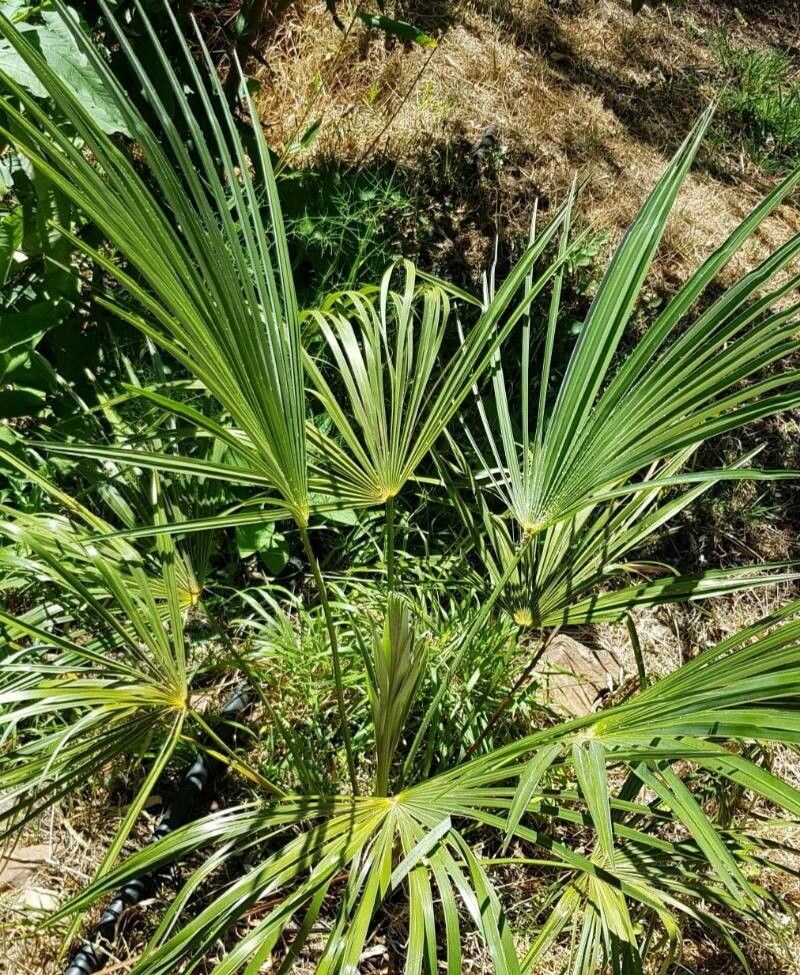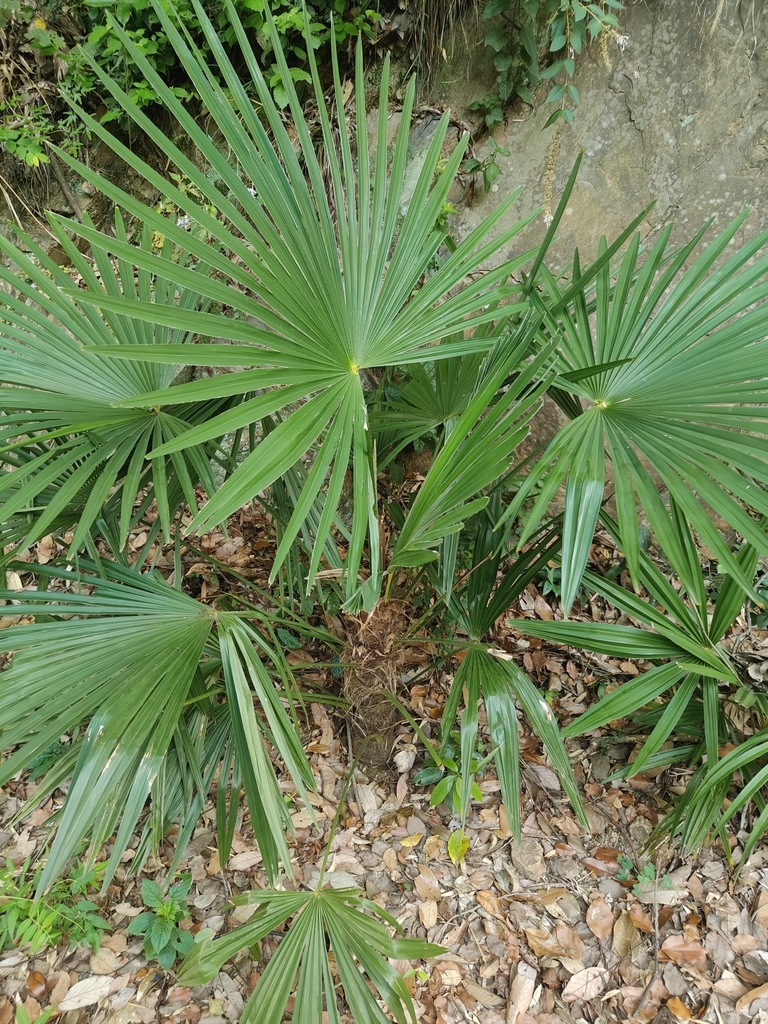
Trachycarpus fortunei, commonly known as the Chinese windmill palm or Chusan palm, is an evergreen palm tree native to central and eastern China. Its attractive appearance and hardiness make it a popular ornamental plant in gardens and parks. The tree can grow up to 12 meters tall with a trunk diameter of up to 30 centimeters. Its fan-shaped leaves have long petioles that can reach up to one meter in length. The small, yellowish-green flowers appear on branched inflorescences that emerge from the base of the leaves.
Trachycarpus fortunei prefers well-drained soil and partial shade, but it can also tolerate full sun and withstand cold temperatures down to -15°C (5°F). Moreover, this palm is resistant to pests such as spider mites and scale insects, making it an ideal choice for low-maintenance gardens and landscapes.
Chinese Windmill Palm: The first part of this plant's common name indicates its geographical origin, China. The second part of the name, "windmill," is inspired by the palm's circular, fan-shaped leaves. These leaves are often arranged in a pattern that resembles the blades of a windmill when viewed from certain angles.
The windmill palm has good resistance to disease and is generally not prone to disease. In terms of care, this plant is relatively low-maintenance. When grown outdoors it needs minimal watering, and larger plants typically do not require pruning. Smaller plants, however, should be pruned after they have bloomed. The windmill palm is suitable for anyone with outdoor space, such as a garden or deck, and does not require much gardening experience.
How to keep Trachycarpus Fortunei.
Light
The Windmill palm grows well in places with plenty of light that is not overly strong. It also tolerates both very high and very low levels of sun exposure. This reflects the varied light conditions of its native habitat. Nevertheless, extremes—too much or too little sunlight—can negatively impact its health.
Water
The windmill palm is a resilient plant native to temperate regions, well-suited for cooler climates with occasional heavy rainfall. It requires moderate moisture, needing to be watered every two weeks. This plant thrives outdoors in well-draining soil and is drought-tolerant, as it is adapted to mimic the wet-dry cycles of its natural habitat.
Humidity
This plant needs special care because it loves high humidity levels of 60-80% or more. The best way to achieve this is by placing a humidifier near the plant. Daily misting is also essential! Make sure the room has good ventilation.
Temperature
Native to Asia, the Windmill Palm will grow best in USDA hardiness zones 8 through 11. However, these tropical plants are cold-hardy and will survive in temperatures down to -4 degrees Fahrenheit.
Fertilizer
To encourage healthy growth, fertilize your Windmill palm in early spring. Consistent feeding improves overall health, producing vigorous growth, increased tolerance of harsh conditions, and enhanced resistance to diseases and pests. Keep to a regular fertilization schedule for your Windmill palm to maintain vibrant, deeply colored foliage and a lush appearance.
Pruning
The windmill palm is a hardy evergreen plant with distinctive fan-shaped leaves. For best results, prune it in early spring to remove any dead fronds, taking care not to over-prune to maintain its natural shape. Be sure to clean your tools to prevent the spread of disease. Pruning at this time encourages healthy growth and aligns with the windmill palm's natural growth cycle, promoting optimal recovery and the development of new fronds.
Pot & Repot
When repotting a Windmill palm, pick a pot slightly larger that provides excellent drainage. Use a potting mix that drains well. Repot in spring, taking care not to harm the roots. Place the palm at the same level it was in the old pot. Water thoroughly after repotting and situate it in a warm area with bright, indirect sunlight. Avoid overwatering to prevent root rot.
Botanical profile.
- Plant Type
- Palm
- Life Cycle
- Perennial
- Genus
- Trachycarpus
- Family
- Arecaceae
- Hardiness Zone
- 7-11
- Mature Height
- 11.89 m to 20.12 m
- Mature Spread
- 1.22 m to 1.83 m
- Leaf Color
- Green
- Leaf Type
- Evergreen
- Flower Color
- Yellow
- Flower Size
- 17.78 cm
- Bloom Time
- Late spring, Early summer, Mid summer
- Planting Time
- Spring, Autumn
- Harvest Time
- Mid summer, Late summer, Early fall
- Native Area
- China
Other names.
Reader questions.
How should I water my Windmill palm?
For indoor Windmill palm care, water your plant by applying water directly to the top layer of soil in the container. Use rainwater or distilled water that is at room temperature. To determine if your Windmill palm needs water, check the soil moisture by poking your finger into it. If the top few inches of soil are dry, water your plant enough to moisten those layers and ensure excess water drains through the container's bottom. If unsure, it's better to underwater than to overwater the palm, as overwatering can lead to root rot. When growing the palm outdoors, rainfall alone may be sufficient. However, if it rains less than once per week during the growing season, provide supplemental water to the soil. Again, rainwater or distilled water are the best options for both indoor and outdoor care of the Windmill palm.
Why should I put fertilizer on my Windmill palm?
If you own a Windmill palm, regular fertilization is important for its overall health. Providing the right nutrients helps your palm grow stronger and better equipped to handle tough conditions, fight off diseases, and resist pests. The foliage of your palm is a key feature, so it's essential to maintain it. To achieve this, follow a regular fertilization schedule tailored to your specific palm. This will result in vibrant leaves with rich color and a lush appearance.
What are the sunlight requirements for a Windmill Palm?
The Windmill palm thrives in both partial and full sun conditions. Partial sun refers to about 3-6 hours of sunlight, while full sun or full shade means the plant should receive more than 6 hours of sunlight. It's essential to observe how sunlight moves through your garden to find the perfect balance of light and shade, ensuring your Windmill palm's happiness.
What is the Windmill Palm?
The Windmill Palm, also known by its botanical name Trachycarpus fortunei, is a type of palm tree. It doesn't have listed essentials or symptoms as part of the provided information, suggesting a focus on its identification and botanical classification.
What should I do if I give too much or too little water to a Windmill palm?
Here are some signs that indicate plants are not getting enough water: brown tips on the plant, wilted and drooping leaves that appear lifeless, and the potential for leaves to turn brown, crispy, and dry out severely. If you notice these signs, water the plant as soon as possible. Alternatively, overwatering can lead to root rot. If this occurs, remove any damaged roots from the soil, especially if they are mushy, fragile, and black. It is important to remove a larger part of the root to address the issue. Overwatering can also cause leaves to turn brown and fall off early. To help the plant recover, drain excess water and wait for the soil to dry before watering again. If you notice signs of root rot, discard the soil in the pot. Clean everything thoroughly and place pebbles in the pot to improve drainage. If you observe tan rings or reddish-brown spots on the leaves, discard any excess water at the base of the pot. Additionally, ensure the plant is in a well-ventilated location to promote faster soil drying and prevent future rotting.
When should I fertilize my Windmill palm tree for best results?
To ensure healthy growth, the Windmill palm should be fertilized in late winter or early spring. This provides essential nutrients for growth when the weather becomes warmer. If you live in a warm climate, it is also beneficial to provide additional fertilizer in early fall. This adds nutrients for the following growing season and helps the palm withstand the winter without foliage damage. Fertilizing earlier in fall allows the new branches to grow and withstand the winter cold.
Can Windmill Palm grow under artificial lighting?
Yes, Windmill Palm can grow under artificial lighting, especially when natural sunlight is not sufficient. Indoor plants benefit from artificial lights, particularly during winter or in less sunny spaces. LED lights are a popular choice, providing specific wavelengths needed for plant growth. Full sun plants require 30-50W/sq ft, partial sun plants need 20-30W/sq ft, and full shade plants require 10-20W/sq ft of artificial light. The light source should be placed 12-36 inches above the plant, and most plants need 8-12 hours of light per day.
What do I do if I give my Windmill palm too much or too little water?
When watering the Windmill palm, the main issue to watch out for is overwatering. There are several signs that indicate the plant is being overwatered. These include brown, drooping leaves and mushy stems with a foul odor. Overwatering can also result in root rot, which is a serious problem if not addressed. If you catch the overwatering early, you can resolve the issue by reducing the watering rate or adding sand to improve soil drainage. In more severe cases, you will need to remove the palm from its container, remove any rotten roots, and repot it. If you are growing the Windmill palm outdoors and it consistently receives too much water, consider transplanting it to a location with looser soil. On the other hand, if the palm is underwatered, the leaves will droop and turn yellow instead of brown. Additionally, you may notice slower growth. In this case, you will need to water the palm more frequently.
When is it not a good idea to fertilize my Windmill palm?
To ensure the health of your Windmill palm, avoid fertilizing it during certain times of the year. Firstly, during the early and mid-winter months, when the palm is dormant and does not require nutrients. Additionally, refrain from fertilizing in late spring and summer, as the weather is typically hotter and drier, which can have a negative impact on the palm's response to fertilization. Instead, establish a fertilization schedule that includes feeding only during early spring and early fall.
What are the symptoms of inadequate light exposure in Windmill Palm?
Inadequate light exposure in Windmill Palm can lead to symptoms such as smaller new leaves, leggy or sparse growth, faster leaf drop, slower or no new growth, lighter-colored new leaves, chlorosis (leaves losing their green color), sunscald, leaf curling, wilting, and leaf scorching. These symptoms vary depending on whether the plant receives too little or too much sunlight.
How often should I give water to my Windmill palm?
To ensure the proper care of your Windmill palm, you typically need to water it around once a week during the growing season (spring, summer, and early fall). However, the rate at which the soil in your plant's container dries out may vary depending on your specific growing environment. Therefore, it is helpful to know how to monitor the soil for moisture instead of blindly following the once-a-week rule. This means that there may be times when you need to water more frequently or less often, such as every few days or every ten days, during the growing season. The same principles apply when growing the Windmill palm outdoors, with the only difference being that rainfall can impact your watering schedule. For instance, if there's about an inch of rainfall during the week, you should refrain from adding additional water to avoid overwatering. Additionally, you should reduce the frequency of watering during winter when the plant is not actively growing as much. During this time, it's advisable to let the soil dry out a bit more between waterings. This often means watering the Windmill palm every other week or every three to four weeks.
What kind of fertilizer should I use for my Windmill palm?
The most important nutrient for a Windmill palm is usually nitrogen, but phosphorus and potassium are still important. It's best to use a balanced fertilizer, like a 10-10-10, that provides all three main nutrients. However, for optimal growth, a more specific ratio of nutrients, such as 10-6-4, may work better. You can choose between a granular or liquid-based fertilizer when applying it.