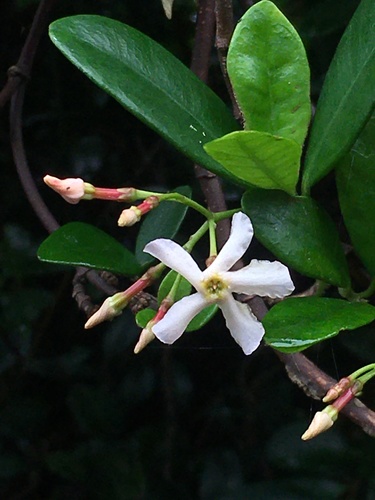
Trachelospermum jasminoides, commonly known as Confederate jasmine or star jasmine, is a popular evergreen vine native to China and Japan. This plant, belonging to the Apocynaceae family, can grow up to 20 feet in length. It features glossy, dark green, oval-shaped leaves that grow in pairs along the stem.
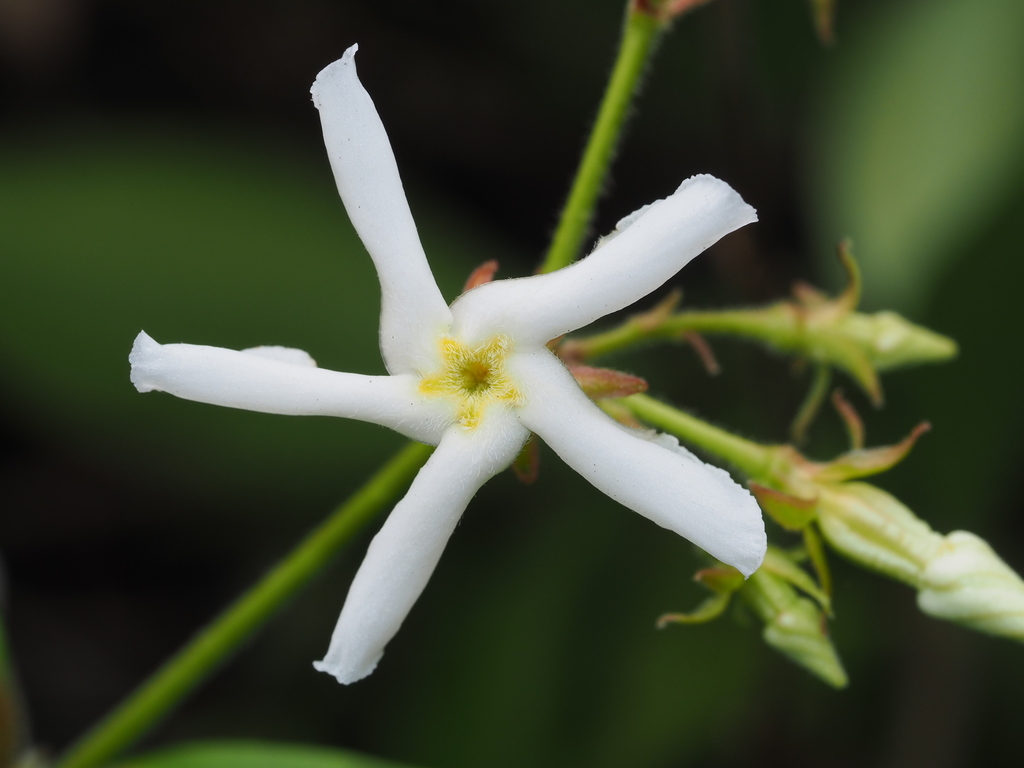
The fragrant white flowers of Trachelospermum jasminoides bloom from late spring through summer, attracting bees and other pollinators. These star-shaped flowers have five petals that form a tube-like structure at the base.
This plant prefers full sun or partial shade and thrives in well-draining soil. It can be grown as ground cover or trained to grow on trellises, walls, fences, or arbors, adding vertical interest to gardens.
Star jasmine is a ground cover plant known for its fragrant flowers and resilience to pruning. It remains evergreen, or green all year round, which is considered to be a symbol of good fortune. FUN FACT · FROM THE LIBRARY
Trachelospermum jasminoides is relatively low-maintenance but requires regular pruning to prevent it from becoming invasive. Additionally, it is known for its ability to purify indoor air by removing toxins such as benzene and formaldehyde.
Overall, Trachelospermum jasminoides is an attractive ornamental plant with fragrant blooms that enhance any garden setting while providing health benefits for indoor environments.
Star jasmine is a plant known for its fresh and pleasant fragrance that invigorates anyone nearby. Its stunning white flowers have five tubular petals resembling windmills. Against the backdrop of the plant’s green leaves, the flowers appear like stars twinkling in the night sky, which is why it is aptly named star jasmine.
Star jasmine generally shows good resistance to disease and is not usually vulnerable to illnesses. Still, if grown in poor conditions it can become more prone to diseases. It also attracts only a small number of insect pests. Regarding care, this plant has moderate needs. It should receive ample sunlight, since lack of light can make it more disease-prone and lead to spindly growth. Because it is frequently kept indoors, it may need to be relocated to a bright spot on a regular basis. It does not need to be watered often. All in all, Star jasmine is appropriate for most people, though it does best with those who can provide strong light conditions.
How to keep Trachelospermum Jasminoides.
Light
For star jasmine, a balance of sun and shade is ideal for growth. In its natural habitat it flourishes beneath a partially shaded canopy. While it can tolerate full sun or deep shade, excessive sunlight may scorch the leaves, and prolonged shade can lead to sparse flowering. Changing light exposure can affect its health and blooming.
Water
Star jasmine, which originates from East Asia, thrives with consistent moisture and should be watered weekly to maintain its lush foliage and fragrant blooms. This evergreen vine grows best outdoors and benefits from well-drained soil to prevent root rot during heavy rains.
Humidity
This plant will thrive in moderate humidity, which is probably the level in your home. However, misting it a few times a week can be very beneficial. Make sure the room has good ventilation.
Temperature
Star jasmine's native habitat is generally warm and humid, with typical temperatures of 68–86 ℉ (20–30 ℃). It can also withstand temperatures from 59–100 ℉ (15–38 ℃), which allows it to be cultivated across a range of regions. To cope with seasonal changes, keep temperatures above 50 ℉ (10 ℃) in winter and give it some shade during very hot summer days.
Fertilizer
Fertilize your Star jasmine in early spring to encourage healthy growth. Regular feeding boosts overall health, producing vigorous growth, increased tolerance of difficult conditions, and stronger resistance to pests and diseases. Keep to a regular fertilizing routine for your Star jasmine to maintain bright, deeply colored foliage and a lush appearance.
Pruning
Star jasmine has glossy leaves and fragrant white flowers. To keep it healthy and looking its best, prune it in early spring. Remove any damaged stems and thin out crowded areas. This not only encourages more vibrant blooms but also prevents the plant from becoming leggy. Aim to maintain a pleasing structure for an attractive appearance.
Pot & Repot
Repot Star jasmine in early spring, picking a pot only slightly bigger than the current one and with adequate drainage. Use a well-draining potting mix, making sure the root ball sits at the same level as before. Gently loosen any root-bound roots. After repotting, water thoroughly and place it in a warm, shady spot. Prune regularly to keep its size in check and encourage new growth.
Toxicity
Trachelospermum jasminoides has no toxic effects reported.
Further reading →
The toxicity and danger assessments provided are for reference only. We do not assure their accuracy, so it's crucial not to depend on them. Seek professional advice when necessary for accurate guidance.
Botanical profile.
- Plant Type
- Vine
- Life Cycle
- Perennial
- Genus
- Trachelospermum
- Family
- Apocynaceae
- Hardiness Zone
- 8-11
- Mature Height
- 0.61 m to 10.06 m
- Mature Spread
- 4.88 m
- Leaf Color
- Green, Red
- Leaf Type
- Evergreen
- Flower Color
- White
- Flower Size
- 2.54 cm
- Bloom Time
- Early summer, Mid summer
- Planting Time
- Spring, Autumn
- Harvest Time
- Mid summer
- Native Area
- Vietnam, Myanmar, Japan, Koppen, Laos, South Korea, China
Other names.
Reader questions.
When Should I Water My Star Jasmine?
Proper and timely watering is crucial for the overall health and development of star jasmine, affecting its growth, flower production, and disease resistance. Water star jasmine when the top 1 to 2 inches of soil is dry to the touch. Wilted, lackluster, or yellowing leaves are signs of needing water, especially during the pre-flowering stage. Star jasmine requires more water in warm temperatures and high sunlight exposure. Be cautious not to water too early to prevent root rot and not too late to avoid wilting or plant death.
Why is it important to add fertilizer to my Star jasmine?
If you own any kind of Star jasmine, fertilizing it regularly will help ensure it stays healthy. Providing the right nutrients will promote stronger growth, making it more resistant to challenging conditions and able to ward off diseases and pests. The foliage of your Star jasmine is a beautiful feature, so it's important to maintain it. To do this, create and stick to a fertilization schedule tailored to your specific plant. This will encourage the development of vibrant, lush leaves.
What are the sunlight requirements for Star Jasmine?
Star Jasmine thrives best in a mix of sun and shade, which is crucial for its growth and flowering. Ideally, it should receive about 3-6 hours of sunlight daily. While it can survive in both full sun and full shade, too much direct sunlight might cause leaf scorch, whereas excessive shade can lead to sparse flowering. It's important to watch how sunlight moves through your garden to find the perfect balance of light and shade for your plants, ensuring their health and happiness.
What is the ideal growth environment for Star Jasmine?
Star Jasmine, or Trachelospermum jasminoides, thrives in warm and humid environments, with optimal temperatures ranging from 68 to 86°F (20 to 30°C). It can adapt to a broad range of temperatures, from 59 to 100°F (15 to 38°C), which makes it suitable for a variety of regions. To accommodate different seasonal needs, maintaining the temperature above 50°F (10°C) during winter and providing shade during intense summer heat are recommended. Although Star Jasmine has some cold tolerance and generally doesn't require extra protection above -5°C, precautions should be taken if temperatures are expected to fall below this threshold.
How Should I Water My Star Jasmine?
Water star jasmine deeply and slowly to encourage deep root growth, utilizing a fine-spouted watering can to avoid excessively wetting the foliage. This method allows for precise watering directly at the plant's base, promoting efficient absorption by the roots. The goal is to maintain consistently moist soil without causing waterlogging, ensuring the plant receives optimal hydration.
When should I fertilize my Star jasmine plant?
To promote healthy growth of your Star jasmine, it is recommended to fertilize it during late winter or early spring. This provides the necessary nutrients for when the weather warms up. In warm climate regions, it is also advised to give your Star jasmine an additional fertilizer feeding in early fall. This not only supplements the soil with nutrients for the next growing season, but also helps the plant endure the cold winter without foliage damage. By fertilizing earlier, the new branches will have sufficient time to grow and withstand the winter cold.
How can artificial lighting benefit indoor Star Jasmine plants?
Indoor Star Jasmine plants require adequate lighting for optimal growth, especially in conditions where natural sunlight is insufficient, such as during winter or in less sunny spaces. Artificial lights, particularly LEDs, can be tailored to provide specific wavelengths of light needed by plants. For full sun plants, 30-50W/sq ft of artificial light is recommended, while partial sun plants need 20-30W/sq ft, and full shade plants require 10-20W/sq ft. The artificial light source should be placed 12-36 inches above the plant for 8-12 hours daily to mimic natural sunlight conditions, promoting healthier and faster growth.
How does Star Jasmine react to low temperatures, and what should be done?
Star Jasmine has a moderate tolerance for low temperatures and prefers conditions above 15°C. In winter, it's crucial to keep it above -5°C, as leaves may start to droop when the temperature falls below -10°C. Mildly affected plants can recover, but in severe cases, the leaves will wilt and eventually fall off. To protect Star Jasmine in cold weather, removing frost-damaged parts and wrapping the plant with insulating materials like non-woven fabric or cloth is advisable. Constructing a wind barrier can also help shield it from the cold.
How Much Water Does Star Jasmine Really Need?
The optimal watering quantity for star jasmine depends on factors like pot size, root depth, and plant size. On average, for a mature plant in a 10-inch pot, about 1.5 to 2 liters per watering session is recommended. Proper hydration signs include vibrant green leaves and healthy growth, while overwatering may cause yellowing leaves or root rot. Adjust watering based on soil moisture, using pots with good drainage and watering early morning or late afternoon to minimize evaporation.
When is it best not to use fertilizer on my Star jasmine plant?
To avoid any negative effects, it is recommended not to fertilize your Star jasmine during certain times of the year. Firstly, during the early and mid-winter months when the plant is dormant and does not require feeding. Secondly, it is best not to fertilize during late spring and throughout summer as the weather tends to be hotter and drier, which can lead to a negative response to fertilization. Instead, it is advisable to stick to a fertilization schedule that involves feeding only in early spring and early fall.
What are the symptoms of insufficient light in Star Jasmine?
Symptoms of light deficiency in Star Jasmine include small and pale new leaves, leggy or sparse growth, faster leaf drop, and halted growth, indicating the plant is in survival mode. Additionally, chlorosis, sunscald, leaf curling, wilting, and leaf scorching can occur under extreme sunlight conditions or with inadequate light exposure. These symptoms show the plant's struggle with either too much or too little sunlight, affecting its ability to photosynthesize properly and maintain overall health.
How does Star Jasmine respond to high temperatures, and how can it be protected?
During hot summer months, Star Jasmine should be kept in conditions below 38°C. Exposure to temperatures above 43°C can result in lighter leaf color, dry and withered leaf tips, curling leaves, and increased susceptibility to sunburn. To mitigate these issues, trim away any sunburned and dried parts of the plant. Moving the plant to a shaded area, especially during midday and afternoon sun, or using a shade cloth can offer protection. Additionally, maintaining soil moisture through watering in the morning and evening can help the plant cope with extreme heat.