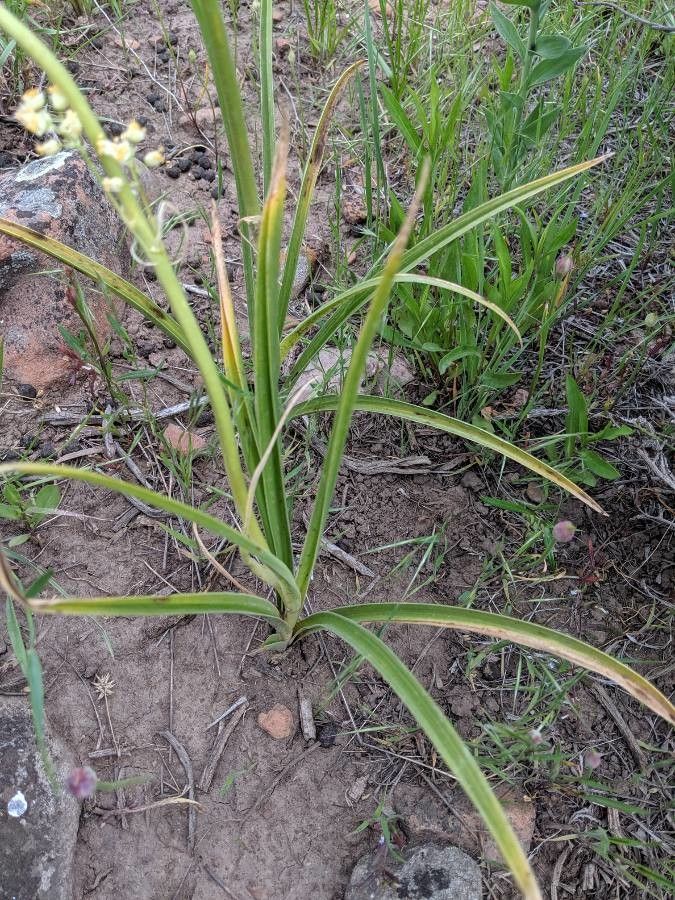
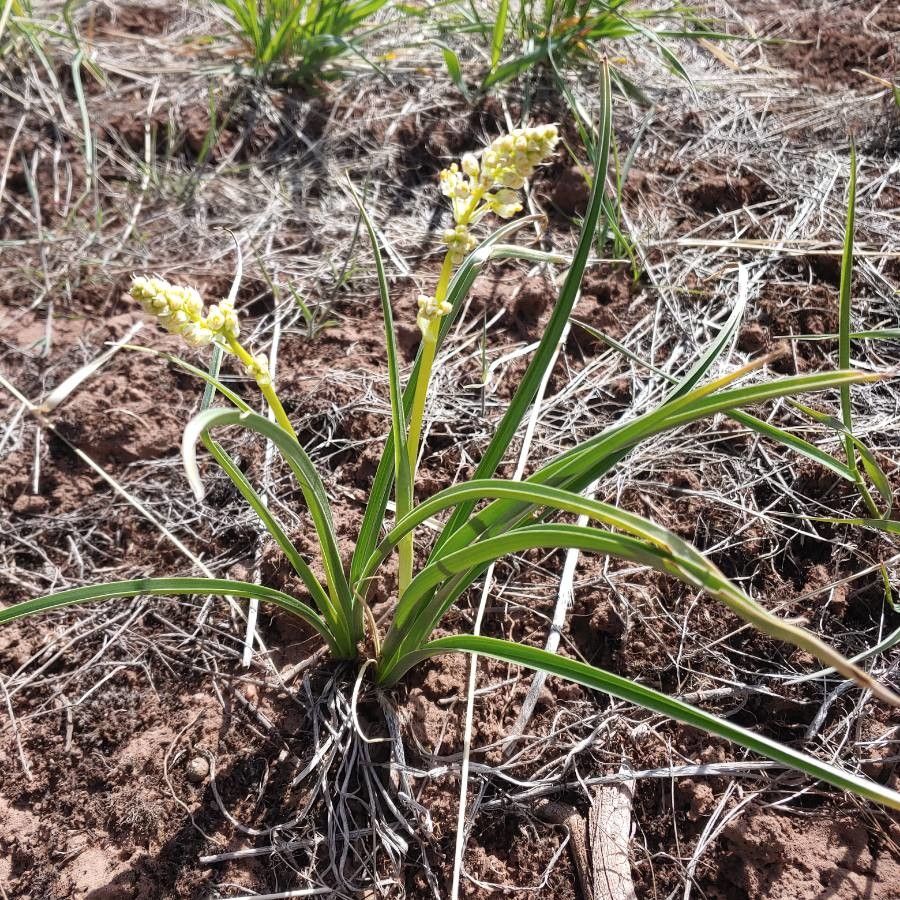
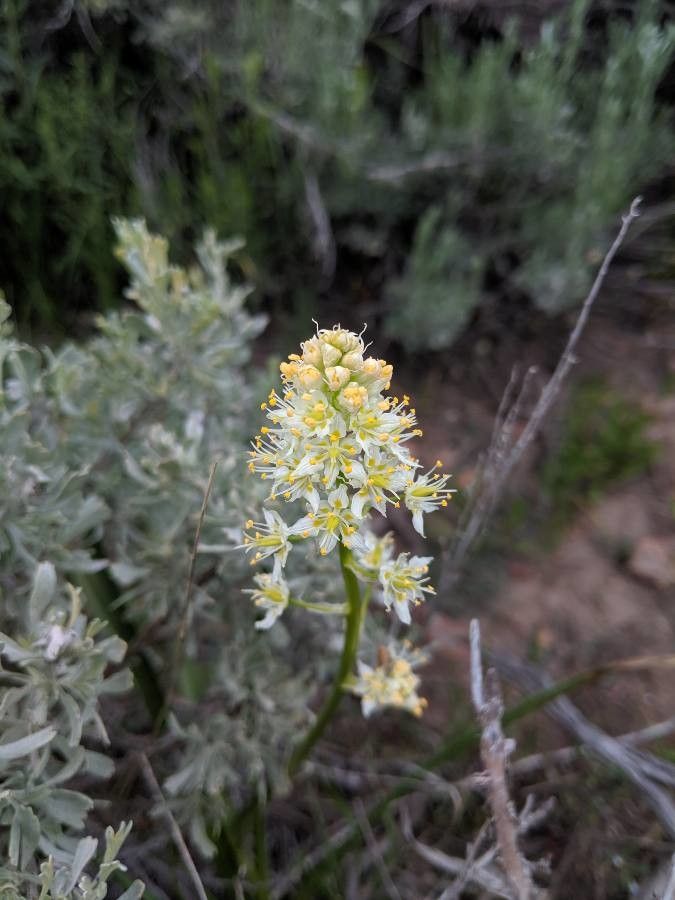
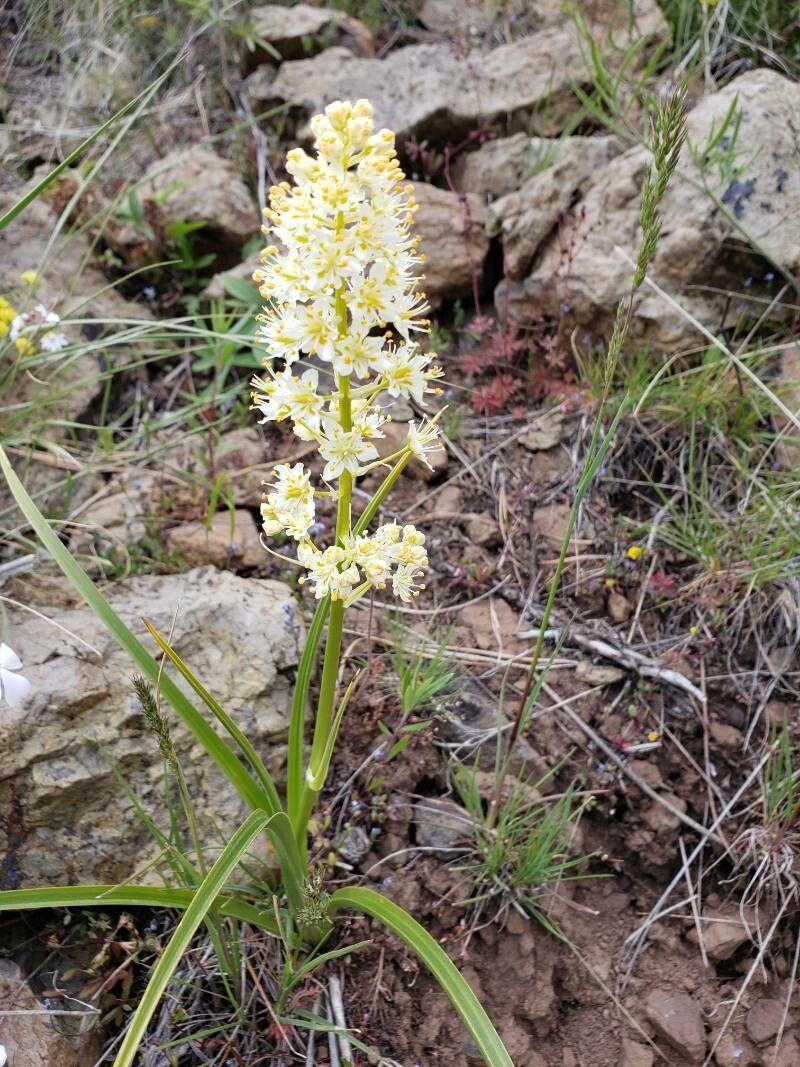
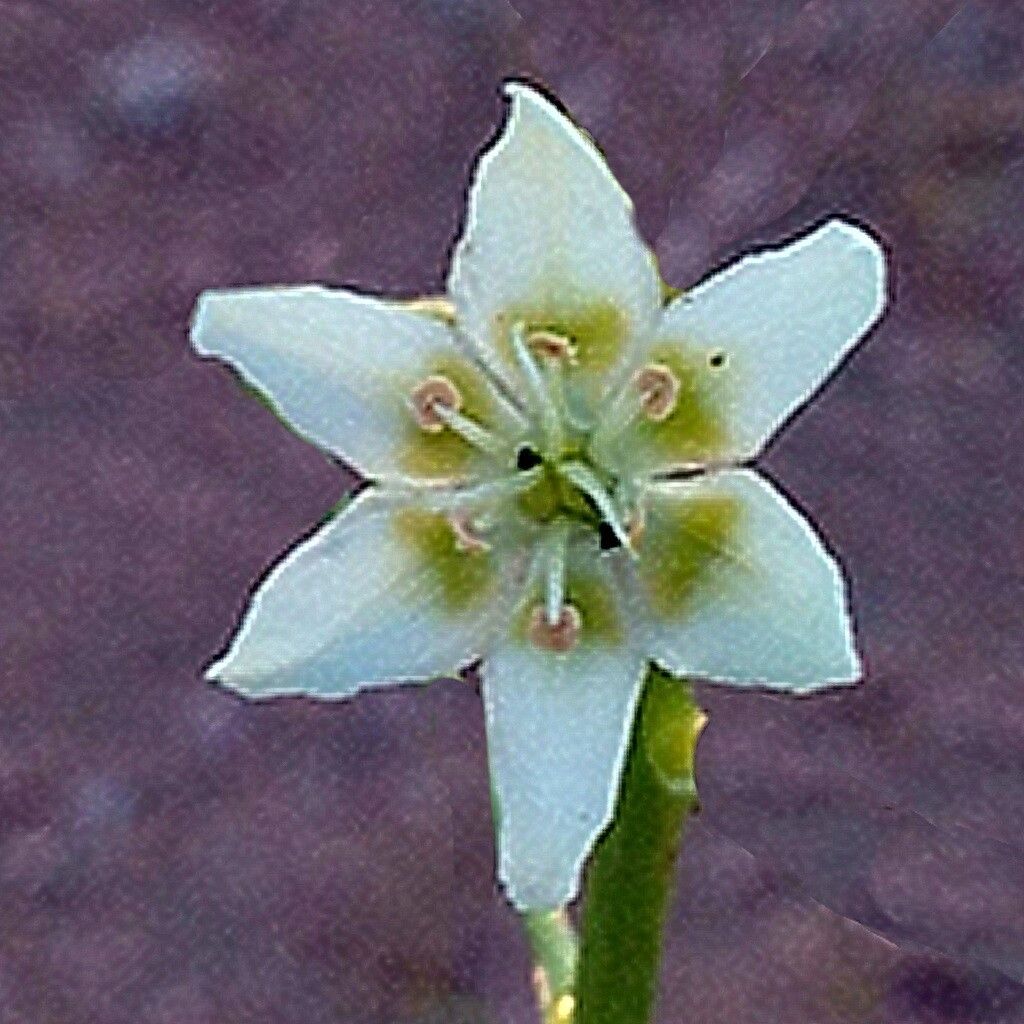
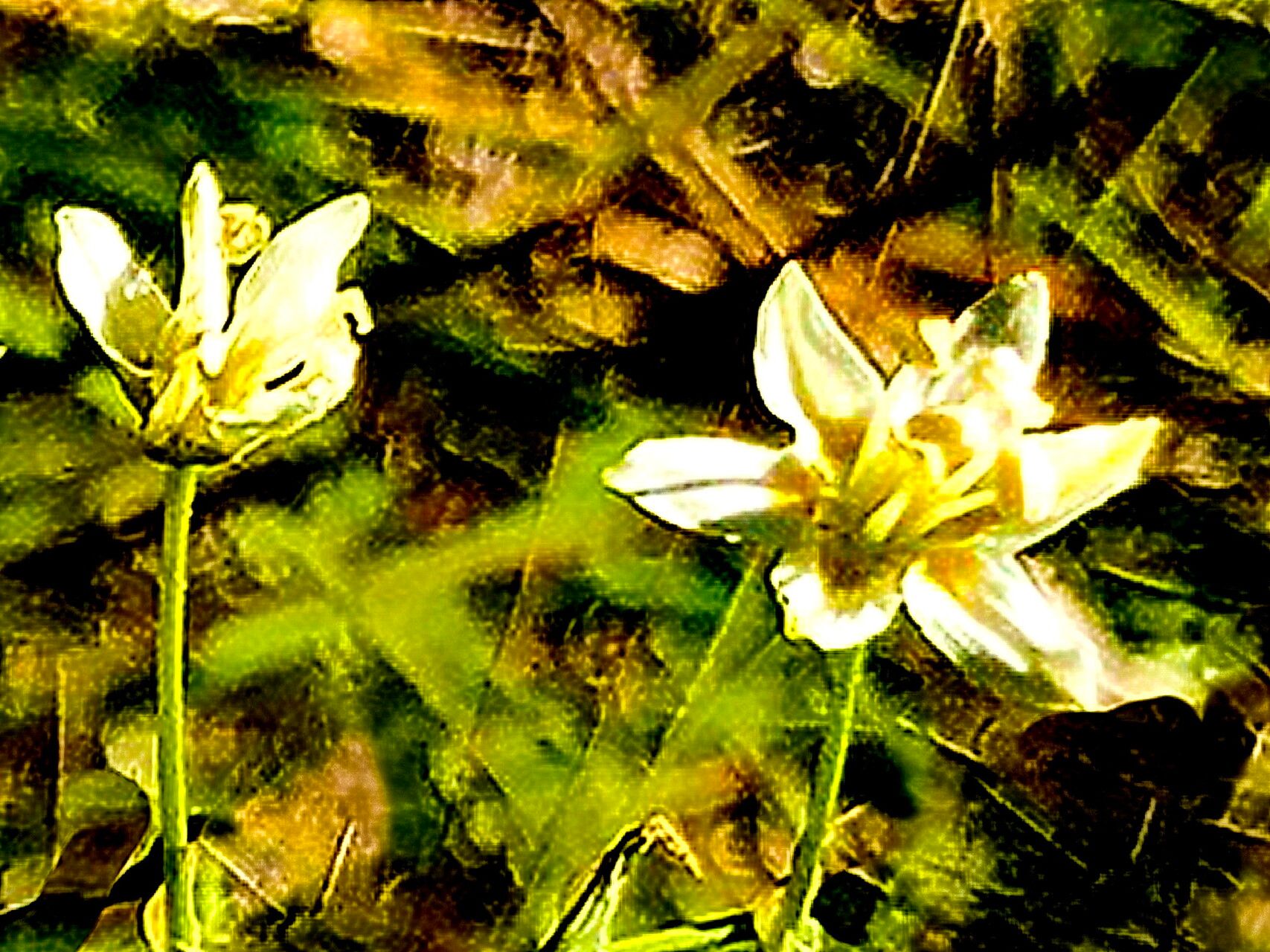
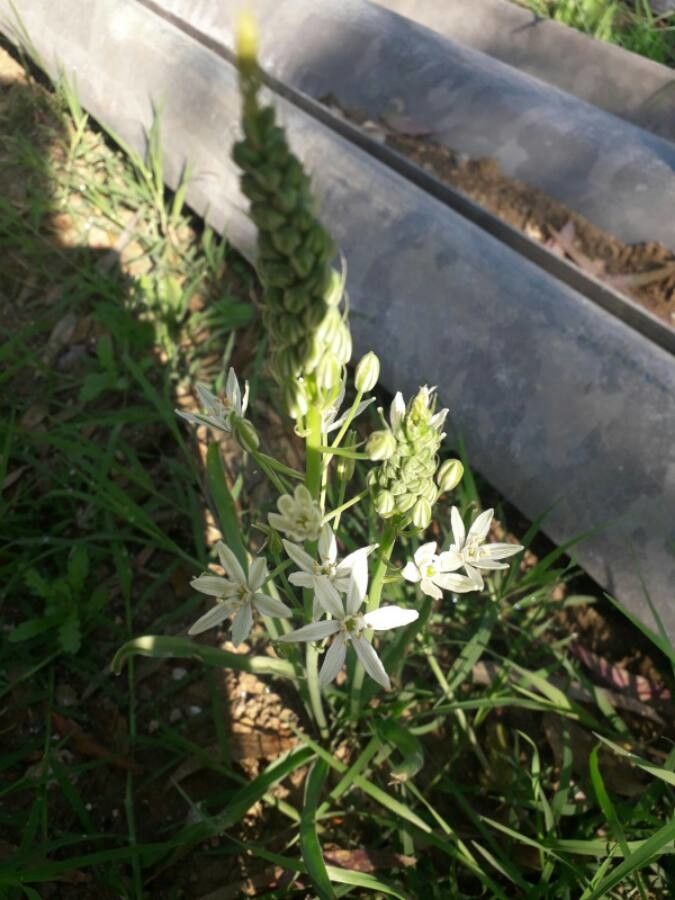
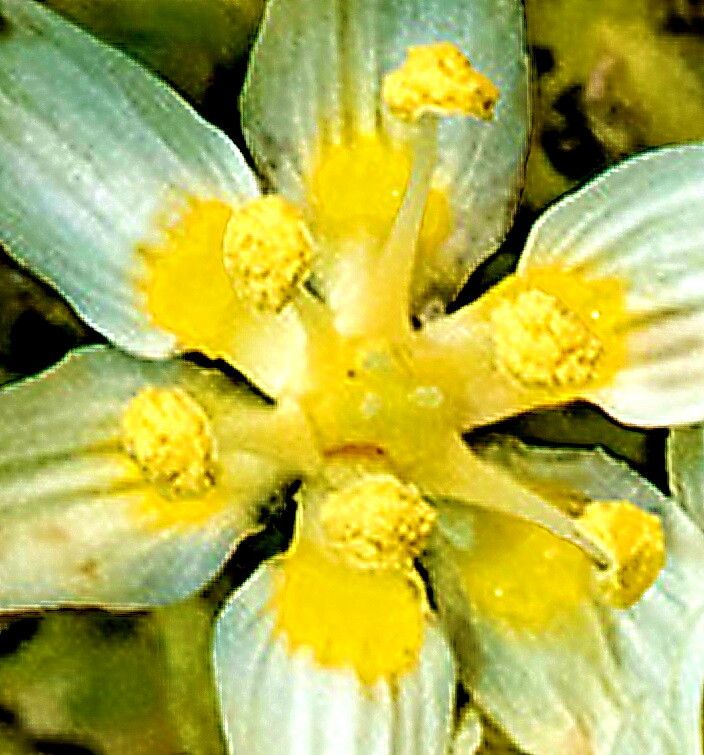
Toxicoscordion paniculatum is a species of flowering plant known by the common names foothill deathcamas, panicled death-camas, and sand-corn. It is widely distributed across much of the western United States, especially in the mountains and deserts of the Great Basin region west of the Rocky Mountains. It grows in many types of habitat, including sagebrush plateau, grasslands, forests, and woodlands, etc.Toxicoscordion paniculatum is a perennial wildflower growing from a brown or black bulb up to 5 centimeters long by 3 wide. The stem grows up to 70 centimeters long. The leaves are linear in shape, measuring up to 50 centimeters long. Most of the leaves are at the base of the stem and there may be a few reduced leaves above. The inflorescence is an open panicle of flowers, becoming dense at the tip. (The flower pictured here appears to be of the close relative Toxicoscordion venenosum; see Burke Museum external link for accurate descriptions.) The panicle contains up to 80 flowers, most of which are bisexual; some flowers at the end of branches and near the base of the panicle are only staminate (male), or are sterile. Each flower has six tepals, the inner three being slightly larger than the outer, measuring about 3 to 6 millimeters in length. The tepals are cream-colored, each with a yellowish green gland at the base. The fruit is a capsule 1 or 2 centimeters long.This plant is toxic to animals, but livestock generally avoid it because it is unpalatable. Cases of human poisoning by ingestion of the bulbs have been documented as well.
Foothill death camas is fairly disease-resistant and is usually not prone to illnesses. However, it can be vulnerable to pests and diseases present in its environment. These problems are typically not serious. For care, this plant needs moderate maintenance. It should be pruned on a regular basis to keep a tidy appearance and encourage healthy growth. Fertilizing can also help boost flowering. Foothill death camas is appropriate for anyone with an outdoor area, such as a garden or patio, and does not require substantial experience in plant care. It may need more attention when grown indoors.
How to keep Toxicoscordion Paniculatum.
Light
Foothill death camas occurs naturally in habitats like forest understories or rocky areas, where it grows in natural shade. It prefers partial sun but can tolerate full sun or full shade, showing its adaptable and hardy character.
Temperature
Foothill death camas can tolerate a broad span of temperature conditions, but its range may still be restricted by particular combinations of moisture and heat. It does best in warm summer conditions with sufficient rainfall or watering. Extended spells of cloudy, rainy weather or prolonged high temperatures can raise the chance of Foothill death camas dying. In winter, adequate protection from the cold can increase the plant's chances of survival.
Fertilizer
One application of fertilizer in spring is usually enough for Foothill death camas, though multiple feedings can enhance growth. Fertilize once every month to a month and a half. Feeding improves the leaves’ appearance and function, helping maintain even color and a healthy texture. It also promotes root development and nutrient uptake for long-term plant health.
Pruning
Foothill death camas is a plant with toxic bulbs and star-shaped flowers. To keep it healthy and attractive, prune it in early spring by removing dead leaves and spent flower stalks. This will improve its growth, airflow, and overall appearance. Be sure to use clean, sharp tools for maintenance. Regular pruning helps maintain the plant's shape, vitality, and safety in your garden.
Botanical profile.
- Plant Type
- Herb
- Life Cycle
- Perennial
- Genus
- Toxicoscordion
- Family
- Melanthiaceae
- Hardiness Zone
- 5-9
- Mature Height
- 30 cm to 61 cm
- Mature Spread
- 20 cm to 30 cm
- Leaf Color
- Green
- Leaf Type
- Deciduous
- Flower Color
- White, Cream
- Flower Size
- 1.02 cm to 2.03 cm
- Bloom Time
- Mid spring, Late spring
- Planting Time
- Spring
- Harvest Time
- Early summer, Mid summer
- Native Area
- Mexico
Other names.