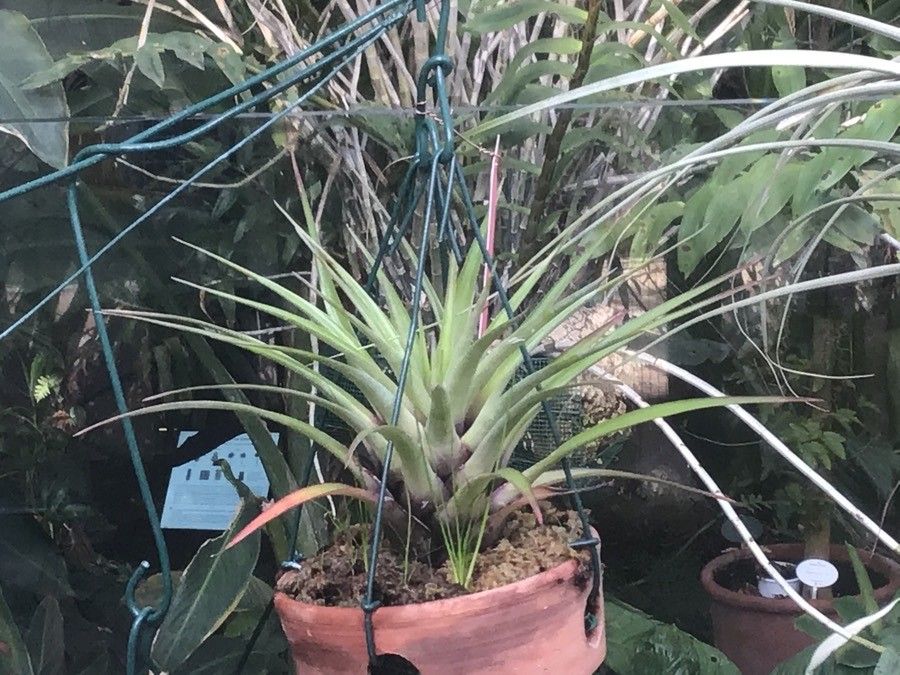
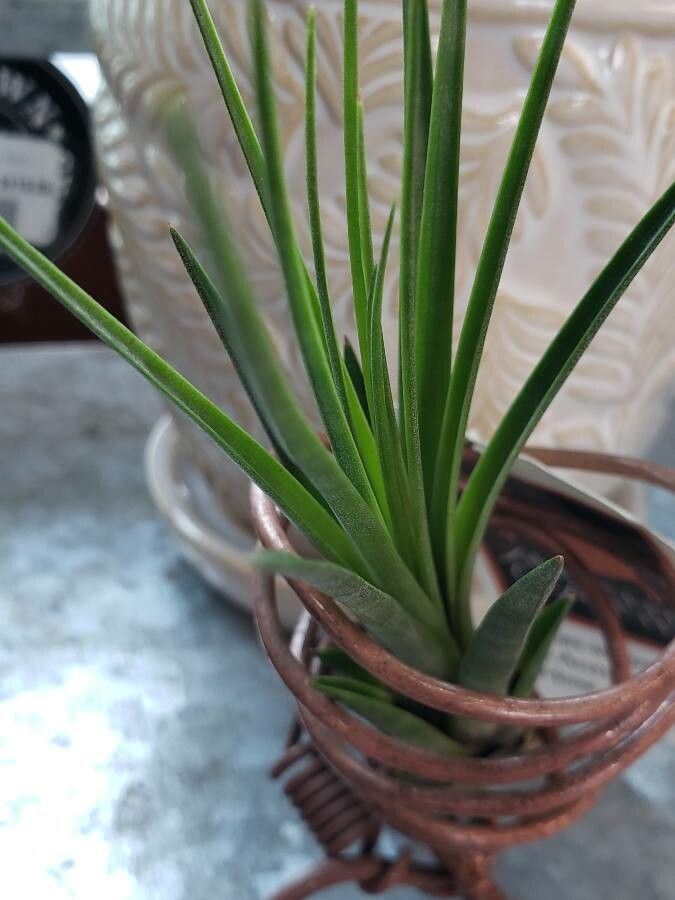
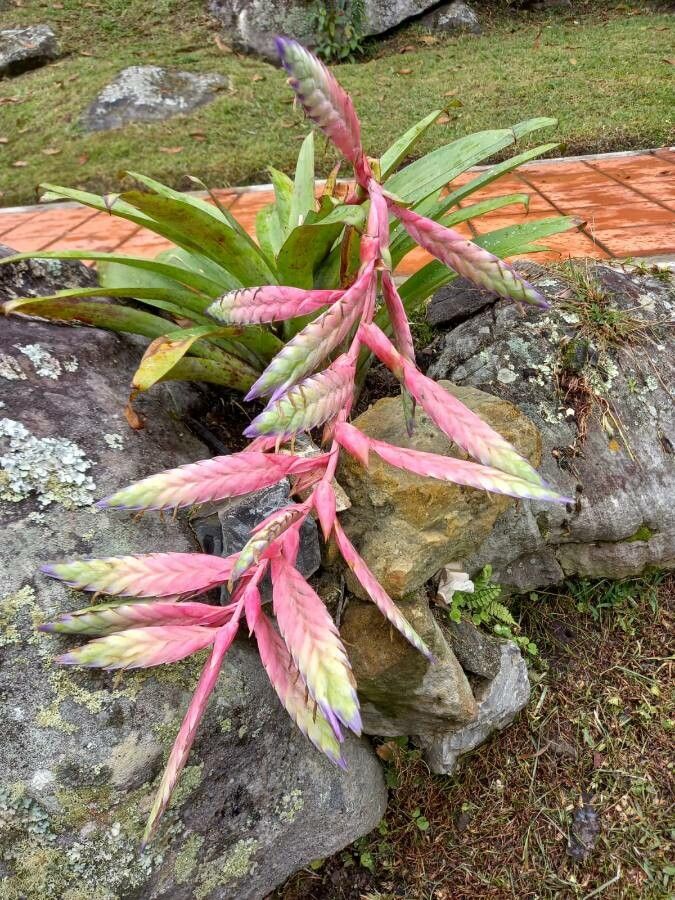
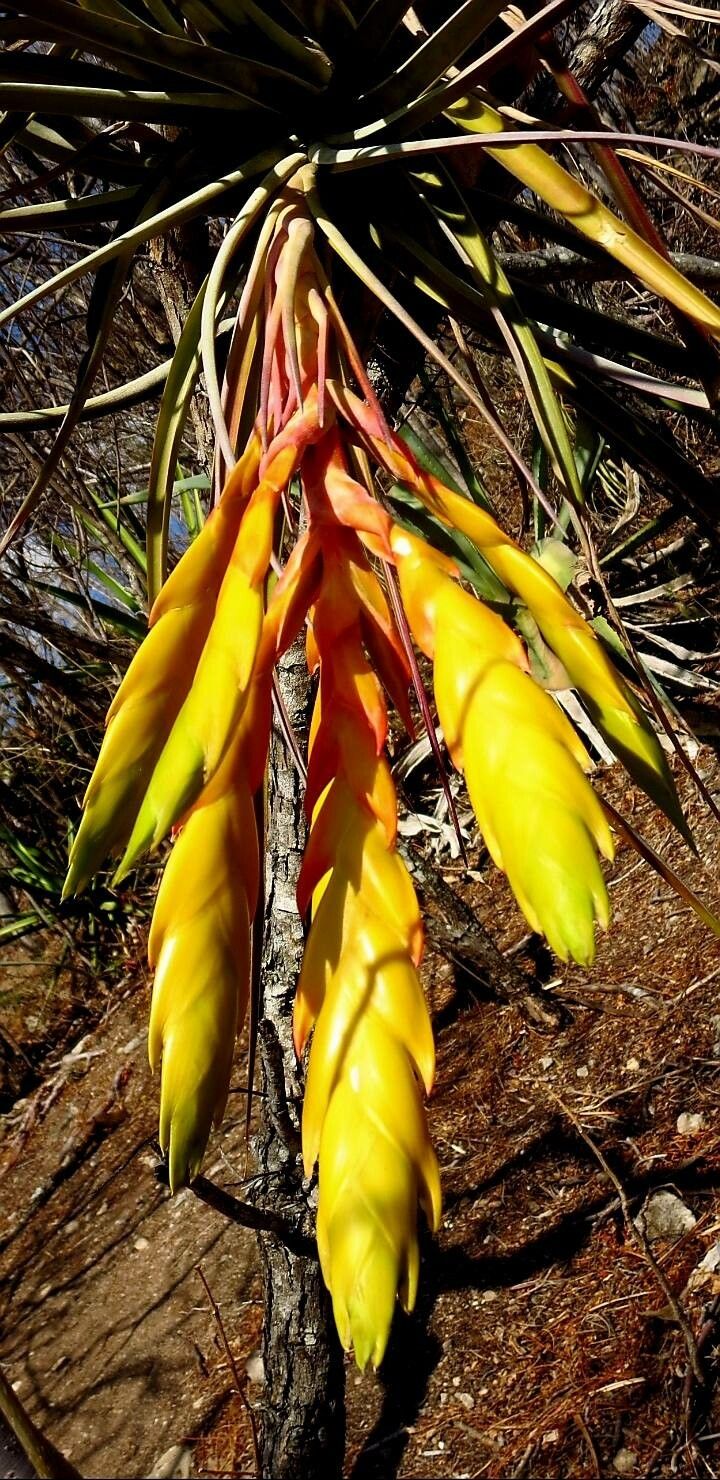
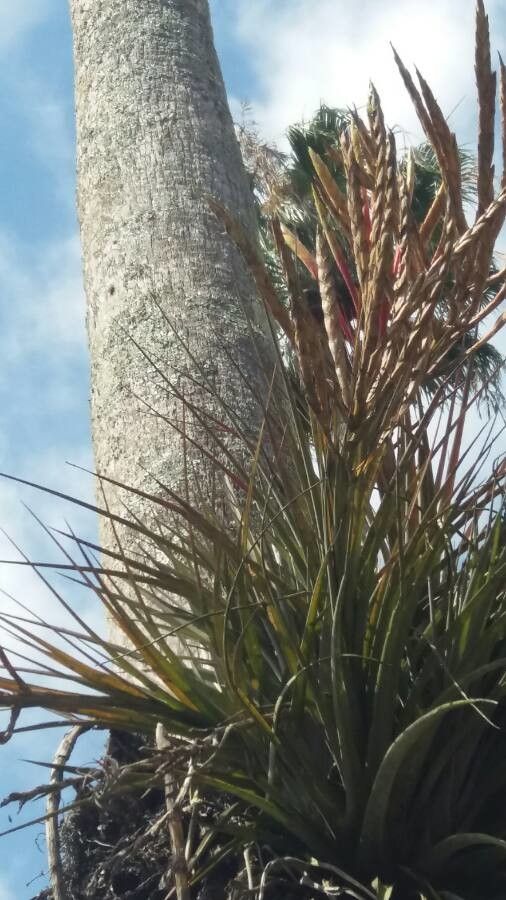
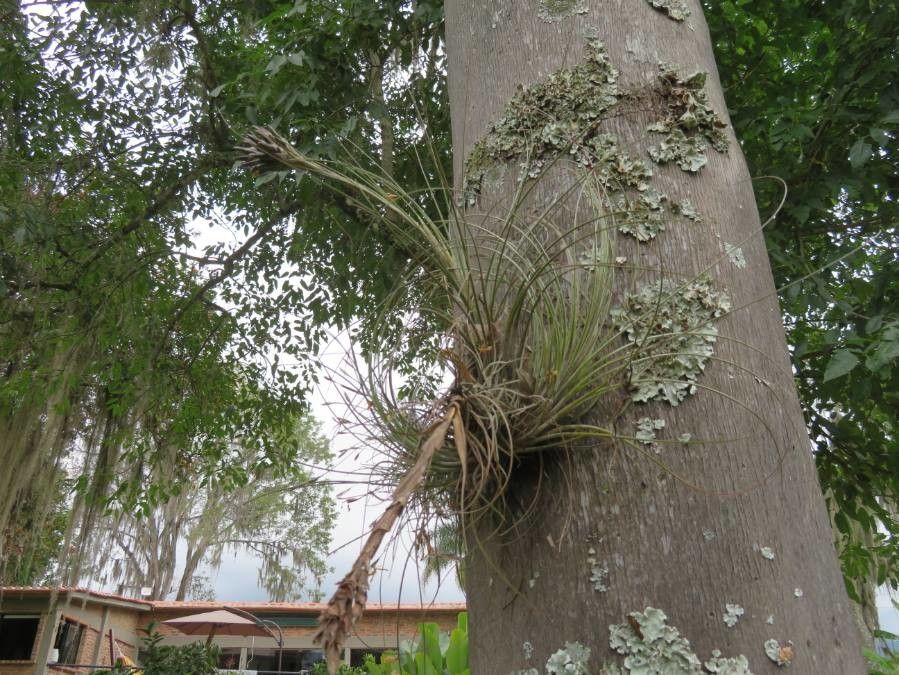
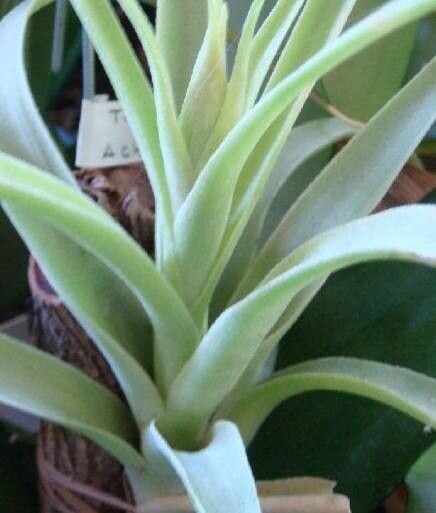
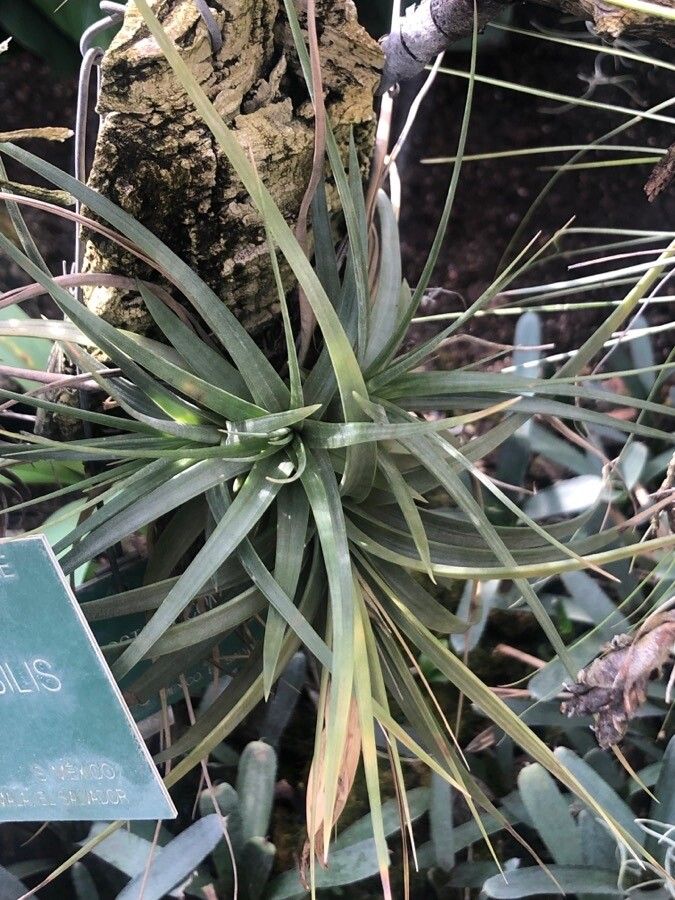
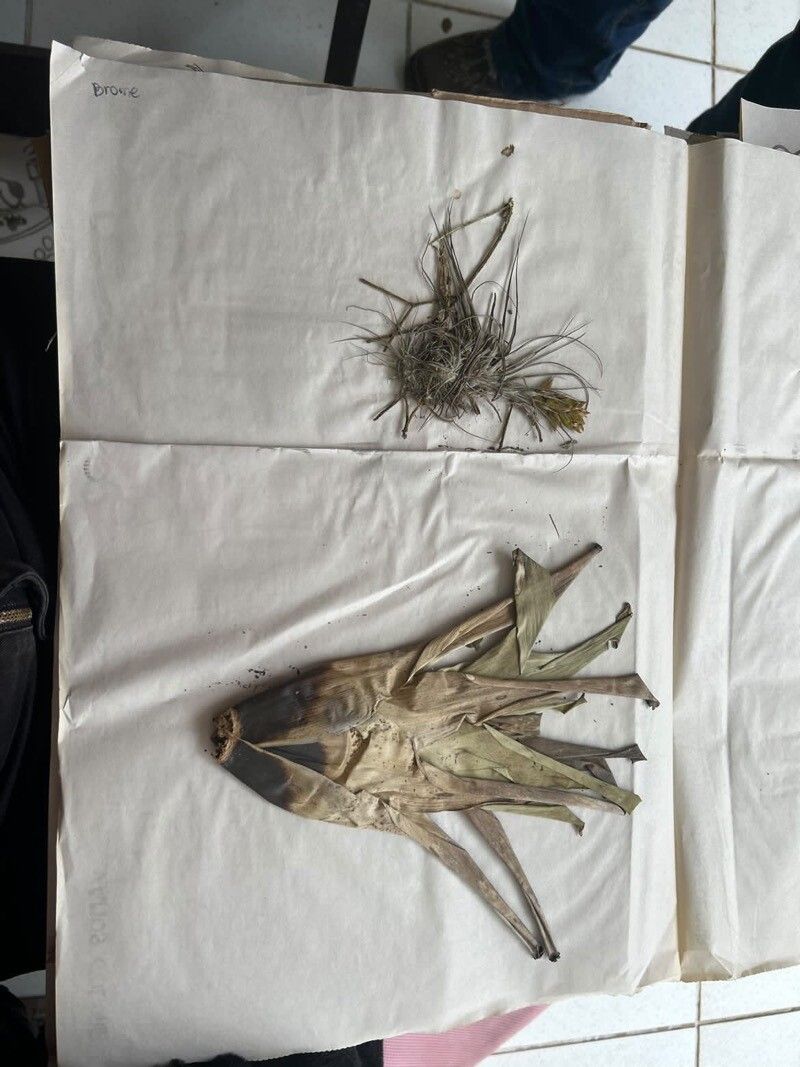
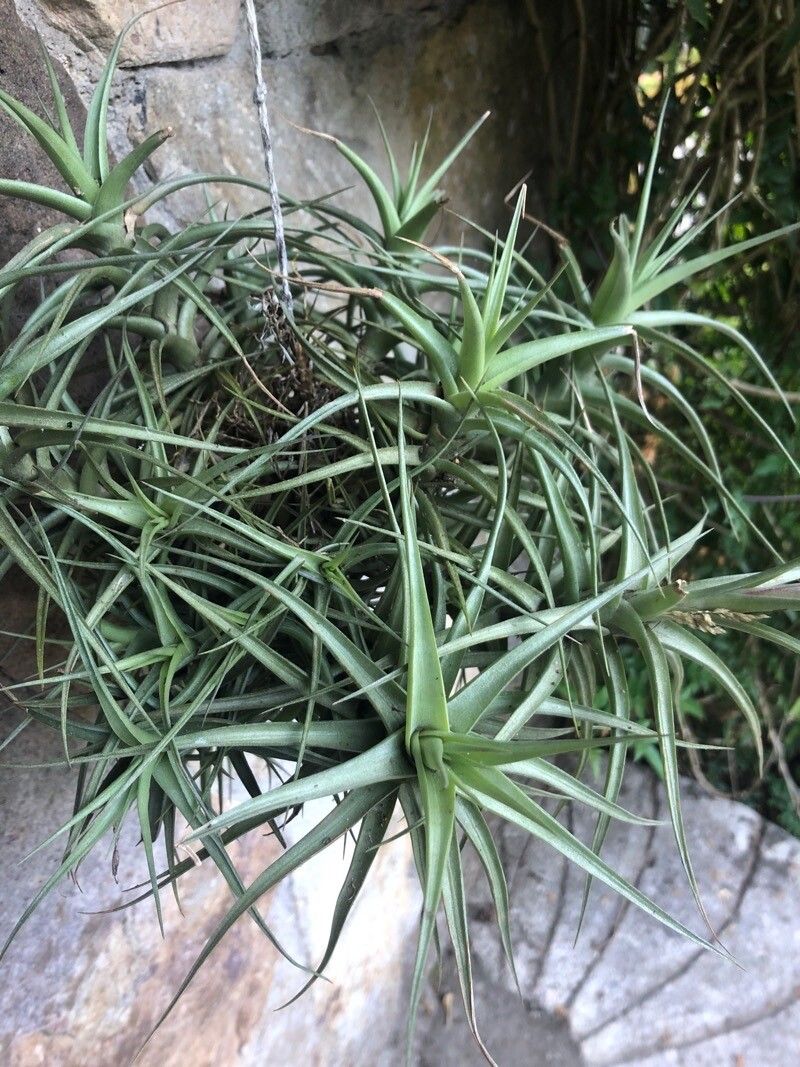
Tillandsia fasciculata, commonly known as the "giant air plant," is a fascinating species belonging to the Bromeliaceae family. Native to the tropical regions of Central and South America, it thrives in diverse habitats such as rainforests, cloud forests, and savannas. This impressive plant features long, narrow leaves arranged in a rosette formation. The leaves, typically green or gray-green, have small scales on their surfaces that help absorb moisture from the air. The plant also produces striking flower spikes that can reach up to 2 feet (60 cm) in length, adorned with small, tubular flowers showcasing bright red or purple petals. As an epiphyte, Tillandsia fasciculata grows on other plants without causing them harm, drawing nutrients from the surrounding environment through its leaves instead of relying on soil. You can cultivate Tillandsia fasciculata indoors or outdoors, provided it receives bright but indirect sunlight, along with regular misting or soaking every few days. It can also be creatively displayed by mounting it on driftwood or other decorative objects. Overall, Tillandsia fasciculata is an attractive and unique air plant, making it a captivating addition to any plant collection or home decor setup.
Giant airplant has strong resistance to disease and generally does not contract illnesses. However, it can develop rot if ventilation is poor. Its care level is considered medium, since it requires frequent misting to raise humidity and a small amount of fertilizer mixed into the water. Giant airplant is best for people with some growing experience, because improper care over time can be fatal to the plant, even when problems are not immediately noticeable.
How to keep Tillandsia Fasciculata.
Light
The giant airplant thrives with plentiful sunlight for its growth and health. It can tolerate partial exposure, but a complete lack of sun can cause unhealthy foliage and reduced vigor. Native to sunny habitats, it struggles under insufficient light. Conversely, too much sun can stress the plant.
Water
The giant air plant thrives in humid environments and prefers to absorb moisture consistently from the air. To keep it hydrated, water it weekly. As an epiphyte, it absorbs water through its leaves instead of its roots, making it a unique choice for indoor gardens.
Humidity
This plant needs special care because it loves high humidity levels of 60-80% or more. The best way to achieve this is by placing a humidifier near the plant. Daily misting is also essential! Make sure the room has good ventilation.
Temperature
Giant airplant is native to habitats where temperatures range from 68 to 100 °F (20 to 38 ℃). It favors warm climates. In colder seasons, it is advisable to modify the plant's surroundings to keep it within its preferred temperature range.
Fertilizer
To care for a giant airplant, fertilize it every two weeks during the spring and summer using a quarter-strength balanced fertilizer. In the fall and winter, reduce fertilization to once a month. Make sure to dilute the fertilizer in water before applying it to protect the plant's delicate trichomes. Following this routine will support robust growth and enhance the plant's resilience, benefiting all care levels.
Pruning
The Giant Airplant is an epiphytic bromeliad known for its rosette of silvery leaves and tall flowering stalks. For optimal health and appearance, prune in early spring or late winter. Use sanitized tools to remove dead leaves and spent stalks, cutting close to the base.
Botanical profile.
- Plant Type
- Herb
- Life Cycle
- Perennial
- Genus
- Tillandsia
- Family
- Bromeliaceae
- Hardiness Zone
- 9-11
- Mature Height
- 61 cm
- Mature Spread
- 20 cm
- Leaf Color
- Green, Gray
- Leaf Type
- Evergreen
- Flower Color
- Violet, Purple
- Flower Size
- 2.54 cm to 5.08 cm
- Bloom Time
- Summer, Early fall, Mid fall
- Planting Time
- Spring, Autumn
- Harvest Time
- Fall
- Native Area
- Colombia, Bahamas, Belize, Cuba, Honduras, Mexico, Guatemala, Venezuela, Brazil, El Salvador, Nicaragua, Costa Rica, Panama, Jamaica
Other names.
Reader questions.
What do I do if I give too much water to my Giant airplant?
Overwatering can severely harm Giant airplants because their stems and leaves are susceptible to rotting. Unlike other plants, overwatering primarily affects the center of the Giant airplant's leaves, resulting in waterlogged conditions. This trapped water not only suffocates the leaves but also provides a breeding ground for microorganisms. In fact, overwatering is the primary cause of death for Giant airplants kept as houseplants. Conversely, if maintained outdoors, Giant airplants are less likely to suffer from overwatering due to better ventilation, thus promoting their overall health. Identifying the symptoms of an overwatered Giant airplant include a darkened base and mushy roots, along with yellowing and falling leaves. If your Giant airplant exhibits signs of overwatering, it is crucial to remove the dead and dying parts and ensure thorough drying of the plant. Placing it on a dry surface with good air circulation, possibly aided by a fan, can help rectify the situation, especially if the plant is of a suitable size. Without intervention, the spread of rot will gradually lead to the demise of the Giant airplant.
What are the sunlight requirements for a Giant Airplant?
The Giant Airplant, or Tillandsia fasciculata, flourishes under ample sunlight exposure, which is crucial for its growth and well-being. It can withstand partial sun exposure; however, lack of sunlight may lead to unhealthy foliage and reduced vitality. The plant originates from environments rich in sunlight and may struggle in insufficient lighting. Conversely, too much exposure can also stress the plant. Observing how sunlight moves through your garden and choosing locations that offer a mix of light and shade can significantly benefit your plants.
What are the ideal temperature conditions for Giant airplant?
Giant airplant, or Tillandsia fasciculata, thrives in temperatures ranging from 68 to 100 °F (20 to 38 °C), favoring warm climates. During colder seasons, it's important to maintain this preferred temperature range. In winter, if the temperature drops below 0°C, the plant should be moved indoors. It's beneficial to keep indoor temperatures above 20°C, reducing watering if temperatures fall below this point. For outdoor overwintering in colder climates, providing shelter, a temporary greenhouse, or wrapping with plastic film or fabric can help, along with reduced and careful watering to keep the soil slightly moist.
What should I do if the Giant airplant doesn't get enough water?
To determine when to water the plant, look out for signs like wrinkled appearance or loose, rolling leaves. In more severe situations, the leaf tips may dry out and turn brown. If a giant airplant is underwatered, it will look droopy instead of sharp, but it can be revived with regular spraying or soaking. It's crucial to note that once the leaf tips dry out and turn brown, they cannot be revived, so establishing a proper watering schedule is vital.
What artificial lighting is recommended for indoor Giant Airplants?
For indoor Giant Airplants lacking sufficient natural sunlight, especially during winter or in less sunny spaces, artificial lighting is a beneficial alternative. LED lights are recommended due to their ability to offer specific wavelengths needed by the plants. Full sun plants require 30-50W/square foot, partial sun plants need 20-30W/square foot, and full shade plants require 10-20W/square foot of artificial light. The ideal distance for placing the light source is 12-36 inches above the plant to mimic natural sunlight, and most plants benefit from 8-12 hours of light per day.
How does cold weather affect Giant airplant and what measures should be taken?
Giant airplant is sensitive to cold weather, thriving best above 20°C and needing protection when temperatures drop below 0°C. At -5°C, leaves may initially show no symptoms but will eventually wither, droop, and the plant can dry up if the cold persists. If exposed to frost, trim frostbitten areas and move the plant indoors to a warm spot near a south-facing window for sufficient sunlight. It's also advised to avoid placing the plant near heaters or air conditioning vents to prevent air dryness.
How frequently should I water my Giant airplant?
- On average, mist the plant three or four times a week. - If you live in a dry area or your plant needs more water, increase the frequency. - For the Giant airplant, soak it in a bowl of water for 30 minutes to 1 hour every 1-2 weeks. - In spring and fall, soaking once a week is common, while in summer it may be more frequent, and in winter less frequent. - Your city's climate may affect the schedule slightly, but overall, the care requirements don't vary much. - They are easy to maintain, and after a few weeks, you'll learn their needs and establish a watering routine that works for you.
What are the symptoms of light deficiency in Giant Airplants?
Giant Airplants may exhibit several symptoms when faced with light deficiency, including smaller new leaves, leggy or sparse growth, faster leaf drop, slower or halted growth, and lighter-colored new leaves. These symptoms indicate the plant's struggle to adapt to insufficient light conditions. Conversely, overexposure to sunlight can cause chlorosis, sunscald, leaf curling, wilting, and leaf scorching, reflecting the plant's negative response to excessive sunlight.
What should be done if the Giant airplant experiences high temperatures?
During summer, ensuring the Giant airplant remains below 38°C is crucial to avoid heat stress, as temperatures above 43°C can cause dry and withered leaf tips, halted growth, and increase the risk of root rot. Additionally, plants may suffer from sunburn due to excessive sun exposure. To manage high temperatures, remove any withered parts of the plant, relocate it to a shaded area during the midday and afternoon sun, and water it during cooler times, such as in the morning or evening, to maintain both plant and environmental moisture.
How do I water a large airplant?
Giant airplants have a unique way of absorbing water through their leaves. In their natural habitat, water condenses on the leaves at night and is absorbed through pores. As a houseplant, you can recreate this by misting water onto the leaves. However, be careful not to let water accumulate in the center of the leaves, as it can lead to bacterial growth and suffocation. Mist the leaves evenly and avoid over spraying. It's best to do this at night, as it aligns with the plant's natural cycle. If possible, use unchlorinated water, such as rainwater, stream water, or lake water. These plants derive nutrients from water, so it's important to provide water with minerals and nutrients. Distilled water is not recommended for long-term use. Alternatively, you can water the plant by soaking it for 30 minutes to 1 hour. After soaking, make sure to dry the plant thoroughly by placing it on its side or upside down on a paper towel or dish towel for about 2 hours. In the summer or dry locations, more frequent soaking may be necessary. Pay attention to the water temperature and aim to keep it between 60- and 80-degrees Fahrenheit. If the water temperature is unsuitable, let it sit in the room for a while before watering. You'll know it's time to water the plant when it appears wrinkled, with rolled leaves that remain loose. If the plant is underwatered, it will droop, but it can be revived with continuous spraying or soaking. Once the leaf tips dry out and turn brown, they cannot recover, so it's crucial to establish an appropriate watering schedule. Additionally, consider environmental factors such as humidity and temperature when determining how often to water. Dry climates or indoor air with reduced humidity may require more frequent watering. Warmer seasons call for more water, while cooler temperatures require less. High humidity is beneficial, but if the air circulation is high, you may need to water more often due to increased evaporation.
How can you address sunlight-related issues for Giant Airplants?
For sunlight-related issues in Giant Airplants, indoor solutions include gradually moving plants to sunnier locations each week until they receive at least 6 hours of direct sunlight daily, utilizing a south-facing window, and considering artificial lighting for plants that are large or not easily movable. For outdoor plants, it is crucial to adapt them slowly to sunnier spots to prevent sunburn. Additionally, identifying and minimizing obstructions, such as pruning trees, or transplanting smaller plants during their dormant period to areas with better sunlight and drainage, can improve light exposure.
How does the Giant airplant get water in its natural environment?
Giant airplants absorb moisture from the humid air in their natural habitat. Although they are low-maintenance houseplants, watering them requires mimicking their wild growth conditions. Instead of traditional flower pots, these plants do well in rocky soil or when attached to the side of an object. Many people use coconut shells, large seashells, or wireframes for this purpose.