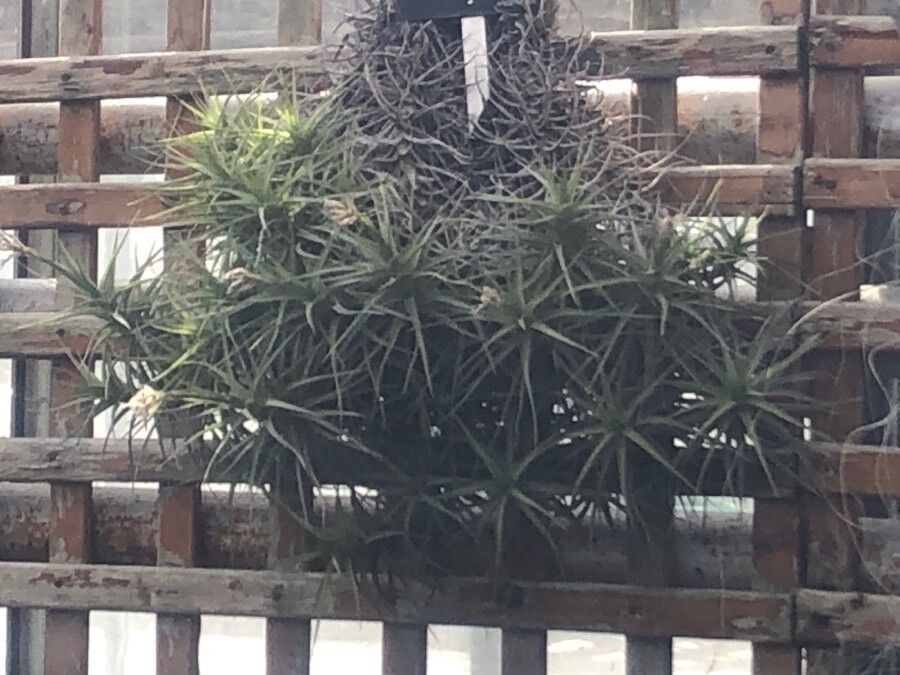
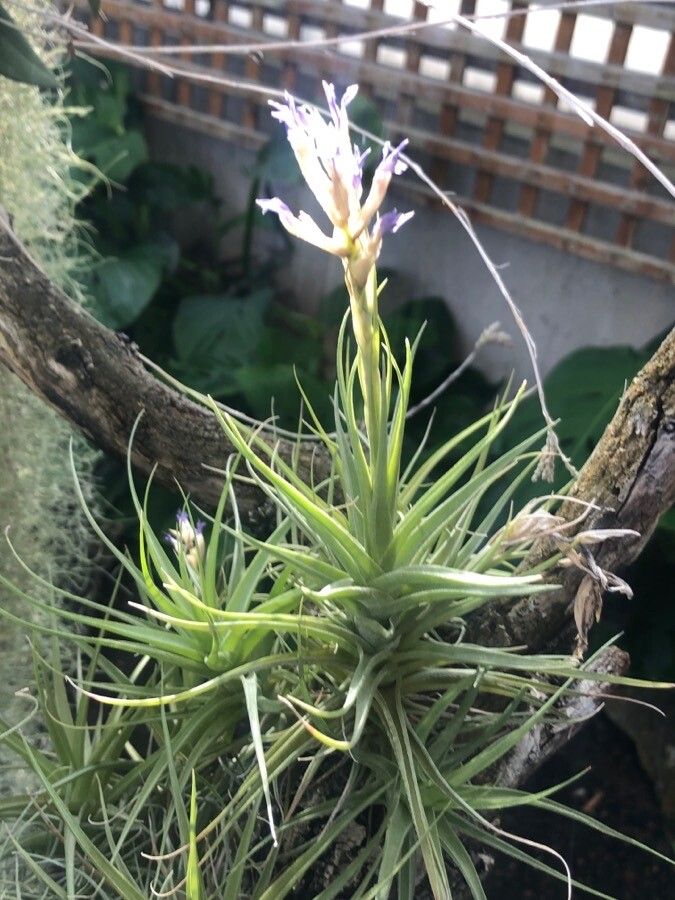
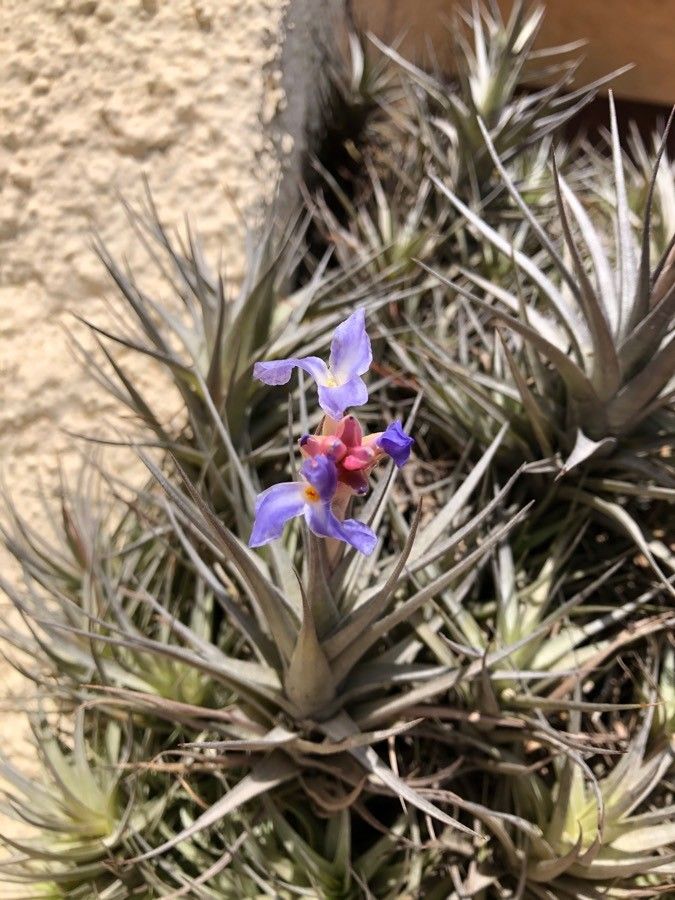
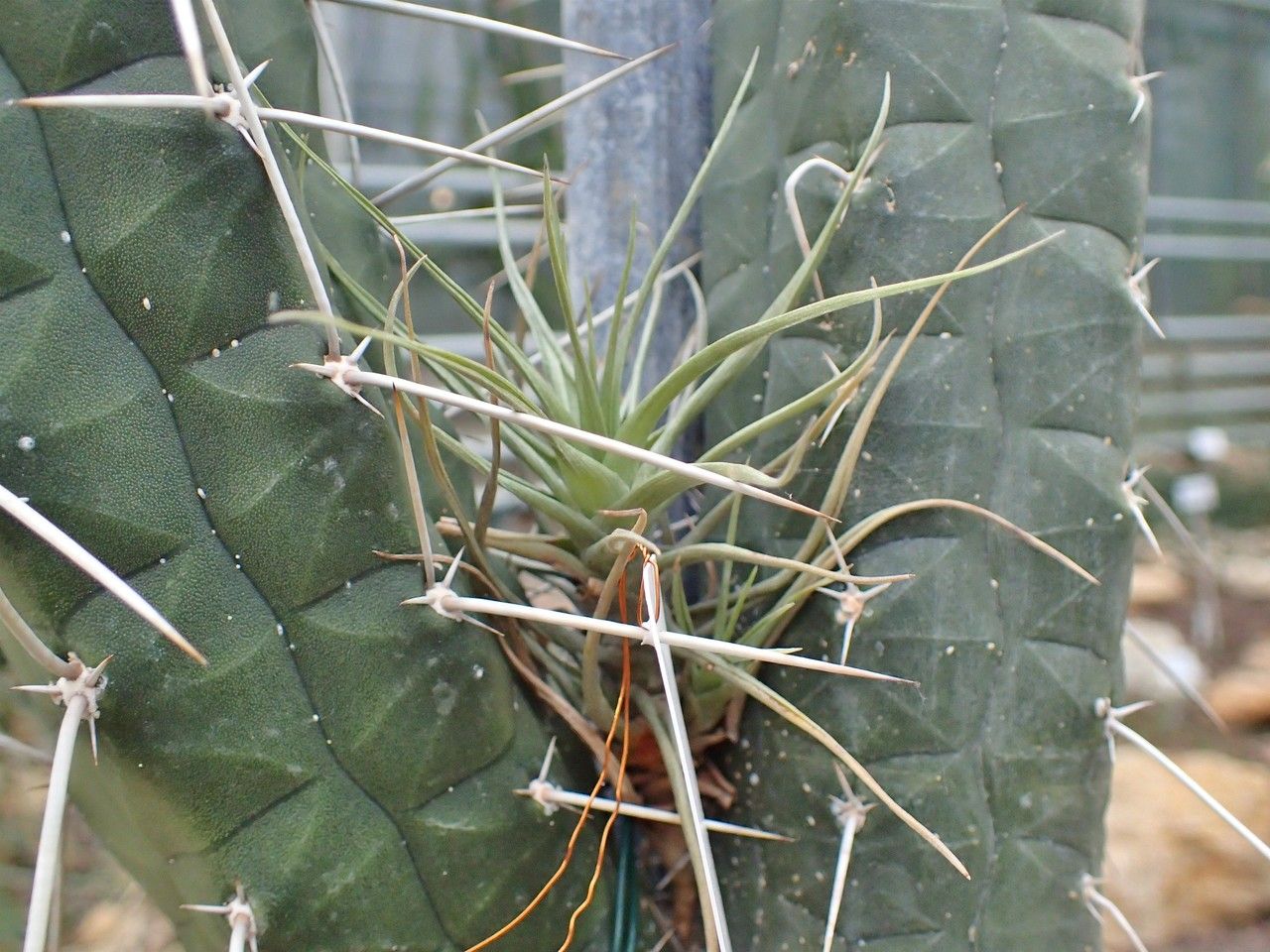
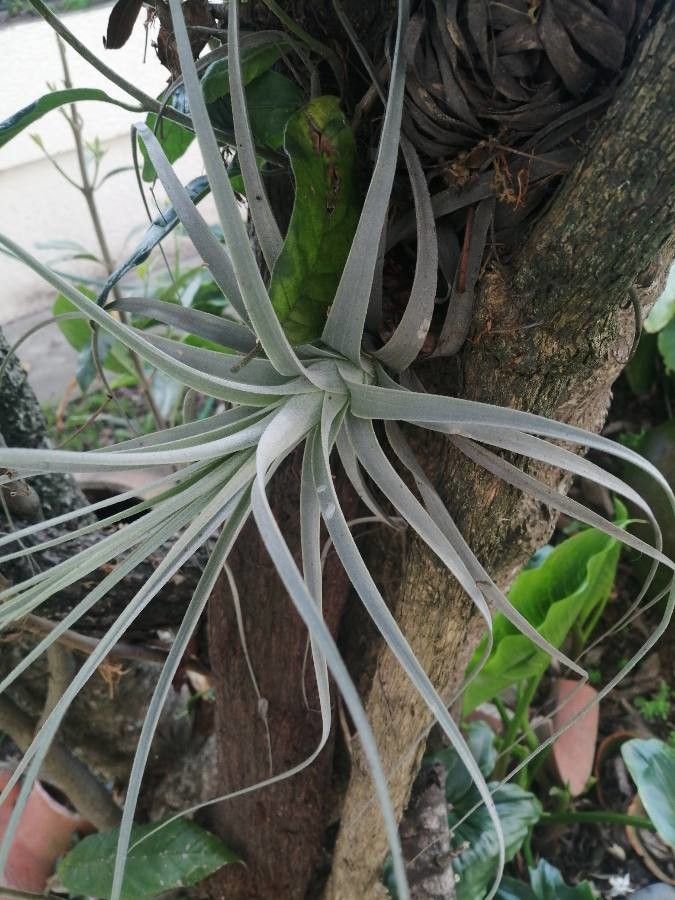
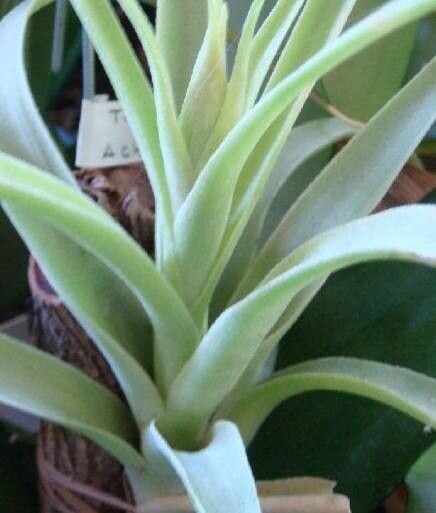
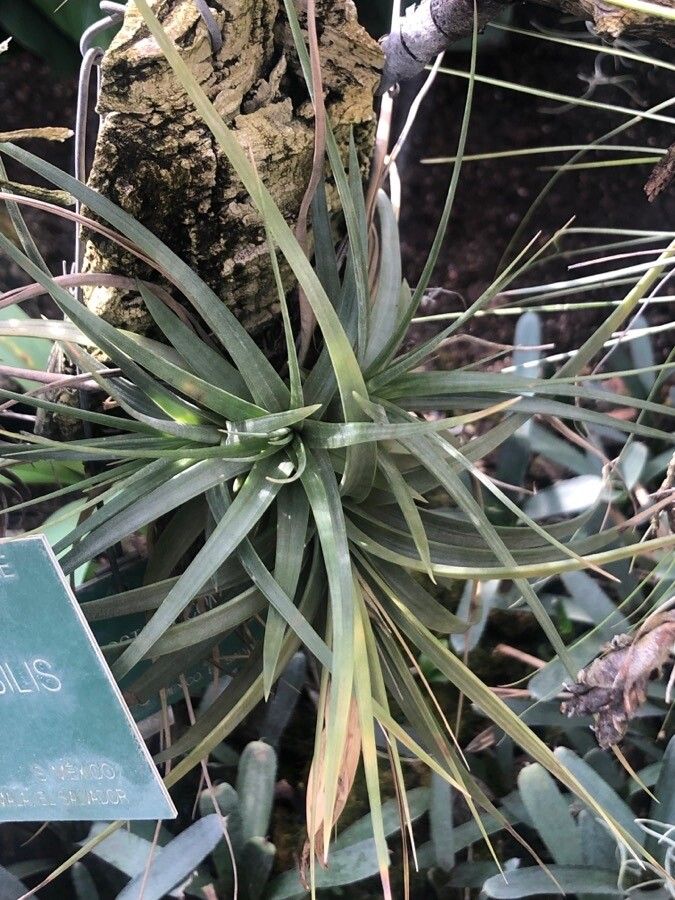
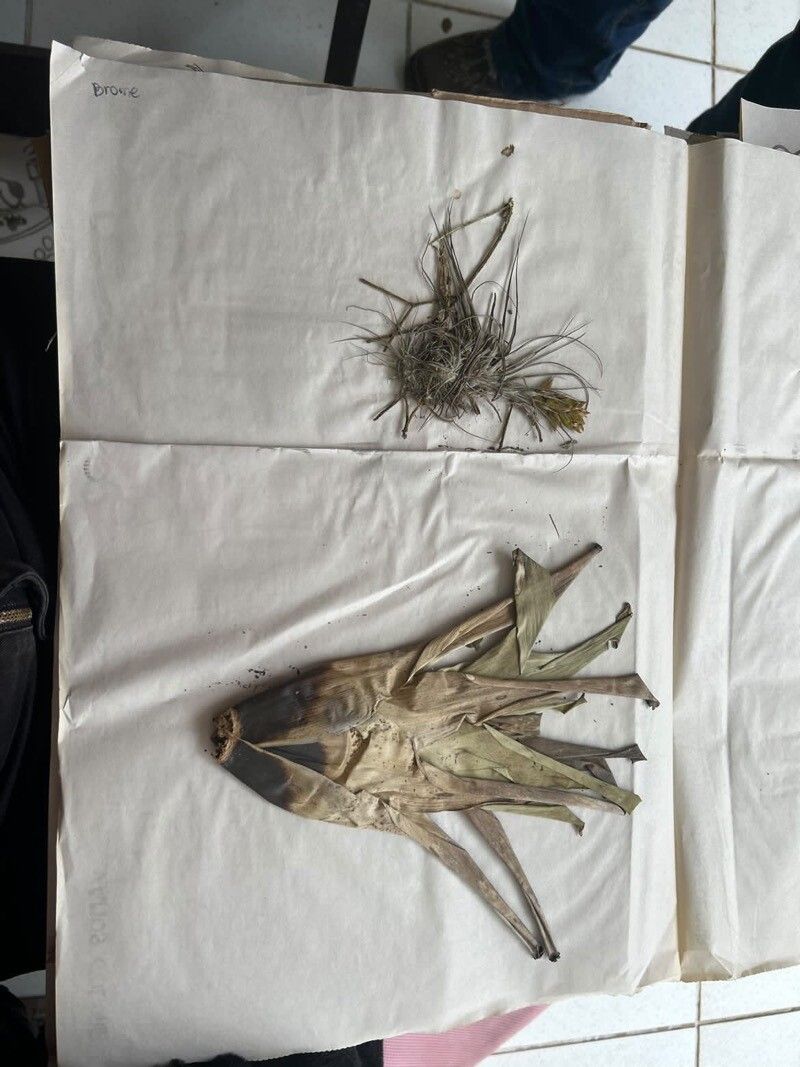
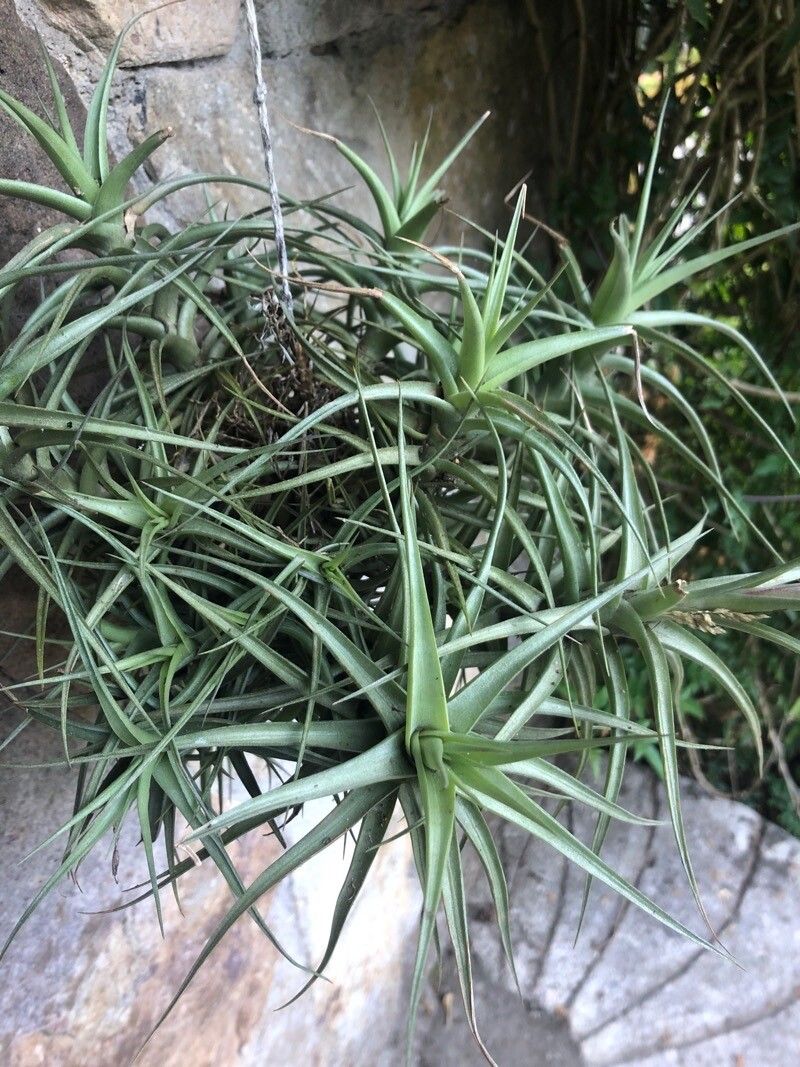
Tillandsia bergeri is a fascinating species of air plant belonging to the Bromeliaceae family. Native to the tropical regions of Central and South America, it thrives in humid forests and on trees. This plant has a distinctive look, featuring long, thin leaves that curl at the tips and form a rosette shape. The leaves are green with silver scales, which enable the plant to absorb moisture from the air.
As an epiphytic plant, Tillandsia bergeri does not need soil to grow. It derives nutrients and moisture from its environment through its leaves. It can be cultivated both indoors and outdoors, provided it receives bright but indirect sunlight.
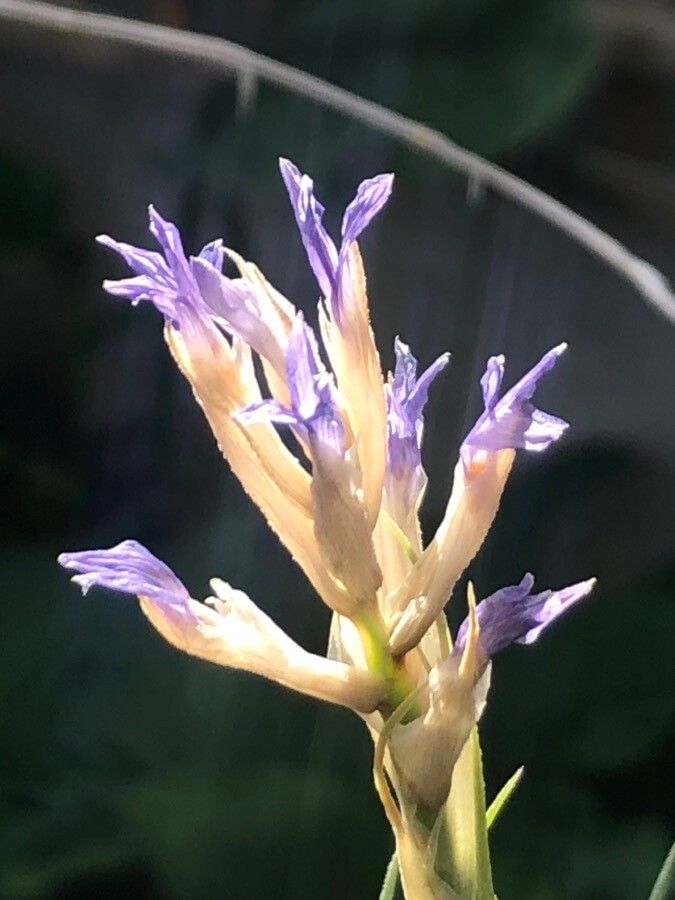
During its blooming season in late spring or early summer, Tillandsia bergeri produces small, fragrant purple flowers on tall spikes. These flowers attract pollinators, including hummingbirds.
One of the appealing aspects of Tillandsia bergeri is its low-maintenance care requirements. It needs minimal watering — just misting once or twice a week should be sufficient. This makes it an excellent choice for those seeking easy-to-care-for plants for their home or garden.
In summary, Tillandsia bergeri is a unique and attractive addition to any plant collection, noted for its distinctive appearance and simple care needs.
Tillandsia bergeri is generally resistant to disease and is not commonly affected by illnesses. However, it can be prone to rot if ventilation is poor. Its care level is considered medium because it needs frequent misting to increase humidity and a small amount of fertilizer added to its water. This species is appropriate for those with some cultivating experience, as improper care over time can be fatal to the plant, even when problems are not immediately noticeable.
How to keep Tillandsia Bergeri.
Light
Tillandsia bergeri is native to habitats like forest understories that offer natural shade. It favors partial sun but can withstand full sun when necessary.
Water
Tillandsia species are prone to both under and overwatering. If you don't water your plants enough, they'll get dry, curled, and brown. Too much and the plant will succumb to root rot. Misting the Tillandsia aeranthos bergeri at least once a week throughout the summer is suggested, possibly even daily if circumstances are hot and dry. This will be significantly less in the winter. After sprinkling, shake the plant to remove any extra water that may have become caught in the leaf. If the leaves begin to curl excessively upwards, the plant is likely to dry out. To tackle this issue, some enthusiasts suggested immersing the plant for 12 hours. It's advisable to use filtered tap water or bottled water for the best results.
Temperature
Tillandsia bergeri grows best in warm conditions. If the ambient temperature becomes too low, the plant may stop growing or suffer frost damage. It tolerates high heat and humidity well and needs a steady level of moisture in its surroundings. However, very high temperature and humidity can make it vulnerable to fungal infections. In dry conditions, regular watering and misting are necessary to keep the air humidity adequate. The plant is sensitive to sudden temperature swings, so keeping the temperature fairly stable is important.
Pruning
Pruning is necessary for most plants to bloom successfully. Despite their low maintenance, air plants require trimming on a regular basis to remove dead leaves, browning leaf tips, and broken leaves. Individual rosettes that have perished after flowering should also be removed.
Botanical profile.
- Plant Type
- Herb
- Life Cycle
- Perennial
- Genus
- Tillandsia
- Family
- Bromeliaceae
- Hardiness Zone
- 9-11
- Mature Height
- 10 cm
- Mature Spread
- 34 cm
- Leaf Color
- Green, Gray, Silver
- Leaf Type
- Evergreen
- Flower Color
- Purple, Violet
- Flower Size
- 3.05 cm to 5.08 cm
- Bloom Time
- Spring
- Planting Time
- Spring, Summer, Autumn
- Harvest Time
- Late spring, Early summer, Mid summer
- Native Area
- Brazil
Other names.