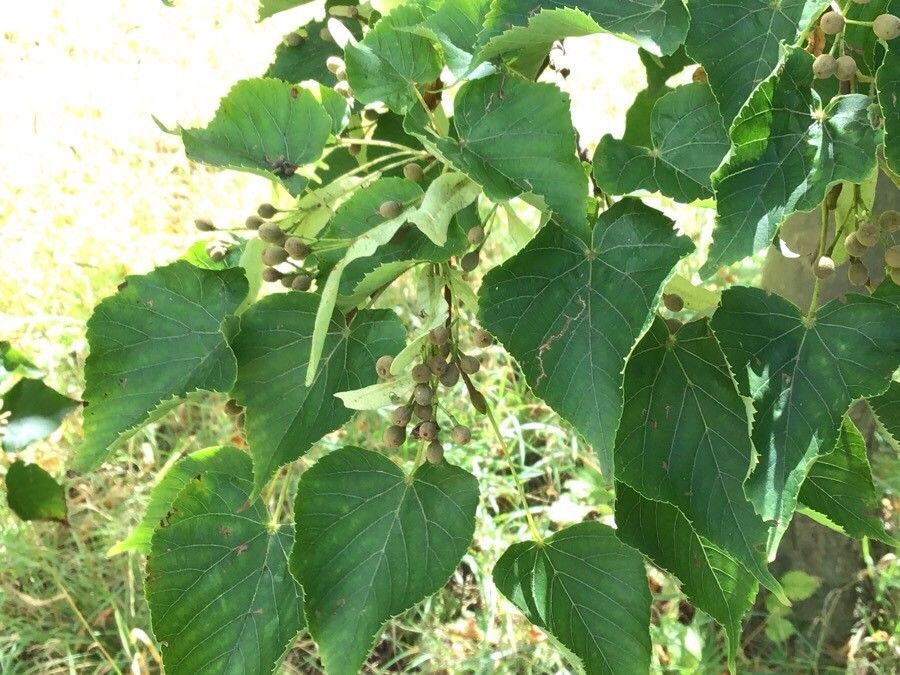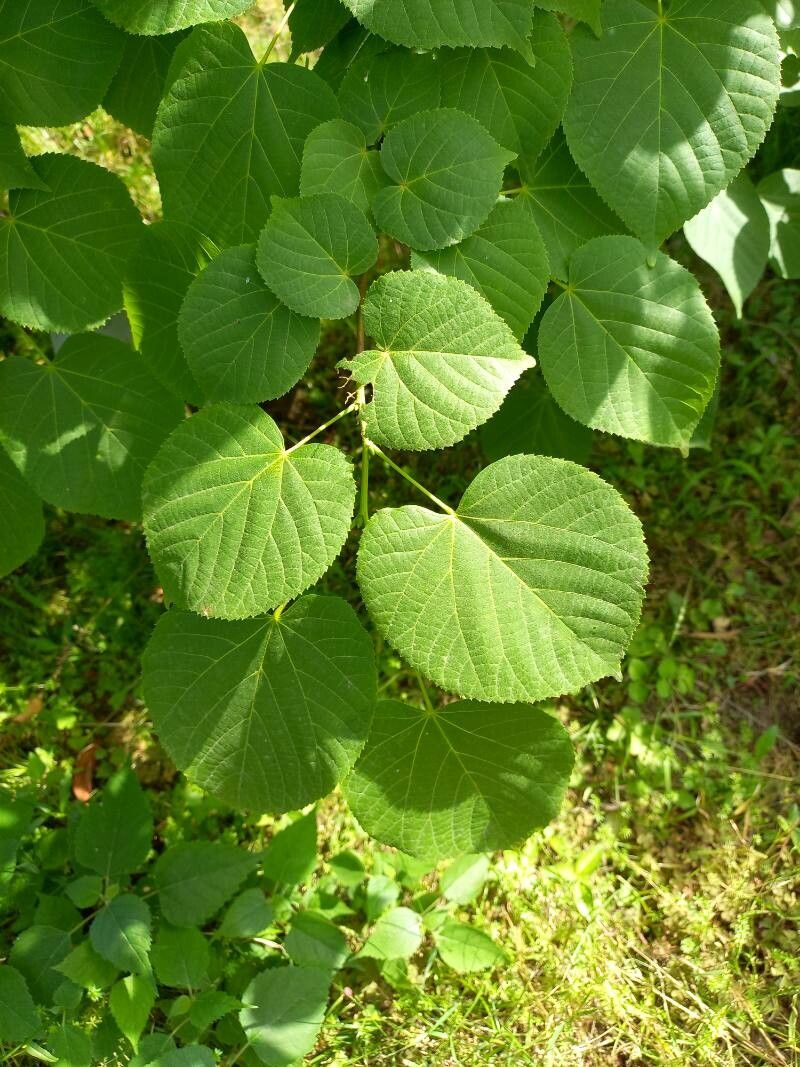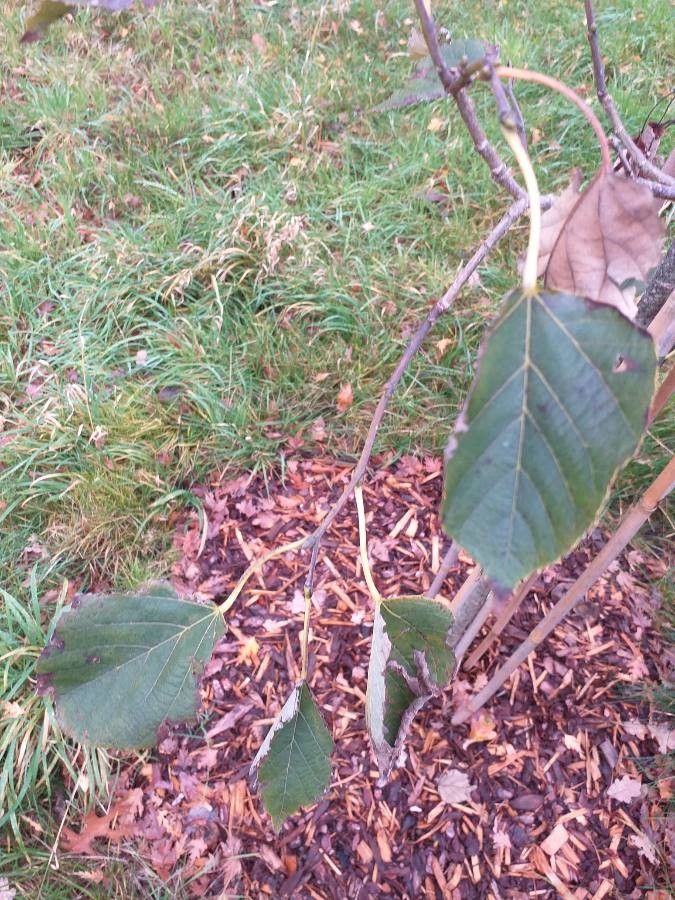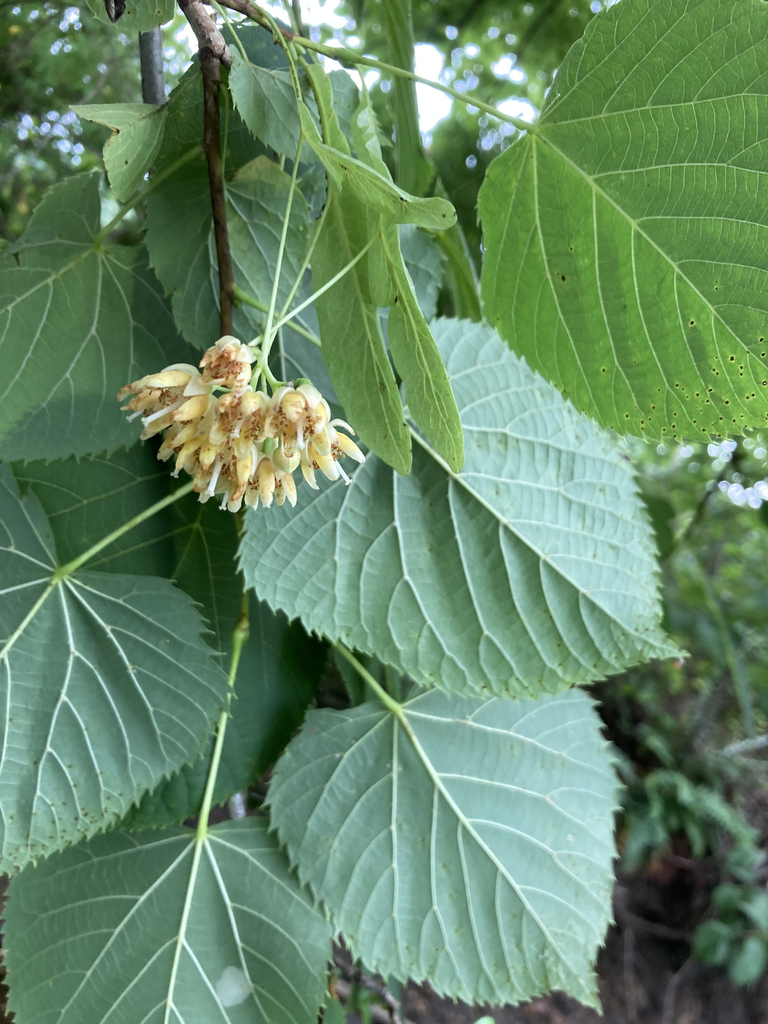
Tilia americana, commonly known as American Linden or Basswood, is a deciduous tree native to North America. Belonging to the Tiliaceae family, this tree can reach heights of up to 80 feet with a spread of 50 feet. It typically has an upright, pyramidal shape and dense foliage that offers ample shade during the summer months.
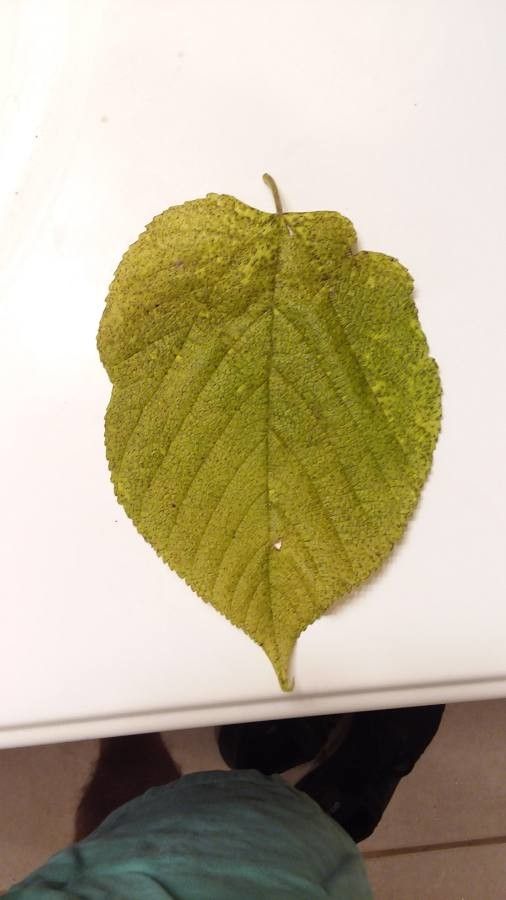
The leaves of Tilia americana are heart-shaped with serrated edges. They are dark green and turn yellow in the fall before dropping off. The tree produces small, fragrant, yellowish-white flowers that bloom in early summer.
The bark of the American Linden is grayish-brown with deep furrows that form ridges on the surface. Traditionally, it has been used for its medicinal properties and in the making of baskets, rope, paper pulp, and musical instruments.
American basswood leaves play a significant role in enhancing the nutrient quality of the soil surrounding the tree. These leaves are rich in nitrogen, calcium, potassium, and magnesium. When they fall to the ground, they decompose and release these nutrients into the soil, making it more fertile. FUN FACT · FROM THE LIBRARY
Tilia americana prefers moist soil conditions but can tolerate drought once established. It grows best in full sun to partial shade but can also thrive in full shade.
Overall, Tilia americana is an attractive tree species that provides numerous benefits. It enhances aesthetic value with its beautiful foliage and fragrant flowers while also offering important ecological services. It creates a habitat for wildlife species such as birds and insects, which rely on it for food or shelter at different stages of their life cycles.
American Basswood: The term "basswood" refers to any species from the Tilia genus. The name comes from combining "bass" and "wood," where "bass" is derived from the word "bast." This refers to the fibers extracted from the tree's inner bark. The slender timber of these trees makes them popular for extensive planting. Historically, the inner bark has been used as a source of fiber for making baskets, ropes, and fishing nets. As the species originates from North America, it is commonly known as American basswood.
American basswood resists disease well and is typically not susceptible to illnesses. Regarding maintenance, this species is fairly low-maintenance. When grown outdoors it needs little watering, and larger specimens usually do not require pruning. Smaller plants, however, should be pruned after they finish blooming. American basswood is appropriate for anyone with an outdoor area, such as a garden or a deck, and does not demand extensive plant-care experience.
How to keep Tilia Americana.
Light
American basswood grows best in locations with abundant sunlight, though it can tolerate slight shade. This trait reflects its native, open, forest-like habitat. Sufficient sun exposure supports healthy growth, while too little or too much light can adversely affect the plant's vitality.
Water
American basswood thrives in environments with moderate moisture. To keep it healthy, water it once every one to two weeks. It prefers outdoor conditions that mimic its natural water cycle, which helps maintain consistent soil moisture without oversaturating it.
Humidity
This plant will thrive in moderate humidity, which is probably the level in your home. However, misting it a few times a week can be very beneficial. Make sure the room has good ventilation.
Temperature
American basswood does best when average temperatures range from 32 ℉ (0 ℃) to 90 ℉ (32 ℃). Native to North America, it prospers in temperate and subtropical regions. During summer it can tolerate temperatures as high as 100 ℉ (38 ℃), but in winter it can survive only down to -30 ℉ (-34 ℃). In colder months, it is advisable to mulch around the plant’s base to protect the roots from frost damage.
Fertilizer
Apply fertilizer to your American basswood in early spring to encourage healthy growth. Consistent fertilization boosts overall health, producing vigorous growth, improved tolerance to harsh conditions, and greater resistance to diseases and pests. Stick to a defined fertilization schedule for your American basswood to preserve vibrant, deeply colored foliage and a lush appearance.
Pruning
The American basswood is known for its large, heart-shaped leaves and fragrant flowers. To ensure a healthy growth, it is important to prune the tree annually in early spring. This involves removing dead branches, thinning out the canopy to improve air circulation, and shaping the tree for aesthetic appeal. These practices not only promote vigorous growth but also help reduce the risk of disease. Regular maintenance is crucial for maintaining a strong structure and enhancing the tree's flowering.
Toxicity
The American linden tree which produces honey and whose leaves are used to prepare meals for both livestock and humans, show no toxicity or allergy if ingested. This quality makes it a safe and great home plant, as well as a source of food to both insects, birds and humans.
Further reading →
The toxicity and danger assessments provided are for reference only. We do not assure their accuracy, so it's crucial not to depend on them. Seek professional advice when necessary for accurate guidance.
Botanical profile.
- Plant Type
- Tree
- Life Cycle
- Perennial
- Genus
- Tilia
- Family
- Malvaceae
- Hardiness Zone
- 3-8
- Mature Height
- 17.98 m to 36.88 m
- Mature Spread
- 9.14 m to 14.94 m
- Leaf Color
- Green
- Leaf Type
- Deciduous
- Flower Color
- Yellow
- Flower Size
- 1.02 cm to 1.52 cm
- Bloom Time
- Early summer, Mid summer
- Planting Time
- Spring, Autumn
- Harvest Time
- Mid summer
- Native Area
- Mexico
Other names.
Reader questions.
When should I water my American Basswood?
Watering American Basswood is crucial for its health, requiring a balance between too much and too little water. The best time to water is when the soil's top 1 to 2 inches feel dry. Signs that your American Basswood needs water include soil dryness, dry and brittle leaf edges, loss of leaf vibrancy, and wilting. However, both overwatering and underwatering come with risks such as root rot or drought stress, potentially leading to the tree’s decline or death.
Why is it necessary to add fertilizer to my American basswood tree?
If you own an American basswood, regardless of the kind, regular fertilization is important for its overall health. By providing the right nutrients, your American basswood will grow stronger, better able to handle tough growing conditions, and more resistant to diseases and pests. The foliage of the American basswood is attractive, so it's important to maintain it. This involves following a specific fertilization schedule to ensure the leaves develop a deep color and a lush appearance.
What are the sun requirements for American Basswood?
American basswood requires full sun exposure, defined as above 6 hours of sunlight daily, to thrive optimally, although it can also tolerate partial sun, which means about 3-6 hours of sunlight. It's essential to watch how sunlight moves through your garden to ensure that you choose spots that provide the right balance of light and shade for your plants, promoting their health and happiness.
What are the optimal growth temperatures for American Basswood?
American Basswood (Tilia americana) thrives in average temperatures ranging from 32°F (0°C) to 90°F (32°C) to achieve optimal growth. Native to North America, this tree flourishes in both temperate and subtropical climates. During the summer months, it can withstand temperatures as high as 100°F (38°C), but in winter, its tolerance limit drops to a chilly -30°F (-34°C). To protect its roots from frost damage during colder months, mulching around the base of the plant is advisable.
How should I water my American Basswood?
Watering an American Basswood effectively involves using a watering can with a long spout to ensure even distribution around the base, without directly pouring water over the trunk or leaves. Utilizing a moisture meter can help in keeping the soil moist but not over-saturated. Focus on watering around the base to cover the root spread area and avoid overwatering to prevent root rot. Also, refrain from mixing fertilizers with the water, and avoid getting the leaves or trunk wet to prevent diseases.
When should I fertilize my American basswood tree?
To properly care for your American basswood tree, fertilization is essential. The first fertilization should be done in late winter or early spring, before the weather becomes warm enough for the tree to resume healthy growth. This initial fertilization ensures that your tree receives all the necessary nutrients for robust growth. For those living in warm climate regions, it is advisable to provide an additional fertilizer feeding during early fall. This second fertilization not only replenishes the soil with nutrients for the next growing season but also helps the tree to withstand the winter cold without foliage damage. By fertilizing earlier in the fall, the new branches have ample time to grow and become more resistant to winter conditions.
How does sunlight affect the growth of American Basswood?
Sunlight plays a crucial role in the healthy development of American Basswood. In its natural habitat, which is open and has a forest-like environment, the basswood thrives in areas generously exposed to sunlight but can also survive in slightly shaded locations. Adequate exposure to sunlight is vital for the plant's healthy maturation, while both insufficient and excessive light can negatively impact its vitality. In case natural sunlight is not adequate, especially during winter or in less sunny spaces, artificial lighting can be utilized to promote faster, healthier growth.
How should American Basswood be protected in extreme winter conditions?
American Basswood is known for its strong cold resistance, and generally, it doesn't require special frost protection during winter. However, if temperatures are expected to plummet below -35°C (-31°F), it's crucial to protect the tree. One effective method is by wrapping the trunk and branches with non-woven fabric or cloth to shield it from the cold. Additionally, to help the plant deal with potential drought and water scarcity during winter and early spring, it's recommended to water the plant abundantly before the first freeze in autumn, ensuring the soil is moist as it enters a frozen state.
How much water does American Basswood really need?
The American Basswood's watering needs depend on environmental factors and its stage of growth. Generally, it requires enough water to moisten the root ball, with young plants needing about 2-3 liters per session and larger plants needing more. Proper hydration is indicated by healthy, vibrant leaves and firm stems. Signs of underwatering include wilting and dry leaves, while overwatering leads to yellowing leaves, leaf drop, and potential root rot. It’s advised to check the soil moisture before watering, allowing the soil to slightly dry out between waterings.
When is it best not to add fertilizer to my American basswood plant?
There are specific times of the year when you should not fertilize your American basswood tree. One of these times is in the early and mid-winter months when the tree is dormant and does not need any nourishment. Another time to avoid fertilizing is during late spring and all throughout the summer. These months tend to be hotter and drier, which can cause the tree to have a negative reaction to fertilizer. To prevent any potential problems, it is best to stick to a fertilization schedule that only includes feeding in the early spring and early fall.
How can artificial lighting support plant growth?
Artificial lighting is essential for indoor plants when natural sunlight is insufficient. LED lights, being customizable to provide specific wavelengths of light needed by plants, are a popular choice. Full sun plants require 30-50W per square foot of artificial light, partial sun plants need 20-30W per square foot, and full shade plants need 10-20W per square foot. To mimic natural sunlight, the light source should be 12-36 inches above the plant. Moreover, mimicking the length of natural daylight hours, most plants will need 8-12 hours of light per day to ensure optimal growth.
What are the symptoms of temperature stress in American Basswood, and how can they be mitigated?
American Basswood shows different symptoms under low and high-temperature stress. During winter, it is important to keep the temperature above -30°C (-22°F) to avoid brittle and dry branches, which may lead to a lack of new shoots in spring. The solution for this is to prune any dead branches that fail to produce new leaves as spring arrives. In contrast, during summer, it's best to keep temperatures below 32°C (90°F) to prevent leaves from becoming lighter in color, drying, and becoming susceptible to sunburn. To mitigate high-temperature stress, trim away sunburned parts, relocate the plant to a shaded area or use a shade cloth, and ensure the soil stays moist by watering in the morning and evening.