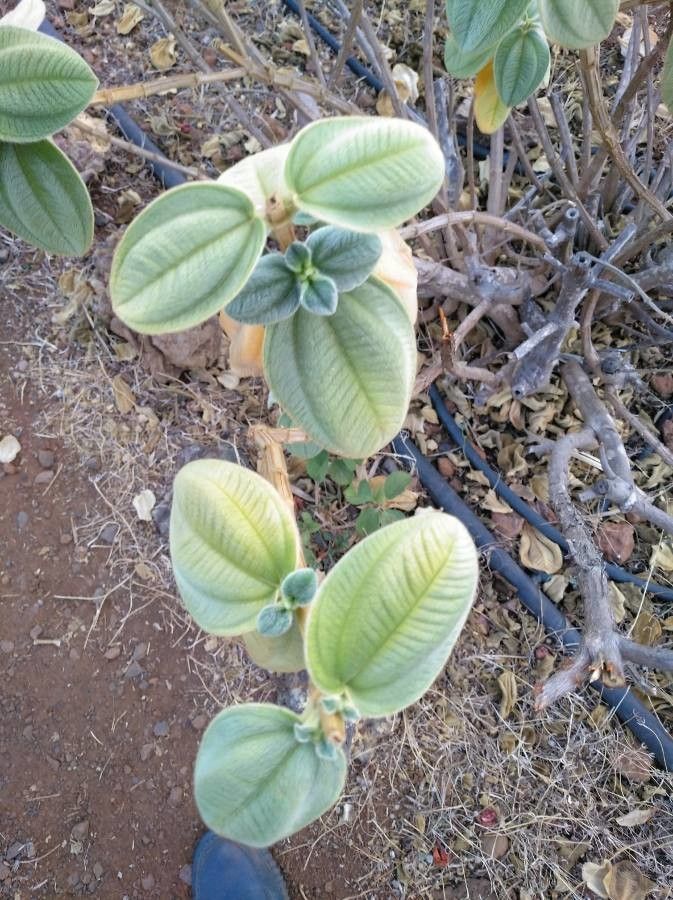
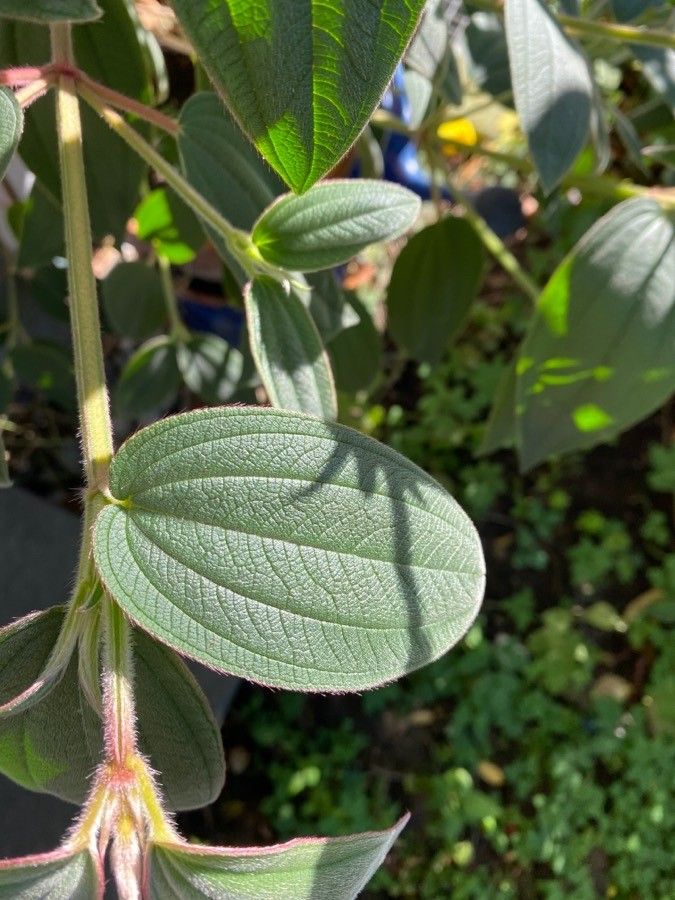
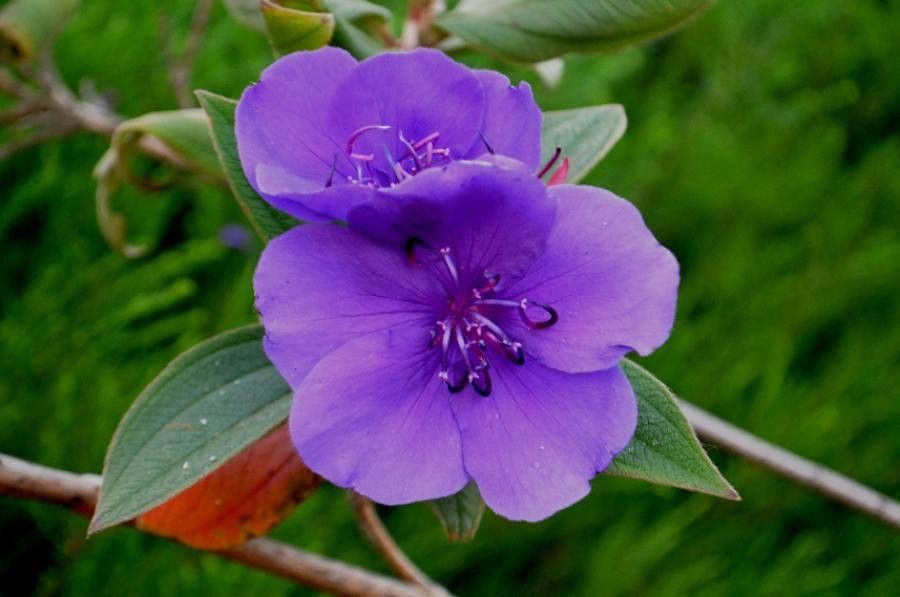
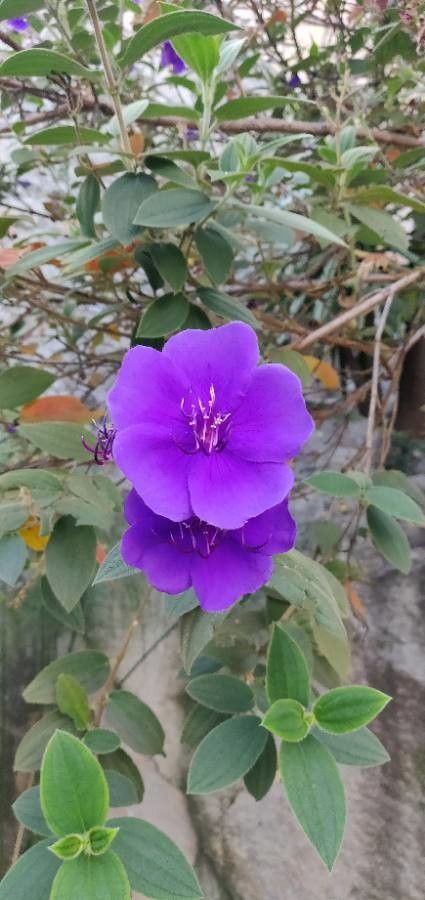
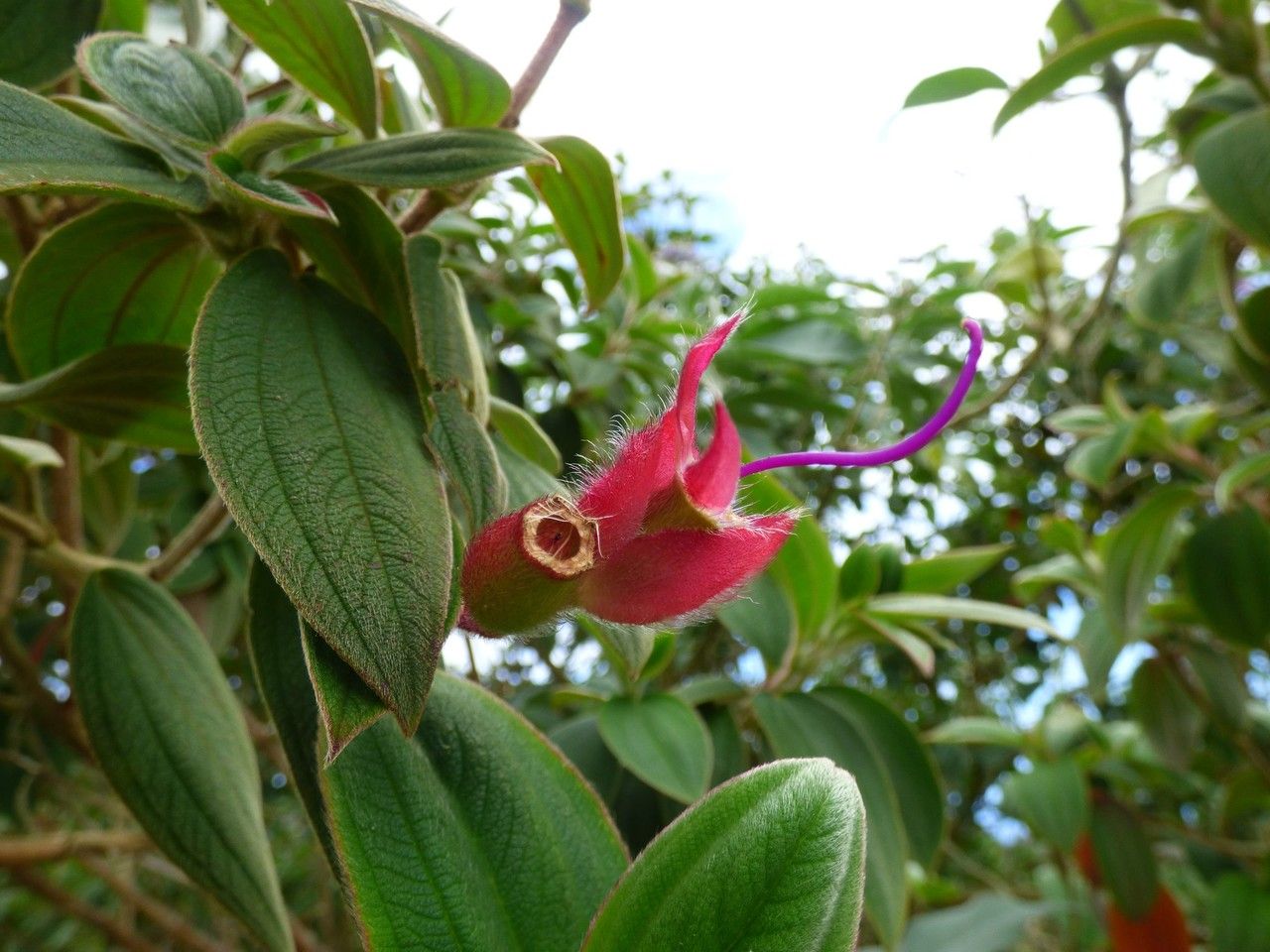
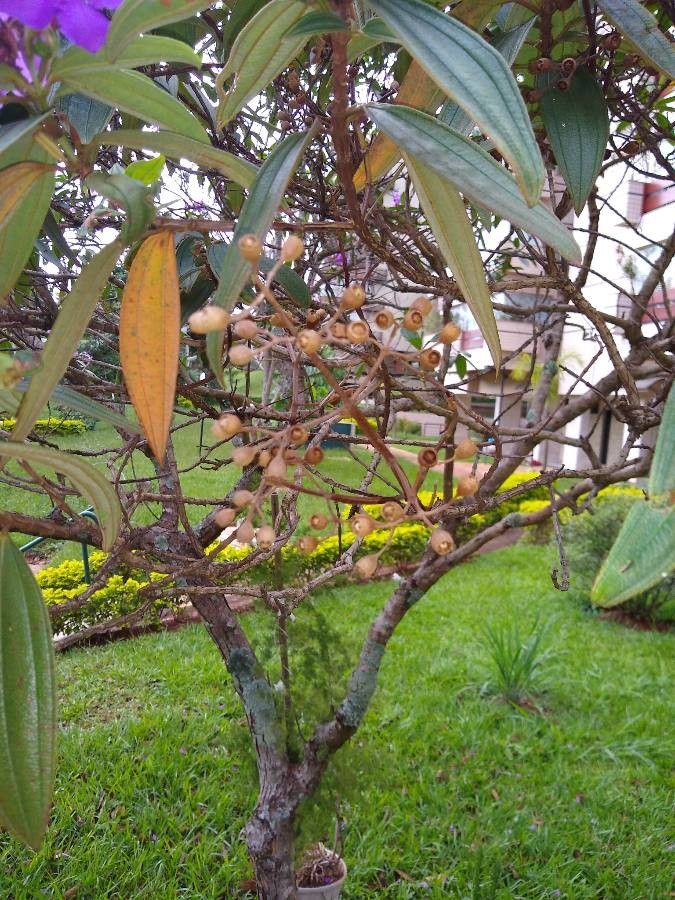
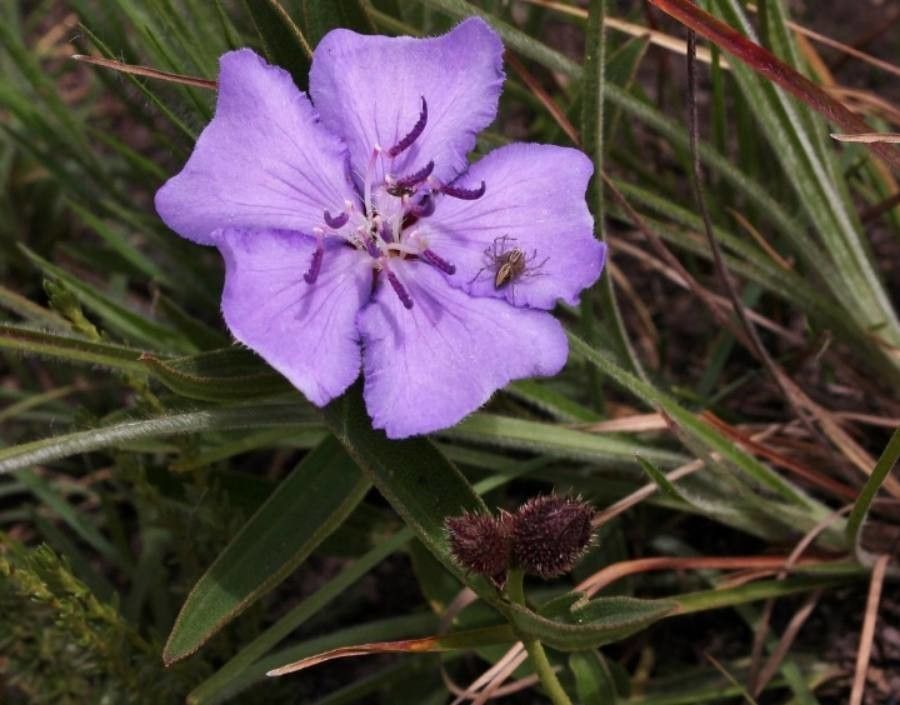
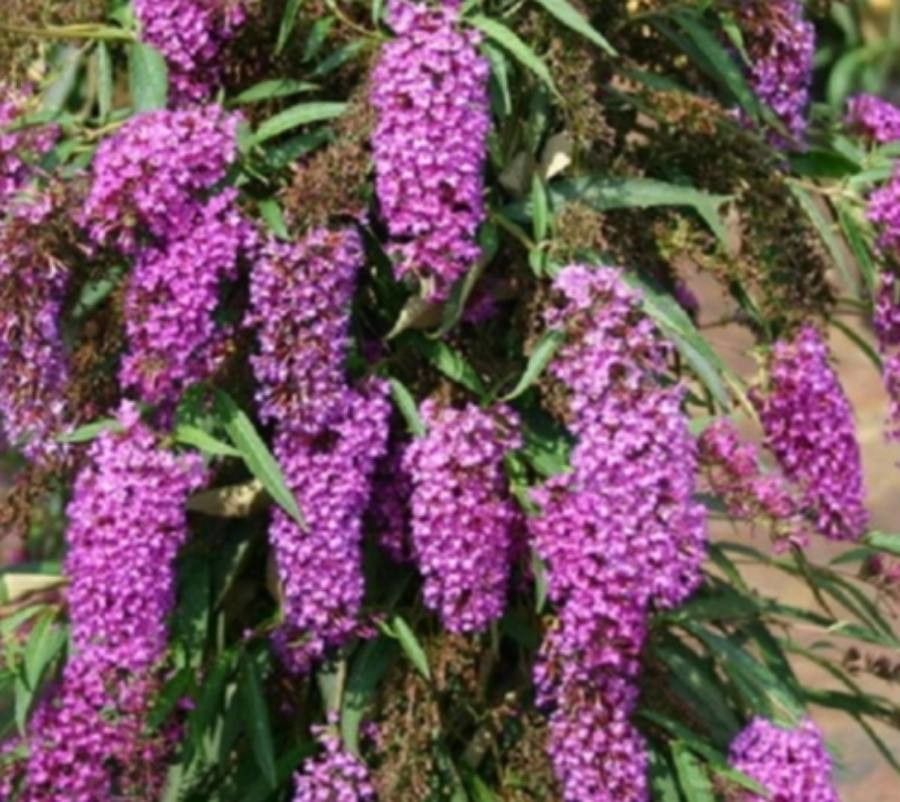
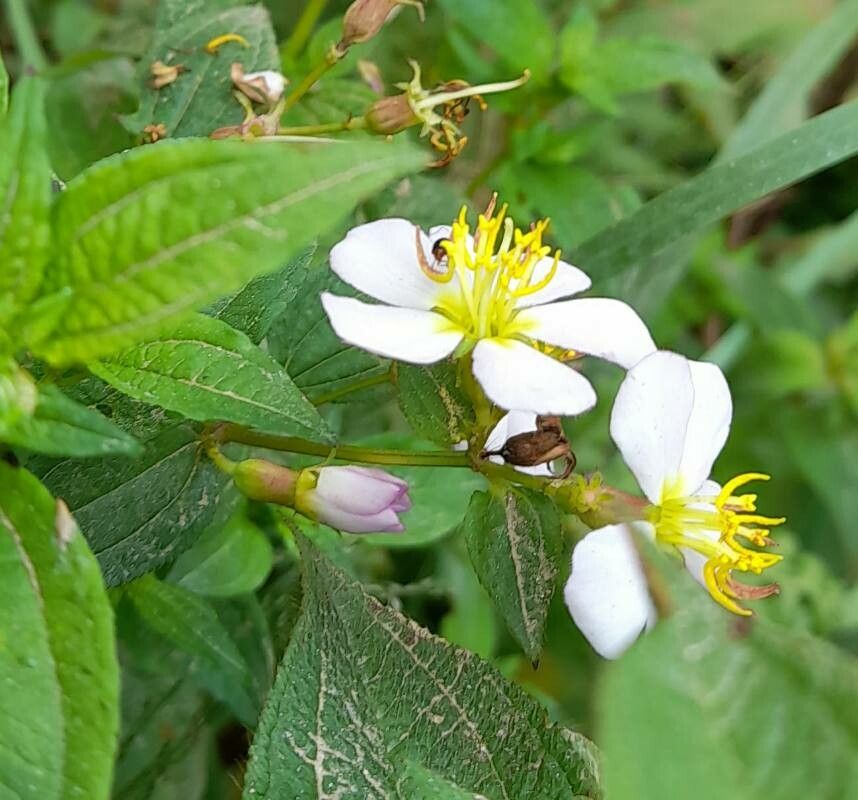
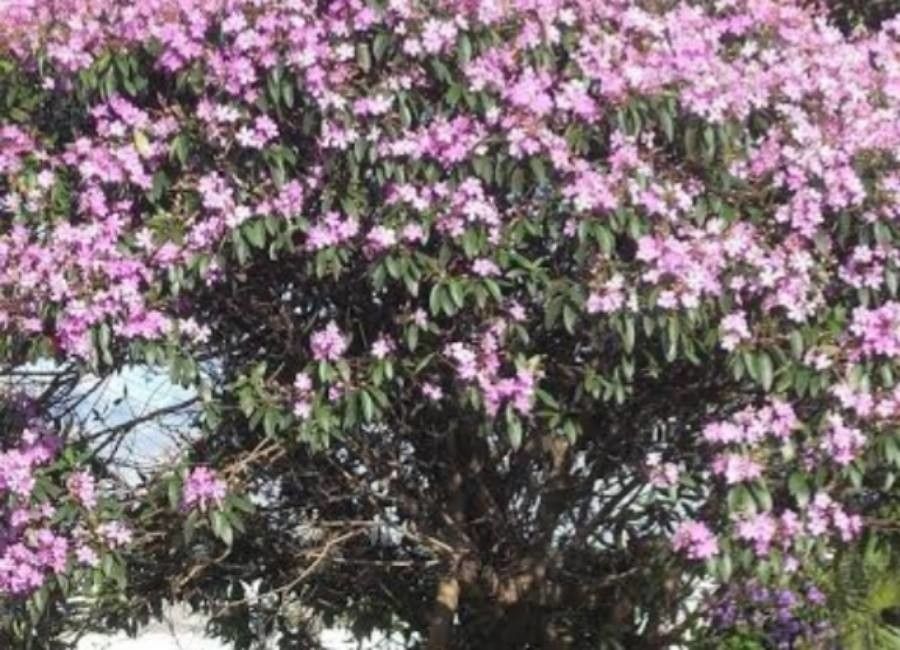
Tibouchina urvilleana, commonly known as the Princess Flower or Glory Bush, is a stunning flowering plant native to Brazil. Belonging to the Melastomataceae family, this plant can grow up to 10 feet tall and spread up to 6 feet wide. It features large, velvety leaves that are dark green on the top and purple underneath. The vibrant flowers, which come in shades of purple or pink, have five petals that form a cup shape. The Princess Flower blooms from late summer through fall, attracting bees and butterflies with its nectar-rich blossoms. It thrives in full sun to partial shade and requires well-draining soil that is kept moist but not waterlogged. Tibouchina urvilleana can be grown as an ornamental shrub or small tree, either in gardens or containers. While it requires regular pruning to maintain its shape and size, the plant is generally low maintenance. Overall, Tibouchina urvilleana is an eye-catching plant with beautiful blooms that add a splash of color to any garden landscape.
Princess Flower: The vibrant purple hue of this plant's blossoms immediately catches the eye of those who encounter it for the first time. This rich color conveys a sense of nobility and imparts a prestigious feeling to onlookers. Due to these distinguishing qualities, the princess flower is often found in royal gardens, giving rise to its regal name.
Princess flower is resistant to disease and is generally unlikely to develop illnesses. In terms of care, this plant is fairly low-maintenance. When grown outdoors it needs little watering, and larger specimens typically do not need pruning. However, smaller plants should be trimmed after they have bloomed. Princess flower is suitable for anyone with an outdoor area, such as a garden or a deck, and does not require extensive care experience.
How to keep Tibouchina Urvilleana.
Light
Princess flower does best in places that receive abundant light throughout the day, though it can also tolerate areas with a mix of sun and shade. Its native habitat has prepared it to use sunlight efficiently for growth and flowering. Insufficient light can impede its development, while excessive light may cause leaf scorch.
Water
The princess flower, native to moist, tropical environments, thrives in high humidity and needs to be watered moderately every 1-2 weeks. While it can tolerate short dry periods, it benefits from rainwater during its active growing season. This support helps maintain its lush foliage, making it a popular evergreen plant for outdoor cultivation.
Temperature
The native growing environment for the princess flower is a warm, humid tropical climate. It prefers temperatures between 68 to 100 ℉ (20 to 38 ℃) and should be kept safe from frost. In cooler regions, it can be grown in a greenhouse or kept as a potted indoor plant in a sunny spot. During summer months it can be moved outdoors to a sheltered area with partial shade to prevent excessive heat. In winter it should be brought indoors and placed where there is bright light and cooler temperatures.
Fertilizer
The best time to fertilize a Princess flower is in early spring, as it breaks dormancy. This encourages overall growth and flower development. Fertilization improves the foliage, stems, and branches, and promotes flowers that are large, vibrant, and long-lasting. It also helps transfer nutrients from the roots to the blooms and enhances the plant’s health and resistance to disease.
Pruning
The Princess Flower boasts vibrant purple blossoms and lush foliage. To encourage healthy growth and abundant blooms, prune the plant in early spring. This helps remove dead branches, improves air circulation, and shapes the plant. Always use clean, sharp tools for pruning to prevent infections and promote robust growth.
Pot & Repot
When repotting a Princess flower, select a pot 1–2 inches (2.5–5.1 cm) larger with good drainage. Use a well-draining potting mix. Repot in spring or fall, making sure the root ball sits slightly below the rim of the pot. Water thoroughly after repotting and place it in a warm spot with indirect sunlight.
Toxicity
Princess flower plants are not toxic to humans, dogs, and cats. Though they are generally considered safe, parts of the plant may be a choking hazard for small children and pets. It’s best to take precautions and keep them out of reach to prevent adverse effects.
Further reading →
The toxicity and danger assessments provided are for reference only. We do not assure their accuracy, so it's crucial not to depend on them. Seek professional advice when necessary for accurate guidance.
Botanical profile.
- Plant Type
- Shrub
- Life Cycle
- Perennial
- Genus
- Tibouchina
- Family
- Melastomataceae
- Hardiness Zone
- 9-11
- Mature Height
- 3.05 m to 6.1 m
- Mature Spread
- 2.13 m to 3.05 m
- Leaf Color
- Green
- Leaf Type
- Evergreen
- Flower Color
- Purple
- Flower Size
- 10.16 cm
- Bloom Time
- Late spring, Summer
- Planting Time
- Spring, Autumn
- Harvest Time
- Mid summer, Late summer, Early fall
- Native Area
- Brazil
Other names.
Reader questions.
How should I water my Princess flower?
Your Princess flower is not picky when it comes to watering. Any common watering tool like cans, hoses, or cups will work fine. Just make sure you water the soil directly and evenly to nourish the entire root system. Filtered water is recommended to avoid harmful particles, and water at room temperature is best to avoid shocking the plant. However, the Princess flower usually responds well to any water you provide.
Why is it necessary to add fertilizer to my Princess flower?
Fertilization plays a crucial role in maintaining the overall health and well-being of a Princess flower. It ensures the plant receives the necessary energy and nutrients to develop lush foliage, sturdy stems, and branches. However, it is the flowers of the Princess flower that are particularly desirable among gardeners. Luckily, fertilization also enhances the production of large, vibrant, and long-lasting blooms. This is due to the ability of the right fertilizer to facilitate efficient fuel transfer from the roots to the flowers through the stems. Additionally, proper fertilization promotes the plant's overall health, making it more resilient against diseases.
What are the sunlight requirements for a Princess flower?
The Princess flower, or Tibouchina urvilleana, thrives in full sun, defined as receiving more than 6 hours of sunlight daily, but it can also tolerate partial sun, which is about 3-6 hours of sunlight. It's important to observe the movement of sunlight in your garden to choose the ideal spots that offer a mix of light and shade, which is crucial for the plant's health and happiness.
What is the native growth environment for Princess Flower?
Princess Flower, or Tibouchina urvilleana, thrives in a warm tropical climate with high humidity. It is best suited to temperatures ranging between 68 to 100°F (20 to 38°C) and requires protection from frost. This heat-loving plant struggles in cold temperatures, and if kept in cooler climates, should be grown in a greenhouse or as a potted plant indoors in a location that gets plenty of sun. In summer, it benefits from being moved outdoors to a partially shaded spot to shield it from excessive heat, while in winter, it should be brought indoors to a brightly lit area with cooler temperatures to continue thriving.
What should I do if I give too much or too little water to my Princess flower?
Outdoor plants, especially newly planted ones or seedlings, are often susceptible to lack of watering. It's important to remember to water them adequately for the first few months while they are small or newly planted. Once the roots are established, Princess flower plants can typically rely on rainwater. When it comes to Princess flower plants in pots, overwatering is a common issue. If you accidentally overwater your plant, it's crucial to act quickly to mitigate the damage. Immediately stop watering the plant to minimize the impact of overwatering. Then, remove the Princess flower from its pot to inspect the roots. If there are no signs of root rot, you can return the plant to its container. However, if you do find root rot, trim away the affected roots and consider applying a fungicide to prevent further damage. Finally, repot the Princess flower in well-draining soil. On the other hand, underwatering can often be resolved easily. If you notice that your Princess flower has drooping, dried out, or fallen leaves, it's likely underwatered. simply increase the frequency of watering, and the leaves should regain their fullness promptly. It's important to correct your watering schedule as soon as you notice the plant being underwatered.
When should I fertilize my Princess flower for the best results?
To optimize the growth and flower development of your Princess flower, fertilizing during early spring is crucial as it exits its dormant phase and prepares to bloom. This ensures plenty of energy for overall growth. However, it's not the only ideal time to feed the plant. A smaller feeding during the fall months can also benefit the Princess flower, although not as extensively as the first one. While some gardeners choose to fertilize during planting, it is not always necessary.
How does sunlight affect the growth and health of a Princess flower?
Sunlight plays a vital role in the growth and health of a Princess flower. This plant prefers abundant light during the day, although it can also grow in areas with a mixture of sun and shade. Its ability to use sunlight effectively for growth and blooming comes from its native habitat conditions. Lack of sufficient light can hinder its development and cause issues such as leaf scorch from overexposure.
How should Princess Flower be cared for in different seasons?
In warmer seasons, Princess Flower should be moved outdoors to a location with partial shade to protect it from too much heat. During autumn and winter, it's recommended to bring the plant indoors to avoid cold damage, placing it near a bright window but away from direct heat sources to maintain beneficial temperatures above 20°C. The critical point is ensuring the plant isn't exposed to temperatures near 0°C, which are harmful. Managing these temperature shifts is key to keeping your Princess Flower healthy year-round.
How often should I give water to my Princess flower?
To ensure healthy growth, most outdoor plants can rely on natural rainfall. However, if your area doesn't receive much rain, you should water your plants every 2 weeks in the spring and fall, and more often during the summer. In the winter, when growth slows down, you can reduce the watering frequency. For young or newly planted Princess flowers, more frequent watering is necessary to help them establish and become drought-tolerant. When it comes to potted plants, there are two approaches to determining watering frequency for your Princess flower. The first is to follow a set schedule, which could be once a week or every other week. However, this method may not be suitable as it doesn't consider the specific conditions of your plant's environment. Another option is to gauge watering based on soil moisture. It's generally recommended to wait until the top two to four inches of soil (about ⅓ to ½ depth of the pot) have completely dried out before watering again. Remember to adjust the frequency during the summer when the plant's water needs are higher.
When should I not use fertilizer on my Princess flower?
During the winter, Princess flowers enter a dormant phase where they do not require fertilization. They do not need much energy from the soil to grow during this time. In fact, fertilizing them in winter increases the risk of overfertilization and its negative effects. The best times to feed Princess flowers are in early spring and fall. Therefore, in most of the spring and summer, they do not need fertilizer. Additionally, if the plant is experiencing hot or dry conditions, it is advisable to avoid feeding it.
What artificial lighting requirements do indoor Princess flowers have?
Indoor Princess flowers require adequate lighting to grow optimally, especially in conditions where natural sunlight is scarce, like during winter or in less sunny indoor spaces. Artificial lighting, such as LED lights, provides a solution by offering the necessary wavelengths of light. Full sun plants need 30-50W/sq ft, partial sun plants require 20-30W/sq ft, and full shade plants need 10-20W/sq ft. The light source should be placed 12-36 inches above the plant for 8-12 hours a day to mimic natural sunlight conditions.
What are the symptoms of temperature stress in Princess Flower, and how can they be addressed?
Princess Flower shows distinct symptoms when stressed by temperatures that are too low or too high. In cold conditions, if temperatures fall below 20°C and especially if it goes under -5°C, leaves may lighten and, following frost, turn brown or black with signs of wilting or drooping. The treatment involves trimming frost-damaged parts and moving the plant to a warm, brightly-lit indoor space while avoiding direct heat from heaters. In contrast, high temperatures above 38°C can lighten leaf color and increase sunburn risk. To address this, trim sunburned areas, ensure the plant has shade, especially during peak sun, and maintain soil moisture with morning or evening watering. These actions help mitigate temperature stress effects on Princess Flowers.