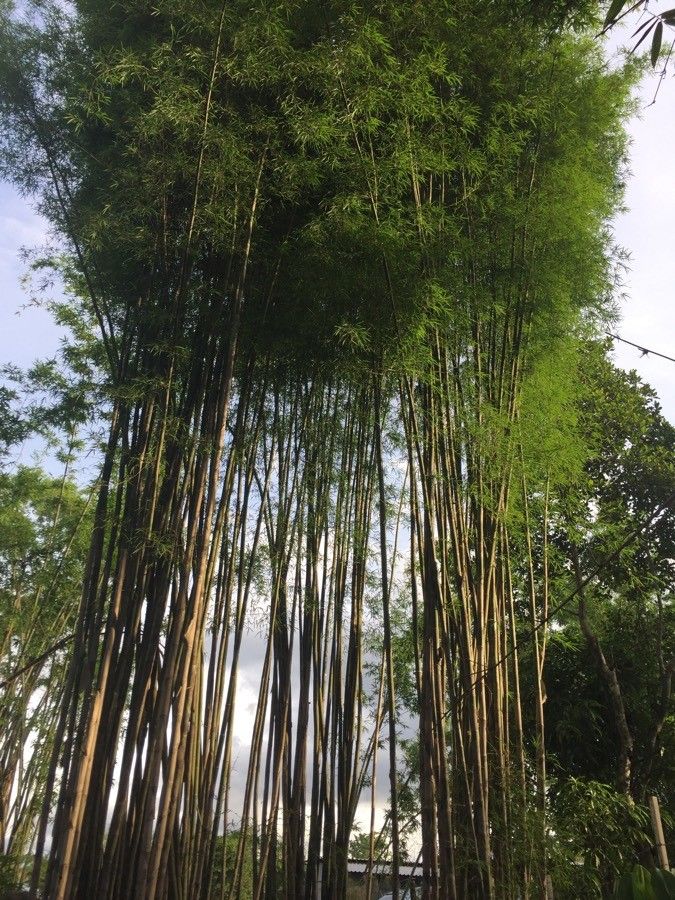
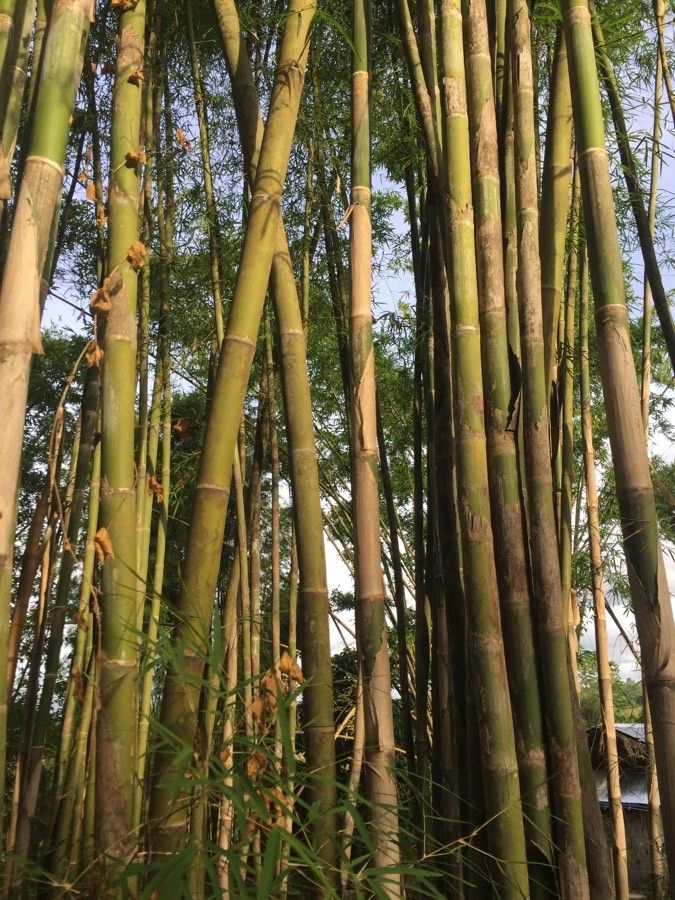
Thyrsostachys siamensis is one of two bamboo species belonging to the genus Thyrsostachys. It grows up to 7 to 13m tall. It is native to Yunnan, Myanmar, Laos, Thailand, Vietnam and naturalised in Sri Lanka, Bangladesh, Malaysia. The plant is also known as long-sheath bamboo, monastery bamboo, Thai bamboo, Thai umbrella bamboo, umbrella bamboo, and umbrella-handle bamboo.
Long-sheath bamboo is well resistant to disease and is generally unlikely to develop illnesses. Regarding care, this plant is fairly low-maintenance. When grown outdoors it needs only light watering, and larger specimens typically do not require pruning. Smaller plants, however, should be cut back after they finish blooming. Long-sheath bamboo is suitable for anyone with outdoor space, such as a garden or a deck, and does not demand extensive care experience.
How to keep Thyrsostachys Siamensis.
Light
Long-sheath bamboo prefers abundant sunlight, doing best when it gets sun for most of the day but also tolerating locations with less direct light. Native to brightly lit environments, the plant's growth can be impeded by too little illumination; on the other hand, overly intense light can lead to leaf scorching.
Water
Long-sheath bamboo flourishes in the tropical climate of Southeast Asia, where it needs consistent moisture and high humidity. To promote its rapid growth and maintain its graceful appearance, water the plant twice a week during its active growing season.
Temperature
Long-sheath bamboo comes from areas where temperatures range from 68 to 100.4 degrees Fahrenheit (20 to 38 degrees Celsius). It favors temperate conditions. To keep it healthy, adjust temperatures to replicate the seasonal variations of its native climate when needed.
Fertilizer
Long-sheath bamboo needs extra nutrients to encourage healthy new growth. In spring, placing compost around the base of the plant can effectively supply the nutrition it requires. Fertilizing supports vigorous growth and improves the plant’s resistance to diseases and pests.
Pruning
Long-sheath bamboo is characterized by its tall, slender appearance and elongated sheaths. To promote healthy growth, prune it in early spring by removing any dead or damaged stems. Thinning out dense clumps can improve air circulation and help control rapid growth. Always use clean, sharp tools to prevent the spread of diseases.
Botanical profile.
- Plant Type
- Grass
- Life Cycle
- Perennial
- Genus
- Thyrsostachys
- Family
- Poaceae
- Hardiness Zone
- 9-12
- Mature Height
- 7.01 m to 13.11 m
- Mature Spread
- 3.05 m to 4.88 m
- Leaf Color
- Light Green, Pale Green
- Leaf Type
- Evergreen
- Flower Size
- 0.25 cm to 0.51 cm
- Bloom Time
- Late spring, Early summer, Mid summer
- Planting Time
- Spring, Summer, Autumn
- Harvest Time
- Late summer, Early fall, Mid fall
- Native Area
- Cambodia, Vietnam, Myanmar, Laos, Thailand, China
Other names.
Reader questions.
How much sunlight does Long-sheath bamboo require?
Long-sheath bamboo thrives in conditions where it can bask in the sunlight for the majority of the day. It is a plant that originates from habitats abundant with sunlight and prefers ample solar exposure. Although it can manage in areas with less dominant sun, its growth may be stunted without sufficient light. However, it's important to note that excessive exposure can lead to leaf scorching. For healthy growth, observing how sunlight moves through your garden and choosing locations that offer a good balance of light and shade is crucial.
What is the ideal temperature range for Long-sheath bamboo?
Long-sheath bamboo, or Thyrsostachys siamensis, thrives in environments with temperature ranges of 68 to 100.4 degrees Fahrenheit (20 to 38 degrees Celsius). It is a plant that loves temperate weather. When caring for Long-sheath bamboo, it's important to adjust the temperature to mimic its native climate's seasonal changes when possible. This heat-loving plant can be adversely affected by cold temperatures, so it's recommended to bring it indoors in autumn, placing it near a bright window but away from heaters, and ensuring the temperature stays above 20°C during winter to facilitate its growth. Any temperatures nearing 0°C can be detrimental to the Long-sheath bamboo.
What can be done if my indoor Long-sheath bamboo isn't getting enough natural light?
If your Long-sheath bamboo isn't receiving enough natural light indoors, particularly during winter or in less sunny spaces, artificial lighting can be a beneficial solution. Optimal growth can be supported by ensuring that indoor plants have adequate lighting. LED lights, popular for indoor plant lighting, allow customization to provide specific wavelengths needed by plants. For different sunlight requirements, the amount of artificial light needed varies: full sun plants require 30-50W/sq ft, partial sun plants 20-30W/sq ft, and full shade plants 10-20W/sq ft. The light source should be placed 12-36 inches above the plant, mimicking natural sunlight, and plants generally need 8-12 hours of light per day.
How should Long-sheath bamboo be cared for in low temperatures?
In low temperatures, Long-sheath bamboo requires special attention as it prefers warmer conditions and thrives when the temperature is above 20°C. During winter, it is crucial to keep the plant above 0°C to prevent damage. If the temperature falls below -5°C, the leaves of Long-sheath bamboo may lighten in color, and after frost damage, they gradually turn brown or black. Symptoms such as wilting and drooping are common. To care for a frost-damaged Long-sheath bamboo, trim off the damaged parts and move the plant to a warm, indoor environment, preferably near a south-facing window for ample sunlight, while avoiding placement near heaters or air conditioning vents to prevent the air from becoming excessively dry.
What are the symptoms of insufficient sunlight in Long-sheath bamboo?
Symptoms of insufficient sunlight in Long-sheath bamboo include new leaves growing smaller in size, the plant developing a leggy or sparse appearance due to longer spaces between leaves or stems, an early drop of older leaves to conserve resources, a halt in leaf production indicating a survival mode due to poor light conditions, leaves appearing pale or with irregular color patterns indicating a lack of chlorophyll, and conditions like chlorosis, sunscald, leaf curling, wilting, and leaf scorching, each indicating various levels of stress or damage due to inadequate or excessive sunlight.
What are the effects of high temperatures on Long-sheath bamboo, and how can it be managed?
During the summer, it’s important to ensure that Long-sheath bamboo is not exposed to temperatures above 38°C. High temperatures, especially those exceeding 43°C, can cause the leaves to lighten in color and increase the plant's susceptibility to sunburn. Managing Long-sheath bamboo in high temperatures involves trimming away sunburned and dried parts of the plant and moving it to a location that provides shade during the midday and afternoon sun. Additionally, watering the plant in the morning and evening helps keep the soil moist and supports the plant's well-being during hot conditions.
How can I ensure my Long-sheath bamboo gets enough light?
Ensuring Long-sheath bamboo receives enough light involves a few strategies depending on whether the plant is indoors, outdoors, or in the ground. Indoors, gradually move plants to brighter locations each week, aiming for at least 6 hours of direct sunlight daily, using a south-facing window for natural light or artificial light if moving the plant isn't feasible. Outdoors, adapt your plants to increased sunlight gradually to prevent sunburn. In general, reduce light obstructions by pruning branches or leaves blocking sunlight and consider transplanting smaller plants during their dormant period to sunnier locations with good drainage. Remember, although parts of the plant affected by insufficient sunlight may not recover, new growth should be healthy with improved light conditions.