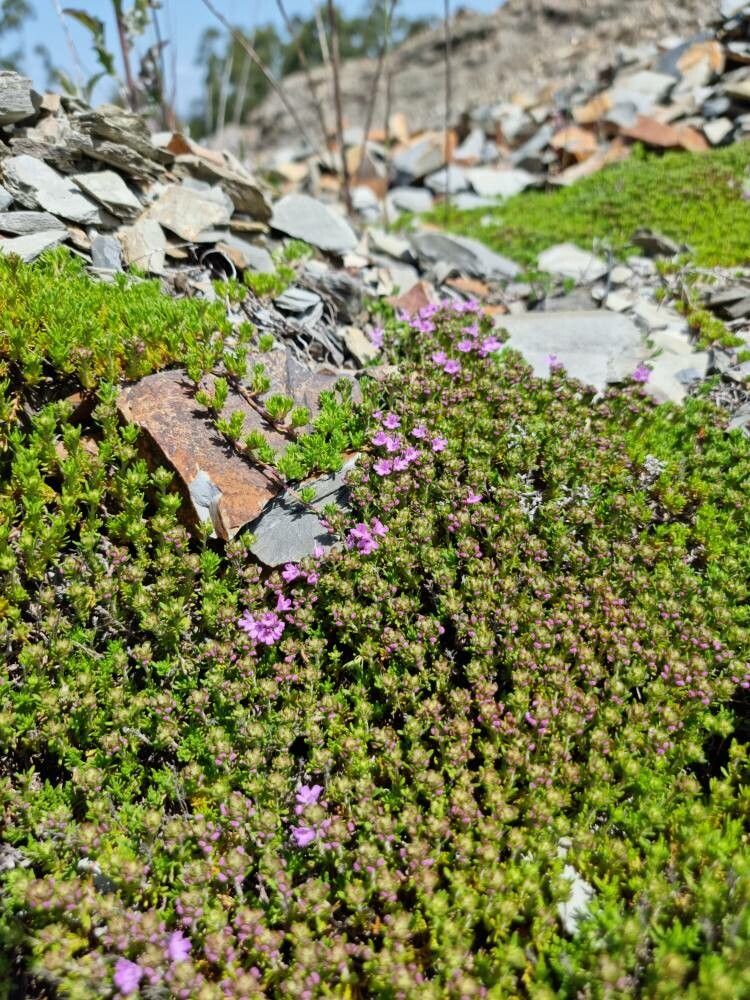
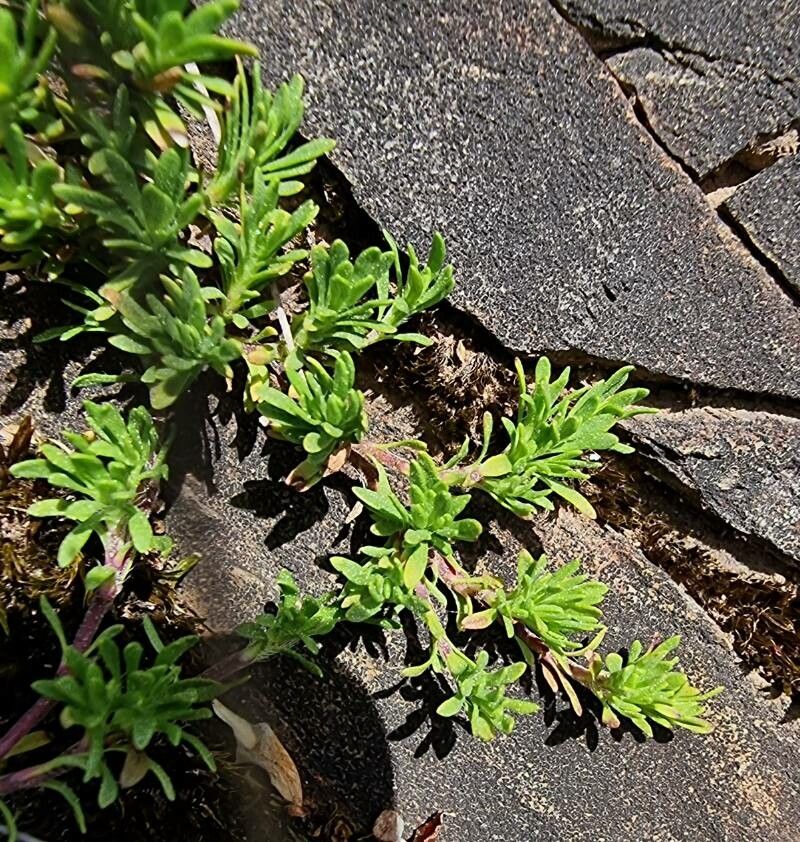
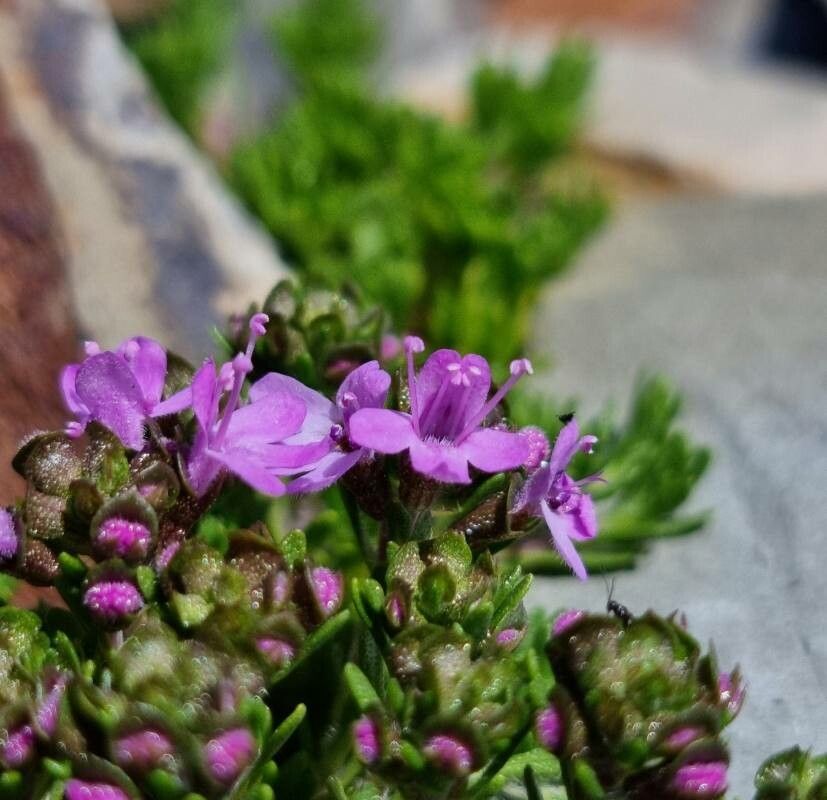
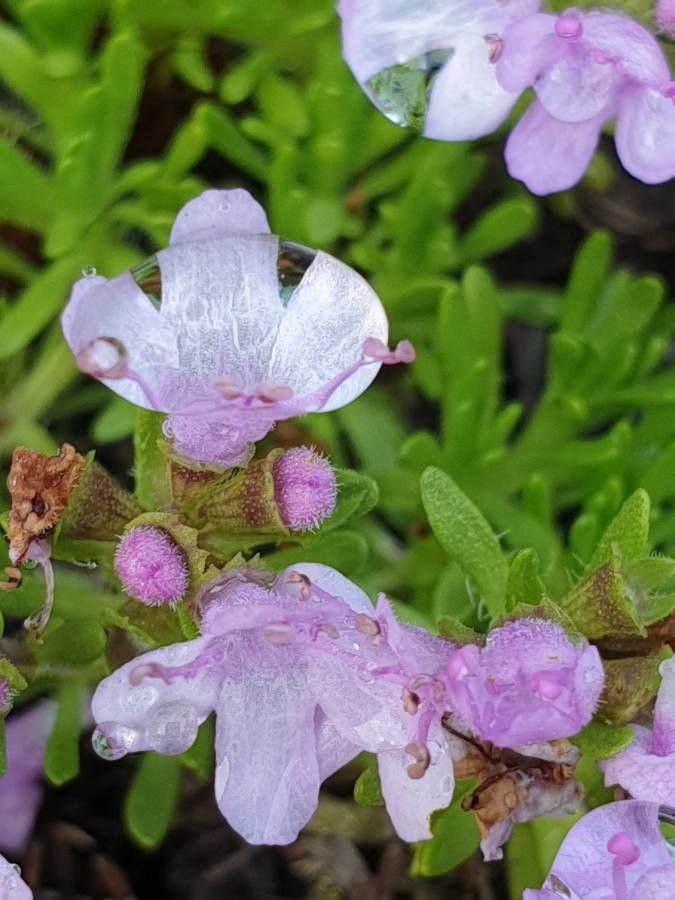
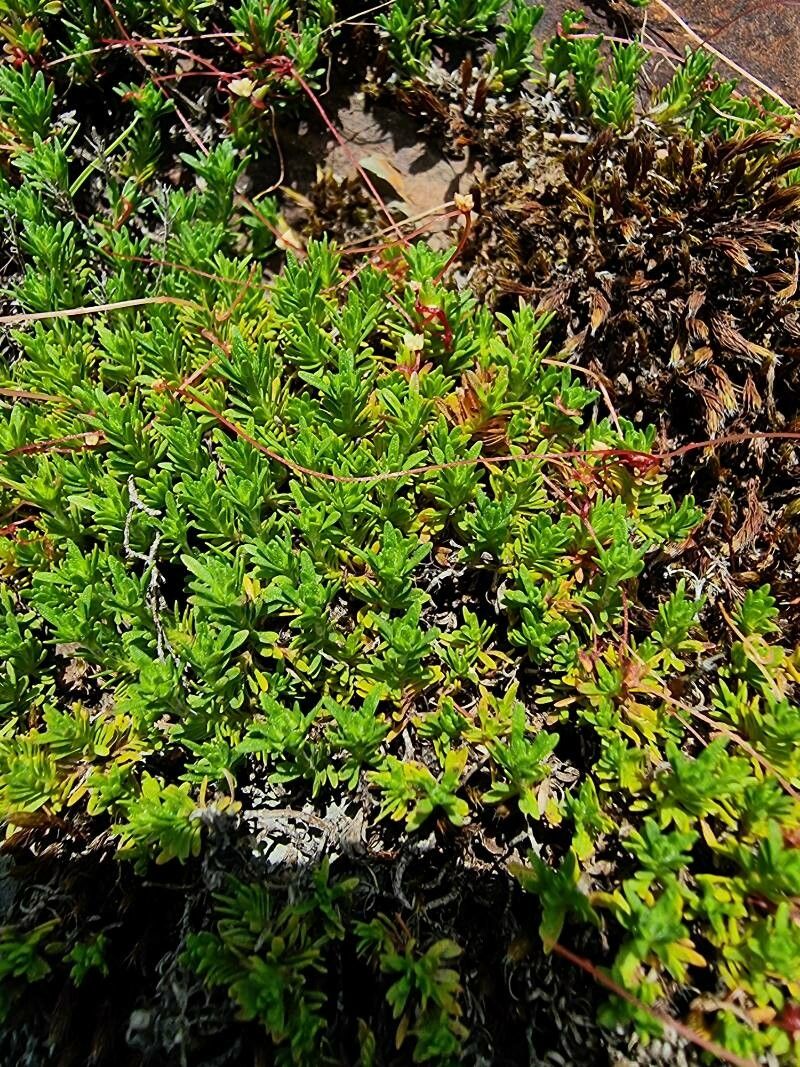
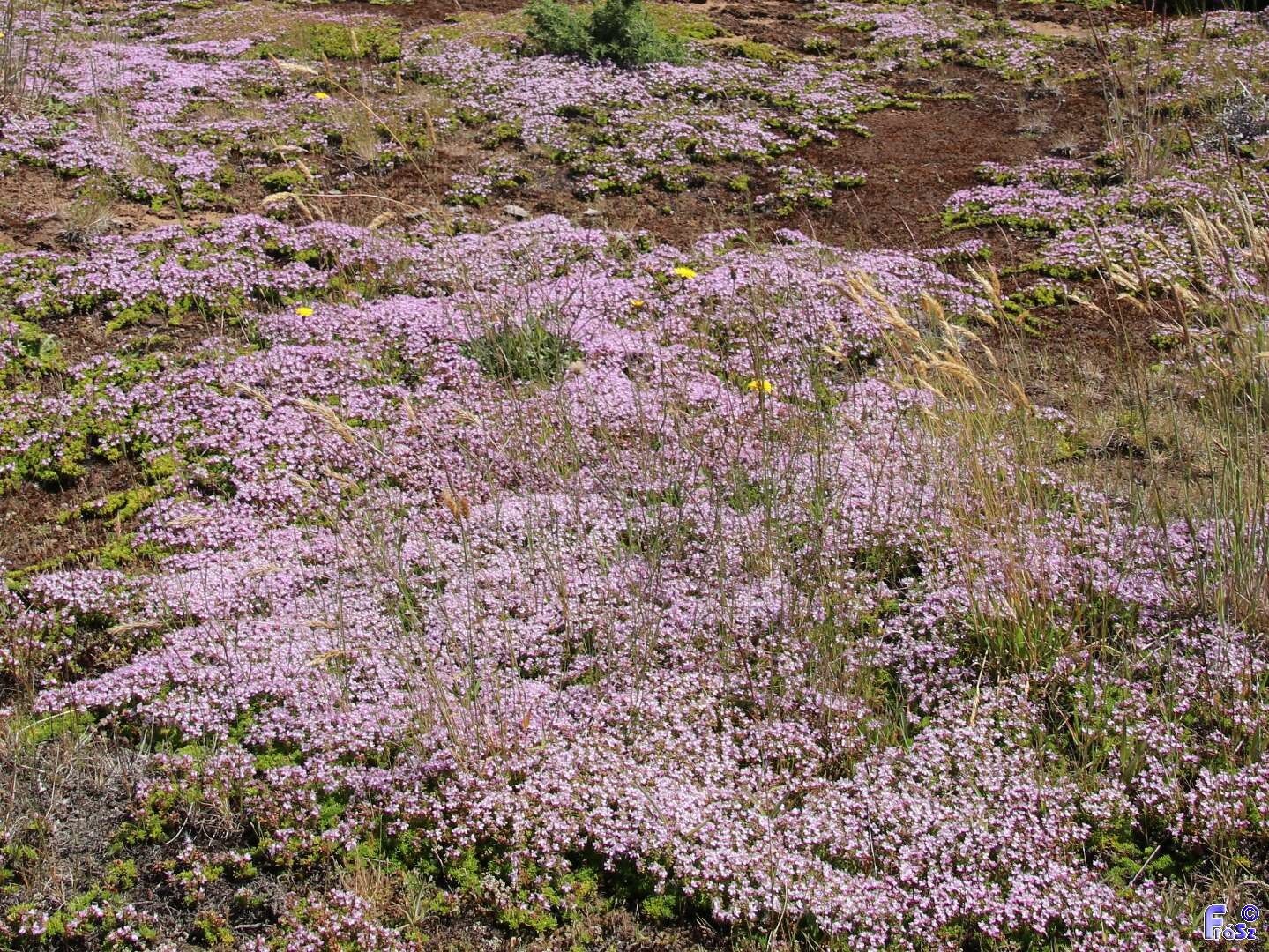
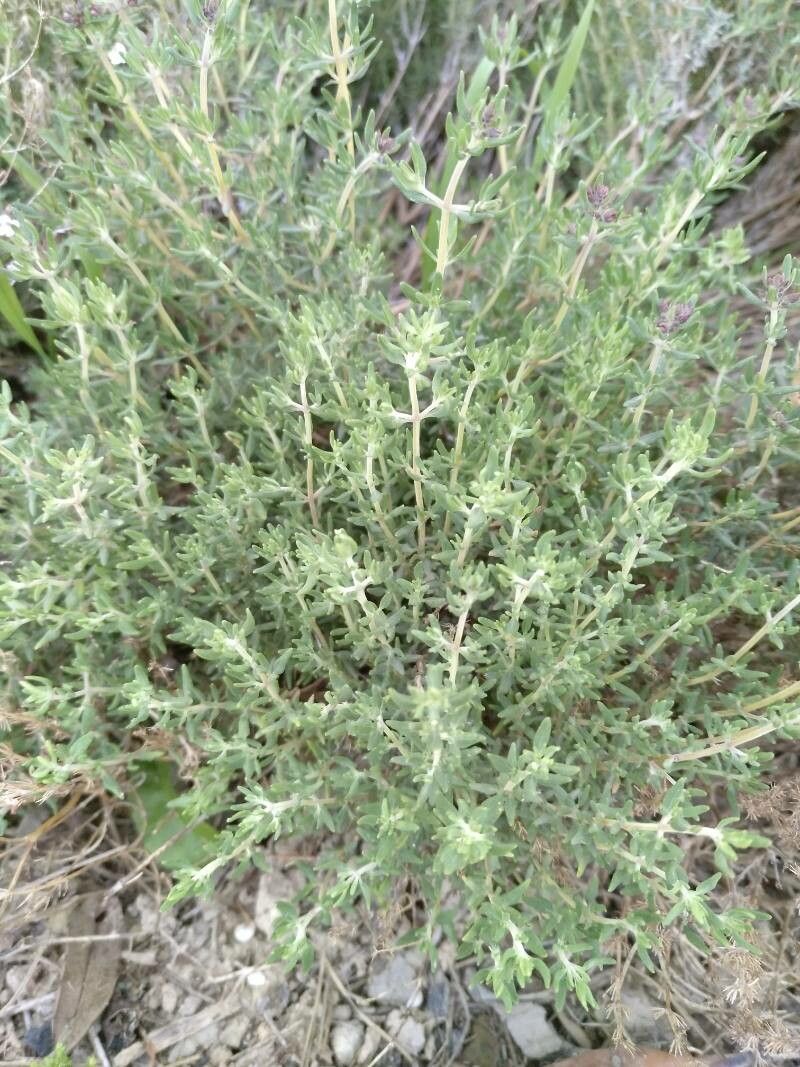
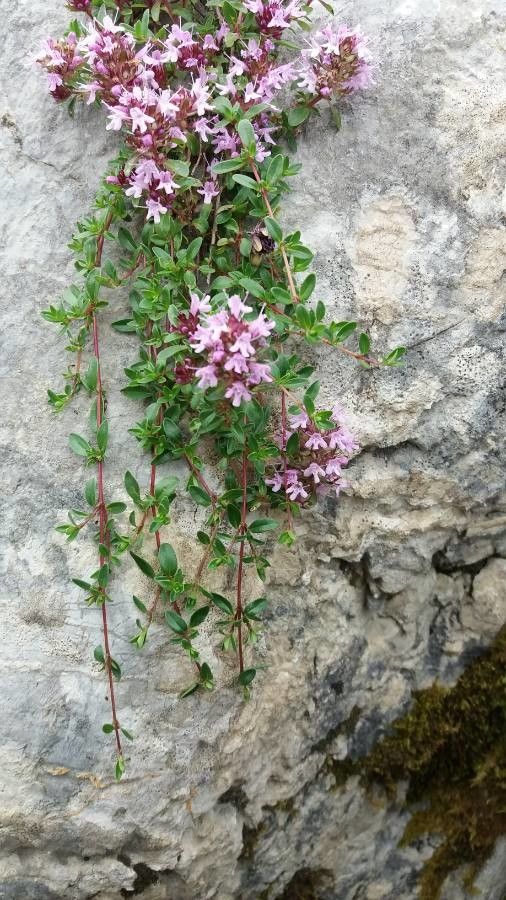
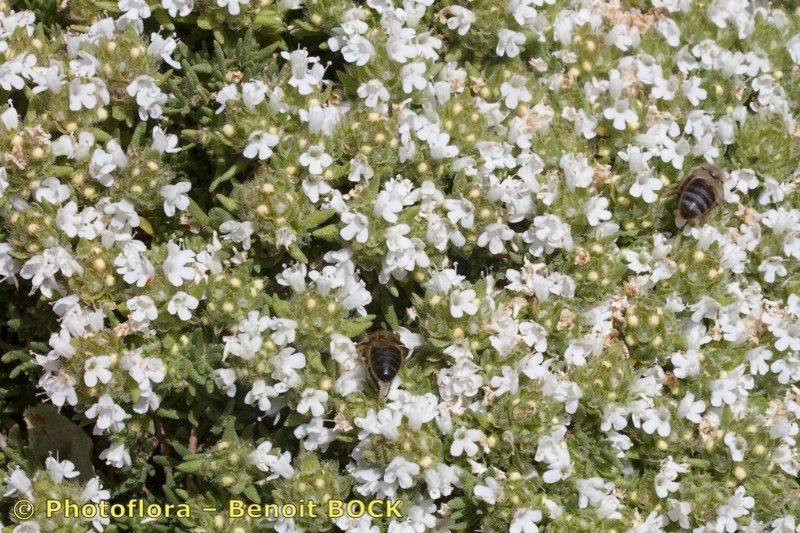
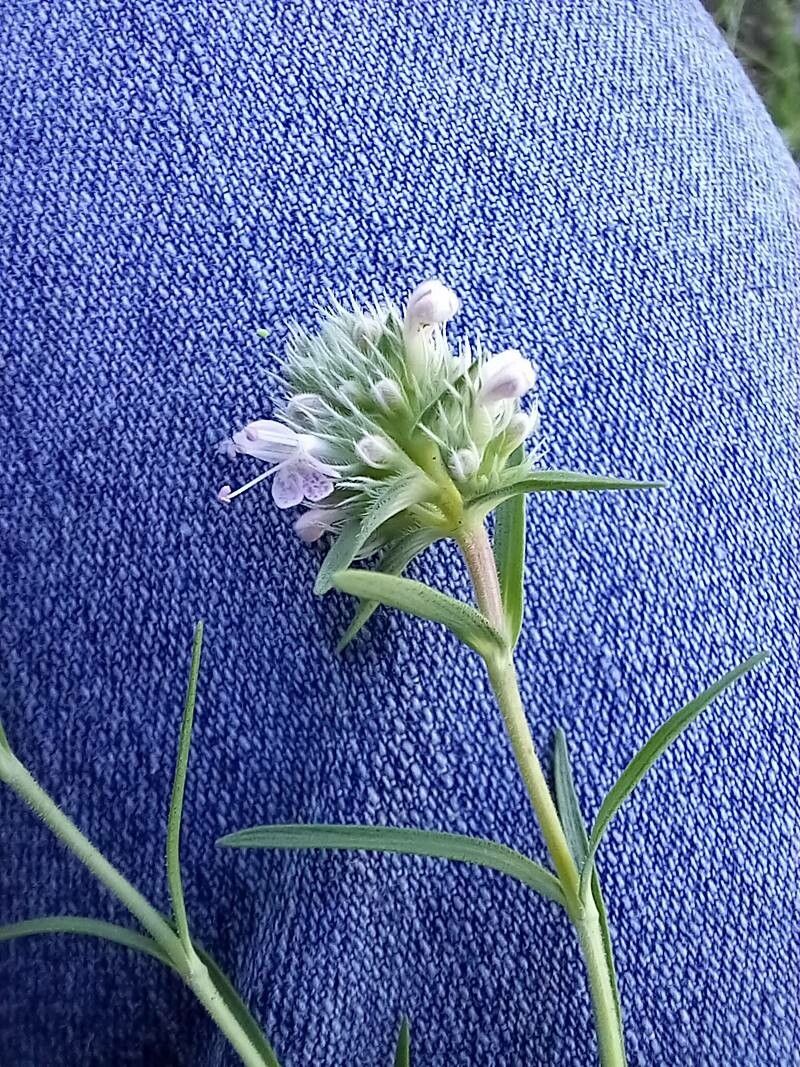
Thymus caespititius is dwarf, aromatic mat-forming groundcover shrub. It is native to oceanic areas in the Iberian Peninsula (northwest Portugal and northwest Spain) and the Atlantic archipelagos of the Azores and Madeira. The plant has narrow, spatula-shaped, smooth leaves to 6 mm (0.24 in) long, fringed with tiny hairs. The rose, lilac or white flowers are borne in small, flattened mat-hugging heads from late spring to summer.
Azores thyme is fairly resistant to disease and generally does not tend to get sick. Nonetheless, it can be vulnerable to pests and diseases present in its environment. These problems are typically not serious. For care, this plant needs moderate maintenance. It should be pruned regularly to preserve a neat appearance and support healthy growth. Fertilizing can also help encourage flowering. Azores thyme is well suited for anyone with outdoor space, like a garden or patio, and does not demand extensive gardening experience. It may need more attention when grown indoors.
How to keep Thymus Caespititius.
Light
Azores thyme is a sun-loving, perennial herbaceous plant native to open habitats and commonly found in meadows and grasslands. It prefers full sun but can also tolerate partial sun.
Water
Azores thyme, native to the Azores, thrives in consistently moist and moderately humid conditions. To prevent waterlogging, water the plant weekly, maintaining a steady supply of moisture. This is particularly important during cooler months when indoor heating can dry the air. As an evergreen plant, Azores thyme keeps its foliage throughout the year, which underscores the importance of regular watering.
Temperature
Azores thyme can tolerate a wide range of temperatures, yet its distribution may still be constrained by specific combinations of moisture and heat. It grows best in warm summer conditions with sufficient rainfall or irrigation. Long spells of cloudy, rainy weather, as well as extended high temperatures, raise the probability of Azores thyme dying. In winter, adequate protection from cold can enhance the plant’s survival rate.
Fertilizer
The best time to fertilize Azores thyme is in early spring, when it is coming out of dormancy and starting active growth. Fertilization supplies essential nutrients for healthy development. Although Azores thyme has fairly low fertilizer requirements, applying fertilizer once a year can improve its survival and encourage better, longer-lasting flowers.
Pruning
Azores thyme is known for its dense, aromatic foliage. To keep the plant healthy, prune it in the spring. Start by removing any dead stems and then trim the plant by about one-third to encourage bushiness. Be careful not to prune too heavily, as this can stress the plant. Regular light pruning will help prevent legginess and promote a more compact form. For best results, consult horticultural guides for any necessary adjustments based on your local climate.
Botanical profile.
- Plant Type
- Herb
- Life Cycle
- Perennial
- Genus
- Thymus
- Family
- Lamiaceae
- Hardiness Zone
- 6-9
- Mature Height
- 5 cm to 10 cm
- Mature Spread
- 15 cm to 30 cm
- Leaf Color
- Dark Green, Forest Green
- Leaf Type
- Evergreen
- Flower Color
- Pink, Lavender
- Flower Size
- 0.51 cm to 0.76 cm
- Bloom Time
- Summer
- Planting Time
- Spring, Summer, Autumn
- Harvest Time
- Late summer, Early fall, Mid fall
- Native Area
- Spain, Portugal
Other names.
Reader questions.
What are the sunlight requirements for Azores thyme?
Azores thyme, also known by its botanical name Thymus caespititius, thrives in various sunlight conditions. For optimal growth, it requires 'full sun', which means the plant should receive above 6 hours of sunlight daily. However, it can also grow in 'partial sun', defined as about 3-6 hours of sunlight each day. When cultivating Azores thyme, it's important to observe the movement of sunlight through your garden, selecting locations that ensure an appropriate balance of light and shade, vital for the plant's health and development.
What is the name and botanical name of Azores thyme?
Azores thyme is known by its common name, with its botanical name being Thymus caespititius. This specifies the unique classification of this particular species of thyme, distinguishing it from others within the Thymus genus.