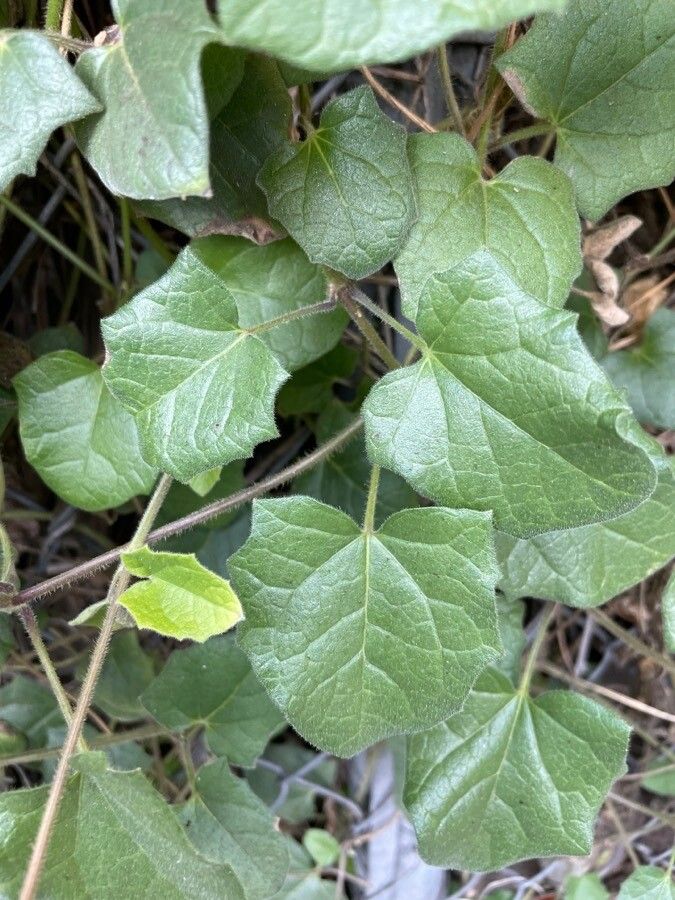
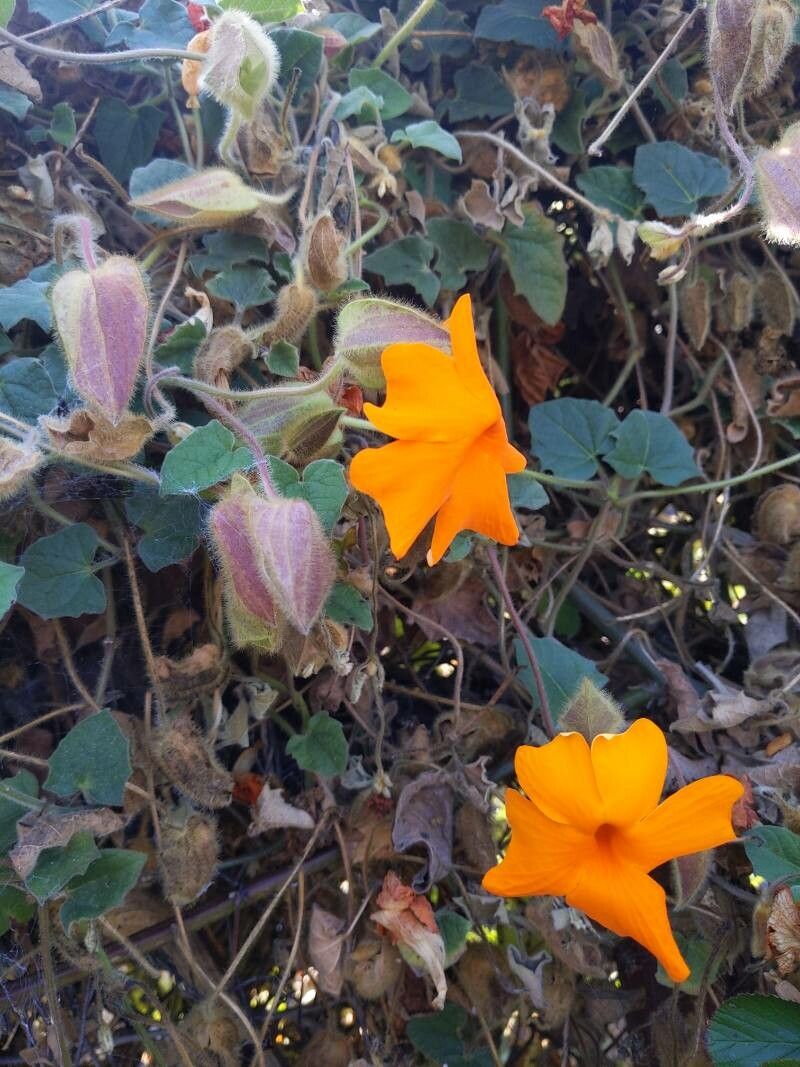
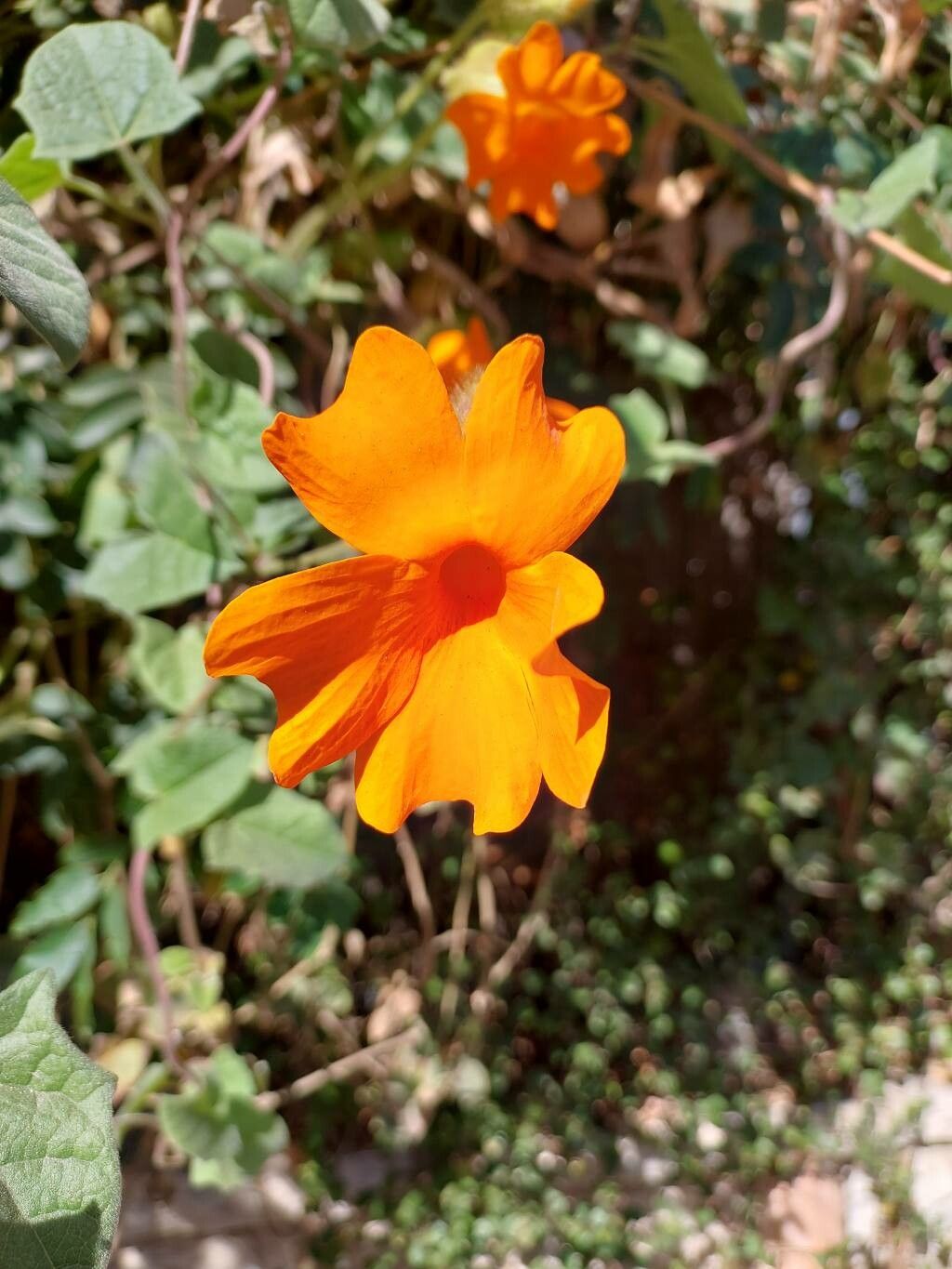
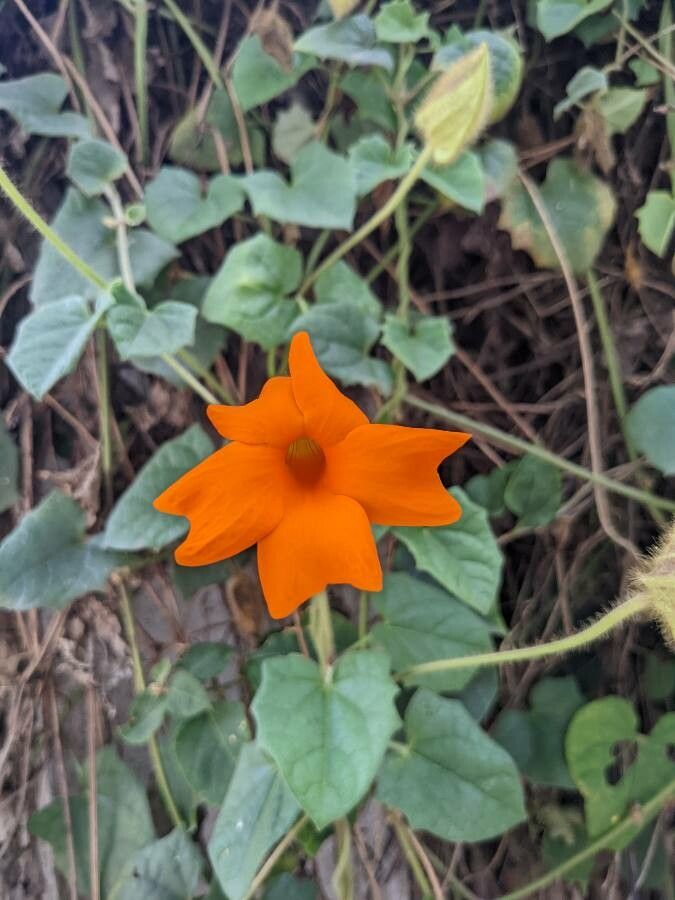
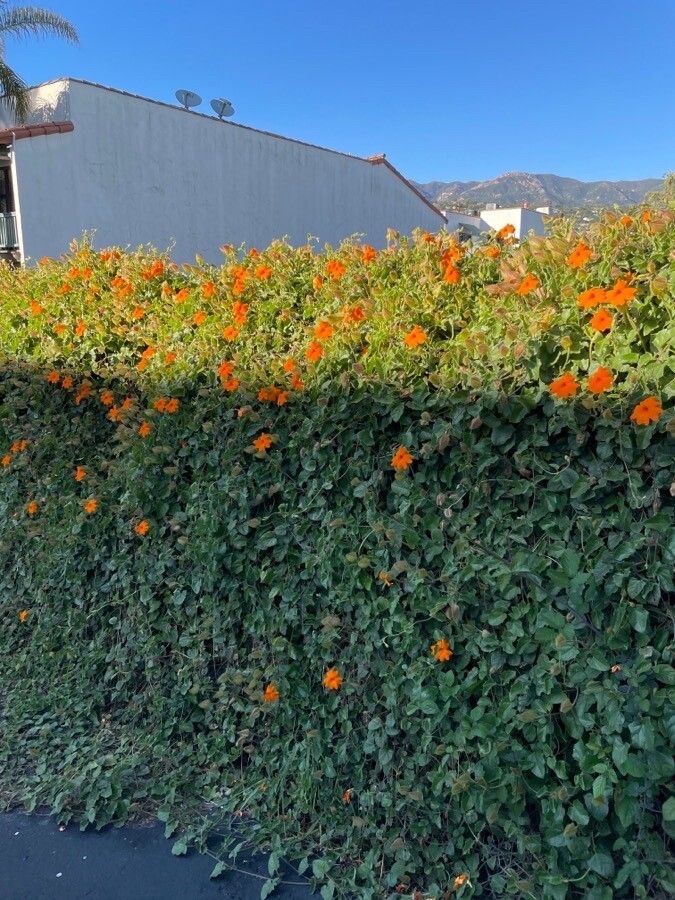
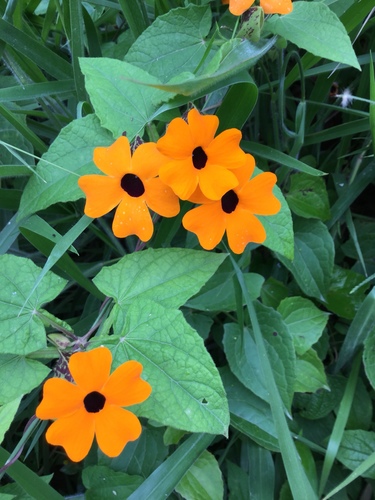
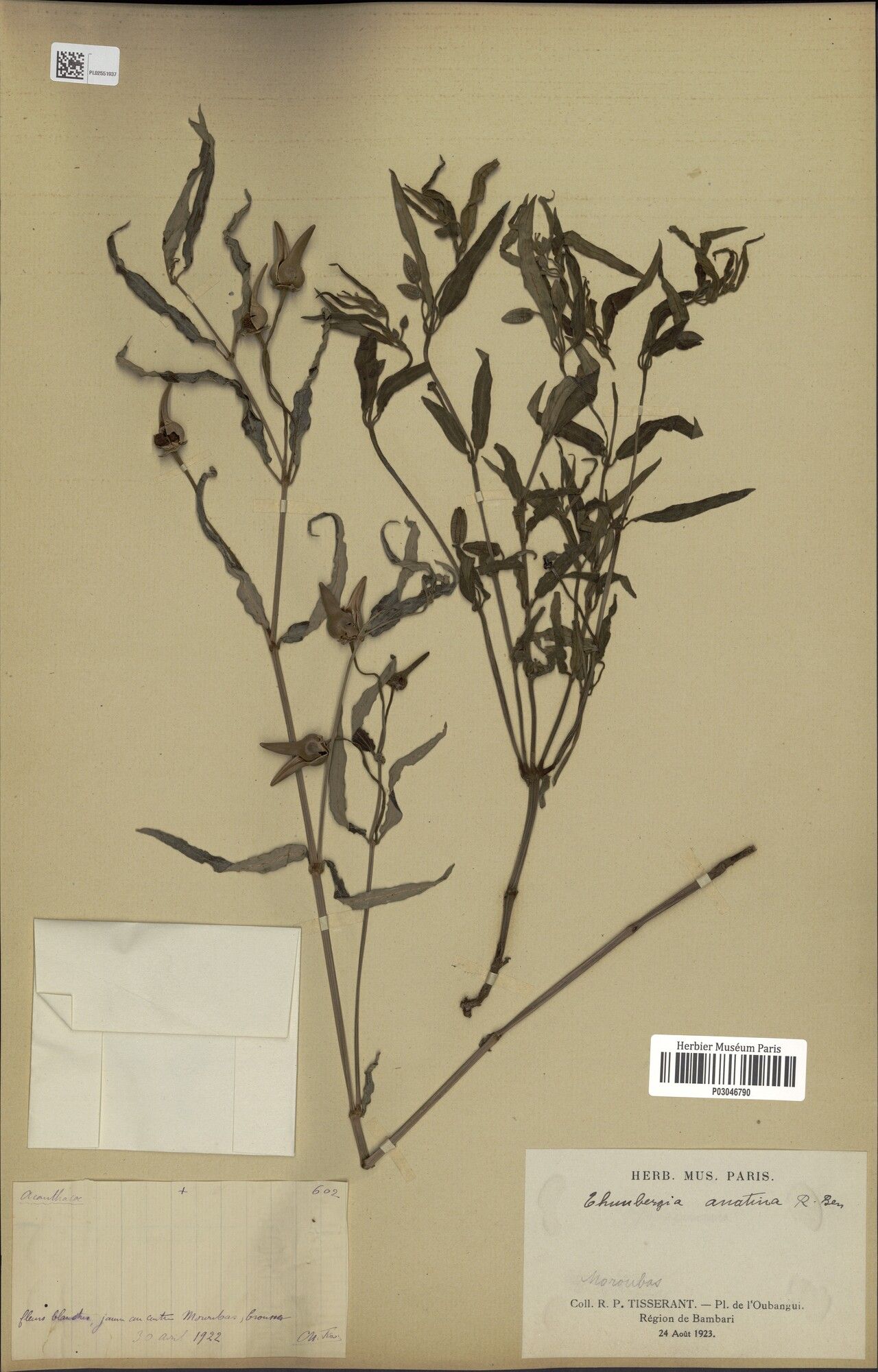
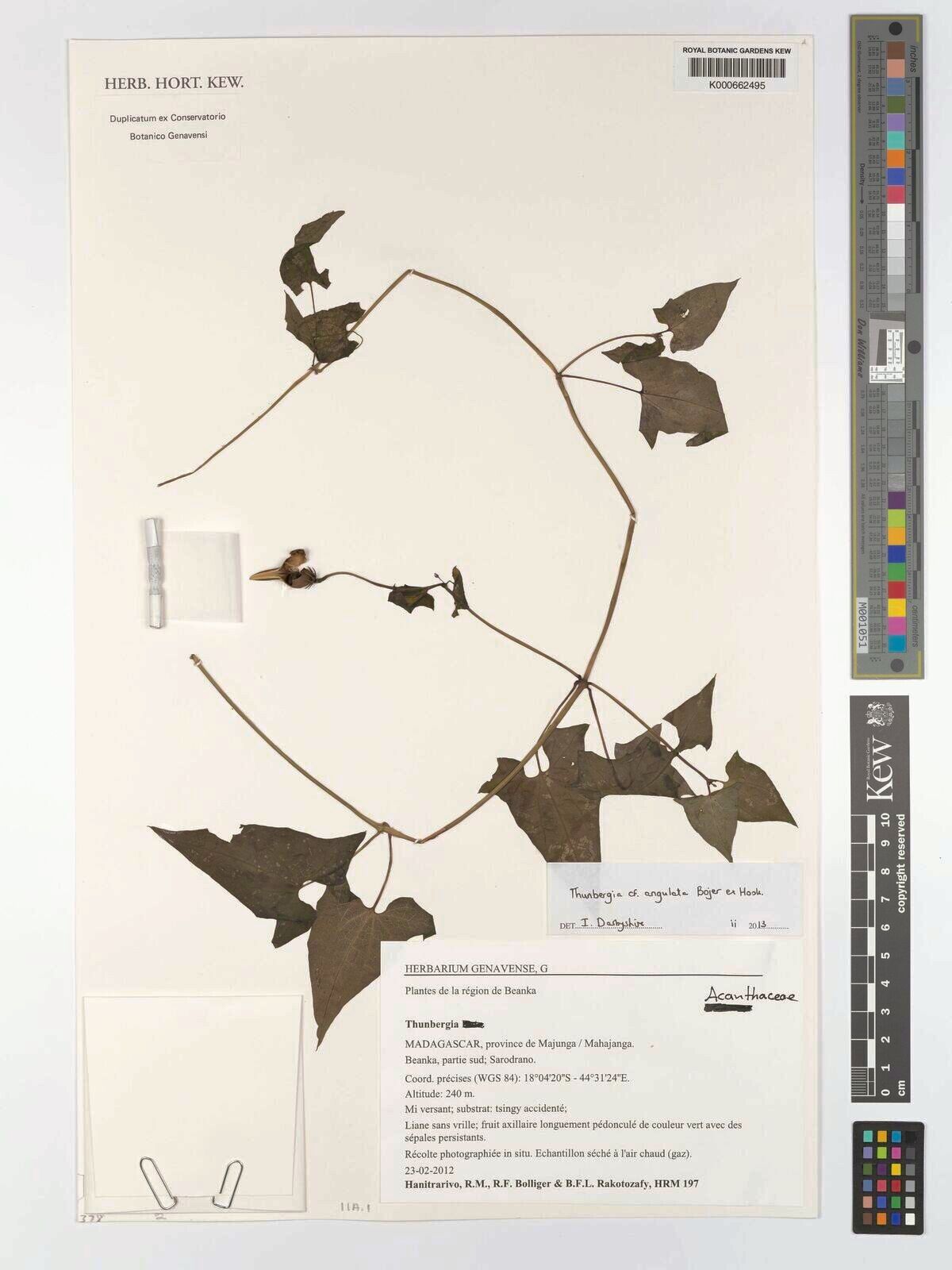
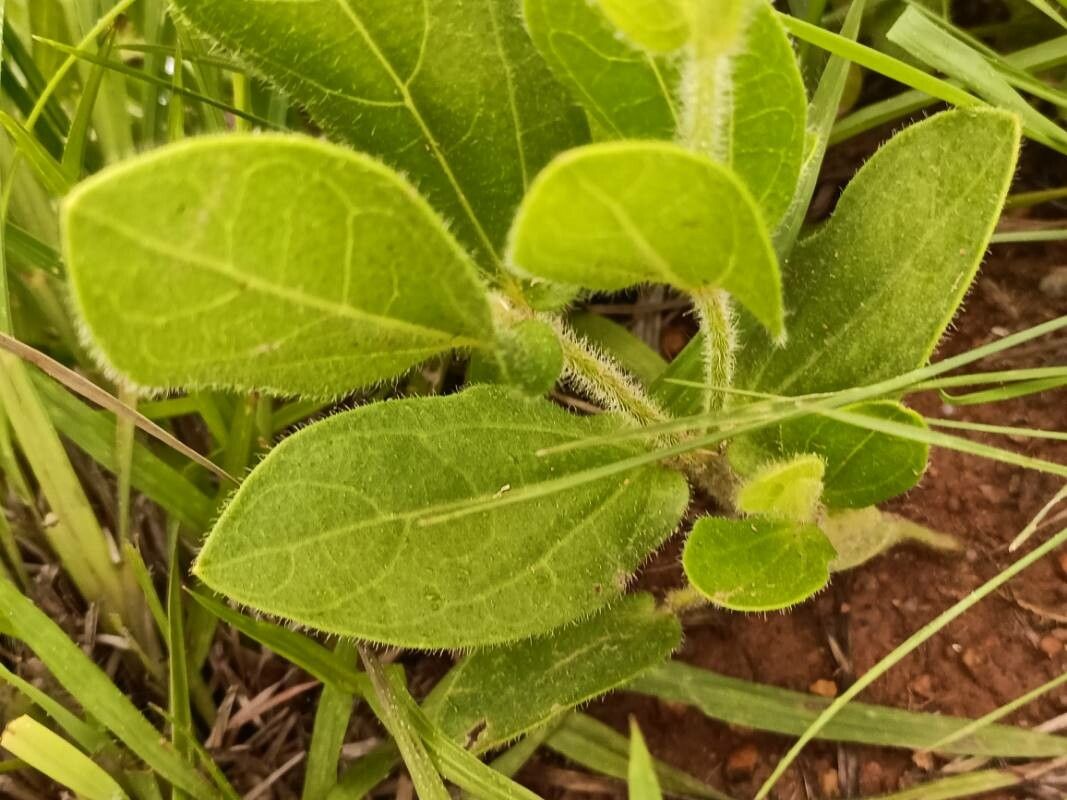
Thunbergia gregorii, commonly known as orange clockvine or orange trumpet vine, is a herbaceous perennial climbing plant species in the family Acanthaceae, native to East Africa and sometimes cultivated as an ornamental vine. The bright, pure all-orange flowers distinguish it from the related black-eyed Susan vine (Thunbergia alata).Spencer Le Marchant Moore described the species in 1894, naming it after John Walter Gregory. Within the genus Thunbergia, it is most closely related to T. alata, the two being placed in the subgenus Parahexacentris. The common name of clockvine relates to the vine spiralling upwards in a clockwise direction.Thunbergia gregorii is an evergreen vine that grows to 8–10 ft. tall, or if left without support can become an extensive groundcover. It looks like the related black-eyed Susan vine (T. alata), but without the black eye. Thunbergia gregorii is native to east Africa, and is pollinated by bees.Hardy to -1 C, Thunbergia gregorii flowers more profusely and even year-round in warmer climates, while restricted to summer and autumn in cooler climates. It has received the Royal Horticultural Society's Award of Garden Merit. Propagation is by cuttings taken in the summer.
Orange clock vine is resistant to disease and is usually not susceptible to illnesses. When it comes to care, this plant is fairly low-maintenance. Outdoors it needs only light watering, and larger specimens generally do not require pruning. Smaller plants, however, should be pruned after they finish blooming. Orange clock vine is appropriate for anyone who has outdoor space, such as a garden or deck, and does not demand extensive gardening experience.
How to keep Thunbergia Gregorii.
Light
Orange clock vine is found in open habitats, such as sunny meadows and forest margins, where it receives abundant light. It thrives in Full Sun but also tolerates Partial Sun, adapting well to a variety of sunlight conditions.
Water
The Orange Clock Vine, native to East Africa, thrives in tropical conditions with consistent moisture. It prefers soil that is both evenly moist and well-drained, requiring watering twice a week. Higher humidity levels promote its growth, and proper watering boosts the vibrancy of its flowers during the active growing season.
Temperature
Orange clock vine comes from tropical areas, where the climate is generally warm and humid. Consequently, it is adapted to high heat and humidity. It does not tolerate sudden temperature changes and prefers a steady thermal environment, so avoiding temperature fluctuations indoors is important. It usually cannot endure cold conditions and needs higher temperatures to grow. If the surrounding temperature drops too low, the plant may stop growing or even die.
Fertilizer
The best time to fertilize an Orange clock vine is in early spring as it emerges from dormancy. This encourages overall growth and flower development. Fertilization improves foliage, stems, and branches, and encourages flowers that are larger, more vibrant, and longer-lasting. It helps transfer nutrients from the roots to the flowers and enhances the plant’s health and resistance to disease.
Pruning
The Orange Clock Vine is known for its vibrant orange flowers. To encourage growth and shape the plant, it's best to prune it in early spring. After the last frost, trim any overgrown or dead stems back to the base to promote optimal flowering. Consistent care is important, as it helps prevent pests and diseases, ensuring the plant maintains its lush appearance.
Botanical profile.
- Plant Type
- Vine
- Life Cycle
- Perennial
- Genus
- Thunbergia
- Family
- Acanthaceae
- Hardiness Zone
- 10-11
- Mature Height
- 3.05 m
- Mature Spread
- 91 cm
- Leaf Color
- Green, Dark Green
- Leaf Type
- Semi-evergreen
- Flower Color
- Orange
- Flower Size
- 4.06 cm to 5.08 cm
- Bloom Time
- All year round
- Planting Time
- Spring, Summer, Autumn
- Harvest Time
- All year round
- Native Area
- Burundi, Mozambique, Ethiopia, Kenya, Uganda, Tanzania
Other names.
Reader questions.
What are the sunlight requirements for an Orange Clock Vine?
The Orange Clock Vine (Thunbergia gregorii) thrives in various sunlight conditions, requiring full sun, which means it needs above 6 hours of sunlight daily, or partial sun, with about 3-6 hours of sunlight. It's important to watch how sunlight gracefully moves through your garden to choose spots that provide the perfect balance of light and shade for your plants, ensuring their happiness.
What is the botanical name of the Orange Clock Vine?
The botanical name of the Orange Clock Vine is Thunbergia gregorii.