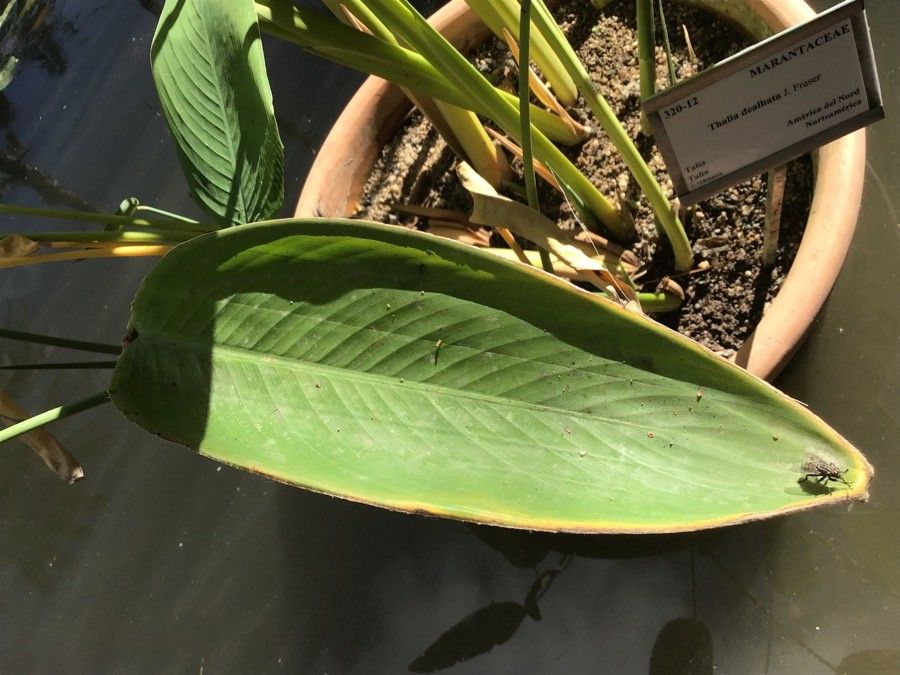
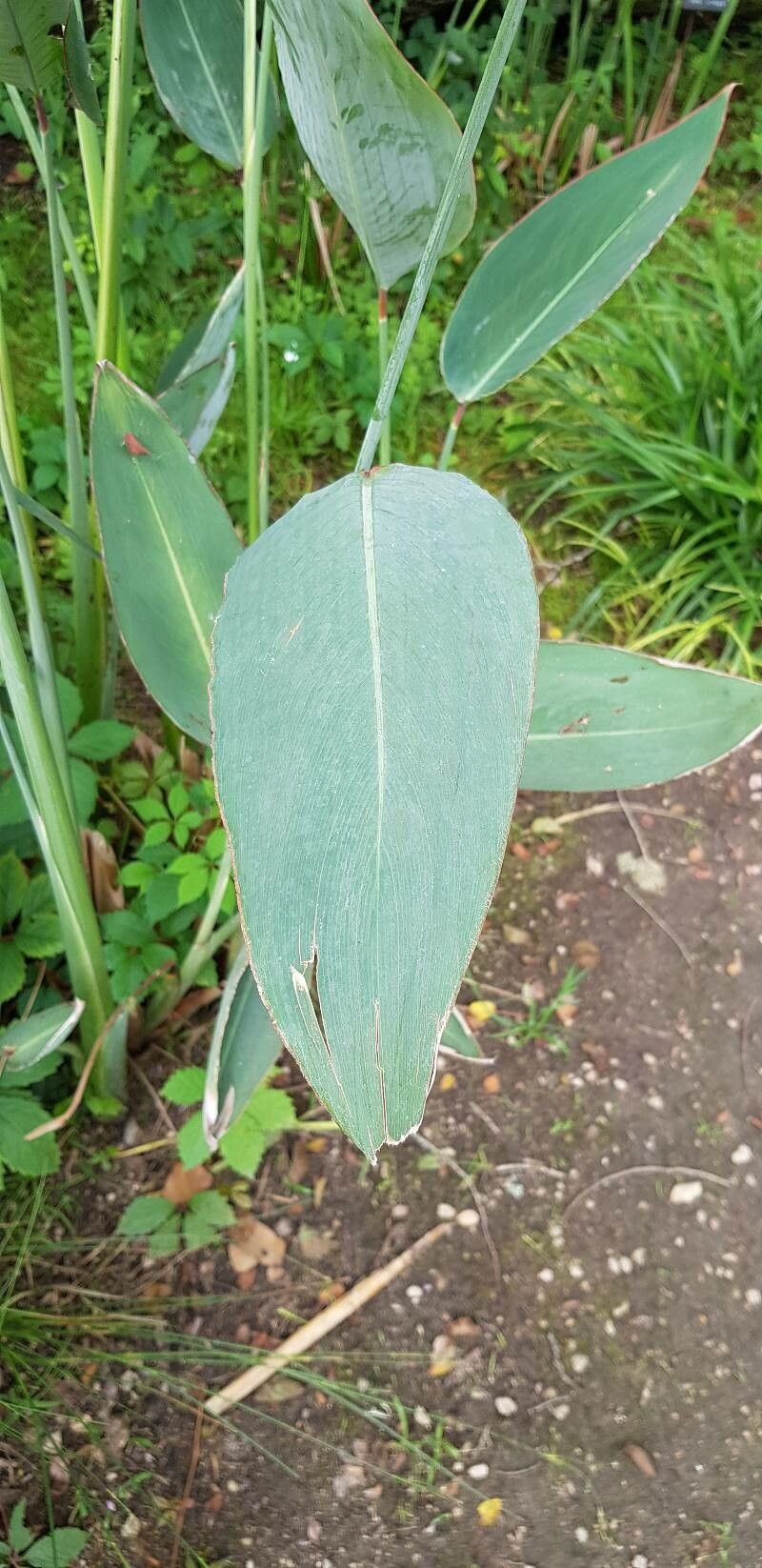
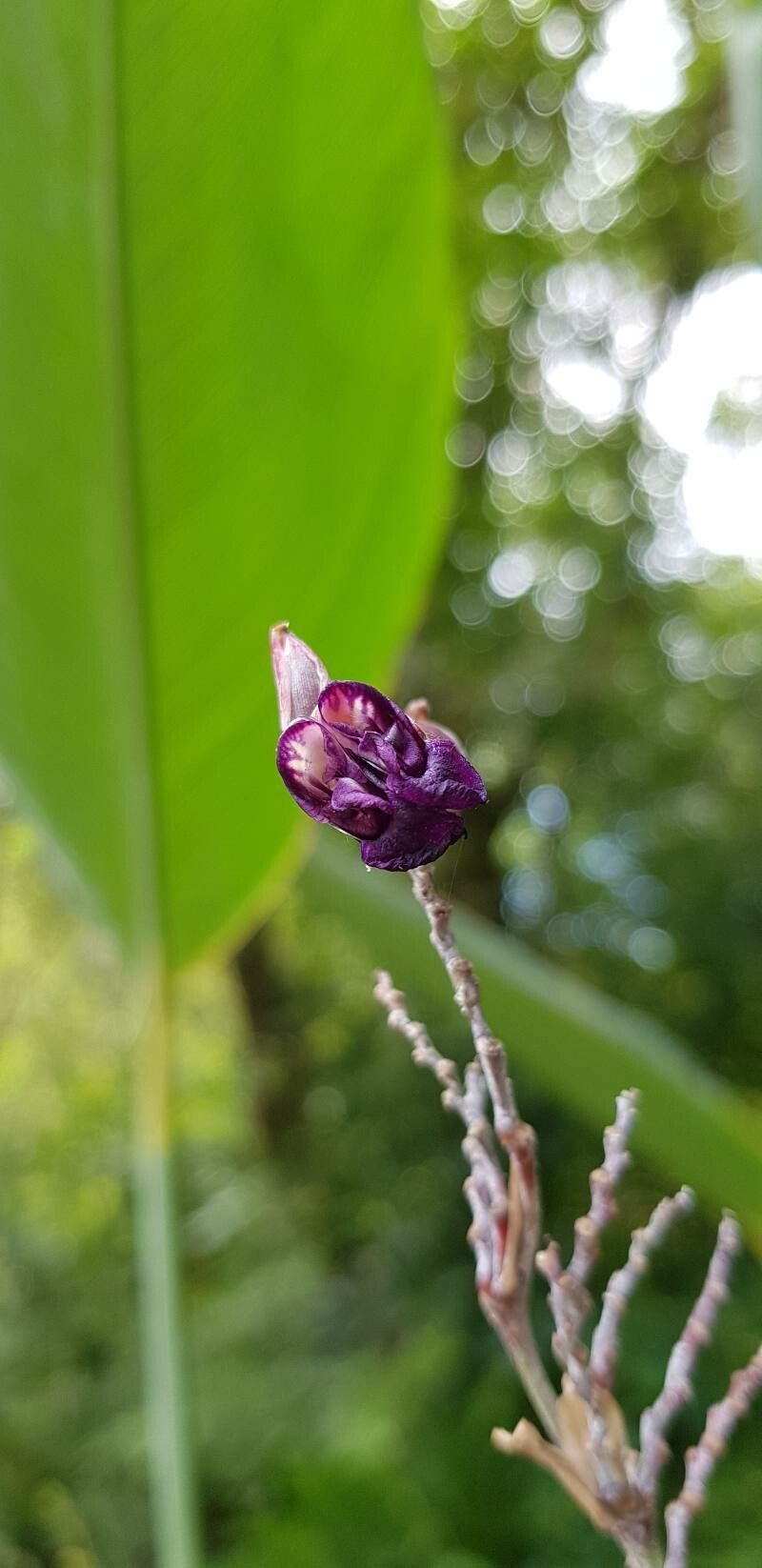
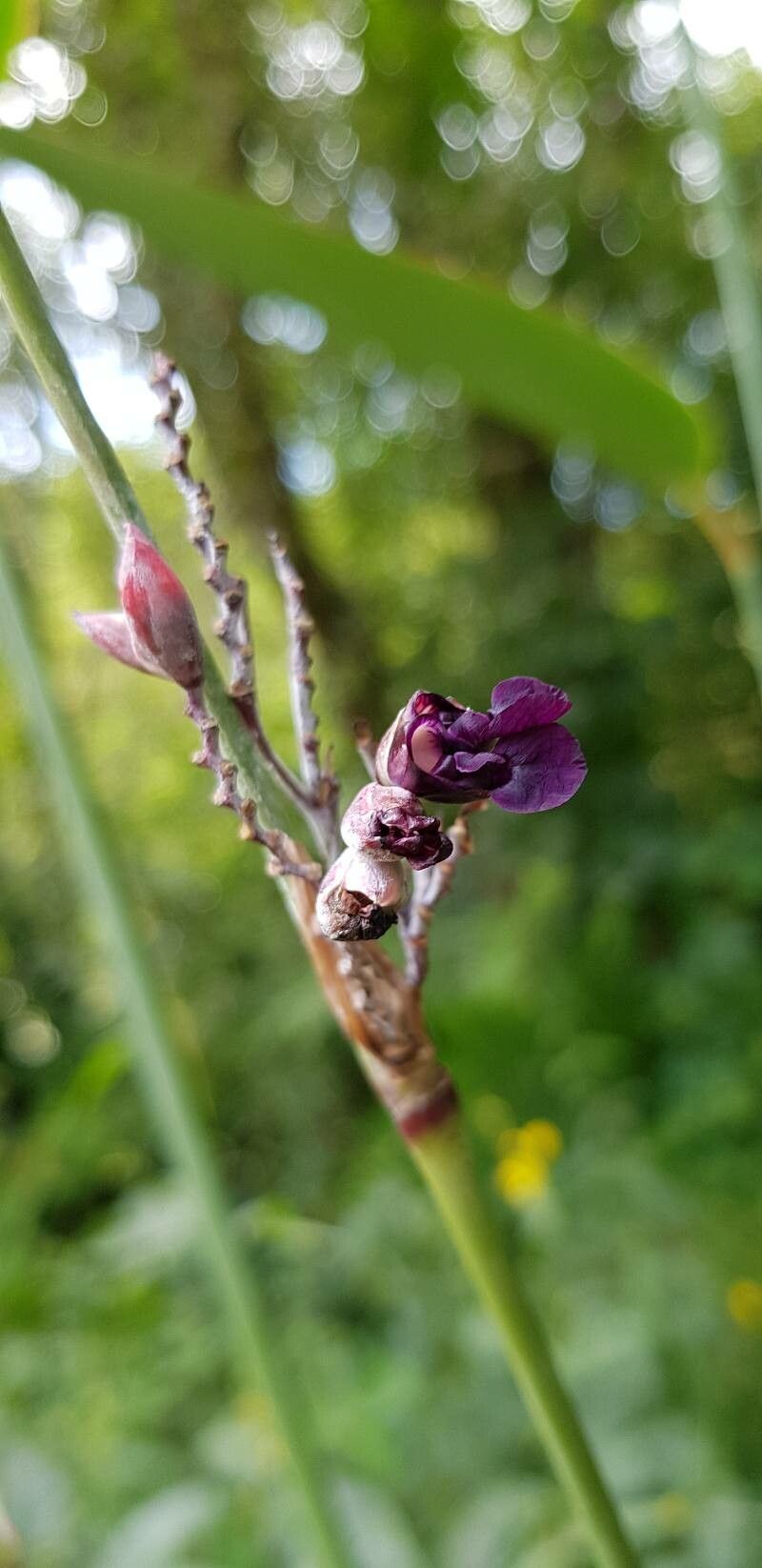
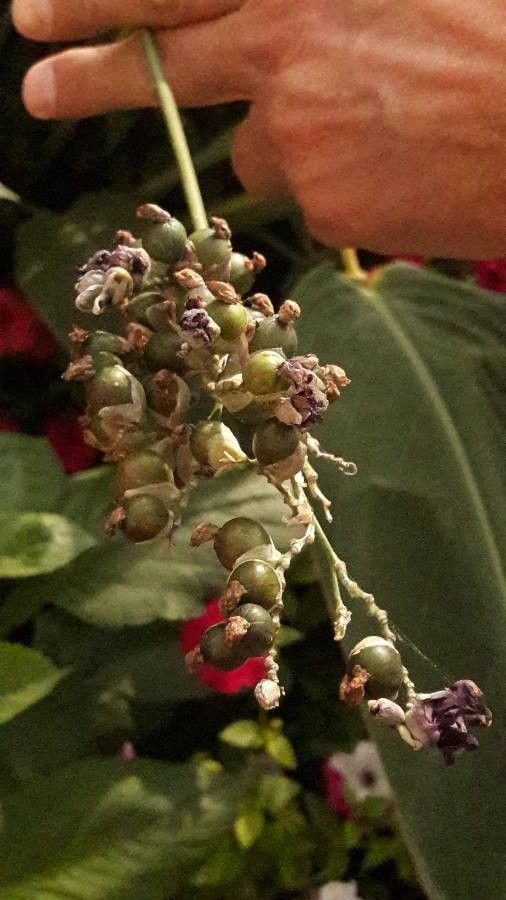
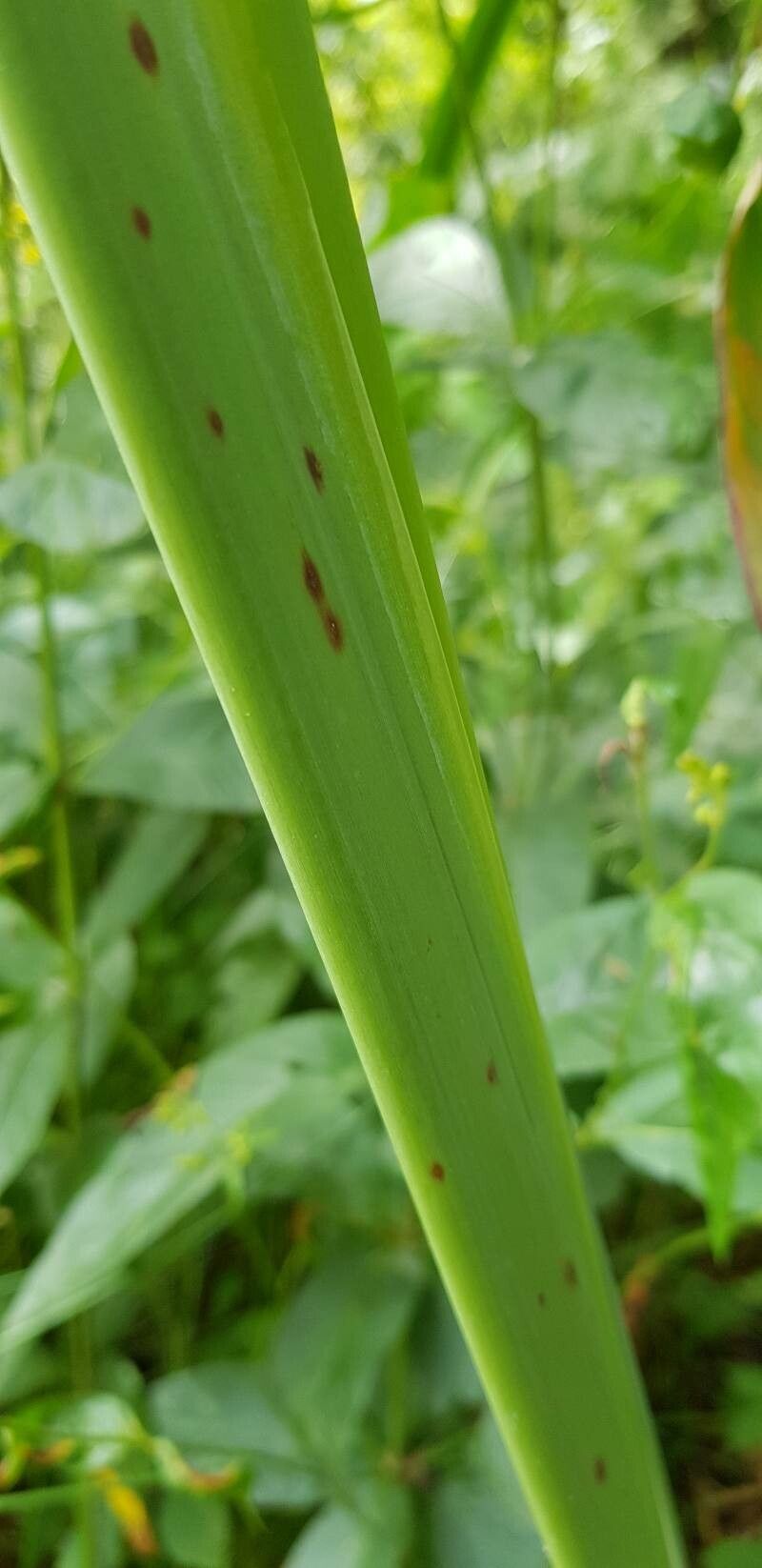
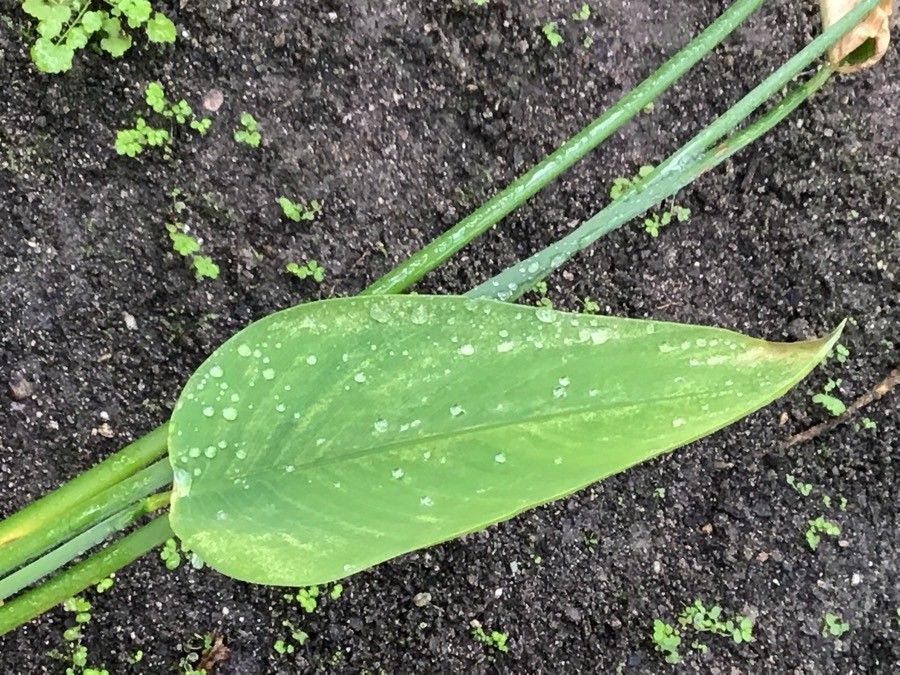
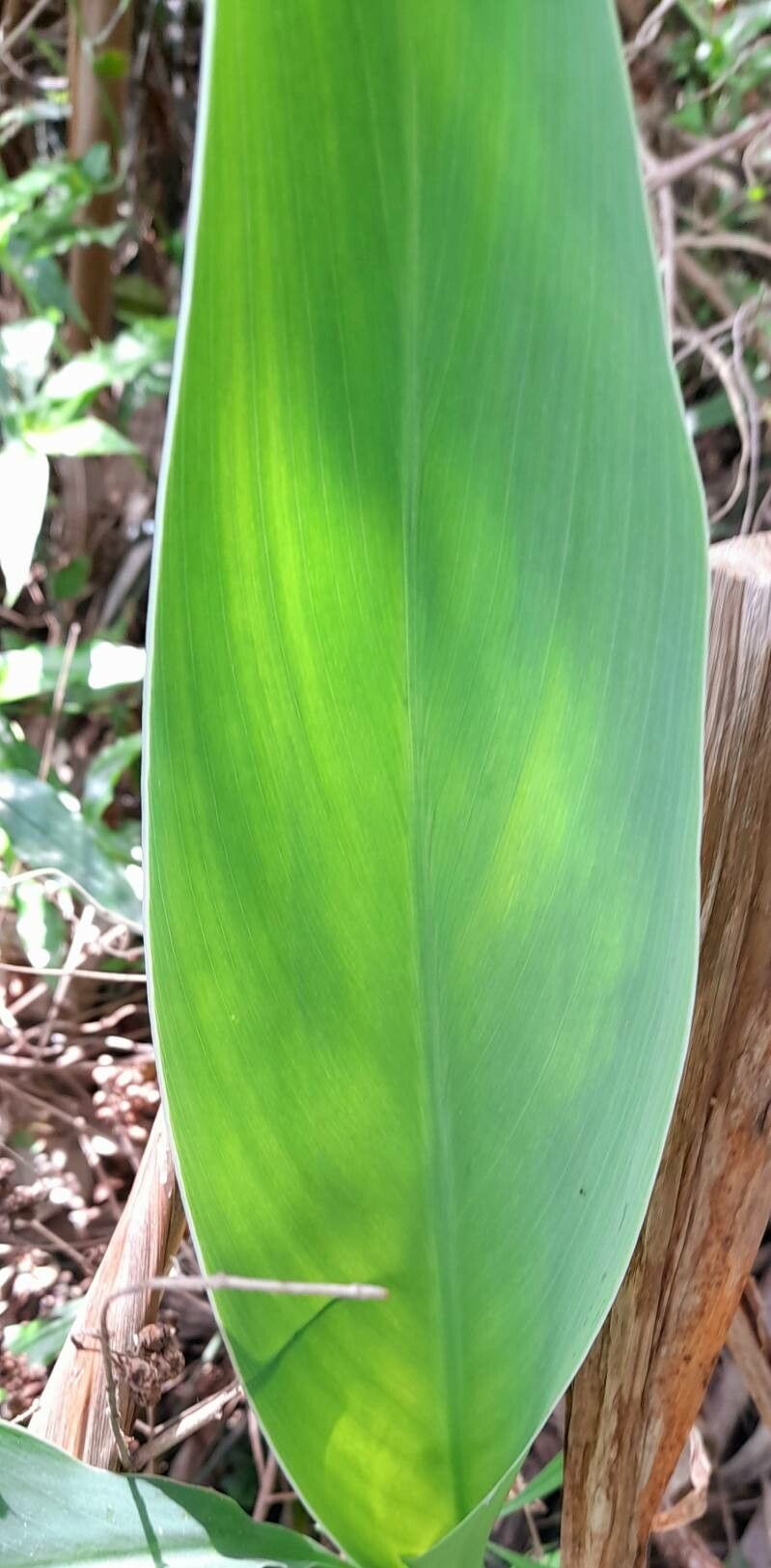
Thalia dealbata, the powdery alligator-flag, hardy canna, or powdery thalia, is an aquatic plant in the family Marantaceae, native to swamps, ponds and other wetlands in the southern and central United States. Its range includes much of Coastal Plains and the lower Mississippi Valley (States of South Carolina, Georgia, Alabama, Mississippi, Louisiana, Texas, Oklahoma, Arkansas, Missouri, Illinois and Kentucky). The plant has been grown as an aquatic ornamental because of the pretty violet flowers, and in cultivation has been proved hardy as far north as Philadelphia (Pennsylvania) and Vancouver (British Columbia).Thalia dealbata grows to 6 ft (1.8 m), with small violet flowers on an 8 in (20 cm) panicle held above the foliage. The blue-green leaves are ovate to lanceolate, dusted with white powder and with purple edges.
Hardy canna has moderate resistance to disease but can be prone to leaf spot disease. Its leaves can curl and dry out when humidity is low. The plant is considered difficult to care for because it needs high humidity and good ventilation to grow properly. Those conditions can be hard to achieve in typical indoor environments. Hardy canna is best suited to people who can provide high humidity, though even experienced growers may find it hard to get the plant to thrive. Beginners might be able to keep it alive, but it may not perform well.
How to keep Thalia Dealbata.
Light
Plenty of sunlight supports a hardy canna's growth and vigor, so a bright, sun-filled location is preferred. It will tolerate some shade, however. Too much sun can scorch the leaves, while too little light can produce weaker stems and fewer flowers.
Water
Hardy canna thrives in wetland environments and prefers consistent moisture, usually needing to be watered twice a week. It can tolerate short dry periods and flourishes in standing water, making it an excellent choice for pond edges or bog gardens where adequate light and water can promote its growth.
Temperature
Hardy canna is an adaptable plant native to areas with fluctuating temperatures, preferring to grow in 50 to 100 °F (10 to 38 ℃). Its surroundings should be adjusted as the seasons change to ensure optimal growth.
Pruning
Hardy canna thrives in marshy environments, featuring large blue-green leaves and striking purple spikes. To maintain its health, prune in early spring or late winter by removing dead foliage. Regularly thinning the plants improves air circulation, controls their size, and encourages growth. Make sure to use sharp tools during pruning to prevent disease and keep the plants healthy.
Botanical profile.
- Plant Type
- Herb
- Life Cycle
- Perennial
- Genus
- Thalia
- Family
- Marantaceae
- Hardiness Zone
- 6-11
- Mature Height
- 0.91 m to 1.83 m
- Mature Spread
- 61 cm
- Leaf Color
- Green, Blue, Silver
- Leaf Type
- Evergreen
- Flower Color
- Purple, Lavender
- Flower Size
- 2.03 cm
- Bloom Time
- Summer, Early fall, Mid fall
- Planting Time
- Spring, Summer
- Harvest Time
- Late summer, Fall, Early winter
Other names.
Reader questions.
What should I do if I give my Hardy canna too much or too little water?
Observing the plant can help determine if there are watering issues. If you overwater the plant, you may notice yellow leaves with yellow-brown patches at the tips. In severe cases, the leaves may droop and curl due to root rot, making it difficult for the plant to absorb more water. If your Hardy canna is indoors, be cautious of overwatering as the plant cannot tolerate standing water. If you see standing water or leaf changes, stop watering and let the soil air out for 3-5 days. If root rot is present, act quickly by removing the plant from its pot or ground, washing off the roots, and discarding any dead or decaying roots. Replace the old soil with fresh soil. When underwatering, the Hardy canna is sensitive to drought and will show signs such as curled, pendulous, and lifeless leaves, gradual yellowing from the bottom, and browning edges. Increasing the frequency of watering can help address underwatering. Additionally, if the air is too dry, increasing humidity can keep the soil moist for longer. Consider adjusting the plant's location if it receives excessive sunlight or is exposed to excessive heat, as this can lead to extra evaporation.
Why should I put fertilizer on my Hardy canna plant?
Fertilization is important for the Hardy canna because it provides essential nutrients for the plant's growth. Although the overall fertilization needs of the Hardy canna are low, annual fertilization can be very beneficial. It helps the plant survive and may result in better, longer-lasting flowers. Therefore, those seeking to enhance the appearance of their Hardy canna should ensure regular fertilization.
What are the sunlight requirements for Hardy Canna?
Hardy Canna thrives best in conditions where it can receive full sun, which means it should get more than 6 hours of sunlight daily. It can also tolerate partial sun, with about 3-6 hours of sunlight. However, it's important to observe your garden's sunlight patterns to find the perfect balance of light and shade ensuring optimal growth for your plants.
What is hardy canna and where does it thrive?
Hardy canna, botanically known as Thalia dealbata, is a versatile plant originating from environments with variable temperatures. It thrives in a temperature range of 50 to 100 °F (10 to 38 °C). Optimal growth is ensured by adjusting its surroundings with the changing seasons. This plant demonstrates strong cold resistance, typically not requiring special frost protection measures during winter. However, in conditions where winter temperatures are expected to drop below -25°C, precautionary cold protection should be provided by covering the plant with soil or straw. To prepare for winter, it's advisable to water the plant abundantly before the first freeze in autumn, ensuring the soil is moist as it enters a frozen state. This preparation helps prevent drought and water scarcity for the plant during the colder months and early spring.
How frequently should I water my Hardy canna?
To water your plant, here are some guidelines for different seasons and factors to consider
When should I fertilize my Hardy canna plant for best results?
The best time to fertilize a Hardy canna is in late winter to early spring when it is coming out of its dormant phase and starting to grow actively. Fertilizing at this time helps the plant have a strong start to the growing season. While it is generally best to fertilize in early spring, it is also okay to fertilize in the fall. However, it is not recommended to fertilize a Hardy canna in the summer or winter.
What are the essential light conditions for growing Hardy Canna?
Hardy Canna requires ample sunlight to ensure its vitality and growth, making a spot that receives clear, sun-drenched exposure ideal. While it can tolerate some shade, too much sun can cause leaf scorch, and insufficient sun might weaken stem growth and reduce blooming. For indoor plants, artificial lighting can be a vital solution during winter or in less sunny spaces. LED lights are recommended for their ability to provide specific wavelengths needed by the plants, with required wattages varying based on the plant's natural sunlight needs.
How does hardy canna react to low temperatures?
Hardy canna is cold-tolerant, thriving best when the temperature remains above 10°C. During the winter, temperatures should be kept above -15°C. If temperatures fall below -25°C, the plant may not show noticeable changes immediately, but there might be a decrease in sprouting or even failure to sprout in the following spring. To manage this, in spring, it is recommended to remove any parts of the plant that have failed to sprout, promoting healthier growth.
How should I water my Hardy canna plant correctly?
There are various ways to water your Hardy canna effectively. If your plant is in a small indoor pot, you can easily bring it to your kitchen sink and use the faucet to add water. Holding the pot in your hands, you can stop watering when the excess water drains out of the pot's holes. However, avoid doing this during winter or in cold climates as it can harm the plant's root system. If the tap water in your area contains high levels of fluorine, chlorine, or salts, it's better to use rainwater or lake water instead. In addition to faucet watering, you can also water the Hardy canna through overhead watering or directly into the soil using a watering can, hose, or any other watering tool you prefer. For plants that are grown in the ground, if there's insufficient rain, you can aim the hose at the root system for more than 10 minutes to ensure proper watering. Keep in mind that the Hardy canna is sensitive to the water quality it receives. They prefer soft, acidic water naturally. If you have hard water, using an at-home water filter can help remove minerals and salts. Allowing tap water to sit out for about 24 hours can also help chemicals dissipate. Alternatively, you can purchase filtered water specifically for your plants. The Hardy canna thrives best with water that has a pH level of 6.5. If possible, collecting and storing rainwater during rainy periods is a great option for watering your Hardy canna.
When is the best time to not put fertilizer on my Hardy canna plant?
To avoid overfertilization and its complications, it is recommended to only fertilize your Hardy canna during late winter and early spring. These plants have low fertilization needs, so a single annual feeding is sufficient. It's important not to continue fertilizing throughout spring, summer, and fall. The only exception to this rule is if you didn't fertilize in spring, in which case you can feed the plant in fall. Additionally, there is no need to fertilize during winter when the Hardy canna is in a dormant growth phase and not producing new growth.
What are the symptoms of inappropriate light conditions for Hardy Canna?
Symptoms of inadequate lighting for Hardy Canna include small or lighter-colored new leaves, leggy or sparse growth, accelerated leaf drop, slower or halted growth, and symptoms of overexposure like chlorosis, sunscald, leaf curling, wilting, and leaf scorching. These symptoms help in identifying whether the plant is receiving too much or too little light, aiding in adjusting its environment accordingly.
How should hardy canna be cared for in high temperatures?
During the summer, hardy canna should be kept at temperatures below 38°C to avoid heat stress. Exposure to temperatures exceeding 43°C can result in the leaves turning lighter in color, becoming prone to curling, and susceptible to sunburn. In severe cases, the entire plant may wilt and dry up. Care for hardy canna in such conditions involves trimming away sunburned and dried parts of the plant. Moving the plant to a location that offers shade during the midday and afternoon sun, or using a shade cloth, can protect it. Additionally, watering the plant in the morning and evening helps keep the soil moist and supports the plant's overall health in high temperatures.