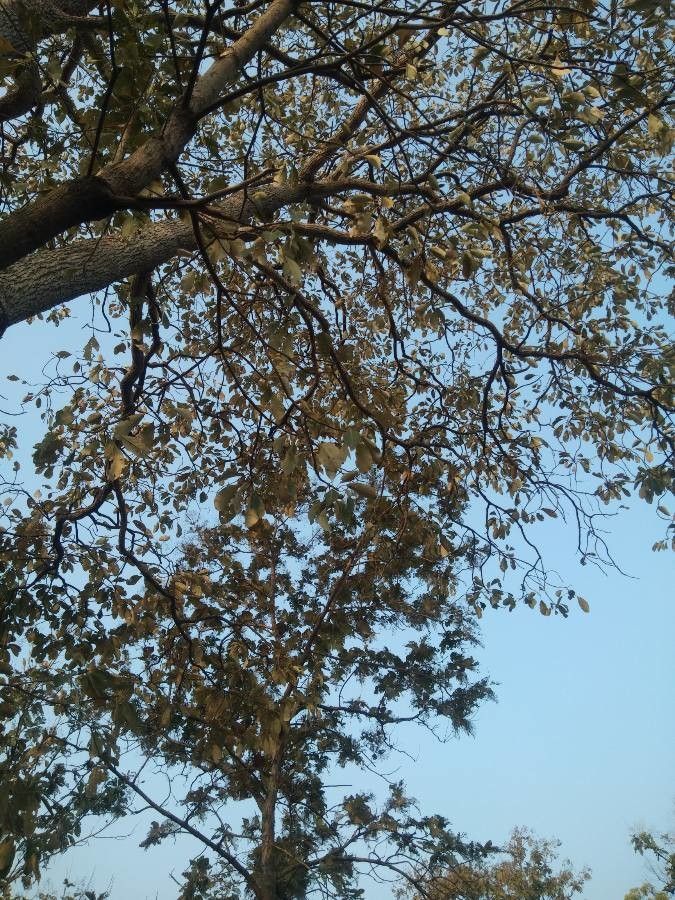
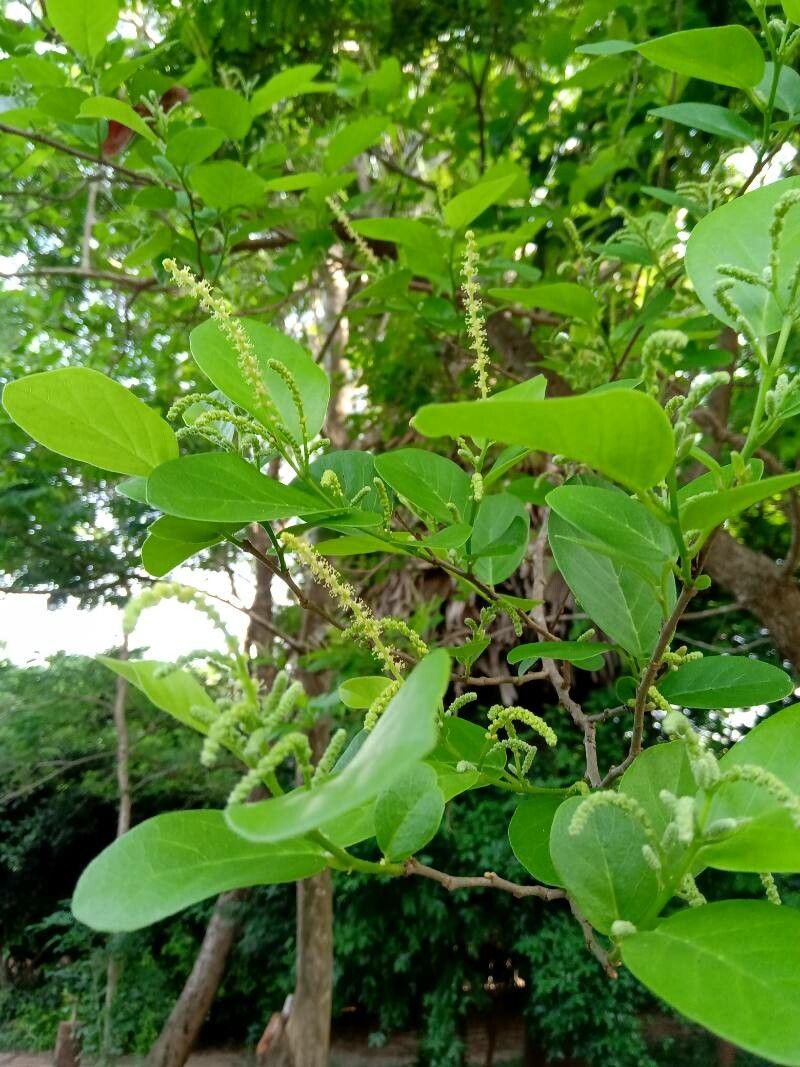
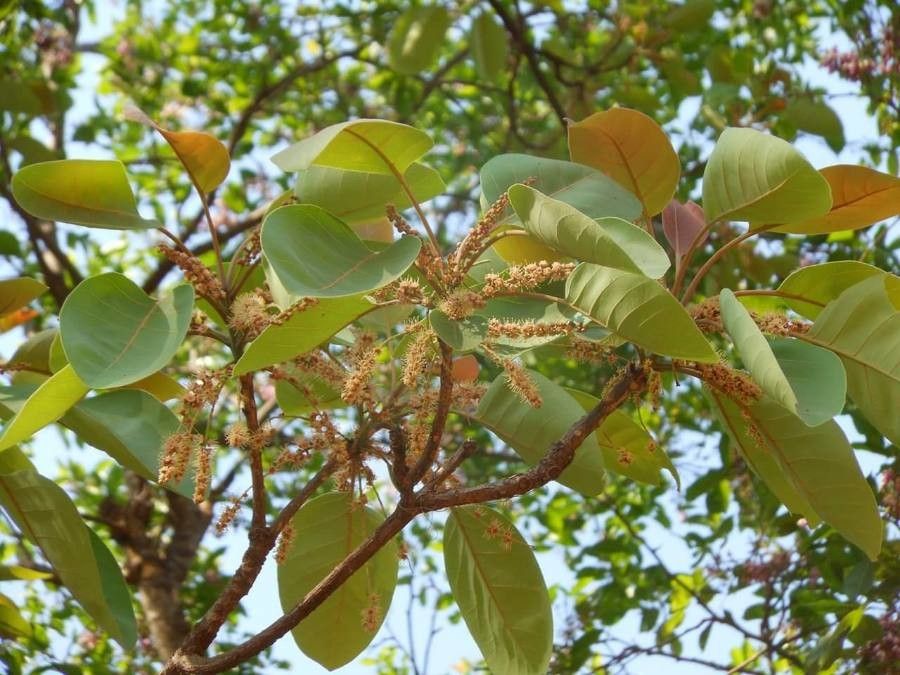
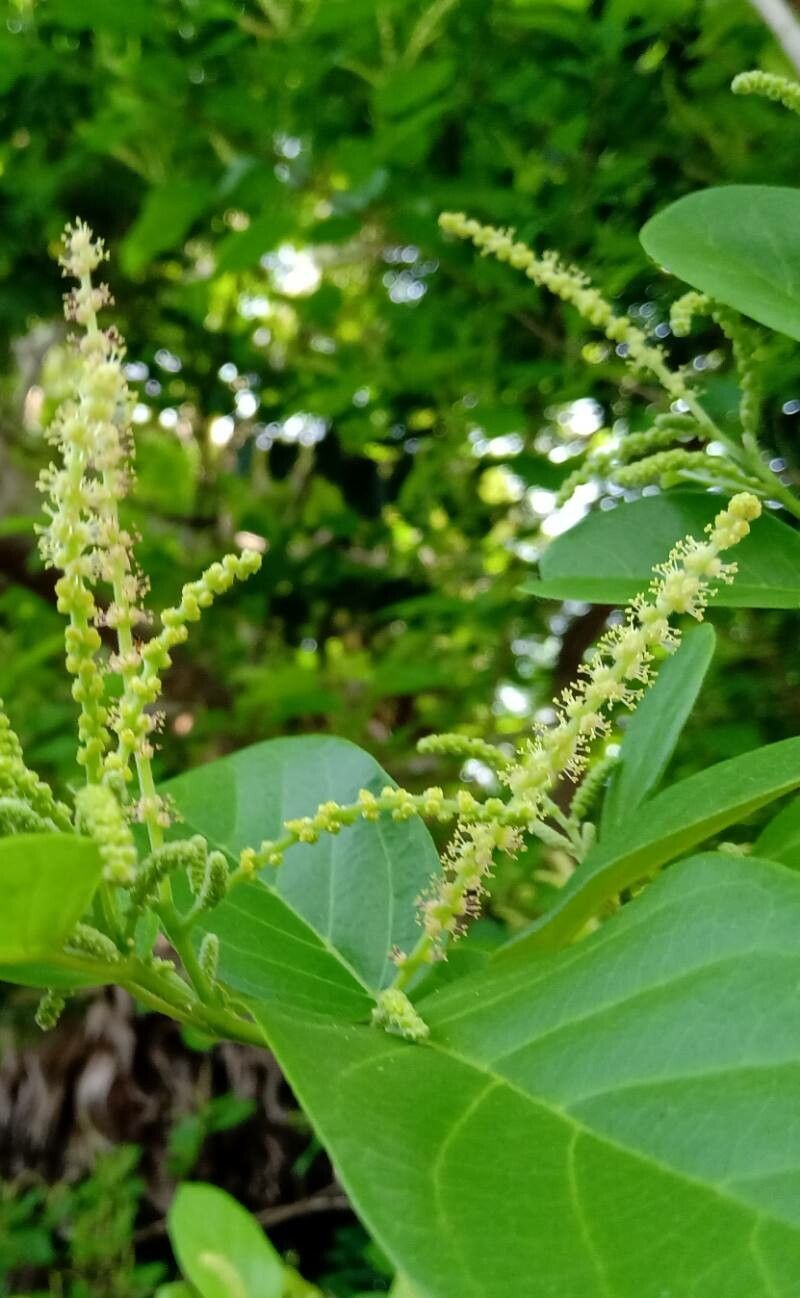
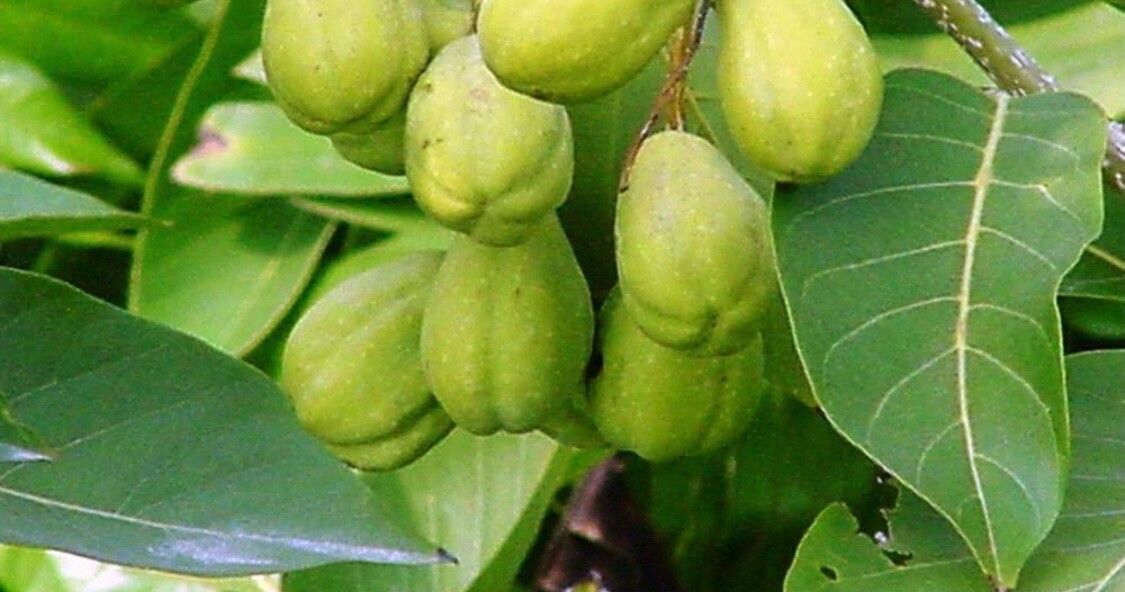
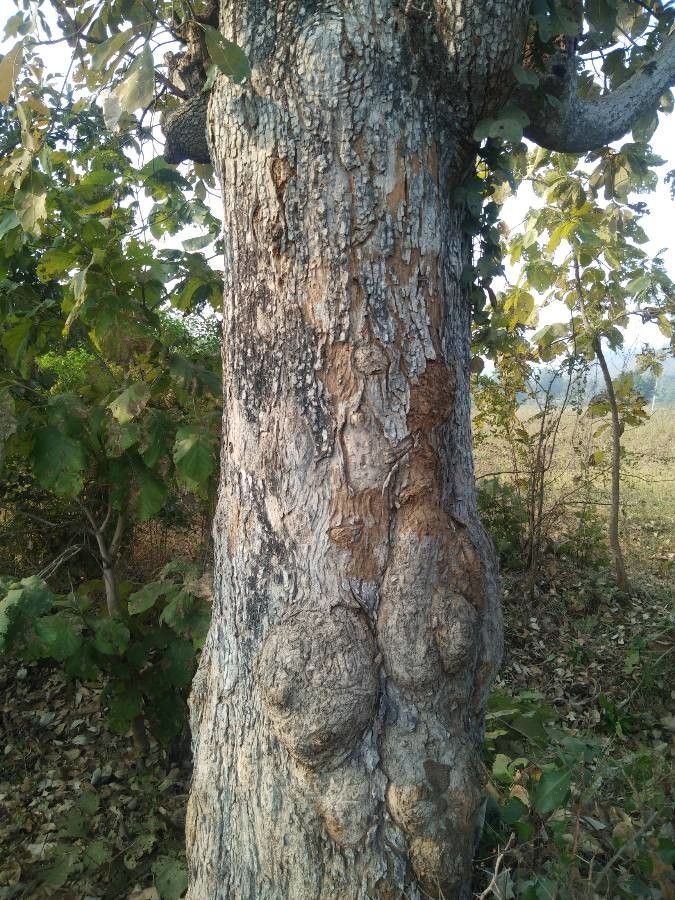
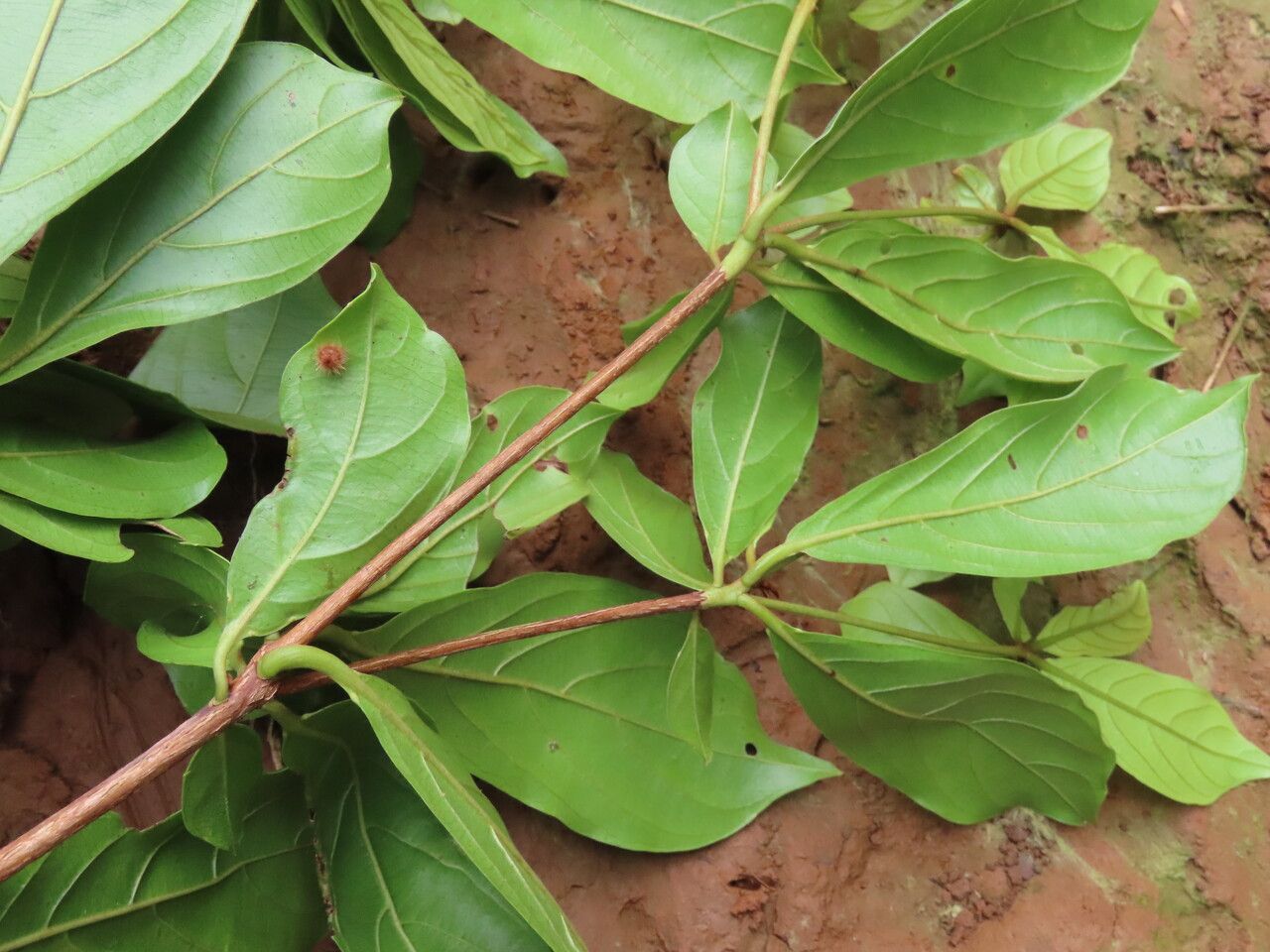
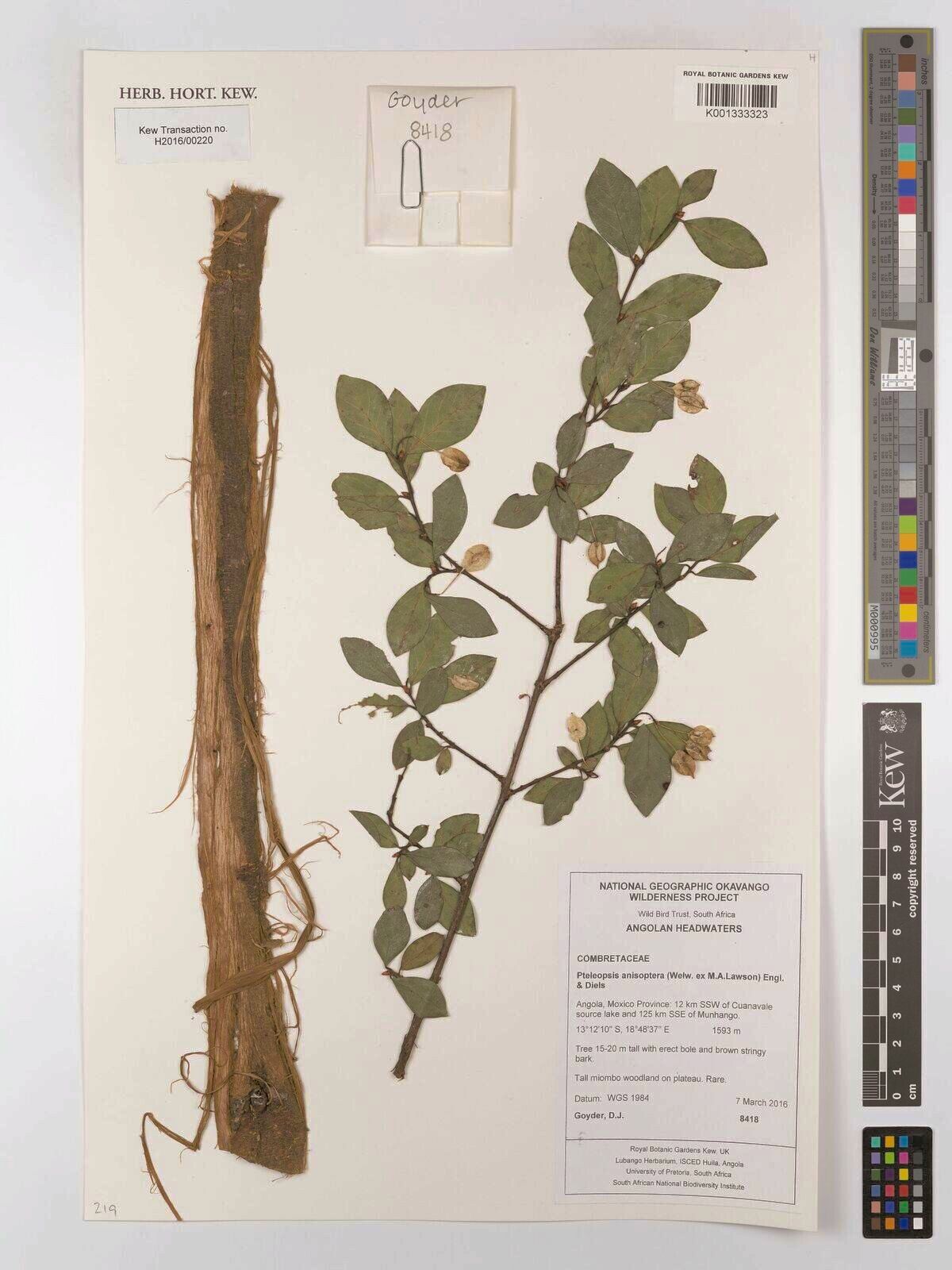
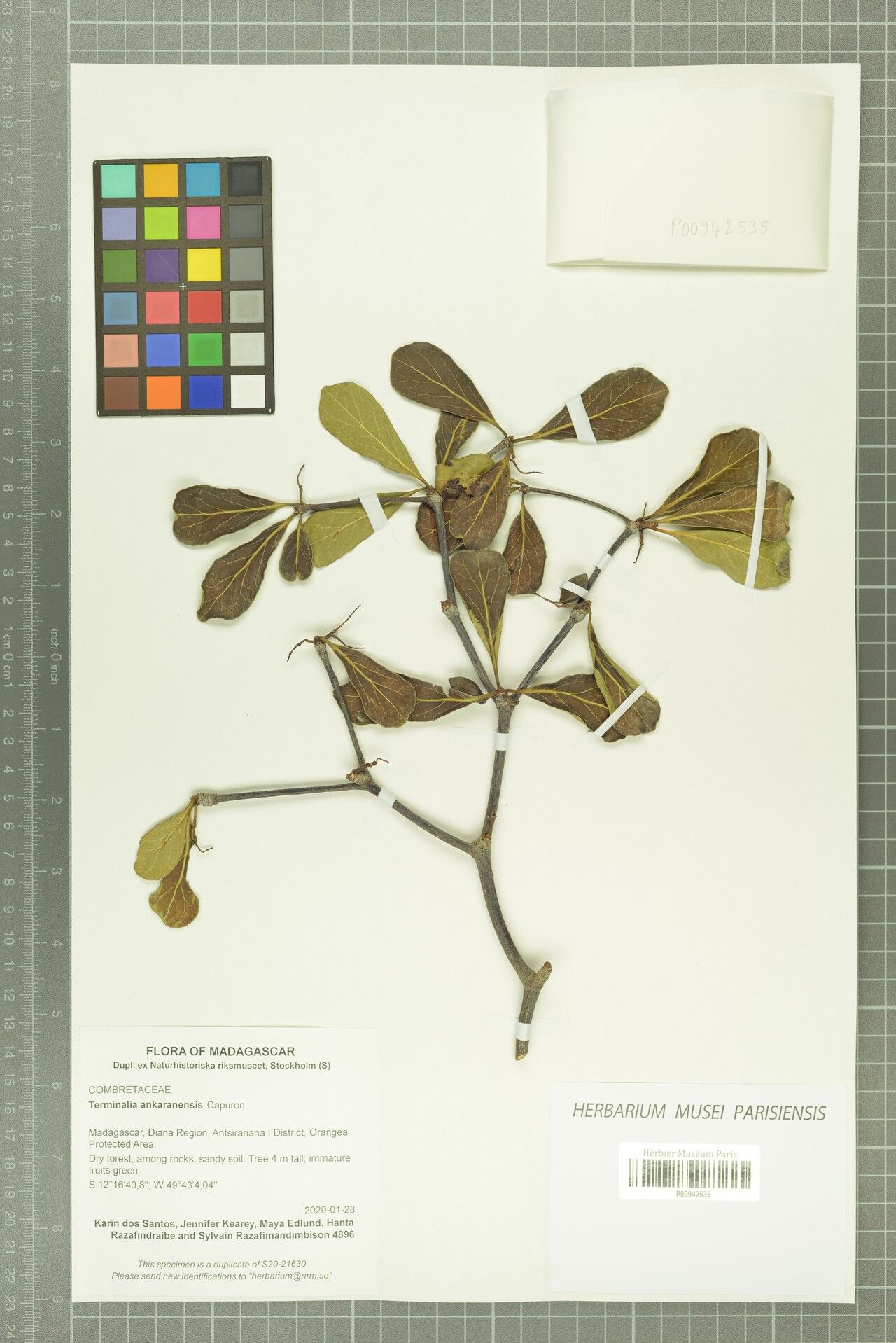
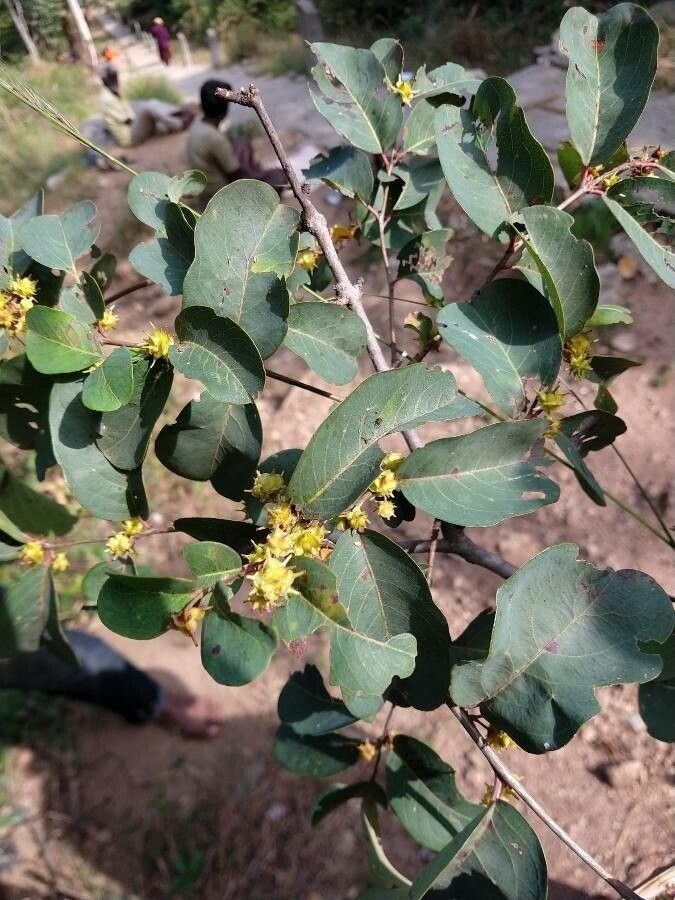
Terminalia bellirica, known as baheda, bahera, behada, beleric or bastard myrobalan (Arabic: beliledj بليلج, borrowed from Middle Persian Balilag), Persian بلیله (Balileh), Sanskrit: Bibhitaka बिभीतक, Aksha अक्ष) is a large deciduous tree in the Combretaceae family. It is common on the plains and lower hills in South and Southeast Asia, where it is also grown as an avenue tree. The basionym is Myrobalanus bellirica Gaertn. (Fruct. Sem. Pl. 2: 90, t. 97. 1791). William Roxburgh transferred M. bellirica to Terminalia as "T. bellerica (Gaertn.) Roxb.". This spelling error is now widely used, causing confusion. The correct name is Terminalia bellirica (Gaertn.) Roxb.
Beleric myrobalan is fairly disease-resistant and typically not susceptible to illnesses. In terms of care, this plant is fairly low-maintenance. When grown outdoors it needs little watering, and larger specimens typically do not require pruning. Smaller ones, however, should be trimmed after they finish blooming. Beleric myrobalan is suitable for anyone with an outdoor area, such as a garden or deck, and does not demand much gardening experience.
How to keep Terminalia Bellirica.
Light
Beleric myrobalan is native to open habitats, such as sunlit meadows and forest margins, which offer abundant light. It does best in Full Sun but will also tolerate Partial Sun, adjusting well to different sunlight levels.
Water
Beleric myrobalan thrives in moderate rainfall and prefers humid conditions. Although it can tolerate drought, it needs water every 2-3 weeks to maintain its health. As an evergreen plant, it keeps its leaves throughout the year, so consistent moisture is essential for balanced hydration and healthy growth.
Temperature
Beleric myrobalan comes from tropical areas, where the climate is usually warm and humid. Because of this, it is well suited to high temperatures and moisture. It is sensitive to sudden temperature shifts and prefers a steady thermal environment, so avoiding indoor temperature fluctuations is important. It typically cannot tolerate cold and needs warmer conditions to grow. If the surrounding temperature falls too low, the plant may stop growing or even die.
Fertilizer
Fertilization is essential for Beleric myrobalan care. Regular feeding throughout the growing season supplies the energy needed for its showy leaves and promotes general growth. Failing to fertilize can lead to unhealthy foliage, reduced ornamental value, and stunted or weak growth that is more likely to break.
Pruning
The Beleric Myrobalan is a deciduous tree appreciated for both its medicinal and ornamental properties. To maintain its health and appearance, prune the tree in early spring by removing any dead or overly crowded branches. This helps improve air circulation and light penetration. Proper pruning also encourages healthy growth and abundant fruit production. Make sure to sanitize your tools before use, and consult horticultural guides for the best care practices.
Botanical profile.
- Plant Type
- Tree
- Life Cycle
- Perennial
- Genus
- Terminalia
- Family
- Combretaceae
- Hardiness Zone
- 10-12
- Mature Height
- 17.98 m to 35.05 m
- Mature Spread
- 35.05 m
- Leaf Color
- Green
- Leaf Type
- Deciduous
- Flower Color
- White
- Flower Size
- 0.51 cm to 0.51 cm
- Bloom Time
- Mid spring, Late spring
- Planting Time
- Spring, Summer
- Harvest Time
- Late summer, Early fall, Mid fall
- Native Area
- Nepal, Sri Lanka, India, Malaysia, Indonesia, Cambodia, Vietnam, Myanmar, Singapore, Bangladesh, Pakistan, Laos, Thailand, China
Other names.
Reader questions.
How much sunlight does Beleric myrobalan require?
Beleric myrobalan thrives in environments that provide ample light, such as open sunny meadows and forest edges. It does best in full sun, which means it needs above 6 hours of sunlight daily, but it can also tolerate partial sun, with about 3-6 hours of sunlight a day. Adapting well to various sunlight conditions, it's crucial to ensure that your garden or space provides the right balance of light and shade to keep your Beleric myrobalan healthy.
What is Beleric myrobalan also known as?
Beleric myrobalan is also known by its botanical name, Terminalia bellirica.
What should I do if natural sunlight is not enough for my indoor Beleric myrobalan?
If your Beleric myrobalan doesn't receive sufficient natural sunlight, especially during winter or in less sunny spaces, artificial lighting can be a vital solution. It's recommended to use LED lights for indoor plants as they can provide specific wavelengths needed for optimal growth. Full sun plants require 30-50W\/sq ft of artificial light, partial sun plants 20-30W\/sq ft, and full shade plants 10-20W\/sq ft. Ensure the artificial light source is placed 12-36 inches above the plant and mimics natural daylight hours, typically 8-12 hours of light per day, for healthy growth.
What are the symptoms of light deficiency in Beleric myrobalan?
Beleric myrobalan shows several symptoms when it doesn't get enough light. Look for small or immature new leaves, leggy or sparse growth indicating long spaces between leaves or stems, faster leaf drop as the plant conserves resources, slower or stunted growth, and lighter-colored or pale new leaves. These symptoms suggest the plant is struggling with suboptimal lighting conditions.
How does excessive sunlight affect Beleric myrobalan?
Exposure to excessive sunlight can harm Beleric myrobalan, leading to symptoms like chlorosis where leaves lose their green color, sunscald causing damage to leaves or stems, leaf curling as a defense mechanism against sunlight overexposure, wilting due to loss of water through increased transpiration, and leaf scorching characterized by brown, crispy leaf edges. These conditions indicate that the plant is receiving more sunlight than it can handle, affecting its health and growth.
What solutions are available for Beleric myrobalan suffering from light-related issues?
For indoor Beleric myrobalan, gradually increasing sunlight exposure or using artificial light can address light deficiency. Place the plant near a south-facing window or use grow lights for at least 8 hours a day. For outdoor plants, move them gradually to sunnier spots while avoiding sudden exposure to high light levels to prevent sunburn. Reducing obstructions and transplanting smaller plants to sunny locations with good drainage during their dormant period can also improve sunlight access. However, parts of the plant already affected might not recover, but new growth should be healthy with proper light conditions.